BASIC PRINCIPLES
OF
GENETIC ENGINEERING
CONTENTS
• What is a gene ?
• Definition
• History
• Process
• Molecular tools of genetic engineering
• History of restriction enzyme
• Mechanism of action
• Types of restriction enzymes
• Application of restriction enzymes
WHAT IS A GENE ?
• A Gene is a fundamental, physical and functional
unit of heredity.
• It is responsible for the physical and inheritable
characteristics of an organism.
DEFINITION
• Genetic Engineering is manipulation/alteration of structure of a
gene tocreatea desired characteristic in an organism.
• Genetic recombination technology consists of the breakage and joining
of DNA molecules.
• Genetically engineered DNA prepared by transplanting or splicing
genes from one species into the cells of a host organism of a different
species. Such DNA becomes part of the host's genetic makeup and is
replicated.
• Genetic engineering primarily involves the manipulation of genetic
material ( DNA) toachieve the desire goal in pre determined way.
• If genetic material from anotherspecies is added to the host, the
resulting organism is called transgenic.
• Geneticengineering can also be used to removegenetic material
from the targetorganism, creating a knock outorganism.
• Genetic engineering, sometimes called genetic modification, is
the process of altering the DNA in an organism’s genome.
• This may mean changing one base pair (A-T or C-G), deleting
a whole region of DNA, or introducing an additional copy of a
gene.
• It may also mean extracting DNA from another organism’s
genome and combining it with the DNA of that individual.
• Plants, animals or micro organisms that have been changed
through genetic engineering are termed genetically modified
organisms or GMOs.
• If genetic material from another species is added to the host, the
resulting organism is called transgenic.
• If genetic material from the the resusame species or a species that
can naturally breed with the host is used lting organism is called
cisgenic.
• If genetic engineering is used to remove genetic material from the
target organism the resulting organism is termed a knockout
organism.
HISTORY
• Genetic engineering as the direct manipulation of DNA by
humans outside breeding and mutations has only existed since
the 1970s.
• The term "genetic engineering" was first coined by Jack
Williamson in his science fiction novel Dragon's Island,
published in 1951.
• In 1973 Herbert Boyer and Stanley Cohen created the first
transgenic organism by inserting antibiotic resistance genes into
the plasmid of an E.coli bacterium. In 1974, the same techniques
were applied to mice.
• The first trials of genetically engineered plants occurred in France
and the USA in 1986, tobacco plants were engineered to be
resistant to herbicides.
• Genetic engineering has a number of useful applications,
including scientific research, agriculture and technology.
• In plants, genetic engineering has been applied to improve the
resilience(illness), nutritional value and growth rate of crops
such as potatoes, tomatoes and rice.
• In animals it has been used to develop sheep that produce a
therapeutic protein in their milk that can be used to treat cystic
fibrosis, or worms that glow in the dark to allow scientists to
learn more about diseases such as Alzheimer’s.
TRANSGENIC PLANTS
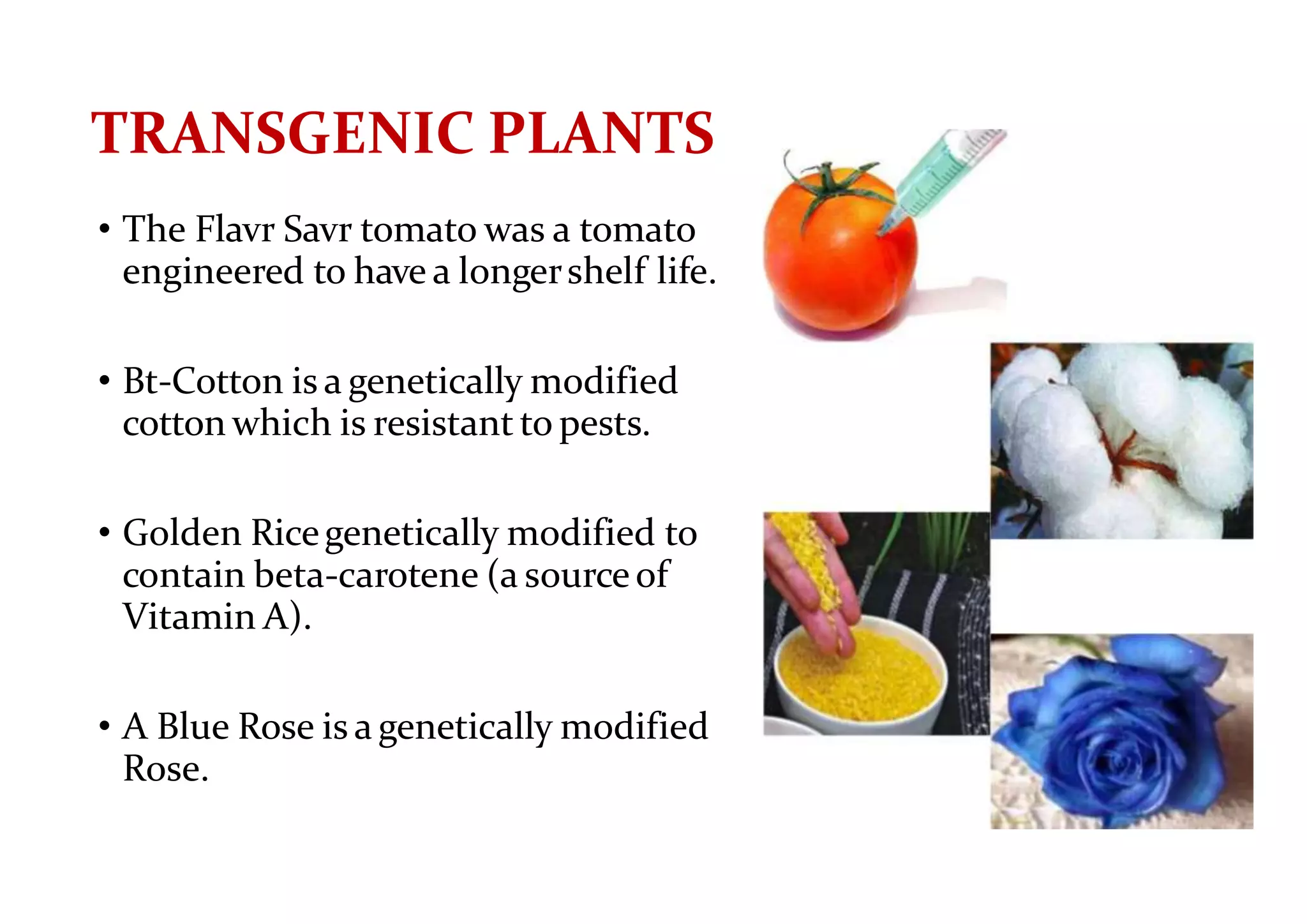
• The Flavr Savr tomato was a tomato
engineered to have a longershelf life.
• Bt-Cotton is a genetically modified
cotton which is resistant to pests.
• Golden Ricegenetically modified to
contain beta-carotene (a sourceof
Vitamin A).
• A Blue Rose is a genetically modified
Rose.
TRANSGENIC ANIMALS
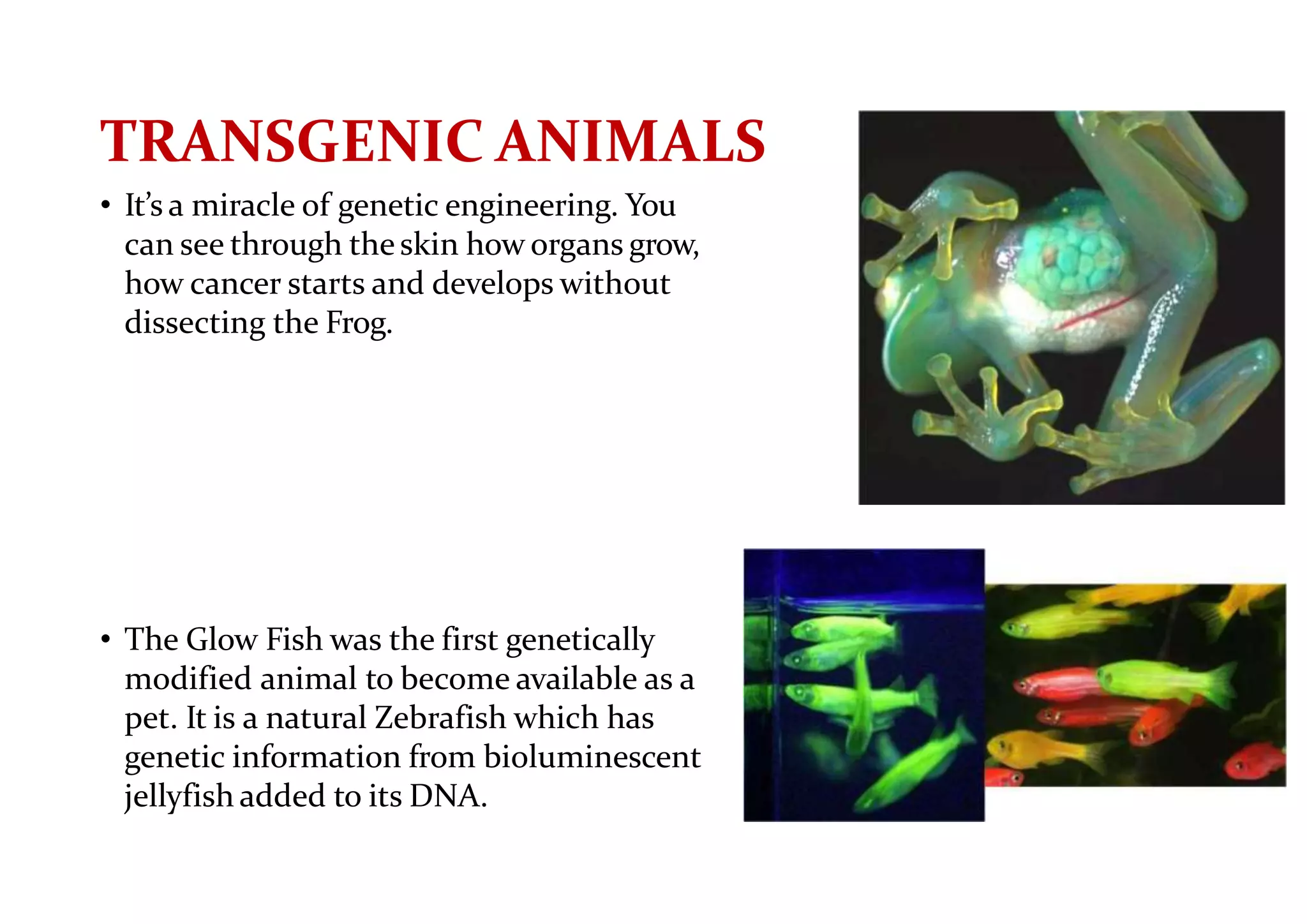
• It’s a miracle of genetic engineering. You
can see through theskin how organs grow,
how cancer starts and develops without
dissecting the Frog.
• The Glow Fish was the first genetically
modified animal to become available as a
pet. It is a natural Zebrafish which has
genetic information from bioluminescent
jellyfish added to its DNA.
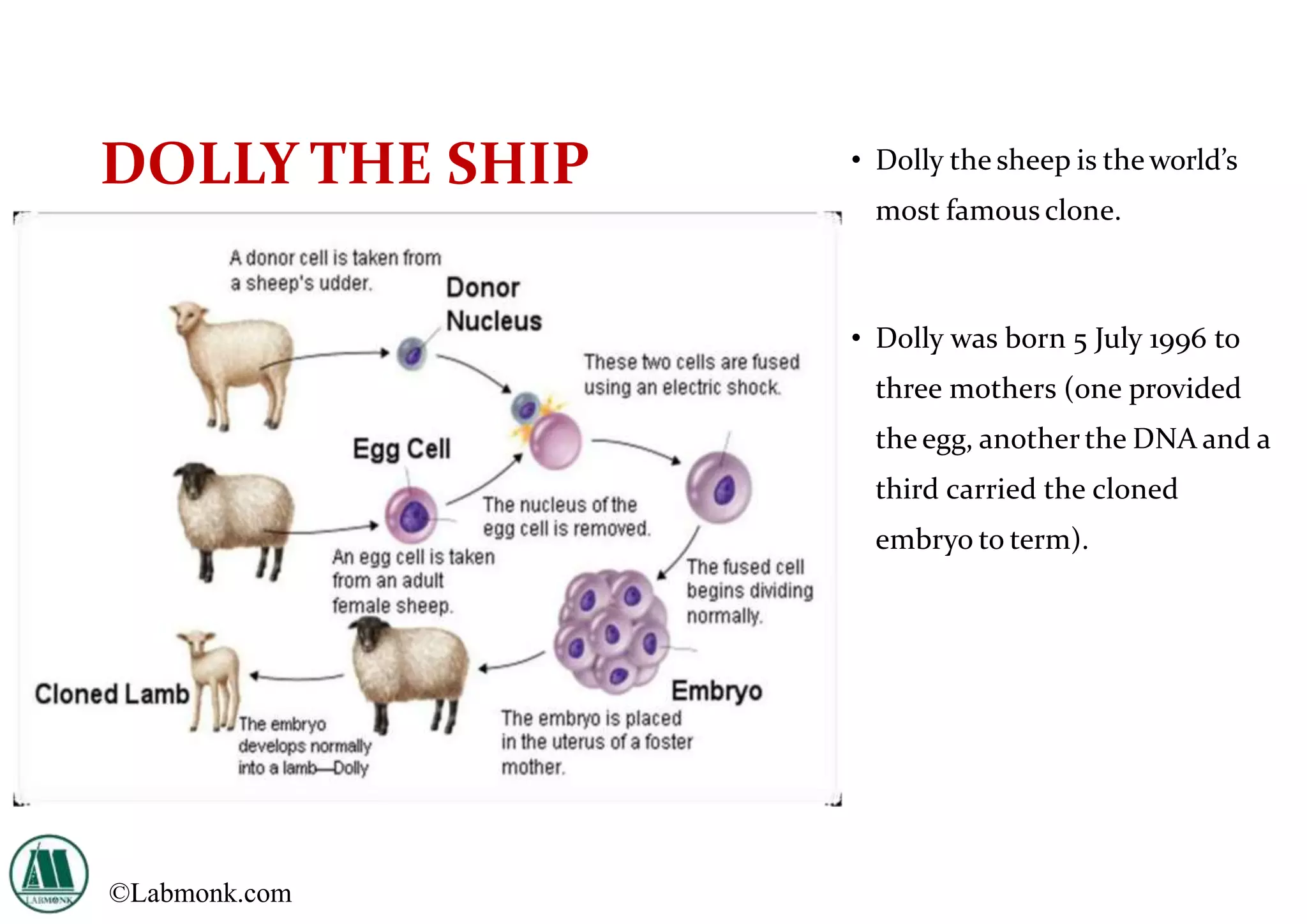
DOLLY THE SHIP • Dolly the sheep is the world’s
most famous clone.
• Dolly was born 5 July 1996 to
three mothers (one provided
the egg, another the DNA and a
third carried the cloned
embryo to term).
©Labmonk.com
• Host organism : The organism that is modified in a genetic
engineering experiment is referred to as the host. Depending on
the goal of the genetic engineering experiment, the host could
range from a bacterial cell to a plant or animal cell or even a
human cell.
• Vector : The vehicle used to transfer genetic material into a host
organism is called a vector. Scientists typically use plasmids,
viruses, cosmids (cos+plasmids), or artificial chromosomes in
genetic engineering experiments.
• To help explain the process of genetic engineering lets take the
example of insulin, a protein that helps regulate the sugar levels
in our blood.
• Normally insulin is produced in the pancreas, but in people
with type 1 diabetes there is a problem with insulin production.
• People with diabetes therefore have to inject insulin to control
their blood sugar levels.
• Genetic engineering has been used to produce a type of insulin,
very similar to our own, from yeast and bacteria like E. coli.
• This genetically modified insulin, ‘Humulin’ was licensed for
human use in 1982.
Example
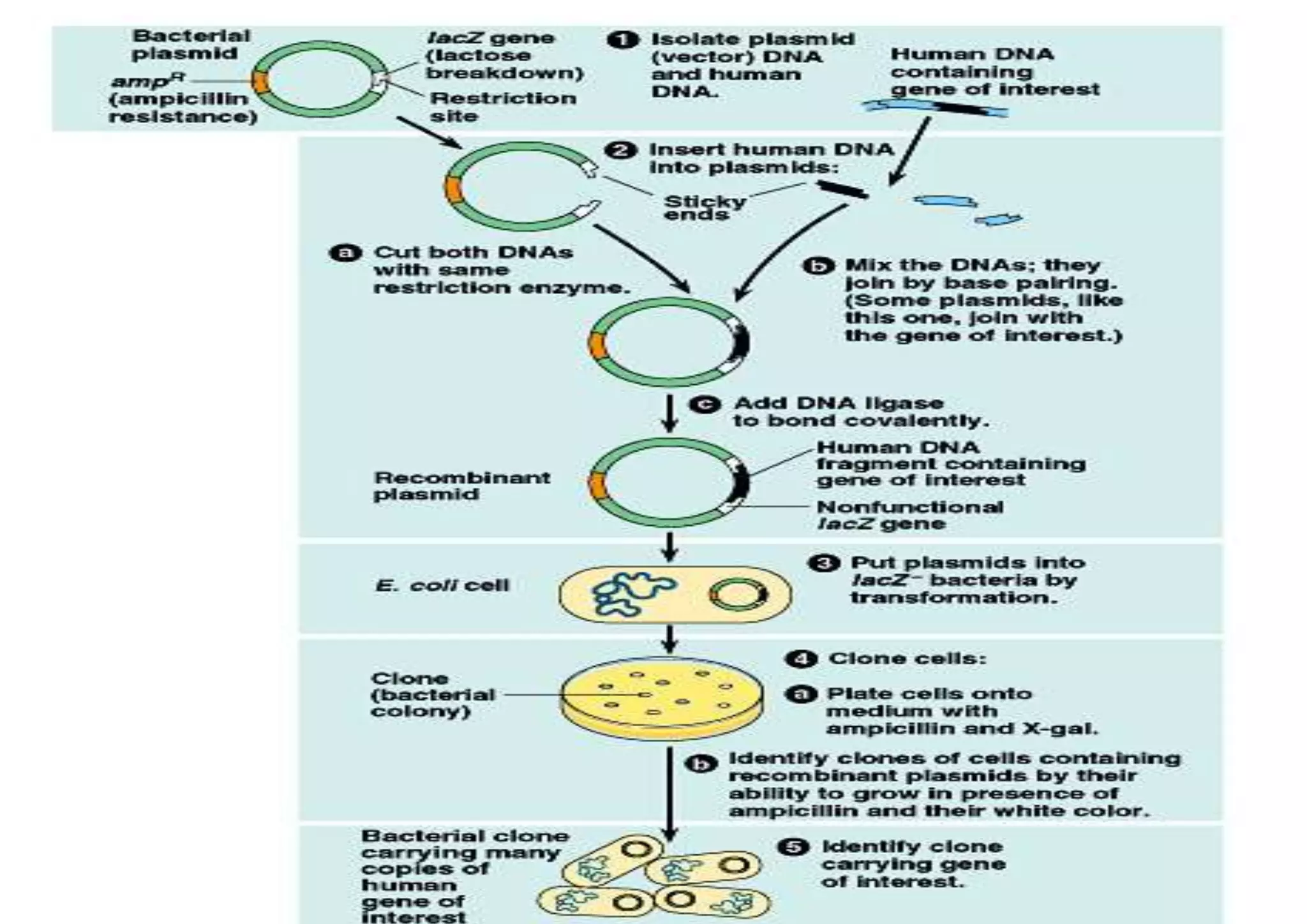
1. A small piece of circular DNA called a plasmid is extracted from the
bacteria or yeast cell.
2. A small section is then cut out of the circular plasmid by restriction
enzymes, ‘molecular scissors’.
3. The gene for human insulin is inserted into the gap in the plasmid. This
plasmid is now genetically modified.
4. The genetically modified plasmid is introduced into a new bacteria or
yeast cell.
5. This cell then divides rapidlyand starts making insulin.
6. To create large amounts of the cells, the genetically modified bacteria or
yeast are grown in large fermentation vessels that contain all the
nutrients they need. The more the cells divide, the more insulin is
produced.
7. When fermentation is complete, the mixture is filtered to release the
insulin.
8. The insulin is then purified and packaged into bottles and insulin pens
for distribution to patients with diabetes.
PROCESS
MOLECULAR TOOLS OF GENETIC
ENGINEERING
•The geneticengineer's tool kitor molecular tool namely the enzymes
are mostcommonly used in recombinant DNA experiments
Theseare:
• Restrictionendonucleases -DNA cutting Enzyme.
• DNA Ligases- DNA joining Enzyme.
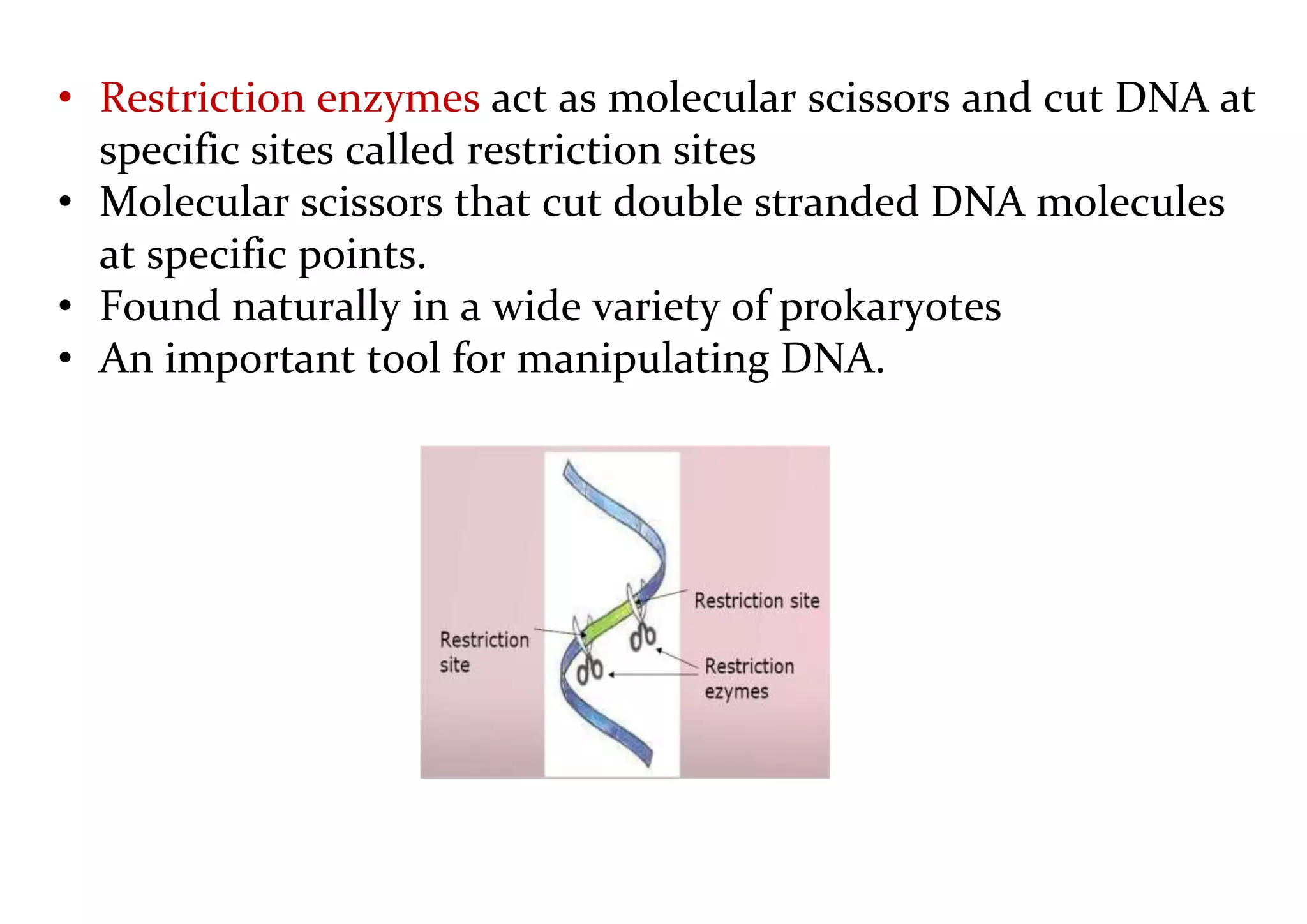
• Restriction enzymes act as molecular scissors and cut DNA at
specific sites called restriction sites
• Molecular scissors that cut double stranded DNA molecules
at specific points.
• Found naturally in a wide variety of prokaryotes
• An important tool for manipulating DNA.
BIOLOGICAL ROLE
• Most bacteria use Restriction Enzymes as a defence
against bacteriophages.
• Restriction enzymes prevent the replication of the
phage by cleaving its DNA at specific sites.
• The host DNA is protected by Methylases which add
methyl groups to adenine or cytosine bases within
the recognition site thereby modifying the site and
protecting the DNA.
HISTORY OF RESTRICTION
ENZYME
• First restriction enzyme was isoltaed in 1970 by Hindll.
• He also done the subsequent discovery and characterization
of numerous restriction endonucleases.
• From then Over 3000 restriction enzymes have been studied
in detail, and more than 600 of these are available
commercially and are routinely used for DNA modification
and manipulation in laboratories.
MECHANISM OF ACTION
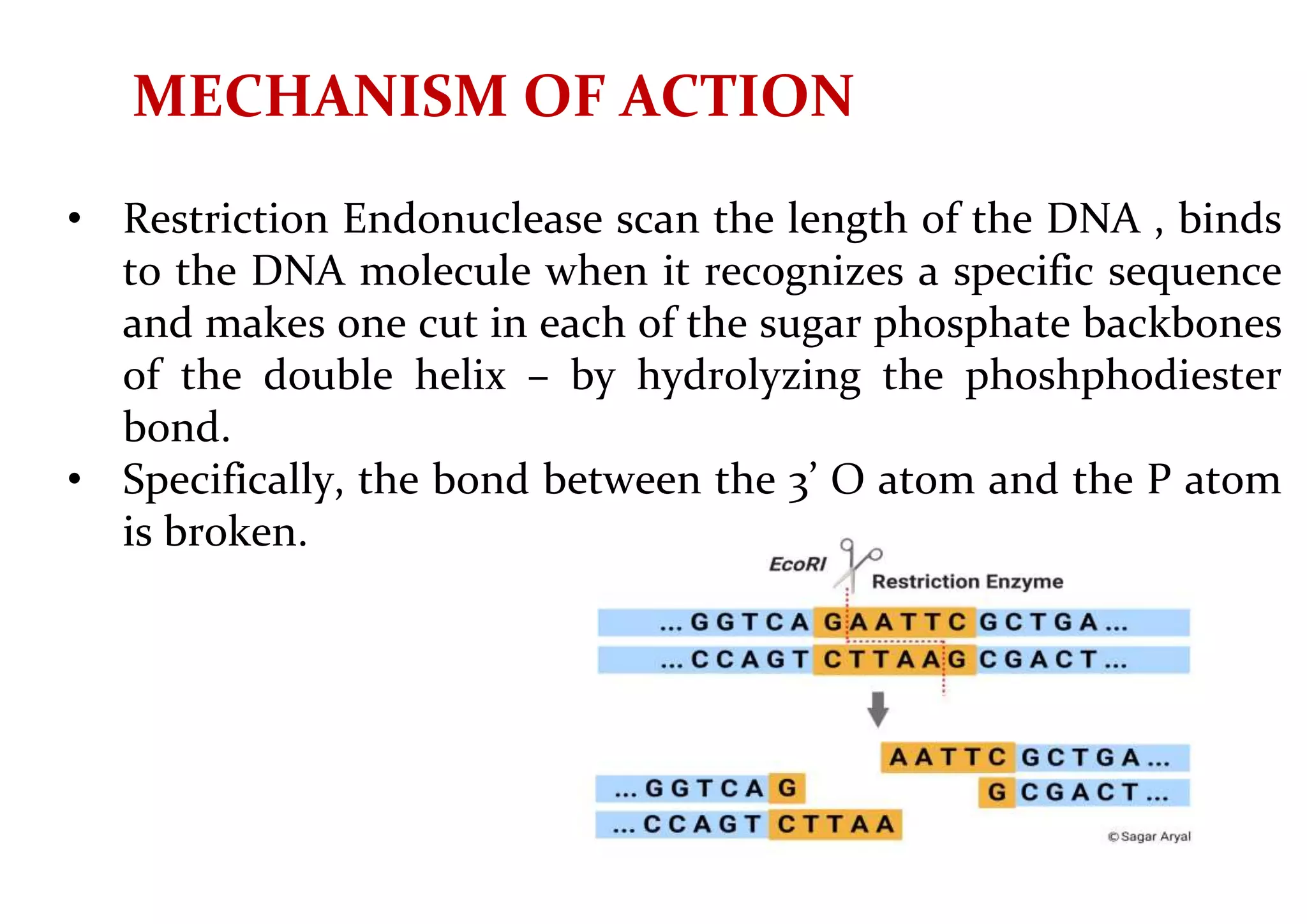
• Restriction Endonuclease scan the length of the DNA , binds
to the DNA molecule when it recognizes a specific sequence
and makes one cut in each of the sugar phosphate backbones
of the double helix – by hydrolyzing the phoshphodiester
bond.
• Specifically, the bond between the 3’ O atom and the P atom
is broken.
ENDS OF RESTRICTION FRAGMENTS
Restriction enzymes recognize a specific sequence of
nucleotides, and produce a double-stranded cut in the DNA.
these cuts are of two types:
Blunt ends
Sticky ends
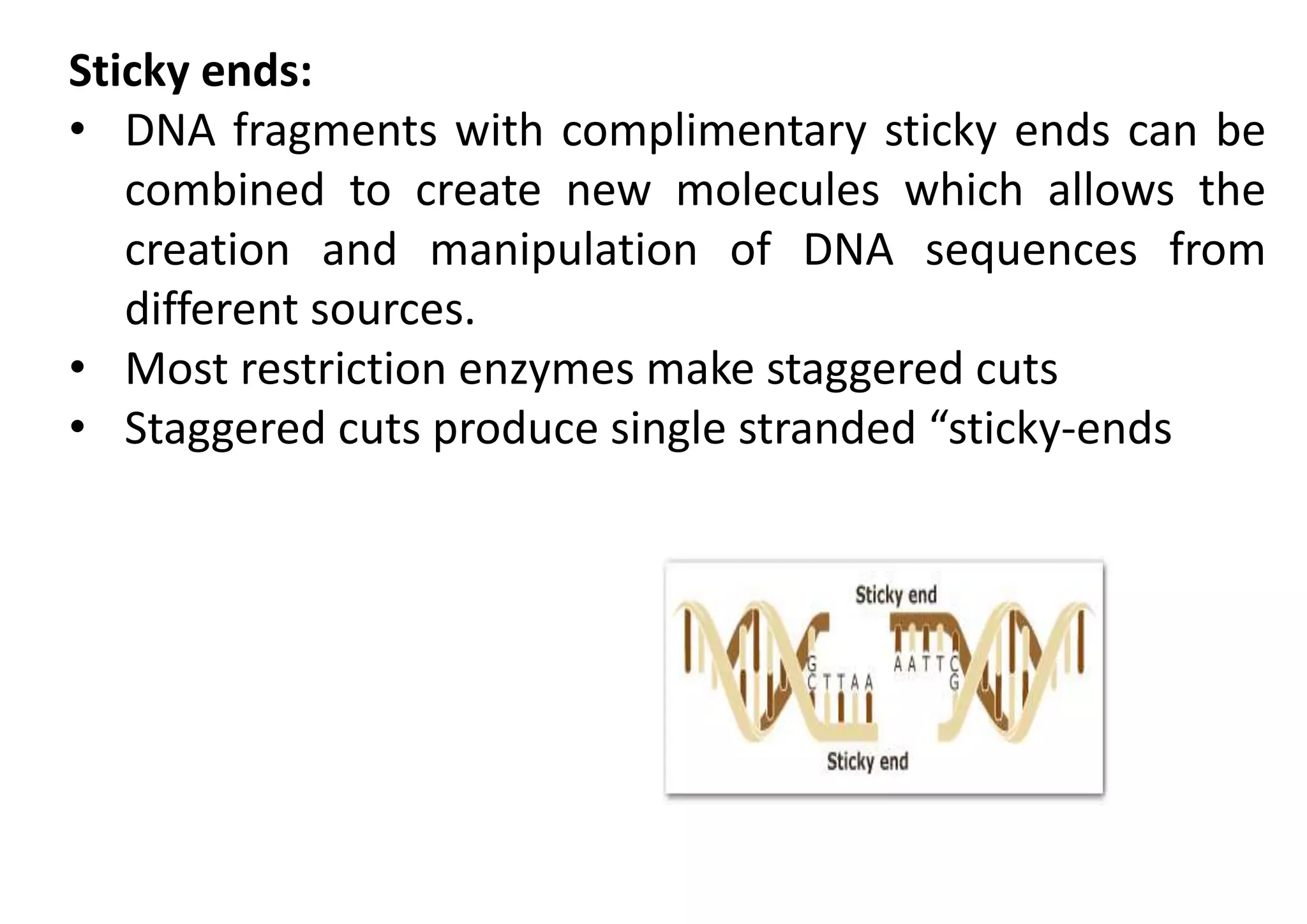
Blunt ends:
• These blunt ended fragments can be joined to any other
DNA fragment with blunt ends.
• Enzymes useful for certain types of DNA cloning
experiments.
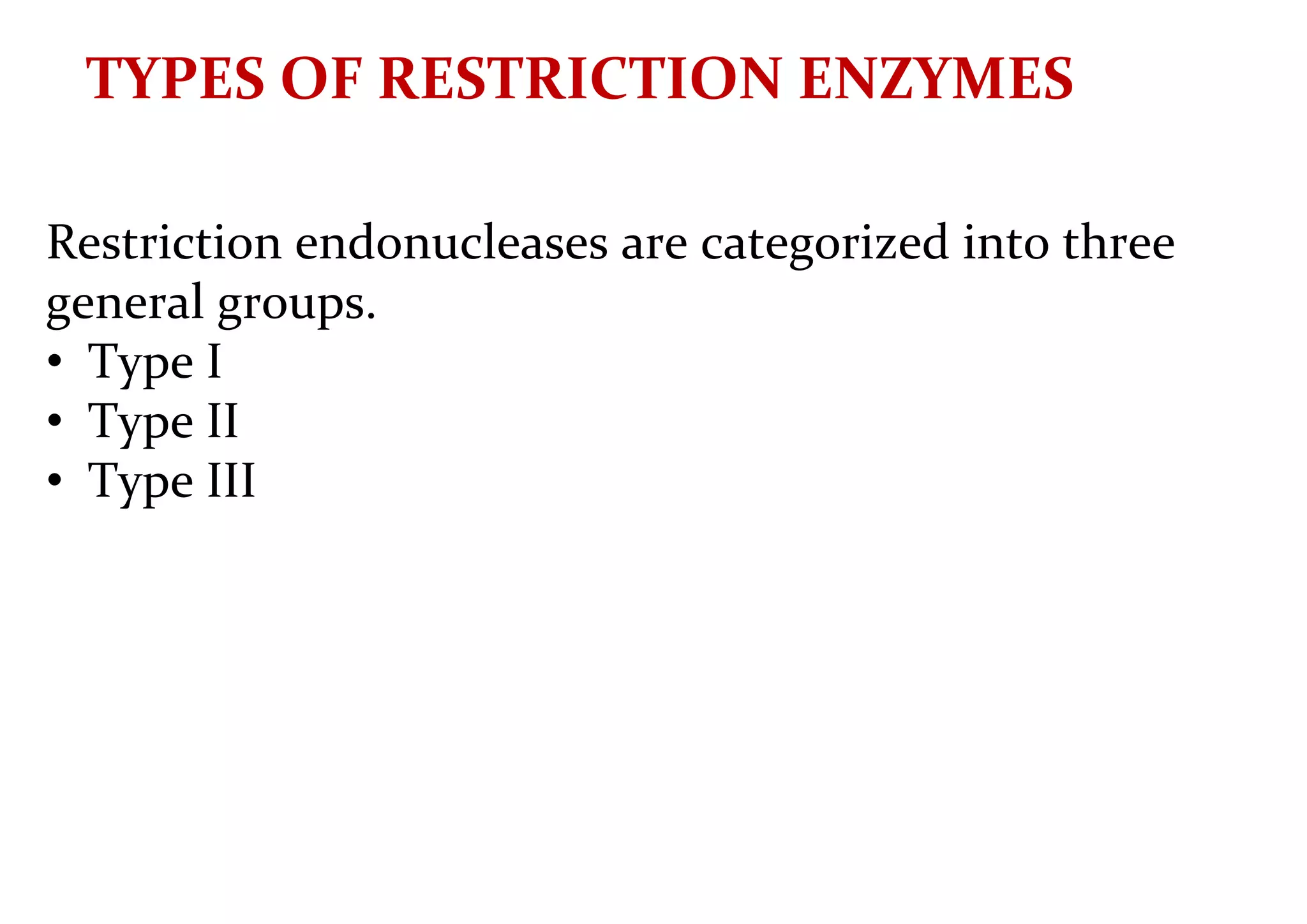
Sticky ends:
• DNA fragments with complimentary sticky ends can be
combined to create new molecules which allows the
creation and manipulation of DNA sequences from
different sources.
• Most restriction enzymes make staggered cuts
• Staggered cuts produce single stranded “sticky-ends
TYPES OF RESTRICTION ENZYMES
Restriction endonucleases are categorized into three
general groups.
• Type I
• Type II
• Type III
These types are categorization based on:
• Their composition.
• Enzyme co-factor requirement.
• The nature of their target sequence.
• Position of their DNA cleavage site relative to the target
sequence.
Type I
• Capable of both restriction and modification activities
• The co factors S-Adenosyl Methionine(AdoMet), ATP, and
mg+ are required for their full activity
• Contain:
two R(restriction) subunits: is required for restriction.
two M(methylation) subunits: necessary for adding methyl
groups to host DNA
one S(specifity) subunits: important for specificity of cut site
recognition in
addition to its methyltransferase activity.
• Cleave DNA at random length from recognition sites
Type II
• These are the most commonly available and used restriction
enzymes
• They are composed of only one subunit.
• Their recognition sites are usually undivided and palindromic
and 4-8 nucleotides in length,
• They recognize and cleave DNA at the same site.
• They do not use ATP for their activity
• They usually require only Mg2+ as a cofactor.
Type III
• Type III restriction enzymes recognize two separate non-
palindromic sequences that are inversely oriented.
• They cut DNA about 20-30 base pairs after the recognition site.
• These enzymes contain more than one subunit.
• And require AdoMet and ATP cofactors for their roles in DNA
methylation and restriction
APPLICATION OF RESTRICTION ENZYMES
• They are used in gene cloning and protein expression
experiments.
• Restriction enzymes are used in biotechnology to cut DNA
into smaller strands in order to study fragment length
differences among individuals (Restriction Fragment Length
Polymorphism – RFLP).
• Each of these methods depends on the use of agarose gel
electrophoresis for separation of the DNA fragments.
• This technique sanctions large scale fabrication of human
insulin for diabetics expending E-coli and for HIV vaccine
and eB.
THANK YOU

Basic principles of genetic engineering

  • 1.
  • 2.
    CONTENTS • What isa gene ? • Definition • History • Process • Molecular tools of genetic engineering • History of restriction enzyme • Mechanism of action • Types of restriction enzymes • Application of restriction enzymes
  • 3.
    WHAT IS AGENE ? • A Gene is a fundamental, physical and functional unit of heredity. • It is responsible for the physical and inheritable characteristics of an organism.
  • 4.
    DEFINITION • Genetic Engineeringis manipulation/alteration of structure of a gene tocreatea desired characteristic in an organism. • Genetic recombination technology consists of the breakage and joining of DNA molecules. • Genetically engineered DNA prepared by transplanting or splicing genes from one species into the cells of a host organism of a different species. Such DNA becomes part of the host's genetic makeup and is replicated. • Genetic engineering primarily involves the manipulation of genetic material ( DNA) toachieve the desire goal in pre determined way.
  • 5.
    • If geneticmaterial from anotherspecies is added to the host, the resulting organism is called transgenic. • Geneticengineering can also be used to removegenetic material from the targetorganism, creating a knock outorganism. • Genetic engineering, sometimes called genetic modification, is the process of altering the DNA in an organism’s genome. • This may mean changing one base pair (A-T or C-G), deleting a whole region of DNA, or introducing an additional copy of a gene. • It may also mean extracting DNA from another organism’s genome and combining it with the DNA of that individual.
  • 6.
    • Plants, animalsor micro organisms that have been changed through genetic engineering are termed genetically modified organisms or GMOs. • If genetic material from another species is added to the host, the resulting organism is called transgenic. • If genetic material from the the resusame species or a species that can naturally breed with the host is used lting organism is called cisgenic. • If genetic engineering is used to remove genetic material from the target organism the resulting organism is termed a knockout organism.
  • 7.
    HISTORY • Genetic engineeringas the direct manipulation of DNA by humans outside breeding and mutations has only existed since the 1970s. • The term "genetic engineering" was first coined by Jack Williamson in his science fiction novel Dragon's Island, published in 1951. • In 1973 Herbert Boyer and Stanley Cohen created the first transgenic organism by inserting antibiotic resistance genes into the plasmid of an E.coli bacterium. In 1974, the same techniques were applied to mice. • The first trials of genetically engineered plants occurred in France and the USA in 1986, tobacco plants were engineered to be resistant to herbicides.
  • 8.
    • Genetic engineeringhas a number of useful applications, including scientific research, agriculture and technology. • In plants, genetic engineering has been applied to improve the resilience(illness), nutritional value and growth rate of crops such as potatoes, tomatoes and rice. • In animals it has been used to develop sheep that produce a therapeutic protein in their milk that can be used to treat cystic fibrosis, or worms that glow in the dark to allow scientists to learn more about diseases such as Alzheimer’s.

  • 9.
    TRANSGENIC PLANTS • TheFlavr Savr tomato was a tomato engineered to have a longershelf life. • Bt-Cotton is a genetically modified cotton which is resistant to pests. • Golden Ricegenetically modified to contain beta-carotene (a sourceof Vitamin A). • A Blue Rose is a genetically modified Rose.
  • 10.
    TRANSGENIC ANIMALS • It’sa miracle of genetic engineering. You can see through theskin how organs grow, how cancer starts and develops without dissecting the Frog. • The Glow Fish was the first genetically modified animal to become available as a pet. It is a natural Zebrafish which has genetic information from bioluminescent jellyfish added to its DNA.
  • 11.
    DOLLY THE SHIP• Dolly the sheep is the world’s most famous clone. • Dolly was born 5 July 1996 to three mothers (one provided the egg, another the DNA and a third carried the cloned embryo to term). ©Labmonk.com
  • 12.
    • Host organism: The organism that is modified in a genetic engineering experiment is referred to as the host. Depending on the goal of the genetic engineering experiment, the host could range from a bacterial cell to a plant or animal cell or even a human cell. • Vector : The vehicle used to transfer genetic material into a host organism is called a vector. Scientists typically use plasmids, viruses, cosmids (cos+plasmids), or artificial chromosomes in genetic engineering experiments.
  • 13.
    • To helpexplain the process of genetic engineering lets take the example of insulin, a protein that helps regulate the sugar levels in our blood. • Normally insulin is produced in the pancreas, but in people with type 1 diabetes there is a problem with insulin production. • People with diabetes therefore have to inject insulin to control their blood sugar levels. • Genetic engineering has been used to produce a type of insulin, very similar to our own, from yeast and bacteria like E. coli. • This genetically modified insulin, ‘Humulin’ was licensed for human use in 1982. Example
  • 14.
    1. A smallpiece of circular DNA called a plasmid is extracted from the bacteria or yeast cell. 2. A small section is then cut out of the circular plasmid by restriction enzymes, ‘molecular scissors’. 3. The gene for human insulin is inserted into the gap in the plasmid. This plasmid is now genetically modified. 4. The genetically modified plasmid is introduced into a new bacteria or yeast cell. 5. This cell then divides rapidlyand starts making insulin. 6. To create large amounts of the cells, the genetically modified bacteria or yeast are grown in large fermentation vessels that contain all the nutrients they need. The more the cells divide, the more insulin is produced. 7. When fermentation is complete, the mixture is filtered to release the insulin. 8. The insulin is then purified and packaged into bottles and insulin pens for distribution to patients with diabetes. PROCESS
  • 16.
    MOLECULAR TOOLS OFGENETIC ENGINEERING •The geneticengineer's tool kitor molecular tool namely the enzymes are mostcommonly used in recombinant DNA experiments Theseare: • Restrictionendonucleases -DNA cutting Enzyme. • DNA Ligases- DNA joining Enzyme.
  • 17.
    • Restriction enzymesact as molecular scissors and cut DNA at specific sites called restriction sites • Molecular scissors that cut double stranded DNA molecules at specific points. • Found naturally in a wide variety of prokaryotes • An important tool for manipulating DNA.
  • 18.
    BIOLOGICAL ROLE • Mostbacteria use Restriction Enzymes as a defence against bacteriophages. • Restriction enzymes prevent the replication of the phage by cleaving its DNA at specific sites. • The host DNA is protected by Methylases which add methyl groups to adenine or cytosine bases within the recognition site thereby modifying the site and protecting the DNA.
  • 19.
    HISTORY OF RESTRICTION ENZYME •First restriction enzyme was isoltaed in 1970 by Hindll. • He also done the subsequent discovery and characterization of numerous restriction endonucleases. • From then Over 3000 restriction enzymes have been studied in detail, and more than 600 of these are available commercially and are routinely used for DNA modification and manipulation in laboratories.
  • 20.
    MECHANISM OF ACTION •Restriction Endonuclease scan the length of the DNA , binds to the DNA molecule when it recognizes a specific sequence and makes one cut in each of the sugar phosphate backbones of the double helix – by hydrolyzing the phoshphodiester bond. • Specifically, the bond between the 3’ O atom and the P atom is broken.
  • 21.
    ENDS OF RESTRICTIONFRAGMENTS Restriction enzymes recognize a specific sequence of nucleotides, and produce a double-stranded cut in the DNA. these cuts are of two types: Blunt ends Sticky ends
  • 22.
    Blunt ends: • Theseblunt ended fragments can be joined to any other DNA fragment with blunt ends. • Enzymes useful for certain types of DNA cloning experiments.
  • 23.
    Sticky ends: • DNAfragments with complimentary sticky ends can be combined to create new molecules which allows the creation and manipulation of DNA sequences from different sources. • Most restriction enzymes make staggered cuts • Staggered cuts produce single stranded “sticky-ends
  • 24.
    TYPES OF RESTRICTIONENZYMES Restriction endonucleases are categorized into three general groups. • Type I • Type II • Type III
  • 25.
    These types arecategorization based on: • Their composition. • Enzyme co-factor requirement. • The nature of their target sequence. • Position of their DNA cleavage site relative to the target sequence.
  • 26.
    Type I • Capableof both restriction and modification activities • The co factors S-Adenosyl Methionine(AdoMet), ATP, and mg+ are required for their full activity • Contain: two R(restriction) subunits: is required for restriction. two M(methylation) subunits: necessary for adding methyl groups to host DNA one S(specifity) subunits: important for specificity of cut site recognition in addition to its methyltransferase activity. • Cleave DNA at random length from recognition sites
  • 27.
    Type II • Theseare the most commonly available and used restriction enzymes • They are composed of only one subunit. • Their recognition sites are usually undivided and palindromic and 4-8 nucleotides in length, • They recognize and cleave DNA at the same site. • They do not use ATP for their activity • They usually require only Mg2+ as a cofactor.
  • 28.
    Type III • TypeIII restriction enzymes recognize two separate non- palindromic sequences that are inversely oriented. • They cut DNA about 20-30 base pairs after the recognition site. • These enzymes contain more than one subunit. • And require AdoMet and ATP cofactors for their roles in DNA methylation and restriction
  • 29.
    APPLICATION OF RESTRICTIONENZYMES • They are used in gene cloning and protein expression experiments. • Restriction enzymes are used in biotechnology to cut DNA into smaller strands in order to study fragment length differences among individuals (Restriction Fragment Length Polymorphism – RFLP). • Each of these methods depends on the use of agarose gel electrophoresis for separation of the DNA fragments. • This technique sanctions large scale fabrication of human insulin for diabetics expending E-coli and for HIV vaccine and eB.
  • 30.