Micro-Electromechanical
System (MEMS)
K. Bharath Kanna, B.E Mech
Project Associate,
NITTTR Chennai.
Introduction
 Micro-electromechanical systems
(MEMS) are small integrated devices or
systems that combine electrical and
mechanical components.
 They range in size from the sub
micrometer level to the millimetres level.
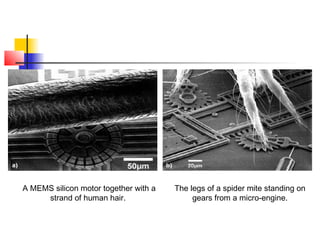
The legs of a spider mite standing on
gears from a micro-engine.
A MEMS silicon motor together with a
strand of human hair.
Different names for MEMS
 USA: Micro- Electro Mechanical
System.
 Europe: Micro system Technology.
 Japan: Micro machines.
MEMS Technology
 Micro fabrication Technology.
 The electronics are fabricated using
integrated circuit (IC) process
sequences.
 The micromechanical components are
fabricated using compatible
"micromachining" processes
Material
 Silicon
 Polymer
 Metals (gold, nickel, aluminum,
chromium, titanium, tungsten, platinum
and silver)
Micro fabrication
There are three basic building blocks in MEMS
technology.
 Deposition: The ability to deposit thin
film of material on substrate.
 Lithography: To apply a patterned mask on
top of the films by photolithographic imaging.
 Etching: To etch the films selectively to the
mask.
Deposition Technology
Deposition technology can be classified
into two groups:
Deposition by Chemical Reaction:
 Chemical Vapor Deposition.
 Electro deposition.
 Epitaxy
 Thermal oxidation.
Deposition Technology
Deposition by Physical Reaction:
 Physical Vapor Deposition
 Casting
Lithography Technology
Lithography can be classified into two
groups:
 Pattern Transfer
 Lithographic Module
Etching Technology
There are two classifications for etching process:
 Wet Etching: The material is dissolved in chemical
solution.
 Dry Etching: the material is sputtered or dissolved
using reactive ions or vapour phase etchants.
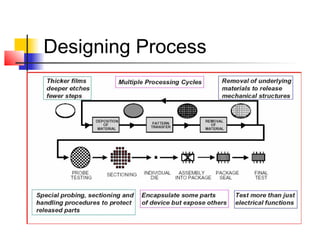
Designing Process
Applications
 Pressure Sensor
 Accelerometers
 Inertial Sensors
 Micro engines
Commercial Application
 Inkjet printers
 Airbag Inflation system
 Tire Pressure Sensor
 Disposal Blood Pressure Sensor
 Dynamic Stability Control in Cars
 DMD chip in DLP Projectors
Advantages
 Minimize energy and materials use in
manufacturing
 Cost/performance advantages
 Improved reproducibility
 Improved accuracy and reliability
 Increased selectivity and sensitivity
Disadvantages
 Farm establishment requires huge
investments
 Micro-components are Costly compare
to macro-components
 Design includes very much complex
procedures
 Prior knowledge is needed to integrate
MEMS devices
Thank You

Micro electromechanical system

  • 1.
    Micro-Electromechanical System (MEMS) K. BharathKanna, B.E Mech Project Associate, NITTTR Chennai.
  • 2.
    Introduction  Micro-electromechanical systems (MEMS)are small integrated devices or systems that combine electrical and mechanical components.  They range in size from the sub micrometer level to the millimetres level.
  • 3.
    The legs ofa spider mite standing on gears from a micro-engine. A MEMS silicon motor together with a strand of human hair.
  • 4.
    Different names forMEMS  USA: Micro- Electro Mechanical System.  Europe: Micro system Technology.  Japan: Micro machines.
  • 5.
    MEMS Technology  Microfabrication Technology.  The electronics are fabricated using integrated circuit (IC) process sequences.  The micromechanical components are fabricated using compatible "micromachining" processes
  • 6.
    Material  Silicon  Polymer Metals (gold, nickel, aluminum, chromium, titanium, tungsten, platinum and silver)
  • 7.
    Micro fabrication There arethree basic building blocks in MEMS technology.  Deposition: The ability to deposit thin film of material on substrate.  Lithography: To apply a patterned mask on top of the films by photolithographic imaging.  Etching: To etch the films selectively to the mask.
  • 8.
    Deposition Technology Deposition technologycan be classified into two groups: Deposition by Chemical Reaction:  Chemical Vapor Deposition.  Electro deposition.  Epitaxy  Thermal oxidation.
  • 9.
    Deposition Technology Deposition byPhysical Reaction:  Physical Vapor Deposition  Casting
  • 10.
    Lithography Technology Lithography canbe classified into two groups:  Pattern Transfer  Lithographic Module
  • 11.
    Etching Technology There aretwo classifications for etching process:  Wet Etching: The material is dissolved in chemical solution.  Dry Etching: the material is sputtered or dissolved using reactive ions or vapour phase etchants.
  • 12.
  • 13.
    Applications  Pressure Sensor Accelerometers  Inertial Sensors  Micro engines
  • 14.
    Commercial Application  Inkjetprinters  Airbag Inflation system  Tire Pressure Sensor  Disposal Blood Pressure Sensor  Dynamic Stability Control in Cars  DMD chip in DLP Projectors
  • 15.
    Advantages  Minimize energyand materials use in manufacturing  Cost/performance advantages  Improved reproducibility  Improved accuracy and reliability  Increased selectivity and sensitivity
  • 16.
    Disadvantages  Farm establishmentrequires huge investments  Micro-components are Costly compare to macro-components  Design includes very much complex procedures  Prior knowledge is needed to integrate MEMS devices
  • 17.