Micro Electro Mechanical System
(MEMS)
Department: Electrical and Computer
Engineering
Outline
MEMS introduction
Components of MEMS
Sensor
Fabrication
MEMS Fabrication Technology
Application
Advantage / Disadvantage
Conclusion
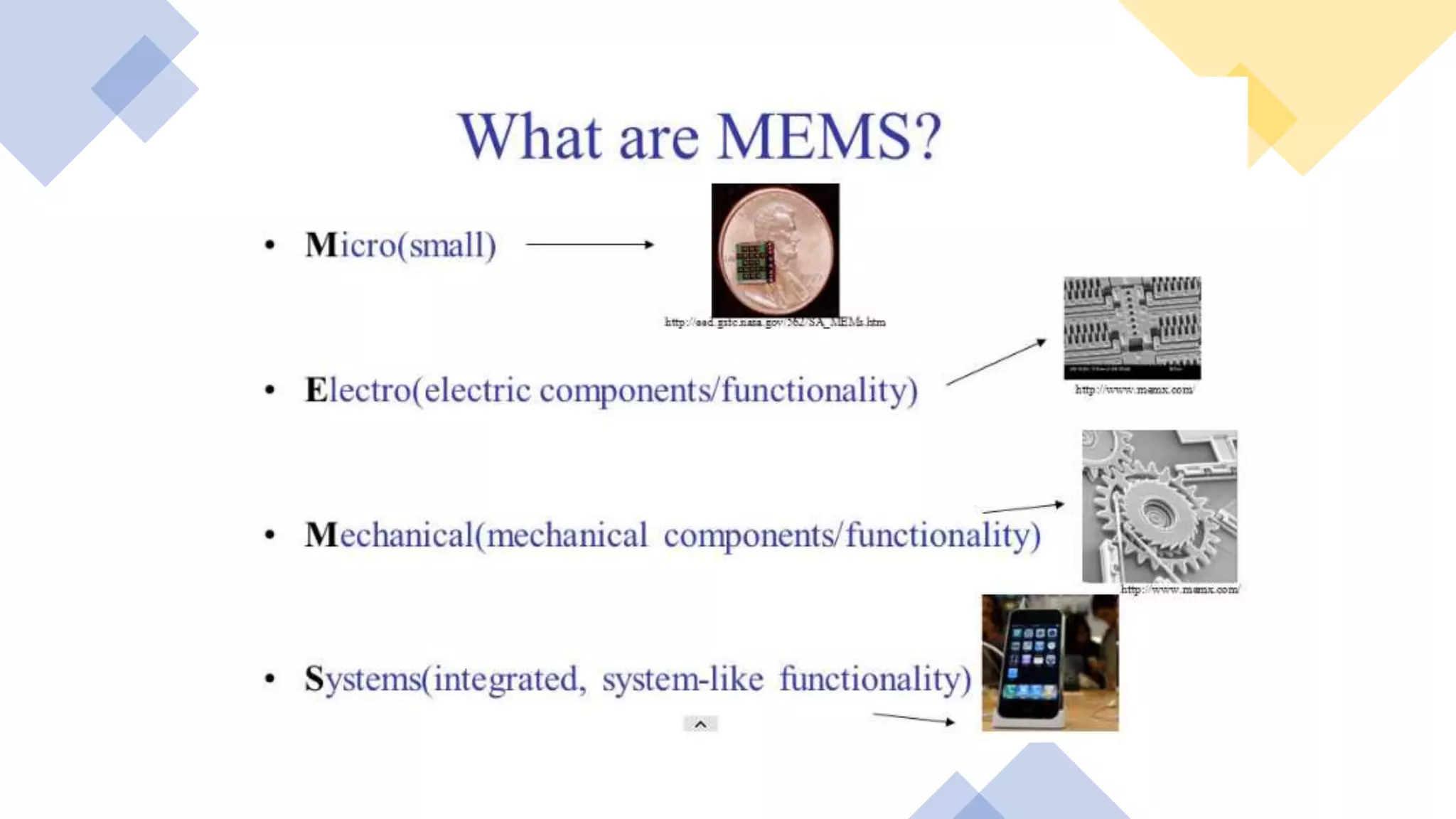
What is MEMS
• Micro electro mechanical system is a technique of combining electrical and mechanical combinations
together on a chip, to produce a system of miniature dimensions.
• MEMS is a integration of a number micro components on a single chip which allow the microsystem
to both sense and control the environment.
• The components are integrated on a single chip using micro fabrication technologies.
Transducer
• a device that converts variations in a physical quantity, such as
pressure or brightness, into an electrical signal, or vice versa.
Actuator
• An actuator is a device that converts an electrical signal into an
action. It can create a force to manipulate itself, other mechanical
devices, or the surrounding environment to perform some useful
function
Sensors
• A device used to measure a physical quality like temperature and convert it into an electronic signal
like voltage without modifying the environment.
What can be sensed?
• Pressure
• Temperature
• Flow rate
• Radiation
• Chemical
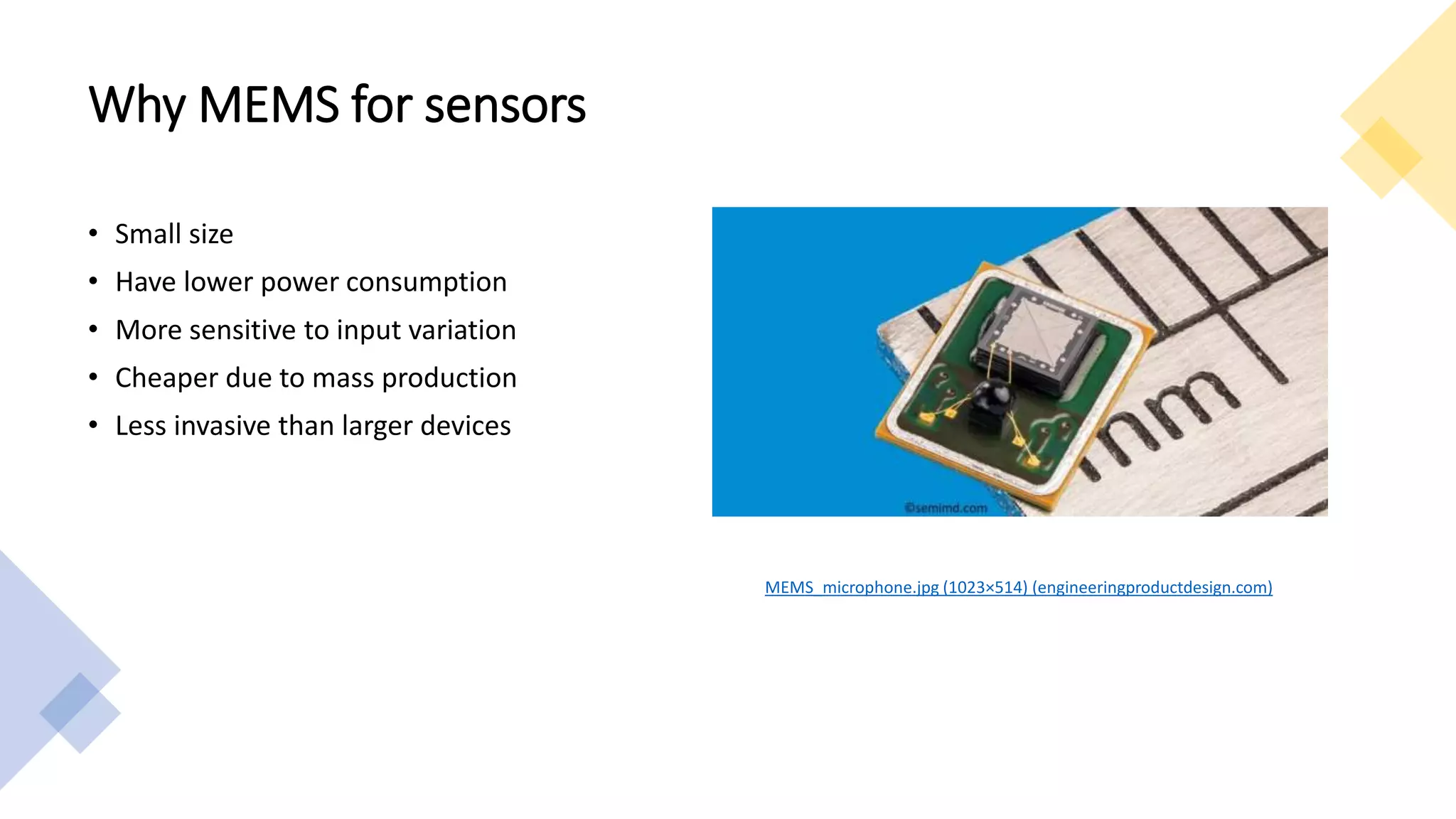
Why MEMS for sensors
• Small size
• Have lower power consumption
• More sensitive to input variation
• Cheaper due to mass production
• Less invasive than larger devices
MEMS_microphone.jpg (1023×514) (engineeringproductdesign.com)
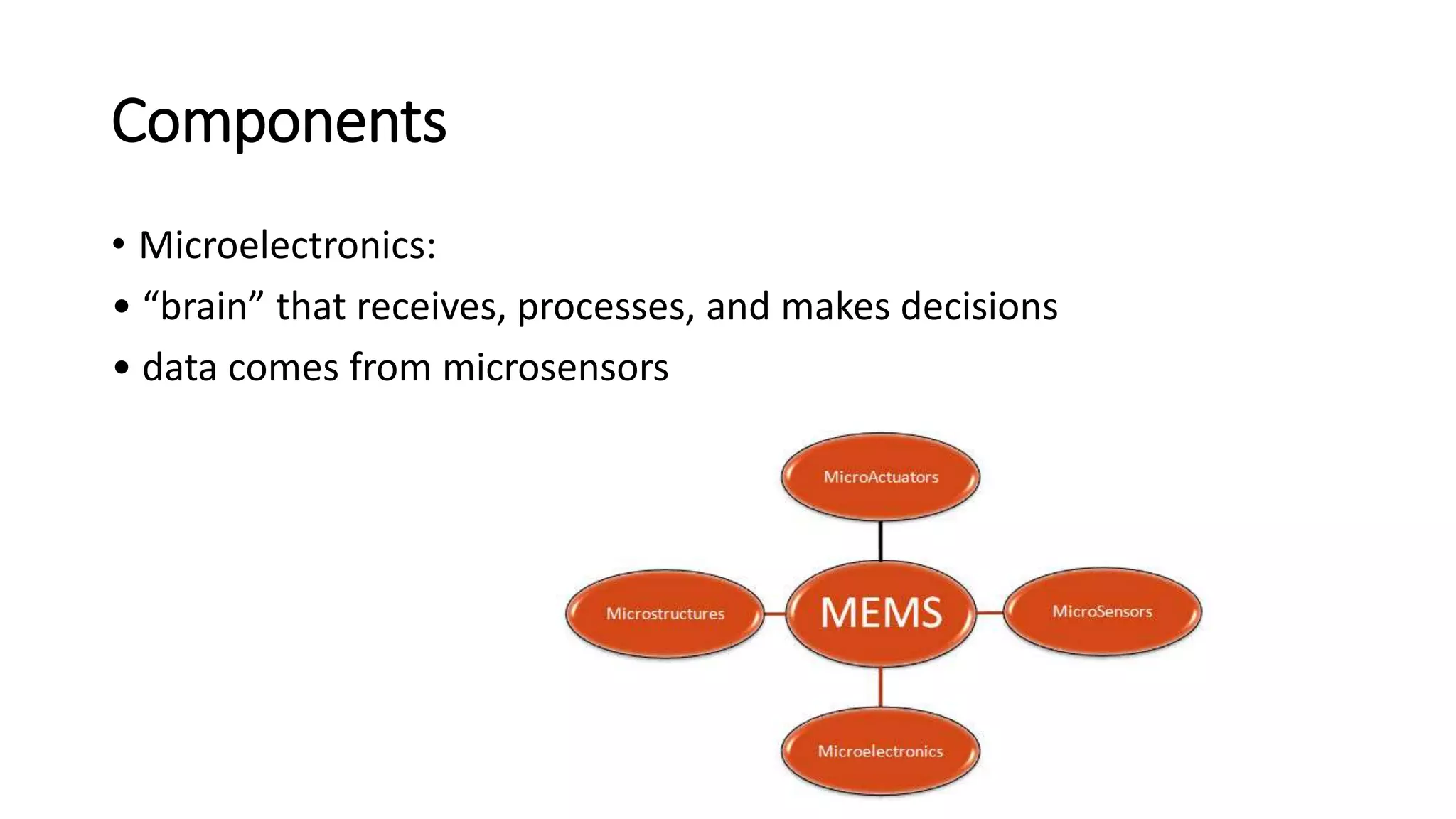
Components
• Microelectronics:
• “brain” that receives, processes, and makes decisions
• data comes from microsensors
Micro actuator:
• acts as trigger to activate external device
• microelectronics will tell micro actuator to activate
device
Microstructures:
• extremely small structures built onto surface of chip
• built right into silicon of MEMS
Microsensors:
• constantly gather data from environment
• pass data to microelectronics for processing
• can monitor mechanical, thermal, biological, chemical
optical, and magnetic readings
Fabrication Process
Material used:
• Silicon
• Polymers
• Metals
• Ceramics
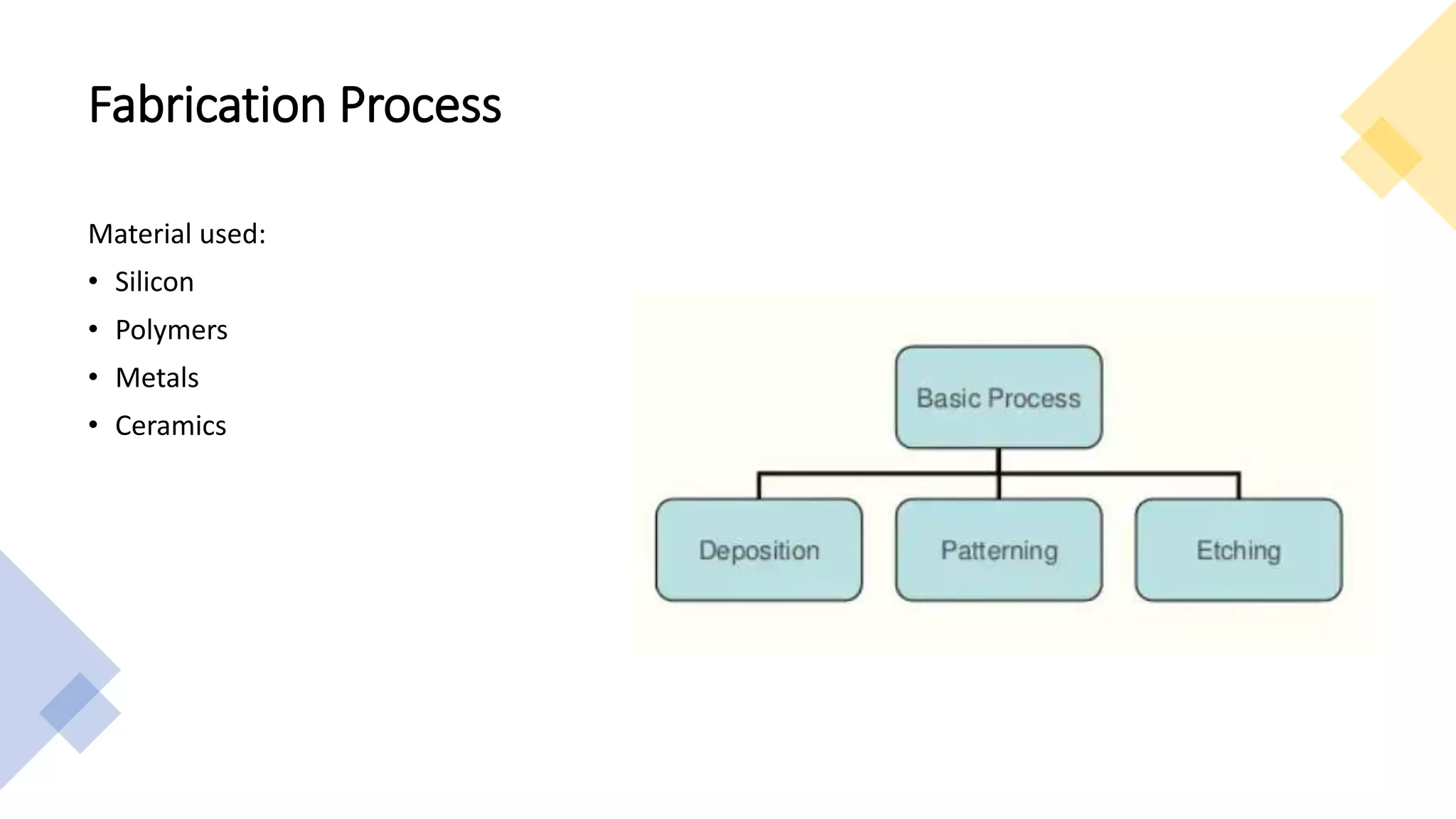
Basic process of fabrication
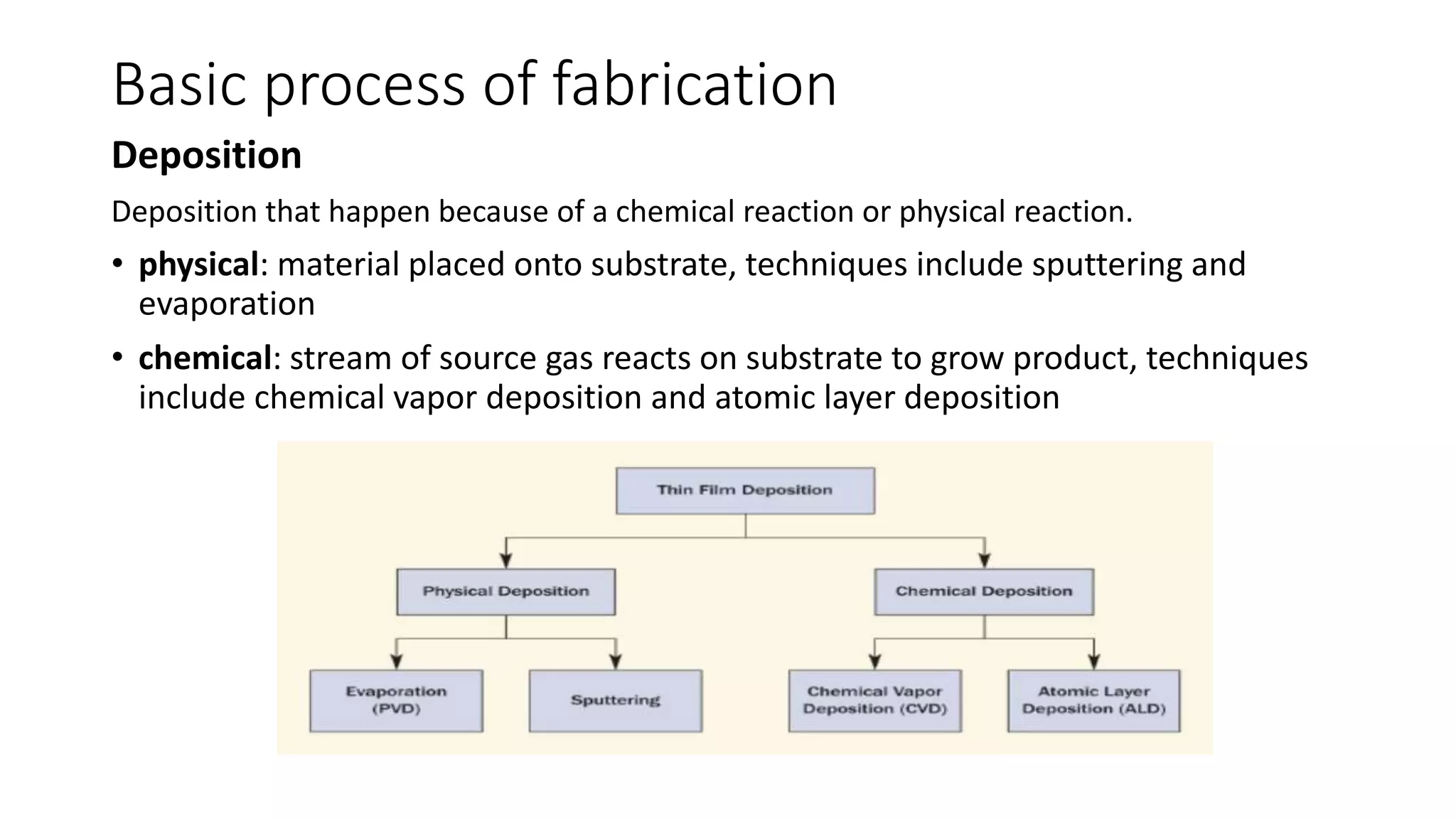
Deposition
Deposition that happen because of a chemical reaction or physical reaction.
• physical: material placed onto substrate, techniques include sputtering and
evaporation
• chemical: stream of source gas reacts on substrate to grow product, techniques
include chemical vapor deposition and atomic layer deposition
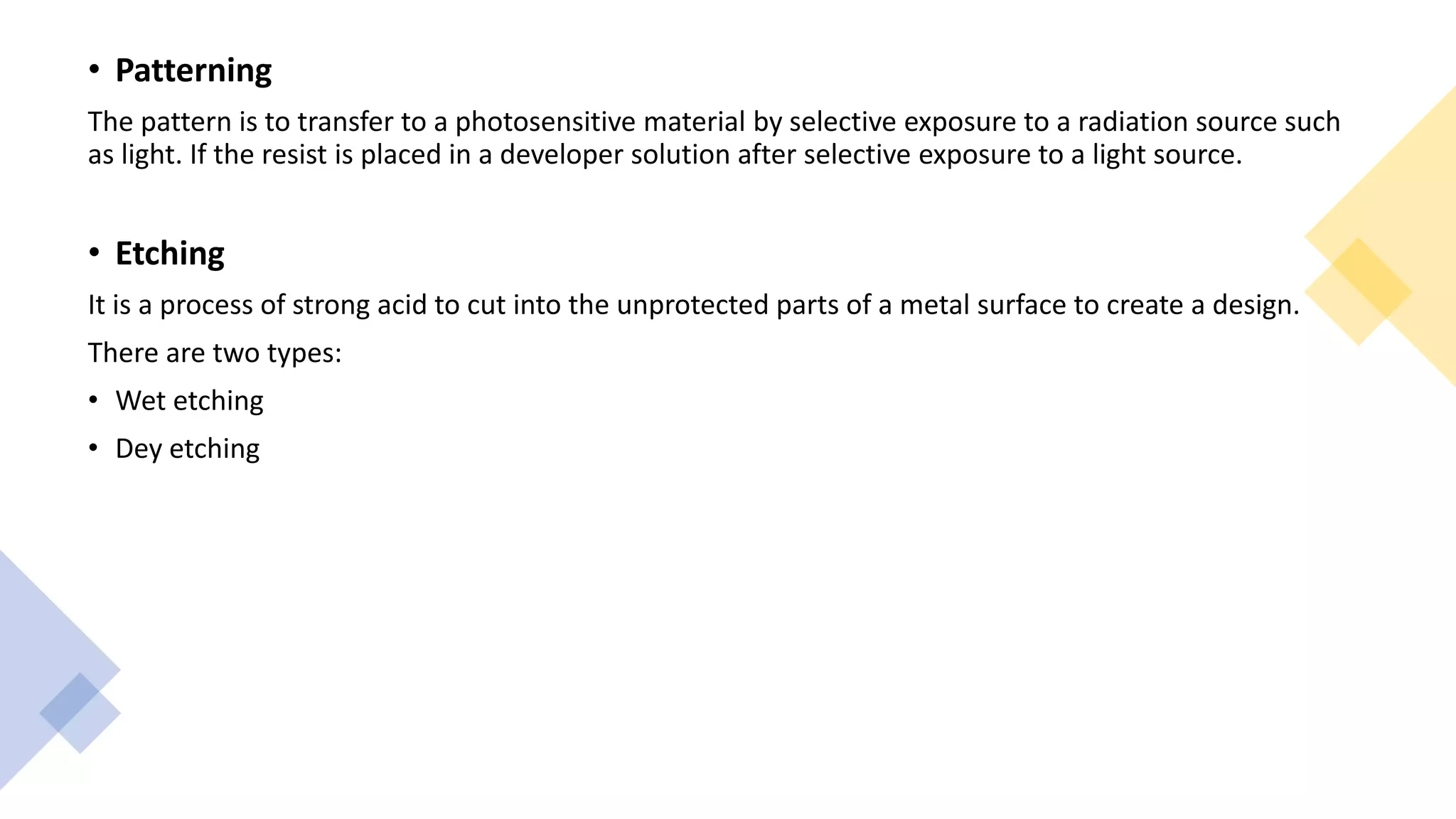
• Patterning
The pattern is to transfer to a photosensitive material by selective exposure to a radiation source such
as light. If the resist is placed in a developer solution after selective exposure to a light source.
• Etching
It is a process of strong acid to cut into the unprotected parts of a metal surface to create a design.
There are two types:
• Wet etching
• Dey etching
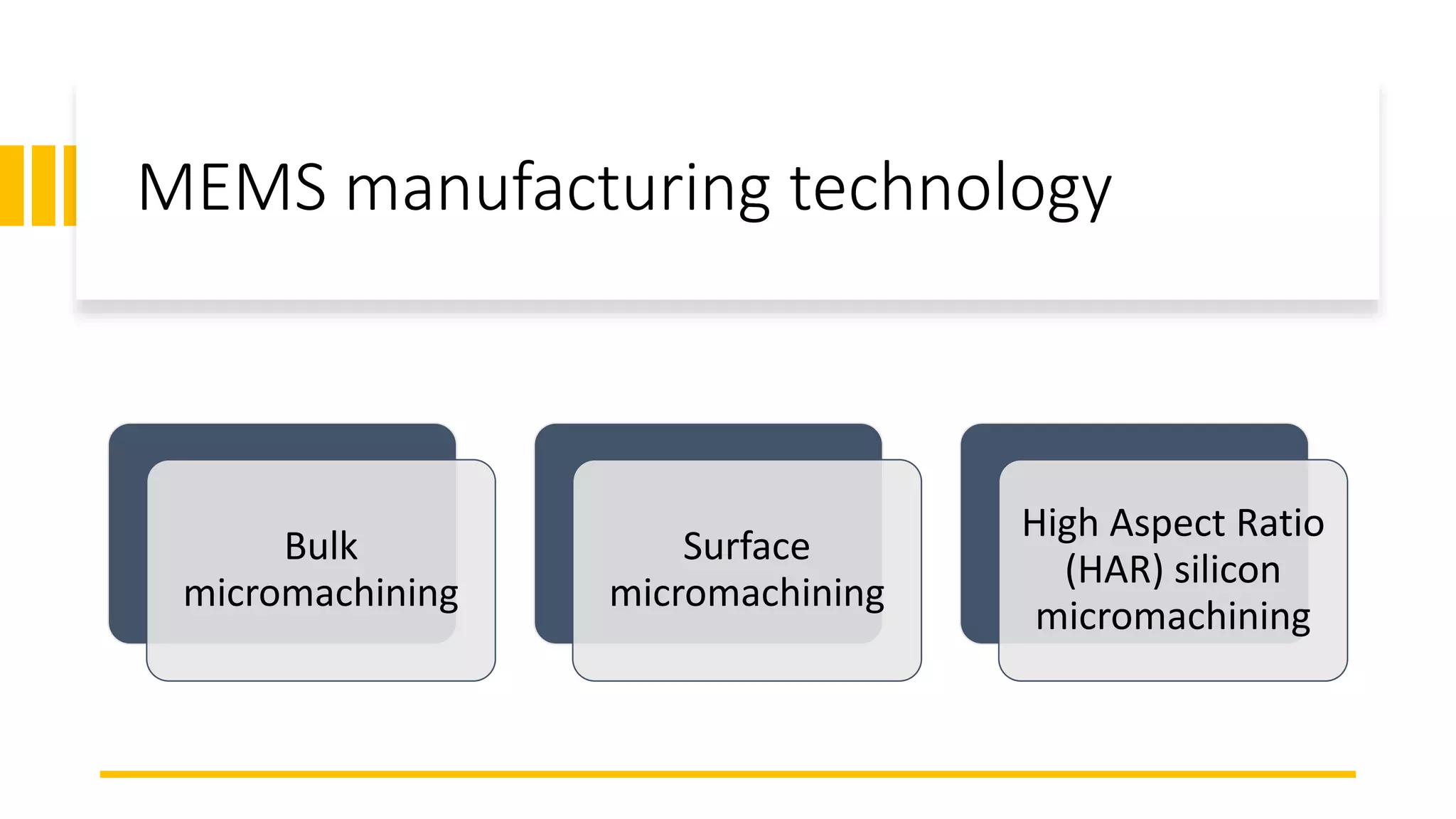
MEMS manufacturing technology
Bulk
micromachining
Surface
micromachining
High Aspect Ratio
(HAR) silicon
micromachining
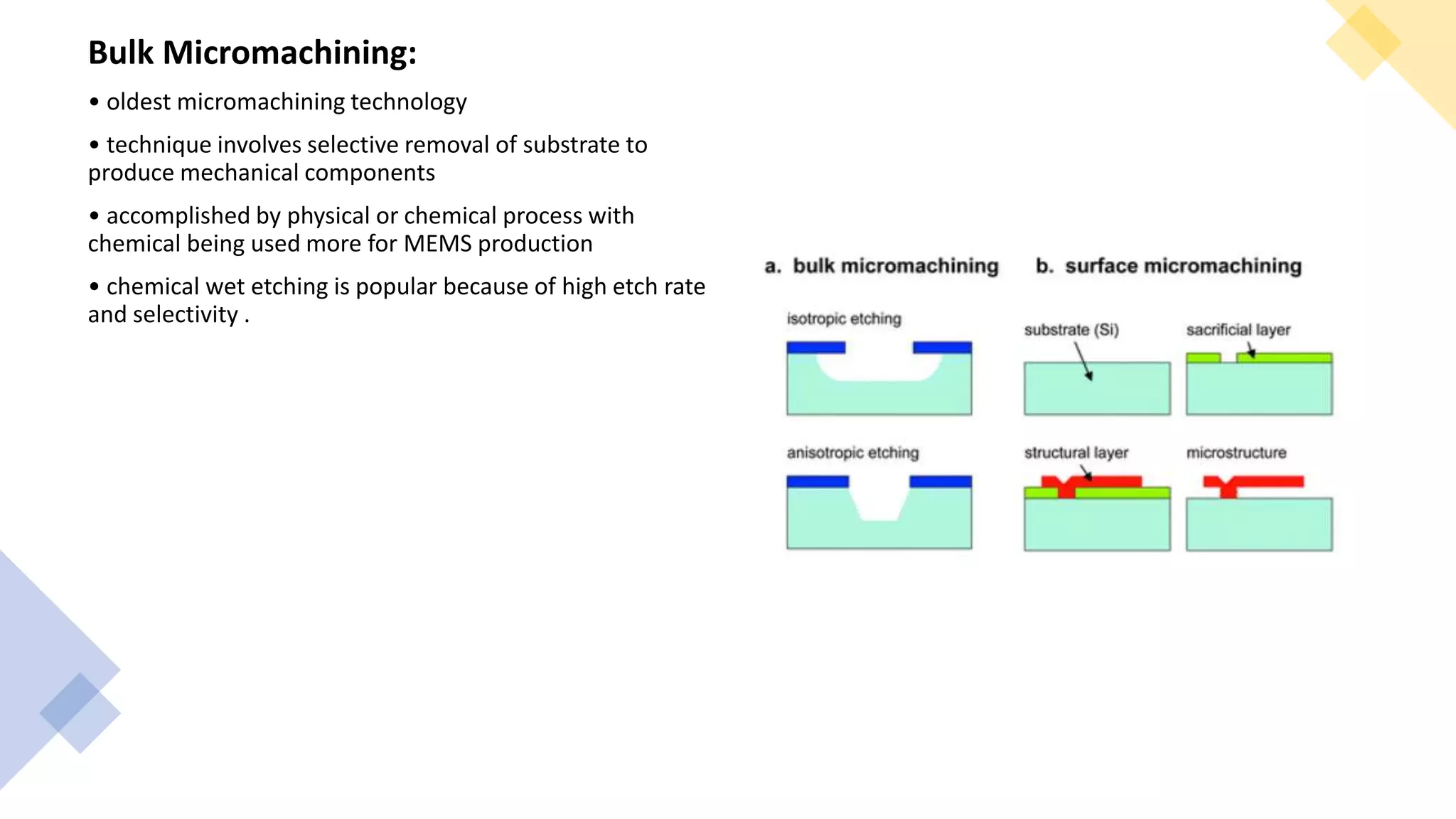
Bulk Micromachining:
• oldest micromachining technology
• technique involves selective removal of substrate to
produce mechanical components
• accomplished by physical or chemical process with
chemical being used more for MEMS production
• chemical wet etching is popular because of high etch rate
and selectivity .
Wafer Bonding:
• Method that involves joining two or more wafers
together to create a wafer stack
• Three types of wafer bonding: direct bonding, anodic
bonding, and intermediate layer bonding
• All require substrates that are flat, smooth, and clean
in order to be efficient and successful.
High Aspect Ratio Fabrication (Silicon):
• Deep reactive ion etching (DRIE)
• Enables very high aspect ratio etches to be
performed into silicon substrates
• Sidewalls of the etched holes are nearly vertical
• Depth of the etch can be hundreds or even thousands
of microns into the silicon substrate.
Advantages of MEMS
• Much smaller area
• Cheaper than alternatives
○ In medical market, that means disposable
• Can be integrated with electronics (system on one chip)
• Speed:
○ Lower thermal time constant
○ Rapid response times(high frequency)
• Power consumption:
○ low actuation energy
○ low heating power
Disadvantages of MEMS
• Very expensive during the research and development stage for any new MEMS design or devices
• Very expensive upfront setup cost for fabrication cleanrooms and foundry facilities
• Fabrication and assembly unit costs can be very high for low quantities. Therefore, MEMS are not suitable for
niche applications, unless cost is not an issue
• Testing equipment to characterise the quality and performance can also be expensive
Application
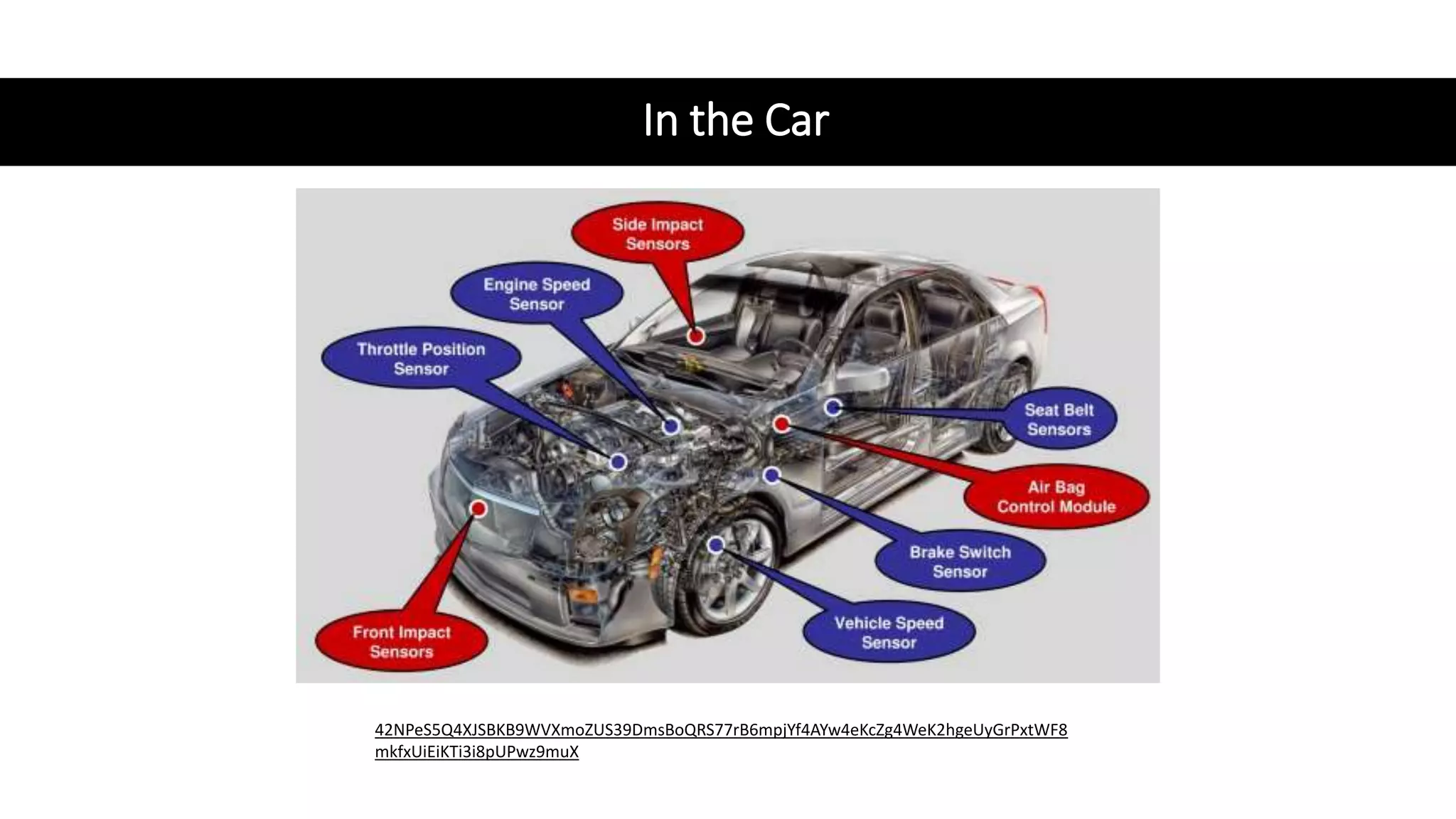
• Automotive
• Health care
• Aero space
• telecommunication
In the Car
42NPeS5Q4XJSBKB9WVXmoZUS39DmsBoQRS77rB6mpjYf4AYw4eKcZg4WeK2hgeUyGrPxtWF8
mkfxUiEiKTi3i8pUPwz9muX
Healthcare
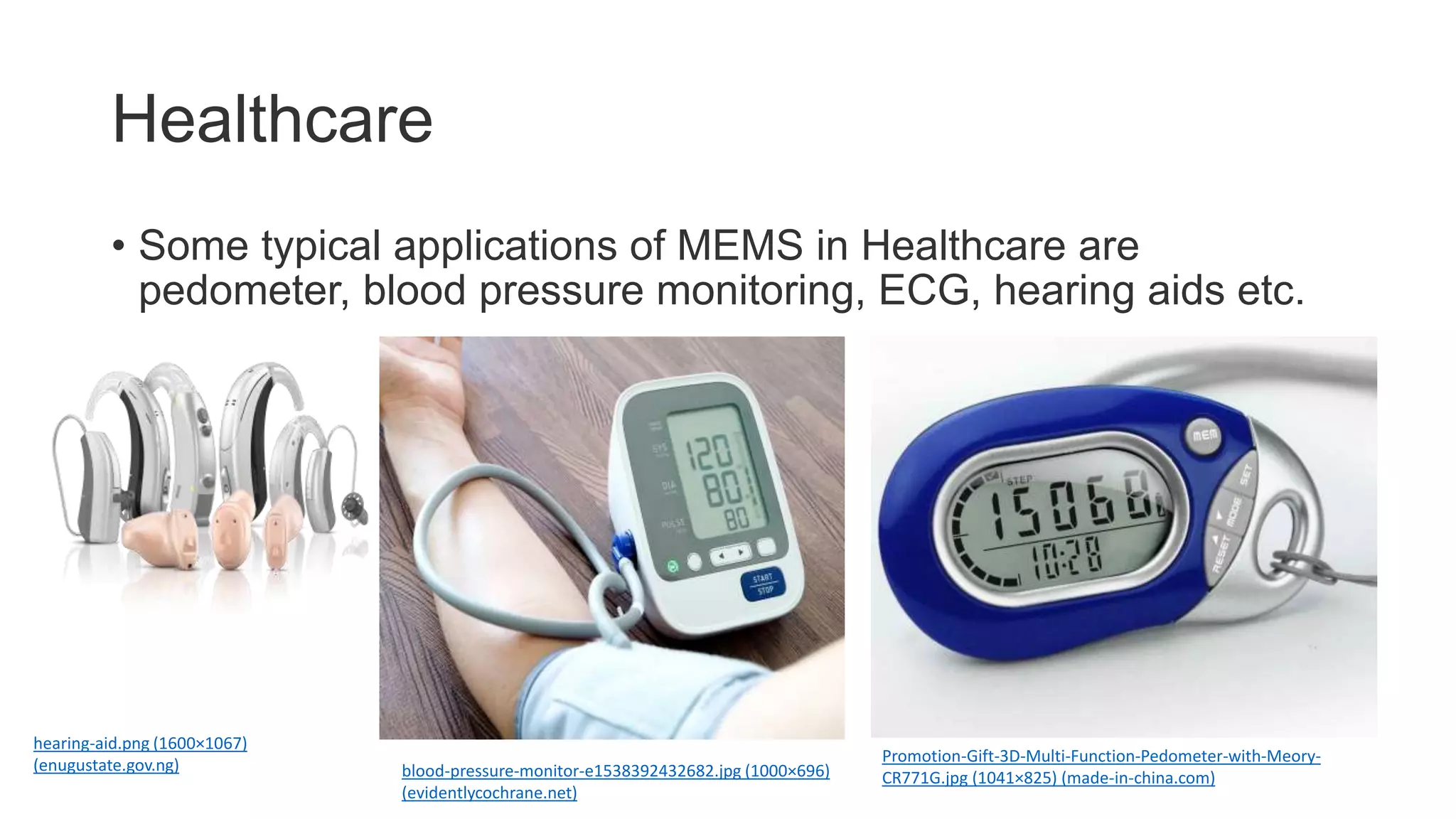
• Some typical applications of MEMS in Healthcare are
pedometer, blood pressure monitoring, ECG, hearing aids etc.
blood-pressure-monitor-e1538392432682.jpg (1000×696)
(evidentlycochrane.net)
Promotion-Gift-3D-Multi-Function-Pedometer-with-Meory-
CR771G.jpg (1041×825) (made-in-china.com)
hearing-aid.png (1600×1067)
(enugustate.gov.ng)
Conclusion
• Micro-Electro-Mechanical Systems are 1-100 micrometer devices that convert electrical energy to
mechanical energy and vice-versa. The three basic steps to MEMS fabrication are deposition,
patterning, and etching. Due to their small size, they can exhibit certain characteristics that their
macro equivalents can’t. MEMS produce benefits in speed, complexity, power consumption, device
area, and system integration. These benefits make MEMS a great choice for devices in numerous
fields.
Micro electro mechanical system (MEMS)

  • 1.
    Micro Electro MechanicalSystem (MEMS) Department: Electrical and Computer Engineering
  • 2.
    Outline MEMS introduction Components ofMEMS Sensor Fabrication MEMS Fabrication Technology Application Advantage / Disadvantage Conclusion
  • 4.
    What is MEMS •Micro electro mechanical system is a technique of combining electrical and mechanical combinations together on a chip, to produce a system of miniature dimensions. • MEMS is a integration of a number micro components on a single chip which allow the microsystem to both sense and control the environment. • The components are integrated on a single chip using micro fabrication technologies.
  • 5.
    Transducer • a devicethat converts variations in a physical quantity, such as pressure or brightness, into an electrical signal, or vice versa. Actuator • An actuator is a device that converts an electrical signal into an action. It can create a force to manipulate itself, other mechanical devices, or the surrounding environment to perform some useful function
  • 6.
    Sensors • A deviceused to measure a physical quality like temperature and convert it into an electronic signal like voltage without modifying the environment. What can be sensed? • Pressure • Temperature • Flow rate • Radiation • Chemical
  • 7.
    Why MEMS forsensors • Small size • Have lower power consumption • More sensitive to input variation • Cheaper due to mass production • Less invasive than larger devices MEMS_microphone.jpg (1023×514) (engineeringproductdesign.com)
  • 8.
    Components • Microelectronics: • “brain”that receives, processes, and makes decisions • data comes from microsensors
  • 9.
    Micro actuator: • actsas trigger to activate external device • microelectronics will tell micro actuator to activate device Microstructures: • extremely small structures built onto surface of chip • built right into silicon of MEMS Microsensors: • constantly gather data from environment • pass data to microelectronics for processing • can monitor mechanical, thermal, biological, chemical optical, and magnetic readings
  • 10.
    Fabrication Process Material used: •Silicon • Polymers • Metals • Ceramics
  • 11.
    Basic process offabrication Deposition Deposition that happen because of a chemical reaction or physical reaction. • physical: material placed onto substrate, techniques include sputtering and evaporation • chemical: stream of source gas reacts on substrate to grow product, techniques include chemical vapor deposition and atomic layer deposition
  • 12.
    • Patterning The patternis to transfer to a photosensitive material by selective exposure to a radiation source such as light. If the resist is placed in a developer solution after selective exposure to a light source. • Etching It is a process of strong acid to cut into the unprotected parts of a metal surface to create a design. There are two types: • Wet etching • Dey etching
  • 13.
  • 14.
    Bulk Micromachining: • oldestmicromachining technology • technique involves selective removal of substrate to produce mechanical components • accomplished by physical or chemical process with chemical being used more for MEMS production • chemical wet etching is popular because of high etch rate and selectivity .
  • 15.
    Wafer Bonding: • Methodthat involves joining two or more wafers together to create a wafer stack • Three types of wafer bonding: direct bonding, anodic bonding, and intermediate layer bonding • All require substrates that are flat, smooth, and clean in order to be efficient and successful. High Aspect Ratio Fabrication (Silicon): • Deep reactive ion etching (DRIE) • Enables very high aspect ratio etches to be performed into silicon substrates • Sidewalls of the etched holes are nearly vertical • Depth of the etch can be hundreds or even thousands of microns into the silicon substrate.
  • 16.
    Advantages of MEMS •Much smaller area • Cheaper than alternatives ○ In medical market, that means disposable • Can be integrated with electronics (system on one chip) • Speed: ○ Lower thermal time constant ○ Rapid response times(high frequency) • Power consumption: ○ low actuation energy ○ low heating power
  • 17.
    Disadvantages of MEMS •Very expensive during the research and development stage for any new MEMS design or devices • Very expensive upfront setup cost for fabrication cleanrooms and foundry facilities • Fabrication and assembly unit costs can be very high for low quantities. Therefore, MEMS are not suitable for niche applications, unless cost is not an issue • Testing equipment to characterise the quality and performance can also be expensive
  • 18.
    Application • Automotive • Healthcare • Aero space • telecommunication
  • 19.
  • 20.
    Healthcare • Some typicalapplications of MEMS in Healthcare are pedometer, blood pressure monitoring, ECG, hearing aids etc. blood-pressure-monitor-e1538392432682.jpg (1000×696) (evidentlycochrane.net) Promotion-Gift-3D-Multi-Function-Pedometer-with-Meory- CR771G.jpg (1041×825) (made-in-china.com) hearing-aid.png (1600×1067) (enugustate.gov.ng)
  • 21.
    Conclusion • Micro-Electro-Mechanical Systemsare 1-100 micrometer devices that convert electrical energy to mechanical energy and vice-versa. The three basic steps to MEMS fabrication are deposition, patterning, and etching. Due to their small size, they can exhibit certain characteristics that their macro equivalents can’t. MEMS produce benefits in speed, complexity, power consumption, device area, and system integration. These benefits make MEMS a great choice for devices in numerous fields.