By: Ariadna Riera,
Maria Lorenzo
And
Marcel Sales

Marcel
THE PROPERTIES OF METALS:
 Hard
 Non-adhesive

Cold and smooth

 Often shiny

Vocabulary:
-Smooth: A surface that is not rough
-Shiny: reflects light of a smooth or polished surface

Ari
 PHYSICAL PROPERTIES:
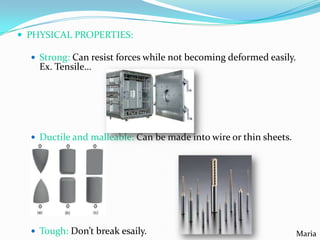
 Strong: Can resist forces while not becoming deformed easily.

Ex. Tensile…

 Ductile and malleable: Can be made into wire or thin sheets.

 Tough: Don’t break esaily.

Maria
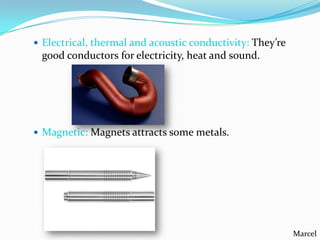
 Electrical, thermal and acoustic conductivity: They’re

good conductors for electricity, heat and sound.

 Magnetic: Magnets attracts some metals.

Marcel
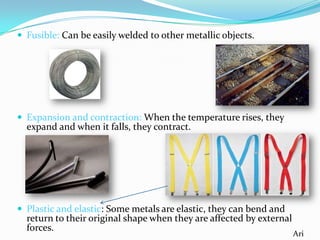
 Fusible: Can be easily welded to other metallic objects.

 Expansion and contraction: When the temperature rises, they

expand and when it falls, they contract.

 Plastic and elastic: Some metals are elastic, they can bend and

return to their original shape when they are affected by external
forces.

Ari
 CHEMICAL PROPERTIES:
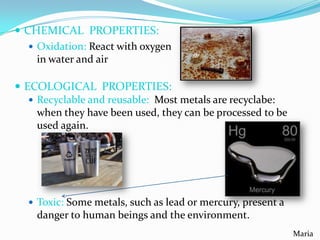
 Oxidation: React with oxygen
in water and air
 ECOLOGICAL PROPERTIES:
 Recyclable and reusable: Most metals are recyclabe:
when they have been used, they can be processed to be
used again.

 Toxic: Some metals, such as lead or mercury, present a

danger to human beings and the environment.
Maria
Where and how metals are obtained?
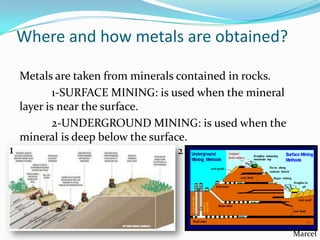
Metals are taken from minerals contained in rocks.
1-SURFACE MINING: is used when the mineral
layer is near the surface.
2-UNDERGROUND MINING: is used when the
mineral is deep below the surface.

1

2

Marcel
Ferrous materials
CHARACTERISTICS:
-Common.
-Inexpensive to extract.
-Need processing to produce pure iron.
-Used to make alloys.
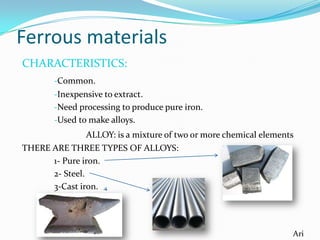
ALLOY: is a mixture of two or more chemical elements
THERE ARE THREE TYPES OF ALLOYS:
1- Pure iron.
2- Steel.
3-Cast iron.

Ari
Steel
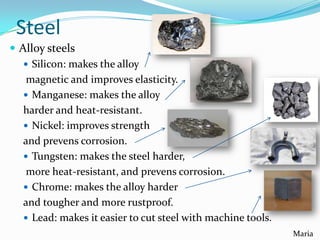
 Alloy steels
 Silicon: makes the alloy
magnetic and improves elasticity.
 Manganese: makes the alloy
harder and heat-resistant.
 Nickel: improves strength
and prevens corrosion.
 Tungsten: makes the steel harder,
more heat-resistant, and prevens corrosion.
 Chrome: makes the alloy harder
and tougher and more rustproof.
 Lead: makes it easier to cut steel with machine tools.
Maria
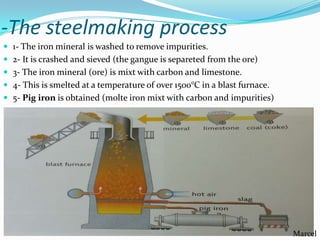
-The steelmaking process
 1- The iron mineral is washed to remove impurities.
 2- It is crashed and sieved (the gangue is separeted from the ore)
 3- The iron mineral (ore) is mixt with carbon and limestone.
 4- This is smelted at a temperature of over 1500°C in a blast furnace.
 5- Pig iron is obtained (molte iron mixt with carbon and impurities)

Marcel
HEAVY METALS
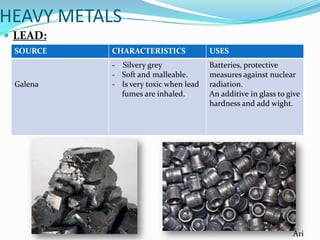
 LEAD:
SOURCE

Galena

CHARACTERISTICS

USES

- Silvery grey
- Soft and malleable.
- Is very toxic when lead
fumes are inhaled.

Batteries, protective
measures against nuclear
radiation.
An additive in glass to give
hardness and add wight.

Ari
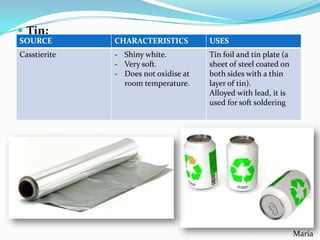
 Tin:
SOURCE

CHARACTERISTICS

USES

Casstierite

- Shiny white.
- Very soft.
- Does not oxidise at
room temperature.

Tin foil and tin plate (a
sheet of steel coated on
both sides with a thin
layer of tin).
Alloyed with lead, it is
used for soft soldering

Maria
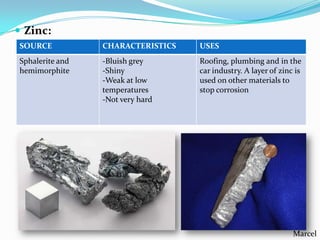
 Zinc:
SOURCE

CHARACTERISTICS

USES

Sphalerite and
hemimorphite

-Bluish grey
-Shiny
-Weak at low
temperatures
-Not very hard

Roofing, plumbing and in the
car industry. A layer of zinc is
used on other materials to
stop corrosion

Marcel
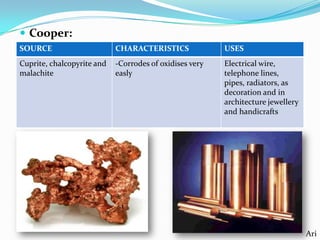
 Cooper:
SOURCE

CHARACTERISTICS

USES

Cuprite, chalcopyrite and
malachite

-Corrodes of oxidises very
easly

Electrical wire,
telephone lines,
pipes, radiators, as
decoration and in
architecture jewellery
and handicrafts

Ari
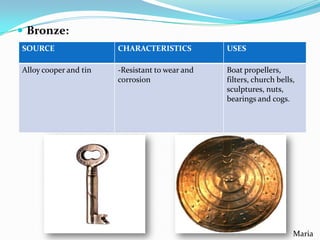
 Bronze:
SOURCE

CHARACTERISTICS

USES

Alloy cooper and tin

-Resistant to wear and
corrosion

Boat propellers,
filters, church bells,
sculptures, nuts,
bearings and cogs.

Maria
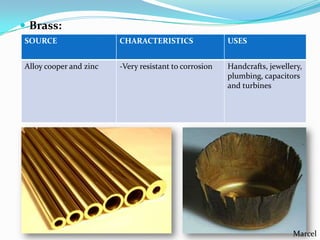
 Brass:
SOURCE

CHARACTERISTICS

USES

Alloy cooper and zinc

-Very resistant to corrosion

Handcrafts, jewellery,
plumbing, capacitors
and turbines

Marcel
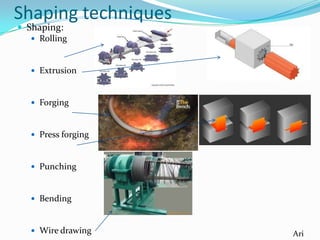
Shaping techniques
 Shaping:
 Rolling

 Extrusion

 Forging

 Press forging

 Punching

 Bending

 Wire drawing

Ari
Shaping techniques
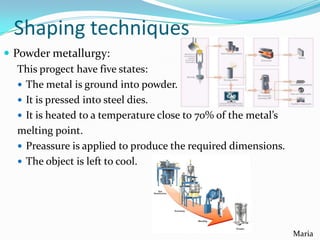
 Powder metallurgy:
This progect have five states:
 The metal is ground into powder.
 It is pressed into steel dies.
 It is heated to a temperature close to 70% of the metal’s
melting point.
 Preassure is applied to produce the required dimensions.
 The object is left to cool.

Maria
Shaping techniques
 Casting: used to change the dimensions of the object.
 The metals is heated to the casting process
 The liquid metal is poured into the mould
 The mould and metal are left to cool until the metal has
solidified.
 The solidified piece is extracted from the mould

Marcel
Ari

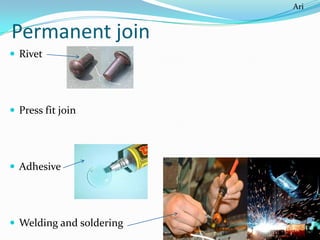
Permanent join
 Rivet

 Press fit join

 Adhesive

 Welding and soldering
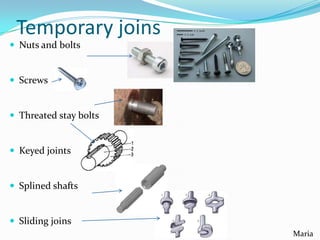
Temporary joins
 Nuts and bolts

 Screws

 Threated stay bolts

 Keyed joints

 Splined shafts

 Sliding joins
Maria
Finishies
Finishing is for:
 Removing surface imperfections
 Polishing
 Protecting metals from water and corrosion

Finishing techniques:
 Grinding
 Lapping
 Polishing

 Buffing
 Coatings

Marcel
Metals

Metals

  • 1.
    By: Ariadna Riera, MariaLorenzo And Marcel Sales Marcel
  • 2.
    THE PROPERTIES OFMETALS:  Hard  Non-adhesive Cold and smooth  Often shiny Vocabulary: -Smooth: A surface that is not rough -Shiny: reflects light of a smooth or polished surface Ari
  • 3.
     PHYSICAL PROPERTIES: Strong: Can resist forces while not becoming deformed easily. Ex. Tensile…  Ductile and malleable: Can be made into wire or thin sheets.  Tough: Don’t break esaily. Maria
  • 4.
     Electrical, thermaland acoustic conductivity: They’re good conductors for electricity, heat and sound.  Magnetic: Magnets attracts some metals. Marcel
  • 5.
     Fusible: Canbe easily welded to other metallic objects.  Expansion and contraction: When the temperature rises, they expand and when it falls, they contract.  Plastic and elastic: Some metals are elastic, they can bend and return to their original shape when they are affected by external forces. Ari
  • 6.
     CHEMICAL PROPERTIES: Oxidation: React with oxygen in water and air  ECOLOGICAL PROPERTIES:  Recyclable and reusable: Most metals are recyclabe: when they have been used, they can be processed to be used again.  Toxic: Some metals, such as lead or mercury, present a danger to human beings and the environment. Maria
  • 7.
    Where and howmetals are obtained? Metals are taken from minerals contained in rocks. 1-SURFACE MINING: is used when the mineral layer is near the surface. 2-UNDERGROUND MINING: is used when the mineral is deep below the surface. 1 2 Marcel
  • 8.
    Ferrous materials CHARACTERISTICS: -Common. -Inexpensive toextract. -Need processing to produce pure iron. -Used to make alloys. ALLOY: is a mixture of two or more chemical elements THERE ARE THREE TYPES OF ALLOYS: 1- Pure iron. 2- Steel. 3-Cast iron. Ari
  • 9.
    Steel  Alloy steels Silicon: makes the alloy magnetic and improves elasticity.  Manganese: makes the alloy harder and heat-resistant.  Nickel: improves strength and prevens corrosion.  Tungsten: makes the steel harder, more heat-resistant, and prevens corrosion.  Chrome: makes the alloy harder and tougher and more rustproof.  Lead: makes it easier to cut steel with machine tools. Maria
  • 10.
    -The steelmaking process 1- The iron mineral is washed to remove impurities.  2- It is crashed and sieved (the gangue is separeted from the ore)  3- The iron mineral (ore) is mixt with carbon and limestone.  4- This is smelted at a temperature of over 1500°C in a blast furnace.  5- Pig iron is obtained (molte iron mixt with carbon and impurities) Marcel
  • 11.
    HEAVY METALS  LEAD: SOURCE Galena CHARACTERISTICS USES -Silvery grey - Soft and malleable. - Is very toxic when lead fumes are inhaled. Batteries, protective measures against nuclear radiation. An additive in glass to give hardness and add wight. Ari
  • 12.
     Tin: SOURCE CHARACTERISTICS USES Casstierite - Shinywhite. - Very soft. - Does not oxidise at room temperature. Tin foil and tin plate (a sheet of steel coated on both sides with a thin layer of tin). Alloyed with lead, it is used for soft soldering Maria
  • 13.
     Zinc: SOURCE CHARACTERISTICS USES Sphalerite and hemimorphite -Bluishgrey -Shiny -Weak at low temperatures -Not very hard Roofing, plumbing and in the car industry. A layer of zinc is used on other materials to stop corrosion Marcel
  • 14.
     Cooper: SOURCE CHARACTERISTICS USES Cuprite, chalcopyriteand malachite -Corrodes of oxidises very easly Electrical wire, telephone lines, pipes, radiators, as decoration and in architecture jewellery and handicrafts Ari
  • 15.
     Bronze: SOURCE CHARACTERISTICS USES Alloy cooperand tin -Resistant to wear and corrosion Boat propellers, filters, church bells, sculptures, nuts, bearings and cogs. Maria
  • 16.
     Brass: SOURCE CHARACTERISTICS USES Alloy cooperand zinc -Very resistant to corrosion Handcrafts, jewellery, plumbing, capacitors and turbines Marcel
  • 17.
    Shaping techniques  Shaping: Rolling  Extrusion  Forging  Press forging  Punching  Bending  Wire drawing Ari
  • 18.
    Shaping techniques  Powdermetallurgy: This progect have five states:  The metal is ground into powder.  It is pressed into steel dies.  It is heated to a temperature close to 70% of the metal’s melting point.  Preassure is applied to produce the required dimensions.  The object is left to cool. Maria
  • 19.
    Shaping techniques  Casting:used to change the dimensions of the object.  The metals is heated to the casting process  The liquid metal is poured into the mould  The mould and metal are left to cool until the metal has solidified.  The solidified piece is extracted from the mould Marcel
  • 20.
    Ari Permanent join  Rivet Press fit join  Adhesive  Welding and soldering
  • 21.
    Temporary joins  Nutsand bolts  Screws  Threated stay bolts  Keyed joints  Splined shafts  Sliding joins Maria
  • 22.
    Finishies Finishing is for: Removing surface imperfections  Polishing  Protecting metals from water and corrosion Finishing techniques:  Grinding  Lapping  Polishing  Buffing  Coatings Marcel