Engineering materials
Introduction
What is engineering
materials?
• Engineering materials is a branch of science which deals
with the study of existing materials, their properties,
functions, uses and effects over different compositions
and mixtures. It provides the reader a broad knowledge
of materials over a wide range.
Types of materials
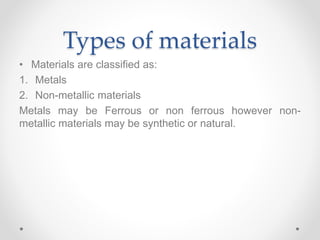
• Materials are classified as:
1. Metals
2. Non-metallic materials
Metals may be Ferrous or non ferrous however non-
metallic materials may be synthetic or natural.
Metals
Metals are the materials which show the properties like
hardness, opaque, shiny and has good electrical and
thermal conductivity.
Metals
Ferrous materials
• Metals or alloys having high percentage of iron.
• These materials are used where high strength is
required at relatively low cost.
• These materials are basically obtained from pig iron ore
which after treatment gives three types of ferrous
materials.
1. Steel
2. Cast iron
3. Wrought iron
Classification of steel
Steels
Low carbon steel
Medium carbon
steel
High carbon steel
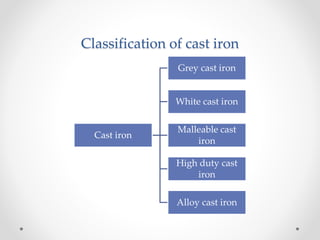
Classification of cast iron
Cast iron
Grey cast iron
White cast iron
Malleable cast
iron
High duty cast
iron
Alloy cast iron
Non-ferrous materials
• Metals other than iron
• They are basically used in alloy form. In pure form, they
are used with other materials in order to obtain a certain
property like corrosion resistance, ductility, hardness etc.
• They are used with other metals in order to improve their
strength.
• Non-ferrous materials may be metals other than iron or
alloys.
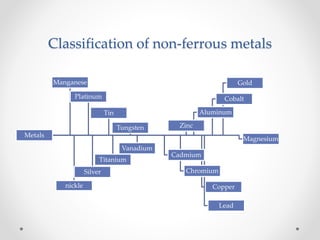
Classification of non-ferrous metals
Metals
Aluminum
Cadmium
Chromium
Cobalt
Copper
Gold
Lead
Magnesium
Manganese
nickle
Platinum
Silver
Tin
Titanium
Tungsten
Vanadium
Zinc
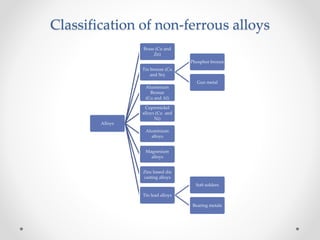
Classification of non-ferrous alloys
Alloys
Brass (Cu and
Zn)
Tin bronze (Cu
and Sn)
Phosphor bronze
Gun metal
Aluminium
Bronze
(Cu and Al)
Cupronickel
alloys (Cu and
Ni)
Aluminium
alloys
Magnesium
alloys
Zinc based die
casting alloys
Tin lead alloys
Soft solders
Bearing metals
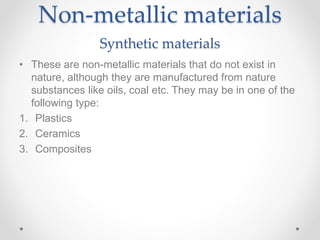
Non-metallic materials
Synthetic materials
• These are non-metallic materials that do not exist in
nature, although they are manufactured from nature
substances like oils, coal etc. They may be in one of the
following type:
1. Plastics
2. Ceramics
3. Composites
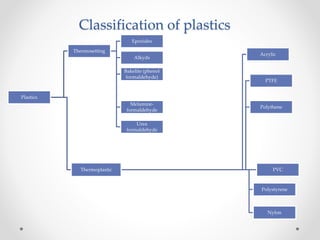
Classification of plastics
Plastics
Thermosetting
Epoxides
Alkyds
Bakelite (phenol
formaldehyde)
Melamine-
formaldehyde
Urea
formaldehyde
Thermoplastic
Acrylic
PTFE
Polythene
PVC
Nylon
Polystyrene
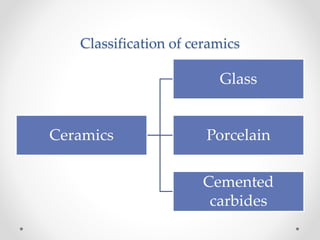
Classification of ceramics
Ceramics
Glass
Porcelain
Cemented
carbides
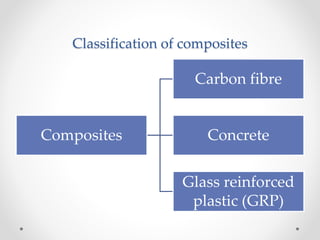
Classification of composites
Composites
Carbon fibre
Concrete
Glass reinforced
plastic (GRP)
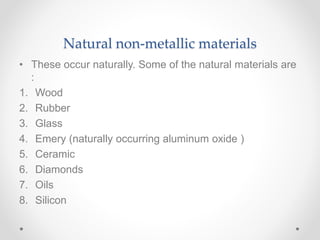
Natural non-metallic materials
• These occur naturally. Some of the natural materials are
:
1. Wood
2. Rubber
3. Glass
4. Emery (naturally occurring aluminum oxide )
5. Ceramic
6. Diamonds
7. Oils
8. Silicon

Engineering materials part 1

  • 1.
  • 2.
    What is engineering materials? •Engineering materials is a branch of science which deals with the study of existing materials, their properties, functions, uses and effects over different compositions and mixtures. It provides the reader a broad knowledge of materials over a wide range.
  • 3.
    Types of materials •Materials are classified as: 1. Metals 2. Non-metallic materials Metals may be Ferrous or non ferrous however non- metallic materials may be synthetic or natural.
  • 4.
    Metals Metals are thematerials which show the properties like hardness, opaque, shiny and has good electrical and thermal conductivity.
  • 5.
    Metals Ferrous materials • Metalsor alloys having high percentage of iron. • These materials are used where high strength is required at relatively low cost. • These materials are basically obtained from pig iron ore which after treatment gives three types of ferrous materials. 1. Steel 2. Cast iron 3. Wrought iron
  • 6.
    Classification of steel Steels Lowcarbon steel Medium carbon steel High carbon steel
  • 7.
    Classification of castiron Cast iron Grey cast iron White cast iron Malleable cast iron High duty cast iron Alloy cast iron
  • 8.
    Non-ferrous materials • Metalsother than iron • They are basically used in alloy form. In pure form, they are used with other materials in order to obtain a certain property like corrosion resistance, ductility, hardness etc. • They are used with other metals in order to improve their strength. • Non-ferrous materials may be metals other than iron or alloys.
  • 9.
    Classification of non-ferrousmetals Metals Aluminum Cadmium Chromium Cobalt Copper Gold Lead Magnesium Manganese nickle Platinum Silver Tin Titanium Tungsten Vanadium Zinc
  • 10.
    Classification of non-ferrousalloys Alloys Brass (Cu and Zn) Tin bronze (Cu and Sn) Phosphor bronze Gun metal Aluminium Bronze (Cu and Al) Cupronickel alloys (Cu and Ni) Aluminium alloys Magnesium alloys Zinc based die casting alloys Tin lead alloys Soft solders Bearing metals
  • 11.
    Non-metallic materials Synthetic materials •These are non-metallic materials that do not exist in nature, although they are manufactured from nature substances like oils, coal etc. They may be in one of the following type: 1. Plastics 2. Ceramics 3. Composites
  • 12.
    Classification of plastics Plastics Thermosetting Epoxides Alkyds Bakelite(phenol formaldehyde) Melamine- formaldehyde Urea formaldehyde Thermoplastic Acrylic PTFE Polythene PVC Nylon Polystyrene
  • 13.
  • 14.
    Classification of composites Composites Carbonfibre Concrete Glass reinforced plastic (GRP)
  • 15.
    Natural non-metallic materials •These occur naturally. Some of the natural materials are : 1. Wood 2. Rubber 3. Glass 4. Emery (naturally occurring aluminum oxide ) 5. Ceramic 6. Diamonds 7. Oils 8. Silicon