CERAMIC
INTERIOR DESIGN ASSIGNMENT- I
Submitted by:
-HARSHA SINGH BA13ARC016
-HEEROK JYOTI BA13ARC017
-DHANANJAY HETE BA13ARC018
INTRODUCTION
 A ceramic is an inorganic, nonmetallic solid material
comprising metal, nonmetal or metalloid atoms primarily
held in ionic and all are made by firing or burning, often
including silicates and metal oxides.
 The word "ceramic comes from the Greek word
keramikos, "of pottery" or "for pottery", from keramos,
"potter's clay, tile, pottery".
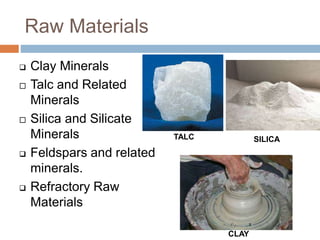
Raw Materials
 Clay Minerals
 Talc and Related
Minerals
 Silica and Silicate
Minerals
 Feldspars and related
minerals.
 Refractory Raw
Materials
TALC SILICA
CLAY
Refractory Raw Materials
Alumina
Magnesia
Dolomite
Chrome Ore
ALUMINA
DOLOMITE CHROME ORE
MAGNESIA
Other Raw Materials
SODA ASH
BORATE
MINERALS
FLUORSPAR
Soda ash
Borate minerals
Fluorspar
Phosphate minerals
Abrasive raw
materials
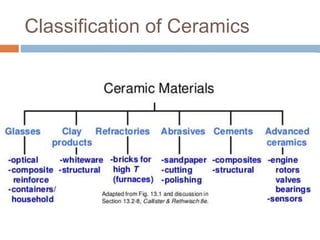
Classification of Ceramics
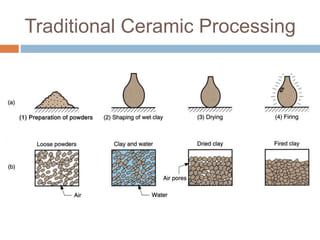
Traditional Ceramic Processing
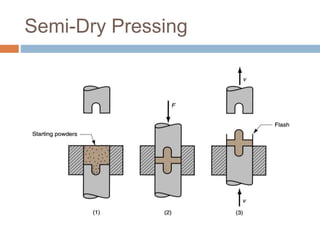
Semi-Dry Pressing
TYPES OF CERAMIC
1.TERRACOTTA
 This is a type of earthenware, is a clay-based
unglazed or glazed ceramic, where the fired
body is porous.
 Uses include flower pots, water and waste
water pipes, bricks, and surface
embellishment in building construction.
2. STONEWARE
 Stoneware is a vitreous (glass) or semi-
vitreous ceramic made primarily from
stoneware clay or non-refractory fire clay.
 Stoneware is fired at high temperatures and it
is non porous.
 Stoneware is made up of 3 major component,
which is clays, fluxes and fillers.
3. FIRECLAY
 1.Fireclay is a type of clay that is able to
withstand intense heat.
 2. It is suitable for making articles which will
not melt, nor even perceptibly soften when
exposed to a high temperature.
 Fireclay consists alumina and silica.
4. EARTHENWARE
 Earthenware is also called low fired clay because it is
normally matured at low temperature
 Finer than stoneware
 Porosity, high water absorbtionof 5-8%
 Must be glazed to prevent water absorbtion
 small cracks in glaze is permeable to water
 Less suitable for sanitary ware compared to vitreous
china
 Not translucent and are more easily to chipped, less
strong than stoneware
 There are two main types of glazed earthenware:
1 ) creamware2) tin-glazed
5. ROOFING
 •Low water absorbtion
 •High slip resistant
 •This allows rainwater to flow downwards without leaking
between tiles
 •Durable chemical and frost resistance
 •protects you from water during the rain, heat in summer and
cold in winter
 •last for about 400 years without losing its beauty and
effectiveness
 •Come in traditional red, brown or antique which are unglazed
with a plain finish
6. PORCELAIN
 •A special type of clay either white or grey, to
which kaolin (a white firing stiff clay) and white
China stone (finely decayed granite, washed
and prepared as small white blocks) is added.
 •Primary components -clays, feldspar or flint
and silica
7.VITREOUS CHINA
 •Mixture of clay, feldspar and quartz which is
molded, glazed and "baked" at extremely high
temperatures
 •material which is strong, nonporous and
impervious to absorption.
 The word “vitreous” means “glass-like,”
 glaze makes ordinary ceramics look shiny and
reflective while maintaining & strengthening their
durability.
 The glaze itself is usually made of composite
minerals and powdered glass.
APPLICATIONS
 Great Variety of
colour, format
and surfaces are
available.
 Unlimited
freedom of
design.
Project: Emser Therme
Flooring
ON STAIRS
Cladding
Conti...
Partitions
Indoor plantation
 Wash Basin
Lamps
Chandelier
Decor Items
INNOVATIONS IN CERAMIC
TILES
 Green pockets are ceramic
interlock tiles which made
from recycled materials, fuse
nature with the interior space,
improving both air quality and
health, as well as a room’s
aesthetics.
GREEN POCKETS
NAGOMI TILES
 The square
indentations on its
surface can be filled
with a diverse range of
materials such as
sintered glass or moss.
 The ceramic tile is produced with a
dent groove inside it to bed the
OLED layer with 2 thin film polymer
wires on the sides of the tiles to
connect the electrical current on
both sides to other ceramic tiles
 It is then covered with high anti-
abrasion transparent film epoxy on
the cold to protect it.
OLEDRAMIC
FIXING OF TILES ON WALLS
FIXING OF TILES ON FLOORS
1.
2.
3.
1. 2. 3.
4. 5. 6.
ADVANTAGES
 Durable
•extremely hard.
•last 10-20 years and longer.
•handle extremes of heat and cold very well.
 Easy to clean
•stain resistant.
•hygienic, not absorb liquids, does not retain the residues
and smells of chemicals, foods or beverages.
•simply vacuum and use damp mop.
 Design options
•modern manufacturing techniques allow ceramic producers
to make materials which can be printed in numerous
ways.
 Cost
-relatively inexpensive, cheaper than hard wood, carpet.
-Once you absorb the initial cost of tile you don’t have to spend
money on it again for the life of the product if it is installed properly.
 Can be installed in nearly any application
-on floors, walls, in showers, backsplashes, ceilings
-countertops, table tops, fireplaces, columns and more
-water resistance, can be installed in wet environment.
 High scratch resistance
 Resistance to burns
 Resistance to fading -not fade due to sunlight and electrical light.
 Environmental friendly -100% natural materials.
THANKYOU

Ceramic

  • 1.
    CERAMIC INTERIOR DESIGN ASSIGNMENT-I Submitted by: -HARSHA SINGH BA13ARC016 -HEEROK JYOTI BA13ARC017 -DHANANJAY HETE BA13ARC018
  • 2.
    INTRODUCTION  A ceramicis an inorganic, nonmetallic solid material comprising metal, nonmetal or metalloid atoms primarily held in ionic and all are made by firing or burning, often including silicates and metal oxides.  The word "ceramic comes from the Greek word keramikos, "of pottery" or "for pottery", from keramos, "potter's clay, tile, pottery".
  • 3.
    Raw Materials  ClayMinerals  Talc and Related Minerals  Silica and Silicate Minerals  Feldspars and related minerals.  Refractory Raw Materials TALC SILICA CLAY
  • 4.
  • 5.
    Other Raw Materials SODAASH BORATE MINERALS FLUORSPAR Soda ash Borate minerals Fluorspar Phosphate minerals Abrasive raw materials
  • 6.
  • 7.
  • 8.
  • 9.
  • 10.
    1.TERRACOTTA  This isa type of earthenware, is a clay-based unglazed or glazed ceramic, where the fired body is porous.  Uses include flower pots, water and waste water pipes, bricks, and surface embellishment in building construction.
  • 11.
    2. STONEWARE  Stonewareis a vitreous (glass) or semi- vitreous ceramic made primarily from stoneware clay or non-refractory fire clay.  Stoneware is fired at high temperatures and it is non porous.  Stoneware is made up of 3 major component, which is clays, fluxes and fillers.
  • 12.
    3. FIRECLAY  1.Fireclayis a type of clay that is able to withstand intense heat.  2. It is suitable for making articles which will not melt, nor even perceptibly soften when exposed to a high temperature.  Fireclay consists alumina and silica.
  • 13.
    4. EARTHENWARE  Earthenwareis also called low fired clay because it is normally matured at low temperature  Finer than stoneware  Porosity, high water absorbtionof 5-8%  Must be glazed to prevent water absorbtion  small cracks in glaze is permeable to water  Less suitable for sanitary ware compared to vitreous china  Not translucent and are more easily to chipped, less strong than stoneware  There are two main types of glazed earthenware: 1 ) creamware2) tin-glazed
  • 14.
    5. ROOFING  •Lowwater absorbtion  •High slip resistant  •This allows rainwater to flow downwards without leaking between tiles  •Durable chemical and frost resistance  •protects you from water during the rain, heat in summer and cold in winter  •last for about 400 years without losing its beauty and effectiveness  •Come in traditional red, brown or antique which are unglazed with a plain finish
  • 15.
    6. PORCELAIN  •Aspecial type of clay either white or grey, to which kaolin (a white firing stiff clay) and white China stone (finely decayed granite, washed and prepared as small white blocks) is added.  •Primary components -clays, feldspar or flint and silica
  • 16.
    7.VITREOUS CHINA  •Mixtureof clay, feldspar and quartz which is molded, glazed and "baked" at extremely high temperatures  •material which is strong, nonporous and impervious to absorption.  The word “vitreous” means “glass-like,”  glaze makes ordinary ceramics look shiny and reflective while maintaining & strengthening their durability.  The glaze itself is usually made of composite minerals and powdered glass.
  • 17.
  • 18.
     Great Varietyof colour, format and surfaces are available.  Unlimited freedom of design. Project: Emser Therme
  • 19.
  • 20.
  • 21.
  • 22.
  • 23.
  • 24.
  • 25.
  • 26.
  • 27.
  • 28.
  • 29.
    INNOVATIONS IN CERAMIC TILES Green pockets are ceramic interlock tiles which made from recycled materials, fuse nature with the interior space, improving both air quality and health, as well as a room’s aesthetics. GREEN POCKETS NAGOMI TILES  The square indentations on its surface can be filled with a diverse range of materials such as sintered glass or moss.
  • 30.
     The ceramictile is produced with a dent groove inside it to bed the OLED layer with 2 thin film polymer wires on the sides of the tiles to connect the electrical current on both sides to other ceramic tiles  It is then covered with high anti- abrasion transparent film epoxy on the cold to protect it. OLEDRAMIC
  • 31.
  • 32.
    FIXING OF TILESON FLOORS 1. 2. 3. 1. 2. 3. 4. 5. 6.
  • 33.
    ADVANTAGES  Durable •extremely hard. •last10-20 years and longer. •handle extremes of heat and cold very well.  Easy to clean •stain resistant. •hygienic, not absorb liquids, does not retain the residues and smells of chemicals, foods or beverages. •simply vacuum and use damp mop.  Design options •modern manufacturing techniques allow ceramic producers to make materials which can be printed in numerous ways.
  • 34.
     Cost -relatively inexpensive,cheaper than hard wood, carpet. -Once you absorb the initial cost of tile you don’t have to spend money on it again for the life of the product if it is installed properly.  Can be installed in nearly any application -on floors, walls, in showers, backsplashes, ceilings -countertops, table tops, fireplaces, columns and more -water resistance, can be installed in wet environment.  High scratch resistance  Resistance to burns  Resistance to fading -not fade due to sunlight and electrical light.  Environmental friendly -100% natural materials.
  • 35.