MORTAR 
& 
CONCRETE 
HOLLOW 
BLOCK 
BY CCAARRLLOO CC.. MMEENNDDOOZZAA
MORTAR 
A fine aggregate and water 
mixed together in suitable 
proportions , they form an 
easily workable paste that 
use for binding materials
FUNCTION OF MORTAR 
To bind together the bricks or stones 
properly so as to provide strength to the 
structure. 
To provide a weather resisting 
To fill up empty joints in brick and stone 
masonry.
DON’T 
do not use dirty water 
puddles or ponds (shallow pool) 
sugar-containing liquids 
soft drinks
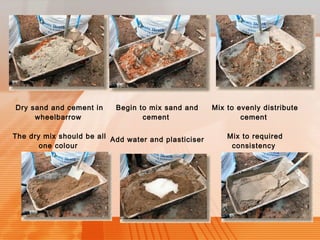
Dry sand and cement in 
wheelbarrow 
Begin to mix sand and 
cement 
Mix to evenly distribute 
cement 
The dry mix should be all 
one colour 
Add water and plasticiser Mix to required 
consistency
CONCRETE HOLLOW 
BLOCKS 
Is a large rectangular brick 
used in construction. 
Portland cement and aggregate, 
usually sand and fine gravel for high-density 
blocks.
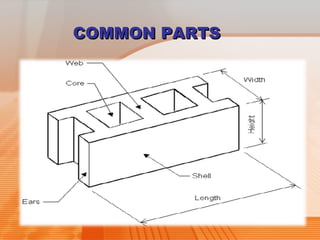
CCOOMMMMOONN PPAARRTTSS
DESCRIPTION 
• Have one or more hollow cores. 
• In general, a hollow-core concrete block is 
more than 50 % solid. 
• Standard hollow concrete blocks come in full 
and half sizes. 
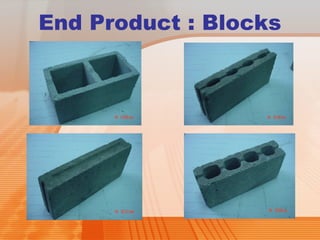
• Full-size blocks are rectangular and have two 
cores. 
• Half size blocks are cubical and have one 
core.
AADDVVAANNTTAAGGEESS OOFF HHOOLLLLOOWW 
CCOONNCCRREETTEE BBLLOOCCKKSS.. 
• Highly Durable: The good concrete compacted 
by high pressure and vibration gives substantial 
strength to the block. Proper curing increase 
compressive strength of the blocks. 
• Low Maintenance 
• Fire Resistant 
• Provide thermal and sound insulation 
• Economical 
• Environment Friendly
SSttrruuccttuurraall AAddvvaannttaaggeess 
• Reducing the vulnerability (exposed to damage) of 
disastrous damage to the structure/building, during 
the natural hazards. 
• Provide and offer better resistance under dynamic 
loading
CCoonnssttrruuccttiioonnaall AAddvvaannttaaggeess 
• No additional formwork or any special 
construction machinery is required for reinforcing 
the hollow block masonry. 
• Only semi-skilled labor is required for this type of 
construction. 
• It is a faster and easier construction system, 
when compared to the other conventional 
construction systems. 
• It is also found to be a cost-effective disaster 
resistant construction system
Architectural and Other 
Advantages 
• This construction system provides better acoustic 
and thermal insulation for the building. 
• Faster construction: - Easy to work with bigger in 
size. 
• Recommended for earth quake resistance. 
• Less water absorption:- Approx. 3 to 4% 
• Environmental Eco-Friendly 
• This system is durable and maintenance free. 
• No leaching: - Reduction in maintenance.
Raw Materials Required 
Cement 
Sand 
Gravels 
Water
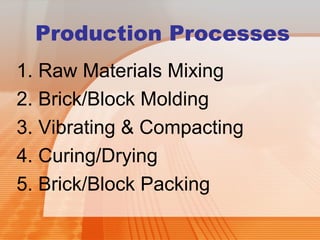
Production Processes 
1. Raw Materials Mixing 
2. Brick/Block Molding 
3. Vibrating & Compacting 
4. Curing/Drying 
5. Brick/Block Packing
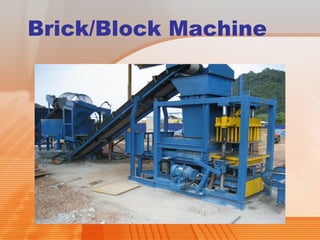
Brick/Block Machine
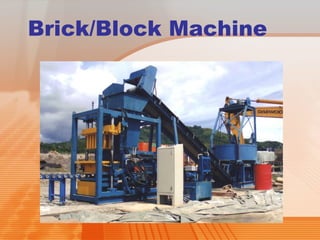
Brick/Block Machine
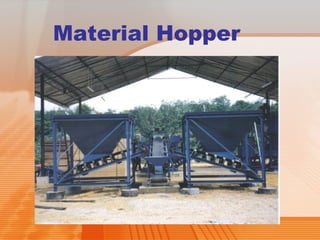
Material Hopper
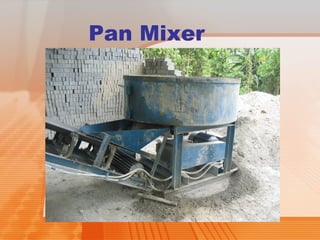
Pan Mixer
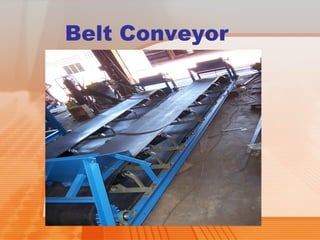
Belt Conveyor
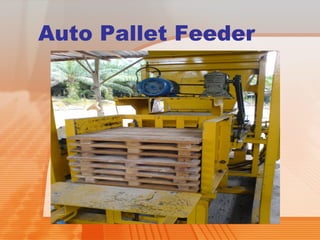
Auto Pallet Feeder
PLC Controller
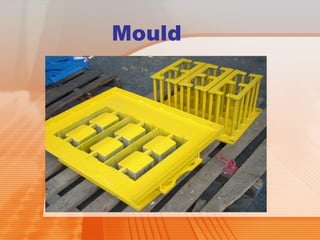
Mould
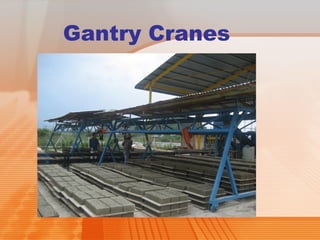
Gantry Cranes
End Product : Blocks
THE END

MORTAR AND CONCRETE HOLLOW BLOCKS

  • 1.
    MORTAR & CONCRETE HOLLOW BLOCK BY CCAARRLLOO CC.. MMEENNDDOOZZAA
  • 2.
    MORTAR A fineaggregate and water mixed together in suitable proportions , they form an easily workable paste that use for binding materials
  • 3.
    FUNCTION OF MORTAR To bind together the bricks or stones properly so as to provide strength to the structure. To provide a weather resisting To fill up empty joints in brick and stone masonry.
  • 4.
    DON’T do notuse dirty water puddles or ponds (shallow pool) sugar-containing liquids soft drinks
  • 5.
    Dry sand andcement in wheelbarrow Begin to mix sand and cement Mix to evenly distribute cement The dry mix should be all one colour Add water and plasticiser Mix to required consistency
  • 6.
    CONCRETE HOLLOW BLOCKS Is a large rectangular brick used in construction. Portland cement and aggregate, usually sand and fine gravel for high-density blocks.
  • 7.
  • 8.
    DESCRIPTION • Haveone or more hollow cores. • In general, a hollow-core concrete block is more than 50 % solid. • Standard hollow concrete blocks come in full and half sizes. • Full-size blocks are rectangular and have two cores. • Half size blocks are cubical and have one core.
  • 9.
    AADDVVAANNTTAAGGEESS OOFF HHOOLLLLOOWW CCOONNCCRREETTEE BBLLOOCCKKSS.. • Highly Durable: The good concrete compacted by high pressure and vibration gives substantial strength to the block. Proper curing increase compressive strength of the blocks. • Low Maintenance • Fire Resistant • Provide thermal and sound insulation • Economical • Environment Friendly
  • 10.
    SSttrruuccttuurraall AAddvvaannttaaggeess •Reducing the vulnerability (exposed to damage) of disastrous damage to the structure/building, during the natural hazards. • Provide and offer better resistance under dynamic loading
  • 11.
    CCoonnssttrruuccttiioonnaall AAddvvaannttaaggeess •No additional formwork or any special construction machinery is required for reinforcing the hollow block masonry. • Only semi-skilled labor is required for this type of construction. • It is a faster and easier construction system, when compared to the other conventional construction systems. • It is also found to be a cost-effective disaster resistant construction system
  • 12.
    Architectural and Other Advantages • This construction system provides better acoustic and thermal insulation for the building. • Faster construction: - Easy to work with bigger in size. • Recommended for earth quake resistance. • Less water absorption:- Approx. 3 to 4% • Environmental Eco-Friendly • This system is durable and maintenance free. • No leaching: - Reduction in maintenance.
  • 13.
    Raw Materials Required Cement Sand Gravels Water
  • 14.
    Production Processes 1.Raw Materials Mixing 2. Brick/Block Molding 3. Vibrating & Compacting 4. Curing/Drying 5. Brick/Block Packing
  • 15.
  • 16.
  • 17.
  • 18.
  • 19.
  • 20.
  • 21.
  • 22.
  • 23.
  • 24.
  • 25.