
FHBM1114 MANAGEMENT
TOPIC 5 : INDIVIDUAL & GROUP DECISION MAKING
PRESENTED BY :
CHIA WEY JIAN
LEE YU SENG
TEY SHU SHAN
WONG CHUN MENG
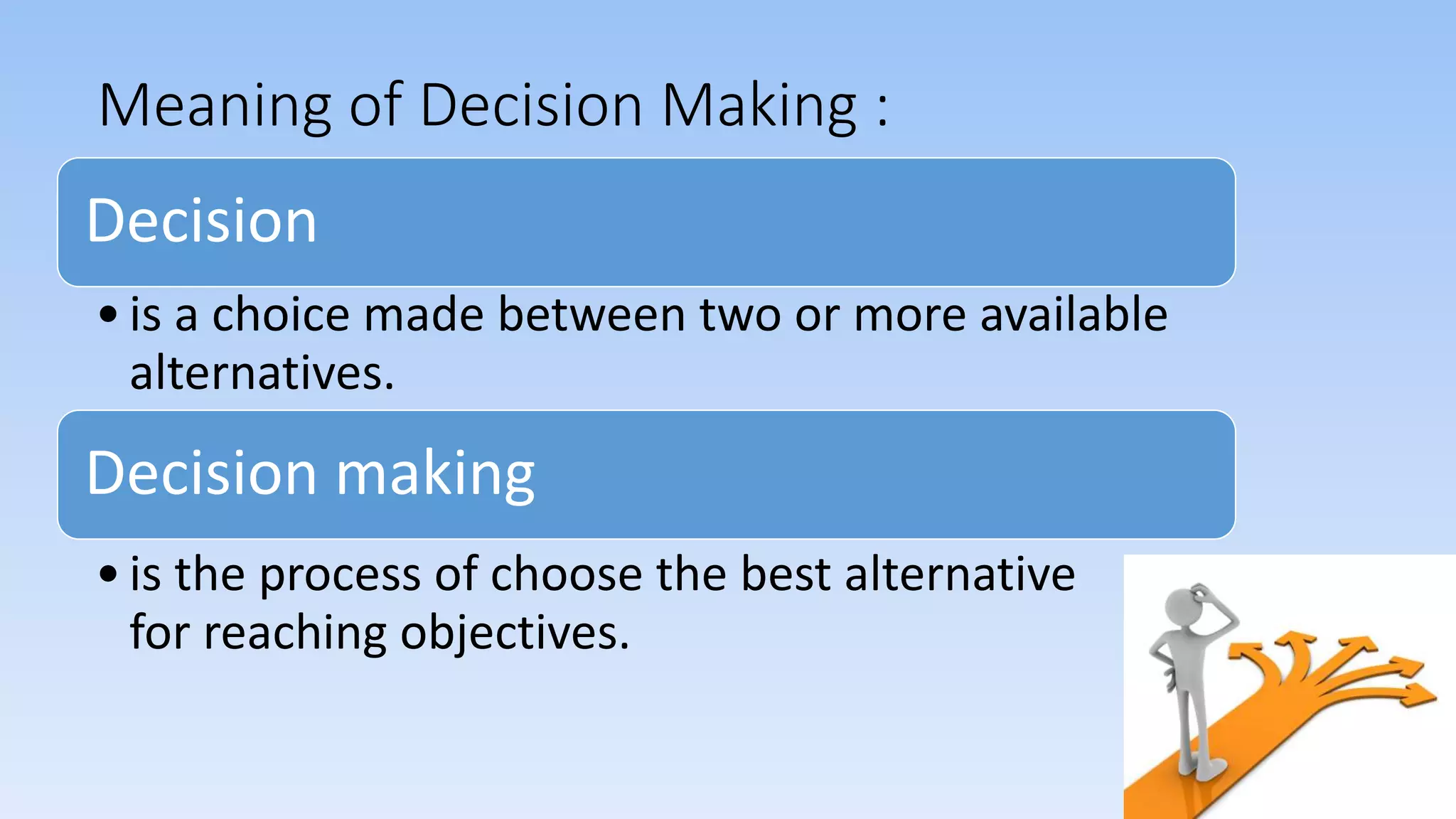
Meaning of Decision Making :
Decision
•is a choice made between two or more available
alternatives.
Decision making
•is the process of choose the best alternative
for reaching objectives.
Types of Decisions
Programmed Decisions :
• Routine and repetitive
• Eg : habit, clerical routine work
Non-programmed Decisions :
• Non-routine, unfamiliar circumstances, unique
• Eg : judgement, creativity
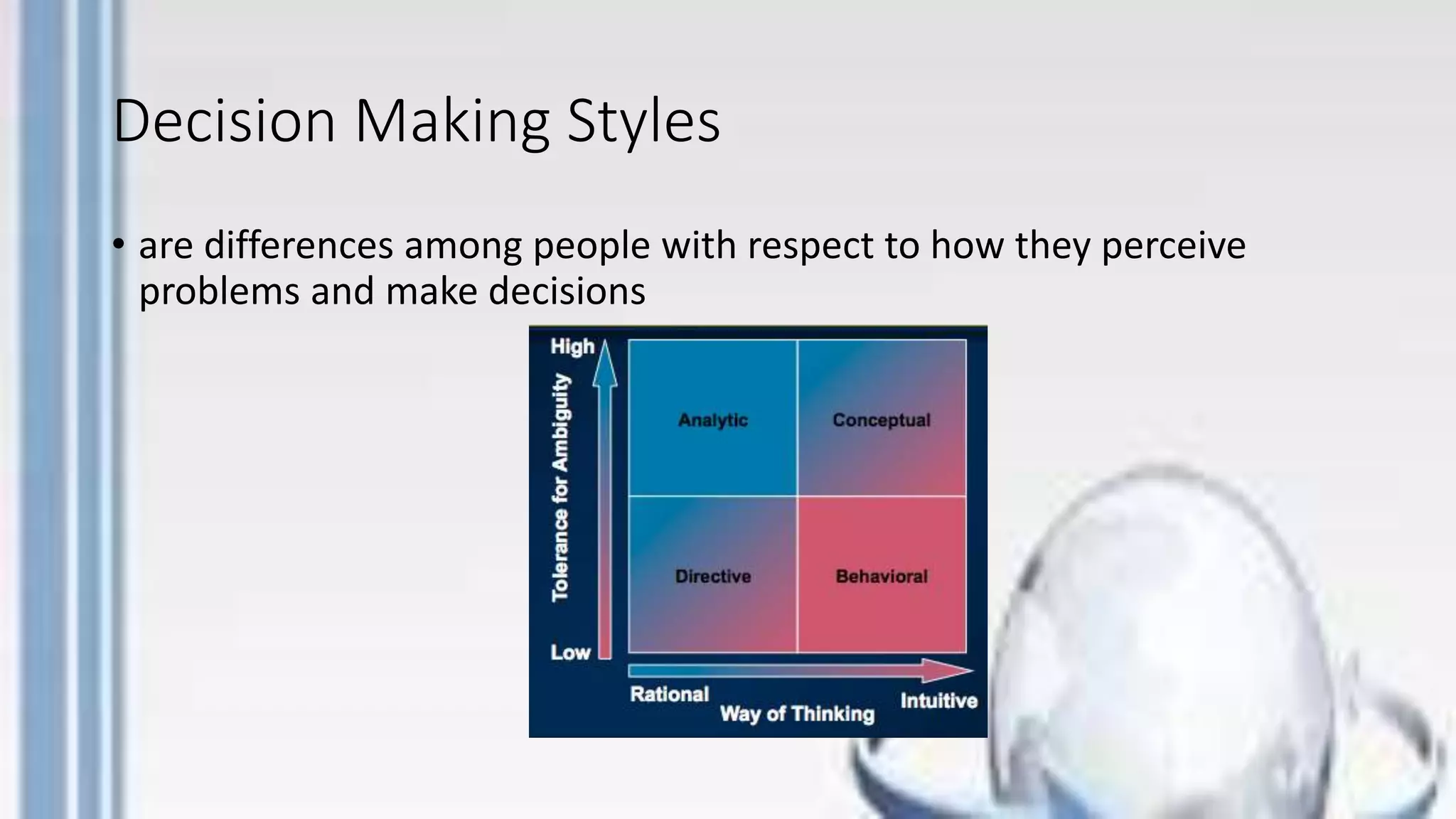
Decision Making Styles
• are differences among people with respect to how they perceive
problems and make decisions
Directive Style
• Action-oriented, focus on facts
• Efficient and logical
• Making fast decision
Analytical Style
• Careful, like lots of information and alternative choices
• Consider more information
• Take longer to make decisions
• Able to cope changing situations
Conceptual Style
• Rely on intuition and have a long-term perspective
• tend to focus on people or social
• Very broad out look
• Focus on long run
• Good at finding creative solutions
Behavioral Style
• Most people-oriented
• Work well with others
• Receptive to suggestions
• Prefer verbal to written information
• Avoid conflict, concern others
Knowing Your Decision Making Style
• Make adjustments to the situation and results.
• Helps understand yourself.
• Able to influence others by being aware of styles.
• Prove yourself to be a valuable asset as a leader.
Rational Decision Making
• Multi-step process for making choices between alternatives.
• Explains how managers should make decisions.
• Assumes managers will make logical decisions that will be
optimum in furthering the organization’s best interests.
• Four steps associated.
Step 1: Identify the Problem and Opportunity
• Problems or difficulties that inhibit the achievement of goals.
• Opportunities: situation that present possibilities for
exceeding existing goals.
• Diagnosis : analysing the underlying causes.
Step 2: Think Up Alternative Solutions
• After identified problem and opportunity, need to come up
with alternative solutions.
• For a programmed decision- easy and obvious.
• For a non-programmed decision- more creative, more better.
Step 3: Evaluate Alternatives & Select a Solution
• Not only according to cost and quality, but according to the
following question :
1. Is it ethical?
2. Is it feasible?
3. Is it ultimately effective?
Step 4: Implement & Evaluate the Solution
Chosen
• Successful Implementation:
1. Plan Carefully.
2. Be Sensitive to those affected.
• Evaluation – follow up and evaluate the result
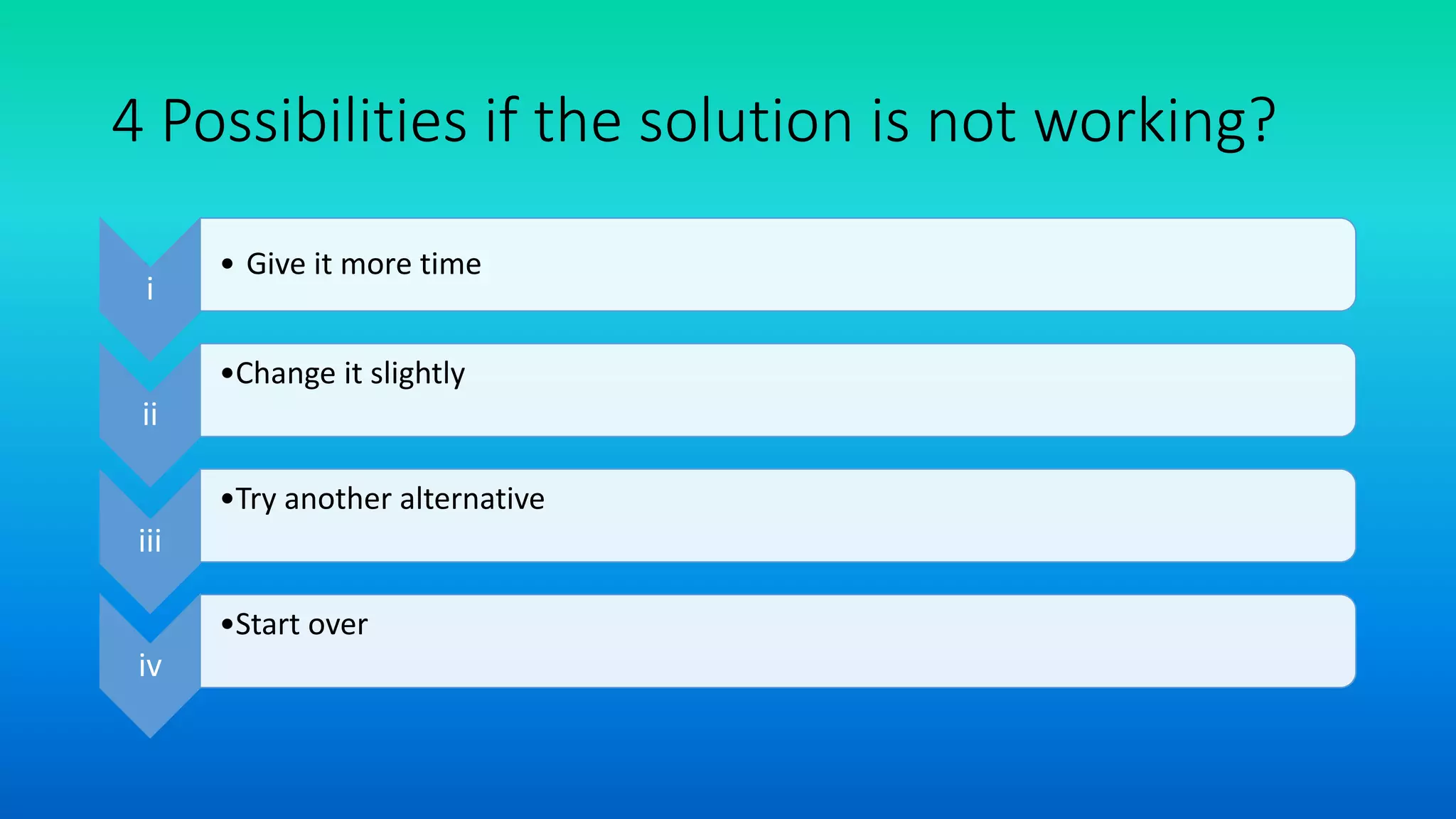
4 Possibilities if the solution is not working?
i
• Give it more time
ii
•Change it slightly
iii
•Try another alternative
iv
•Start over
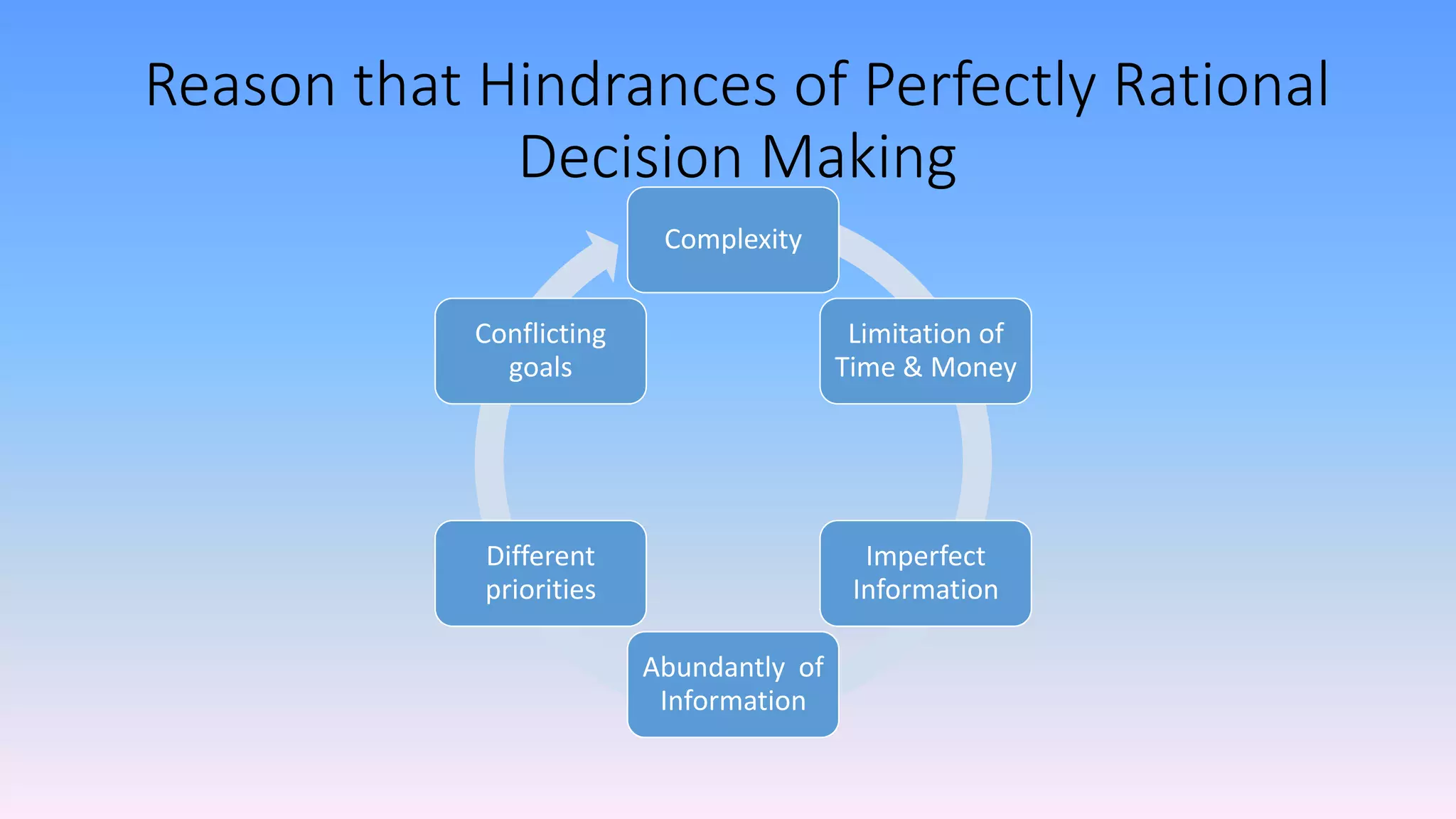
Reason that Hindrances of Perfectly Rational
Decision Making
Complexity
Limitation of
Time & Money
Imperfect
Information
Abundantly of
Information
Different
priorities
Conflicting
goals
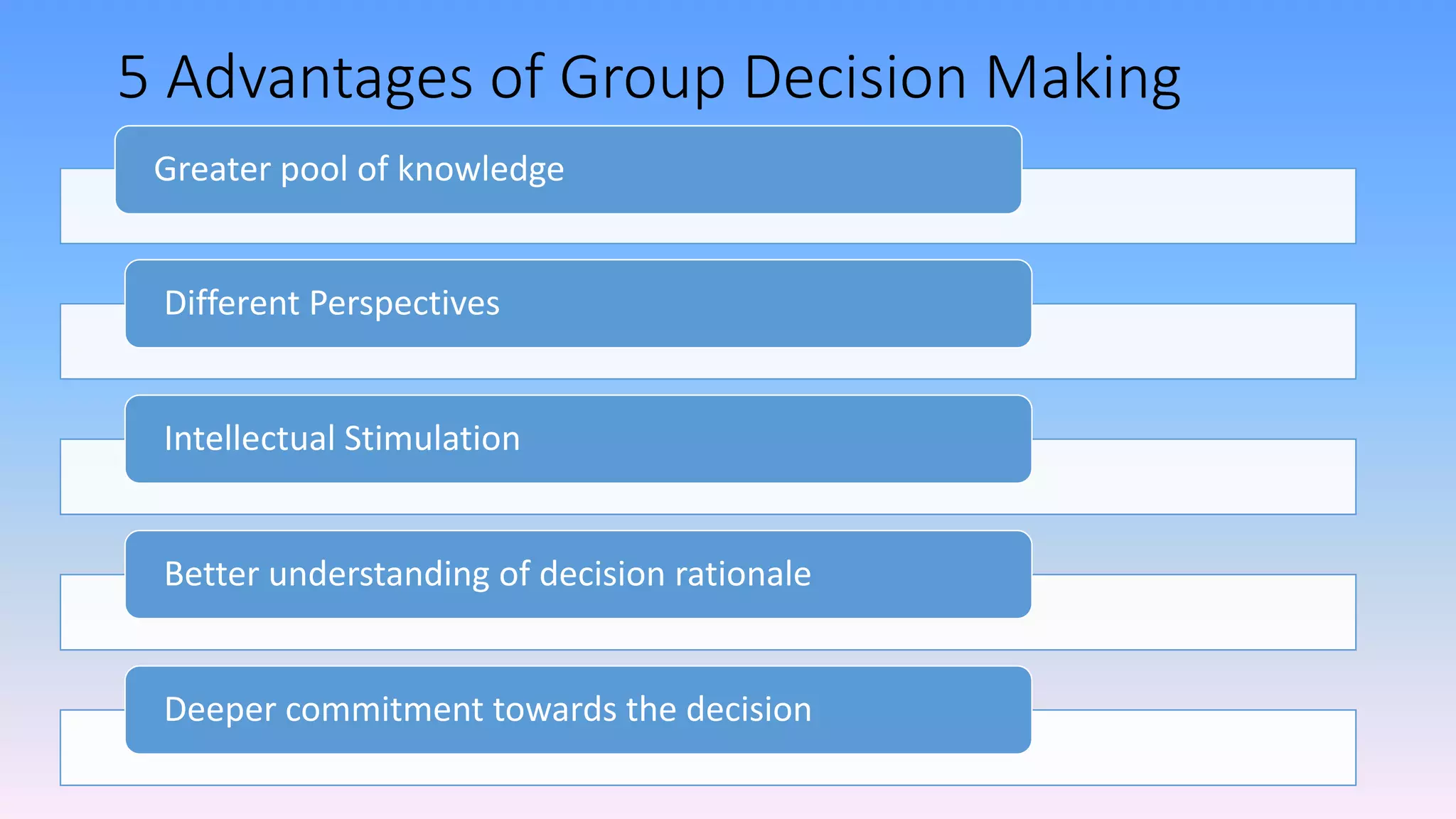
5 Advantages of Group Decision Making
Greater pool of knowledge
Different Perspectives
Intellectual Stimulation
Better understanding of decision rationale
Deeper commitment towards the decision
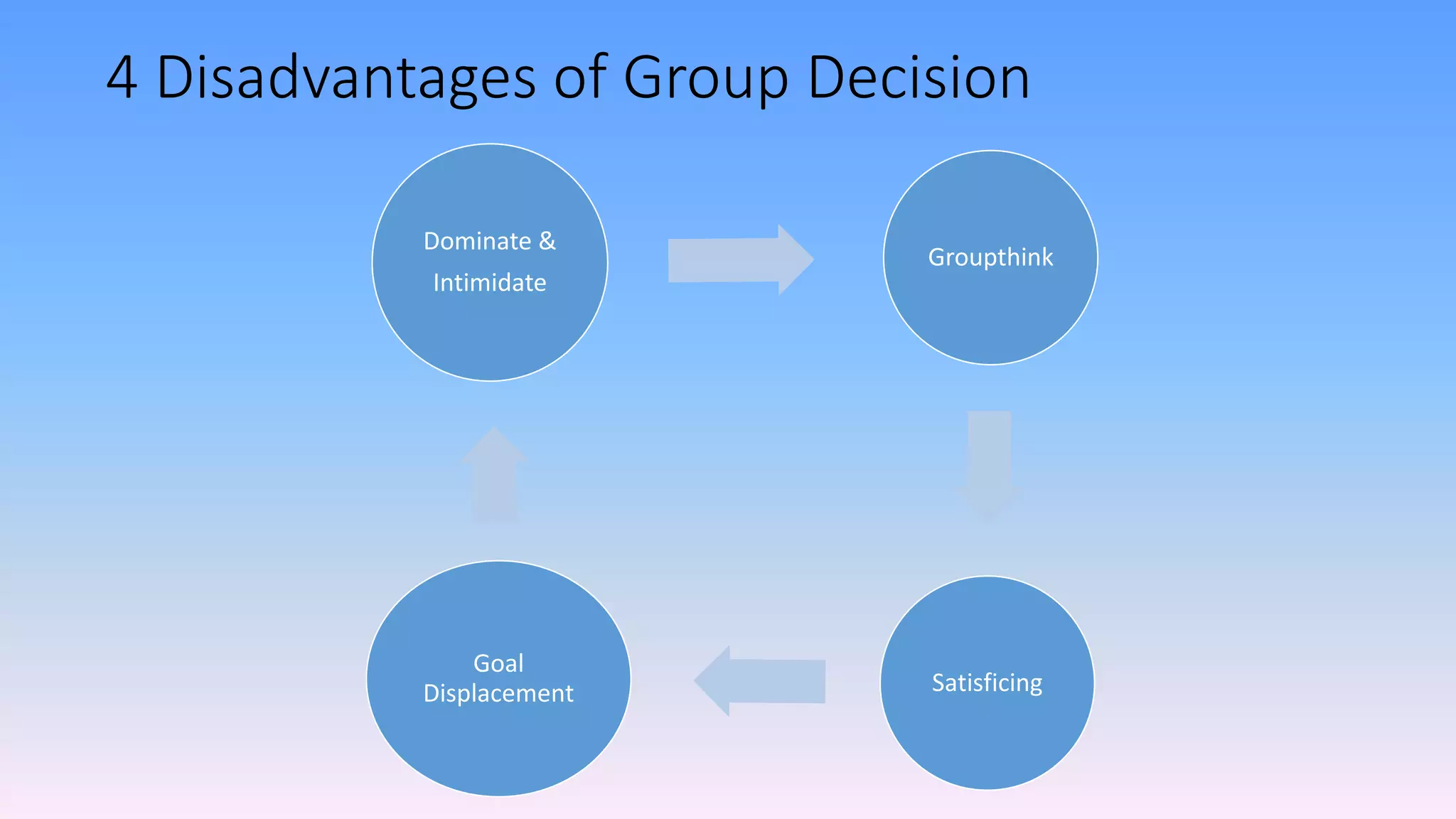
4 Disadvantages of Group Decision
Dominate &
Intimidate
Groupthink
Satisficing
Goal
Displacement
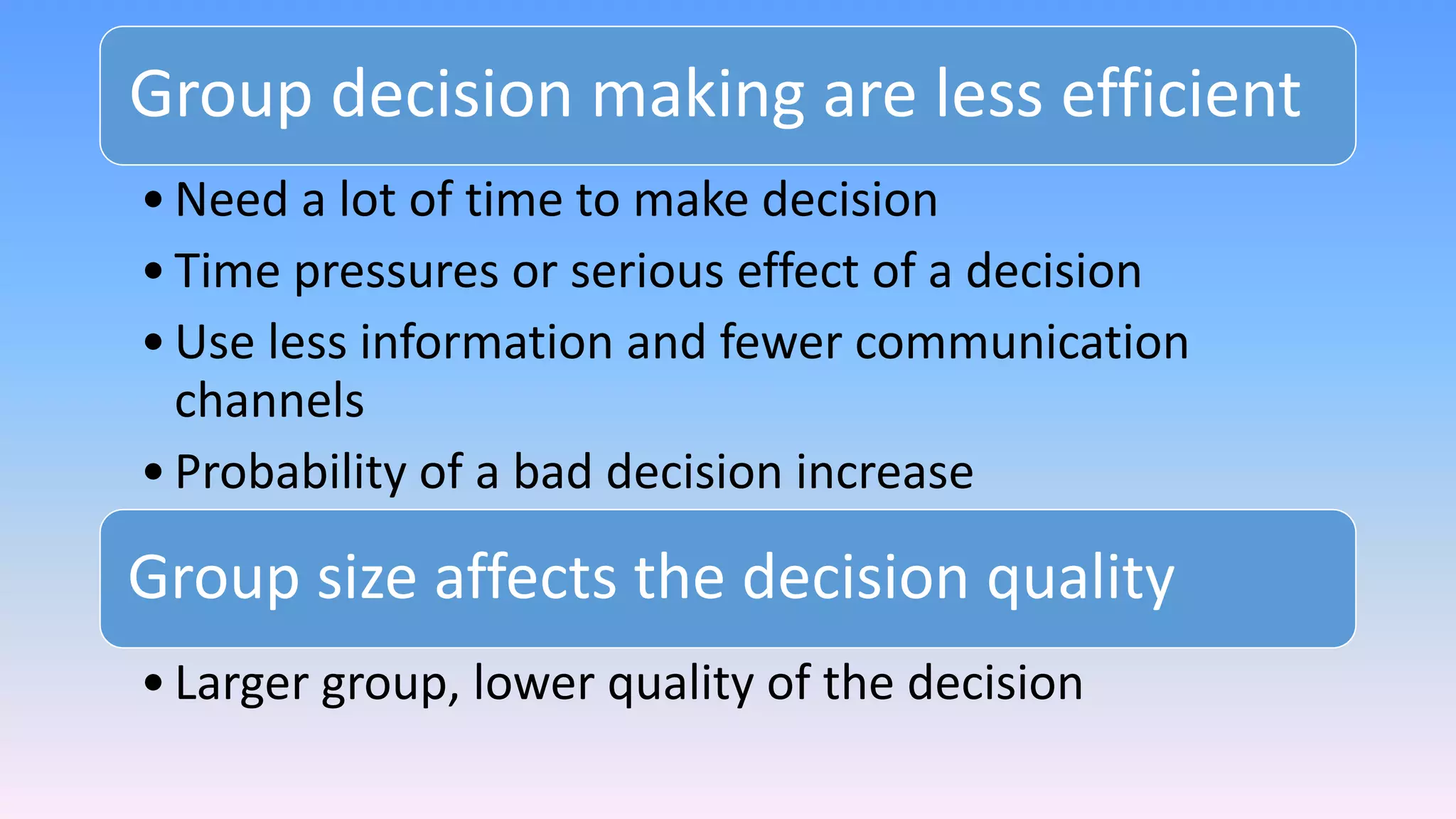
Group decision making are less efficient
•Need a lot of time to make decision
•Time pressures or serious effect of a decision
•Use less information and fewer communication
channels
•Probability of a bad decision increase
Group size affects the decision quality
•Larger group, lower quality of the decision
They may be too confident
•More confident about their judgement and
choices liability because it can lead to
groupthink
Knowledge counts
•Group members know a good deal about the
relevant issue The group leader has the ability
to weight member’s opinion
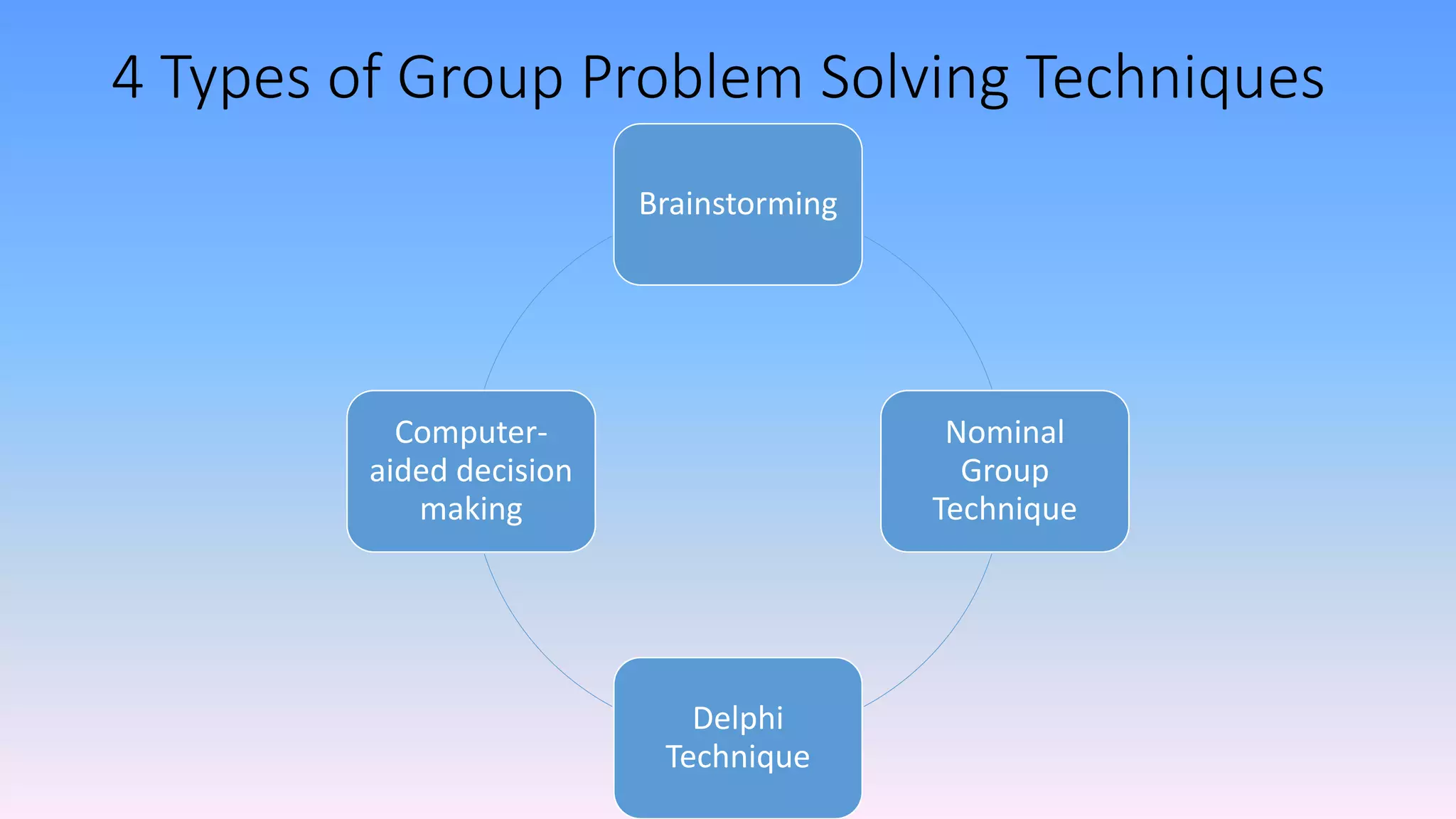
4 Types of Group Problem Solving Techniques
Brainstorming
Nominal
Group
Technique
Delphi
Technique
Computer-
aided decision
making
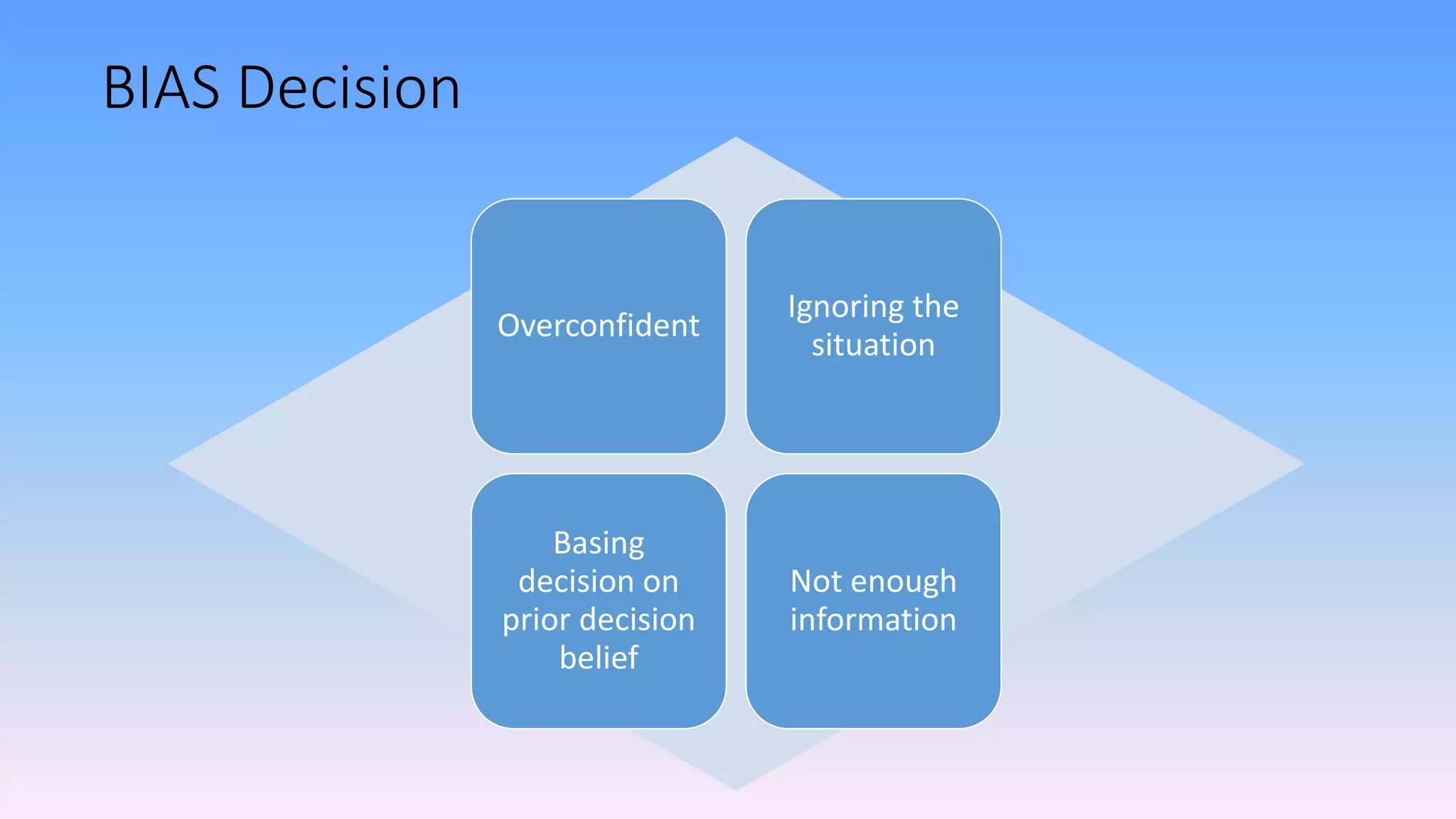
BIAS Decision
Overconfident
Ignoring the
situation
Basing
decision on
prior decision
belief
Not enough
information
THE END

Management - Chapter 7 : Individual & Group Decision Making

  • 1.
    FHBM1114 MANAGEMENT TOPIC 5: INDIVIDUAL & GROUP DECISION MAKING PRESENTED BY : CHIA WEY JIAN LEE YU SENG TEY SHU SHAN WONG CHUN MENG
  • 2.
    Meaning of DecisionMaking : Decision •is a choice made between two or more available alternatives. Decision making •is the process of choose the best alternative for reaching objectives.
  • 3.
    Types of Decisions ProgrammedDecisions : • Routine and repetitive • Eg : habit, clerical routine work Non-programmed Decisions : • Non-routine, unfamiliar circumstances, unique • Eg : judgement, creativity
  • 4.
    Decision Making Styles •are differences among people with respect to how they perceive problems and make decisions
  • 5.
    Directive Style • Action-oriented,focus on facts • Efficient and logical • Making fast decision
  • 6.
    Analytical Style • Careful,like lots of information and alternative choices • Consider more information • Take longer to make decisions • Able to cope changing situations
  • 7.
    Conceptual Style • Relyon intuition and have a long-term perspective • tend to focus on people or social • Very broad out look • Focus on long run • Good at finding creative solutions
  • 8.
    Behavioral Style • Mostpeople-oriented • Work well with others • Receptive to suggestions • Prefer verbal to written information • Avoid conflict, concern others
  • 9.
    Knowing Your DecisionMaking Style • Make adjustments to the situation and results. • Helps understand yourself. • Able to influence others by being aware of styles. • Prove yourself to be a valuable asset as a leader.
  • 10.
    Rational Decision Making •Multi-step process for making choices between alternatives. • Explains how managers should make decisions. • Assumes managers will make logical decisions that will be optimum in furthering the organization’s best interests. • Four steps associated.
  • 11.
    Step 1: Identifythe Problem and Opportunity • Problems or difficulties that inhibit the achievement of goals. • Opportunities: situation that present possibilities for exceeding existing goals. • Diagnosis : analysing the underlying causes.
  • 12.
    Step 2: ThinkUp Alternative Solutions • After identified problem and opportunity, need to come up with alternative solutions. • For a programmed decision- easy and obvious. • For a non-programmed decision- more creative, more better.
  • 13.
    Step 3: EvaluateAlternatives & Select a Solution • Not only according to cost and quality, but according to the following question : 1. Is it ethical? 2. Is it feasible? 3. Is it ultimately effective?
  • 14.
    Step 4: Implement& Evaluate the Solution Chosen • Successful Implementation: 1. Plan Carefully. 2. Be Sensitive to those affected. • Evaluation – follow up and evaluate the result
  • 15.
    4 Possibilities ifthe solution is not working? i • Give it more time ii •Change it slightly iii •Try another alternative iv •Start over
  • 16.
    Reason that Hindrancesof Perfectly Rational Decision Making Complexity Limitation of Time & Money Imperfect Information Abundantly of Information Different priorities Conflicting goals
  • 17.
    5 Advantages ofGroup Decision Making Greater pool of knowledge Different Perspectives Intellectual Stimulation Better understanding of decision rationale Deeper commitment towards the decision
  • 18.
    4 Disadvantages ofGroup Decision Dominate & Intimidate Groupthink Satisficing Goal Displacement
  • 19.
    Group decision makingare less efficient •Need a lot of time to make decision •Time pressures or serious effect of a decision •Use less information and fewer communication channels •Probability of a bad decision increase Group size affects the decision quality •Larger group, lower quality of the decision
  • 20.
    They may betoo confident •More confident about their judgement and choices liability because it can lead to groupthink Knowledge counts •Group members know a good deal about the relevant issue The group leader has the ability to weight member’s opinion
  • 21.
    4 Types ofGroup Problem Solving Techniques Brainstorming Nominal Group Technique Delphi Technique Computer- aided decision making
  • 22.
    BIAS Decision Overconfident Ignoring the situation Basing decisionon prior decision belief Not enough information
  • 23.