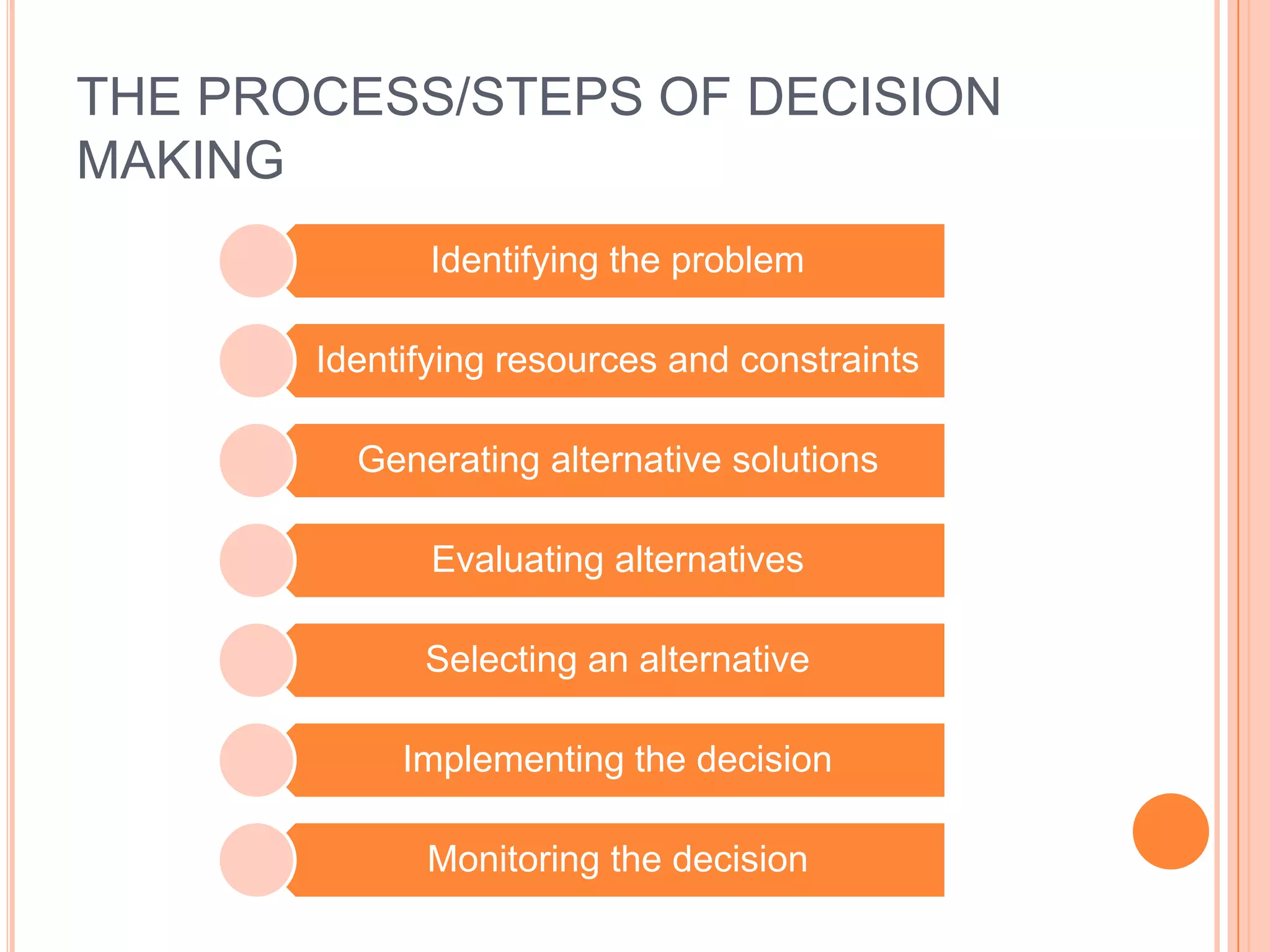
There are several steps involved in the decision making process:
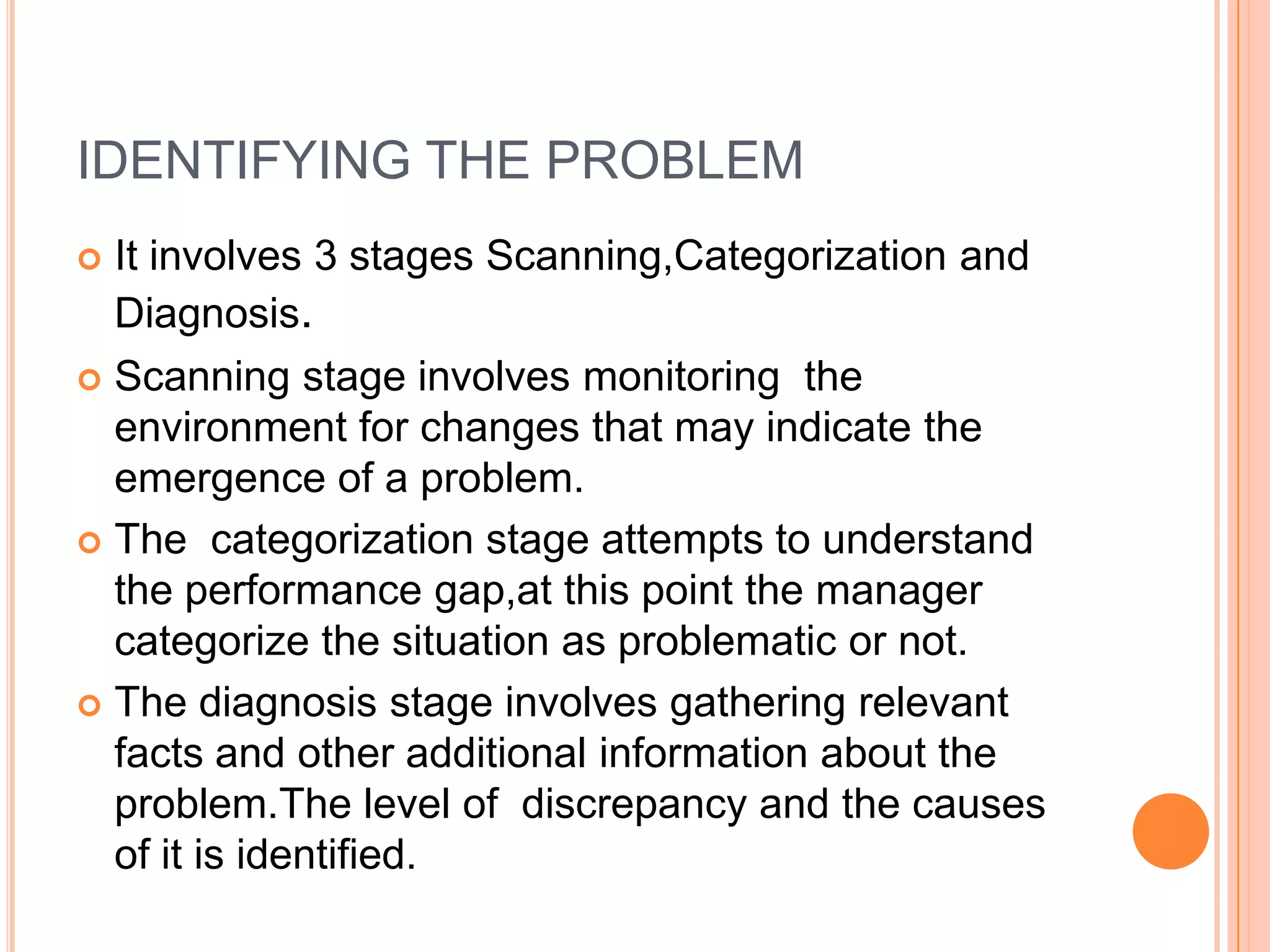
1) Identifying the problem by scanning for issues, categorizing them, and diagnosing causes.
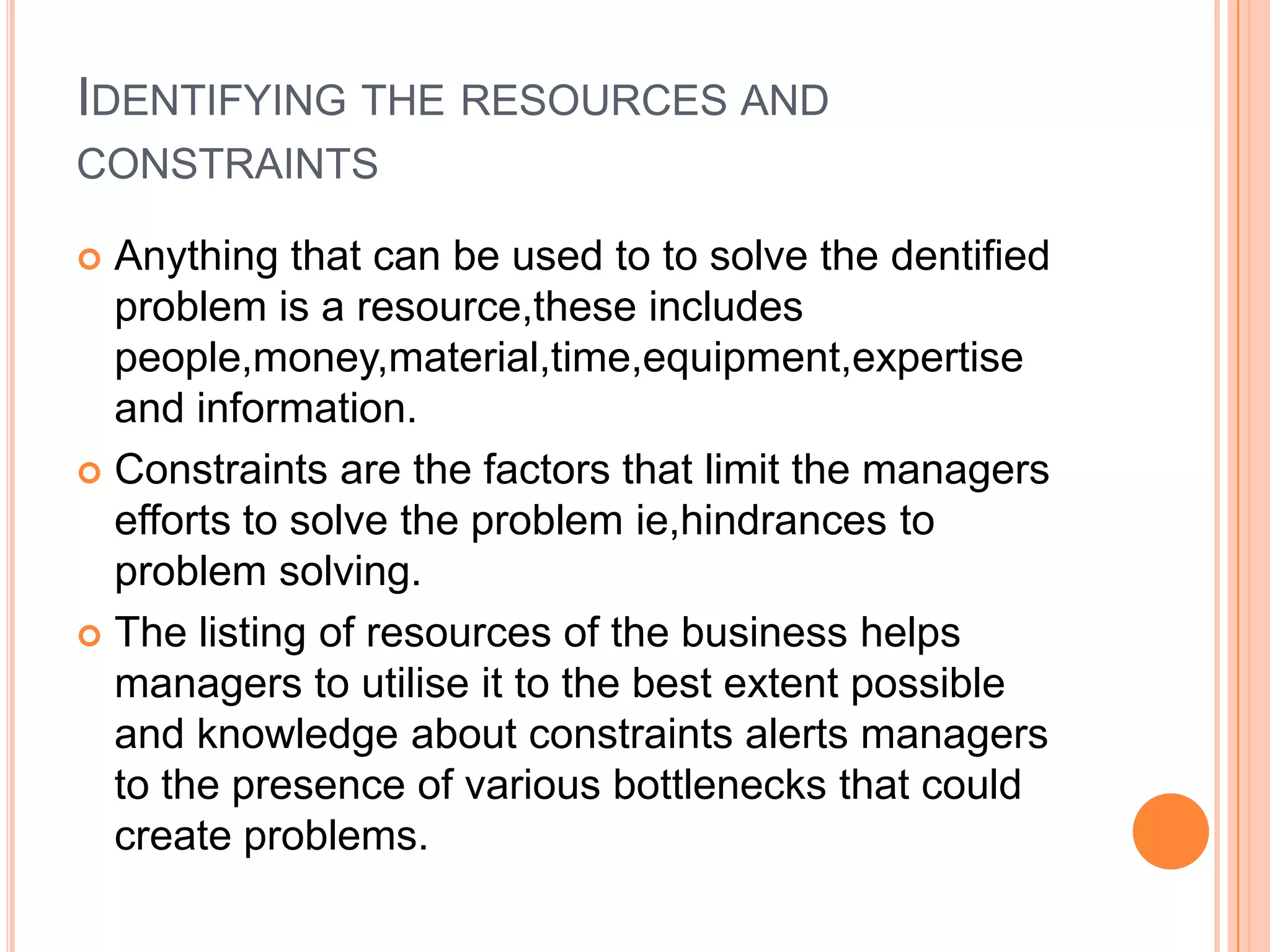
2) Identifying available resources and constraints to solve the problem.
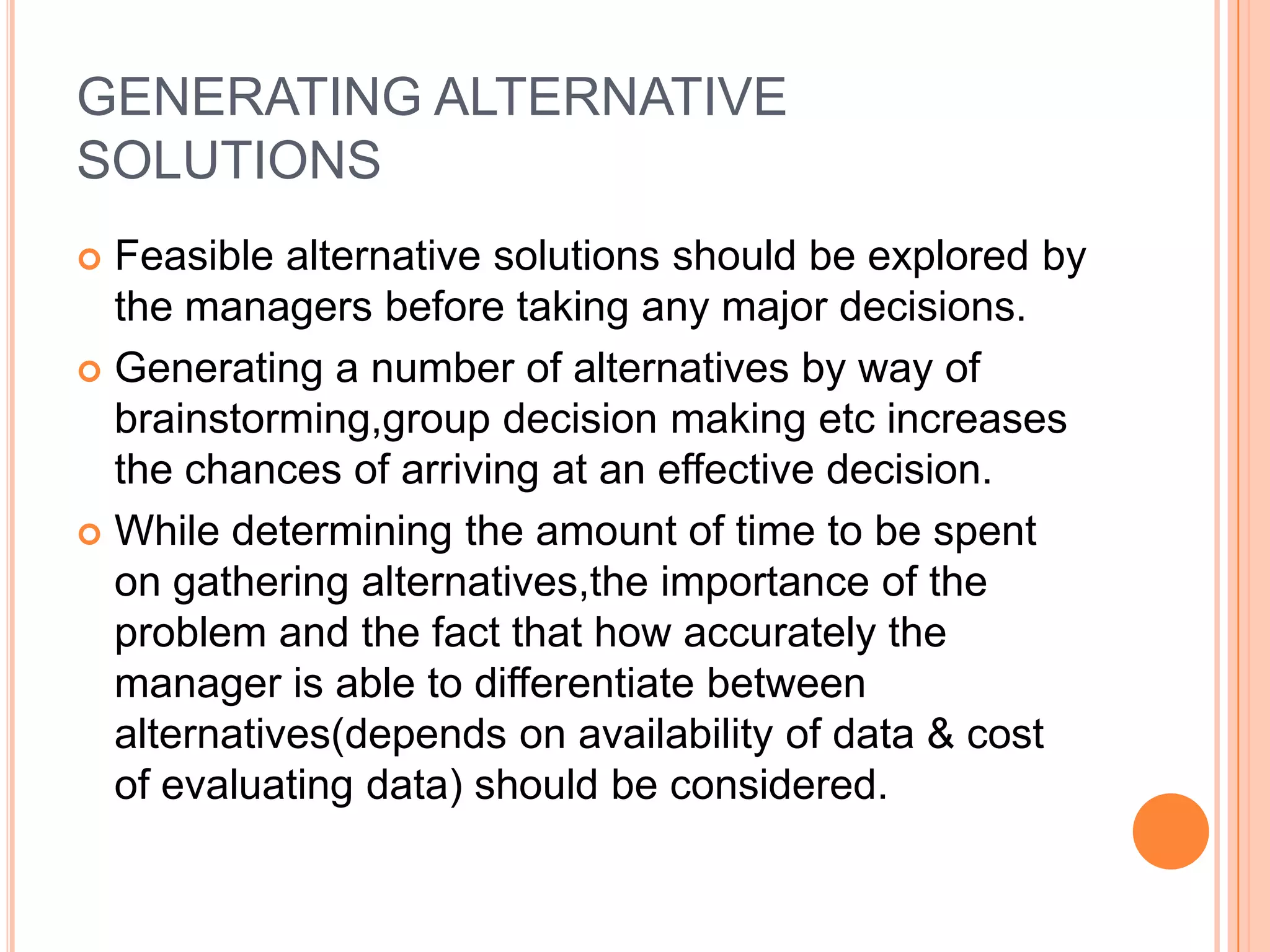
3) Generating alternative solutions by brainstorming with others.
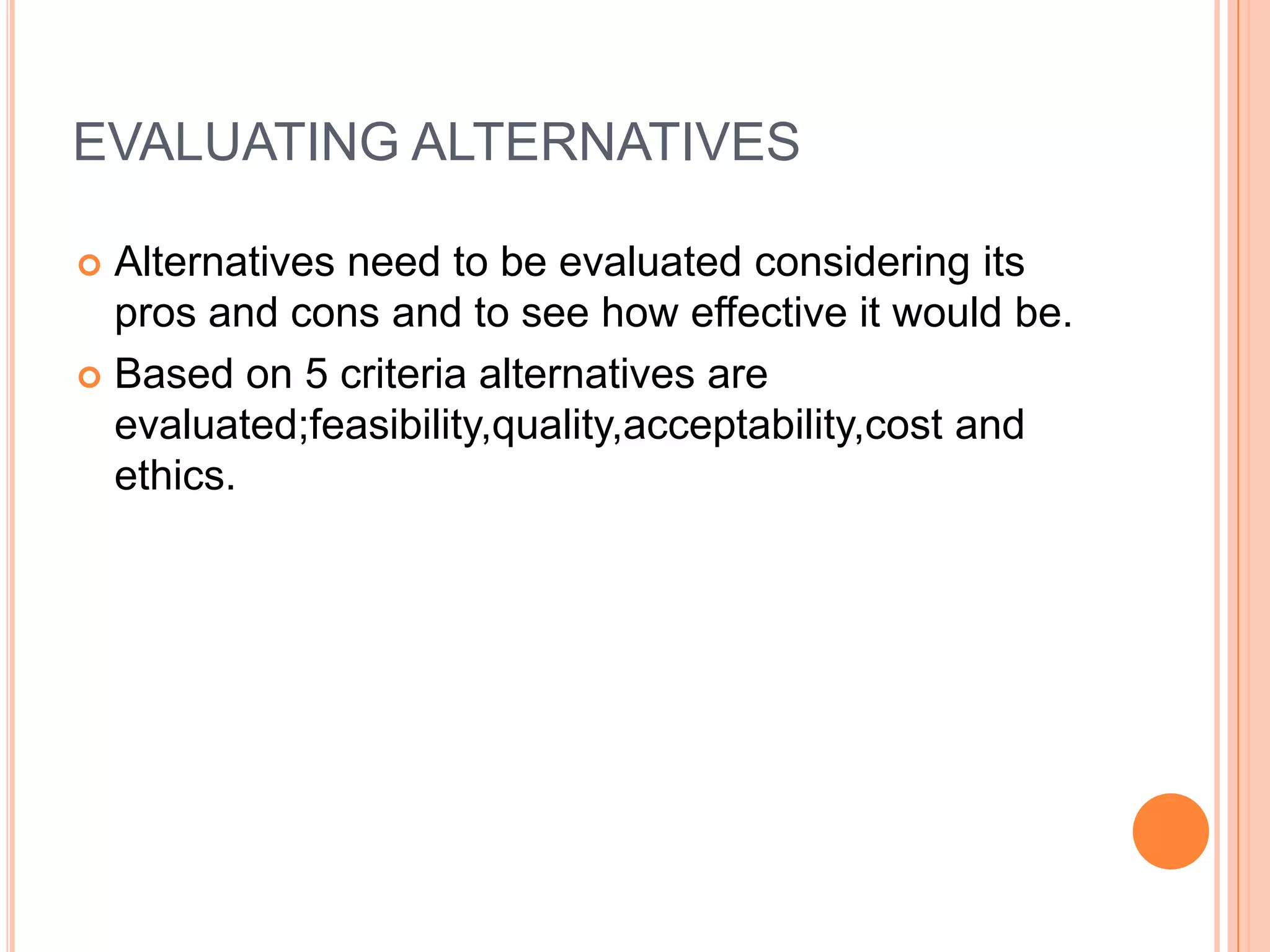
4) Evaluating alternatives based on feasibility, quality, costs, and ethics.
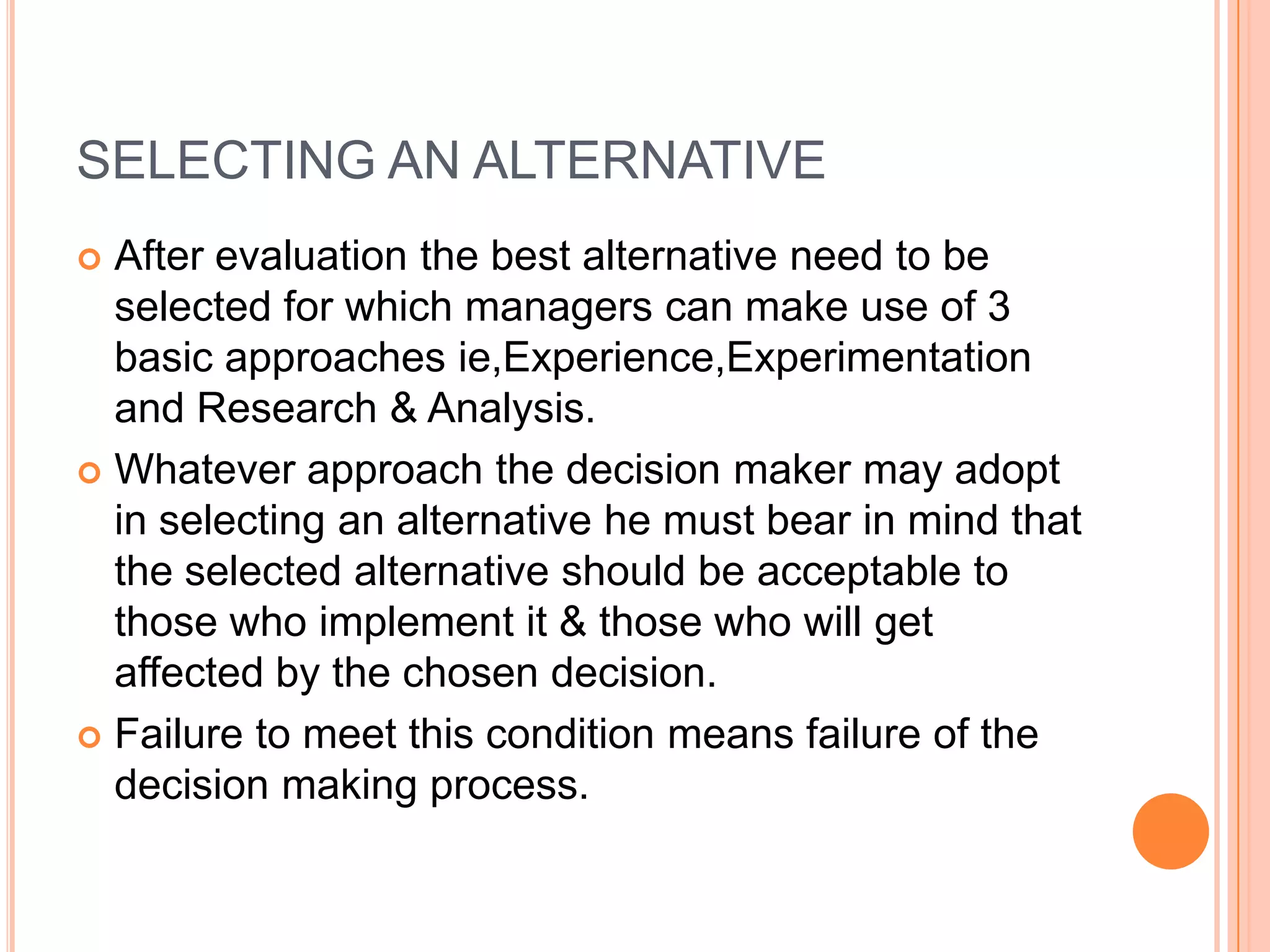
5) Selecting the best alternative using experience, research, or experimentation.
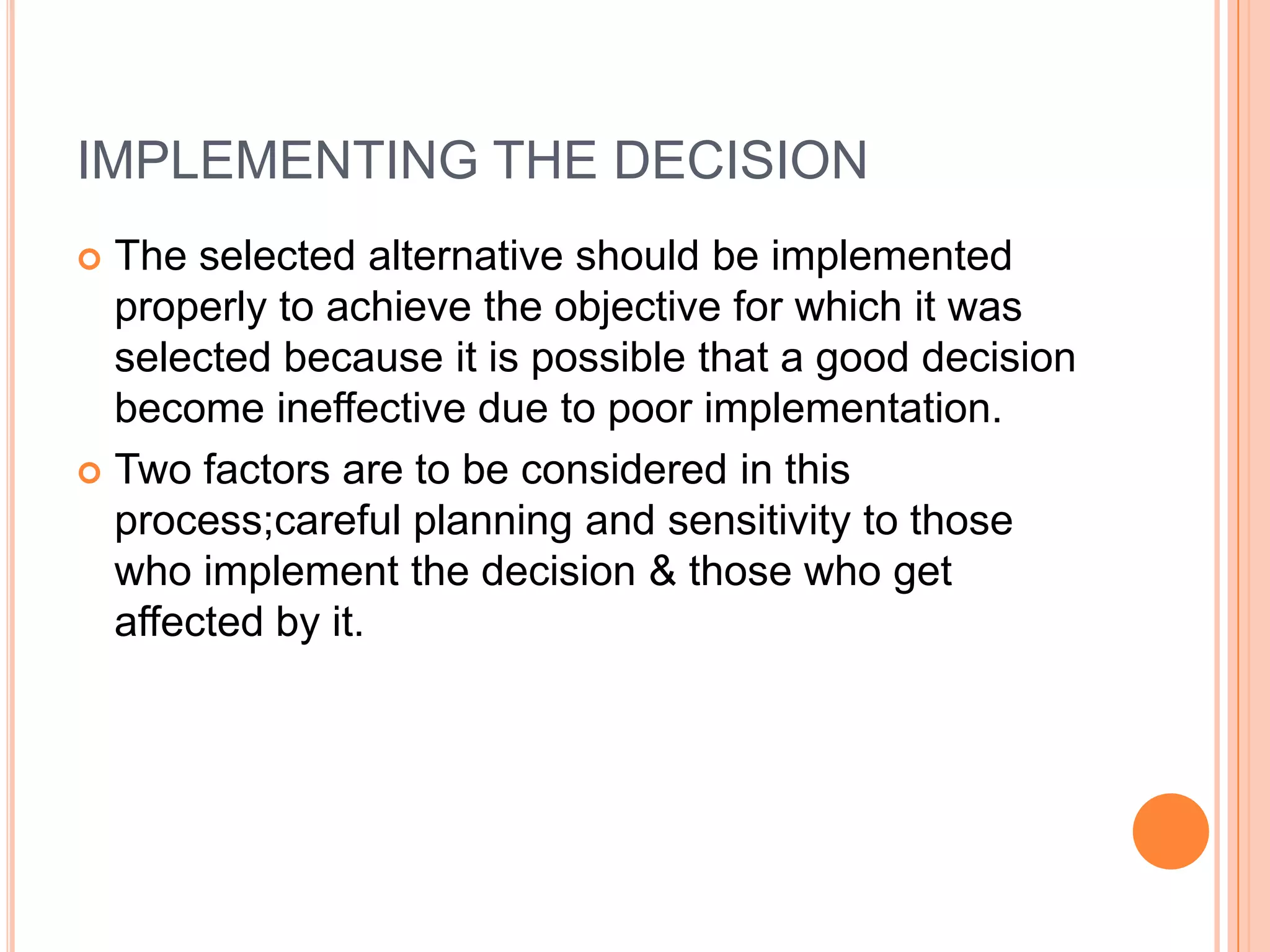
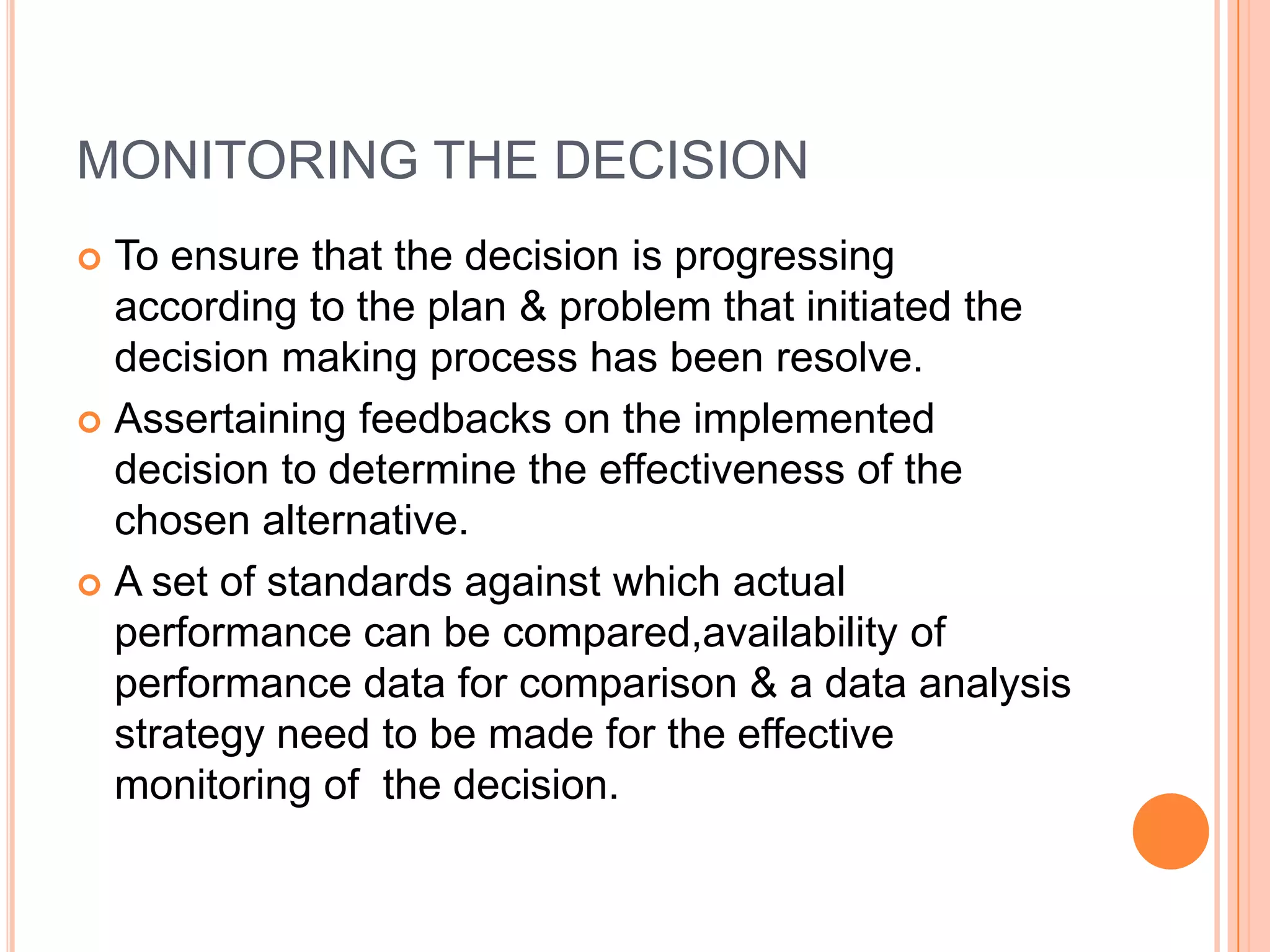
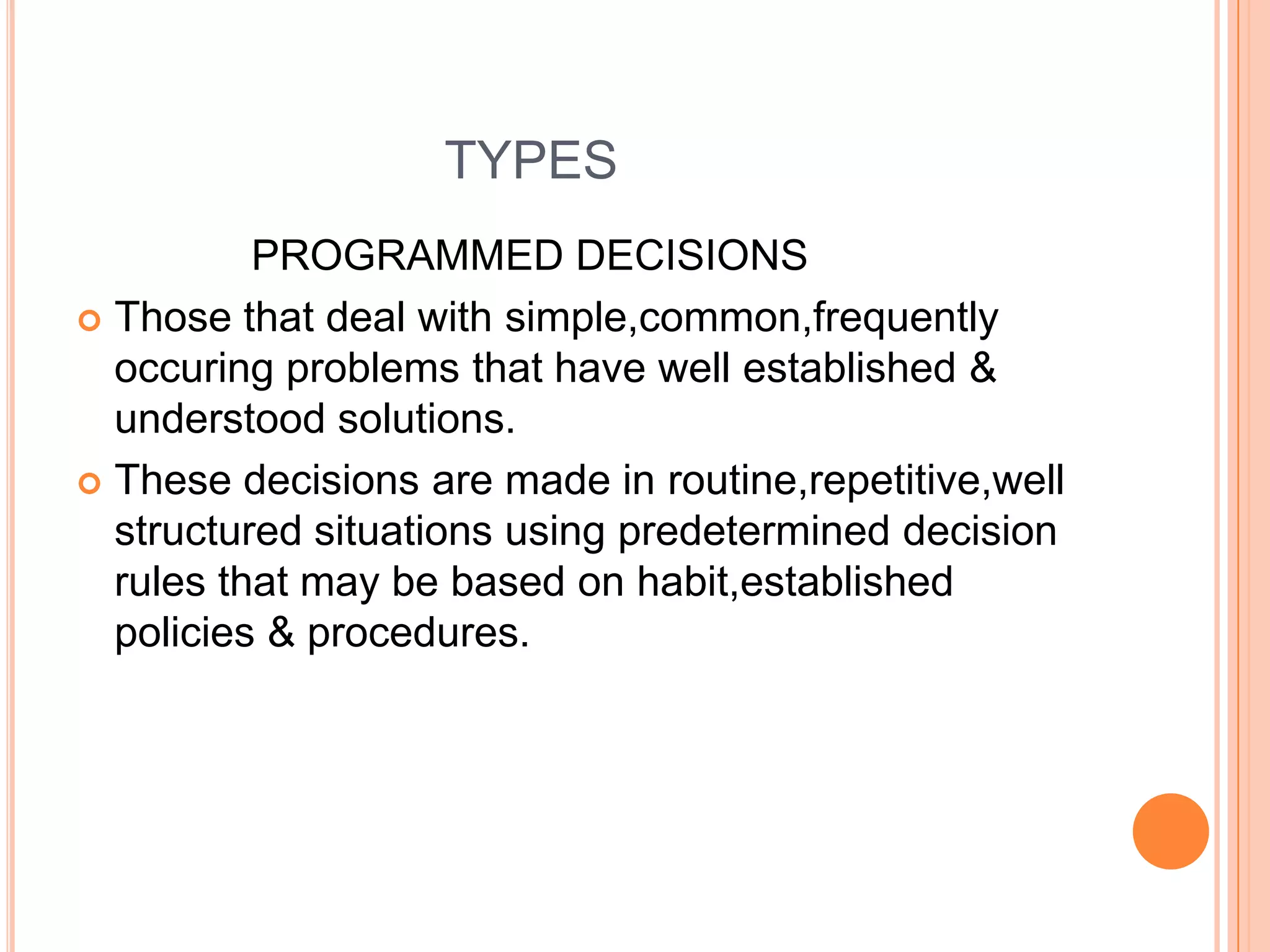
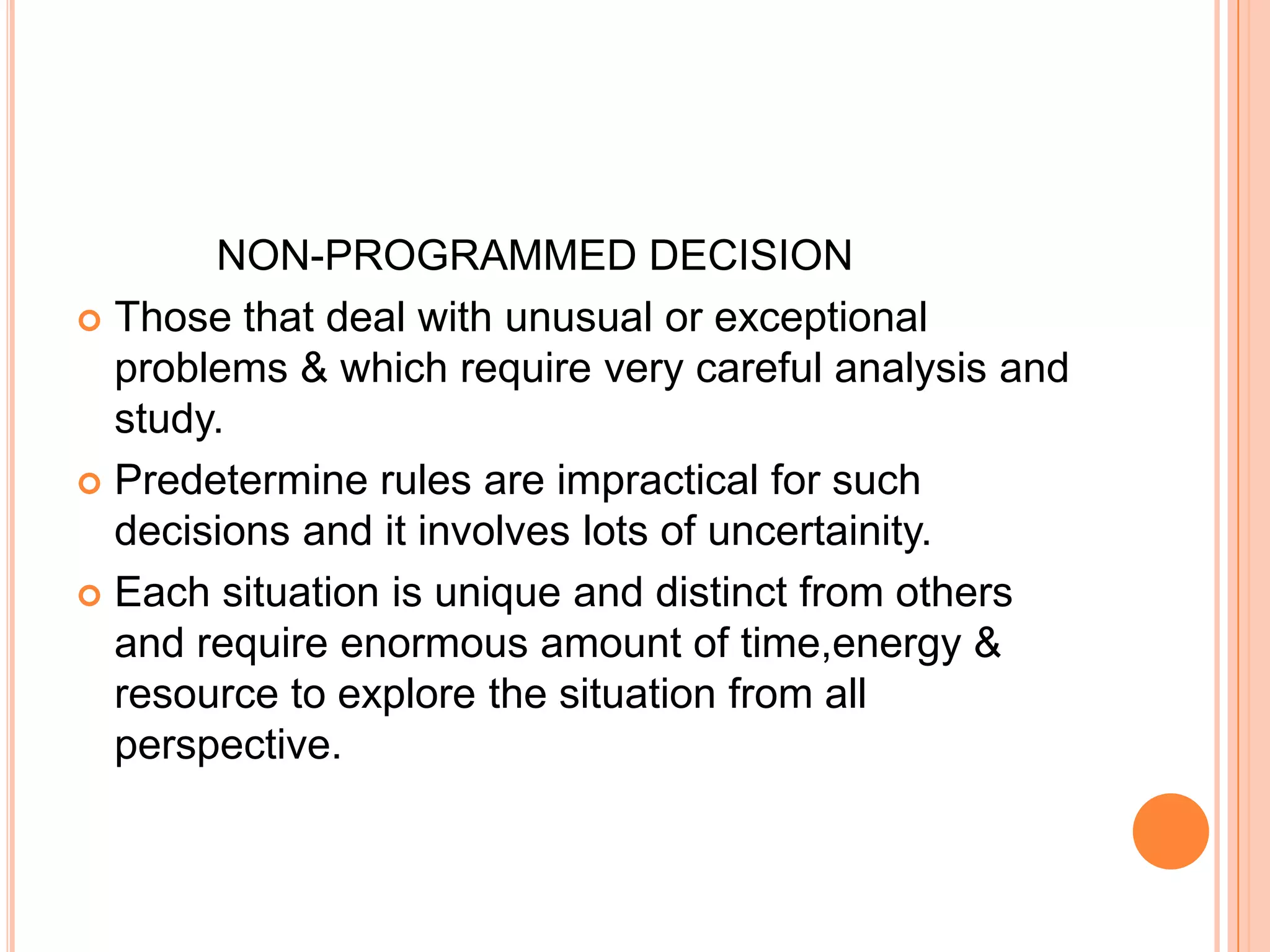
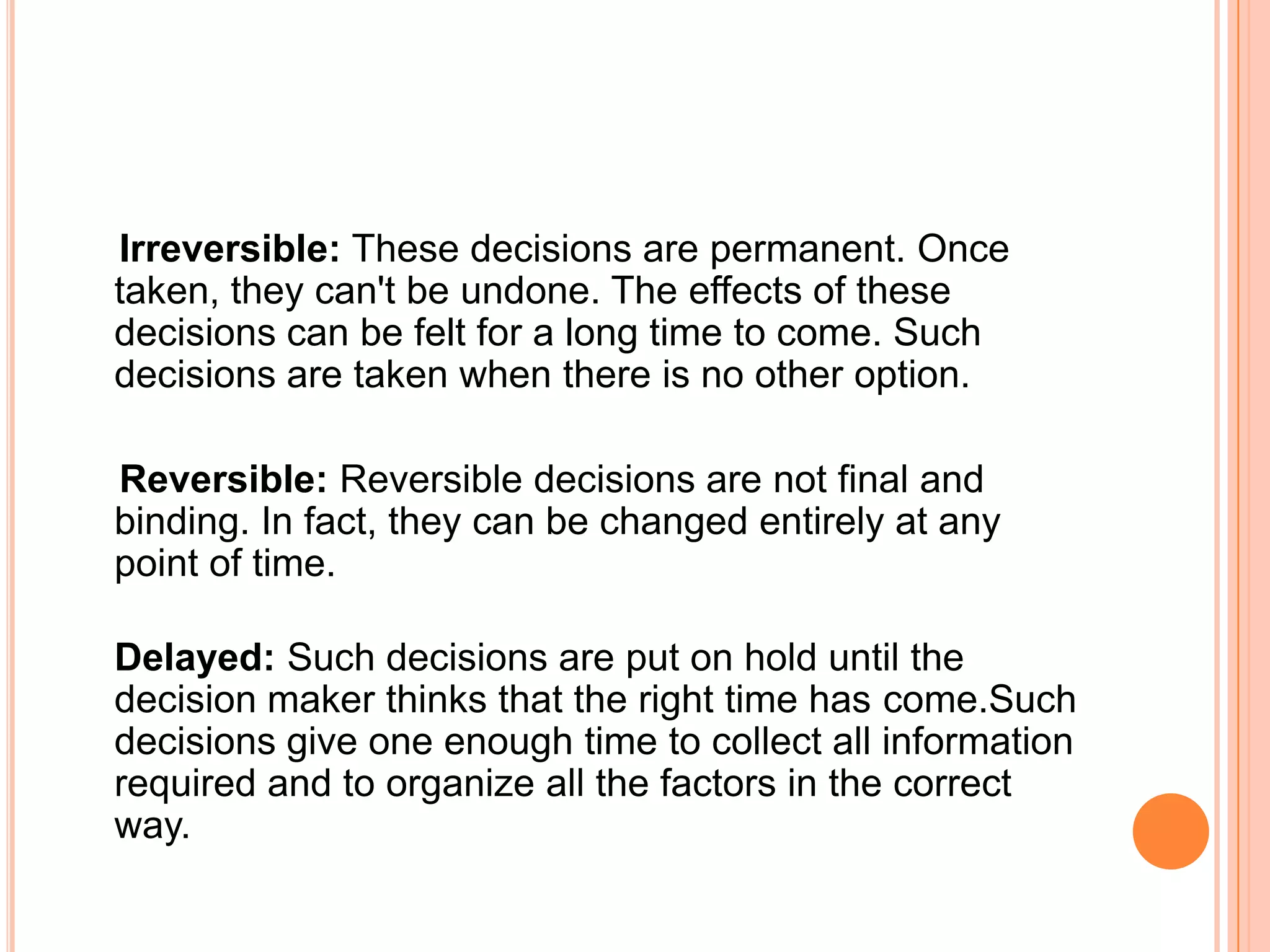
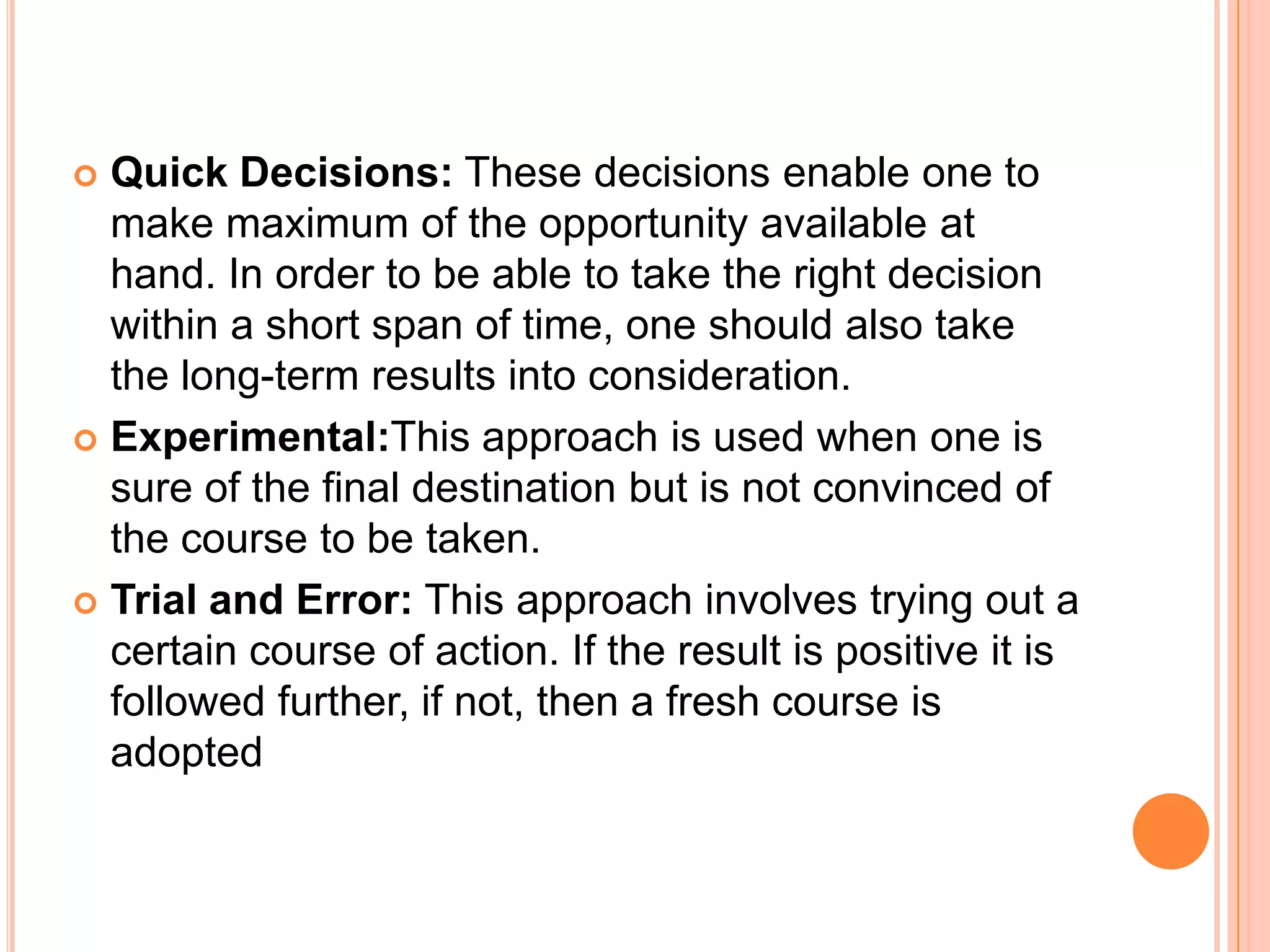
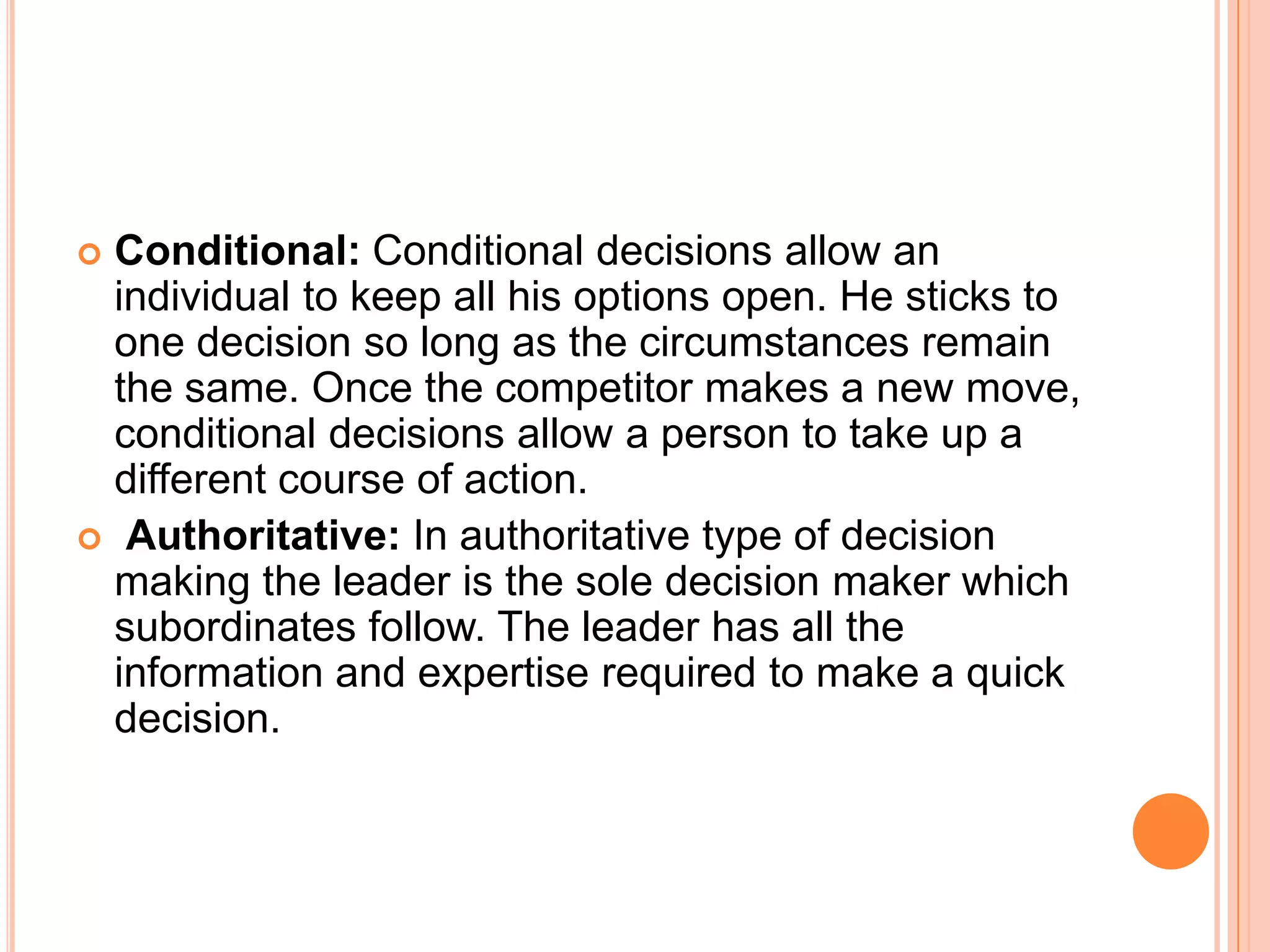
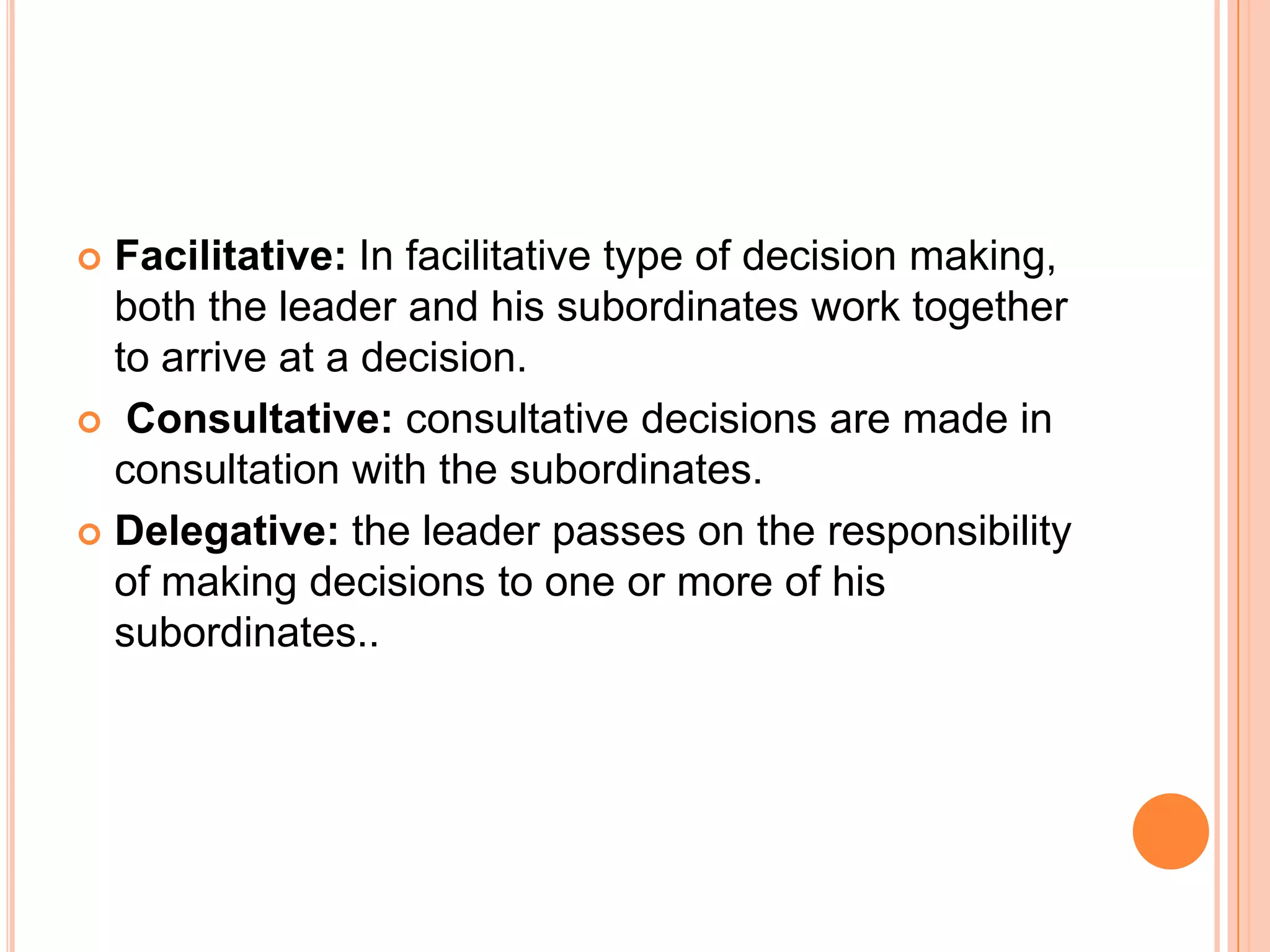
The document then discusses implementing, monitoring, and different types of decisions like programmed versus non-programmed, and reversible versus irreversible decisions.