Making powerful science: an
introduction to NGS and beyond
Martin Philpott
Team Leader in Systems Biology of Uterine Fibroids
& Director Botnar Sequencing Facility
Botnar Research Centre
Next Generation Sequencing
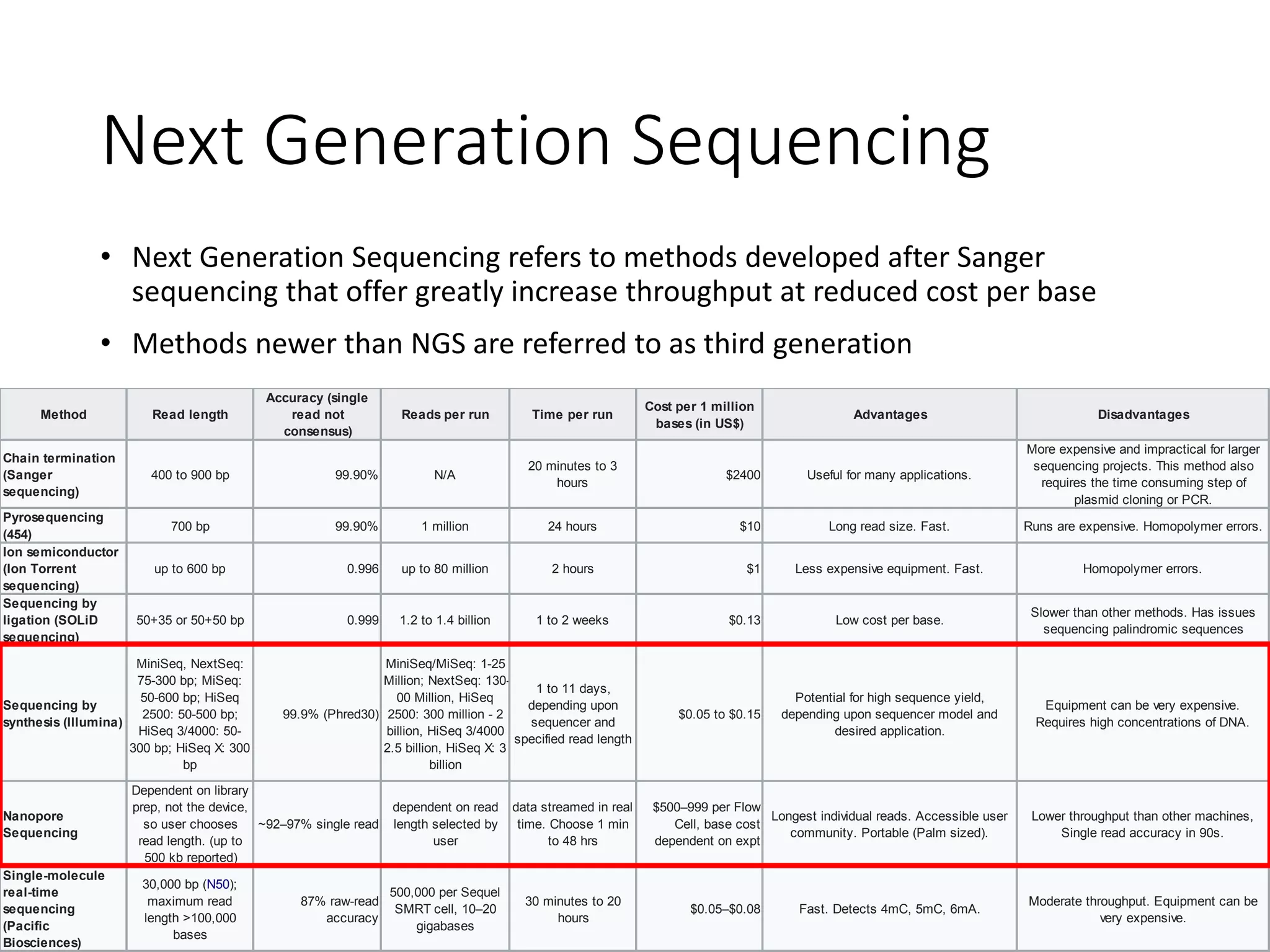
• Next Generation Sequencing refers to methods developed after Sanger
sequencing that offer greatly increase throughput at reduced cost per base
• Methods newer than NGS are referred to as third generation
Method Read length
Accuracy (single
read not
consensus)
Reads per run Time per run
Cost per 1 million
bases (in US$)
Advantages Disadvantages
Chain termination
(Sanger
sequencing)
400 to 900 bp 99.90% N/A
20 minutes to 3
hours
$2400 Useful for many applications.
More expensive and impractical for larger
sequencing projects. This method also
requires the time consuming step of
plasmid cloning or PCR.
Pyrosequencing
(454)
700 bp 99.90% 1 million 24 hours $10 Long read size. Fast. Runs are expensive. Homopolymer errors.
Ion semiconductor
(Ion Torrent
sequencing)
up to 600 bp 0.996 up to 80 million 2 hours $1 Less expensive equipment. Fast. Homopolymer errors.
Sequencing by
ligation (SOLiD
sequencing)
50+35 or 50+50 bp 0.999 1.2 to 1.4 billion 1 to 2 weeks $0.13 Low cost per base.
Slower than other methods. Has issues
sequencing palindromic sequences
Sequencing by
synthesis (Illumina)
MiniSeq, NextSeq:
75-300 bp; MiSeq:
50-600 bp; HiSeq
2500: 50-500 bp;
HiSeq 3/4000: 50-
300 bp; HiSeq X: 300
bp
99.9% (Phred30)
MiniSeq/MiSeq: 1-25
Million; NextSeq: 130-
00 Million, HiSeq
2500: 300 million - 2
billion, HiSeq 3/4000
2.5 billion, HiSeq X: 3
billion
1 to 11 days,
depending upon
sequencer and
specified read length
$0.05 to $0.15
Potential for high sequence yield,
depending upon sequencer model and
desired application.
Equipment can be very expensive.
Requires high concentrations of DNA.
Nanopore
Sequencing
Dependent on library
prep, not the device,
so user chooses
read length. (up to
500 kb reported)
~92–97% single read
dependent on read
length selected by
user
data streamed in real
time. Choose 1 min
to 48 hrs
$500–999 per Flow
Cell, base cost
dependent on expt
Longest individual reads. Accessible user
community. Portable (Palm sized).
Lower throughput than other machines,
Single read accuracy in 90s.
Single-molecule
real-time
sequencing
(Pacific
Biosciences)
30,000 bp (N50);
maximum read
length >100,000
bases
87% raw-read
accuracy
500,000 per Sequel
SMRT cell, 10–20
gigabases
30 minutes to 20
hours
$0.05–$0.08 Fast. Detects 4mC, 5mC, 6mA.
Moderate throughput. Equipment can be
very expensive.
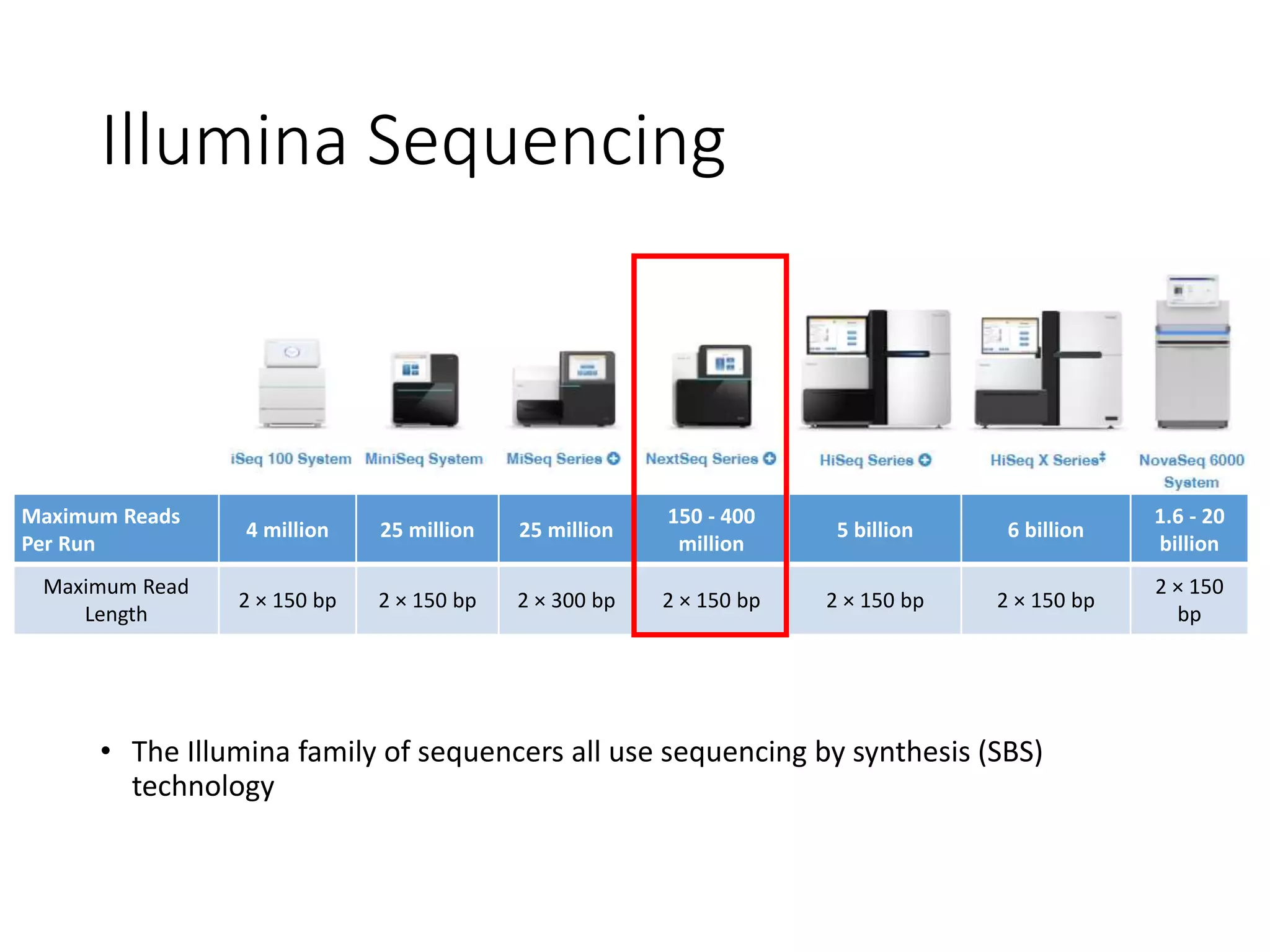
Maximum Reads
Per Run
4 million 25 million 25 million
150 - 400
million
5 billion 6 billion
1.6 - 20
billion
Maximum Read
Length
2 × 150 bp 2 × 150 bp 2 × 300 bp 2 × 150 bp 2 × 150 bp 2 × 150 bp
2 × 150
bp
Illumina Sequencing
• The Illumina family of sequencers all use sequencing by synthesis (SBS)
technology
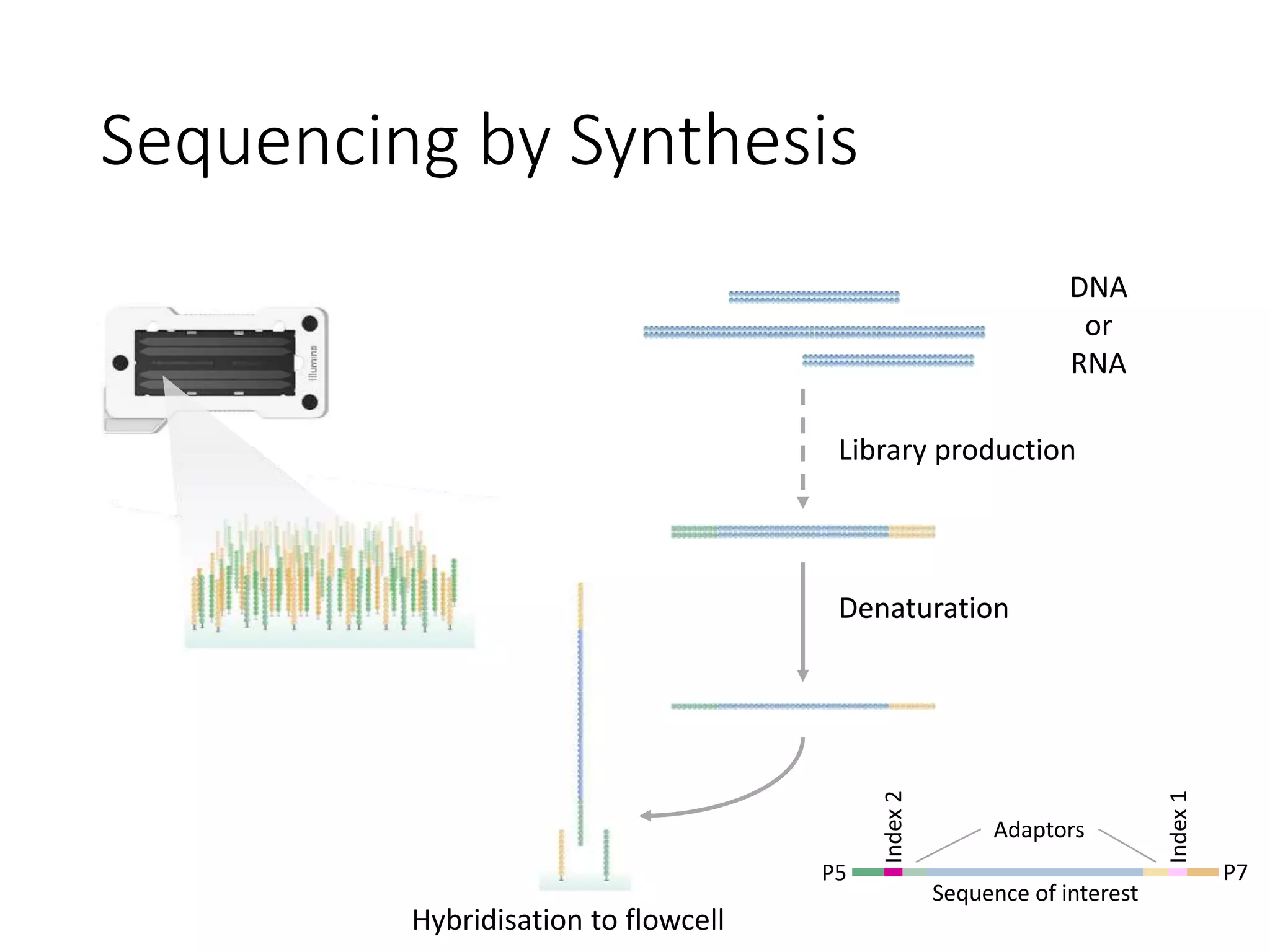
Sequencing by Synthesis
DNA
or
RNA
Library production
Denaturation
Hybridisation to flowcell
P5
Index
2
Index
1
P7
Adaptors
Sequence of interest
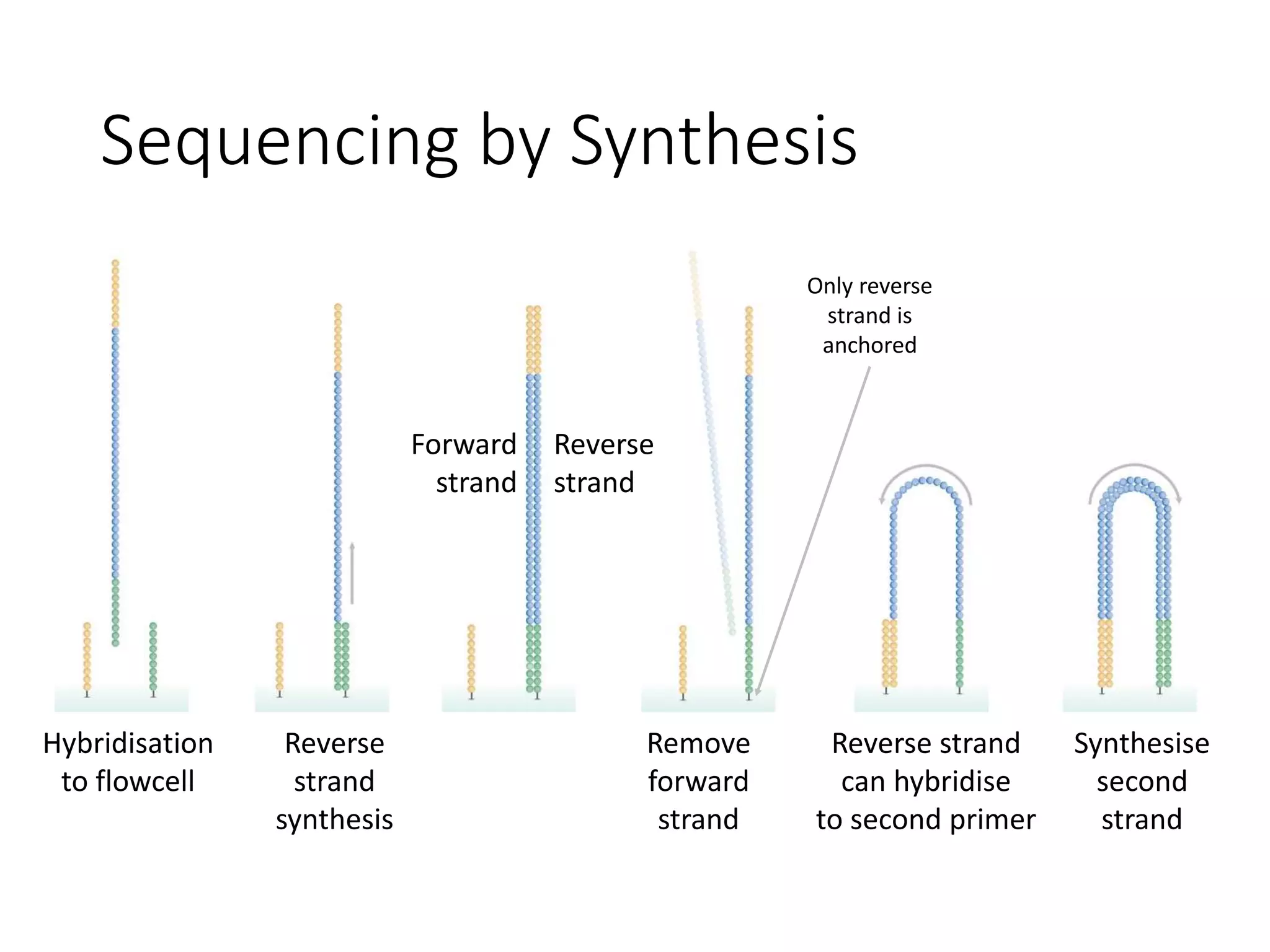
Sequencing by Synthesis
Hybridisation
to flowcell
Reverse
strand
synthesis
Forward
strand
Reverse
strand
Remove
forward
strand
Only reverse
strand is
anchored
Reverse strand
can hybridise
to second primer
Synthesise
second
strand
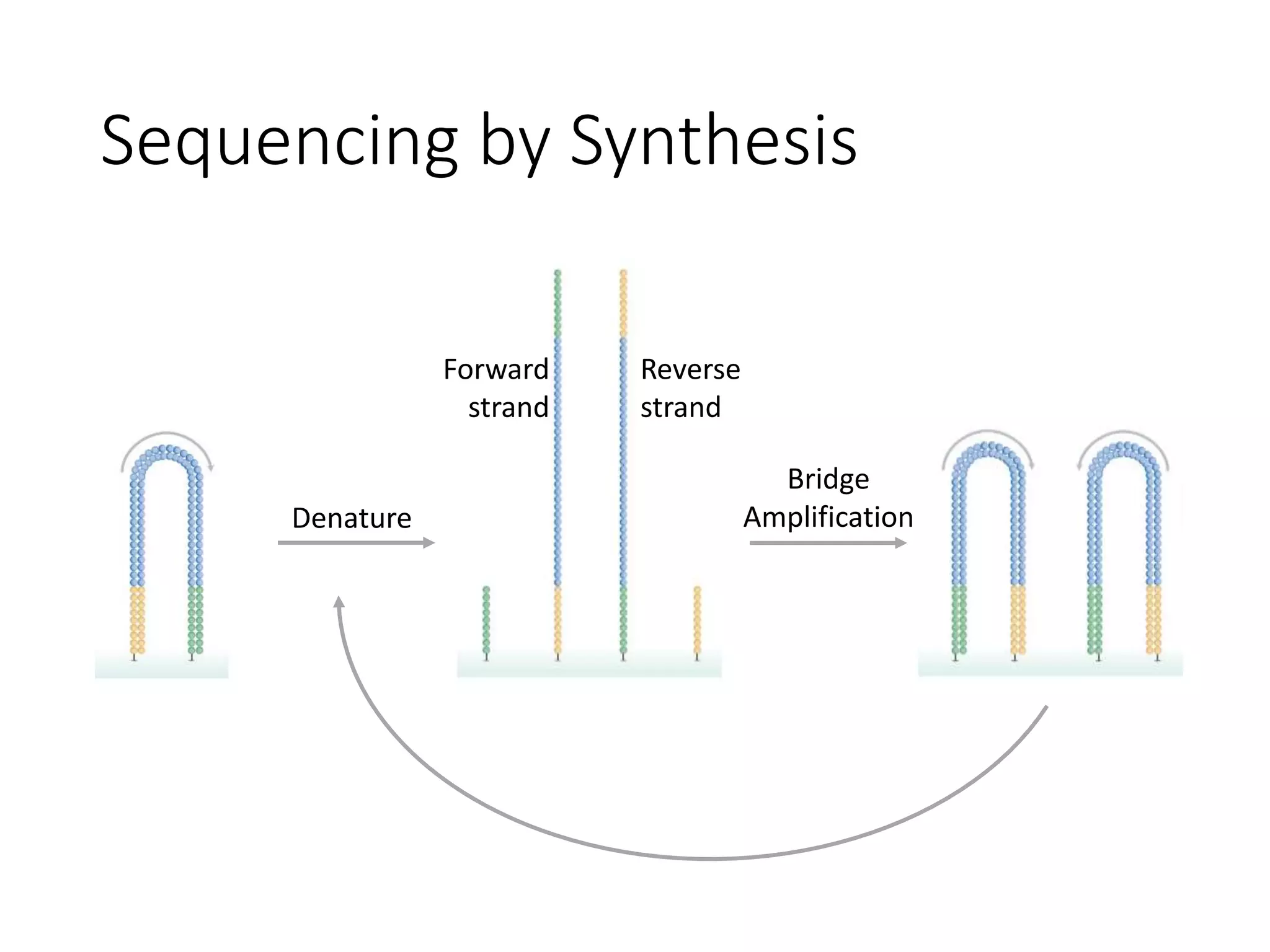
Sequencing by Synthesis
Denature
Forward
strand
Reverse
strand
Bridge
Amplification
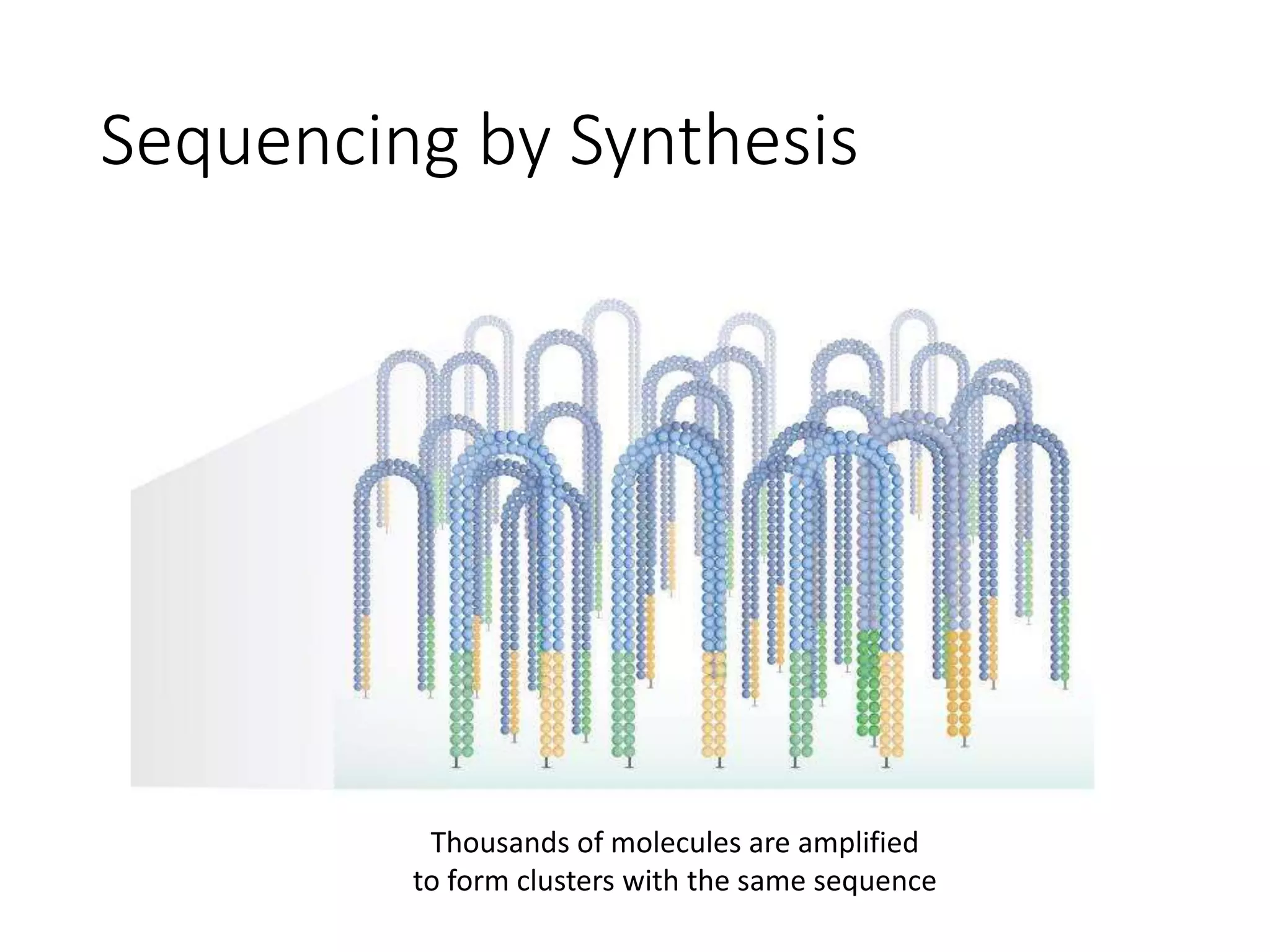
Sequencing by Synthesis
Thousands of molecules are amplified
to form clusters with the same sequence
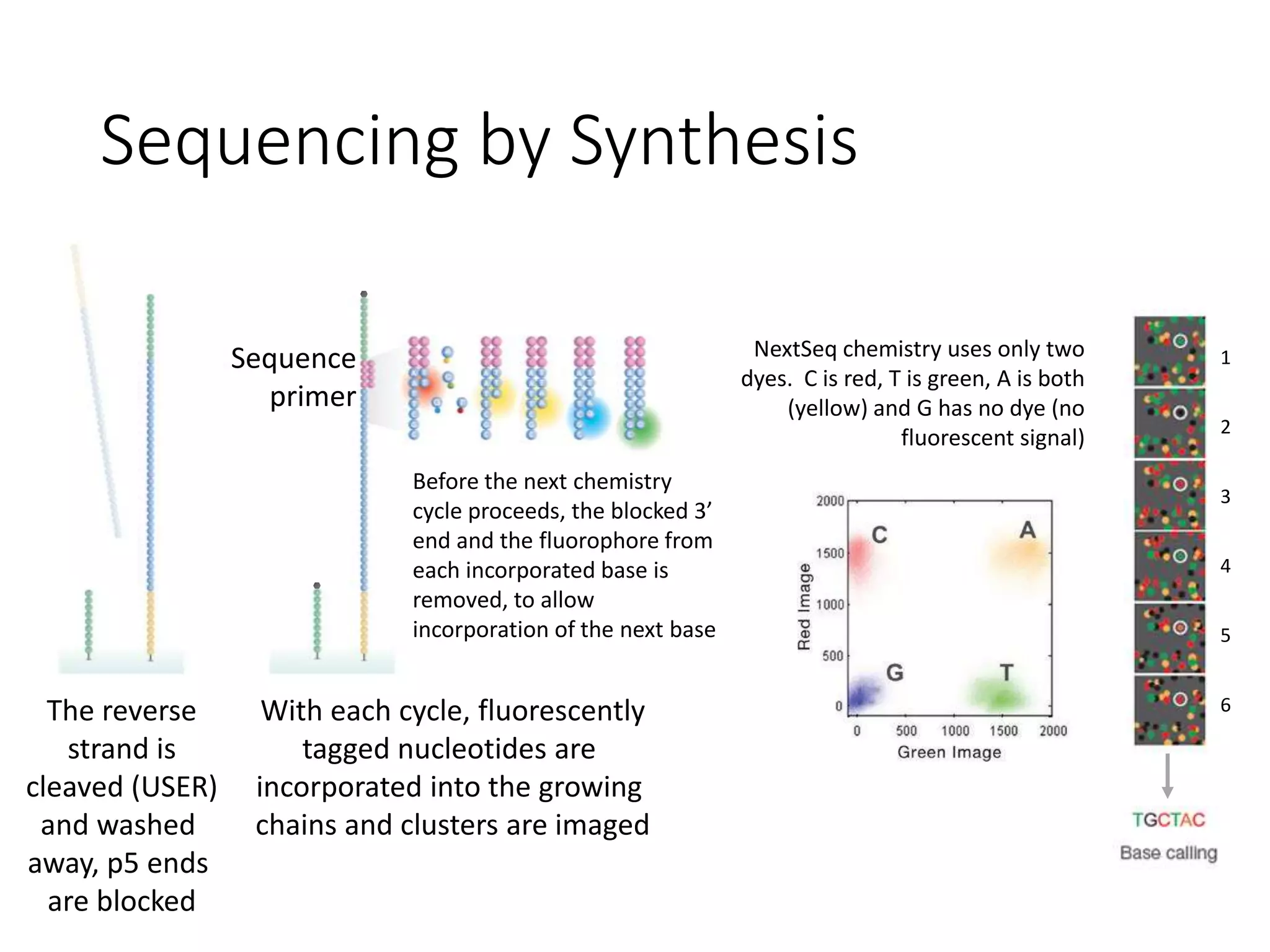
The reverse
strand is
cleaved (USER)
and washed
away, p5 ends
are blocked
Sequence
primer
With each cycle, fluorescently
tagged nucleotides are
incorporated into the growing
chains and clusters are imaged
Before the next chemistry
cycle proceeds, the blocked 3’
end and the fluorophore from
each incorporated base is
removed, to allow
incorporation of the next base
NextSeq chemistry uses only two
dyes. C is red, T is green, A is both
(yellow) and G has no dye (no
fluorescent signal)
Sequencing by Synthesis
1
2
3
4
5
6
Sequencing by Synthesis
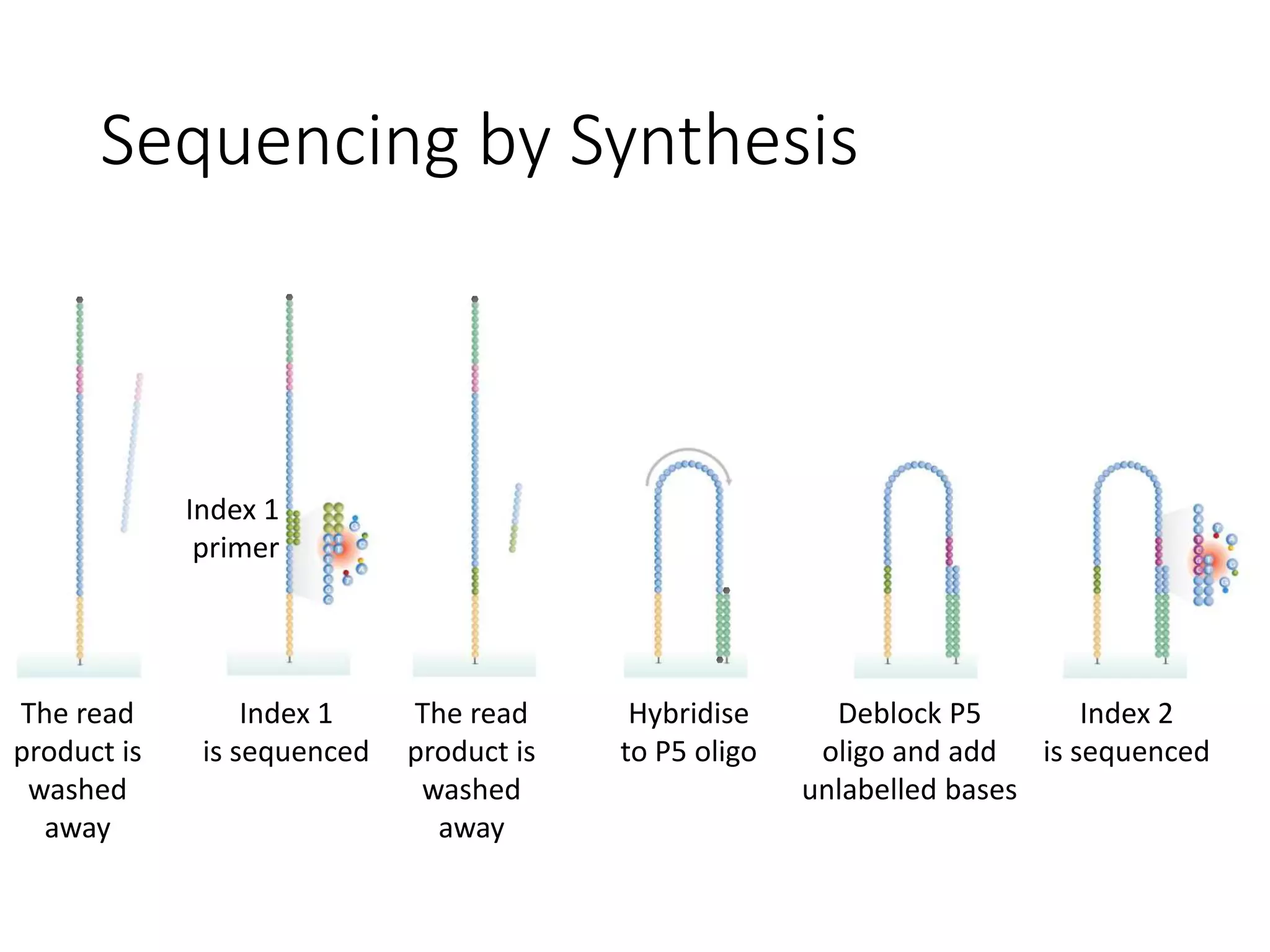
The read
product is
washed
away
Index 1
is sequenced
The read
product is
washed
away
Index 1
primer
Hybridise
to P5 oligo
Deblock P5
oligo and add
unlabelled bases
Index 2
is sequenced
Sequencing by Synthesis
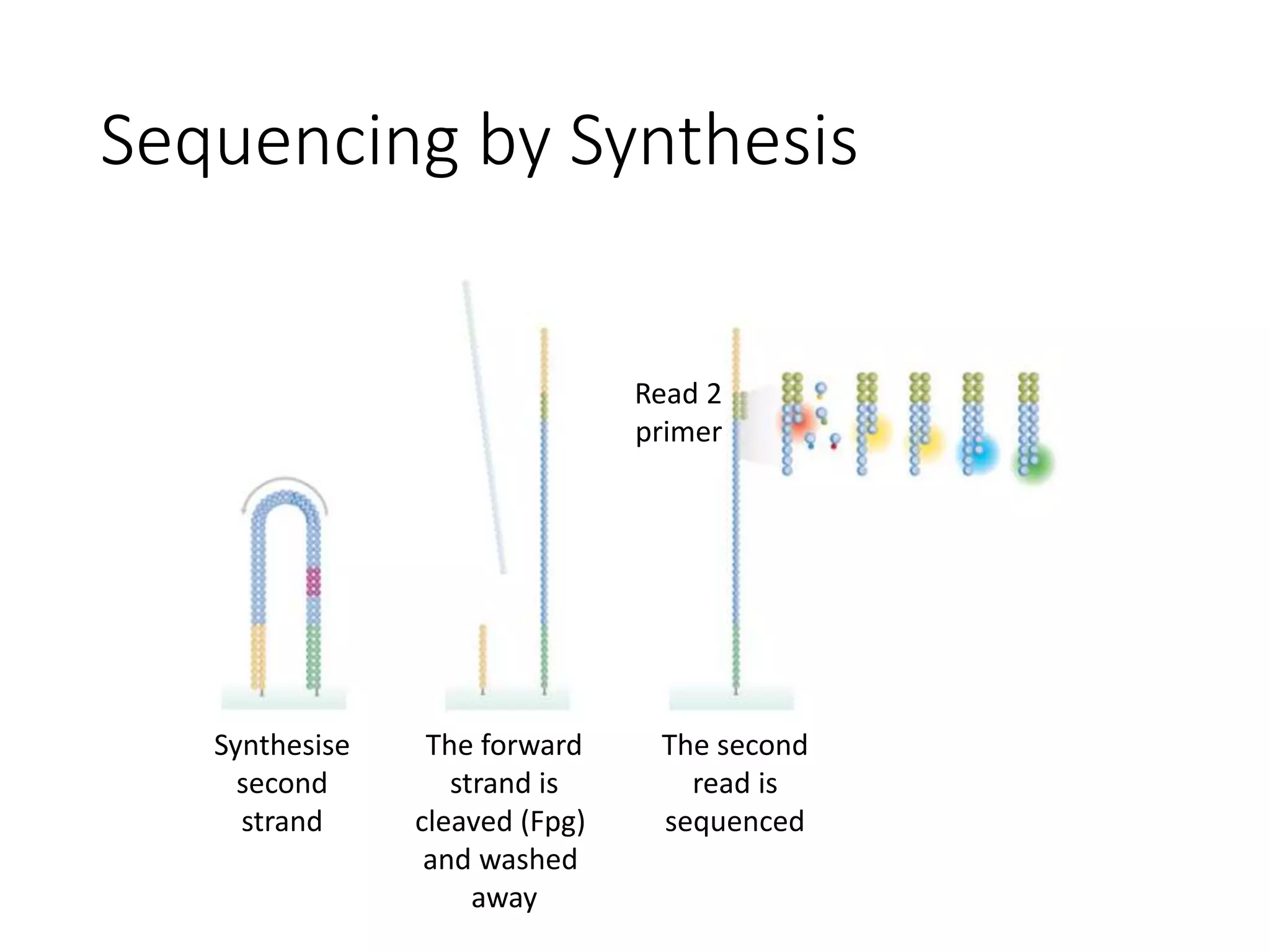
Synthesise
second
strand
The forward
strand is
cleaved (Fpg)
and washed
away
The second
read is
sequenced
Read 2
primer
Library production
• Library production will vary depending on what
sequencing-based methodology is being performed
• RNAseq
• ChIPseq
• ATACseq
• scRNAseq
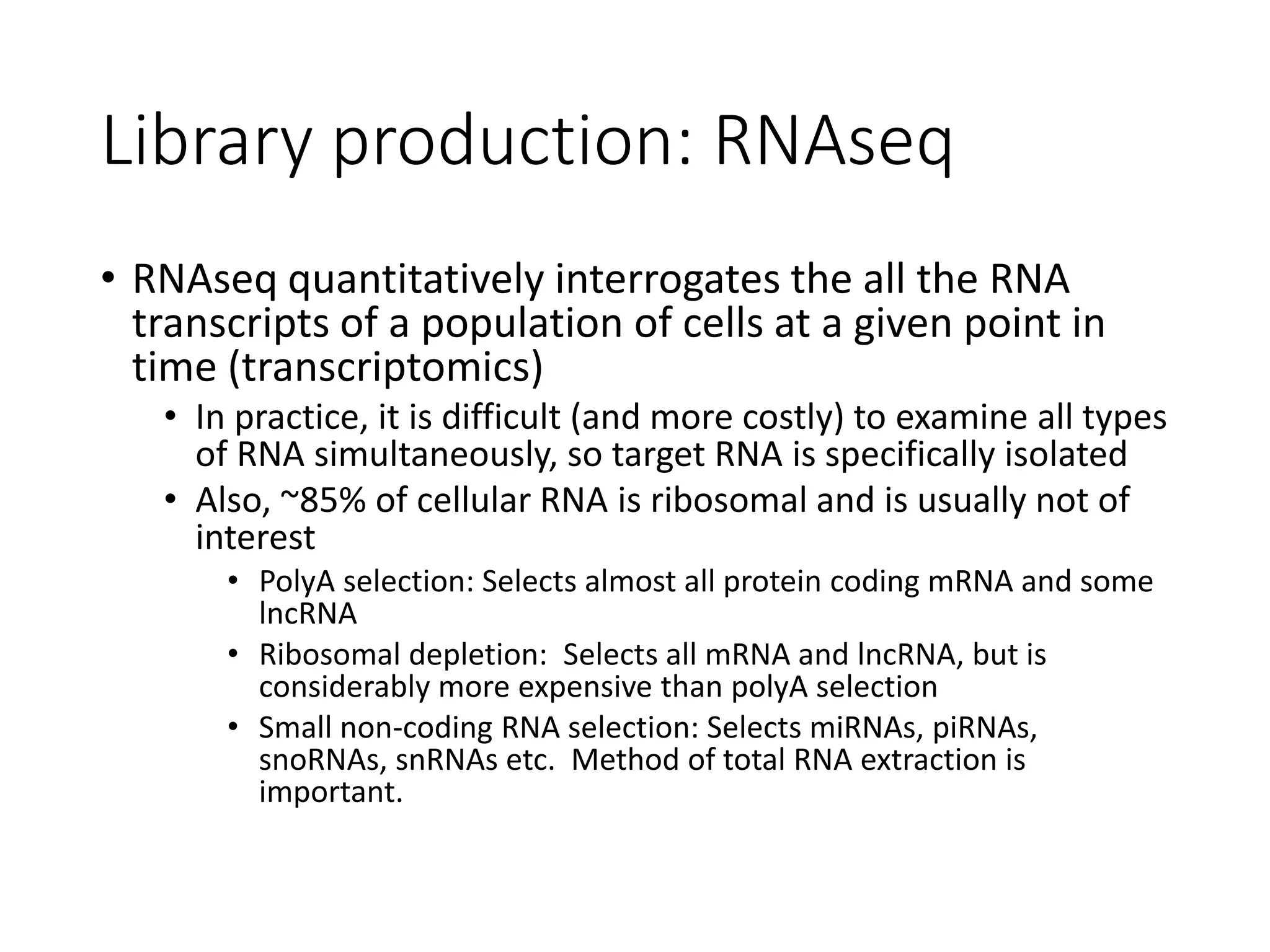
Library production: RNAseq
• RNAseq quantitatively interrogates the all the RNA
transcripts of a population of cells at a given point in
time (transcriptomics)
• In practice, it is difficult (and more costly) to examine all types
of RNA simultaneously, so target RNA is specifically isolated
• Also, ~85% of cellular RNA is ribosomal and is usually not of
interest
• PolyA selection: Selects almost all protein coding mRNA and some
lncRNA
• Ribosomal depletion: Selects all mRNA and lncRNA, but is
considerably more expensive than polyA selection
• Small non-coding RNA selection: Selects miRNAs, piRNAs,
snoRNAs, snRNAs etc. Method of total RNA extraction is
important.
Library production: RNAseq
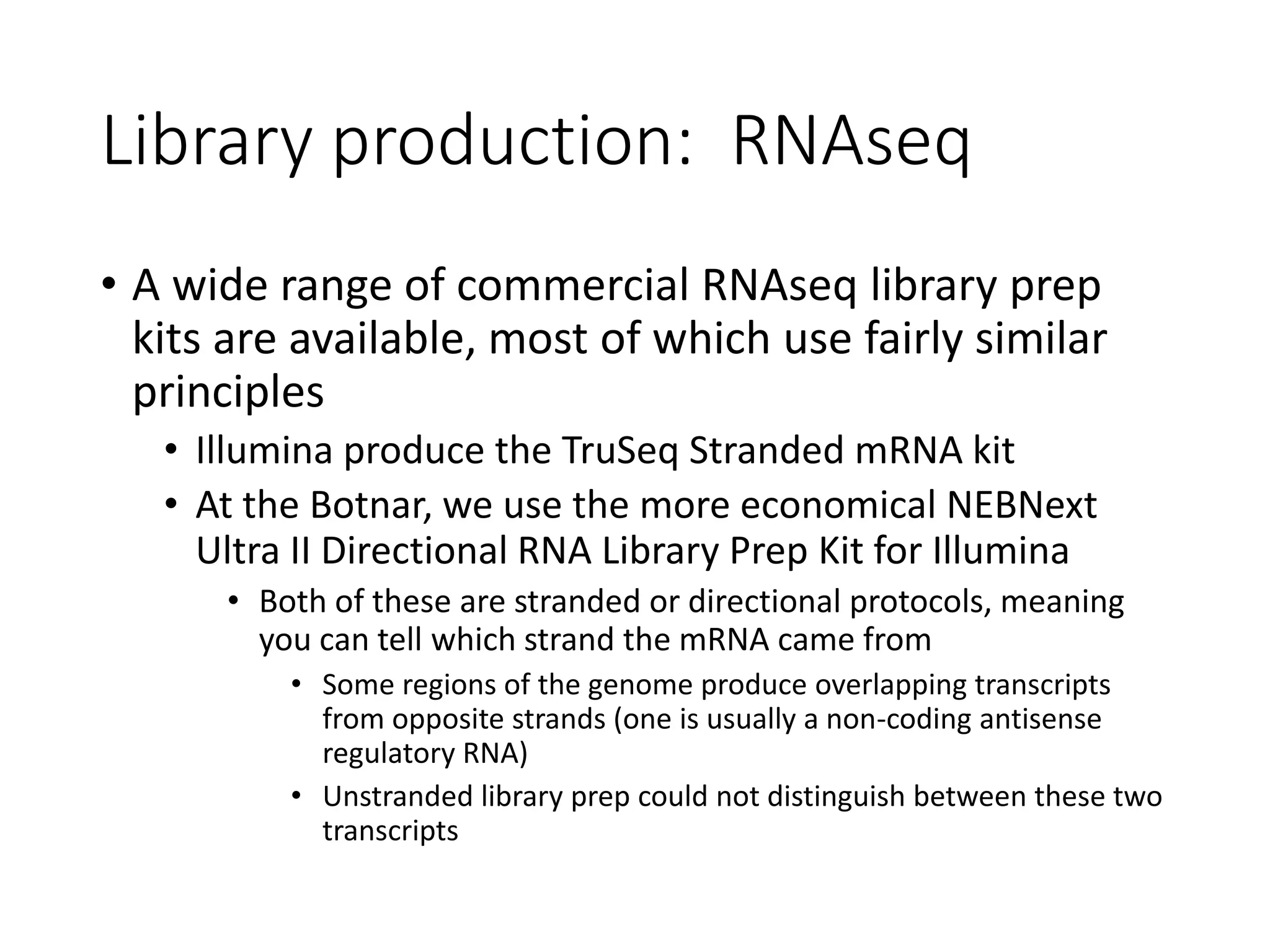
• A wide range of commercial RNAseq library prep
kits are available, most of which use fairly similar
principles
• Illumina produce the TruSeq Stranded mRNA kit
• At the Botnar, we use the more economical NEBNext
Ultra II Directional RNA Library Prep Kit for Illumina
• Both of these are stranded or directional protocols, meaning
you can tell which strand the mRNA came from
• Some regions of the genome produce overlapping transcripts
from opposite strands (one is usually a non-coding antisense
regulatory RNA)
• Unstranded library prep could not distinguish between these two
transcripts
Library production: RNAseq
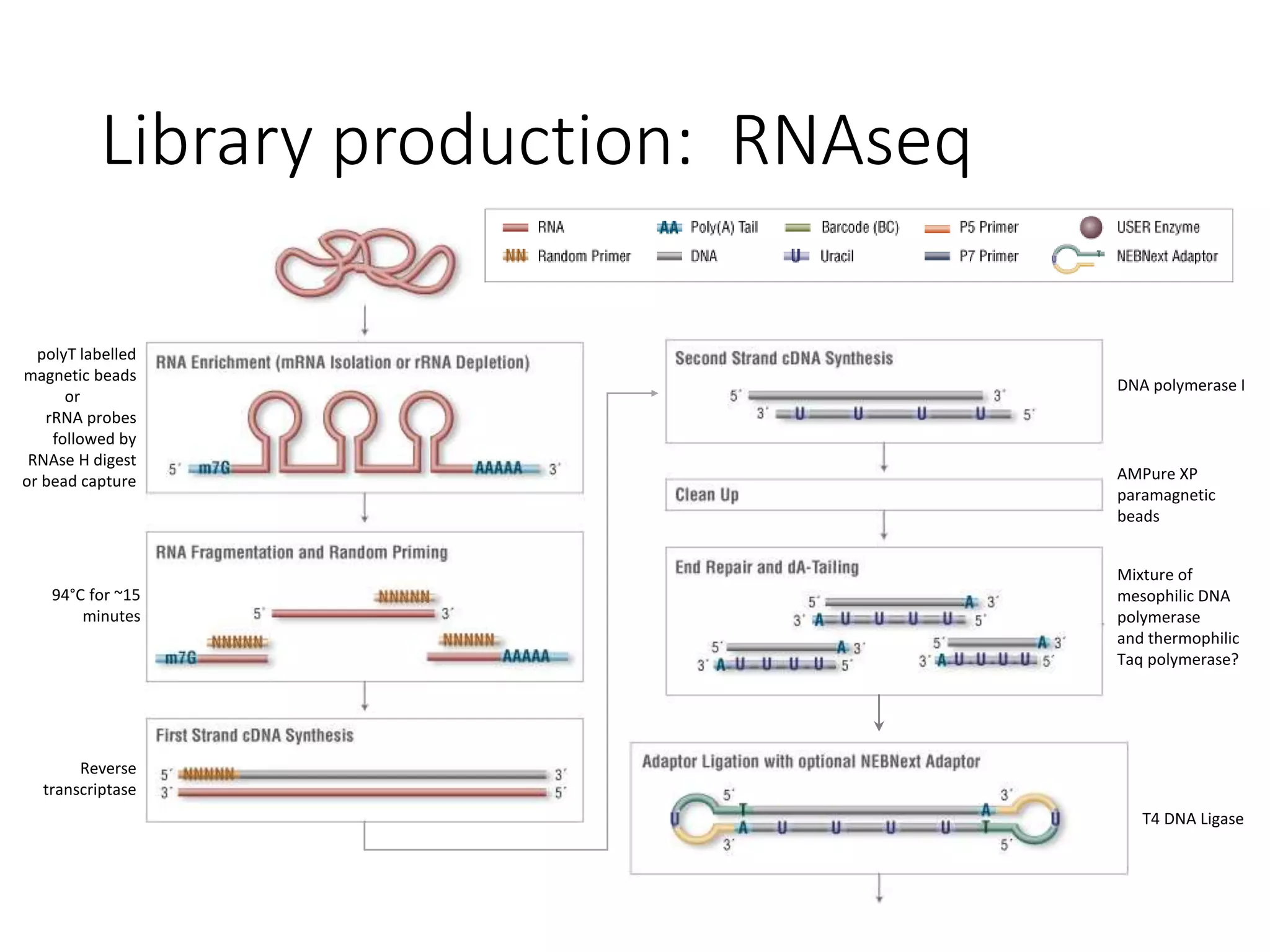
Mixture of
mesophilic DNA
polymerase
and thermophilic
Taq polymerase?
polyT labelled
magnetic beads
or
rRNA probes
followed by
RNAse H digest
or bead capture
94°C for ~15
minutes
Reverse
transcriptase
DNA polymerase I
AMPure XP
paramagnetic
beads
T4 DNA Ligase
Library production: RNAseq
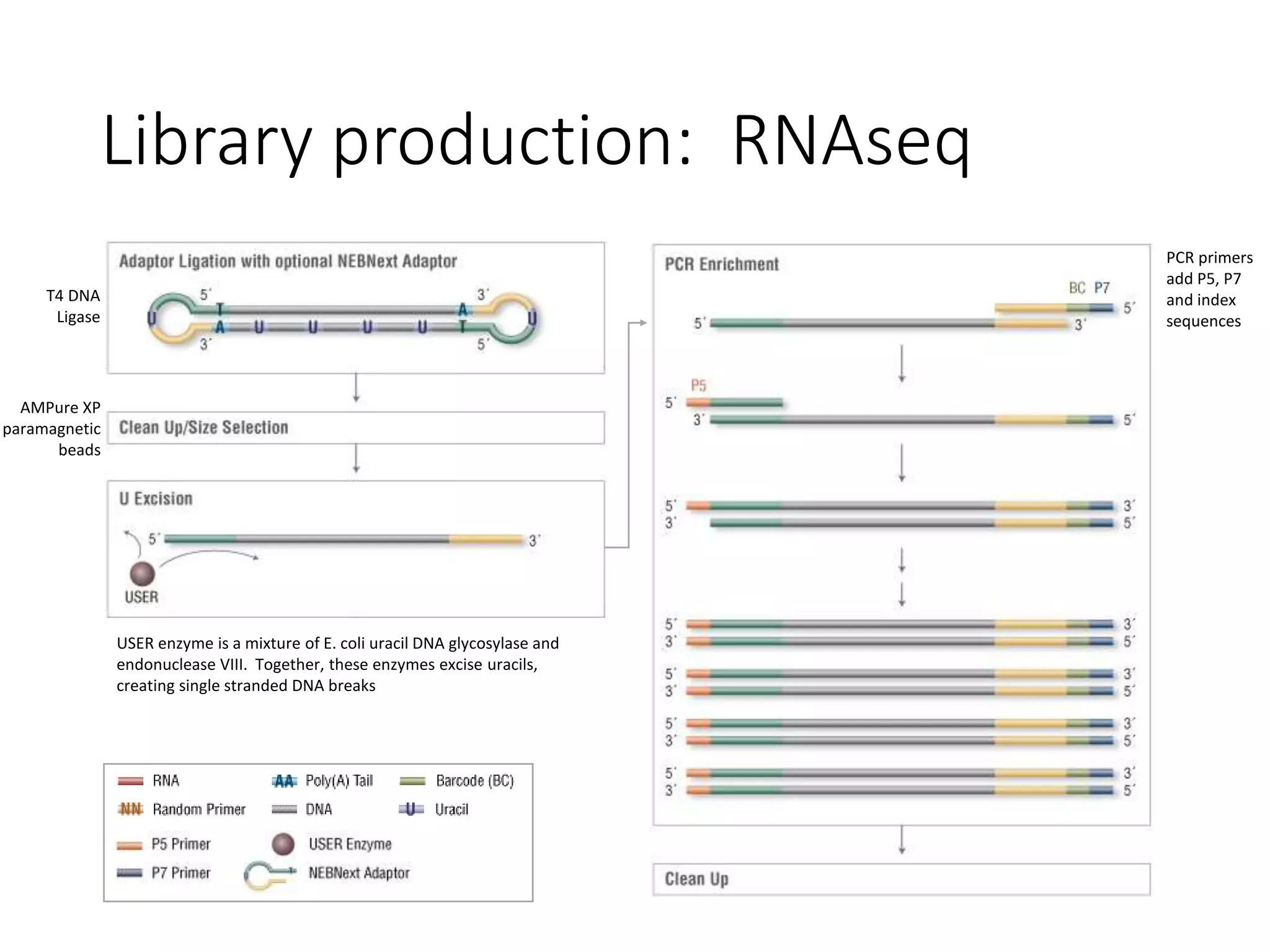
PCR primers
add P5, P7
and index
sequences
AMPure XP
paramagnetic
beads
T4 DNA
Ligase
USER enzyme is a mixture of E. coli uracil DNA glycosylase and
endonuclease VIII. Together, these enzymes excise uracils,
creating single stranded DNA breaks
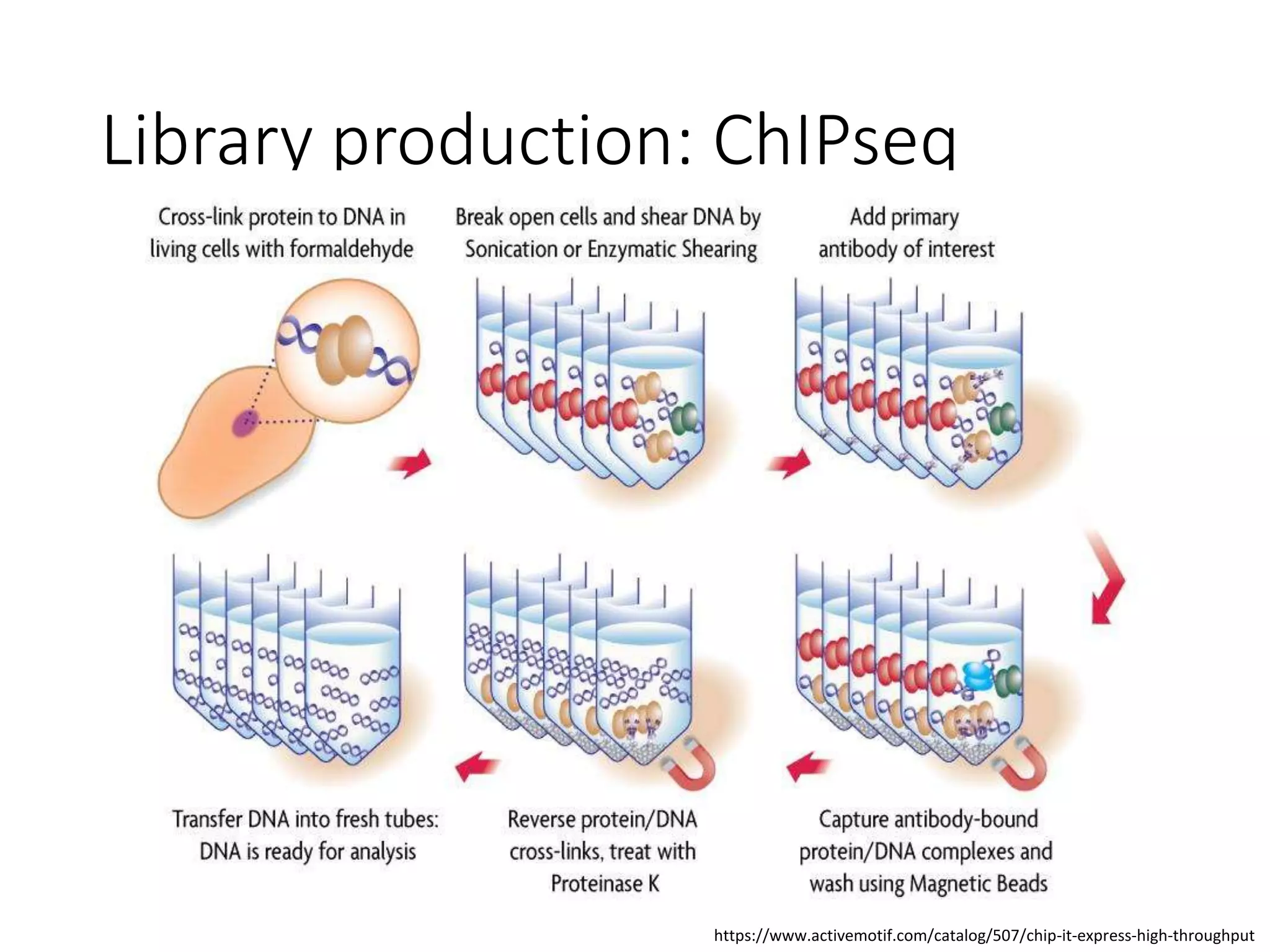
Library production: ChIPseq
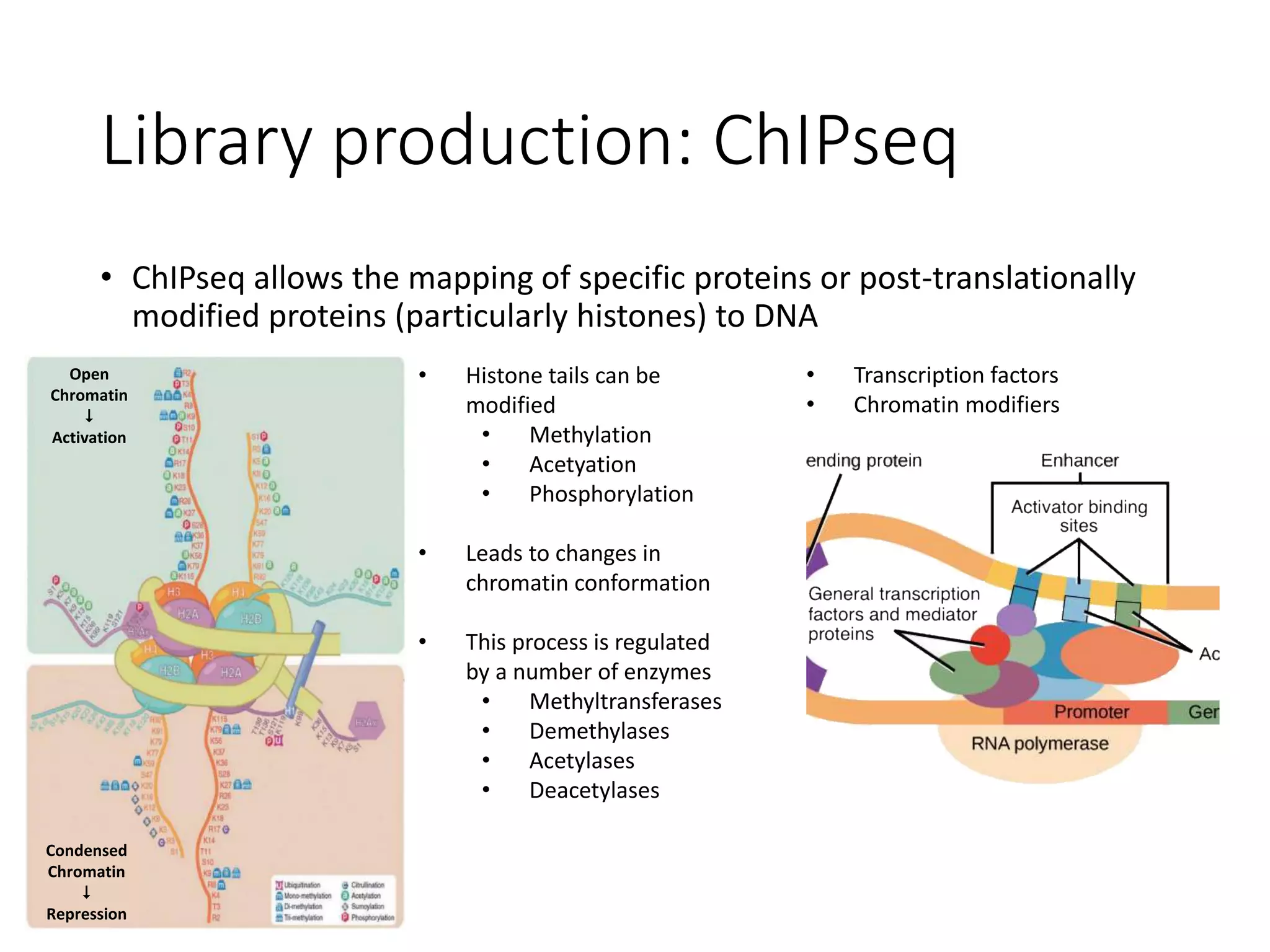
• ChIPseq allows the mapping of specific proteins or post-translationally
modified proteins (particularly histones) to DNA
Open
Chromatin

Activation
Condensed
Chromatin

Repression
• Histone tails can be
modified
• Methylation
• Acetyation
• Phosphorylation
• Leads to changes in
chromatin conformation
• This process is regulated
by a number of enzymes
• Methyltransferases
• Demethylases
• Acetylases
• Deacetylases
• Transcription factors
• Chromatin modifiers
Library production: ChIPseq
https://www.activemotif.com/catalog/507/chip-it-express-high-throughput
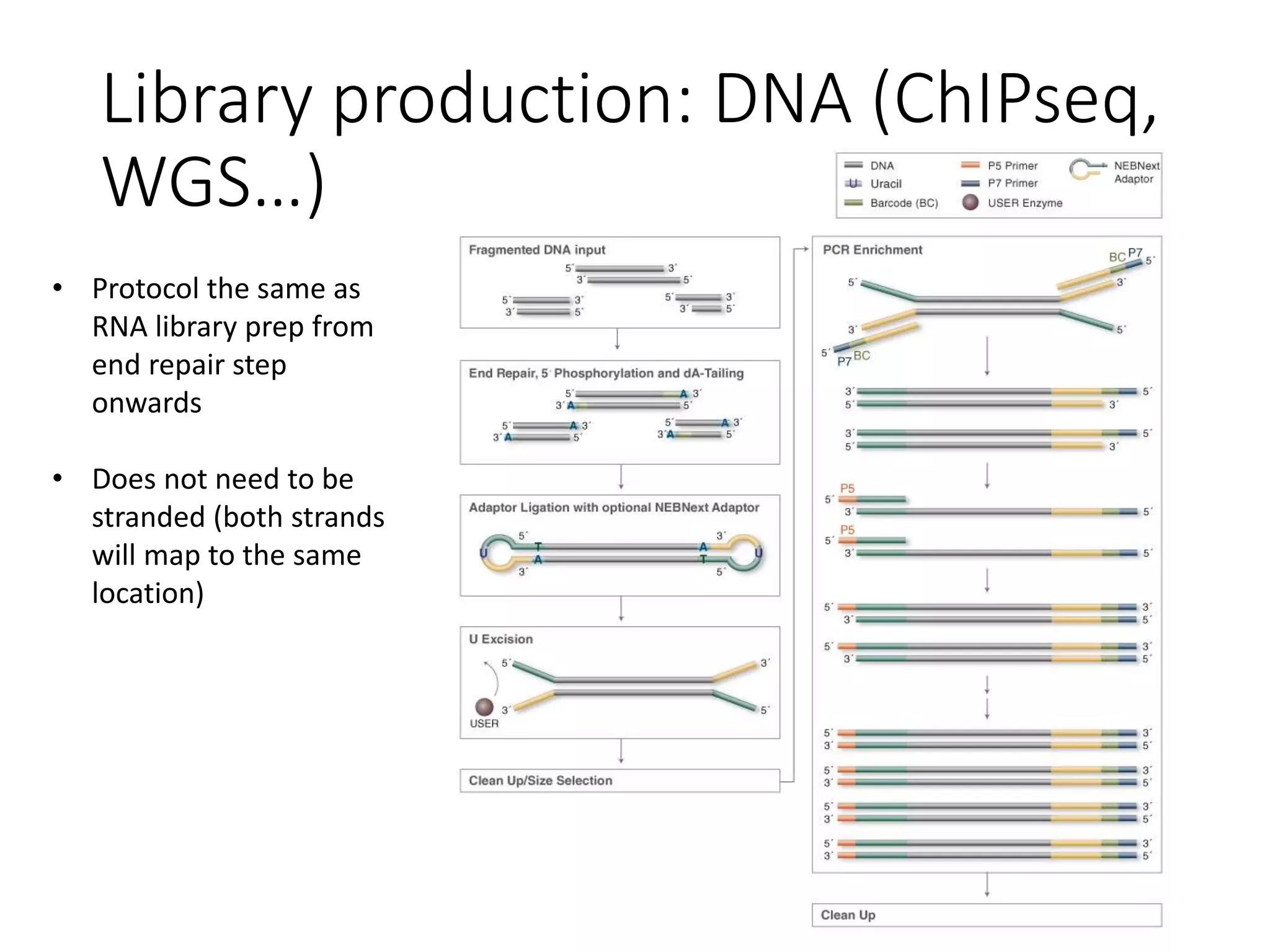
Library production: DNA (ChIPseq,
WGS…)
• Protocol the same as
RNA library prep from
end repair step
onwards
• Does not need to be
stranded (both strands
will map to the same
location)
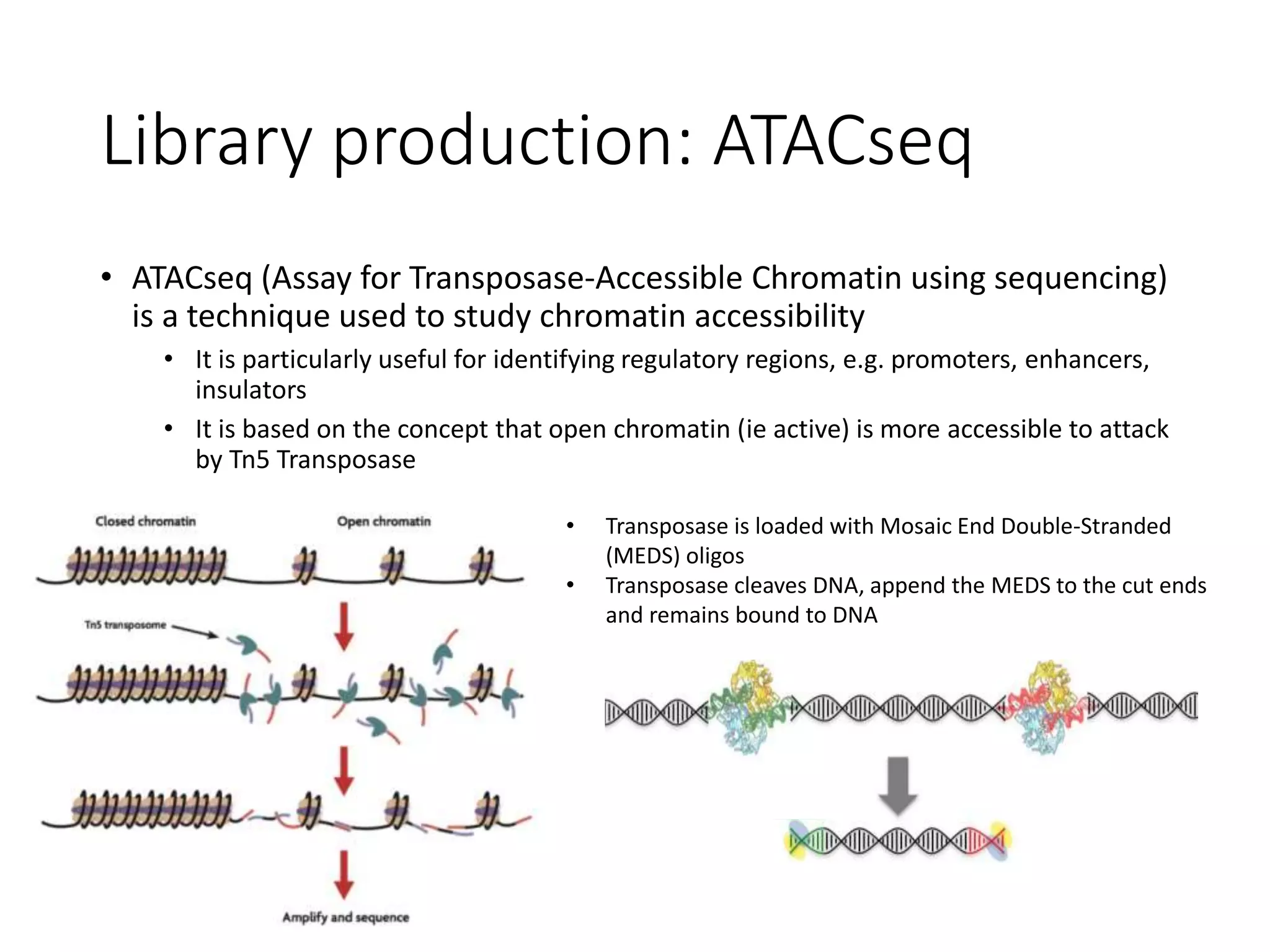
Library production: ATACseq
• ATACseq (Assay for Transposase-Accessible Chromatin using sequencing)
is a technique used to study chromatin accessibility
• It is particularly useful for identifying regulatory regions, e.g. promoters, enhancers,
insulators
• It is based on the concept that open chromatin (ie active) is more accessible to attack
by Tn5 Transposase
• Transposase is loaded with Mosaic End Double-Stranded
(MEDS) oligos
• Transposase cleaves DNA, append the MEDS to the cut ends
and remains bound to DNA
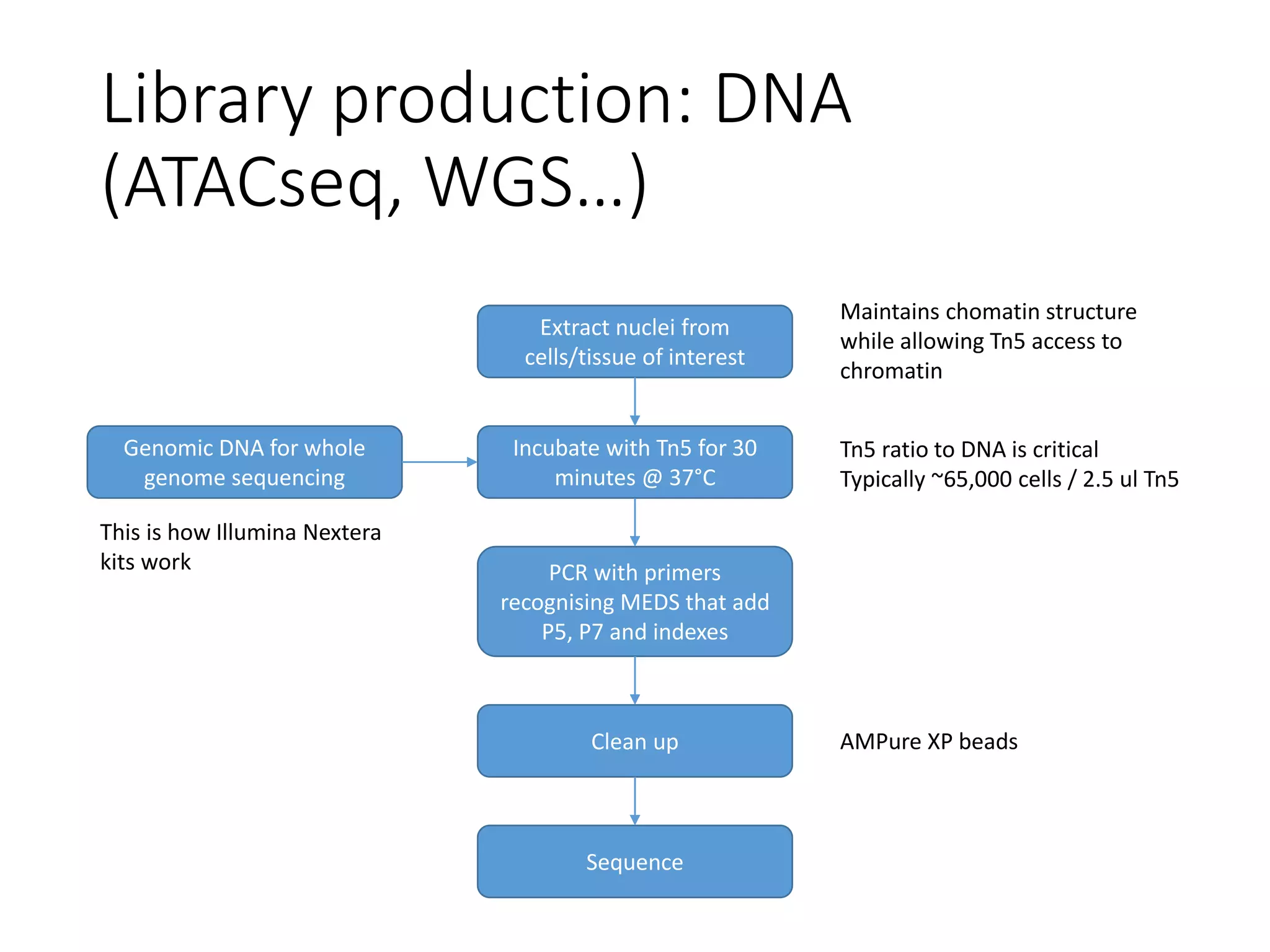
Library production: DNA
(ATACseq, WGS…)
Extract nuclei from
cells/tissue of interest
Incubate with Tn5 for 30
minutes @ 37°C
Maintains chomatin structure
while allowing Tn5 access to
chromatin
PCR with primers
recognising MEDS that add
P5, P7 and indexes
Tn5 ratio to DNA is critical
Typically ~65,000 cells / 2.5 ul Tn5
Clean up AMPure XP beads
Sequence
Genomic DNA for whole
genome sequencing
This is how Illumina Nextera
kits work
Library production: Single cell
sequencing
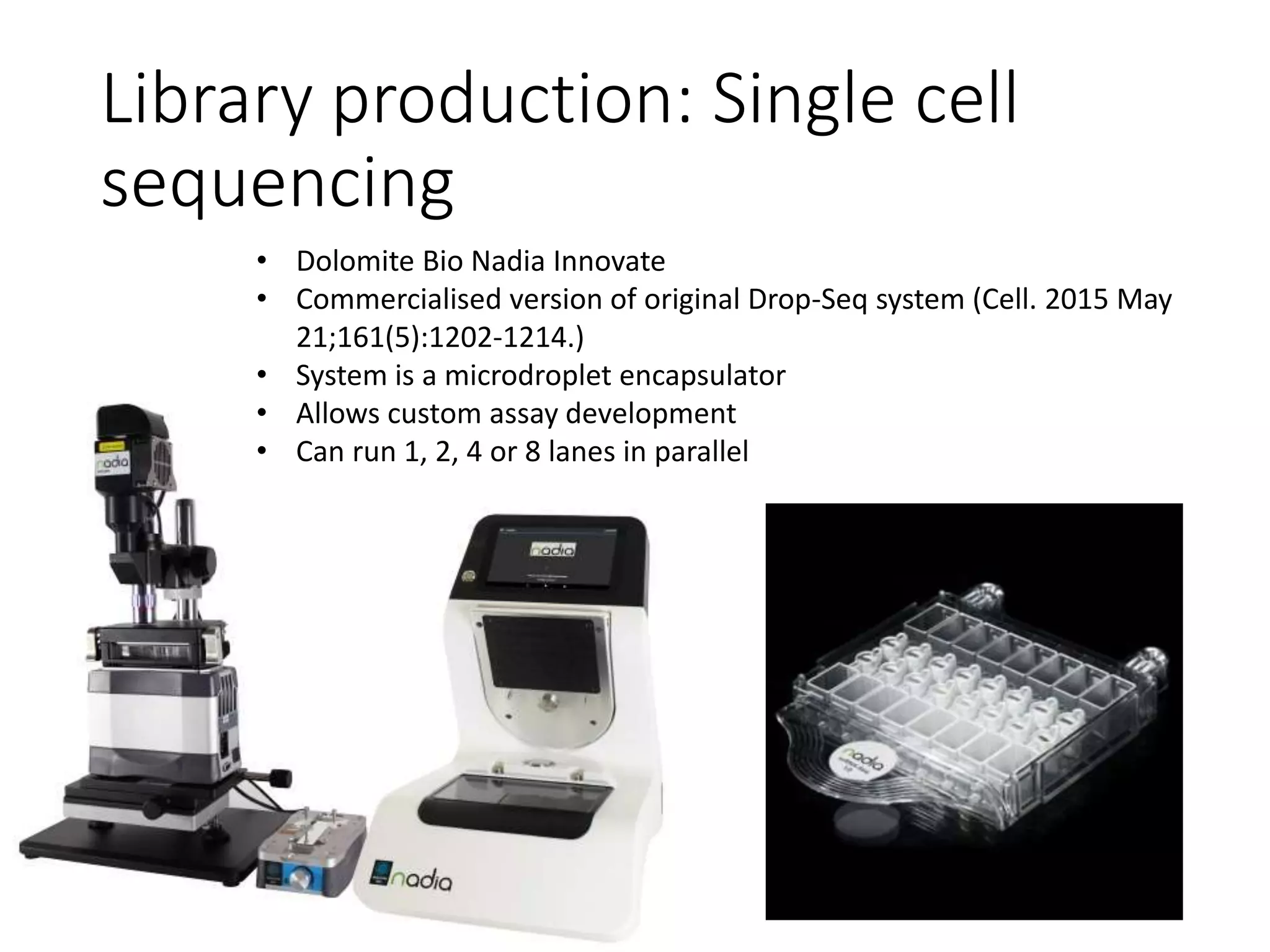
• Dolomite Bio Nadia Innovate
• Commercialised version of original Drop-Seq system (Cell. 2015 May
21;161(5):1202-1214.)
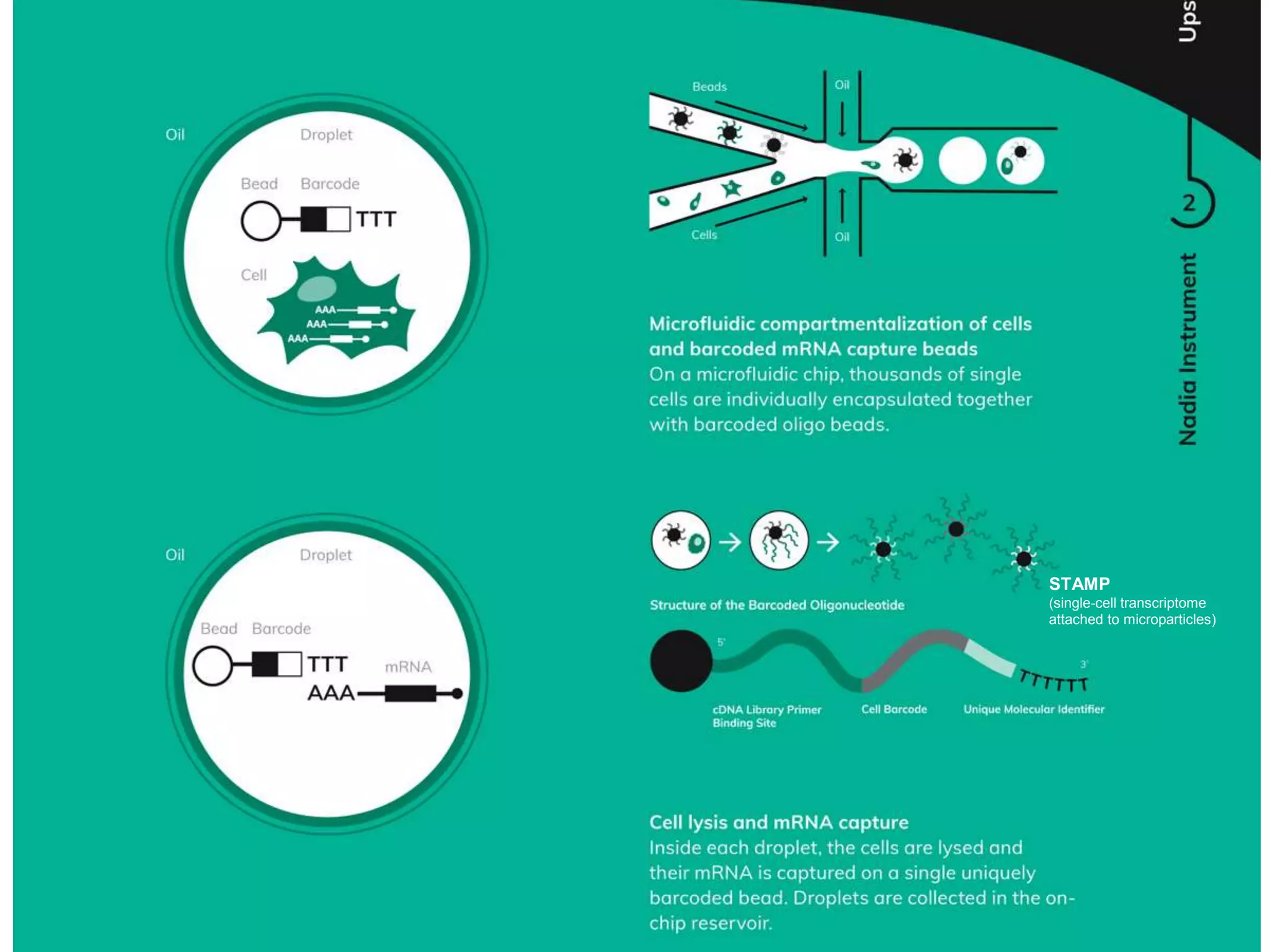
• System is a microdroplet encapsulator
• Allows custom assay development
• Can run 1, 2, 4 or 8 lanes in parallel
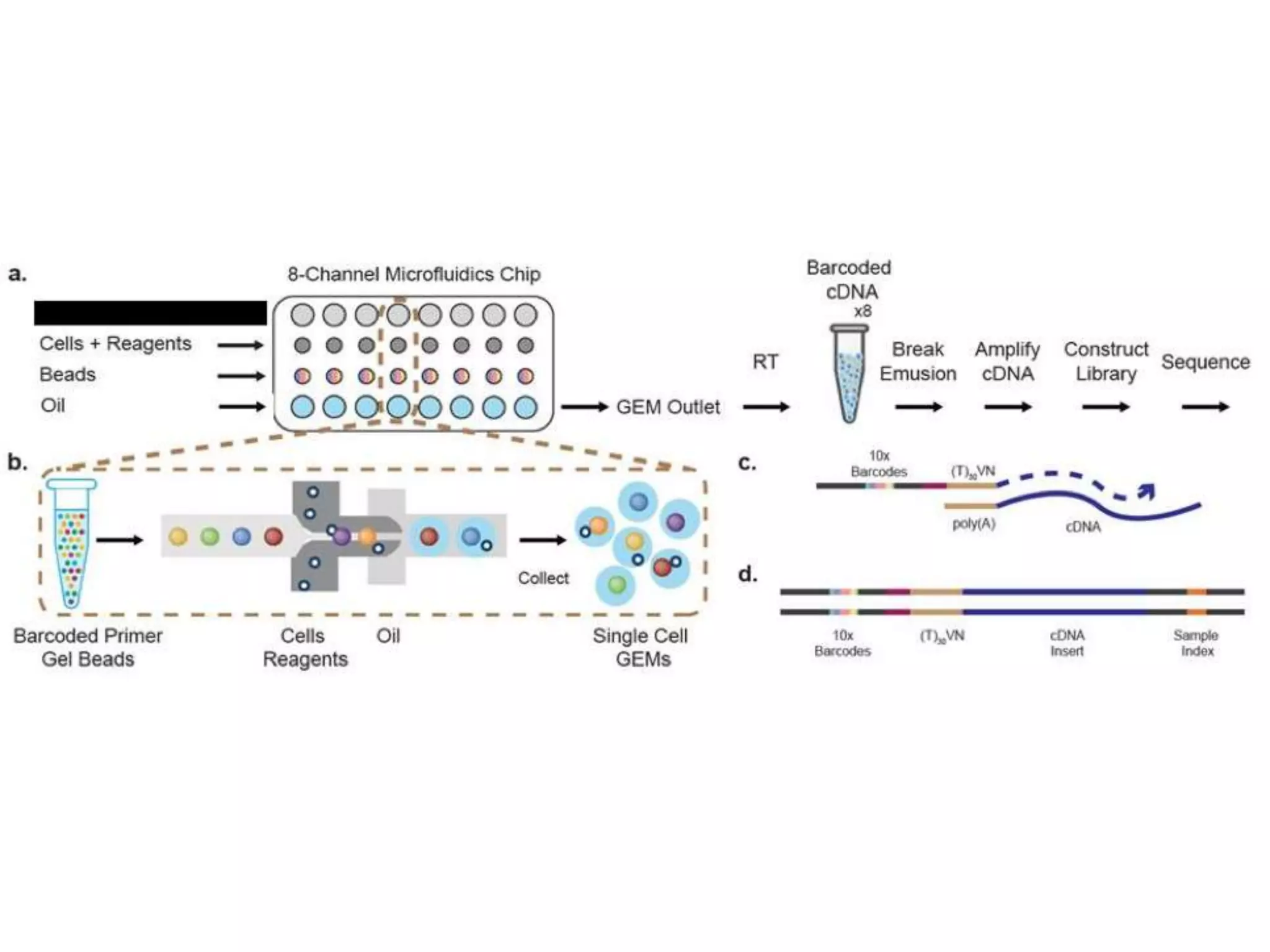
Library production: Single cell
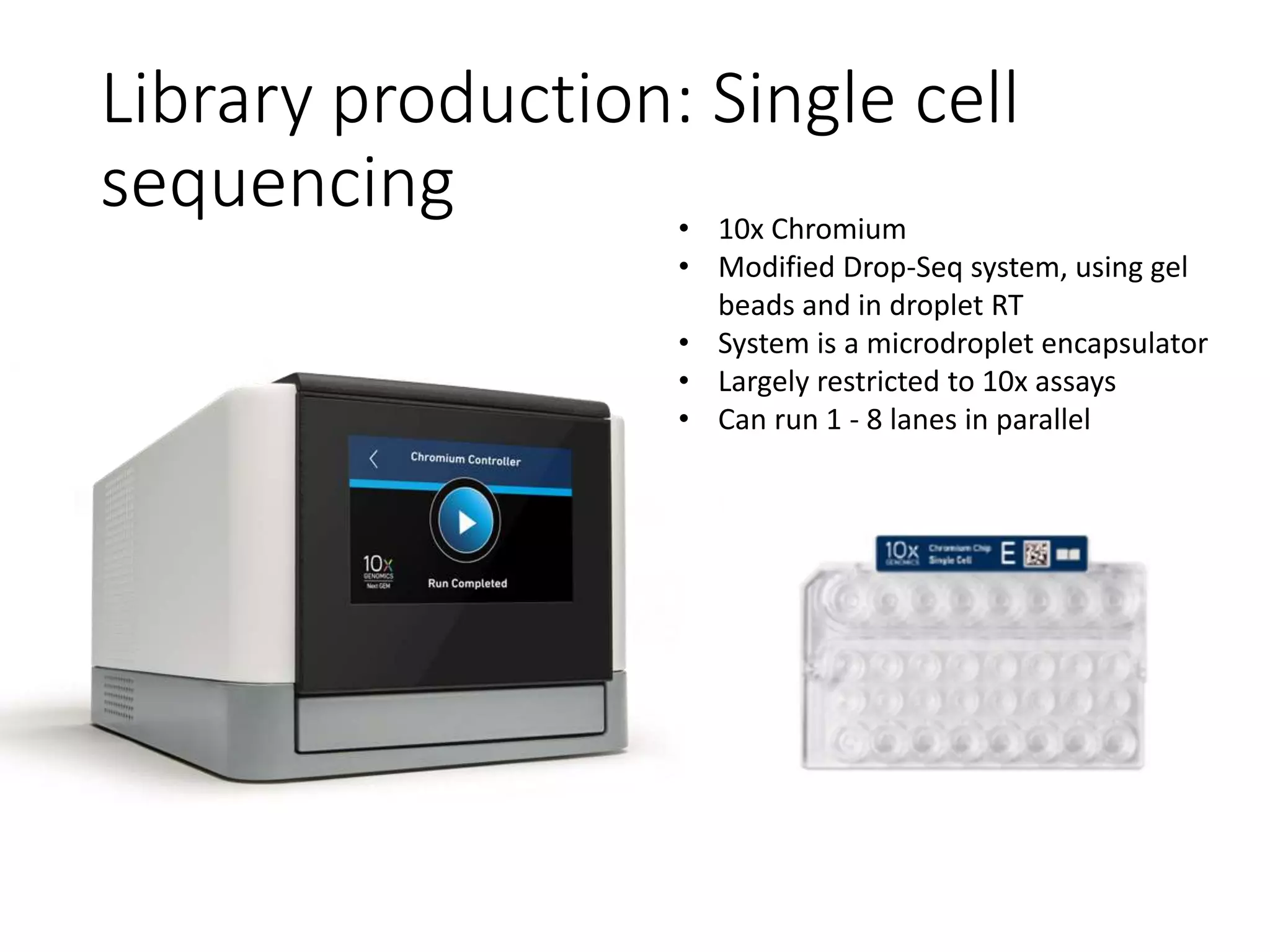
sequencing • 10x Chromium
• Modified Drop-Seq system, using gel
beads and in droplet RT
• System is a microdroplet encapsulator
• Largely restricted to 10x assays
• Can run 1 - 8 lanes in parallel
STAMP
(single-cell transcriptome
attached to microparticles)
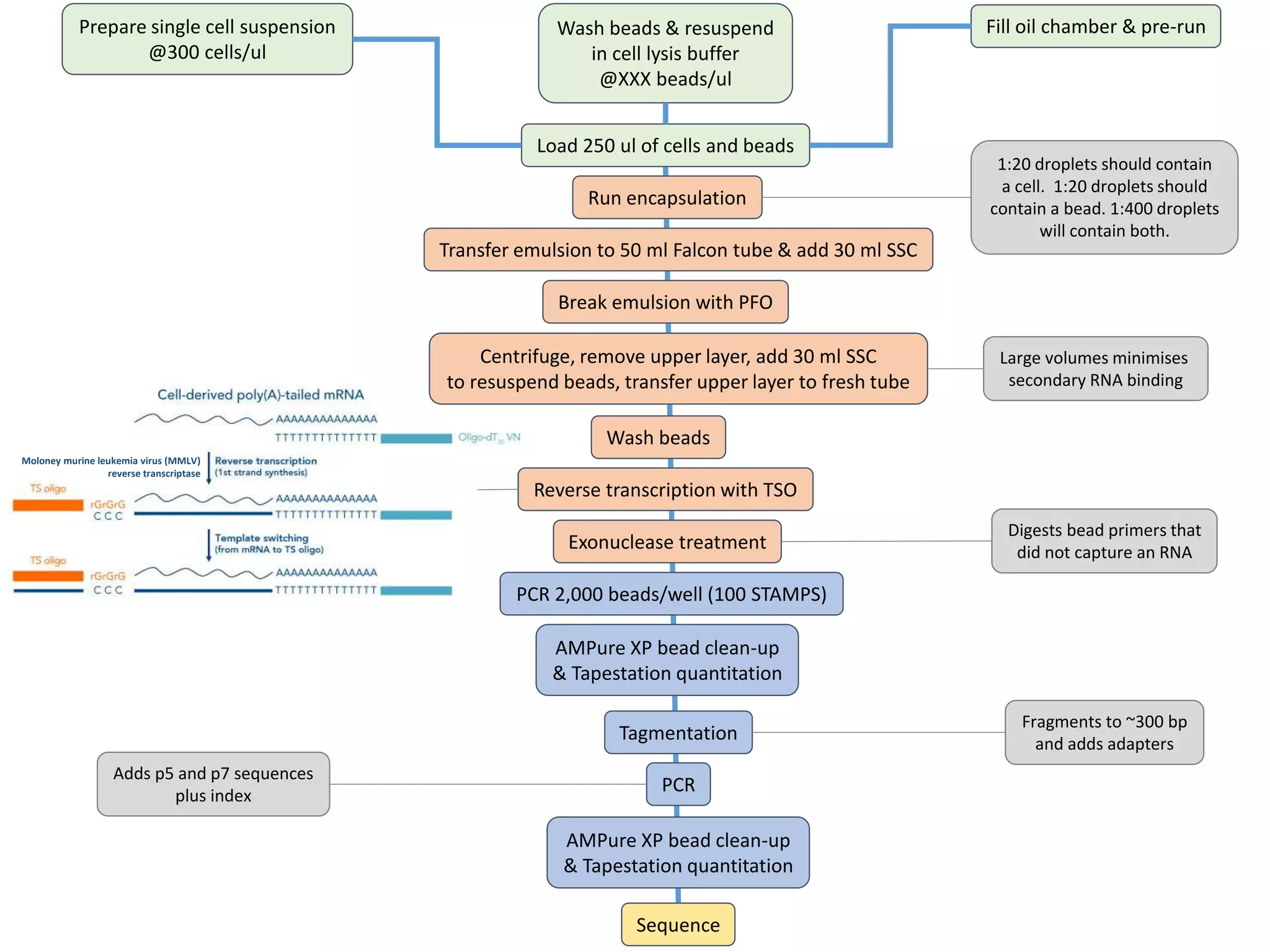
Prepare single cell suspension
@300 cells/ul
Wash beads & resuspend
in cell lysis buffer
@XXX beads/ul
Fill oil chamber & pre-run
Load 250 ul of cells and beads
Run encapsulation
Transfer emulsion to 50 ml Falcon tube & add 30 ml SSC
Break emulsion with PFO
Centrifuge, remove upper layer, add 30 ml SSC
to resuspend beads, transfer upper layer to fresh tube
Wash beads
Reverse transcription with TSO
Exonuclease treatment
PCR 2,000 beads/well (100 STAMPS)
AMPure XP bead clean-up
& Tapestation quantitation
Tagmentation
PCR
AMPure XP bead clean-up
& Tapestation quantitation
Sequence
1:20 droplets should contain
a cell. 1:20 droplets should
contain a bead. 1:400 droplets
will contain both.
Digests bead primers that
did not capture an RNA
Fragments to ~300 bp
and adds adapters
Moloney murine leukemia virus (MMLV)
reverse transcriptase
Adds p5 and p7 sequences
plus index
Large volumes minimises
secondary RNA binding
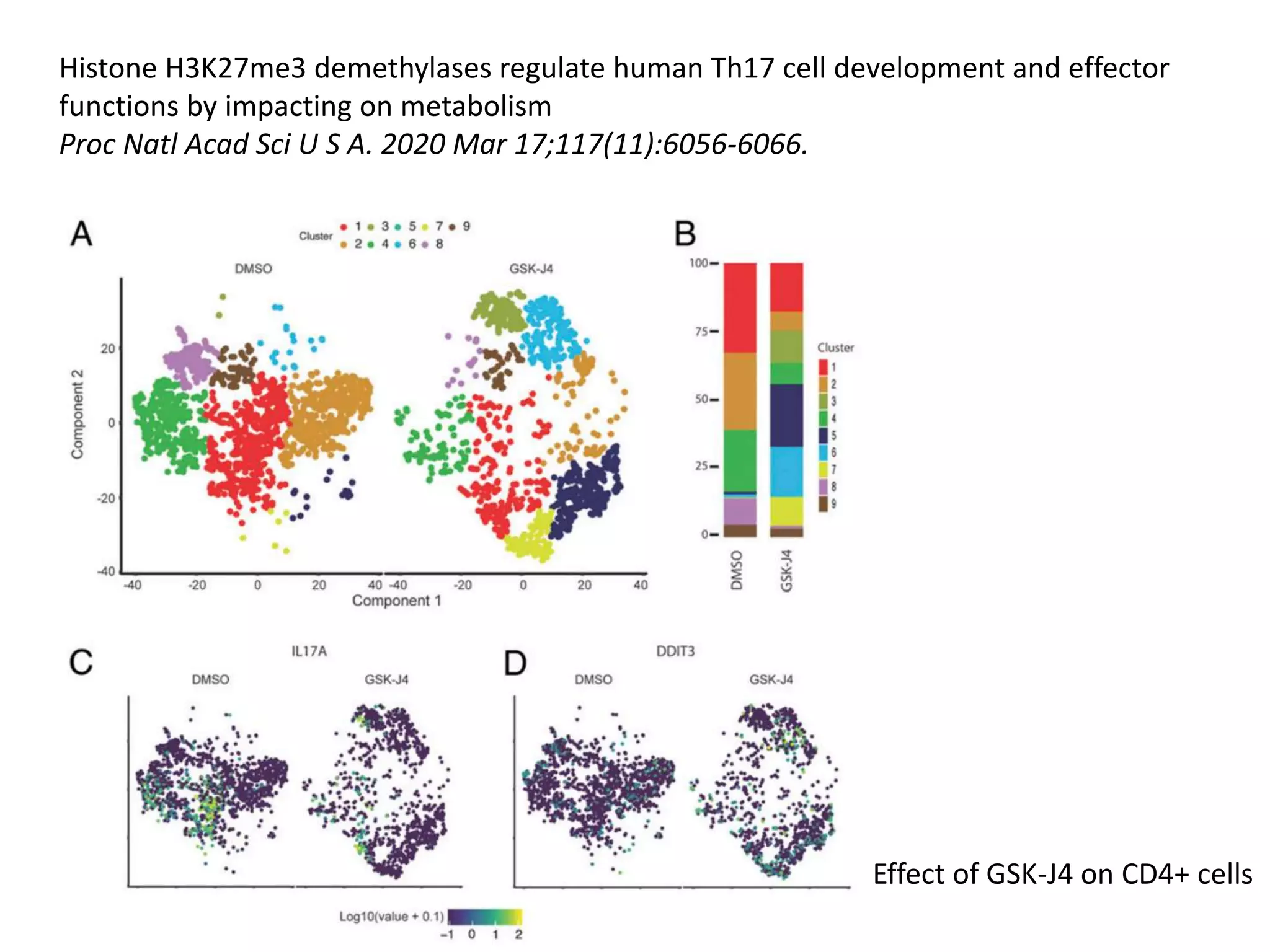
Histone H3K27me3 demethylases regulate human Th17 cell development and effector
functions by impacting on metabolism
Proc Natl Acad Sci U S A. 2020 Mar 17;117(11):6056-6066.
Effect of GSK-J4 on CD4+ cells
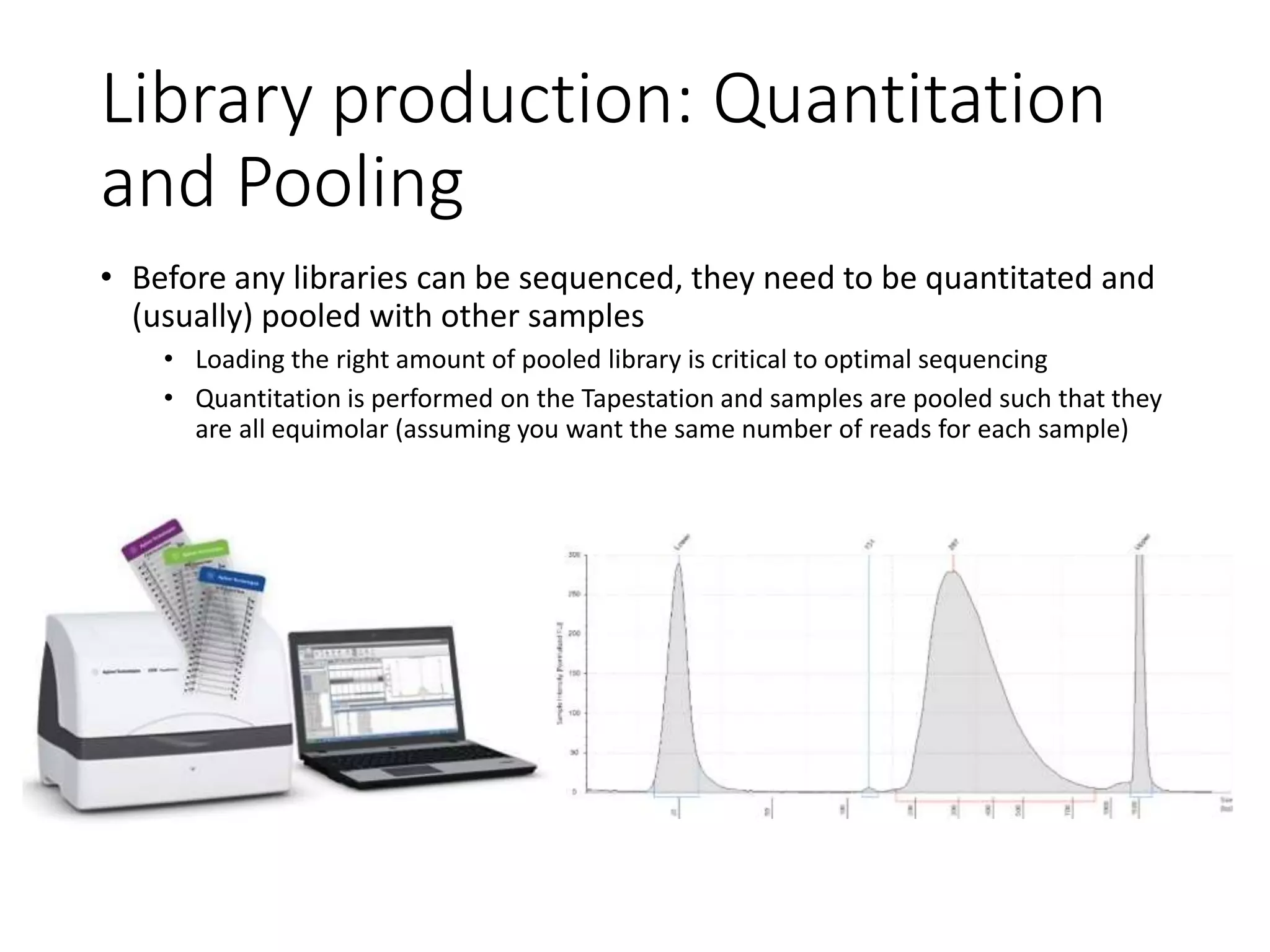
Library production: Quantitation
and Pooling
• Before any libraries can be sequenced, they need to be quantitated and
(usually) pooled with other samples
• Loading the right amount of pooled library is critical to optimal sequencing
• Quantitation is performed on the Tapestation and samples are pooled such that they
are all equimolar (assuming you want the same number of reads for each sample)
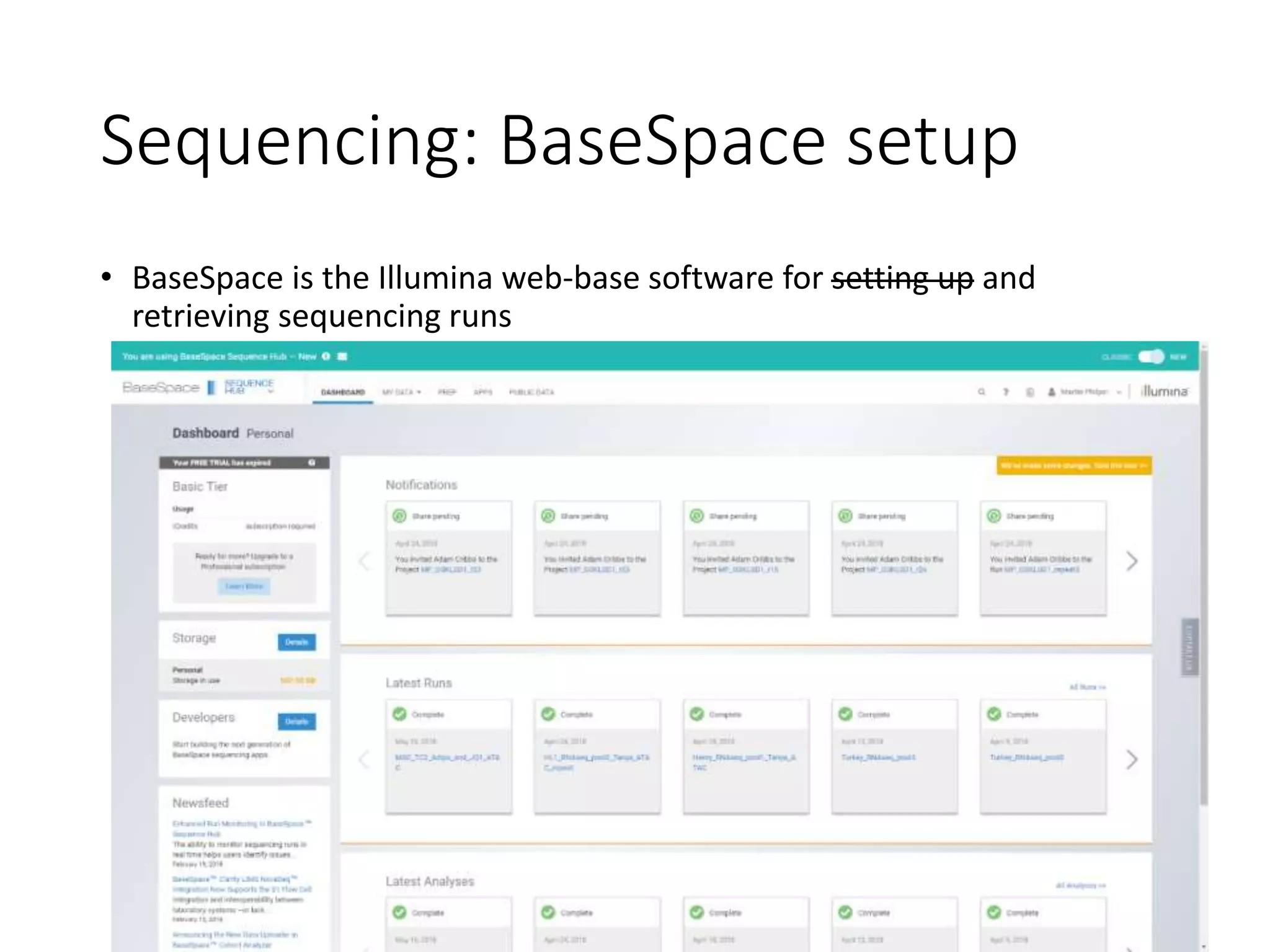
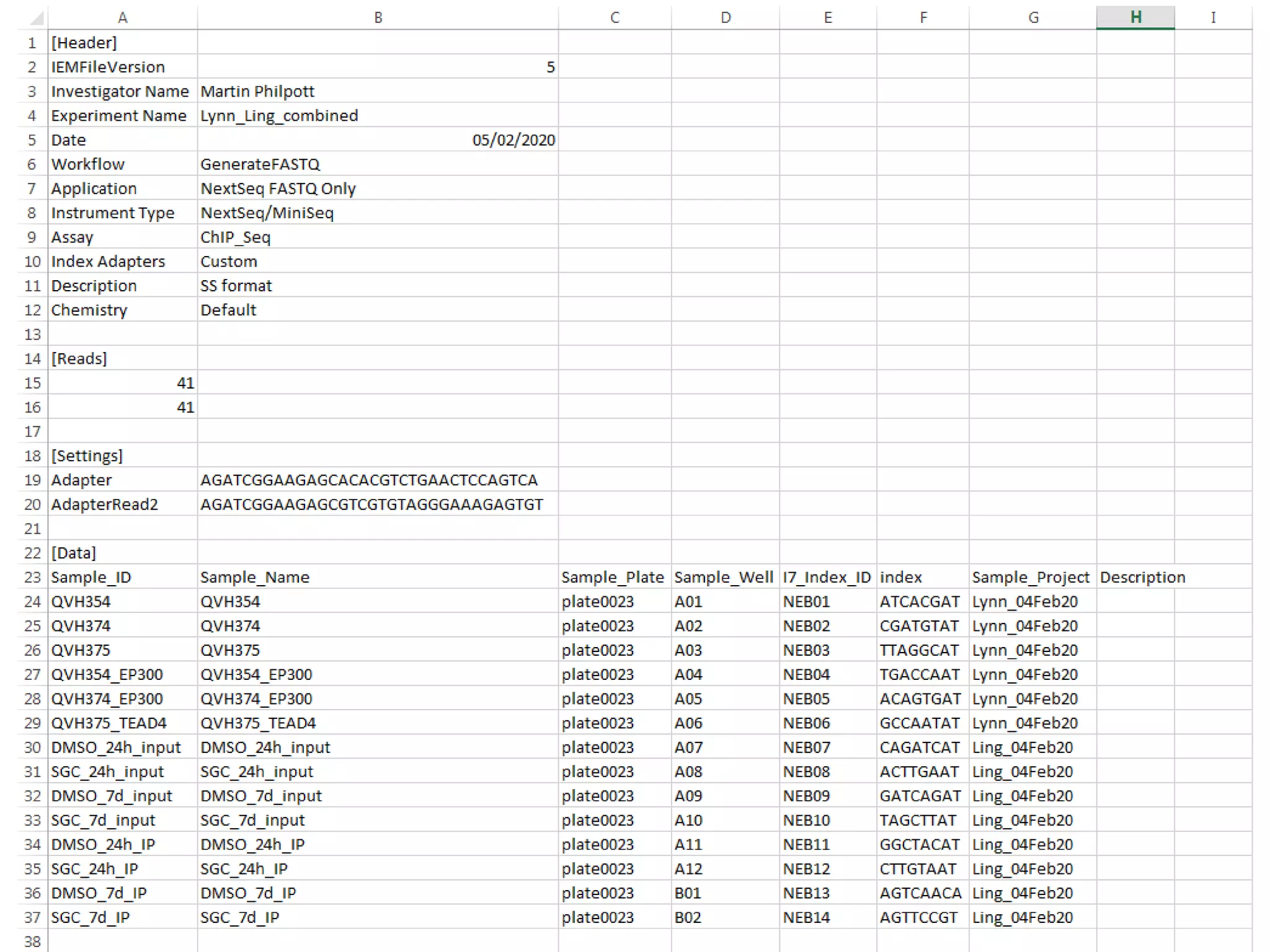
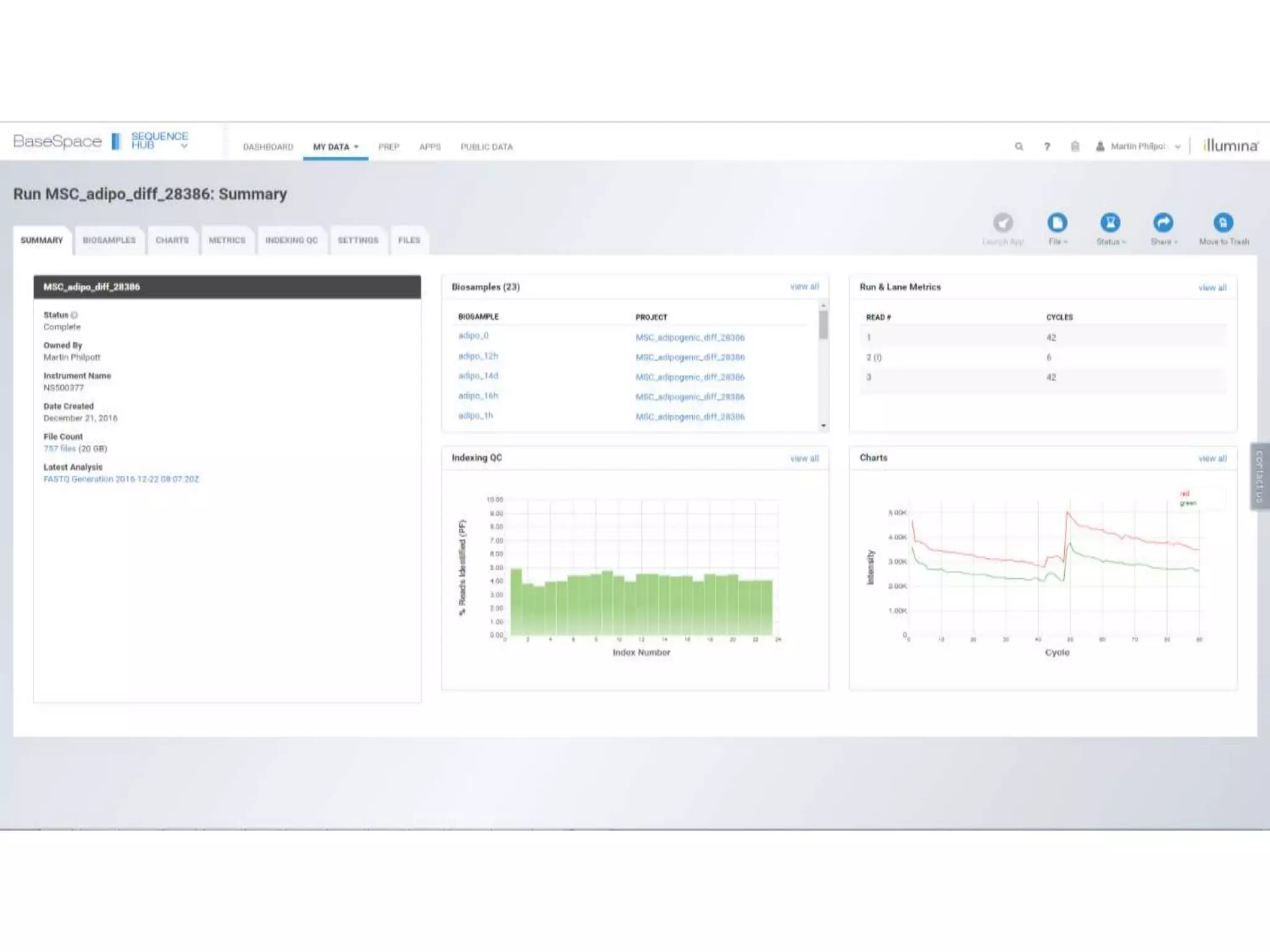
Sequencing: BaseSpace setup
• BaseSpace is the Illumina web-base software for setting up and
retrieving sequencing runs
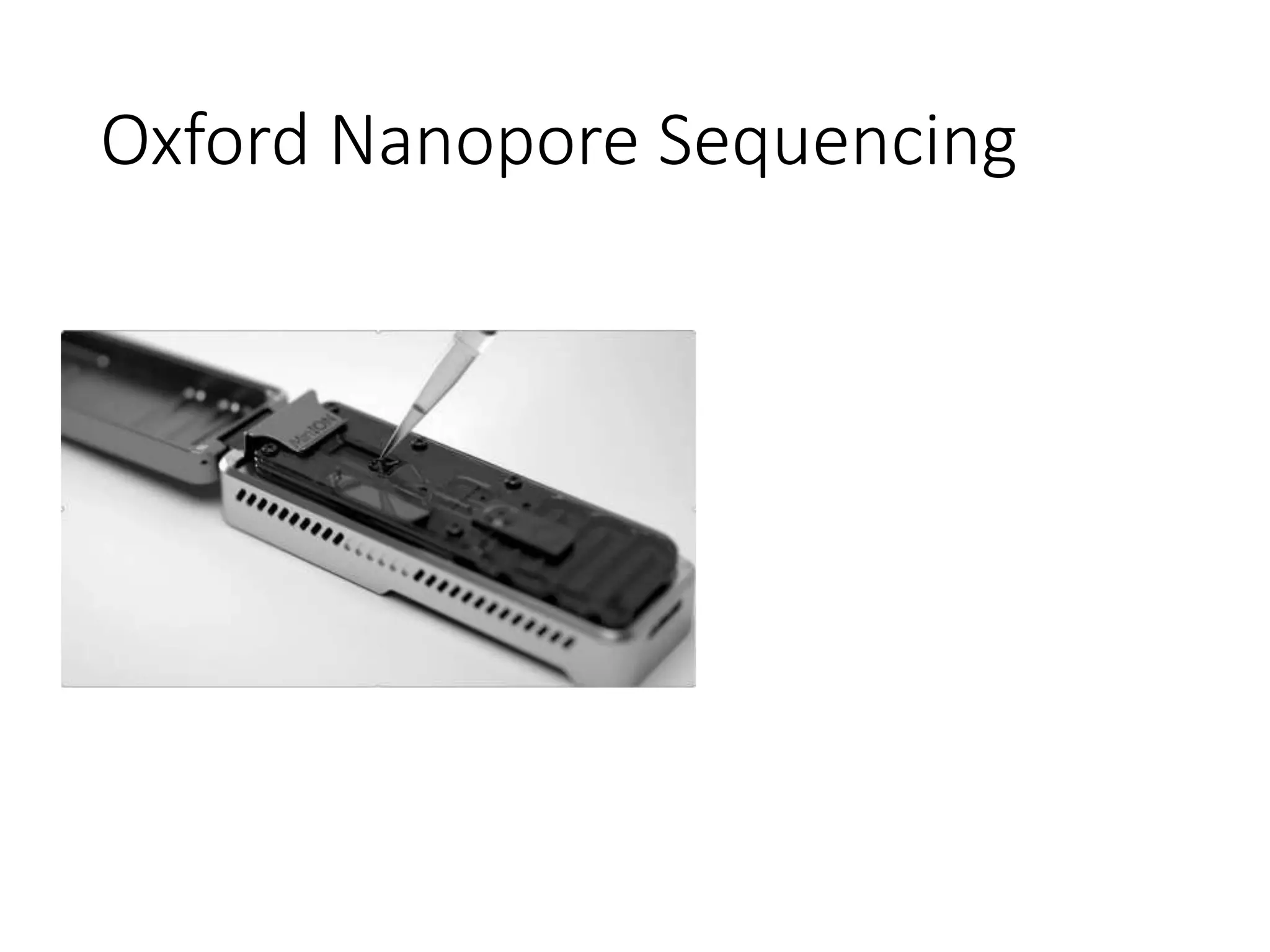
Oxford Nanopore Sequencing
• 3rd Generation sequencing
• Long read sequencing (longest reported read >4 Mb)
• High error rate (3-10%)
• Genome sequencing
• Complete and contiguous genome assemblies; de novo or reference guided
• Resolve structural variants, breakpoints and repeat regions
• Detect epigenetic modifications with direct sequencing and eliminate PCR bias
• Targeted sequencing
• PCR, hybrid-capture, CRISPR/Cas9 enrichment strategies
• Large genomic regions and entire genes in single reads
• Resolve structural variants, repetitive regions, SNVs and phasing
• Gene expression
• Full-length transcripts
• unambiguous identification of splice variants and gene fusions
• Eliminate PCR bias using direct cDNA or direct RNA sequencing
• Identification of anti-sense transcripts and lncRNA isoforms
• Full viral RNA sequence in one read
• Long reads enhance viral identification from metagenomic samples
Oxford Nanopore Sequencing
https://www.youtube.com/watch?v=RcP85JHLmnI
Oxford Nanopore Sequencing
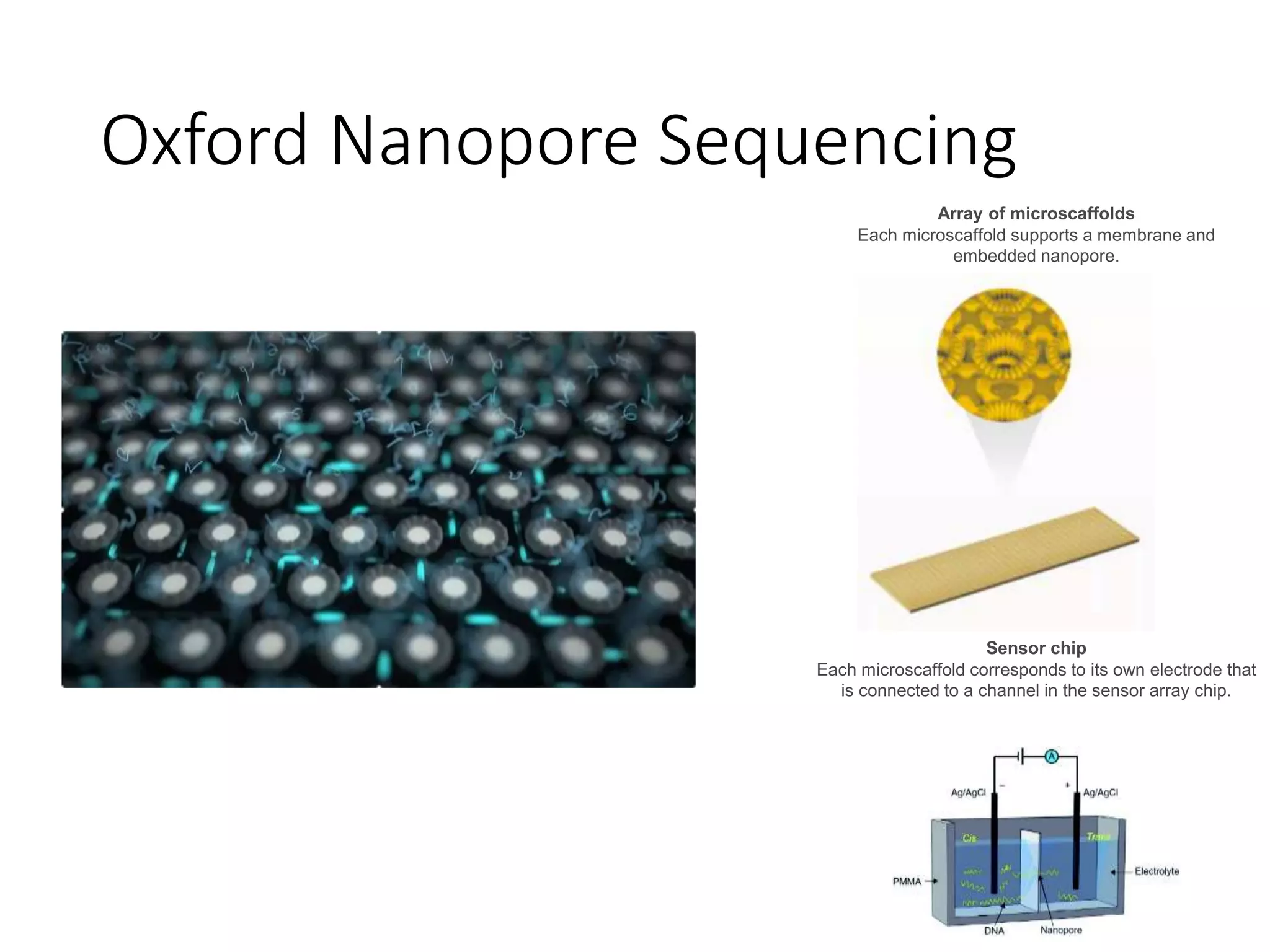
Array of microscaffolds
Each microscaffold supports a membrane and
embedded nanopore.
Sensor chip
Each microscaffold corresponds to its own electrode that
is connected to a channel in the sensor array chip.
Oxford Nanopore Sequencing
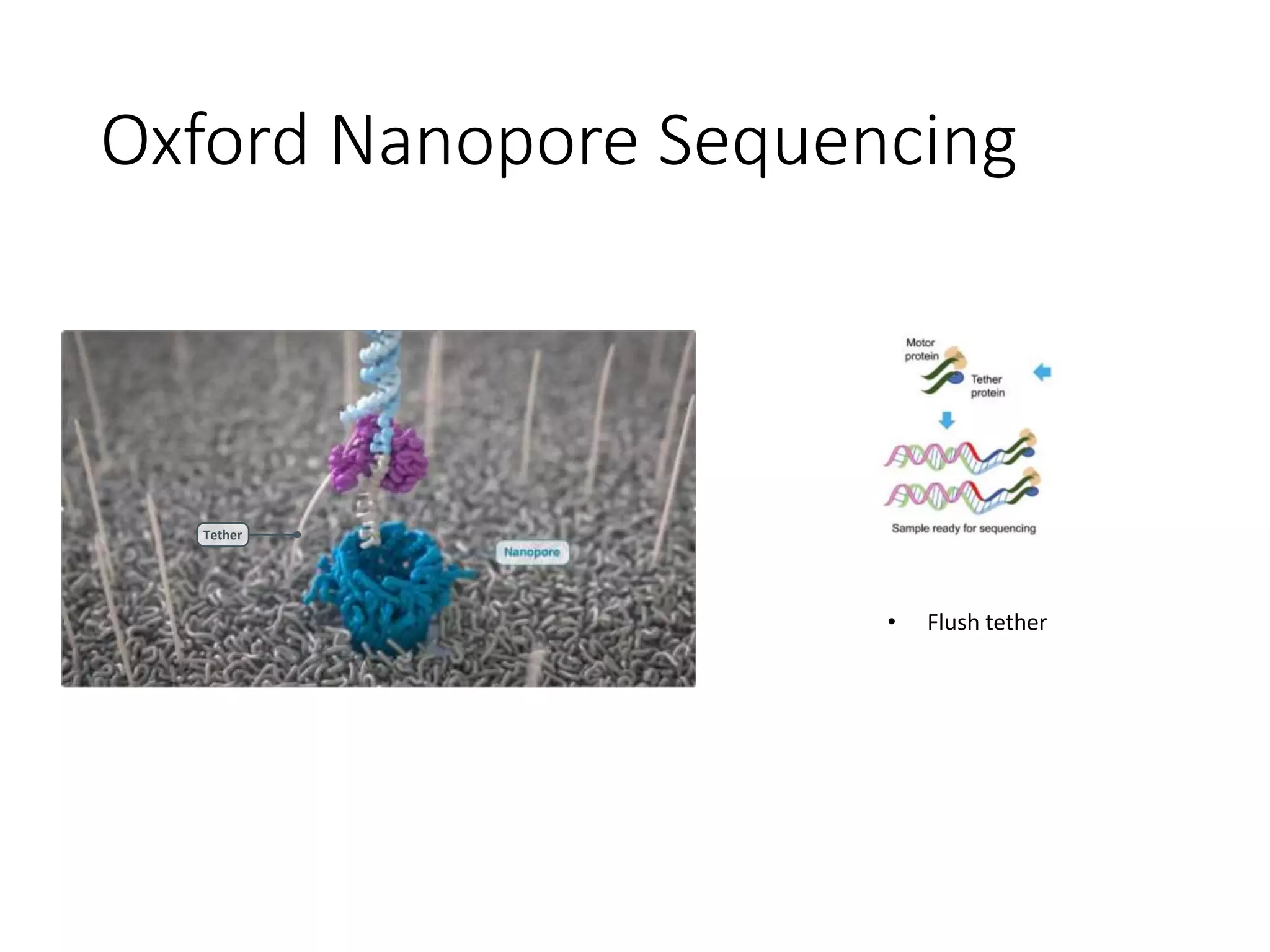
Tether
• Flush tether
Oxford Nanopore Sequencing
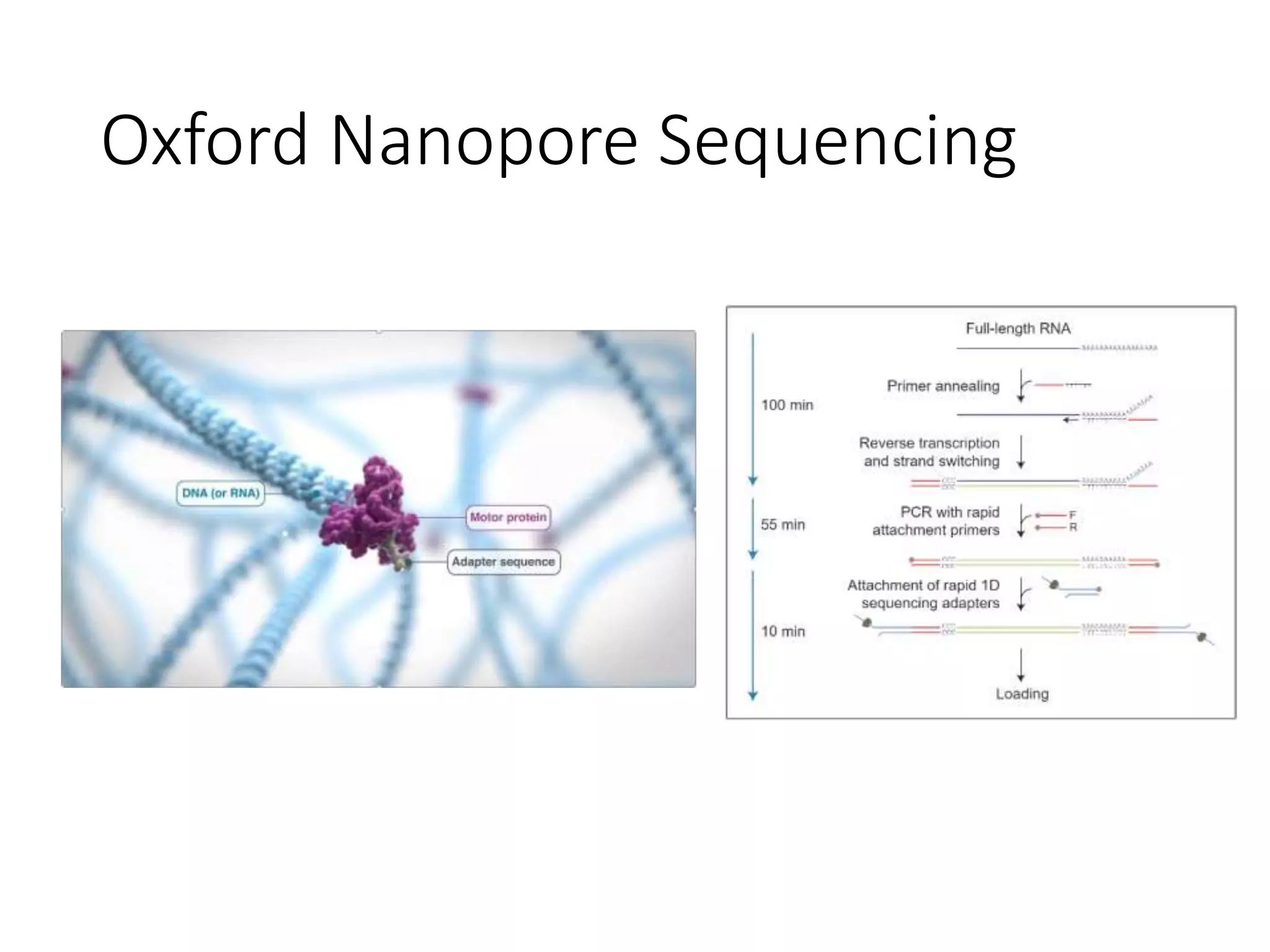
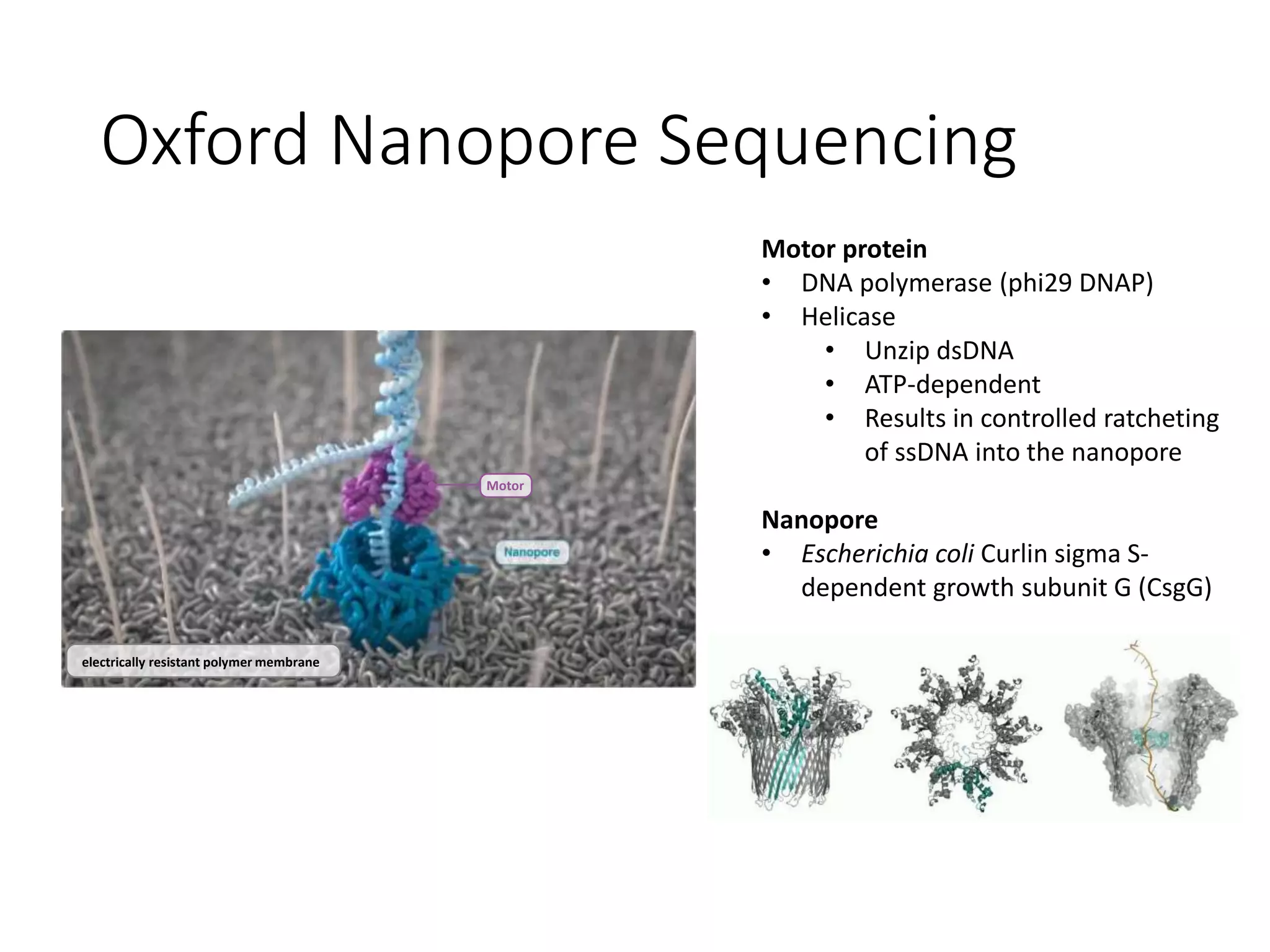
Motor
Motor protein
• DNA polymerase (phi29 DNAP)
• Helicase
• Unzip dsDNA
• ATP-dependent
• Results in controlled ratcheting
of ssDNA into the nanopore
Nanopore
• Escherichia coli Curlin sigma S-
dependent growth subunit G (CsgG)
electrically resistant polymer membrane
Oxford Nanopore Sequencing
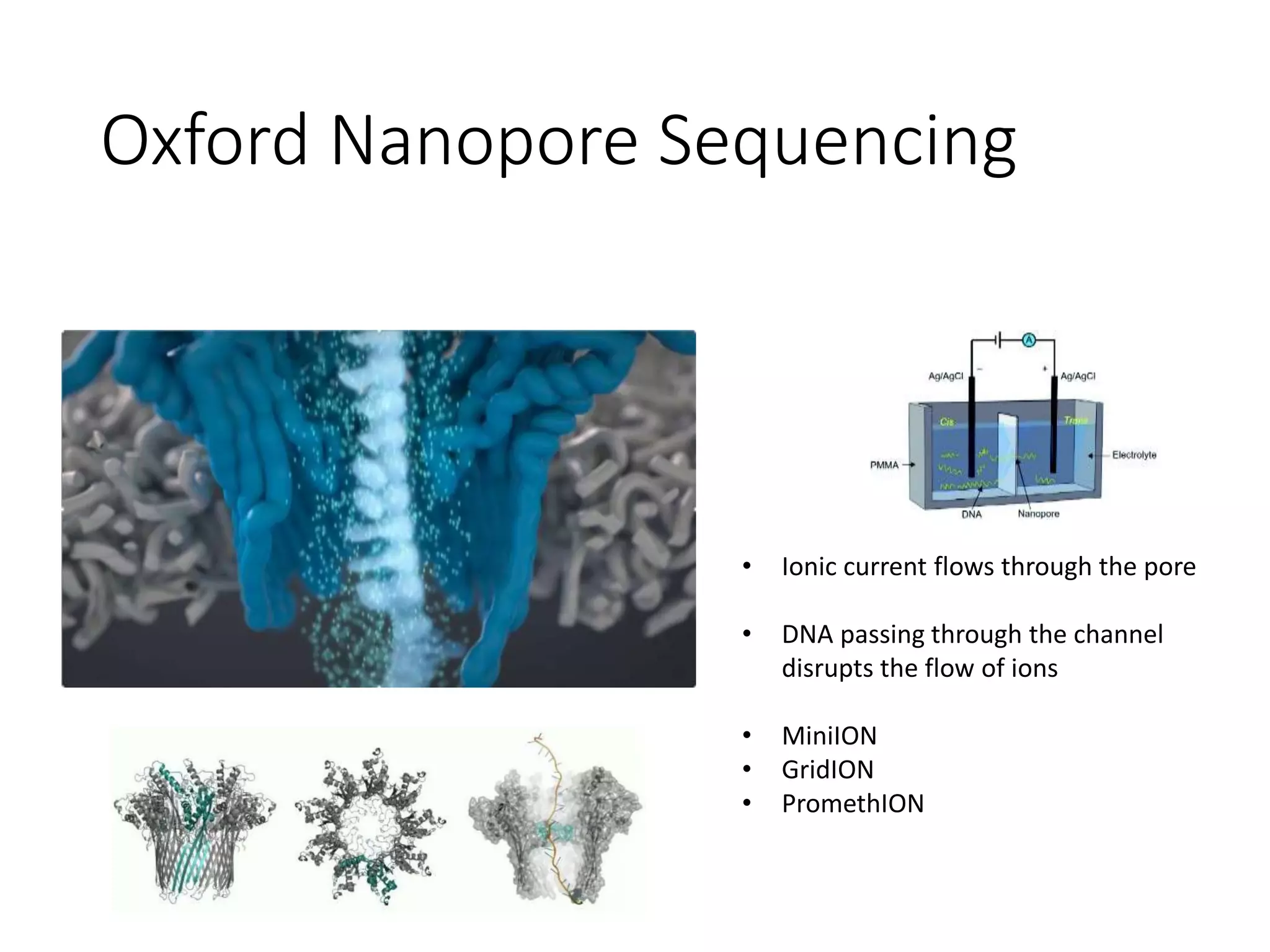
• Ionic current flows through the pore
• DNA passing through the channel
disrupts the flow of ions
• MiniION
• GridION
• PromethION
Oxford Nanopore Sequencing
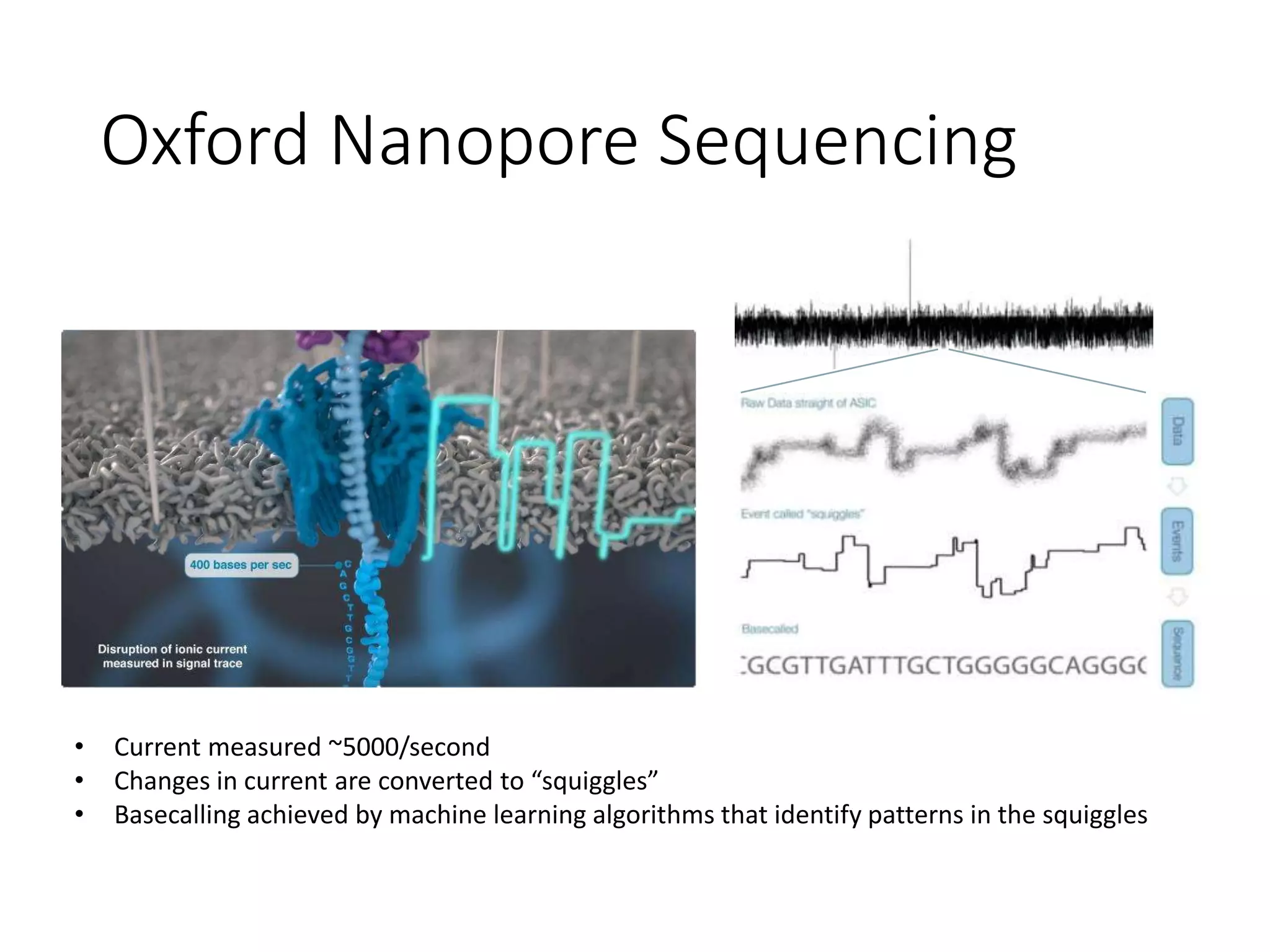
• Current measured ~5000/second
• Changes in current are converted to “squiggles”
• Basecalling achieved by machine learning algorithms that identify patterns in the squiggles
Oxford Nanopore Sequencing
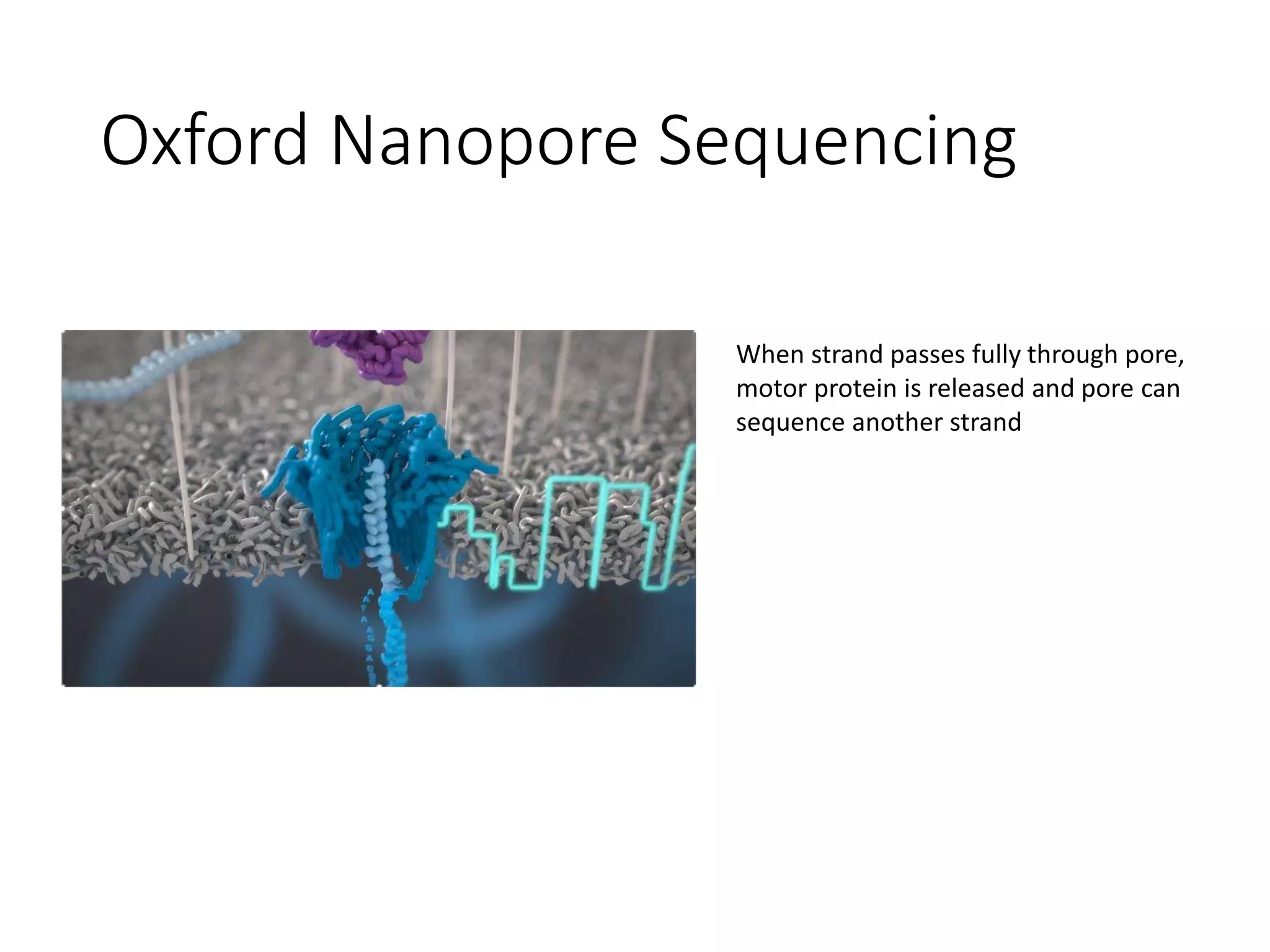
When strand passes fully through pore,
motor protein is released and pore can
sequence another strand
scBUC-seq; single cell Barcode
Umi Correction sequencing
• Existing droplet-based scRNAseq methods only sequence ends of transcripts (usually 3’)
• Methods that cover entire transcripts are only practical for low cell numbers and still doesn’t
assemble individual transcripts
• Droplet-based whole transcript scRNAseq is highly desirable
• Splice variants
• ~95% of multi-exonic genes are alternatively spliced
• splice variants result in multiple protein isoforms from one gene that can have
different functions
• Translocations resulting in fusion proteins or transcripts
scBUC-seq; single cell Barcode
Umi Correction sequencing
• Existing droplet-based scRNAseq methods only sequence ends of transcripts (usually 3’)
• Methods that cover entire transcripts are only practical for low cell numbers and still doesn’t
assemble individual transcripts
• Droplet-based whole transcript scRNAseq is highly desirable
• Splice variants
• ~95% of multi-exonic genes are alternatively spliced
• splice variants result in multiple protein isoforms from one gene that can have
different functions
• Translocations resulting in fusion proteins or transcripts
• But scRNAseq requires high fidelity of barcode and UMI regions
• Oxford Nanopore sequencing only 90-97% accurate
• >70% of reads would be assigned to the wrong barcode
• Synthesize oligos using blocks of dimer
phosphoramidites
• Highly accurate cell assignment
• Uses two pass error correction
• Allows cost-effective and accurate long-
read single-cell sequencing using ONT
platform
Our solution and basis of our products
M Philpott, J Watson, A Thakurta, T Brown Jr, T Brown Sr, U Oppermann, AP Cribbs
Highly accurate barcode and UMI error correction using dual nucleotide dimer blocks allows direct
single-cell nanopore transcriptome sequencing (BioRxiv) - Nature Biotechnology (under revision)
patent pending: N420510GB
CaeruleusGenomics -
confidential
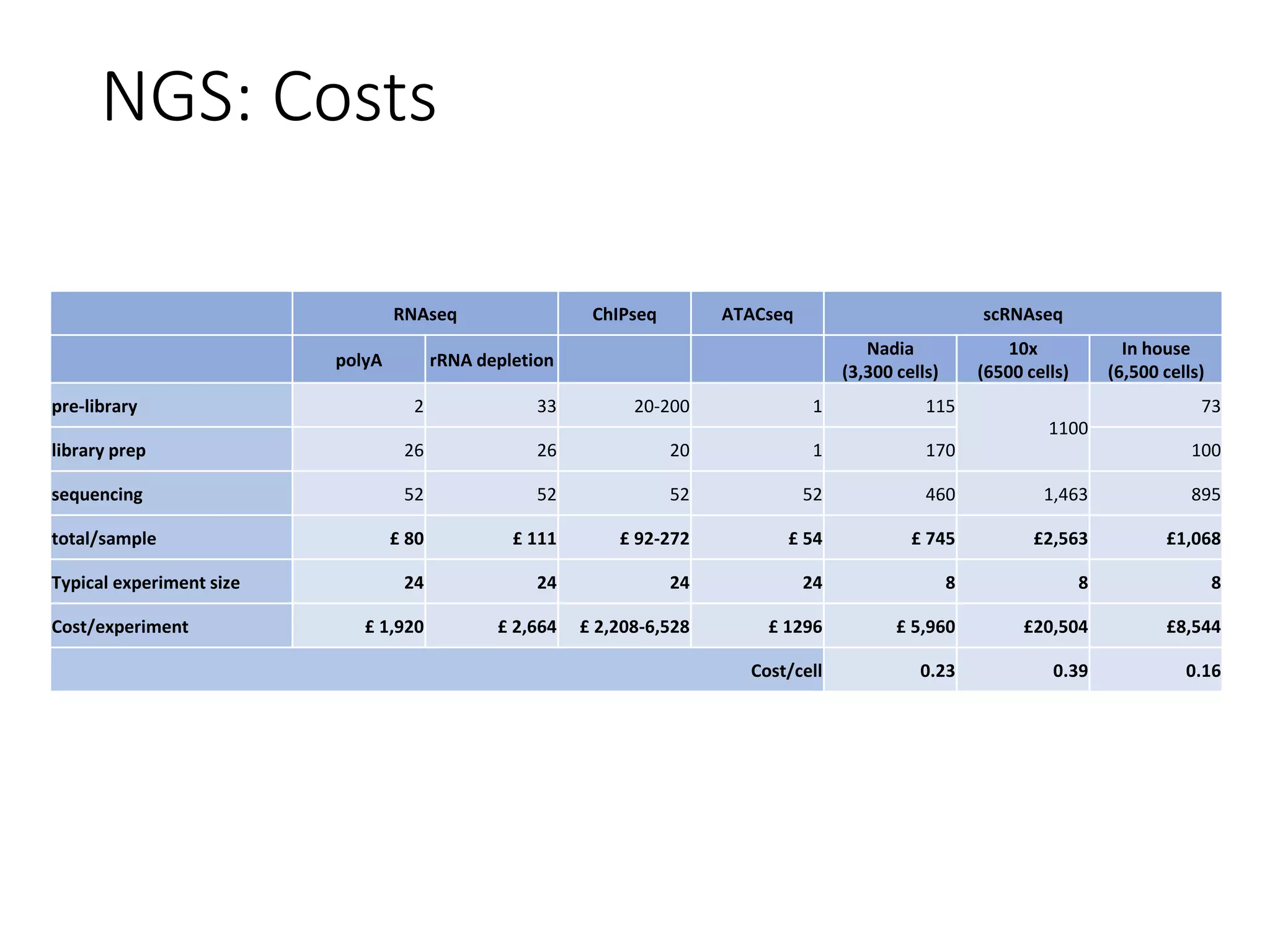
RNAseq ChIPseq ATACseq scRNAseq
polyA rRNA depletion
Nadia
(3,300 cells)
10x
(6500 cells)
In house
(6,500 cells)
pre-library 2 33 20-200 1 115
1100
73
library prep 26 26 20 1 170 100
sequencing 52 52 52 52 460 1,463 895
total/sample £ 80 £ 111 £ 92-272 £ 54 £ 745 £2,563 £1,068
Typical experiment size 24 24 24 24 8 8 8
Cost/experiment £ 1,920 £ 2,664 £ 2,208-6,528 £ 1296 £ 5,960 £20,504 £8,544
Cost/cell 0.23 0.39 0.16
NGS: Costs

Making powerful science: an introduction to NGS and beyond

  • 1.
    Making powerful science:an introduction to NGS and beyond Martin Philpott Team Leader in Systems Biology of Uterine Fibroids & Director Botnar Sequencing Facility Botnar Research Centre
  • 2.
    Next Generation Sequencing •Next Generation Sequencing refers to methods developed after Sanger sequencing that offer greatly increase throughput at reduced cost per base • Methods newer than NGS are referred to as third generation Method Read length Accuracy (single read not consensus) Reads per run Time per run Cost per 1 million bases (in US$) Advantages Disadvantages Chain termination (Sanger sequencing) 400 to 900 bp 99.90% N/A 20 minutes to 3 hours $2400 Useful for many applications. More expensive and impractical for larger sequencing projects. This method also requires the time consuming step of plasmid cloning or PCR. Pyrosequencing (454) 700 bp 99.90% 1 million 24 hours $10 Long read size. Fast. Runs are expensive. Homopolymer errors. Ion semiconductor (Ion Torrent sequencing) up to 600 bp 0.996 up to 80 million 2 hours $1 Less expensive equipment. Fast. Homopolymer errors. Sequencing by ligation (SOLiD sequencing) 50+35 or 50+50 bp 0.999 1.2 to 1.4 billion 1 to 2 weeks $0.13 Low cost per base. Slower than other methods. Has issues sequencing palindromic sequences Sequencing by synthesis (Illumina) MiniSeq, NextSeq: 75-300 bp; MiSeq: 50-600 bp; HiSeq 2500: 50-500 bp; HiSeq 3/4000: 50- 300 bp; HiSeq X: 300 bp 99.9% (Phred30) MiniSeq/MiSeq: 1-25 Million; NextSeq: 130- 00 Million, HiSeq 2500: 300 million - 2 billion, HiSeq 3/4000 2.5 billion, HiSeq X: 3 billion 1 to 11 days, depending upon sequencer and specified read length $0.05 to $0.15 Potential for high sequence yield, depending upon sequencer model and desired application. Equipment can be very expensive. Requires high concentrations of DNA. Nanopore Sequencing Dependent on library prep, not the device, so user chooses read length. (up to 500 kb reported) ~92–97% single read dependent on read length selected by user data streamed in real time. Choose 1 min to 48 hrs $500–999 per Flow Cell, base cost dependent on expt Longest individual reads. Accessible user community. Portable (Palm sized). Lower throughput than other machines, Single read accuracy in 90s. Single-molecule real-time sequencing (Pacific Biosciences) 30,000 bp (N50); maximum read length >100,000 bases 87% raw-read accuracy 500,000 per Sequel SMRT cell, 10–20 gigabases 30 minutes to 20 hours $0.05–$0.08 Fast. Detects 4mC, 5mC, 6mA. Moderate throughput. Equipment can be very expensive.
  • 3.
    Maximum Reads Per Run 4million 25 million 25 million 150 - 400 million 5 billion 6 billion 1.6 - 20 billion Maximum Read Length 2 × 150 bp 2 × 150 bp 2 × 300 bp 2 × 150 bp 2 × 150 bp 2 × 150 bp 2 × 150 bp Illumina Sequencing • The Illumina family of sequencers all use sequencing by synthesis (SBS) technology
  • 4.
  • 5.
    Sequencing by Synthesis DNA or RNA Libraryproduction Denaturation Hybridisation to flowcell P5 Index 2 Index 1 P7 Adaptors Sequence of interest
  • 6.
    Sequencing by Synthesis Hybridisation toflowcell Reverse strand synthesis Forward strand Reverse strand Remove forward strand Only reverse strand is anchored Reverse strand can hybridise to second primer Synthesise second strand
  • 7.
  • 8.
    Sequencing by Synthesis Thousandsof molecules are amplified to form clusters with the same sequence
  • 9.
    The reverse strand is cleaved(USER) and washed away, p5 ends are blocked Sequence primer With each cycle, fluorescently tagged nucleotides are incorporated into the growing chains and clusters are imaged Before the next chemistry cycle proceeds, the blocked 3’ end and the fluorophore from each incorporated base is removed, to allow incorporation of the next base NextSeq chemistry uses only two dyes. C is red, T is green, A is both (yellow) and G has no dye (no fluorescent signal) Sequencing by Synthesis 1 2 3 4 5 6
  • 10.
    Sequencing by Synthesis Theread product is washed away Index 1 is sequenced The read product is washed away Index 1 primer Hybridise to P5 oligo Deblock P5 oligo and add unlabelled bases Index 2 is sequenced
  • 11.
    Sequencing by Synthesis Synthesise second strand Theforward strand is cleaved (Fpg) and washed away The second read is sequenced Read 2 primer
  • 12.
    Library production • Libraryproduction will vary depending on what sequencing-based methodology is being performed • RNAseq • ChIPseq • ATACseq • scRNAseq
  • 13.
    Library production: RNAseq •RNAseq quantitatively interrogates the all the RNA transcripts of a population of cells at a given point in time (transcriptomics) • In practice, it is difficult (and more costly) to examine all types of RNA simultaneously, so target RNA is specifically isolated • Also, ~85% of cellular RNA is ribosomal and is usually not of interest • PolyA selection: Selects almost all protein coding mRNA and some lncRNA • Ribosomal depletion: Selects all mRNA and lncRNA, but is considerably more expensive than polyA selection • Small non-coding RNA selection: Selects miRNAs, piRNAs, snoRNAs, snRNAs etc. Method of total RNA extraction is important.
  • 14.
    Library production: RNAseq •A wide range of commercial RNAseq library prep kits are available, most of which use fairly similar principles • Illumina produce the TruSeq Stranded mRNA kit • At the Botnar, we use the more economical NEBNext Ultra II Directional RNA Library Prep Kit for Illumina • Both of these are stranded or directional protocols, meaning you can tell which strand the mRNA came from • Some regions of the genome produce overlapping transcripts from opposite strands (one is usually a non-coding antisense regulatory RNA) • Unstranded library prep could not distinguish between these two transcripts
  • 15.
    Library production: RNAseq Mixtureof mesophilic DNA polymerase and thermophilic Taq polymerase? polyT labelled magnetic beads or rRNA probes followed by RNAse H digest or bead capture 94°C for ~15 minutes Reverse transcriptase DNA polymerase I AMPure XP paramagnetic beads T4 DNA Ligase
  • 16.
    Library production: RNAseq PCRprimers add P5, P7 and index sequences AMPure XP paramagnetic beads T4 DNA Ligase USER enzyme is a mixture of E. coli uracil DNA glycosylase and endonuclease VIII. Together, these enzymes excise uracils, creating single stranded DNA breaks
  • 17.
    Library production: ChIPseq •ChIPseq allows the mapping of specific proteins or post-translationally modified proteins (particularly histones) to DNA Open Chromatin  Activation Condensed Chromatin  Repression • Histone tails can be modified • Methylation • Acetyation • Phosphorylation • Leads to changes in chromatin conformation • This process is regulated by a number of enzymes • Methyltransferases • Demethylases • Acetylases • Deacetylases • Transcription factors • Chromatin modifiers
  • 18.
  • 19.
    Library production: DNA(ChIPseq, WGS…) • Protocol the same as RNA library prep from end repair step onwards • Does not need to be stranded (both strands will map to the same location)
  • 20.
    Library production: ATACseq •ATACseq (Assay for Transposase-Accessible Chromatin using sequencing) is a technique used to study chromatin accessibility • It is particularly useful for identifying regulatory regions, e.g. promoters, enhancers, insulators • It is based on the concept that open chromatin (ie active) is more accessible to attack by Tn5 Transposase • Transposase is loaded with Mosaic End Double-Stranded (MEDS) oligos • Transposase cleaves DNA, append the MEDS to the cut ends and remains bound to DNA
  • 21.
    Library production: DNA (ATACseq,WGS…) Extract nuclei from cells/tissue of interest Incubate with Tn5 for 30 minutes @ 37°C Maintains chomatin structure while allowing Tn5 access to chromatin PCR with primers recognising MEDS that add P5, P7 and indexes Tn5 ratio to DNA is critical Typically ~65,000 cells / 2.5 ul Tn5 Clean up AMPure XP beads Sequence Genomic DNA for whole genome sequencing This is how Illumina Nextera kits work
  • 22.
    Library production: Singlecell sequencing • Dolomite Bio Nadia Innovate • Commercialised version of original Drop-Seq system (Cell. 2015 May 21;161(5):1202-1214.) • System is a microdroplet encapsulator • Allows custom assay development • Can run 1, 2, 4 or 8 lanes in parallel
  • 23.
    Library production: Singlecell sequencing • 10x Chromium • Modified Drop-Seq system, using gel beads and in droplet RT • System is a microdroplet encapsulator • Largely restricted to 10x assays • Can run 1 - 8 lanes in parallel
  • 24.
  • 25.
    Prepare single cellsuspension @300 cells/ul Wash beads & resuspend in cell lysis buffer @XXX beads/ul Fill oil chamber & pre-run Load 250 ul of cells and beads Run encapsulation Transfer emulsion to 50 ml Falcon tube & add 30 ml SSC Break emulsion with PFO Centrifuge, remove upper layer, add 30 ml SSC to resuspend beads, transfer upper layer to fresh tube Wash beads Reverse transcription with TSO Exonuclease treatment PCR 2,000 beads/well (100 STAMPS) AMPure XP bead clean-up & Tapestation quantitation Tagmentation PCR AMPure XP bead clean-up & Tapestation quantitation Sequence 1:20 droplets should contain a cell. 1:20 droplets should contain a bead. 1:400 droplets will contain both. Digests bead primers that did not capture an RNA Fragments to ~300 bp and adds adapters Moloney murine leukemia virus (MMLV) reverse transcriptase Adds p5 and p7 sequences plus index Large volumes minimises secondary RNA binding
  • 27.
    Histone H3K27me3 demethylasesregulate human Th17 cell development and effector functions by impacting on metabolism Proc Natl Acad Sci U S A. 2020 Mar 17;117(11):6056-6066. Effect of GSK-J4 on CD4+ cells
  • 28.
    Library production: Quantitation andPooling • Before any libraries can be sequenced, they need to be quantitated and (usually) pooled with other samples • Loading the right amount of pooled library is critical to optimal sequencing • Quantitation is performed on the Tapestation and samples are pooled such that they are all equimolar (assuming you want the same number of reads for each sample)
  • 29.
    Sequencing: BaseSpace setup •BaseSpace is the Illumina web-base software for setting up and retrieving sequencing runs
  • 32.
    Oxford Nanopore Sequencing •3rd Generation sequencing • Long read sequencing (longest reported read >4 Mb) • High error rate (3-10%) • Genome sequencing • Complete and contiguous genome assemblies; de novo or reference guided • Resolve structural variants, breakpoints and repeat regions • Detect epigenetic modifications with direct sequencing and eliminate PCR bias • Targeted sequencing • PCR, hybrid-capture, CRISPR/Cas9 enrichment strategies • Large genomic regions and entire genes in single reads • Resolve structural variants, repetitive regions, SNVs and phasing • Gene expression • Full-length transcripts • unambiguous identification of splice variants and gene fusions • Eliminate PCR bias using direct cDNA or direct RNA sequencing • Identification of anti-sense transcripts and lncRNA isoforms • Full viral RNA sequence in one read • Long reads enhance viral identification from metagenomic samples
  • 33.
  • 34.
  • 35.
  • 36.
    Oxford Nanopore Sequencing Arrayof microscaffolds Each microscaffold supports a membrane and embedded nanopore. Sensor chip Each microscaffold corresponds to its own electrode that is connected to a channel in the sensor array chip.
  • 37.
  • 38.
    Oxford Nanopore Sequencing Motor Motorprotein • DNA polymerase (phi29 DNAP) • Helicase • Unzip dsDNA • ATP-dependent • Results in controlled ratcheting of ssDNA into the nanopore Nanopore • Escherichia coli Curlin sigma S- dependent growth subunit G (CsgG) electrically resistant polymer membrane
  • 39.
    Oxford Nanopore Sequencing •Ionic current flows through the pore • DNA passing through the channel disrupts the flow of ions • MiniION • GridION • PromethION
  • 40.
    Oxford Nanopore Sequencing •Current measured ~5000/second • Changes in current are converted to “squiggles” • Basecalling achieved by machine learning algorithms that identify patterns in the squiggles
  • 41.
    Oxford Nanopore Sequencing Whenstrand passes fully through pore, motor protein is released and pore can sequence another strand
  • 42.
    scBUC-seq; single cellBarcode Umi Correction sequencing • Existing droplet-based scRNAseq methods only sequence ends of transcripts (usually 3’) • Methods that cover entire transcripts are only practical for low cell numbers and still doesn’t assemble individual transcripts • Droplet-based whole transcript scRNAseq is highly desirable • Splice variants • ~95% of multi-exonic genes are alternatively spliced • splice variants result in multiple protein isoforms from one gene that can have different functions • Translocations resulting in fusion proteins or transcripts
  • 43.
    scBUC-seq; single cellBarcode Umi Correction sequencing • Existing droplet-based scRNAseq methods only sequence ends of transcripts (usually 3’) • Methods that cover entire transcripts are only practical for low cell numbers and still doesn’t assemble individual transcripts • Droplet-based whole transcript scRNAseq is highly desirable • Splice variants • ~95% of multi-exonic genes are alternatively spliced • splice variants result in multiple protein isoforms from one gene that can have different functions • Translocations resulting in fusion proteins or transcripts • But scRNAseq requires high fidelity of barcode and UMI regions • Oxford Nanopore sequencing only 90-97% accurate • >70% of reads would be assigned to the wrong barcode
  • 44.
    • Synthesize oligosusing blocks of dimer phosphoramidites • Highly accurate cell assignment • Uses two pass error correction • Allows cost-effective and accurate long- read single-cell sequencing using ONT platform Our solution and basis of our products M Philpott, J Watson, A Thakurta, T Brown Jr, T Brown Sr, U Oppermann, AP Cribbs Highly accurate barcode and UMI error correction using dual nucleotide dimer blocks allows direct single-cell nanopore transcriptome sequencing (BioRxiv) - Nature Biotechnology (under revision) patent pending: N420510GB CaeruleusGenomics - confidential
  • 45.
    RNAseq ChIPseq ATACseqscRNAseq polyA rRNA depletion Nadia (3,300 cells) 10x (6500 cells) In house (6,500 cells) pre-library 2 33 20-200 1 115 1100 73 library prep 26 26 20 1 170 100 sequencing 52 52 52 52 460 1,463 895 total/sample £ 80 £ 111 £ 92-272 £ 54 £ 745 £2,563 £1,068 Typical experiment size 24 24 24 24 8 8 8 Cost/experiment £ 1,920 £ 2,664 £ 2,208-6,528 £ 1296 £ 5,960 £20,504 £8,544 Cost/cell 0.23 0.39 0.16 NGS: Costs