Downloaded 309 times


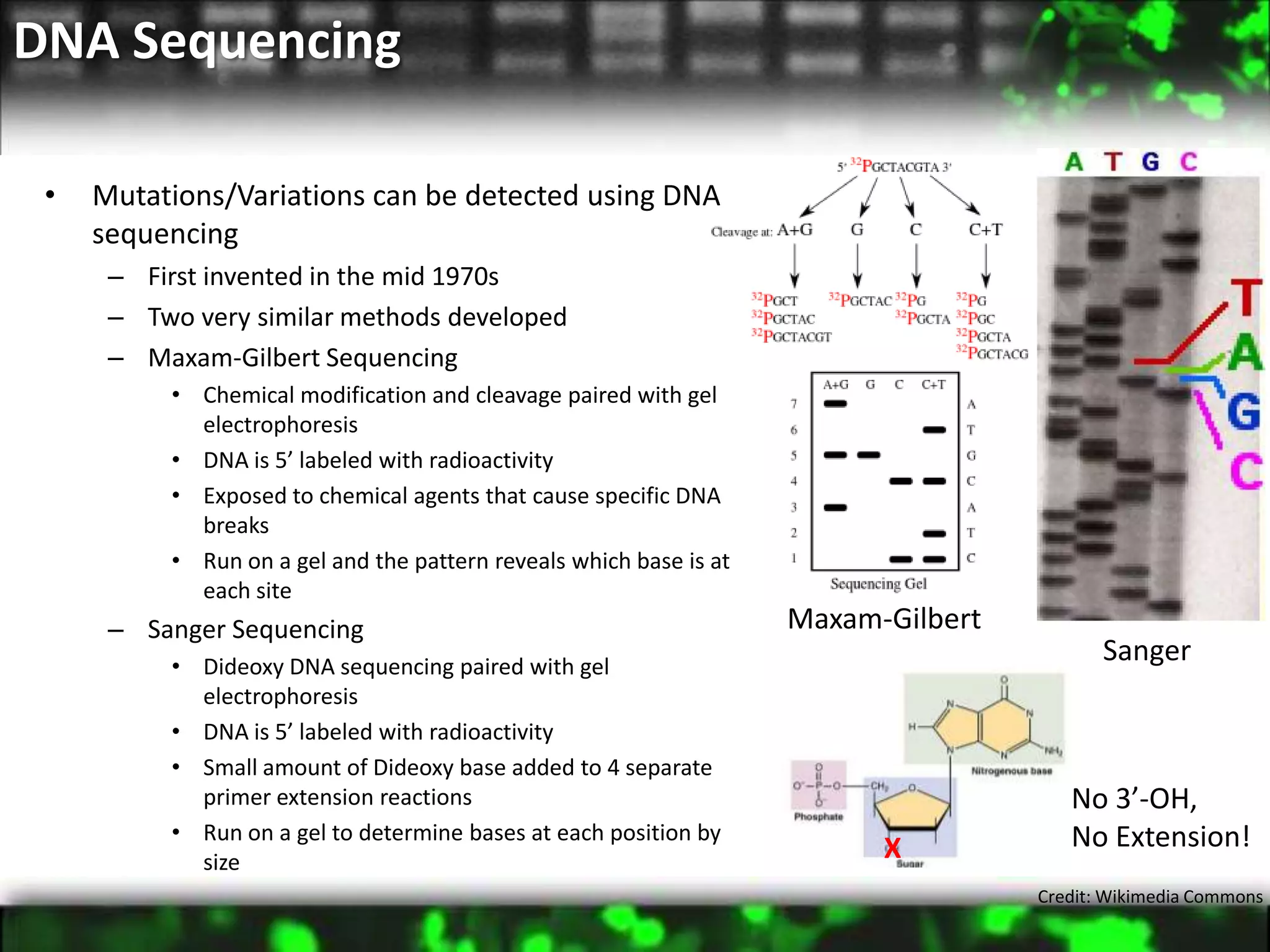


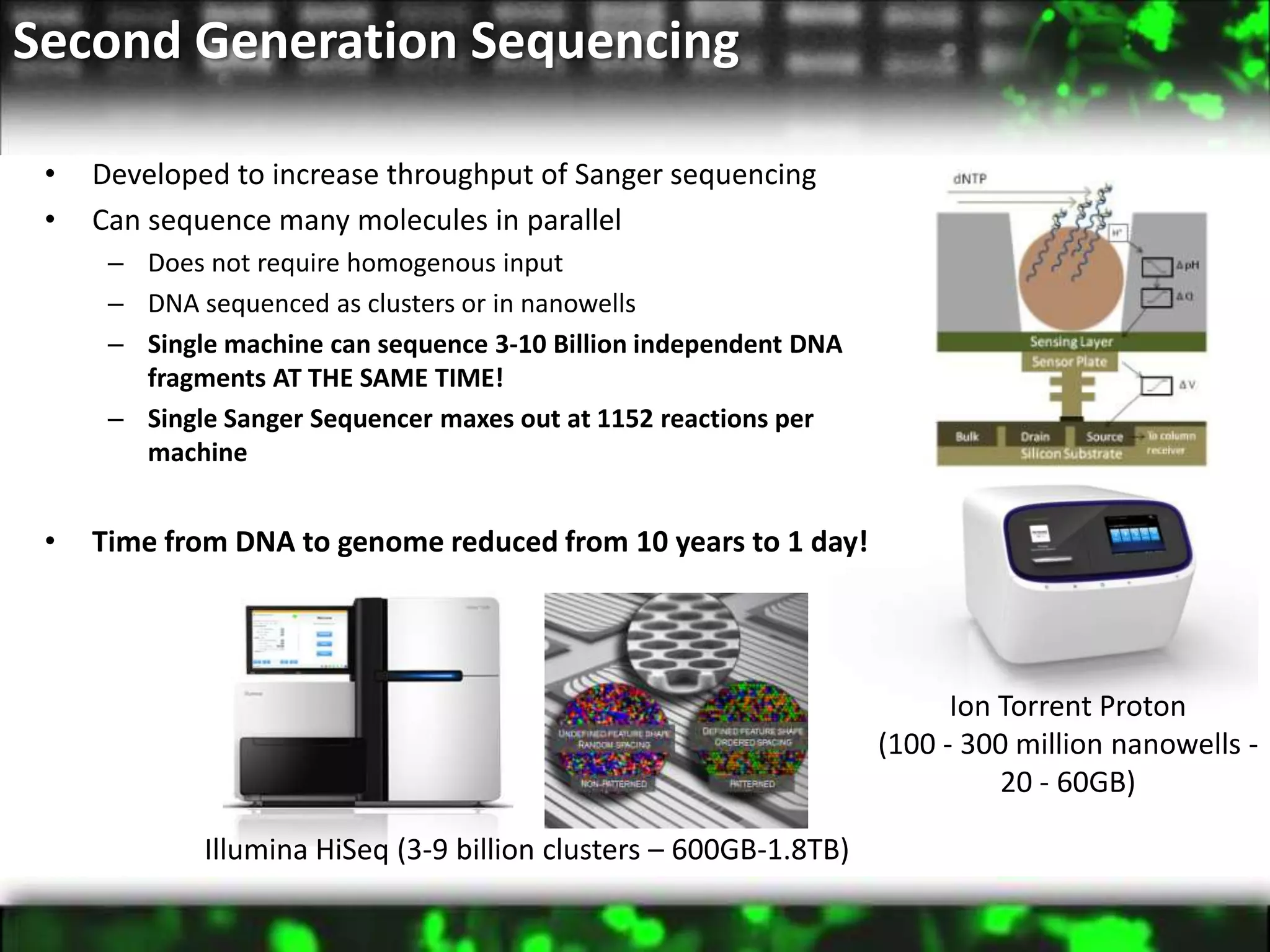


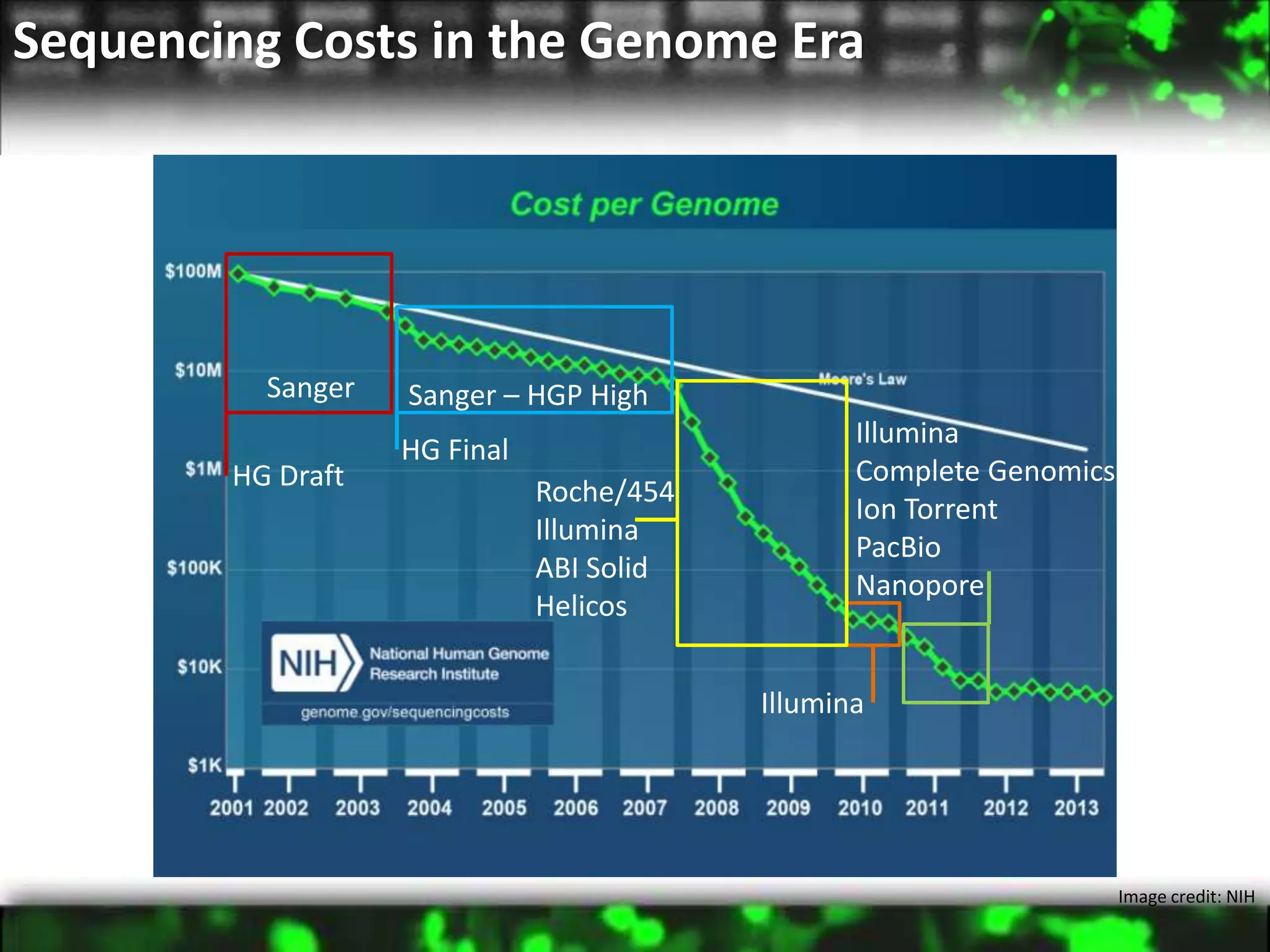


The document discusses advancements in DNA sequencing technologies, tracing the evolution from early methods like Sanger sequencing to second and third generation technologies that drastically reduce sequencing time and costs. It highlights the challenges and limitations of each generation while emphasizing the importance of detecting DNA mutations and the promise of achieving a $0 genome, which relies on reducing costs and increasing the applicability of genetic data in clinical settings. Despite significant progress, the document notes ongoing hurdles such as clinician education and the need for widespread valuation of genomic data in healthcare.


