Next Generation Sequencing
-Past, Present and Future
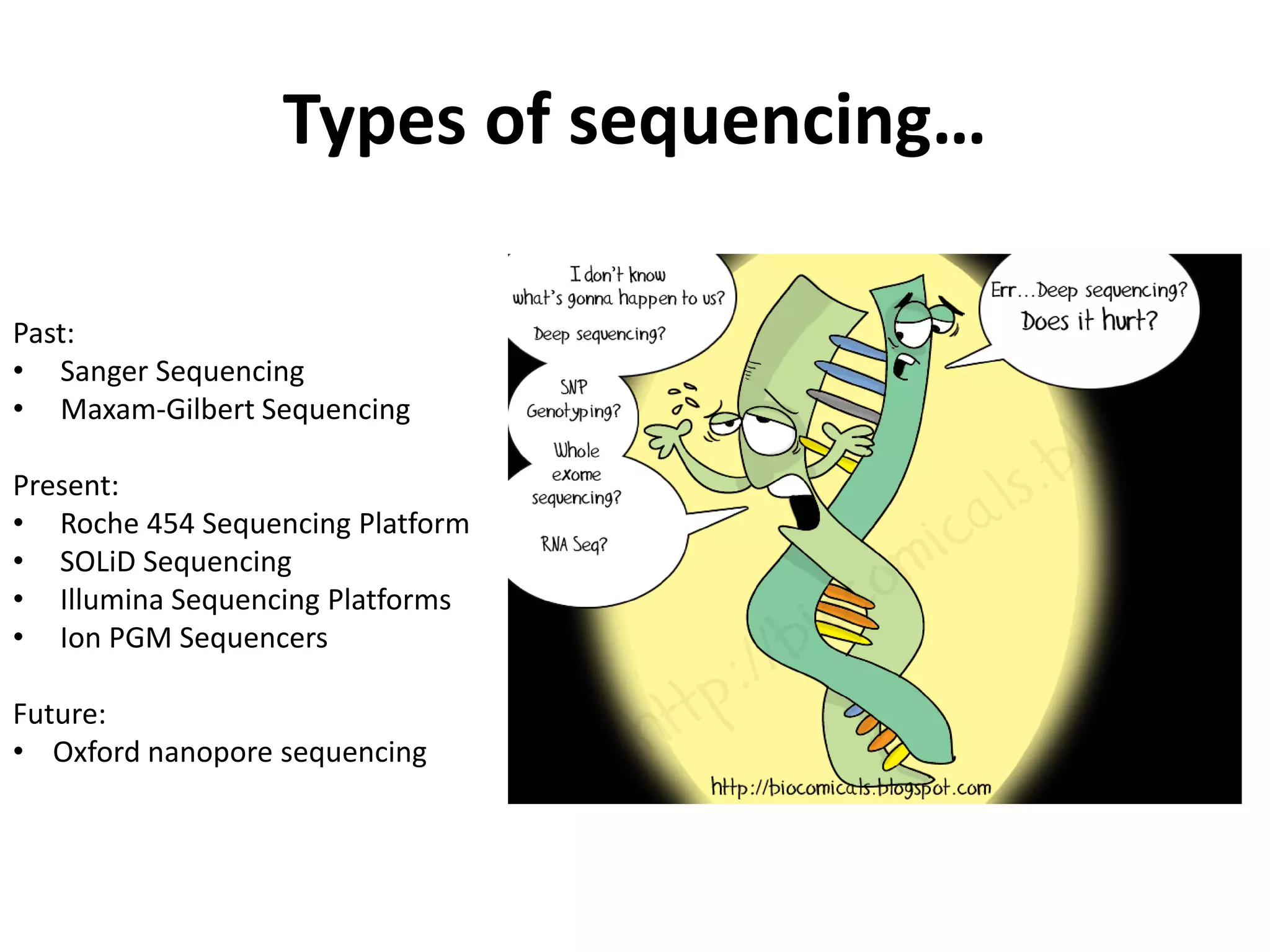
Types of sequencing…
Past:
• Sanger Sequencing
• Maxam-Gilbert Sequencing
Present:
• Roche 454 Sequencing Platform
• SOLiD Sequencing
• Illumina Sequencing Platforms
• Ion PGM Sequencers
Future:
• Oxford nanopore sequencing
PAST…
• Sanger Sequencing
•Maxam-Gilbert Sequencing
Sanger Sequencing
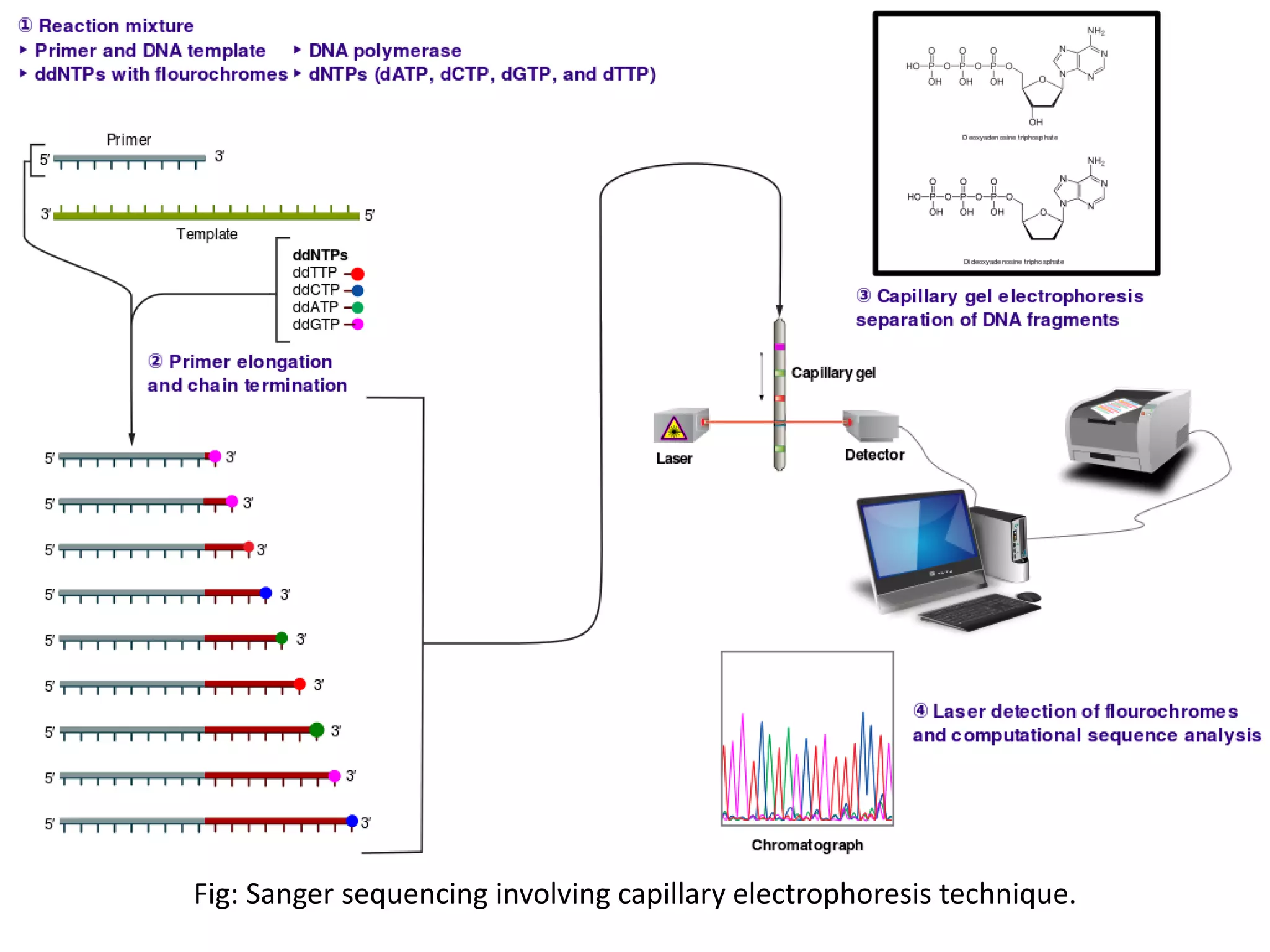
•As we all know, first sequencing technique was developed by Frederick Sanger in 1972. It was
based on chain termination during synthesis[1]. The DNA sequence being synthesized was
terminated using Dideoxynucleotides.
•Sanger sequencing was adopted instead of Maxam-Gilbert Sequencing because of its high
efficiency and low radioactivity as the First generation sequencing.
•AB370: First Automatic Sanger sequencer by Applied Biosystems in 1987 involving Capillary
electrophoresis. Processivity= 96 bases at one time, 500K bases a day with read length up to 600
bases
Deoxynucleotide Dideoxynucleotide
Fig: Sanger sequencing involving capillary electrophoresis technique.
Maxam-Gilbert Sequencing
Another sequencing developed around the same time as that of Sanger was by Sanger’s
colleague Walter Gilbert and Allan Maxam. This sequencing technology was based on chemical
modification of DNA and subsequent cleavage at specific bases[2].
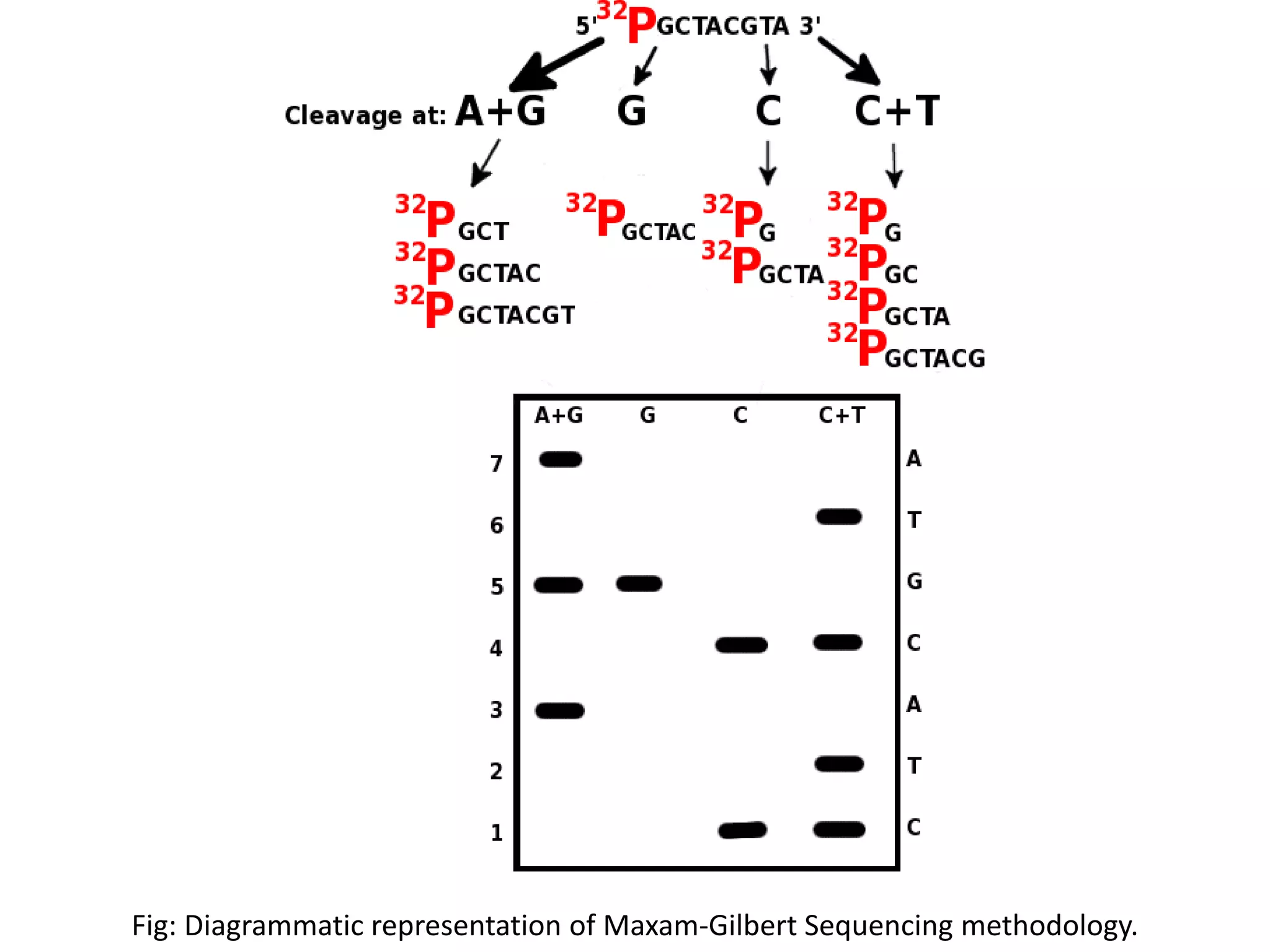
In case of Maxam-Gilbert sequencing[3],
•DNA is cleaved by either Dimethyl sulphate(A/G) or Hydrazine(C/T) in Nucleotide specific
manner and then end labeling is done using 32P Phosphate.
•Partial cleavage at each base produces a nested set of radioactive fragments extending from
the labeled end to each of the position of that base which is then resolved using Polyacrylamide
Gel Electrophoresis.
•Autoradiograph then show band of four different cleavage reaction specific for each base( in a
manner explained by Maxam-Gilbert) and sequence of the DNA fragment can be established by
it.
Fig: Diagrammatic representation of Maxam-Gilbert Sequencing methodology.
Fig: Original results of sequencing published by Maxam and Gilbert[3].
PRESENT…
•Roche 454 Sequencing Platform
•SOLiD Sequencing
•Illumina Sequencing Platforms
•Ion PGM Sequencers
Roche 454 Sequencer
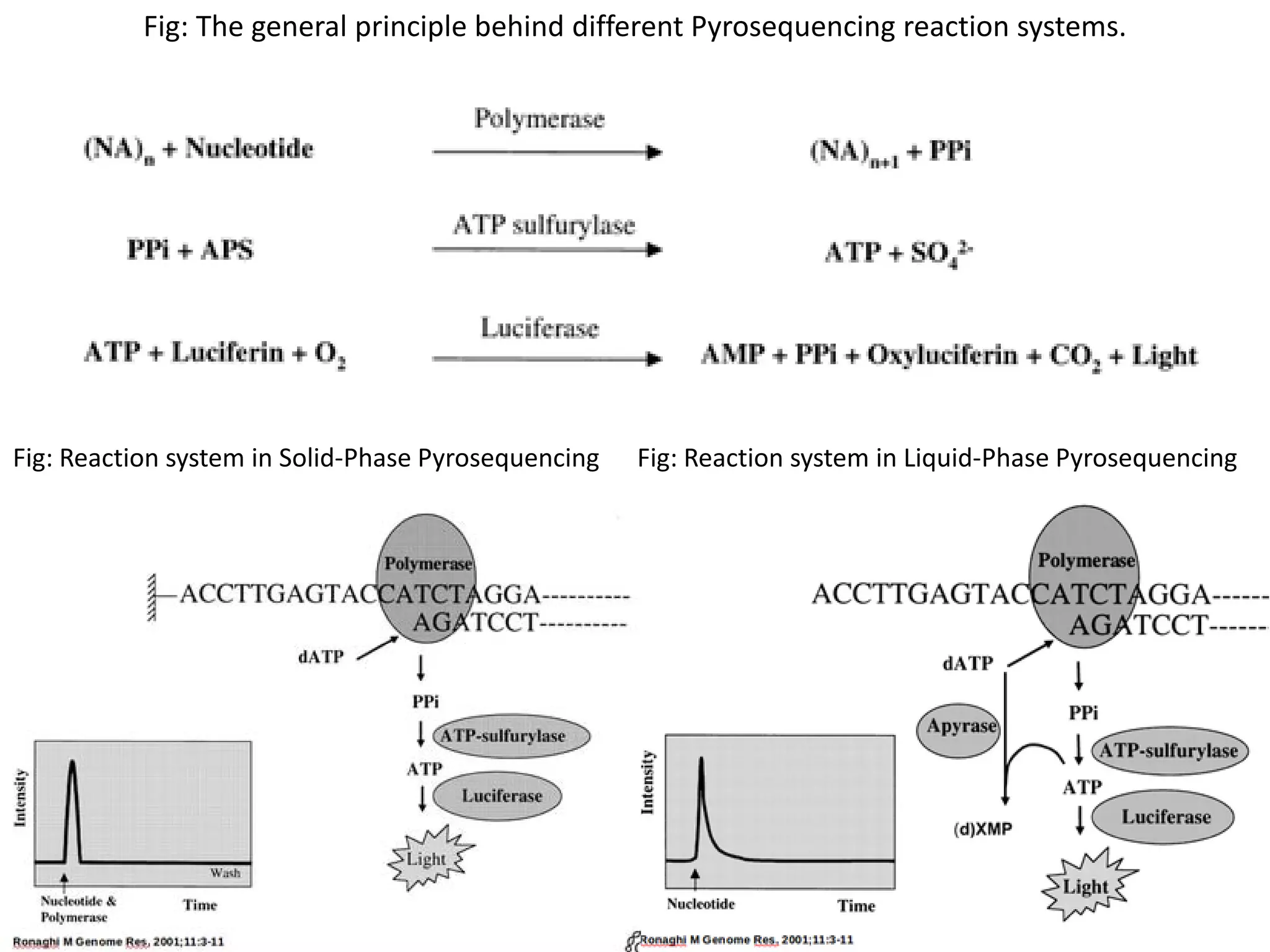
• Principal: Based on detection of pyrophosphate released during nucleotide incorporation
•In a cascade of enzymatic reactions, visible light is generated that is proportional to the # of
incorporated nucleotides.
•The sequence in which the nucleotides are provided for the reaction in known so the added
nucleotide can be determined by the pyrogram thereby establishing the sequence of the
template DNA sequence.
•Library preparation is majorly same as that of Pyrosequencing.
Enzyme System of 454[4]:
1. DNA Polymerase: Klenow fragment of E.coli DNA Pol1 is used to polymerize daughter strand
from ssDNA template strand.
2. ATP Sulfurylase: ATP sulfurylase used in 454 is a recombinant version from the yeast S.
cerevisiae.
3. Luciferase: Luciferase is from the American firefly Photinus pyralis.
4. Apyrase: It is a nucleotide degrading enzyme from the potato, which is introduced to make a
4 enzyme system. It is used to degrade remaining ATP and dNTPs after every reaction to
prevent non specific or false signals.
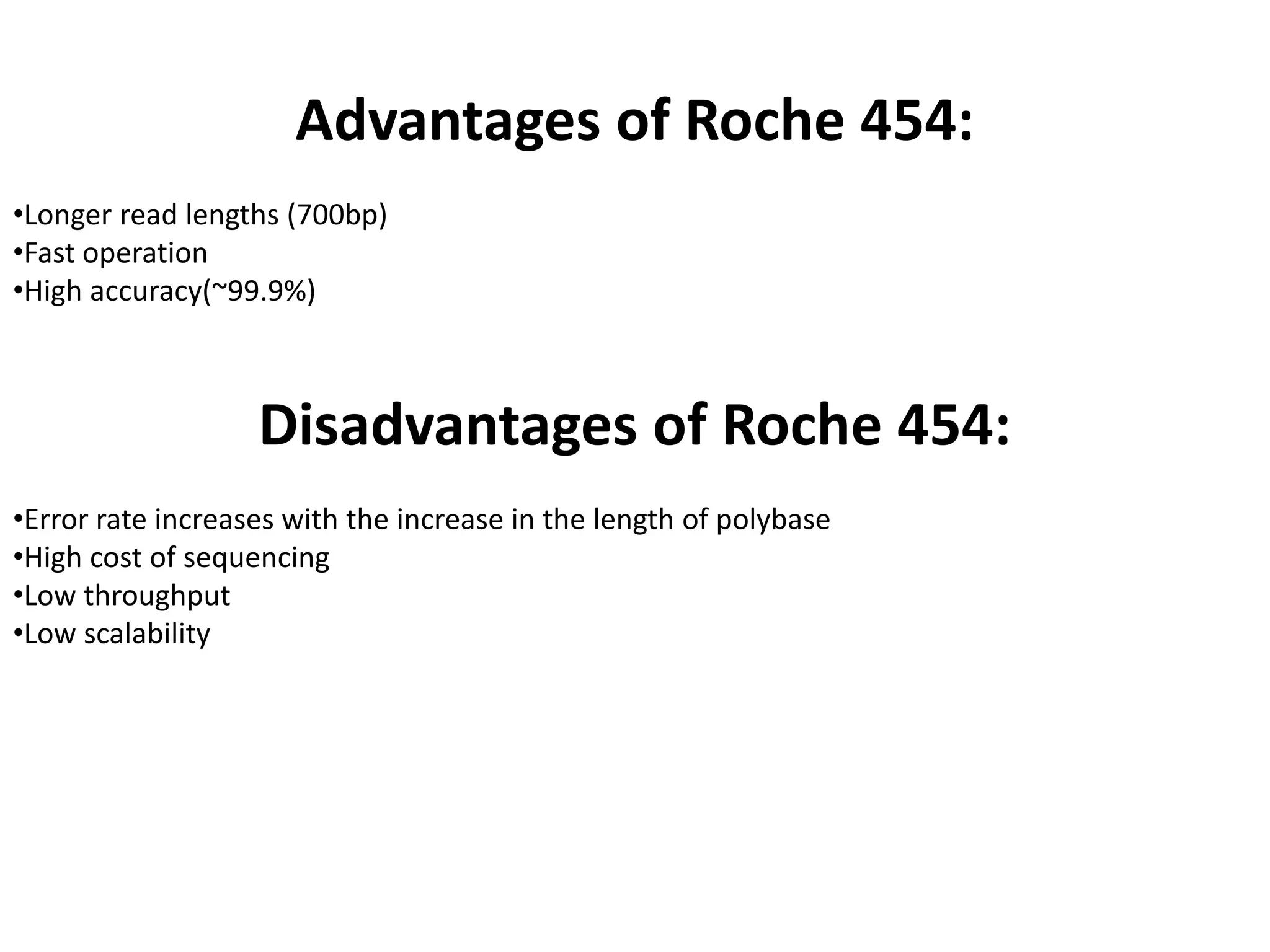
Advantages of Roche 454:
•Longer read lengths (700bp)
•Fast operation
•High accuracy(~99.9%)
Disadvantages of Roche 454:
•Error rate increases with the increase in the length of polybase
•High cost of sequencing
•Low throughput
•Low scalability
Fig: The general principle behind different Pyrosequencing reaction systems.
Fig: Reaction system in Solid-Phase Pyrosequencing Fig: Reaction system in Liquid-Phase Pyrosequencing
SOLiD Sequencing
•Sequencing by Oligonucleotide Ligation and Detection
•Developed by Applied Biosystems(Life Technologies). It is based on Polony sequencing
(Polymerase + Colony).
•The sequencer adopts the technology of two-base sequencing based on ligation sequencing.
•Each sequencing involves 5 rounds of cyclic steps and each round involve multiple ligation steps
between 16 possible Di-base probes having in total of 4 fluorescent dye(among 16 Di-base
probes) attached to them.
•Then the sequence is determined and cross-checked using a Di-base color coding system and
sequence alignment. This can also be done by computer program.
•Advantages: higher accuracy and precision,
•Disadvantages: shorter read length(85 bp) and high cost.
Appication of SOLiD Sequencing
Application of SOLiD includes[1]:
1. Whole genome sequencing
2. Targeted sequencing
3. Transcriptome research (including gene expression profiling, small RNA analysis, and whole
transcriptome analysis)
4. Epigenome (like ChIPSeq and methylation) analysis.
Probe Anatomy
Fig: Structure of Probe[5]
Fig: Site of cleavage of the probe upon ligation. 5 nucleotides remain attached to the
template while the last 3 along with the fluorescent tag are cleaved off[5].
Results of 1st Round of Sequencing
Problem with running a single round of sequencing is that after round one, fluorescent signals
for every fifth base are known and not the rest, so for that, 4 more rounds of sequencing has to
be performed with primer sequence offset by one base[5].
Primer Specification for Every Round
For every subsequent round, the sequence of primer offsets by one base[5].
Di-Base Colour coding system
Fig: Di-base colour coding system developed for SOLiD sequencing only [5].
Illumina- Sequencing by Synthesis
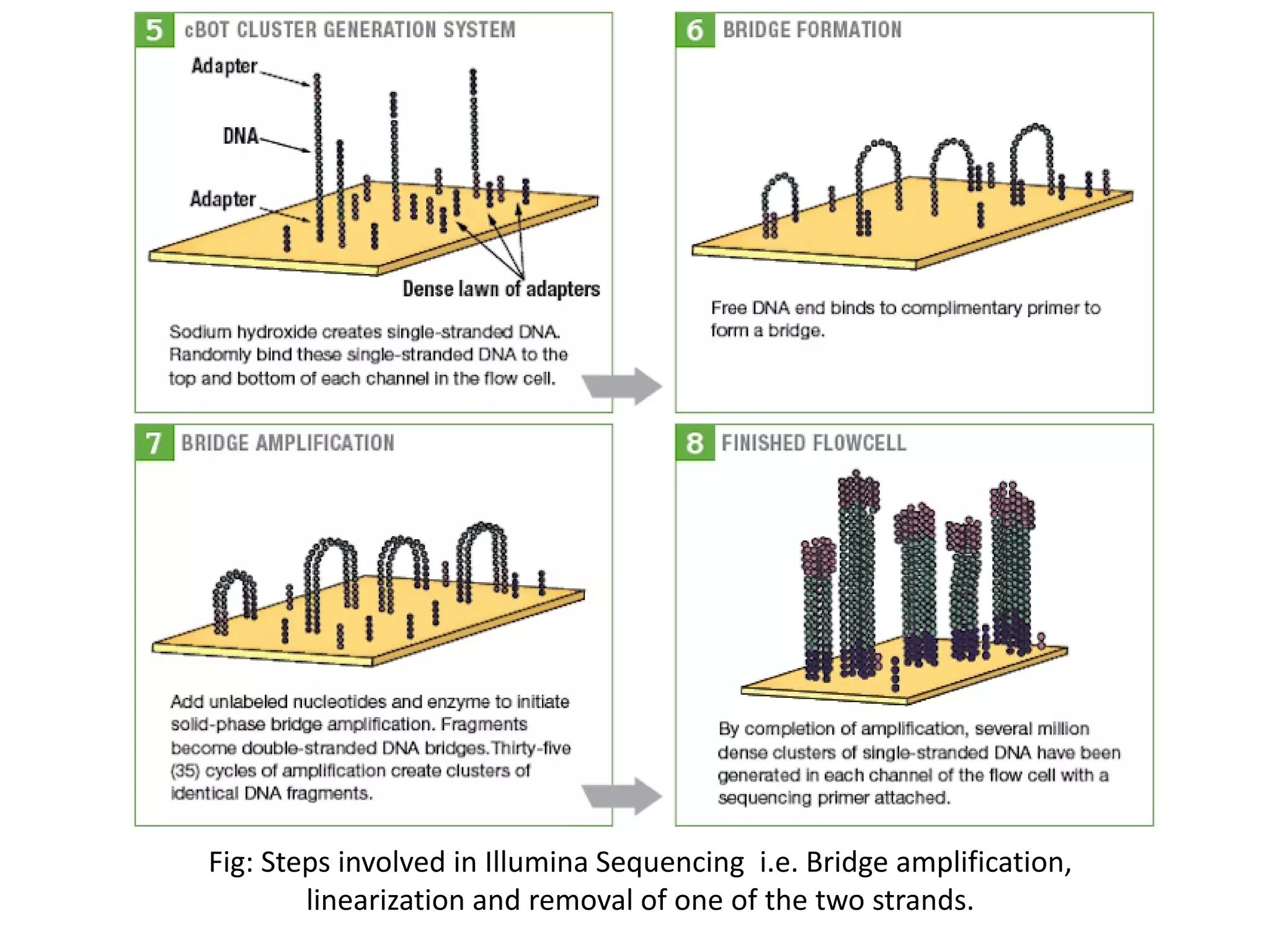
•Sequencing by Synthesis is the proprietary method of Illumina sequencers and involves Bridge
Clonal Amplification of one of the strand after hybridisation to the flow cell surface.
•Hybridisation takes place with the help of one of the adaptors attached to the template.
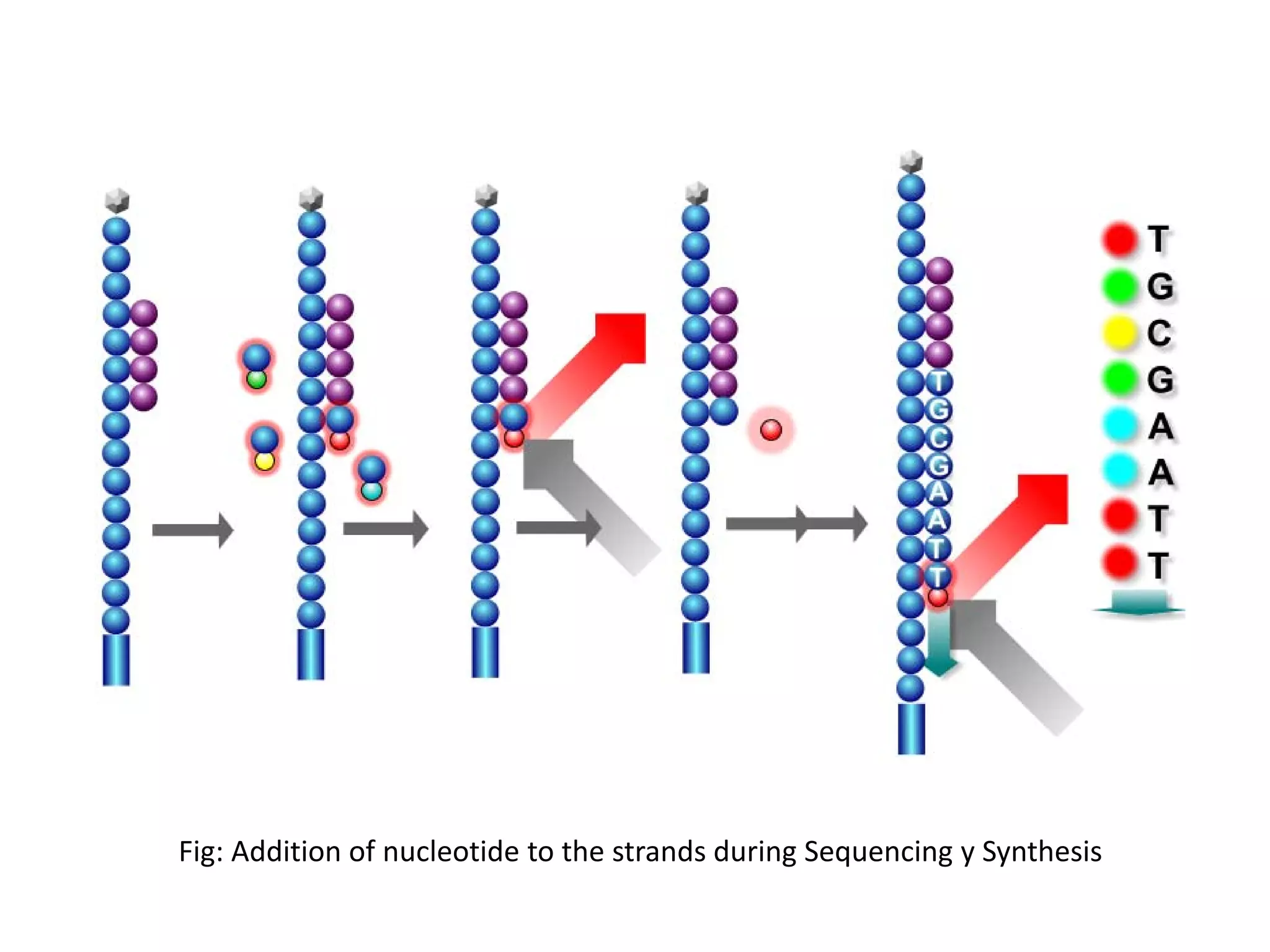
•After clonal amplification, again polymerase start synthesizing the strand but this time
nucleotides complexed with fluorescent tag are incorporated into the strand and the fluorescent
tag is recognized by the detector. In this way sequence of both forward and reverse strand is
obtained and differentiated by index sequence specific for both forward and reverse strand[6].
Fig: Bridge Amplification
during sequence by
synthesis
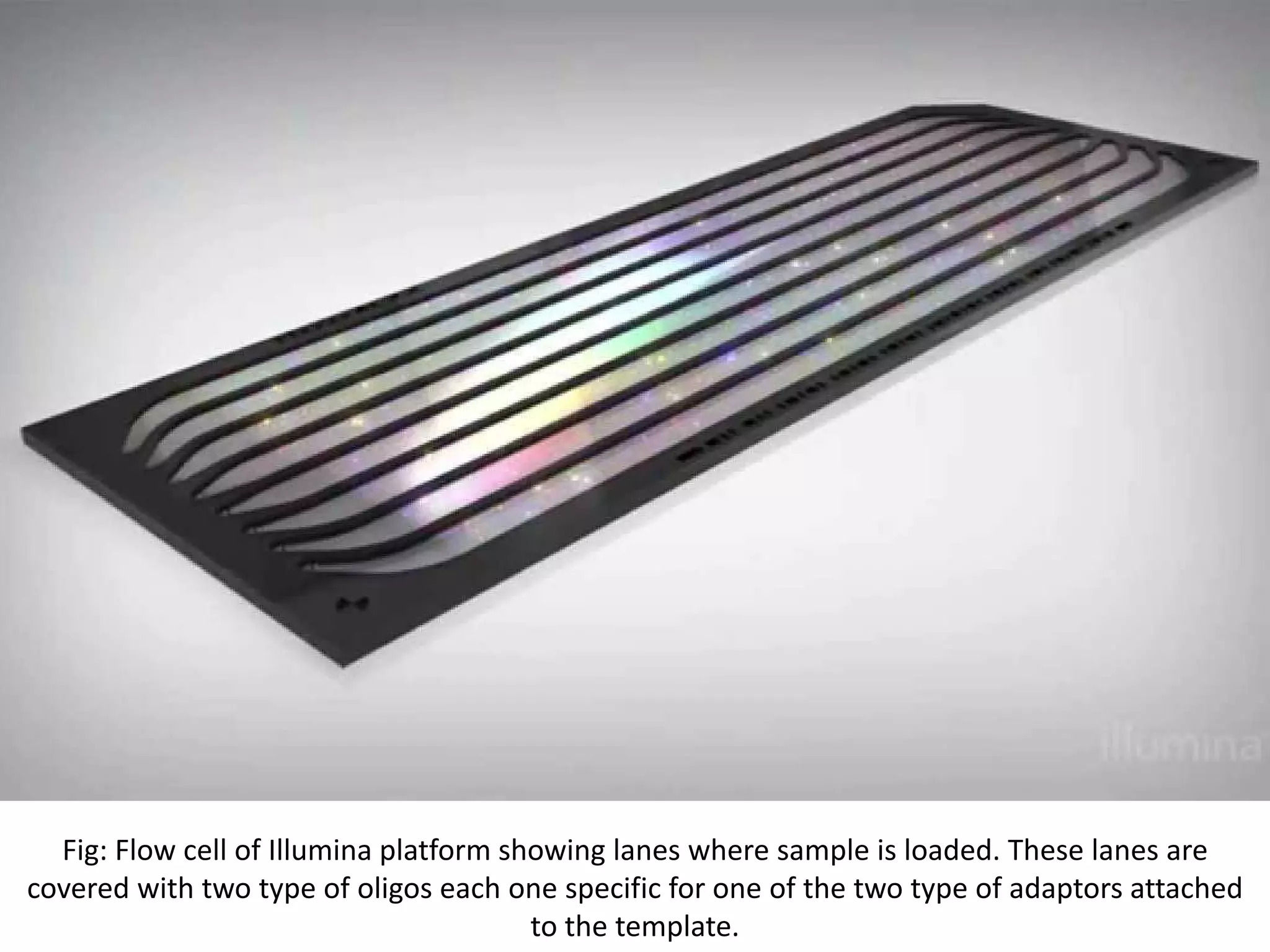
Fig: Flow cell of Illumina platform showing lanes where sample is loaded. These lanes are
covered with two type of oligos each one specific for one of the two type of adaptors attached
to the template.
Fig: Steps involved in Illumina Sequencing i.e. Bridge amplification,
linearization and removal of one of the two strands.
Fig: Addition of nucleotide to the strands during Sequencing y Synthesis
Advantages of Illumina:
•High throughput
Disadvantages of Illumina:
•Shorter read assembly
ION PGM Sequencers
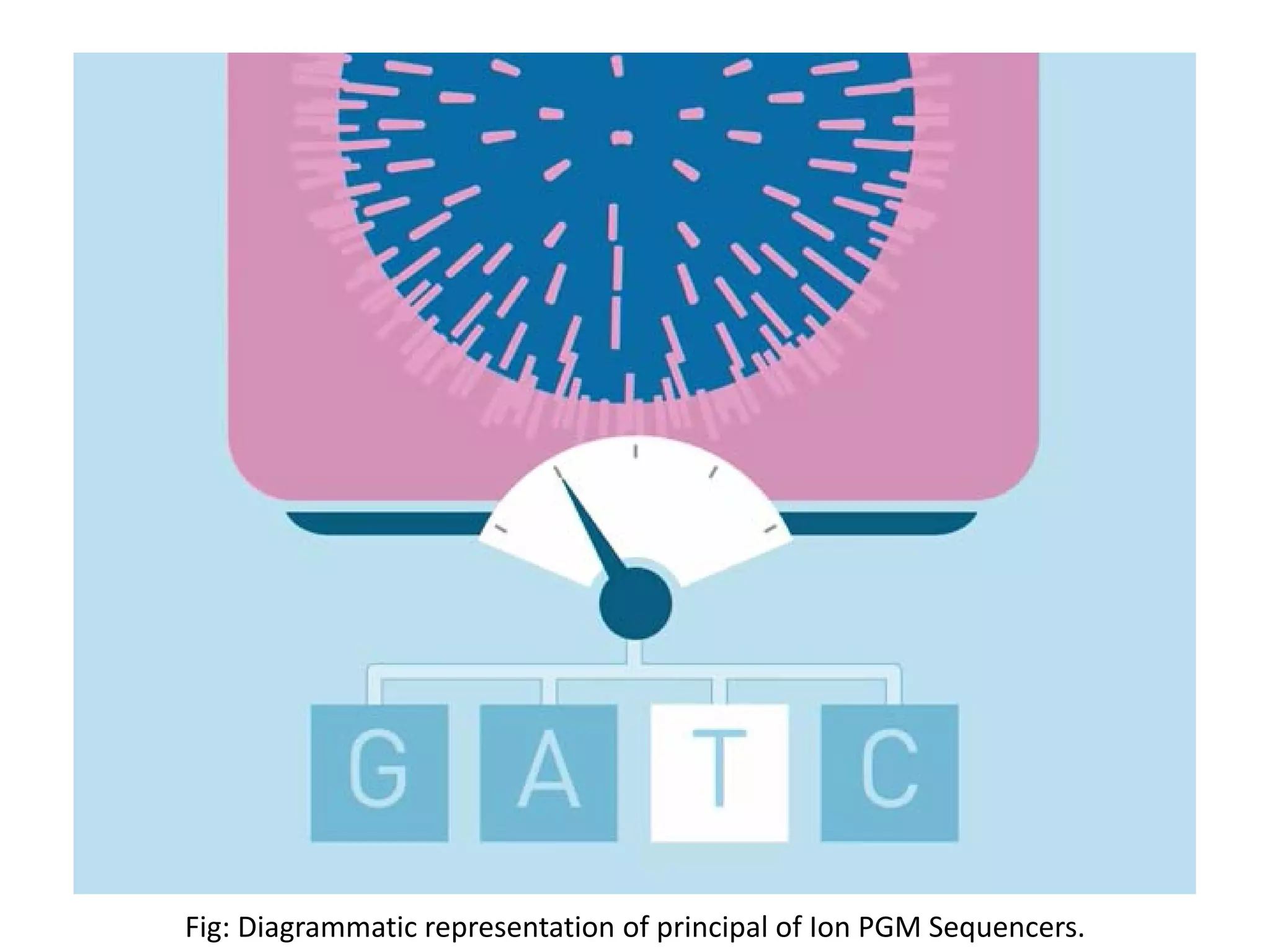
•Ion PGM was released by Life Technologies at the end of 2010.
•In case of PGM by Life Technologies Inc. change in PH is detected by the semiconductor
installed in each well of the chip.
•Change in PH occurs by the release of the H+ during the addition of nucleotide to the template.
Addition of the nucleotide is quantified (specific change in voltage corresponding to the PH
change by release of 1 proton) and therefore multiple addition of same nucleotide can be
detected with accuracy[1][7].
•Each time the chip was flooded with one nucleotide after another, if it is not the correct
nucleotide, no voltage will be found. Also voltage change corresponding to each type of
nucleotide in different[1][7].
•Library preparation involve amplification by emulsion PCR and addition of adaptors and
barcodes for identification of sample during multiplexing.
Fig: Diagrammatic representation of principal of Ion PGM Sequencers.
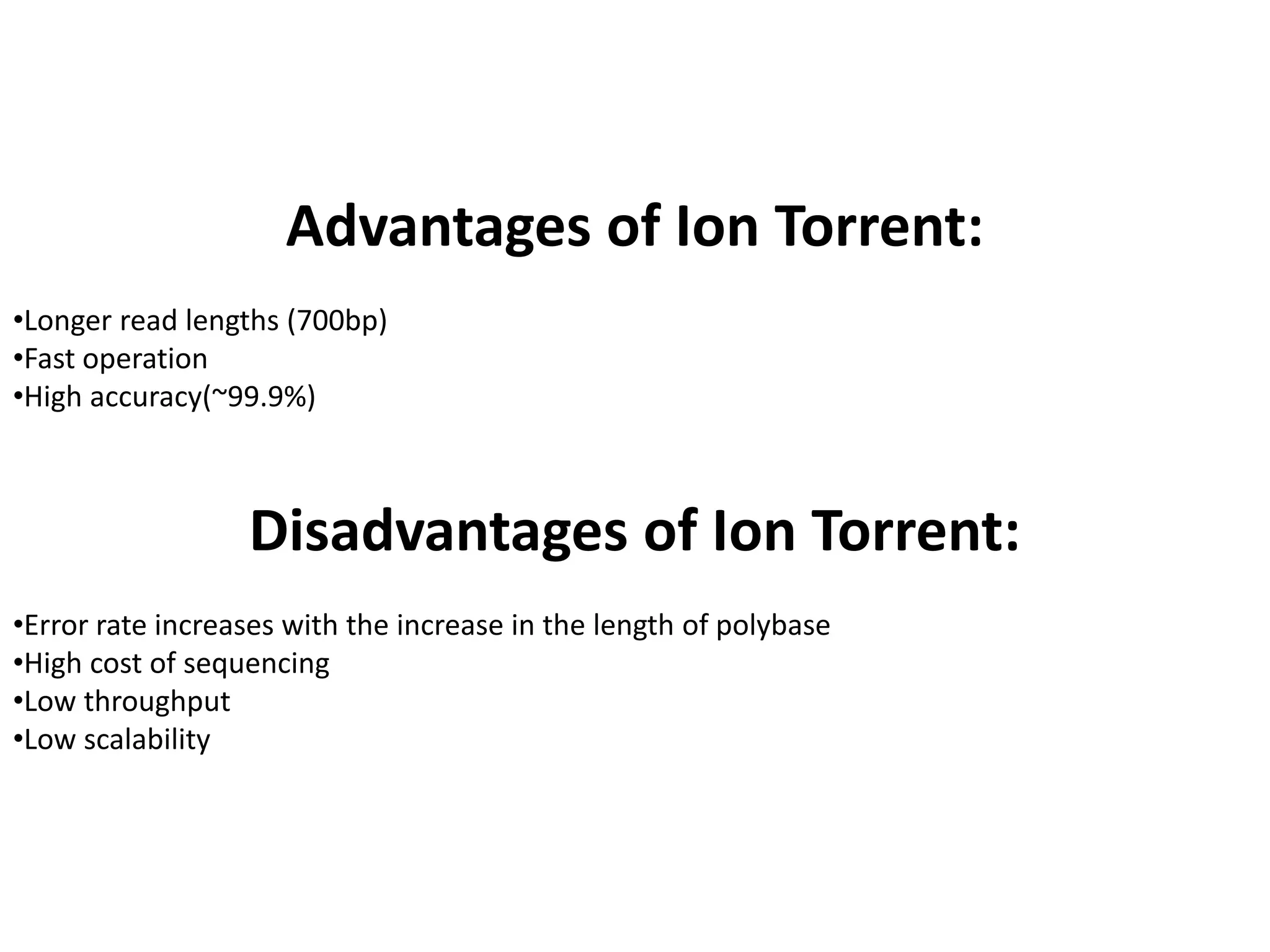
Advantages of Ion Torrent:
•Longer read lengths (700bp)
•Fast operation
•High accuracy(~99.9%)
Disadvantages of Ion Torrent:
•Error rate increases with the increase in the length of polybase
•High cost of sequencing
•Low throughput
•Low scalability
FUTURE…
•Oxford Nanopore Sequencer
•Smallest Sequencer ever
•Based on difference in the resistance to conduction of electrical current by the 4 types of bases
while passing through the Nanopore in single stranded form.
•DNA strand is pulled through the nanopore by the enzyme, one base at a time.
•In some libraries DNA strands are bound by hairpin loop so that both the strands are read in a
single go thereby increasing the accuracy and efficiency of sequencing[8].
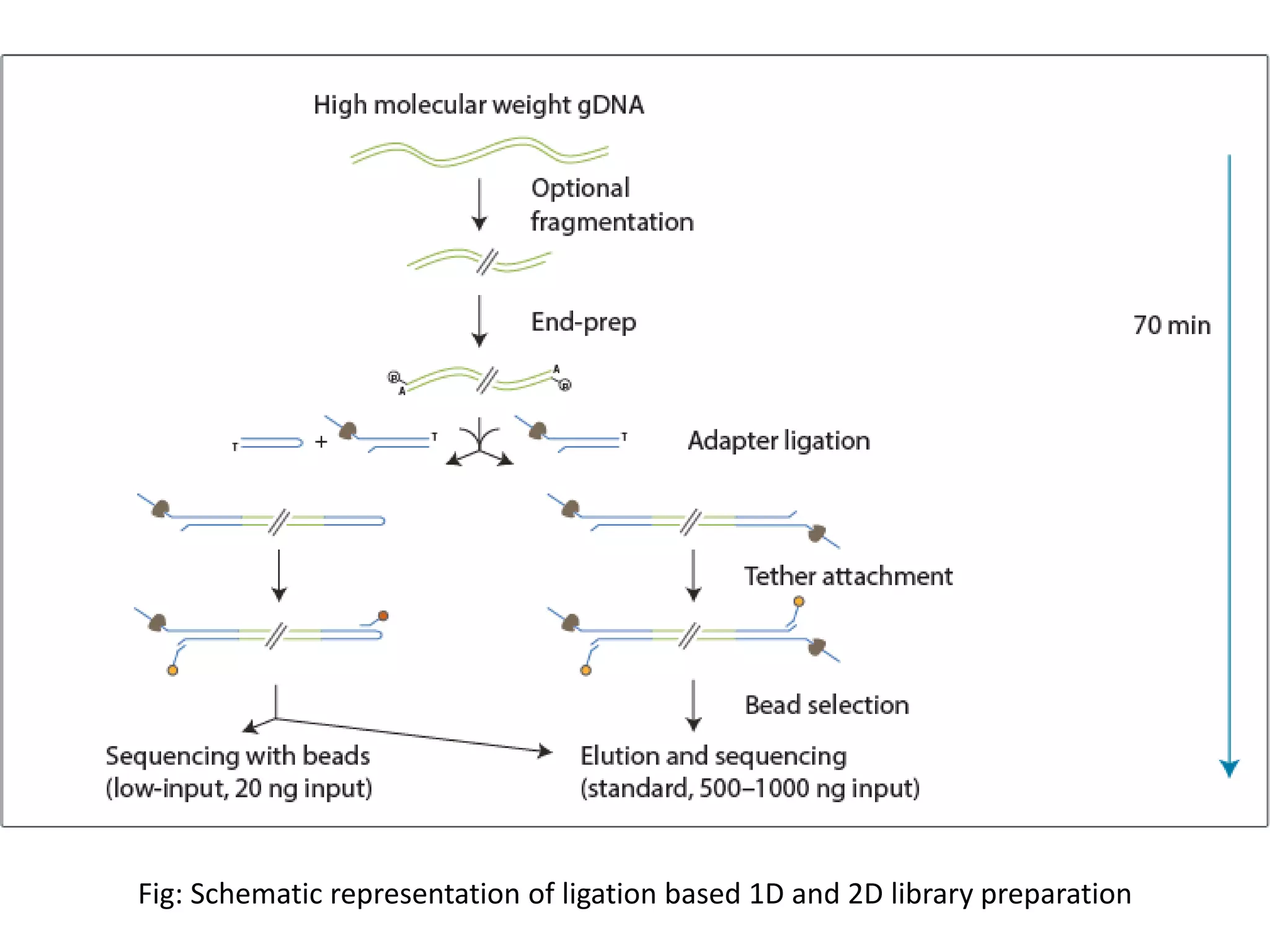
Fig: Schematic representation of ligation based 1D and 2D library preparation
Fig: Diagrammatic representation of structure of Nanopore and its attachment in the membrane[9].
Fig: Diagrammatic representation showing effect of small molecule on the electrical conductivity of nanopore[9]
Fig: Diagrammatic representation showing effect of larger molecule on the electrical conductivity of nanopore[9].
Fig: Passing of DNA strand through the nanopore causes electrical disturbances in the pore
which is characteristic for each type of base and is recorded for base calling[9].
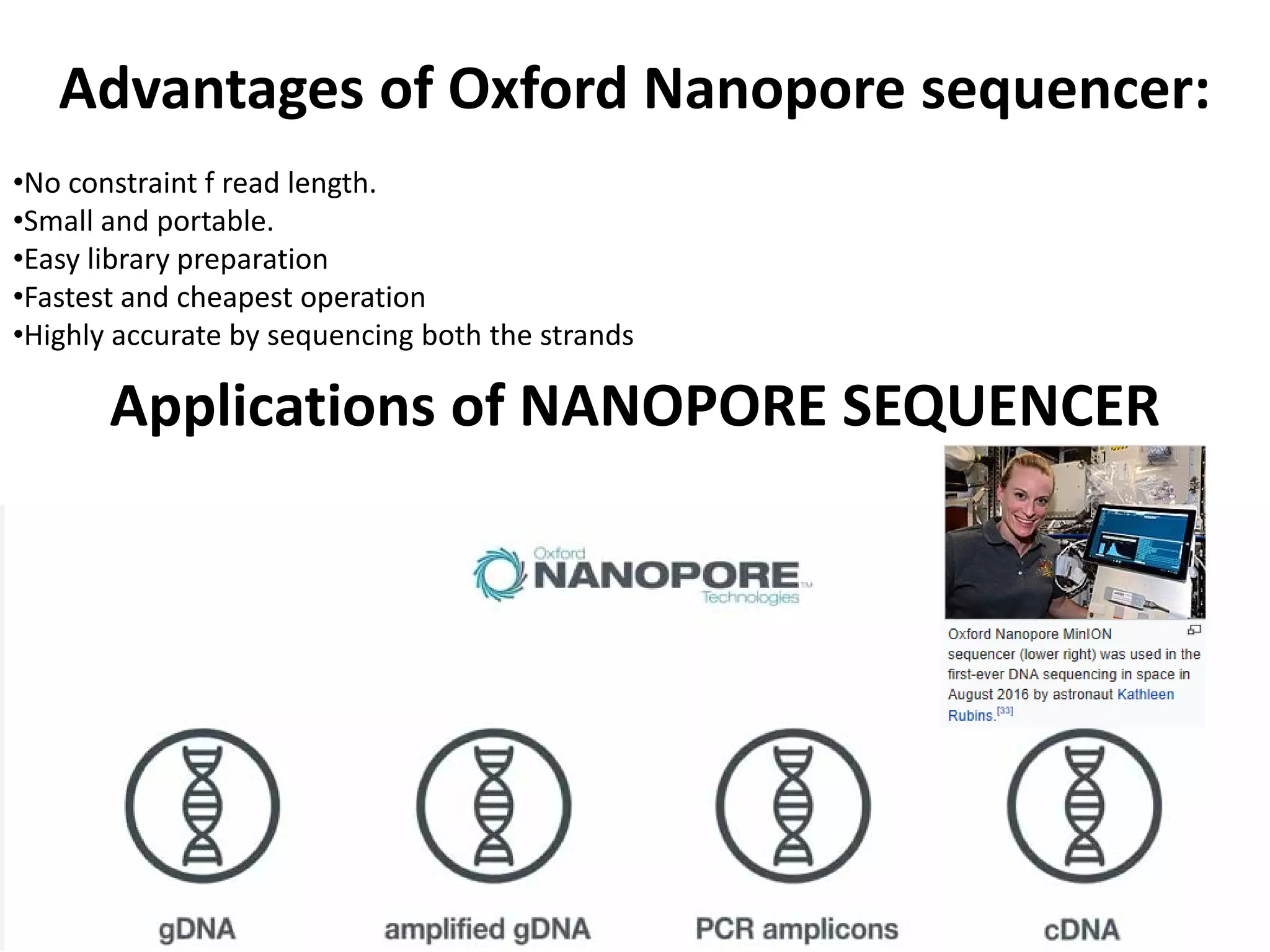
Advantages of Oxford Nanopore sequencer:
•No constraint f read length.
•Small and portable.
•Easy library preparation
•Fastest and cheapest operation
•Highly accurate by sequencing both the strands
Applications of NANOPORE SEQUENCER
REFERENCES
1. Lin Liu, Yinhu Li, Siliang Li, et al., “Comparison of Next-Generation Sequencing Systems,”
Journal of Biomedicine and Biotechnology, vol. 2012, Article ID 251364, 11 pages, 2012.
doi:10.1155/2012/251364
2. http://en.wikipedia.org/wiki/DNA sequencing/.
3. Maxam AM, Gilbert W. A new method for sequencing DNA. Proceedings of the National
Academy of Sciences of the United States of America. 1977;74(2):560-564.
4. https://quizlet.com/61291710/454-dna-sequencing-pyrosequencing-flash-cards/
5. https://www.youtube.com/watch?v=YLT-DUeaLms
6. https://www.youtube.com/watch?v=fCd6B5HRaZ8
7. https://www.thermofisher.com/in/en/home/brands/ion-torrent.html
8. https://nanoporetech.com/
9. https://www.youtube.com/watch?v=3UHw22hBpAk
THANK YOU
Prepared and Presented by-
Tapish Goel

Next generation sequencing

  • 1.
  • 2.
    Types of sequencing… Past: •Sanger Sequencing • Maxam-Gilbert Sequencing Present: • Roche 454 Sequencing Platform • SOLiD Sequencing • Illumina Sequencing Platforms • Ion PGM Sequencers Future: • Oxford nanopore sequencing
  • 3.
  • 4.
    Sanger Sequencing •As weall know, first sequencing technique was developed by Frederick Sanger in 1972. It was based on chain termination during synthesis[1]. The DNA sequence being synthesized was terminated using Dideoxynucleotides. •Sanger sequencing was adopted instead of Maxam-Gilbert Sequencing because of its high efficiency and low radioactivity as the First generation sequencing. •AB370: First Automatic Sanger sequencer by Applied Biosystems in 1987 involving Capillary electrophoresis. Processivity= 96 bases at one time, 500K bases a day with read length up to 600 bases Deoxynucleotide Dideoxynucleotide
  • 5.
    Fig: Sanger sequencinginvolving capillary electrophoresis technique.
  • 6.
    Maxam-Gilbert Sequencing Another sequencingdeveloped around the same time as that of Sanger was by Sanger’s colleague Walter Gilbert and Allan Maxam. This sequencing technology was based on chemical modification of DNA and subsequent cleavage at specific bases[2]. In case of Maxam-Gilbert sequencing[3], •DNA is cleaved by either Dimethyl sulphate(A/G) or Hydrazine(C/T) in Nucleotide specific manner and then end labeling is done using 32P Phosphate. •Partial cleavage at each base produces a nested set of radioactive fragments extending from the labeled end to each of the position of that base which is then resolved using Polyacrylamide Gel Electrophoresis. •Autoradiograph then show band of four different cleavage reaction specific for each base( in a manner explained by Maxam-Gilbert) and sequence of the DNA fragment can be established by it.
  • 7.
    Fig: Diagrammatic representationof Maxam-Gilbert Sequencing methodology.
  • 8.
    Fig: Original resultsof sequencing published by Maxam and Gilbert[3].
  • 9.
    PRESENT… •Roche 454 SequencingPlatform •SOLiD Sequencing •Illumina Sequencing Platforms •Ion PGM Sequencers
  • 10.
    Roche 454 Sequencer •Principal: Based on detection of pyrophosphate released during nucleotide incorporation •In a cascade of enzymatic reactions, visible light is generated that is proportional to the # of incorporated nucleotides. •The sequence in which the nucleotides are provided for the reaction in known so the added nucleotide can be determined by the pyrogram thereby establishing the sequence of the template DNA sequence. •Library preparation is majorly same as that of Pyrosequencing. Enzyme System of 454[4]: 1. DNA Polymerase: Klenow fragment of E.coli DNA Pol1 is used to polymerize daughter strand from ssDNA template strand. 2. ATP Sulfurylase: ATP sulfurylase used in 454 is a recombinant version from the yeast S. cerevisiae. 3. Luciferase: Luciferase is from the American firefly Photinus pyralis. 4. Apyrase: It is a nucleotide degrading enzyme from the potato, which is introduced to make a 4 enzyme system. It is used to degrade remaining ATP and dNTPs after every reaction to prevent non specific or false signals.
  • 11.
    Advantages of Roche454: •Longer read lengths (700bp) •Fast operation •High accuracy(~99.9%) Disadvantages of Roche 454: •Error rate increases with the increase in the length of polybase •High cost of sequencing •Low throughput •Low scalability
  • 12.
    Fig: The generalprinciple behind different Pyrosequencing reaction systems. Fig: Reaction system in Solid-Phase Pyrosequencing Fig: Reaction system in Liquid-Phase Pyrosequencing
  • 13.
    SOLiD Sequencing •Sequencing byOligonucleotide Ligation and Detection •Developed by Applied Biosystems(Life Technologies). It is based on Polony sequencing (Polymerase + Colony). •The sequencer adopts the technology of two-base sequencing based on ligation sequencing. •Each sequencing involves 5 rounds of cyclic steps and each round involve multiple ligation steps between 16 possible Di-base probes having in total of 4 fluorescent dye(among 16 Di-base probes) attached to them. •Then the sequence is determined and cross-checked using a Di-base color coding system and sequence alignment. This can also be done by computer program. •Advantages: higher accuracy and precision, •Disadvantages: shorter read length(85 bp) and high cost.
  • 14.
    Appication of SOLiDSequencing Application of SOLiD includes[1]: 1. Whole genome sequencing 2. Targeted sequencing 3. Transcriptome research (including gene expression profiling, small RNA analysis, and whole transcriptome analysis) 4. Epigenome (like ChIPSeq and methylation) analysis.
  • 15.
  • 16.
    Fig: Site ofcleavage of the probe upon ligation. 5 nucleotides remain attached to the template while the last 3 along with the fluorescent tag are cleaved off[5].
  • 17.
    Results of 1stRound of Sequencing Problem with running a single round of sequencing is that after round one, fluorescent signals for every fifth base are known and not the rest, so for that, 4 more rounds of sequencing has to be performed with primer sequence offset by one base[5].
  • 18.
    Primer Specification forEvery Round For every subsequent round, the sequence of primer offsets by one base[5].
  • 19.
    Di-Base Colour codingsystem Fig: Di-base colour coding system developed for SOLiD sequencing only [5].
  • 20.
    Illumina- Sequencing bySynthesis •Sequencing by Synthesis is the proprietary method of Illumina sequencers and involves Bridge Clonal Amplification of one of the strand after hybridisation to the flow cell surface. •Hybridisation takes place with the help of one of the adaptors attached to the template. •After clonal amplification, again polymerase start synthesizing the strand but this time nucleotides complexed with fluorescent tag are incorporated into the strand and the fluorescent tag is recognized by the detector. In this way sequence of both forward and reverse strand is obtained and differentiated by index sequence specific for both forward and reverse strand[6]. Fig: Bridge Amplification during sequence by synthesis
  • 21.
    Fig: Flow cellof Illumina platform showing lanes where sample is loaded. These lanes are covered with two type of oligos each one specific for one of the two type of adaptors attached to the template.
  • 22.
    Fig: Steps involvedin Illumina Sequencing i.e. Bridge amplification, linearization and removal of one of the two strands.
  • 23.
    Fig: Addition ofnucleotide to the strands during Sequencing y Synthesis
  • 24.
    Advantages of Illumina: •Highthroughput Disadvantages of Illumina: •Shorter read assembly
  • 25.
    ION PGM Sequencers •IonPGM was released by Life Technologies at the end of 2010. •In case of PGM by Life Technologies Inc. change in PH is detected by the semiconductor installed in each well of the chip. •Change in PH occurs by the release of the H+ during the addition of nucleotide to the template. Addition of the nucleotide is quantified (specific change in voltage corresponding to the PH change by release of 1 proton) and therefore multiple addition of same nucleotide can be detected with accuracy[1][7]. •Each time the chip was flooded with one nucleotide after another, if it is not the correct nucleotide, no voltage will be found. Also voltage change corresponding to each type of nucleotide in different[1][7]. •Library preparation involve amplification by emulsion PCR and addition of adaptors and barcodes for identification of sample during multiplexing.
  • 26.
    Fig: Diagrammatic representationof principal of Ion PGM Sequencers.
  • 27.
    Advantages of IonTorrent: •Longer read lengths (700bp) •Fast operation •High accuracy(~99.9%) Disadvantages of Ion Torrent: •Error rate increases with the increase in the length of polybase •High cost of sequencing •Low throughput •Low scalability
  • 28.
  • 29.
    •Smallest Sequencer ever •Basedon difference in the resistance to conduction of electrical current by the 4 types of bases while passing through the Nanopore in single stranded form. •DNA strand is pulled through the nanopore by the enzyme, one base at a time. •In some libraries DNA strands are bound by hairpin loop so that both the strands are read in a single go thereby increasing the accuracy and efficiency of sequencing[8].
  • 30.
    Fig: Schematic representationof ligation based 1D and 2D library preparation
  • 31.
    Fig: Diagrammatic representationof structure of Nanopore and its attachment in the membrane[9]. Fig: Diagrammatic representation showing effect of small molecule on the electrical conductivity of nanopore[9] Fig: Diagrammatic representation showing effect of larger molecule on the electrical conductivity of nanopore[9].
  • 32.
    Fig: Passing ofDNA strand through the nanopore causes electrical disturbances in the pore which is characteristic for each type of base and is recorded for base calling[9].
  • 33.
    Advantages of OxfordNanopore sequencer: •No constraint f read length. •Small and portable. •Easy library preparation •Fastest and cheapest operation •Highly accurate by sequencing both the strands Applications of NANOPORE SEQUENCER
  • 34.
    REFERENCES 1. Lin Liu,Yinhu Li, Siliang Li, et al., “Comparison of Next-Generation Sequencing Systems,” Journal of Biomedicine and Biotechnology, vol. 2012, Article ID 251364, 11 pages, 2012. doi:10.1155/2012/251364 2. http://en.wikipedia.org/wiki/DNA sequencing/. 3. Maxam AM, Gilbert W. A new method for sequencing DNA. Proceedings of the National Academy of Sciences of the United States of America. 1977;74(2):560-564. 4. https://quizlet.com/61291710/454-dna-sequencing-pyrosequencing-flash-cards/ 5. https://www.youtube.com/watch?v=YLT-DUeaLms 6. https://www.youtube.com/watch?v=fCd6B5HRaZ8 7. https://www.thermofisher.com/in/en/home/brands/ion-torrent.html 8. https://nanoporetech.com/ 9. https://www.youtube.com/watch?v=3UHw22hBpAk
  • 35.
    THANK YOU Prepared andPresented by- Tapish Goel