Downloaded 6,024 times

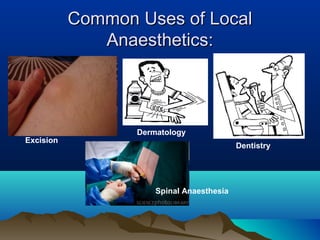
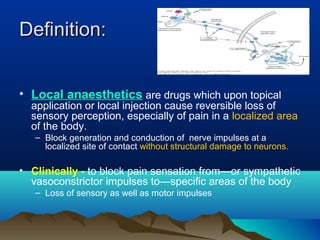
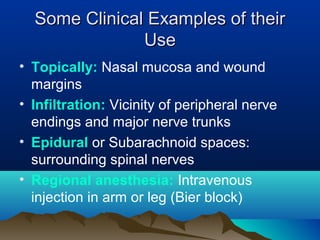
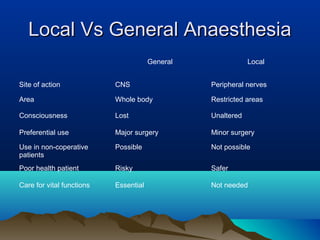

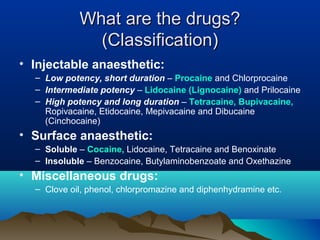

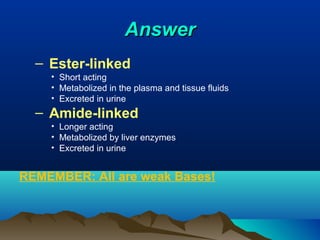
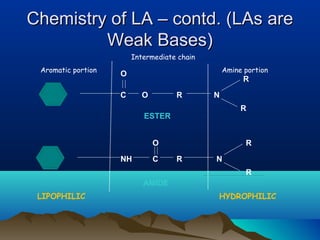
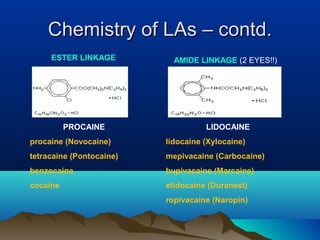
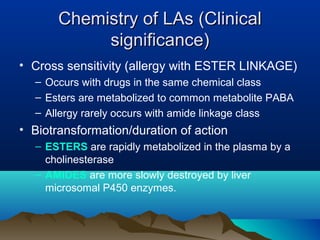
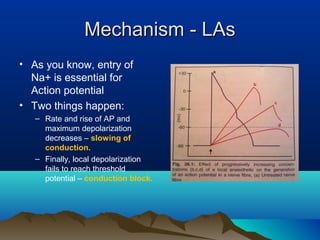
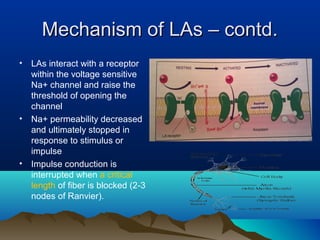
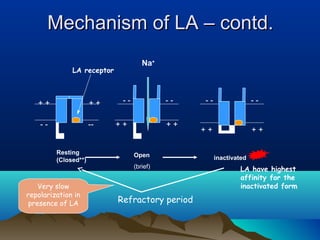
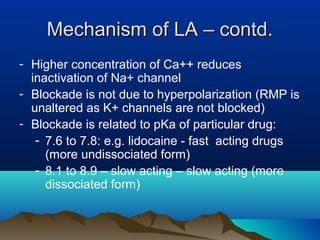
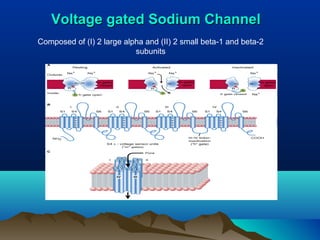
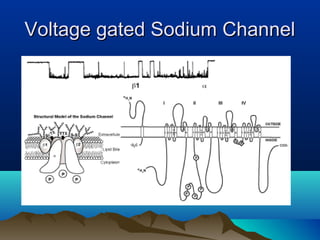

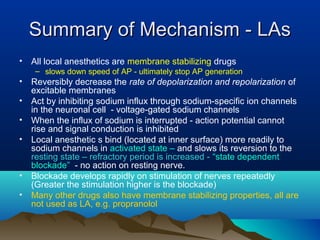
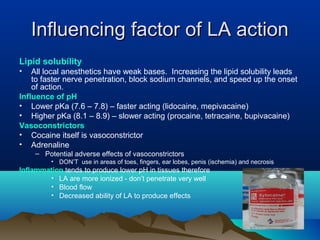
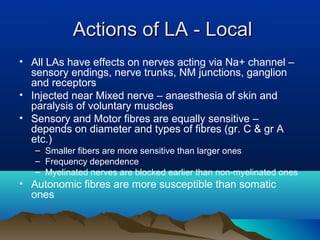
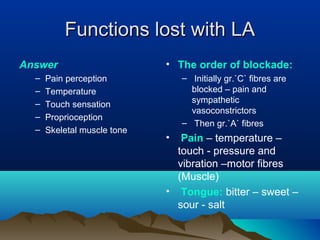
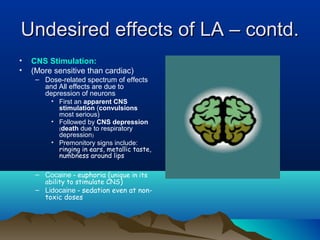
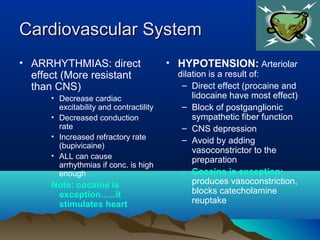
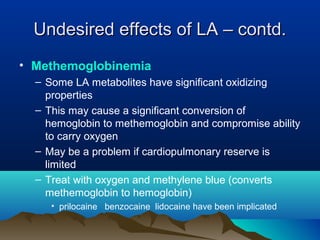
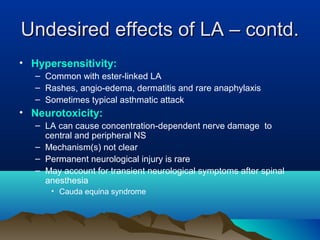
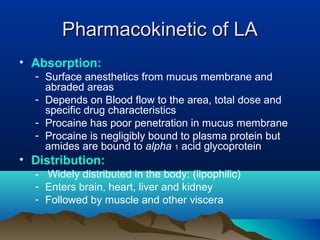
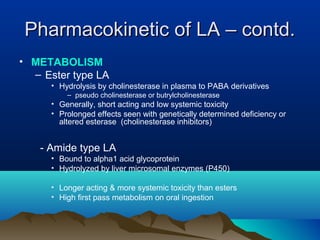
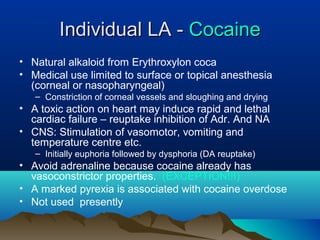
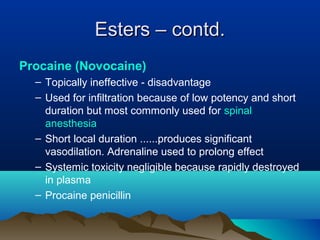
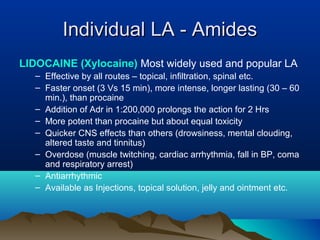

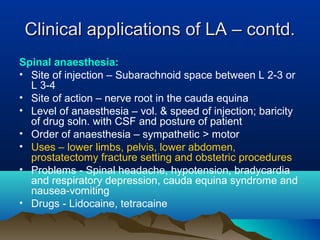
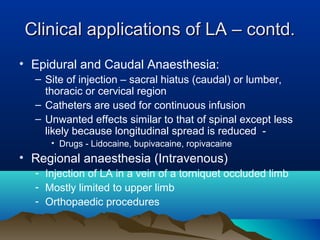
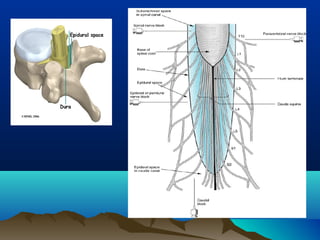

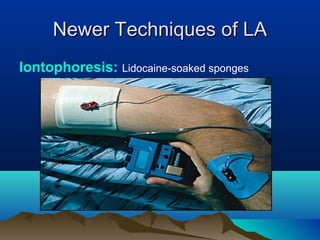
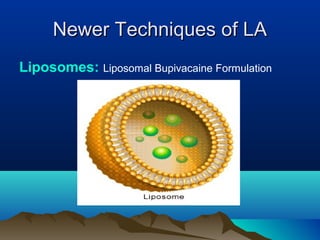


- Local anesthetics are drugs that cause reversible loss of sensation, especially pain, in a localized area of the body when applied topically or injected locally. They block the generation and conduction of nerve impulses at the site of contact without damaging neurons. - Common uses include dentistry, excision procedures, dermatology, and spinal or regional anesthesia. Local anesthetics work by inhibiting sodium influx through voltage-gated sodium channels in neurons, interrupting action potential generation and signal conduction. - Examples of side effects include central nervous system stimulation or depression in high doses, cardiovascular effects like arrhythmias and hypotension, and hypersensitivity reactions.


![10. Local anaesthetics [Autosaved].pptx](https://cdn.slidesharecdn.com/ss_thumbnails/10-230227080146-90018189-thumbnail.jpg?width=640&height=640&fit=bounds)


