Fundamentals of Ultrasound
Guided Peripheral Regional
Anesthesia Techniques
Joseph McVicker, CRNA, MS
Retired Navy Nurse Corps
University South Alabama
Georgetown University East
Carolina University
 I have not been reimbursed nor received benefits
from any company or individual other than the
NCANA for this presentation.
 Technology and images presented in this presentation
are not an endorsements for a specific company or
product. There are for illustrative and demonstration
purposes only.
Conflict of Interest
 List the benefits of U/S guidance for
peripheral regional anesthesia.
 Discuss commonly used machine controls and
methods to improve ultrasound imaging to
obtain optimal view.
 Identify the images of peripheral nerves,
nerve plexuses, and adjacent anatomy for
common upper and lower extremity nerve
blocks.
Objectives
“Inadequate pain relief after surgery may delay
surgical recovery, decrease patient satisfaction,
increase length of stay, raise risk of hospital
readmissions and increase overall healthcare
costs” (Patacsil et al, 2016).
Why PNBs?
 Peripheral Nerve Blocks play an important role in
anesthesia and analgesia for ambulatory surgery.
 Either obviates need for GA or decrease
anesthetic requirement.
 Faster Discharge; more quickly “Street Fit”.
 Part of multimodal approach to pain
management and decrease need for
intraoperative and post operative opiates.
 Less PONV.
 Less postoperative pain.
PNB’s
 Traditional approaches rely on strong knowledge of
anatomy and physical assessment.
 Require motor stimulation and movement. (Pain?)
 Potential for intravascular injection (can’t see).
 Adjacent structure injury.
 Nerve stimulators with insulated needles provide evidence
of proximity at time of injection. Higher incidence of failure
than U/S guided.
 Usual practice not to move needle after injection started
(risk injury to nerve, movement to intravascular).
Traditional PNB Techniques
 Visualize surrounding structures
 Validate external landmarks
 Not a substitute for knowledge of anatomy
 Real time needle guidance!
 Avoid injury to adjacent structures “Steering Needle”
 Visualize other structures to provide local anesthesia
prior to placing block needle (Fascia tough and painful
with blunt needle.)
 More accurate inject local anesthetic can see tissue
displacement and see spread of local.
Benefits of Ultrasound Techniques
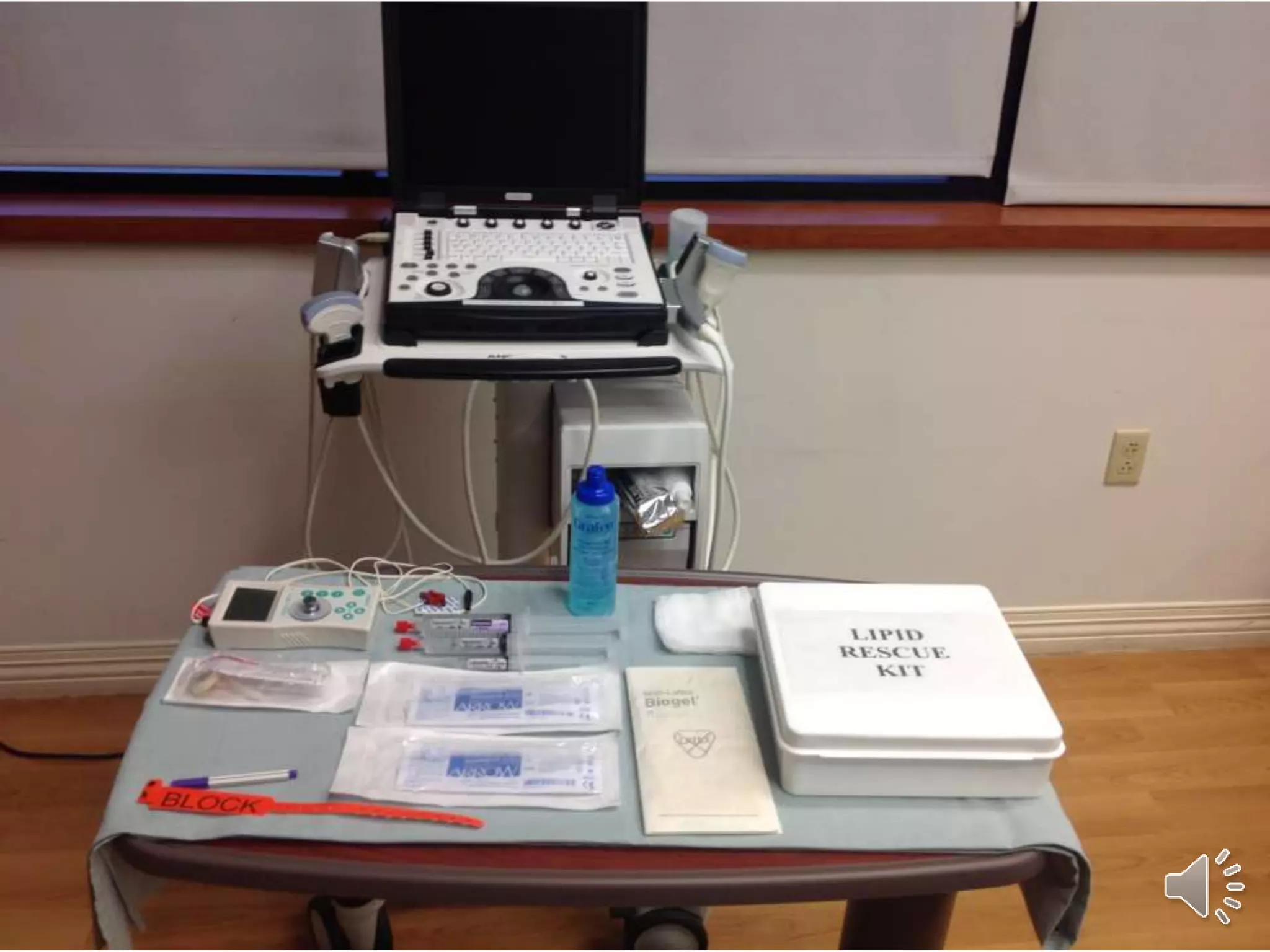
 U/S machines are smaller and more portable.
 Less Expensive than larger and more
cumbersome ancestors.
 Quality of modern software provides
improved imaging.
 Familiarization with the machine and controls
will improve quality and outcomes.
Ultrasound Machines
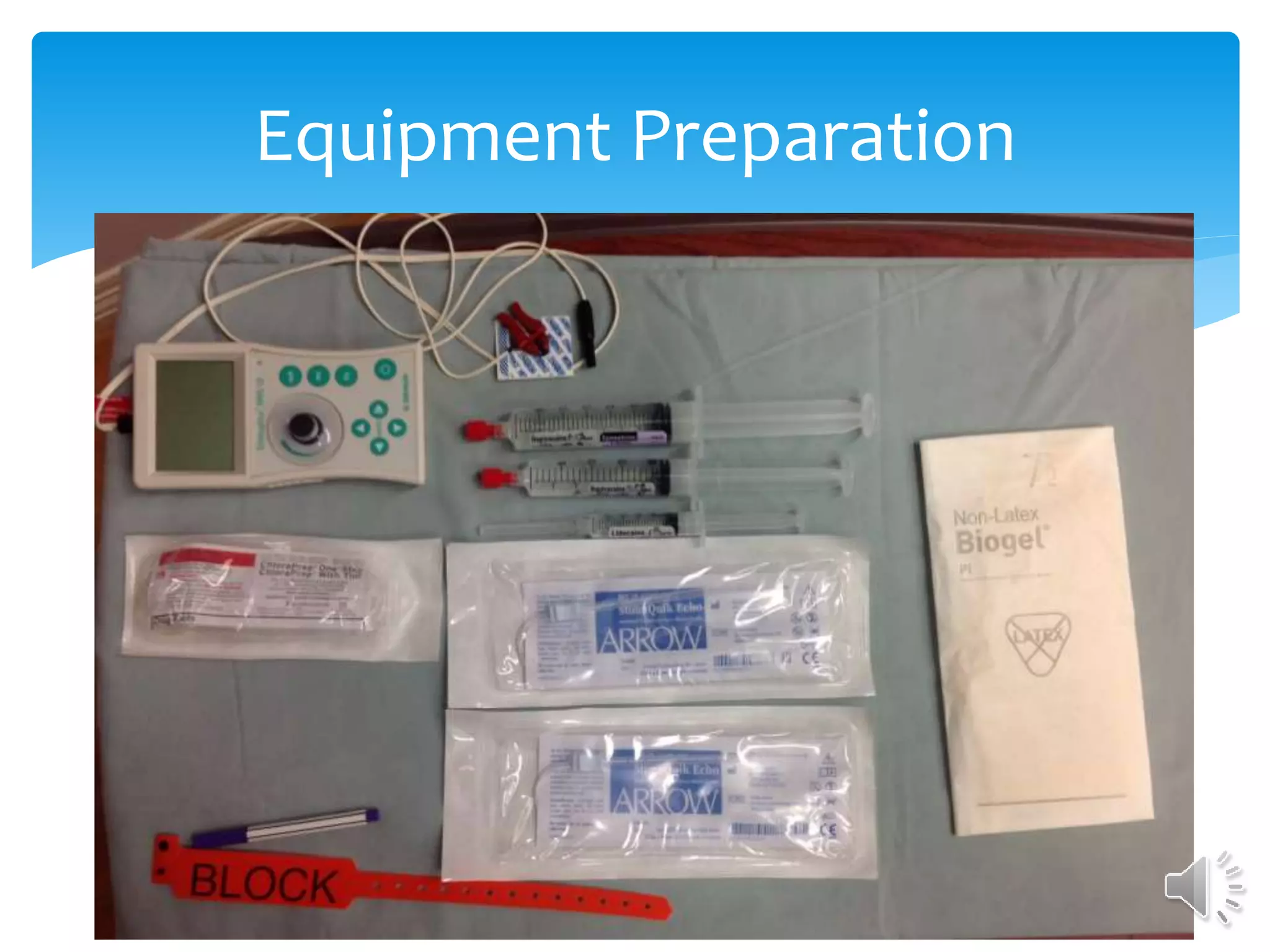
Equipment Preparation
 Pt. Identifiers.
 Informed Consent for regional anesthesia (Correct
Site).
 Mark/Initial Block location on the patient.
 When positioning patient possible to get wrong side
errors. Propose adding a block band to the extremity to
ensure site being blocked is on the same extremity.
 Procedural Time Out/ Facility Protocol.
 Include the patient. Sedate after the time out!
Informed Consent
 Linear array transducers scan a plane through the
body that can be viewed as a Real-time, two-
dimensional image on the screen. (Patients are 3D).
 Doppler used to identify pulsatile fluid filled
structures.
 Commonly superimposed on B-mode image.
2D or B(Brightness)-mode
Depth Control
 Depth: Depth controls the distance over
which the B-Mode images the anatomy.
 To visualize deeper structures, increase the
depth.
 If there is a large part of the display which is
unused at the bottom, decrease the depth.
 B-Mode Gain increases or decreases the
amount of echo information displayed in
an image.
 It may brighten or darken the image if
sufficient echo information is generated.
B-Mode Gain
 Increases the number of focal zones or moves the
focal zone(s) so that you can tighten up the beam for
a specific area.
 A graphic caret corresponding to the focal zone
position(s) appears on the right edge of the image on
the Logiq e U/S machine.
Focus (Logiq e)
 Doppler Mode: Identifies vascular structures.
 Differentiate between arterial and venous
structures.
 The use in this application is solely to facilitate
location of adjacent neuronal structures and
avoidance of vascular injury.
Doppler Mode
 Hyperechoic: Bones, Fascia & Tendons
 Hypoechoic: Muscle, Fat, Small Veins and Arteries
 Anechoic: Large Arteries and Veins
 Variable: Nerves above Clavicle-Hypoechoic,
Below Clavicle-Hyperechoic
 Anisotropy: Non-perpendicular angulation skews
the return of the waves returning to the transducer
Echogenicity
Brachial Plexus Anatomy
 Most beneficial PNB for outpatient shoulder
surgery (Lin, Choi, Hadzic, 2013).
 Primary anesthetic with MAC or Adjunct to
GA.
 Duke Surgery Center primarily ISB
catheter/MAC.
 NHCL/NHCCP Single Shot ISB/GA
Interscalene Nerve Block
 Block at level of Nerve Trunks.
 U/S probe placed where palpate in classic technique
 “Scanning” the neck above clavicle helps with anatomy
 Hypoechoic (above the clavicle)
 Deep to the posterior margin of the SCM
 Between anterior and middle scalene muscles
 Classic “Stop Light” appearance at this level
Interscalene Nerve Block
Interscalene Block Technique
Interscalene Block Images
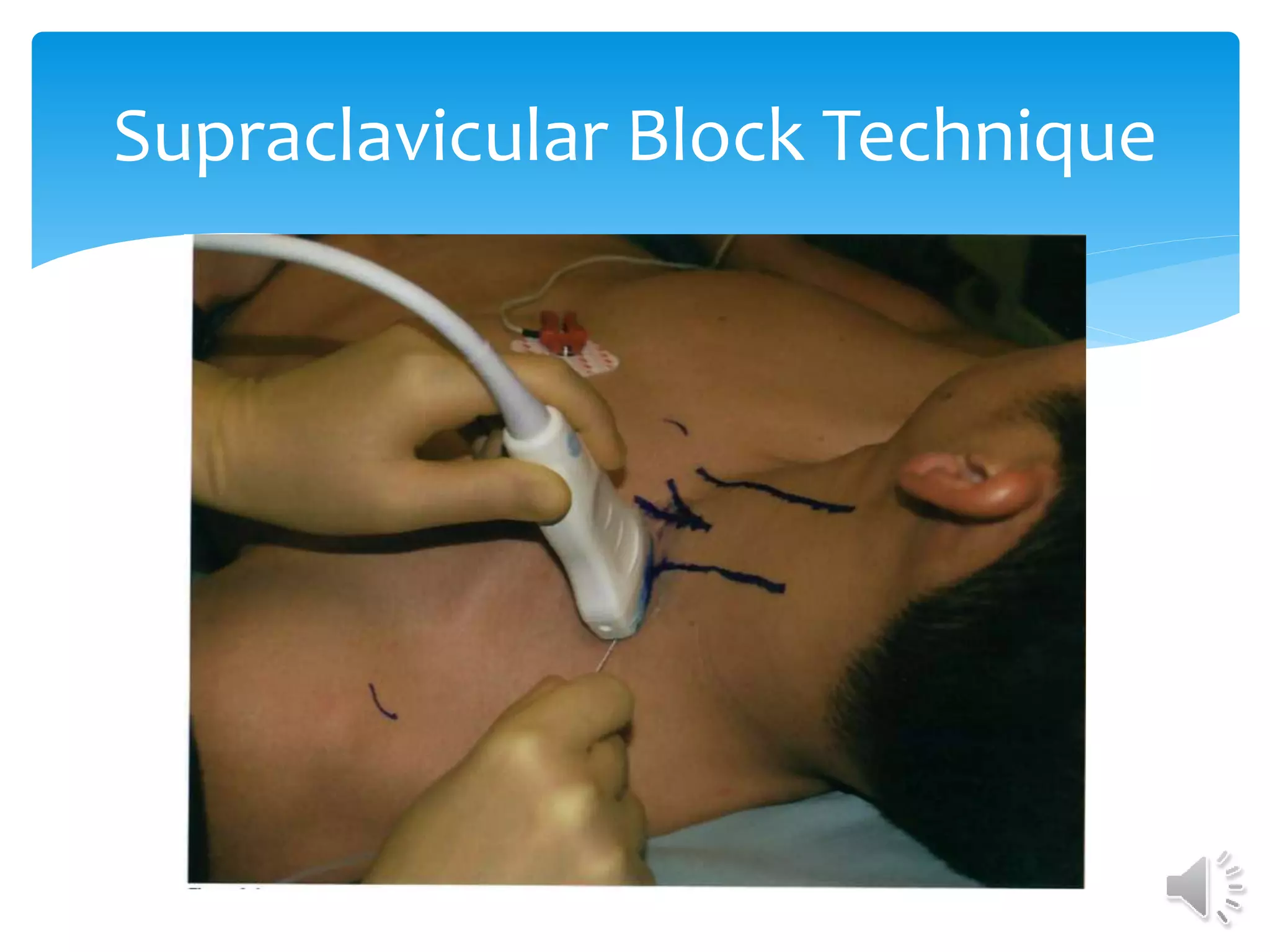
Supraclavicular Block Technique
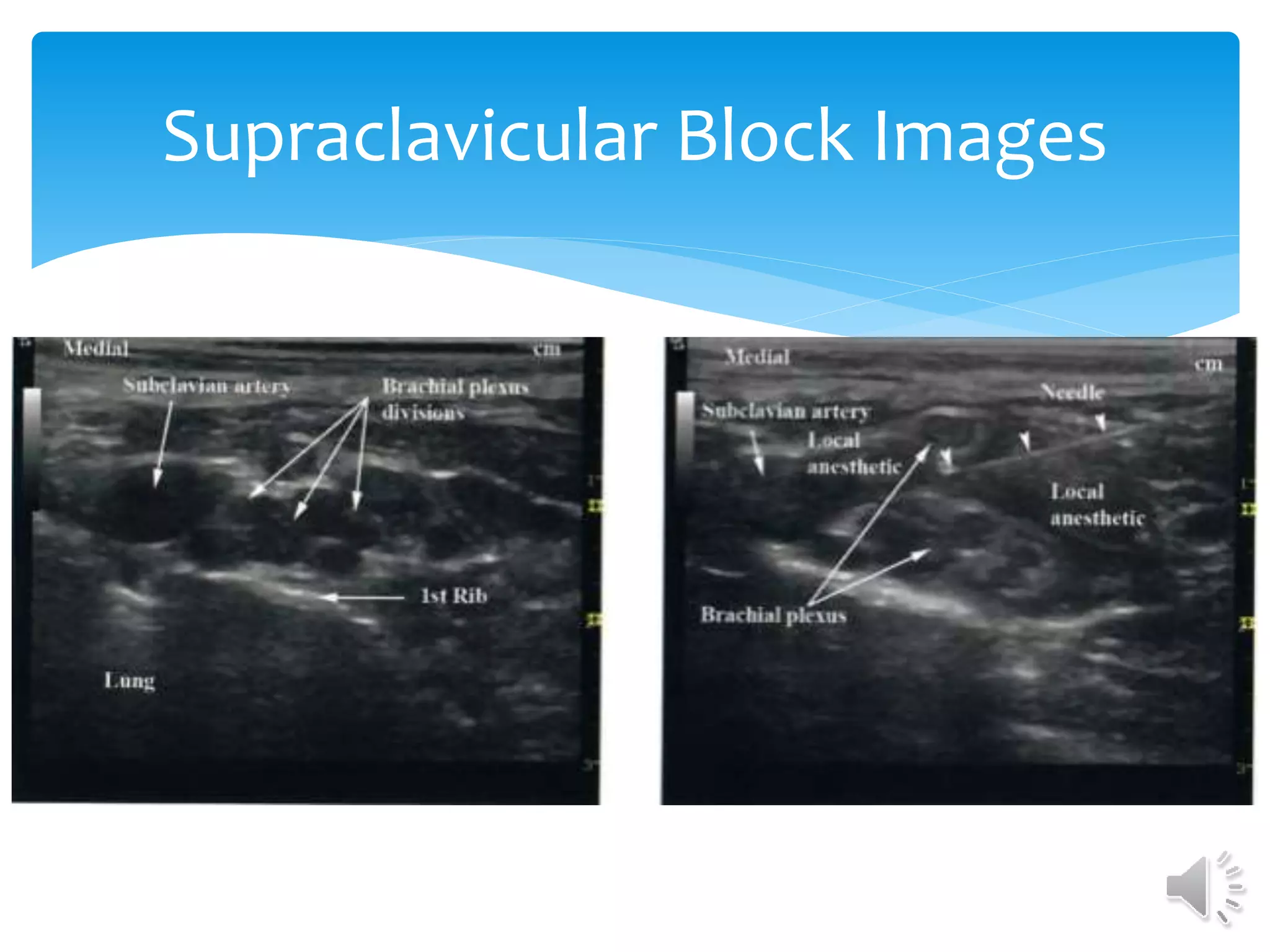
Supraclavicular Block Images
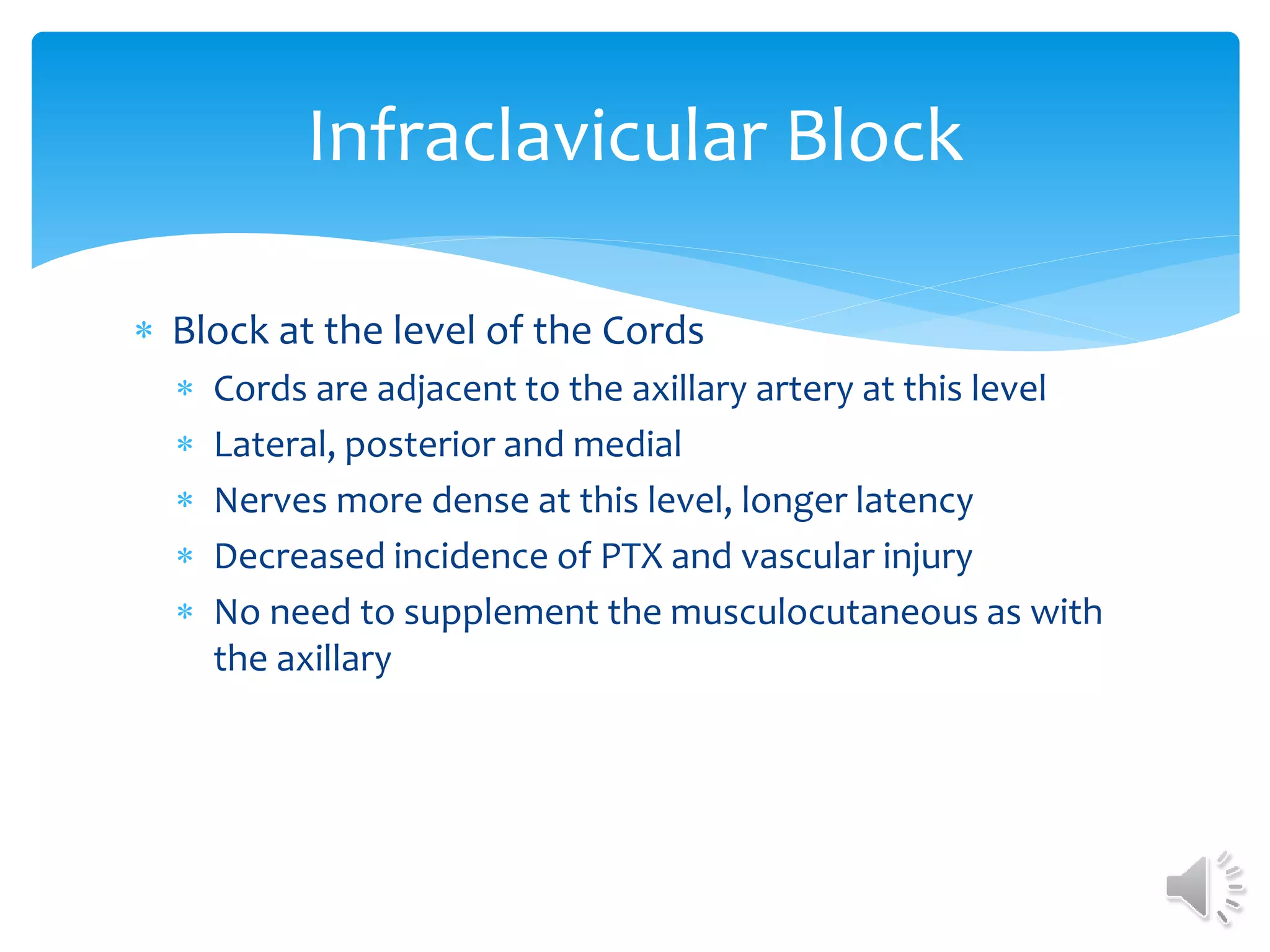
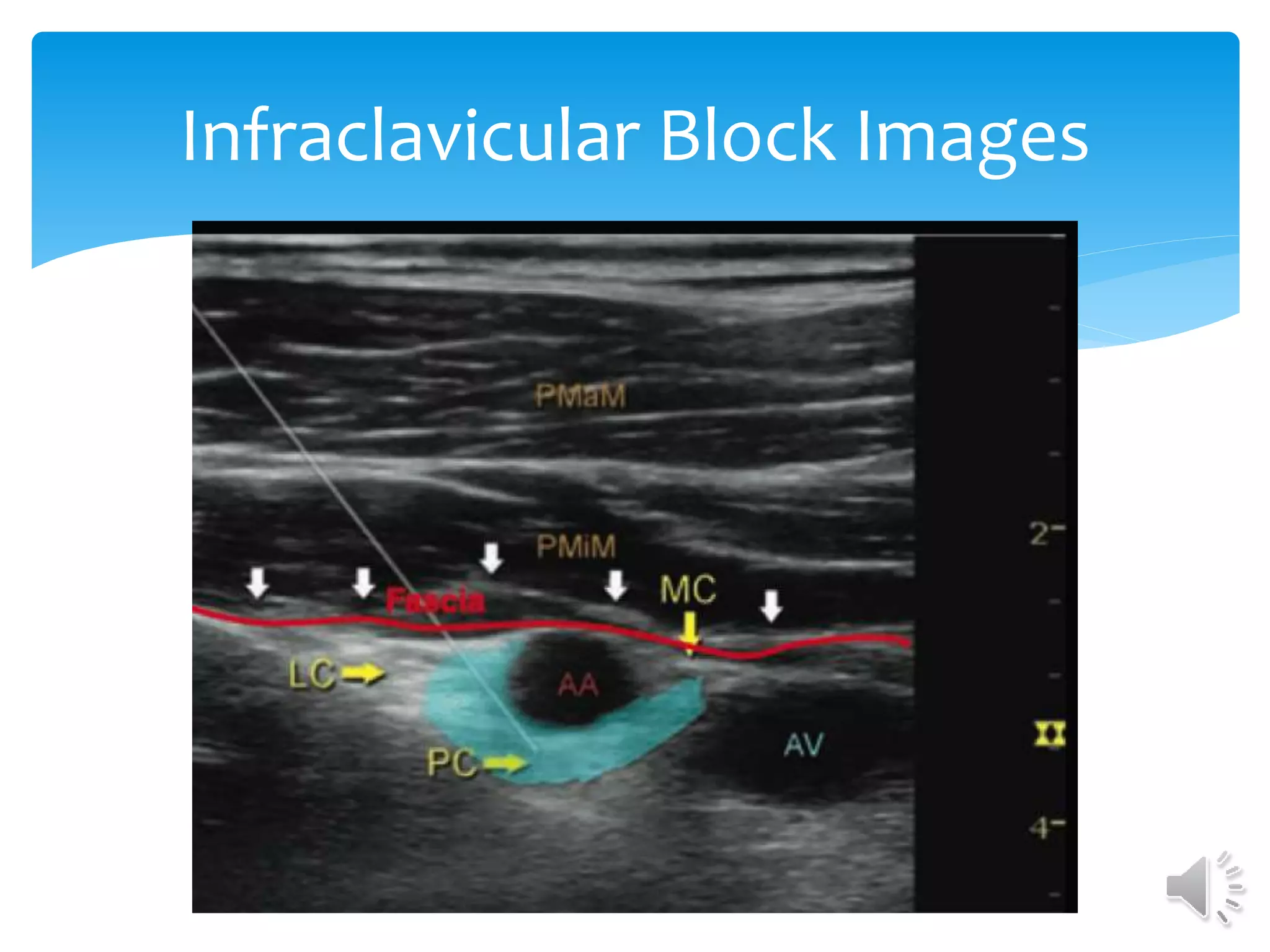
 Block at the level of the Cords
 Cords are adjacent to the axillary artery at this level
 Lateral, posterior and medial
 Nerves more dense at this level, longer latency
 Decreased incidence of PTX and vascular injury
 No need to supplement the musculocutaneous as with
the axillary
Infraclavicular Block
 Parasagittal plane below clavicle medial to corachoid
 Hyperechoic cords?
 Not always, sometimes Hypoechoic.
 Goal to approach from cephalad to posterior aspect of
the axillary artery to proximity of the posterior cord.
Increased success in this approach for single injection.
Infraclavicular Block
Infraclavicular Block Technique
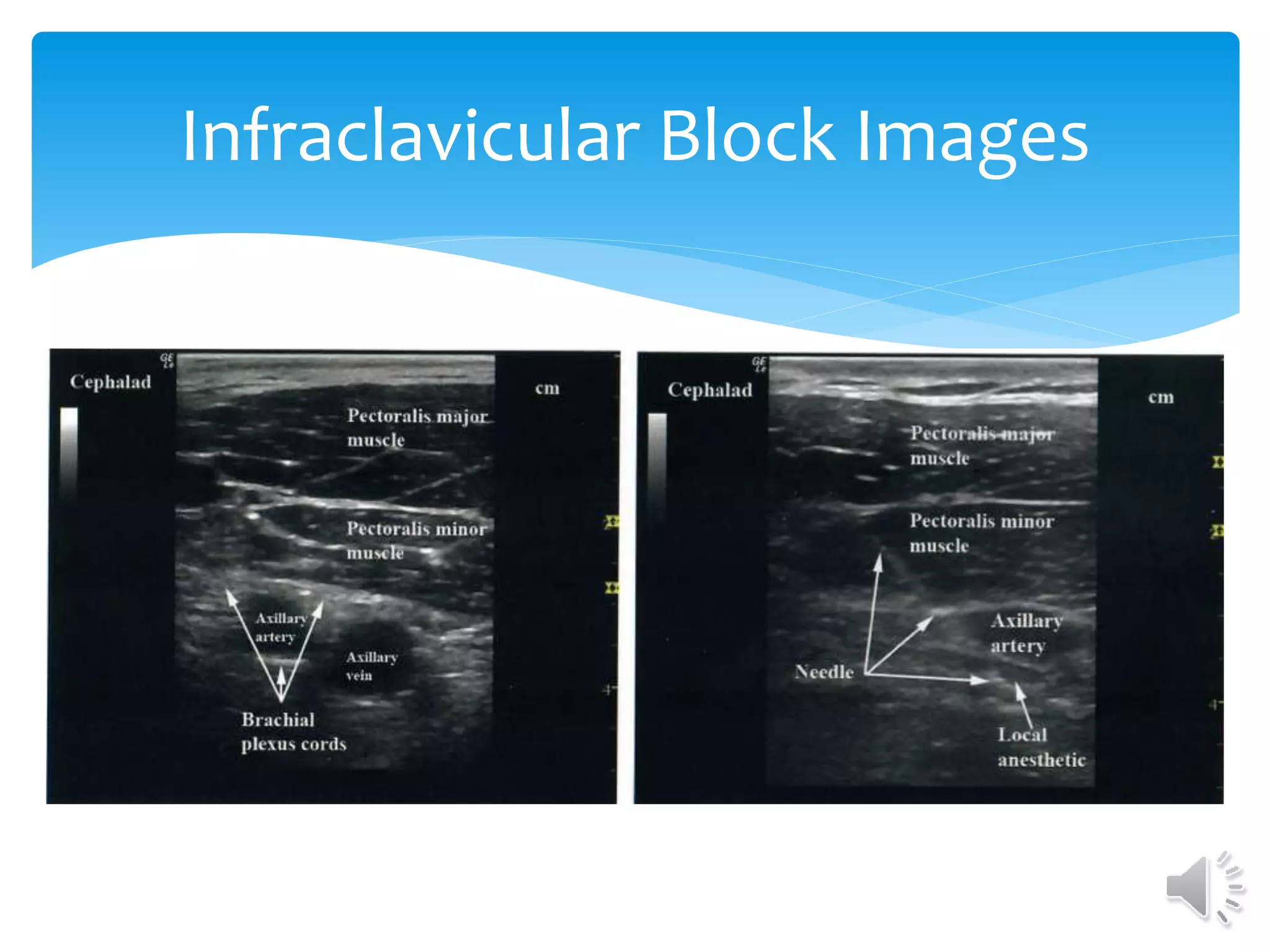
Infraclavicular Block Images
 Medial aspect of upper arm, for surgery below the
elbow.
 Musculocutaneous has left the sheath at this level
 Like other brachial plexus blocks need a tourniquet
ring if not providing significant sedation or general
anesthesia.
 Very shallow.
Axillary Nerve Block
Axillary Block Anatomy
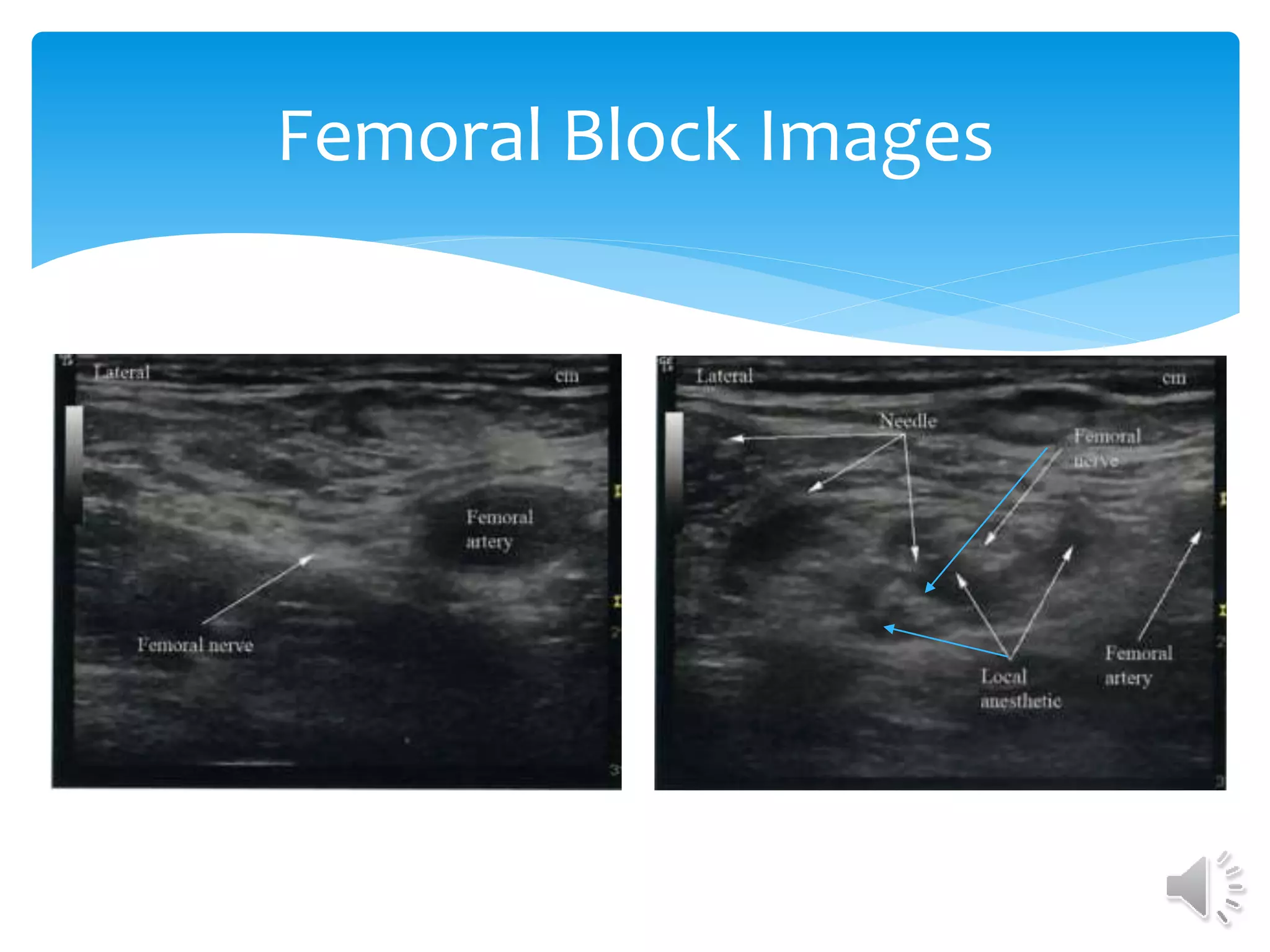
Femoral Block Technique
Femoral Block Images
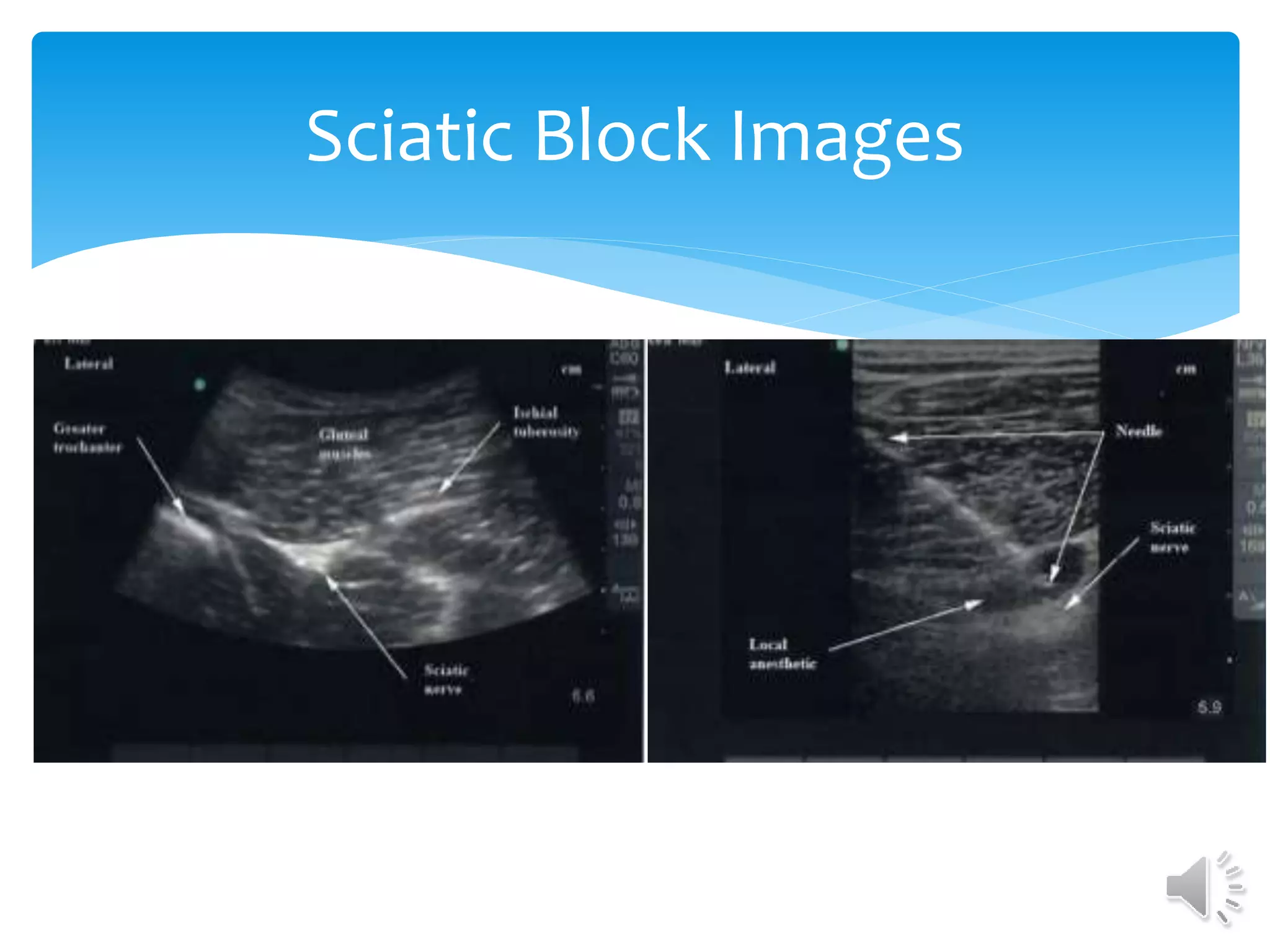
 Large Hyperechoic nerve.
 Primarily blocked for procedures knee and long bones
of the lower extremity.
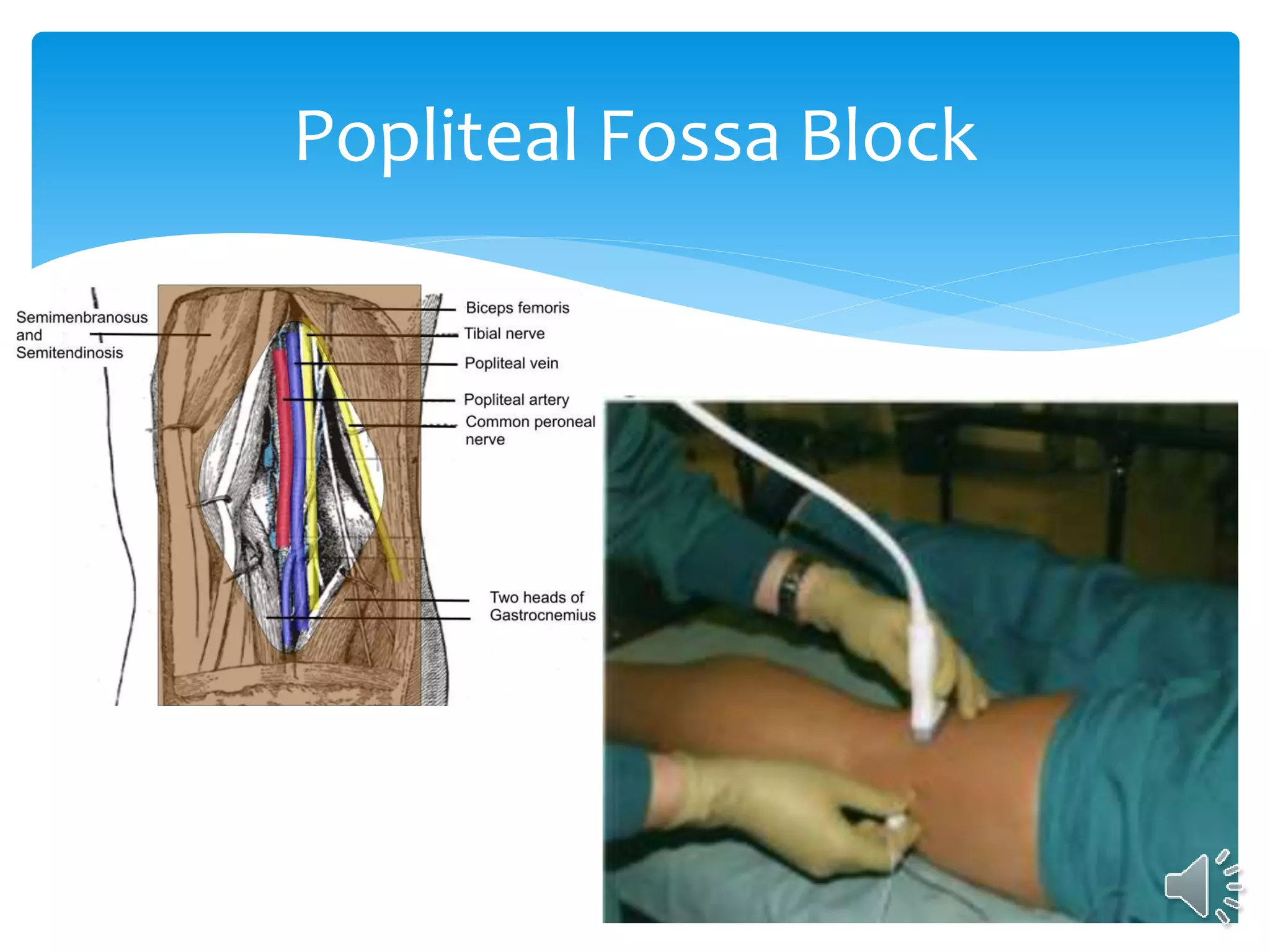
 Can be accessed at popliteal fossa ankle procedures.
Sciatic Nerve Block
Sciatic Nerve Block Technique
Sciatic Block Images
Popliteal Fossa Block
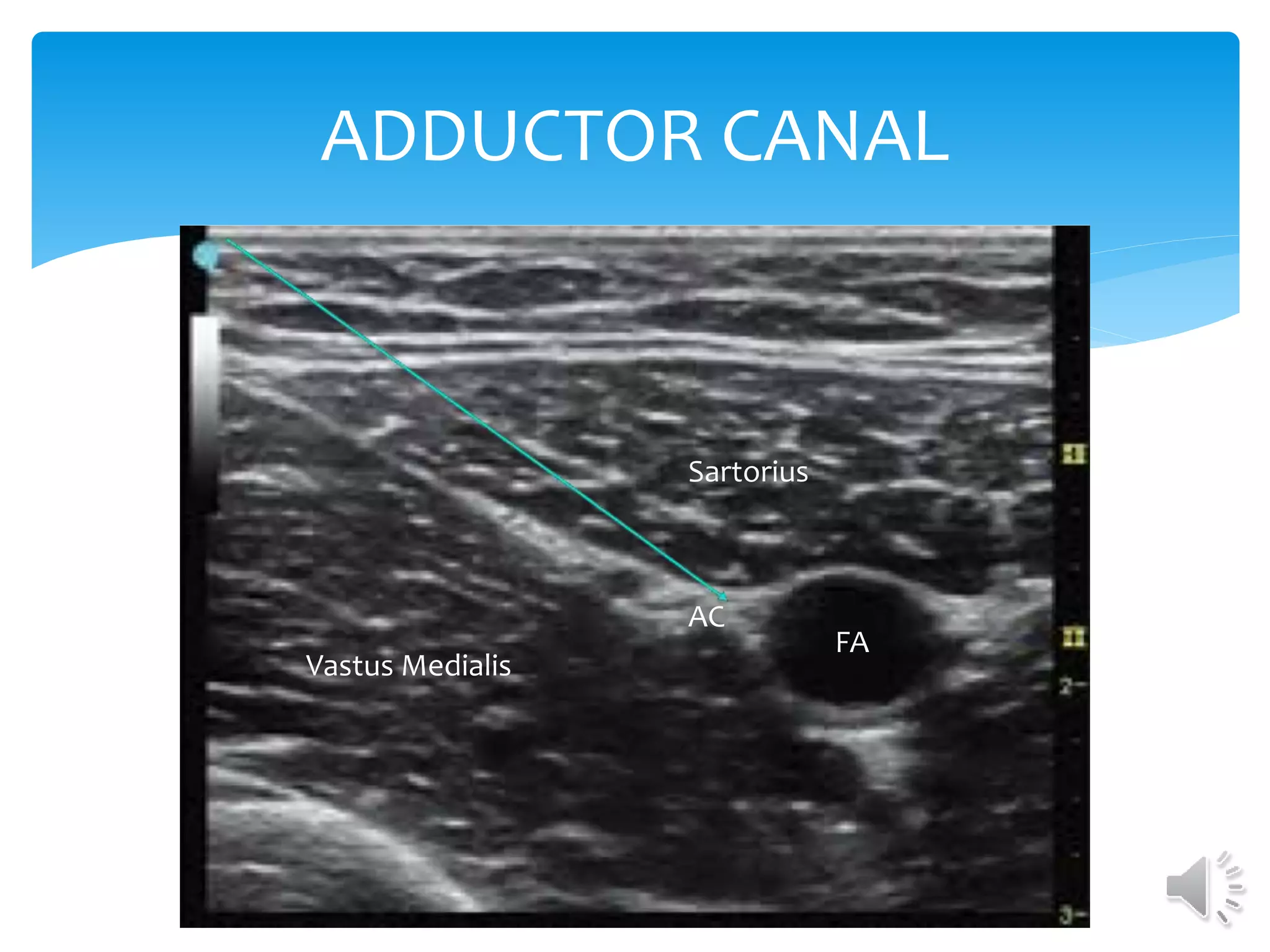
 Block in the medial thigh.
 In conjunction with sciatic nerve block for lower
extremity surgery (further discuss Sciatic approach)
 Primarily Sensory and provides innervation to knee
superficial medial anesthesia below the knee.
 Contents: FA/FV, Saph. N., Nerve to Vastus Medialis,
Medial Cutaneous, Post Br. Obturator.
 Preserves the Quadricep Strangth & Balance
Adductor Canal
ADDUCTOR CANAL
Vastus Medialis
FA
AC
 Infiltration within the posterior capsule of the knee
 Ultrasound guided Infiltration technique
 15 – 20 ml local between artery and femur under
ultrasound guidance
 Uses for ACL*, TKA, etc.
 Will demonstrate during hands on.
 * not beneficial patellar graft is harvested.
iPACK Nerve Block
Transversus Abdominis Plane Block
 Provides anesthesia for T10-L1 nerves. No
relief for surgery above the umbilicus.
 Somatic innervation to the lower anterior
abdominal wall by nerves in the fascial plane
between the TA and IOM.
 No visceral component.
 Provides relief for Hysterectomy, Hernia, Lap
Procedures.
 May be used diagnostically for chronic pain.
TAP Block Technique
 Patient positioned supine.
 Can be done under general anesthesia.
 Arms Abducted.
 Costal Margin, Iliac Crest, Axillary line.
 Needle direction medial to lateral.
 In plane technique. Distinct Needle “Pop”.
 NS test injection.
 20-30 ml local anesthesia per side.
TAP Block Technique
TAP U/S Image
 Liposome Injection of Bupivacaine.
 Extended Release.
 December 14, 2016 FDA approval for TAP Block use.
 Rescinded warning letter for off label advertising.
 Dosing for TAP. One 20ml vial diluted to 40-60 ml.
 No more Local after administration of TAP for 72
Hours.
Exparel/ TAP
References
Beaussier, M., Sciard, D., & Sautet, A. (2016). New modalities of pain treatment after
outpatient orthopaedic surgery. Orthopaedics & Traumatology, Surgery & Research :
OTSR, 102(1 Suppl), S121-4. doi:10.1016/j.otsr.2015.05.011 [doi]
Buckenmaier, C., & Bleckner, L. (2009). In Redding J. (Ed.), Military advanced regional
anesthesia and analgesia, handbook (First ed.). Washington, DC: Office of the Surgeon
General at TMM Publications.
Food and Drug Administration. (2015). Removal of warning letter; TAP block approval.
Retrieved from
http://www.fda.gov/downloads/Drugs/GuidanceComplianceRegulatoryInformation/Enfo
rcementActivitiesbyFDA/WarningLettersandNoticeofViolationLetterstoPharmaceuticalC
ompanies/UCM477250.pdf
Lin, E., Choi, J., & Hadzic, A. (2013). Peripheral nerve blocks for outpatient surgery:
Evidence-based indications. Current Opinion in Anaesthesiology, 26(4), 467-474.
doi:10.1097/ACO.0b013e328362baa4 [doi]
Patacsil, J. A., McAuliffe, M. S., Feyh, L. S., & Sigmon, L. L. (2016). Local anesthetic
adjuvants providing the longest duration of analgesia for single-injection peripheral
nerve blocks in orthopedic surgery: A literature review. American Association of Nurse
Anesthetists Journal, 84(2), 95.

Fundamentals of Ultrasound Guided Peripheral Regional Anesthesia Techniques

  • 1.
    Fundamentals of Ultrasound GuidedPeripheral Regional Anesthesia Techniques Joseph McVicker, CRNA, MS
  • 2.
    Retired Navy NurseCorps University South Alabama Georgetown University East Carolina University
  • 3.
     I havenot been reimbursed nor received benefits from any company or individual other than the NCANA for this presentation.  Technology and images presented in this presentation are not an endorsements for a specific company or product. There are for illustrative and demonstration purposes only. Conflict of Interest
  • 4.
     List thebenefits of U/S guidance for peripheral regional anesthesia.  Discuss commonly used machine controls and methods to improve ultrasound imaging to obtain optimal view.  Identify the images of peripheral nerves, nerve plexuses, and adjacent anatomy for common upper and lower extremity nerve blocks. Objectives
  • 5.
    “Inadequate pain reliefafter surgery may delay surgical recovery, decrease patient satisfaction, increase length of stay, raise risk of hospital readmissions and increase overall healthcare costs” (Patacsil et al, 2016). Why PNBs?
  • 6.
     Peripheral NerveBlocks play an important role in anesthesia and analgesia for ambulatory surgery.  Either obviates need for GA or decrease anesthetic requirement.  Faster Discharge; more quickly “Street Fit”.  Part of multimodal approach to pain management and decrease need for intraoperative and post operative opiates.  Less PONV.  Less postoperative pain. PNB’s
  • 7.
     Traditional approachesrely on strong knowledge of anatomy and physical assessment.  Require motor stimulation and movement. (Pain?)  Potential for intravascular injection (can’t see).  Adjacent structure injury.  Nerve stimulators with insulated needles provide evidence of proximity at time of injection. Higher incidence of failure than U/S guided.  Usual practice not to move needle after injection started (risk injury to nerve, movement to intravascular). Traditional PNB Techniques
  • 8.
     Visualize surroundingstructures  Validate external landmarks  Not a substitute for knowledge of anatomy  Real time needle guidance!  Avoid injury to adjacent structures “Steering Needle”  Visualize other structures to provide local anesthesia prior to placing block needle (Fascia tough and painful with blunt needle.)  More accurate inject local anesthetic can see tissue displacement and see spread of local. Benefits of Ultrasound Techniques
  • 9.
     U/S machinesare smaller and more portable.  Less Expensive than larger and more cumbersome ancestors.  Quality of modern software provides improved imaging.  Familiarization with the machine and controls will improve quality and outcomes. Ultrasound Machines
  • 10.
  • 12.
     Pt. Identifiers. Informed Consent for regional anesthesia (Correct Site).  Mark/Initial Block location on the patient.  When positioning patient possible to get wrong side errors. Propose adding a block band to the extremity to ensure site being blocked is on the same extremity.  Procedural Time Out/ Facility Protocol.  Include the patient. Sedate after the time out! Informed Consent
  • 13.
     Linear arraytransducers scan a plane through the body that can be viewed as a Real-time, two- dimensional image on the screen. (Patients are 3D).  Doppler used to identify pulsatile fluid filled structures.  Commonly superimposed on B-mode image. 2D or B(Brightness)-mode
  • 14.
    Depth Control  Depth:Depth controls the distance over which the B-Mode images the anatomy.  To visualize deeper structures, increase the depth.  If there is a large part of the display which is unused at the bottom, decrease the depth.
  • 15.
     B-Mode Gainincreases or decreases the amount of echo information displayed in an image.  It may brighten or darken the image if sufficient echo information is generated. B-Mode Gain
  • 16.
     Increases thenumber of focal zones or moves the focal zone(s) so that you can tighten up the beam for a specific area.  A graphic caret corresponding to the focal zone position(s) appears on the right edge of the image on the Logiq e U/S machine. Focus (Logiq e)
  • 17.
     Doppler Mode:Identifies vascular structures.  Differentiate between arterial and venous structures.  The use in this application is solely to facilitate location of adjacent neuronal structures and avoidance of vascular injury. Doppler Mode
  • 18.
     Hyperechoic: Bones,Fascia & Tendons  Hypoechoic: Muscle, Fat, Small Veins and Arteries  Anechoic: Large Arteries and Veins  Variable: Nerves above Clavicle-Hypoechoic, Below Clavicle-Hyperechoic  Anisotropy: Non-perpendicular angulation skews the return of the waves returning to the transducer Echogenicity
  • 19.
  • 20.
     Most beneficialPNB for outpatient shoulder surgery (Lin, Choi, Hadzic, 2013).  Primary anesthetic with MAC or Adjunct to GA.  Duke Surgery Center primarily ISB catheter/MAC.  NHCL/NHCCP Single Shot ISB/GA Interscalene Nerve Block
  • 21.
     Block atlevel of Nerve Trunks.  U/S probe placed where palpate in classic technique  “Scanning” the neck above clavicle helps with anatomy  Hypoechoic (above the clavicle)  Deep to the posterior margin of the SCM  Between anterior and middle scalene muscles  Classic “Stop Light” appearance at this level Interscalene Nerve Block
  • 22.
  • 23.
  • 24.
  • 25.
  • 26.
     Block atthe level of the Cords  Cords are adjacent to the axillary artery at this level  Lateral, posterior and medial  Nerves more dense at this level, longer latency  Decreased incidence of PTX and vascular injury  No need to supplement the musculocutaneous as with the axillary Infraclavicular Block
  • 27.
     Parasagittal planebelow clavicle medial to corachoid  Hyperechoic cords?  Not always, sometimes Hypoechoic.  Goal to approach from cephalad to posterior aspect of the axillary artery to proximity of the posterior cord. Increased success in this approach for single injection. Infraclavicular Block
  • 28.
  • 29.
  • 30.
  • 31.
     Medial aspectof upper arm, for surgery below the elbow.  Musculocutaneous has left the sheath at this level  Like other brachial plexus blocks need a tourniquet ring if not providing significant sedation or general anesthesia.  Very shallow. Axillary Nerve Block
  • 32.
  • 33.
  • 34.
  • 35.
     Large Hyperechoicnerve.  Primarily blocked for procedures knee and long bones of the lower extremity.  Can be accessed at popliteal fossa ankle procedures. Sciatic Nerve Block
  • 36.
  • 37.
  • 38.
  • 39.
     Block inthe medial thigh.  In conjunction with sciatic nerve block for lower extremity surgery (further discuss Sciatic approach)  Primarily Sensory and provides innervation to knee superficial medial anesthesia below the knee.  Contents: FA/FV, Saph. N., Nerve to Vastus Medialis, Medial Cutaneous, Post Br. Obturator.  Preserves the Quadricep Strangth & Balance Adductor Canal
  • 40.
  • 41.
     Infiltration withinthe posterior capsule of the knee  Ultrasound guided Infiltration technique  15 – 20 ml local between artery and femur under ultrasound guidance  Uses for ACL*, TKA, etc.  Will demonstrate during hands on.  * not beneficial patellar graft is harvested. iPACK Nerve Block
  • 42.
    Transversus Abdominis PlaneBlock  Provides anesthesia for T10-L1 nerves. No relief for surgery above the umbilicus.  Somatic innervation to the lower anterior abdominal wall by nerves in the fascial plane between the TA and IOM.  No visceral component.  Provides relief for Hysterectomy, Hernia, Lap Procedures.  May be used diagnostically for chronic pain.
  • 43.
    TAP Block Technique Patient positioned supine.  Can be done under general anesthesia.  Arms Abducted.  Costal Margin, Iliac Crest, Axillary line.  Needle direction medial to lateral.  In plane technique. Distinct Needle “Pop”.  NS test injection.  20-30 ml local anesthesia per side.
  • 44.
  • 45.
  • 46.
     Liposome Injectionof Bupivacaine.  Extended Release.  December 14, 2016 FDA approval for TAP Block use.  Rescinded warning letter for off label advertising.  Dosing for TAP. One 20ml vial diluted to 40-60 ml.  No more Local after administration of TAP for 72 Hours. Exparel/ TAP
  • 47.
    References Beaussier, M., Sciard,D., & Sautet, A. (2016). New modalities of pain treatment after outpatient orthopaedic surgery. Orthopaedics & Traumatology, Surgery & Research : OTSR, 102(1 Suppl), S121-4. doi:10.1016/j.otsr.2015.05.011 [doi] Buckenmaier, C., & Bleckner, L. (2009). In Redding J. (Ed.), Military advanced regional anesthesia and analgesia, handbook (First ed.). Washington, DC: Office of the Surgeon General at TMM Publications. Food and Drug Administration. (2015). Removal of warning letter; TAP block approval. Retrieved from http://www.fda.gov/downloads/Drugs/GuidanceComplianceRegulatoryInformation/Enfo rcementActivitiesbyFDA/WarningLettersandNoticeofViolationLetterstoPharmaceuticalC ompanies/UCM477250.pdf Lin, E., Choi, J., & Hadzic, A. (2013). Peripheral nerve blocks for outpatient surgery: Evidence-based indications. Current Opinion in Anaesthesiology, 26(4), 467-474. doi:10.1097/ACO.0b013e328362baa4 [doi] Patacsil, J. A., McAuliffe, M. S., Feyh, L. S., & Sigmon, L. L. (2016). Local anesthetic adjuvants providing the longest duration of analgesia for single-injection peripheral nerve blocks in orthopedic surgery: A literature review. American Association of Nurse Anesthetists Journal, 84(2), 95.

Editor's Notes

  • #6 Jason Patacsil DNP SP Literature review April AANA Journal
  • #8 Pain: movement of affected extremity. Electrical stimulation pain minimized or obviated by decreasing the Pulse width to 0.1 or 0.3 avoid 1.0 ms unless seeking paresthesia with needle.
  • #9 Steering Avoidance of vascular structures
  • #11 Still use the stimultor when teaching. Confirms that you are where you want to be. Eventually will discard the stimulator in favor of U/S image
  • #12 Lipid Rescue: 1.5 ml /kg or about 100ml over one minute then infusion of 15ml/kg/hour or 1000ml/hour. Max 2 repeat boluses. Can double infusion. Max total/cumulative dose is 12mg/kg or 840ml for a 70 kg person.
  • #13 When positioned the surgeons mark may not be visible for the time out, And more than one block requires anesthetist’s initials on each sight.
  • #14 2D is an important concept as we will be blocking a 3D patient
  • #19 Bones will have an anechoic shadow due to inability of U/S waves to penetrate
  • #20 Not pictured Phrenic Nerve origenC3,4,5 passes anterior to the brachial plexus, superficial to the C-8, T-1 roots and then proceeds deep to the clavicle. Additionally, the brachial plexus may have a branch that contributes to the phrenic nerve. Almost 100% ipsilateral block of phrenic nerve at this level.
  • #21 With prolonged blockade also prolonged block of the phrenic nerve.
  • #22 Accessory muscles of ventilation. Caution in people with lung disease. Almost 100%
  • #23 Note the location of the transducer. Slightly caudad to the level of C6. Identify the plexus at the level of the supraclavicular block, The plexus is just lateral to the subclavian artery.
  • #24 Scan cephalad until the nerve structures coalesce into the three major trunks. Inject local in the direction of the most superior trunk. This will preferentially block the shoulder. Note Depth Markers. Yellow Focus markers. If open Biceps tendonesis incision will be made consider intercostobrachial blockade or ask surgeon to infiltrate incision at time of closure. Frequent complaints of pain in this region post operatively with good functioning ISB. Primary indication for shoulde and proximal humerus. Question whether adequate for elbow surgery. Some advocacy for lower approach 2-3 cm aboce clavicle for elbow.
  • #26 Needle always from lateral to medial. Needle visualization and STRICT in plane technique to avoid Pneumothorax or vascular injury. Stay above the level of the first rib. Note Anechoic region around the nerves and again the depth of the needle relative to the lung, absence of echoes behind the first rib rib Consider intercostobrachial block if tourniquet used for procedure. The Spinal of the Arm, good for surgeries at elbow and above. NYSORA advocates the with U/S guidance that low approach to ISB is acceptable for hand and wrist surgery. Anecdotally more frequent need to block ulnar nerve at elbow or supplement ulnar distribution on operative field when ISB performed for wrist and hand procedures.
  • #28 Rotate the transducer to obtain the best round view of the axillary artery. Use caution to avoid vascular injury. Difficult to compress this area. Keep vascular structures and tip of needle in view at all times.
  • #29 Small curvilinear low frequency transduce better for this block in muscular males.
  • #31 Redline fascia of Pect Minor muscle. Ideal picture with no pressure distortion of structure as seen on previous slide. Blue =ideal local spread. Note that there about 10% of the time you will encounter an anatomic septum preventing anterior spread of the local to the medial cord. Withdraw and redirect the needle to pass the artery at 12 o'clock position stopping at 2 o'clock and inject 5 ml of local. Keep transducer pressure constant during injection ensure compression of venous structures
  • #34 NAVL!
  • #35 Needle approach from lateral to medial. According to MARAA U/S improves femoral nerve block by decreasing latency, improving sensory component and reducing LA volume needed. Primarily for procedures of the knee joint. Infrapatellar surjery involving the tibia and fibula necessitate Sciatic nerve block for complete analgesia.
  • #36 Still need to block saphenous component for procedures on anteromedial aspect of skin
  • #37 Line between the greater trochanter and the ischial tuberosity. Sciatic nerve bisects this line. Large curvilinear probe for wide angle view and deeper structures.
  • #38 Nerve is located between anterior surface of the gluteus maximus and posterior surface of quadratus femoris muscles. Needle direction lateral to medial. High Frequency curvilinear probe
  • #39 Note lateral to medial approach to avoid vascular structures. Attempt as high as possible to ensure getting both branches of the nerve Normally used in conjunction with saphenous or adductor canal block
  • #40 Vastus Medialis is the only motor nerve
  • #41 Anterior to left Sartorius on top Vastus medialis on left, if move more caudad artery drops out of the sub sartorial plane and descending genicular artery continues adjacent to saphenous.
  • #42 Provides medial relief. Inferior lateral knee pain no well controlled. Most TKA pain is medial. Preserves motor component when used with adductor canal blocks. Success considered in attenuation not elimination of pain
  • #44 Note the spread of the local anesthetic remote from needle placement. This confirms proper fascial placement. No hemodynamic instability, Not good for incisions above umbilicus. May use continuous technique.
  • #45 Transducer perpendicular to the needle. Medial to lateral approach. Less likely to enter peritoneum.
  • #46 The local should be seen spreading between the fascia away from the needle if it forms a fluid pocket the location of the needle is not correct.