ARJUN SHENOY 
POSTGRADUATE STUDENT 
DEPT OF MAXILLOFACIAL SURGERY 
KVGDCH
 Definition 
 Requirements 
 composition 
 Mechanism of action 
 Classification 
 Biotransformation 
 Indications and contraindications
The word was coined by Dr Oliver Holmes 1846 
•Greek word. 
•An means without and aisthetos means pain. 
• Anesthesia means loss of sensation including 
pain, touch, temperature and pressure perception 
and may be accompanied by impairment of motor 
function
 Nonirritant. 
 Should not produce any local reaction. 
 Should not cause any permanent change in the 
nerve structure. 
 Should cause minimal systemic toxicity. 
 Should be effective and enough penetrating 
properties when used topically. 
 Should have short time of onset.
 Duration should enough to allow the 
completion of procedure. 
 Should have enough potency. 
 Should be free from allergy producing 
substances. 
 Should be sterilized of capable of being 
sterilized by heat without deterioration. 
 Should be stable and readily undergo 
biotransformation in the body.
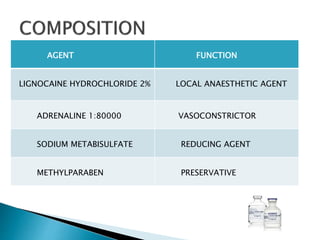
AGENT FUNCTION 
LIGNOCAINE HYDROCHLORIDE 2% LOCAL ANAESTHETIC AGENT 
ADRENALINE 1:80000 VASOCONSTRICTOR 
SODIUM METABISULFATE REDUCING AGENT 
METHYLPARABEN PRESERVATIVE
DISTILLED WATER DILUTING AGENT 
RINGERS SOLUTION VEHICLE 
SODIUM HYDROXIDE TO ADJUST PH 
NITROGEN BUBBLES PREVENTS DESTRUCTION OF 
VASOPRESSOR BY OXYGEN
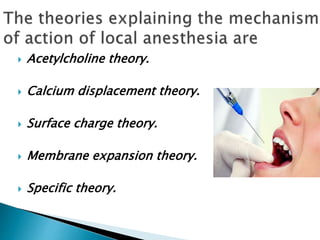
 Acetylcholine theory. 
 Calcium displacement theory. 
 Surface charge theory. 
 Membrane expansion theory. 
 Specific theory.
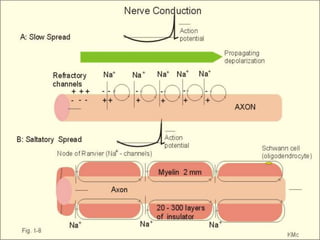
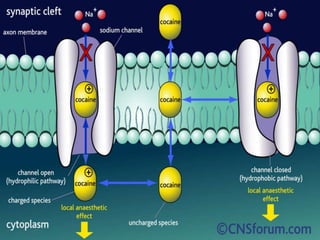
 Local anaesthetics are membrane stabilizing 
drugs. 
 Acts by inhibiting sodium influx through 
voltage gated sodium specific ion channels in 
the nueronal cells. 
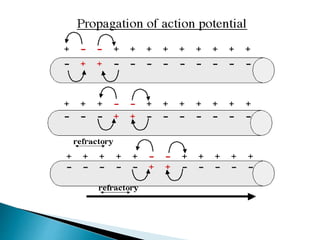
 Hence action potential cannot arise due to 
this inhibition and blockade of conduction is 
established.
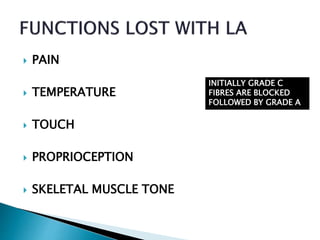
 PAIN 
 TEMPERATURE 
 TOUCH 
 PROPRIOCEPTION 
 SKELETAL MUSCLE TONE 
INITIALLY GRADE C 
FIBRES ARE BLOCKED 
FOLLOWED BY GRADE A
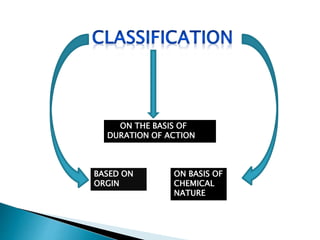
ON THE BASIS OF 
DURATION OF ACTION 
BASED ON 
ORGIN 
ON BASIS OF 
CHEMICAL 
NATURE
ON BASIS OF OCCURANCE
 On the basis if OCCURRENCE in nature: 
 NATURALLY OCCURING: 
 e.g. cocaine. 
SYSTEMIC COMPOUNDS 
 Derivatives of acentanillide: e.g. lignocaine 
(lidocaine, xylocaine) 
l 
 Miscellaneous drugs with local anesthetic 
action like phenol, chlorpromazine
 ESTERS 
These can be further classified as: 
Esters of benzoic acid 
e.g. cocaine butacaine. 
Esters of para-aminobenzoic acid 
e.g. procaine, propoxycaine. 
 AMIDES 
e.g. articaine, bupivacine, lidocaine.
 short acting 
articaine, lidocaine, mepivacaine, prilocaine. 
 Long acting: 
bupivacaine, etidocaine, bucricaine
 Incision and drainage of incised abscess. 
 Removal of cysts, residual infection areas, 
hydrophilic groups and neoplastic growths, 
ranula and salivary calculi. 
 In the treatment of tic douloreux by 
producing prolonged anesthesia with the 
combination of a local anesthetic agent and 
alcohol injection.
 Extraction of teeth and fractured roots. 
 Odontectomy. 
 Treatment of alveolagia. 
 Alveolectomy. 
 Apicoectomy.
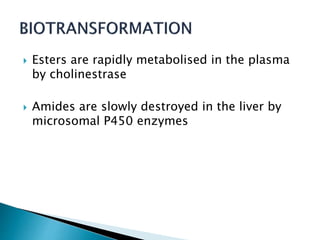
 Esters are rapidly metabolised in the plasma 
by cholinestrase 
 Amides are slowly destroyed in the liver by 
microsomal P450 enzymes
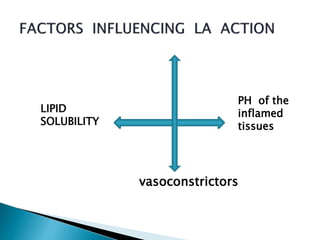
LIPID 
SOLUBILITY 
PH of the 
inflamed 
tissues 
vasoconstrictors
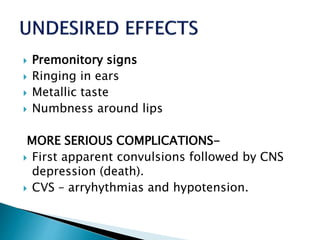
 Premonitory signs 
 Ringing in ears 
 Metallic taste 
 Numbness around lips 
MORE SERIOUS COMPLICATIONS- 
 First apparent convulsions followed by CNS 
depression (death). 
 CVS – arryhythmias and hypotension.
MODES OF APPLICATION 
TOPICAL OR SURFACE APPLICATION 
INFILTRATIONS 
NERVE BLOCKS 
FIELD BLOCKS 
CENTRALLY ACTING (SPINAL)
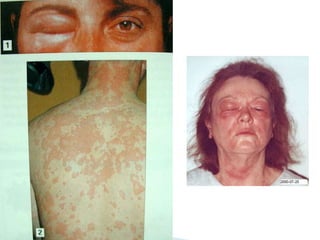
 Methhaemoglobinemia 
 neurotoxicity 
 hypersensitivity
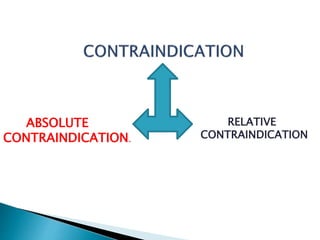
ABSOLUTE 
CONTRAINDICATION. 
RELATIVE 
CONTRAINDICATION
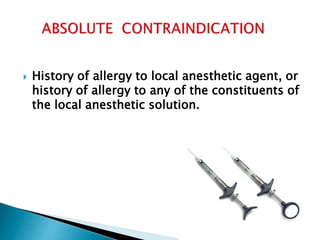
 History of allergy to local anesthetic agent, or 
history of allergy to any of the constituents of 
the local anesthetic solution.
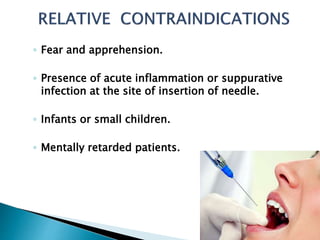
◦ Fear and apprehension. 
◦ Presence of acute inflammation or suppurative 
infection at the site of insertion of needle. 
◦ Infants or small children. 
◦ Mentally retarded patients.
◦ Major surgical procedures with 
haemodynamic unstability 
epilepsy 
◦ Presence of methhaemoglobinemia. Two 
drugs are to be avoided. They are 
benzocaine and articaine. 
 Presence of atypical plasma cholinesterase
 1)patient remains awake and cooperative. 
 2)little disturbance of normal physiology. 
 3)low incidence of morbidity. 
 4)patient can leave the hospital unescorted. 
 5)additional personnel not required.
 6)percentage of failure is small. 
 7)technique not difficult master. 
 8)no additional expense to the patient. 
 9)Patient need not miss the previous meal.
 No true disadvantages to the use of regional 
anesthesia, when the patient is mentally 
prepared and when there are no 
contraindications.
 Potency: depends solely on the chemical 
nature. 
 Duration of anesthesia: depends on 
molecular weight and presence of 
vasoconstrictor 
 If lipophillic group predominates then the 
ability to diffuse into the lipid rich nerve 
diminishes.
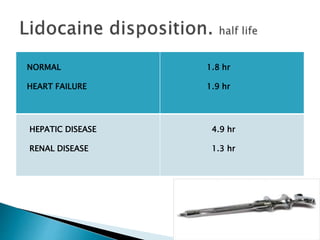
NORMAL 
HEART FAILURE 
1.8 hr 
1.9 hr 
HEPATIC DISEASE 
RENAL DISEASE 
4.9 hr 
1.3 hr
Local Anaesthesia

Local Anaesthesia

  • 1.
    ARJUN SHENOY POSTGRADUATESTUDENT DEPT OF MAXILLOFACIAL SURGERY KVGDCH
  • 2.
     Definition Requirements  composition  Mechanism of action  Classification  Biotransformation  Indications and contraindications
  • 3.
    The word wascoined by Dr Oliver Holmes 1846 •Greek word. •An means without and aisthetos means pain. • Anesthesia means loss of sensation including pain, touch, temperature and pressure perception and may be accompanied by impairment of motor function
  • 4.
     Nonirritant. Should not produce any local reaction.  Should not cause any permanent change in the nerve structure.  Should cause minimal systemic toxicity.  Should be effective and enough penetrating properties when used topically.  Should have short time of onset.
  • 5.
     Duration shouldenough to allow the completion of procedure.  Should have enough potency.  Should be free from allergy producing substances.  Should be sterilized of capable of being sterilized by heat without deterioration.  Should be stable and readily undergo biotransformation in the body.
  • 6.
    AGENT FUNCTION LIGNOCAINEHYDROCHLORIDE 2% LOCAL ANAESTHETIC AGENT ADRENALINE 1:80000 VASOCONSTRICTOR SODIUM METABISULFATE REDUCING AGENT METHYLPARABEN PRESERVATIVE
  • 7.
    DISTILLED WATER DILUTINGAGENT RINGERS SOLUTION VEHICLE SODIUM HYDROXIDE TO ADJUST PH NITROGEN BUBBLES PREVENTS DESTRUCTION OF VASOPRESSOR BY OXYGEN
  • 8.
     Acetylcholine theory.  Calcium displacement theory.  Surface charge theory.  Membrane expansion theory.  Specific theory.
  • 9.
     Local anaestheticsare membrane stabilizing drugs.  Acts by inhibiting sodium influx through voltage gated sodium specific ion channels in the nueronal cells.  Hence action potential cannot arise due to this inhibition and blockade of conduction is established.
  • 13.
     PAIN TEMPERATURE  TOUCH  PROPRIOCEPTION  SKELETAL MUSCLE TONE INITIALLY GRADE C FIBRES ARE BLOCKED FOLLOWED BY GRADE A
  • 14.
    ON THE BASISOF DURATION OF ACTION BASED ON ORGIN ON BASIS OF CHEMICAL NATURE
  • 15.
    ON BASIS OFOCCURANCE
  • 16.
     On thebasis if OCCURRENCE in nature:  NATURALLY OCCURING:  e.g. cocaine. SYSTEMIC COMPOUNDS  Derivatives of acentanillide: e.g. lignocaine (lidocaine, xylocaine) l  Miscellaneous drugs with local anesthetic action like phenol, chlorpromazine
  • 17.
     ESTERS Thesecan be further classified as: Esters of benzoic acid e.g. cocaine butacaine. Esters of para-aminobenzoic acid e.g. procaine, propoxycaine.  AMIDES e.g. articaine, bupivacine, lidocaine.
  • 18.
     short acting articaine, lidocaine, mepivacaine, prilocaine.  Long acting: bupivacaine, etidocaine, bucricaine
  • 19.
     Incision anddrainage of incised abscess.  Removal of cysts, residual infection areas, hydrophilic groups and neoplastic growths, ranula and salivary calculi.  In the treatment of tic douloreux by producing prolonged anesthesia with the combination of a local anesthetic agent and alcohol injection.
  • 20.
     Extraction ofteeth and fractured roots.  Odontectomy.  Treatment of alveolagia.  Alveolectomy.  Apicoectomy.
  • 21.
     Esters arerapidly metabolised in the plasma by cholinestrase  Amides are slowly destroyed in the liver by microsomal P450 enzymes
  • 22.
    LIPID SOLUBILITY PHof the inflamed tissues vasoconstrictors
  • 23.
     Premonitory signs  Ringing in ears  Metallic taste  Numbness around lips MORE SERIOUS COMPLICATIONS-  First apparent convulsions followed by CNS depression (death).  CVS – arryhythmias and hypotension.
  • 25.
    MODES OF APPLICATION TOPICAL OR SURFACE APPLICATION INFILTRATIONS NERVE BLOCKS FIELD BLOCKS CENTRALLY ACTING (SPINAL)
  • 26.
     Methhaemoglobinemia neurotoxicity  hypersensitivity
  • 27.
  • 28.
     History ofallergy to local anesthetic agent, or history of allergy to any of the constituents of the local anesthetic solution.
  • 29.
    ◦ Fear andapprehension. ◦ Presence of acute inflammation or suppurative infection at the site of insertion of needle. ◦ Infants or small children. ◦ Mentally retarded patients.
  • 30.
    ◦ Major surgicalprocedures with haemodynamic unstability epilepsy ◦ Presence of methhaemoglobinemia. Two drugs are to be avoided. They are benzocaine and articaine.  Presence of atypical plasma cholinesterase
  • 31.
     1)patient remainsawake and cooperative.  2)little disturbance of normal physiology.  3)low incidence of morbidity.  4)patient can leave the hospital unescorted.  5)additional personnel not required.
  • 32.
     6)percentage offailure is small.  7)technique not difficult master.  8)no additional expense to the patient.  9)Patient need not miss the previous meal.
  • 33.
     No truedisadvantages to the use of regional anesthesia, when the patient is mentally prepared and when there are no contraindications.
  • 34.
     Potency: dependssolely on the chemical nature.  Duration of anesthesia: depends on molecular weight and presence of vasoconstrictor  If lipophillic group predominates then the ability to diffuse into the lipid rich nerve diminishes.
  • 35.
    NORMAL HEART FAILURE 1.8 hr 1.9 hr HEPATIC DISEASE RENAL DISEASE 4.9 hr 1.3 hr