NOW
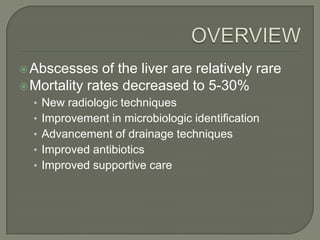
 Abscesses    of the liver are relatively rare
 Mortality rates decreased to 5-30%
  • New radiologic techniques
  • Improvement in microbiologic identification
  • Advancement of drainage techniques
  • Improved antibiotics
  • Improved supportive care
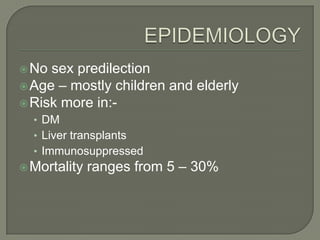
 No sex predilection
 Age – mostly children and elderly
 Risk more in:-
  • DM
  • Liver transplants
  • Immunosuppressed
 Mortality   ranges from 5 – 30%
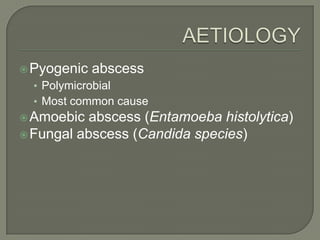
 Pyogenic   abscess
  • Polymicrobial
  • Most common cause
 Amoebic  abscess (Entamoeba histolytica)
 Fungal abscess (Candida species)
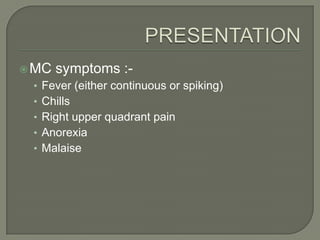
 MC   symptoms :-
 • Fever (either continuous or spiking)
 • Chills
 • Right upper quadrant pain
 • Anorexia
 • Malaise
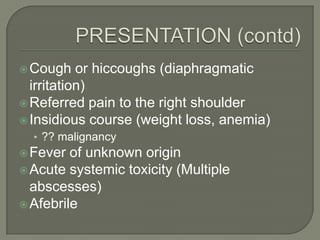
 Cough    or hiccoughs (diaphragmatic
  irritation)
 Referred pain to the right shoulder
 Insidious course (weight loss, anemia)
  • ?? malignancy
 Fever  of unknown origin
 Acute systemic toxicity (Multiple
  abscesses)
 Afebrile
 MC :- Fever, Tender hepatomegaly
 Mass +/-
 Decreased breath sounds
  • Rt basilar lung zones
  • Atelectasis, effusion
 Pleuralor hepatic friction rub
 Jaundice
  • Biliary tract disease
  • Multiple abscesses
 Biliary
        Disease
 Cholecystitis
 Empyema
 A/c Gastritis
 Hepatocellular Carcinoma
 Hydatid Cysts
 Pneumonia
 CBC:-
  • Anemia
  • Neutrophilic leukocytosis
 LFT
  • Albumin ↓
  • Alkaline phosphatase ↑
  • SGOT, SGPT, bilirubin levels ↑ (variable)
 Blood cultures (+ve 50%)
 Culture of abscess fluid
 ELISA for E histolytica
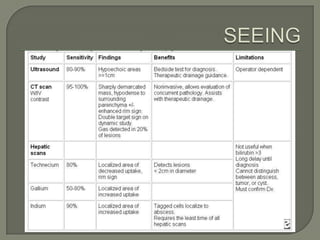
 CTscan
 USG
 CXR
 Drainage   - percutaneous /surgical
 Antimicrobial treatment as adjunct
 Antibiotic therapy as standalone
  • Unfit for invasive procedures
  • Multiple abscesses
  • Many months therapy
  • Serial imaging and close monitoring
 Indications   :-
  • Signs of peritonitis
  • Known abdominal surgical pathology (eg -
    diverticular abscess)
  • Failure of previous drainage attempts
  • Complicated, multiloculated, thick-walled abscess
    with viscous pus
 EMPERIC
 • Beta-lactam/beta-lactamase inhibitor
 • Carbapenems
 • Second generation cephalosporins
                        +
 • Anaerobic coverage (metronidazole /clindamycin)
 Change   ≈ C&S report
 Amoebic       :-
  • Metronidazole
  • Chloroquine ± emetine/dehydroemetine
 Fungal   :-
  • Amphotericin B (plain, lipid)
  • Fluconazole
 4-6weeks of therapy - solitary lesions
 12 weeks - multiple abscesses
 Guide to the length of therapy :-
  • clinical process
  • radiographic progress
 Sepsis
 Empyema       :-
  • contiguous spread
  • intrapleural rupture of abscess
           – rupture of abscess
 Peritonitis
 Endophthalmitis (K pneumoniae
  bacteremia)
 Untreated= fatal
 Bad prognosis :-
  •   Severity of underlying medical conditions
  •   Presence of complications
  •   Delay in diagnosis
  •   Bilirubin > 3.5 mg/dL
  •   Encephalopathy
  •   S.Albumin level of < 2 g/dL
  •   Multiple abscesses
  •   Malignant etiology
  •   High APACHE II score

Liver abscess

  • 1.
  • 2.
     Abscesses of the liver are relatively rare  Mortality rates decreased to 5-30% • New radiologic techniques • Improvement in microbiologic identification • Advancement of drainage techniques • Improved antibiotics • Improved supportive care
  • 3.
     No sexpredilection  Age – mostly children and elderly  Risk more in:- • DM • Liver transplants • Immunosuppressed  Mortality ranges from 5 – 30%
  • 4.
     Pyogenic abscess • Polymicrobial • Most common cause  Amoebic abscess (Entamoeba histolytica)  Fungal abscess (Candida species)
  • 7.
     MC symptoms :- • Fever (either continuous or spiking) • Chills • Right upper quadrant pain • Anorexia • Malaise
  • 8.
     Cough or hiccoughs (diaphragmatic irritation)  Referred pain to the right shoulder  Insidious course (weight loss, anemia) • ?? malignancy  Fever of unknown origin  Acute systemic toxicity (Multiple abscesses)  Afebrile
  • 9.
     MC :-Fever, Tender hepatomegaly  Mass +/-  Decreased breath sounds • Rt basilar lung zones • Atelectasis, effusion  Pleuralor hepatic friction rub  Jaundice • Biliary tract disease • Multiple abscesses
  • 10.
     Biliary Disease  Cholecystitis  Empyema  A/c Gastritis  Hepatocellular Carcinoma  Hydatid Cysts  Pneumonia
  • 11.
     CBC:- • Anemia • Neutrophilic leukocytosis  LFT • Albumin ↓ • Alkaline phosphatase ↑ • SGOT, SGPT, bilirubin levels ↑ (variable)  Blood cultures (+ve 50%)  Culture of abscess fluid  ELISA for E histolytica
  • 13.
  • 14.
     Drainage - percutaneous /surgical  Antimicrobial treatment as adjunct  Antibiotic therapy as standalone • Unfit for invasive procedures • Multiple abscesses • Many months therapy • Serial imaging and close monitoring
  • 15.
     Indications :- • Signs of peritonitis • Known abdominal surgical pathology (eg - diverticular abscess) • Failure of previous drainage attempts • Complicated, multiloculated, thick-walled abscess with viscous pus
  • 16.
     EMPERIC •Beta-lactam/beta-lactamase inhibitor • Carbapenems • Second generation cephalosporins + • Anaerobic coverage (metronidazole /clindamycin)  Change ≈ C&S report
  • 17.
     Amoebic :- • Metronidazole • Chloroquine ± emetine/dehydroemetine  Fungal :- • Amphotericin B (plain, lipid) • Fluconazole
  • 18.
     4-6weeks oftherapy - solitary lesions  12 weeks - multiple abscesses  Guide to the length of therapy :- • clinical process • radiographic progress
  • 19.
     Sepsis  Empyema :- • contiguous spread • intrapleural rupture of abscess – rupture of abscess  Peritonitis  Endophthalmitis (K pneumoniae bacteremia)
  • 20.
     Untreated= fatal Bad prognosis :- • Severity of underlying medical conditions • Presence of complications • Delay in diagnosis • Bilirubin > 3.5 mg/dL • Encephalopathy • S.Albumin level of < 2 g/dL • Multiple abscesses • Malignant etiology • High APACHE II score