Obstructive Jaundice
:an approach Dr Harsh saxena
Pesenter PG 1 Department of
Hepatology MMC chennai
Definition
• Jaundice – Yellowish discoloration of skin, mucus membranes and
conjunctiva resulting from widespread tissue deposition of the
pigmented metabolite bilirubin
• Clinically >3mg/dl
Sleisenger and Fordtran's Gastrointestinal and Liver Disease, 10th ed
Haemoglobin and
other
haemoproteins
Bilirubin
BrG Canalicular membrane
OATP MRP3
Bilirubin Albumin
Albumin
Bile
BrG Urine
B-UGT
MRP2
OATP – Organic anion transporter
MRP – Multidrug resistant associated protein
UGT – Uridine diphosphate - glucurynyl transferase
BrG – Bilirubin glucuronides
Sleisenger and Fordtran's Gastrointestinal and Liver Disease, 10th ed
Hyperbilirubinemia
Disorders of bilirubin
metabolism
Conjugated
Unconjugated
Liver disease
Hepatocellular
dysfunction
Hepatic disorders with
prominent cholestasis
Bile duct obstruction
Bile duct diseases
Extrinsic compression
Cholestasis
• Conjugated hyperbilirubinemia due to :
i. Impaired bile formation (hepatocytes)
ii. Impaired bile flow (bile duct/ductules)
• Consequences –
Secondary liver damage
i. Bile acid induced hepatocyte injury
ii. Secondary biliary cirrhosis
Failure of substances secreted in bile to reach intestine
i. Bile acid deficiency in gut
ii. Fat malabsorbtion/fat-solube vitamin malabsorbtion
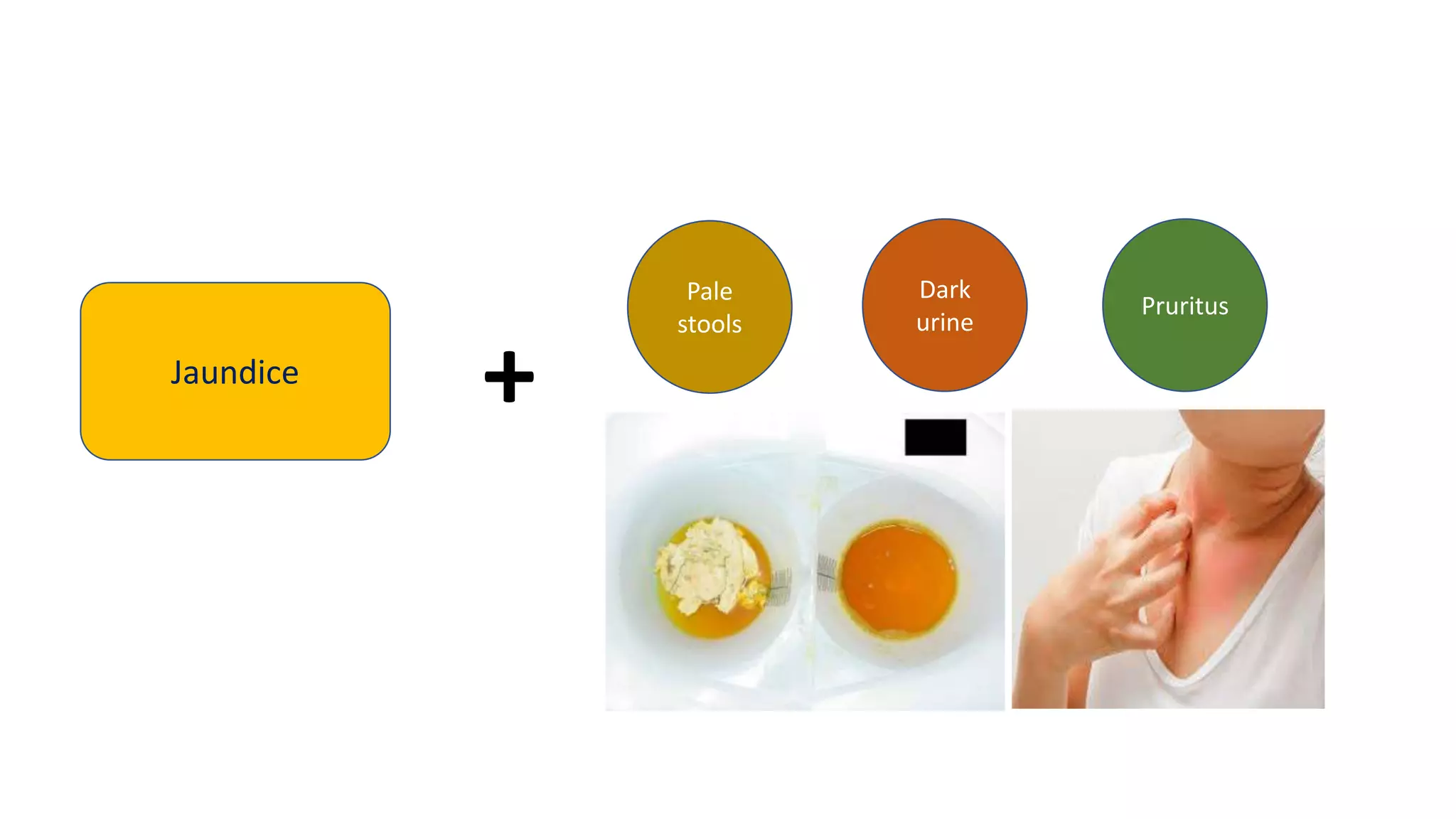
Jaundice
Pale
stools
Dark
urine
Pruritus
+
Clinically
• Pruritus
• Fatigue
• Xanthomas
• Hepatic
osteodystrophy
• Pale stools or
steatorrhea
• Evidence of fat
soluble vitamin
deficiency
• Enlarged liver with a
firm smooth non
tender edge
Histologically
• Bile plugs
• Feathery
degeneration of
hepatocytes
• Small bile duct
destruction
• Peri cholangitis
• Portal oedema
• Bile lakes and infarcts
• Biliary cirrhosis
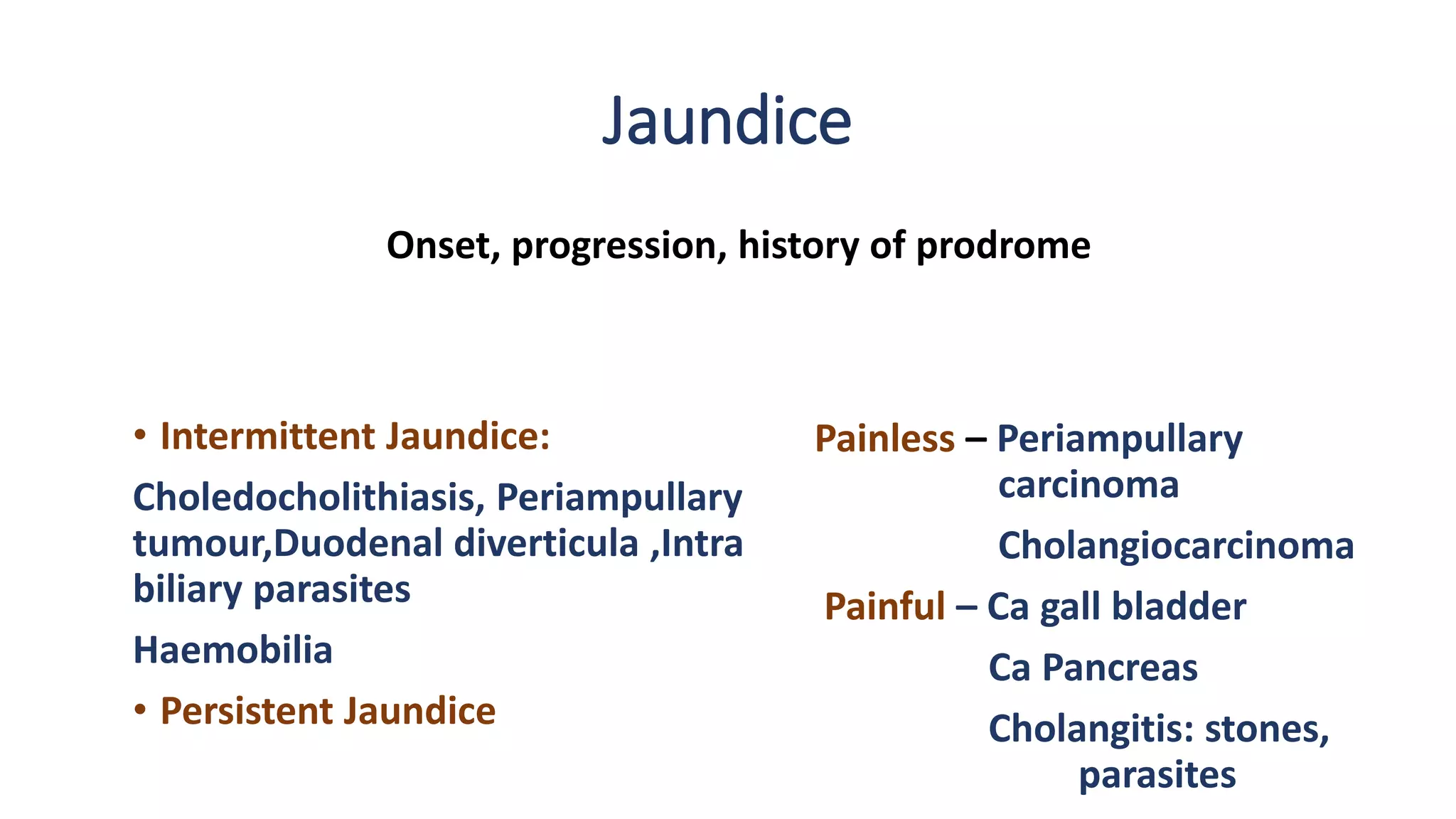
Jaundice
Painless – Periampullary
carcinoma
Cholangiocarcinoma
Painful – Ca gall bladder
Ca Pancreas
Cholangitis: stones,
parasites
• Intermittent Jaundice:
Choledocholithiasis, Periampullary
tumour,Duodenal diverticula ,Intra
biliary parasites
Haemobilia
• Persistent Jaundice
Onset, progression, history of prodrome
Pruritus
• Irritating sensation which arouses desire to scratch to get temporary
relief 1
• Present in 80 – 100 % patients with cholestatic jaundice 2
• 25 % have presenting symptom 3
• Bile salts – Histamine release – irritation of C fibres
• Marked in PBC, Cholestatic jaundice of pregnancy
• History – Severity (Disturbed Sleep, ADL)
1Arch Dermatol. 2003 Nov; 139(11):1475-8
2J Dtsch Dermatol Ges. 2013 Feb; 11(2):158-68.
3Aliment Pharmacol Ther. 2003 Apr 1; 17(7):857-70.
ADL – Activities of daily life
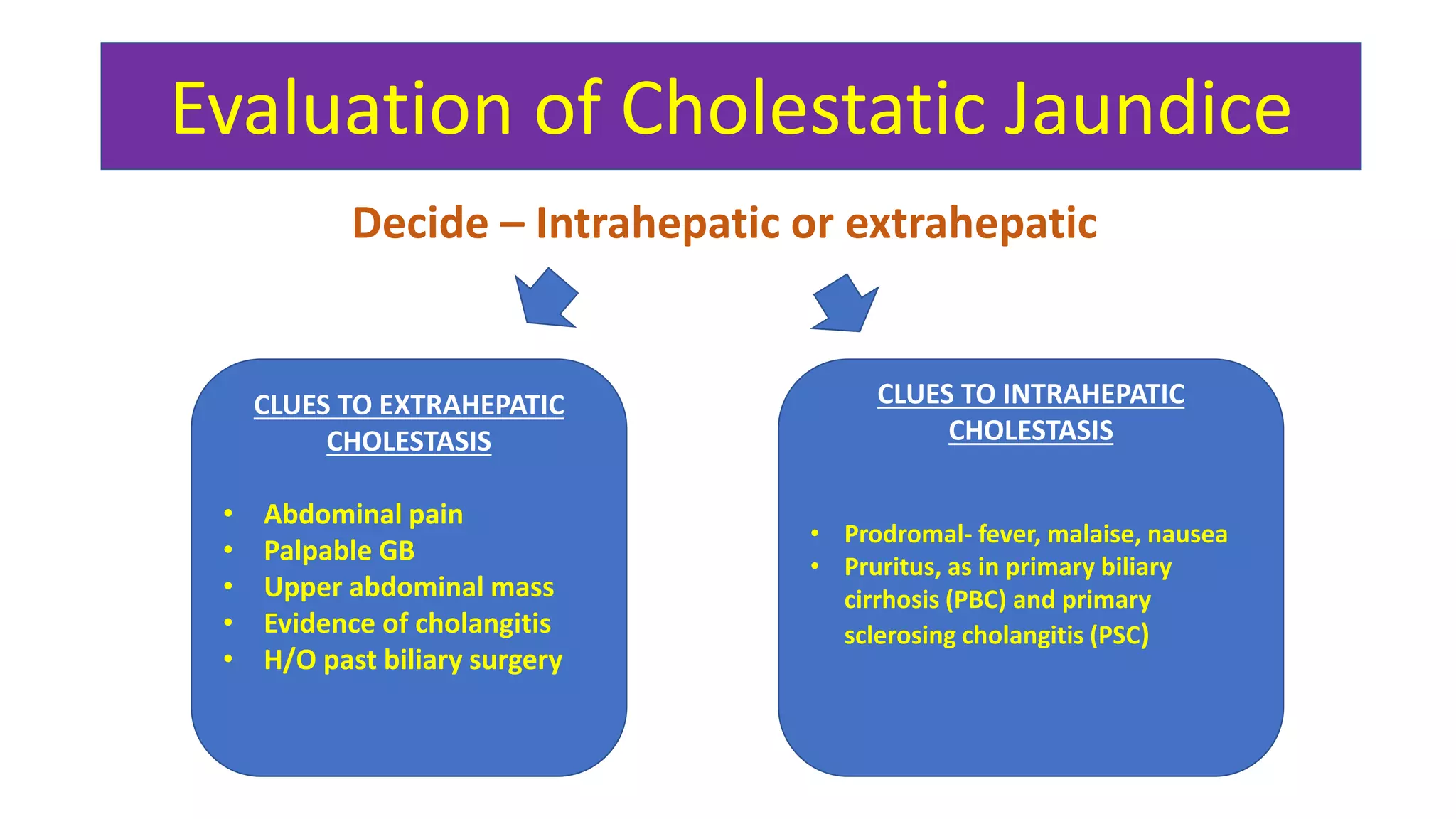
Evaluation of Cholestatic Jaundice
Decide – Intrahepatic or extrahepatic
CLUES TO EXTRAHEPATIC
CHOLESTASIS
• Abdominal pain
• Palpable GB
• Upper abdominal mass
• Evidence of cholangitis
• H/O past biliary surgery
CLUES TO INTRAHEPATIC
CHOLESTASIS
• Prodromal- fever, malaise, nausea
• Pruritus, as in primary biliary
cirrhosis (PBC) and primary
sclerosing cholangitis (PSC)
Extrahepatic causes of cholestatic jaundice
Benign
• Choledocholithiasis
• Post operative biliary
strictures
• Primary sclerosing
cholangitis
• Chronic pancreatitis
• AIDS cholangiopathy
• Mirizzi syndrome
• Parasitic disease
Malignant
• Cholangiocarcinoma
• Pancreatic cancer
• Ca GB
• Ampullary cancer
• Malignant
involvement of porta
lymph nodes
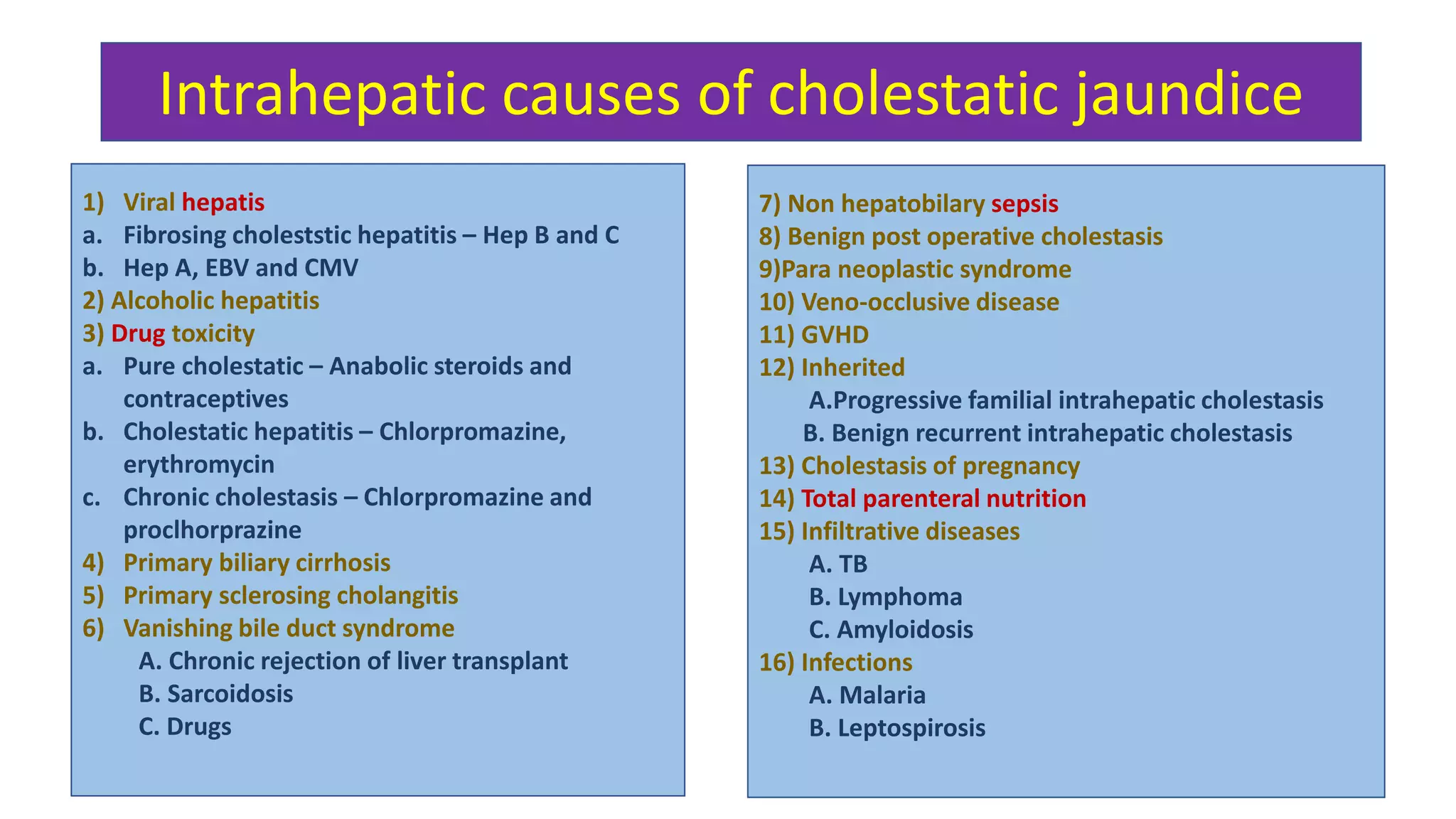
Intrahepatic causes of cholestatic jaundice
1) Viral hepatis
a. Fibrosing choleststic hepatitis – Hep B and C
b. Hep A, EBV and CMV
2) Alcoholic hepatitis
3) Drug toxicity
a. Pure cholestatic – Anabolic steroids and
contraceptives
b. Cholestatic hepatitis – Chlorpromazine,
erythromycin
c. Chronic cholestasis – Chlorpromazine and
proclhorprazine
4) Primary biliary cirrhosis
5) Primary sclerosing cholangitis
6) Vanishing bile duct syndrome
A. Chronic rejection of liver transplant
B. Sarcoidosis
C. Drugs
7) Non hepatobilary sepsis
8) Benign post operative cholestasis
9)Para neoplastic syndrome
10) Veno-occlusive disease
11) GVHD
12) Inherited
A.Progressive familial intrahepatic cholestasis
B. Benign recurrent intrahepatic cholestasis
13) Cholestasis of pregnancy
14) Total parenteral nutrition
15) Infiltrative diseases
A. TB
B. Lymphoma
C. Amyloidosis
16) Infections
A. Malaria
B. Leptospirosis
Clinical History and causes of cholestasis
1. Pain – Duct stones, tumor or gall bladder disease
2. Arthralgia, myalgia predating jaundice – Hepatitis (Viral)
3. Fever and rigors – Cholangitis d/t duct stone or traumatic stricture (Charcot’s intermittent
biliary fever)
4. Contaminated food/ alcohol consumptions
5. H/O hepato – toxins – Drugs/Chemicals
6. Parenteral exposure – Blood transfusion, drug abuse, tattoos, sexual activity
7. H/O Pain and blood mixed stools (Ulcerative colitis) - ?PSC
8. Joint pain, alopecia , thyroid disorders, T1DM- Autoimmune hepatitis
9. Weight loss, loss of apetite – Malignancy
History
• Age , Sex, Occupation
• Jaundice – Onset, progressive or intermittent
• Pain – Location, radiation, fullness, palpable mass
• Pruritus – Generalised
• Associated symptoms – Anorexia, weight loss, fever
• Gastric stasis – Early satiety, vomiting, belching
• History of anaemia
• Previous malignancy
• Diabetes or diarrhoea of recent onset
• Jaundice
Early – Extrahepatic cholestasis
Fluctuating – Periampullary carcinoma
Choledocholithiasis
Parasites
Duodenal diverticula
• Jaundice
Painless – Periampullary carcinoma
Cholangiocarcinoma
Painful – Ca gall bladder
Ca Pancreas
Cholangitis
• Fever – at onset – viral hepatitis
with rigors – cholangitis
low grade fever - neoplasm
• Prodromal symptoms – Viral hepatitis
History
• Age
• Sex
• Occupation
• Jaundice – Duration
Progression
History…cont
• Pain abdomen – Site
Nature
Severity
• Can you feel a lump?
• Pruritus
Pain Type
Biliary colic Steady, usually in the epigastrium and right upper
quadrant, increases over 15 minutes to 1 hour, plateaus
over next 6 hours then subsides
Pancreatic pain Dull aching, continuous, epigastrium radiating to the
back, relieved by leaning
Hepatomegaly Dull aching and dragging type of pain in the right
hypochondrium
History ….cont
• Malena
• History s/o malignancy
• History s/o autoimmune disorders
• Prodromal symptoms – Viral aetiology
• Fever – at onset – viral hepatitis
with rigors – cholangitis
low grade fever - neoplasm
Past history
• Recurrent jaundice – relapsing hepatitis
• Right upper quadrant surgery – Sticture
• Recurrent biliary colic – Cholelithiasis
• Hepatotoxic drugs
• Contact with jaundiced person
• Sexual history
Risk factors
1. Alcohol intake
2. Medications
3. Pregnancy
4. Sexual contact, drug abuse, needle punctures
5. ICU – Sepsis, shock, Total parenteral nutrition
6. After BM transplantation – Veno occlusive disease or GVHD
Family history
1. Benign recurrent intrahepatic cholestasis (BRIC)
2. Progressive familial intrahepatic cholestasis (PFIC)
Family history
• Progressive familial intrahepatic cholestasis (PFIC)
• Alpha 1 antitrypsin deficiency
• Auto immune disorders
Personal history
• Bowel – Pale stools
Alteration in bowel habits
• Bladder
• Sleep – Pruritus disturbing sleep
Hepatic encephalopathy
Physical examination
1. Anemia – GI blood loss, nutritional deficiency, hypersplenism
2. Nails – Clubbing, shiny nails
3. Itch marks
4. Virchow’s node or sister mary joseph nodule – Abdominal malignancy
5. Jugular venous distension – Hepatic congestion
6. S/O Fat soluble vitamin deficiency
• Vit D (Osteomalacia, demineralized bone, kyphosis , fracture)
• Vit E (Cerebellar ataxia, posterior column dysfunction, peripheral neuropathy)
• Vit A (Night blindness, thick skin)
• Vit K (Easy bruisablity, gum bleeding)
6. S/O hepatic osteodystrophy – Loss of height, back pain, collapsed vertebra,
fracture of ribs with minimal trauma
GI system examination
•Oral cavity – Yellowish discoloration, oral thrush
•Hepatomegaly – Alcoholic liver disease, primary or
secondary hepatic neoplasm, infiltrative disease
•Hard and nodular liver – Metastatic malignancy
•Murphy’s sign – Cholecystitis
•Enlarged gall bladder – Non calculus biliary
obstruction
•Other abdominal masses – Primary Ca stomach or
colon
Courvoisier's law – Presence of a palpably enlarged gall
bladder which is non tender and accompanied with jaundice,
the cause is unlikely to be gallstones
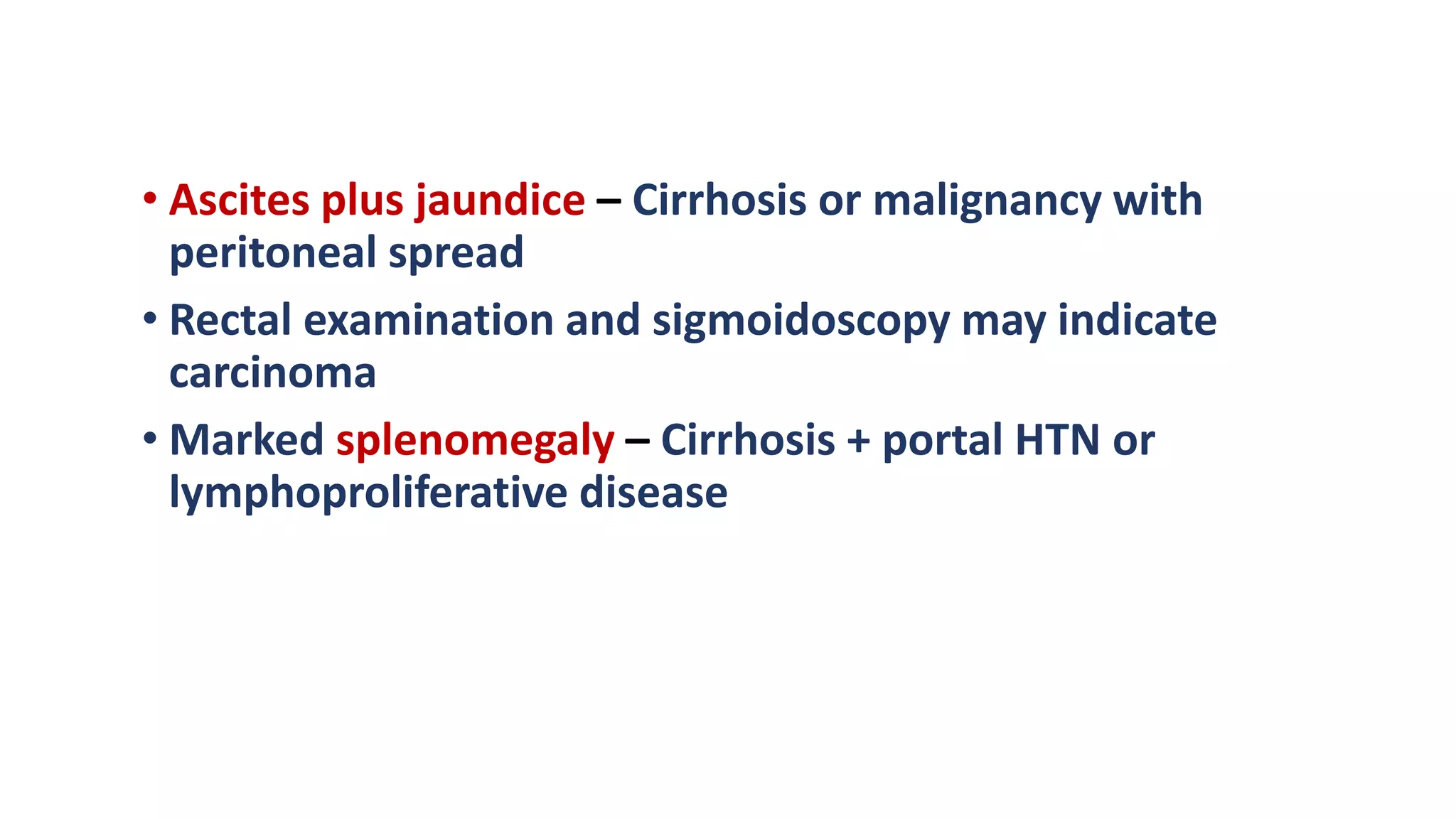
• Ascites plus jaundice – Cirrhosis or malignancy with
peritoneal spread
• Rectal examination and sigmoidoscopy may indicate
carcinoma
• Marked splenomegaly – Cirrhosis + portal HTN or
lymphoproliferative disease
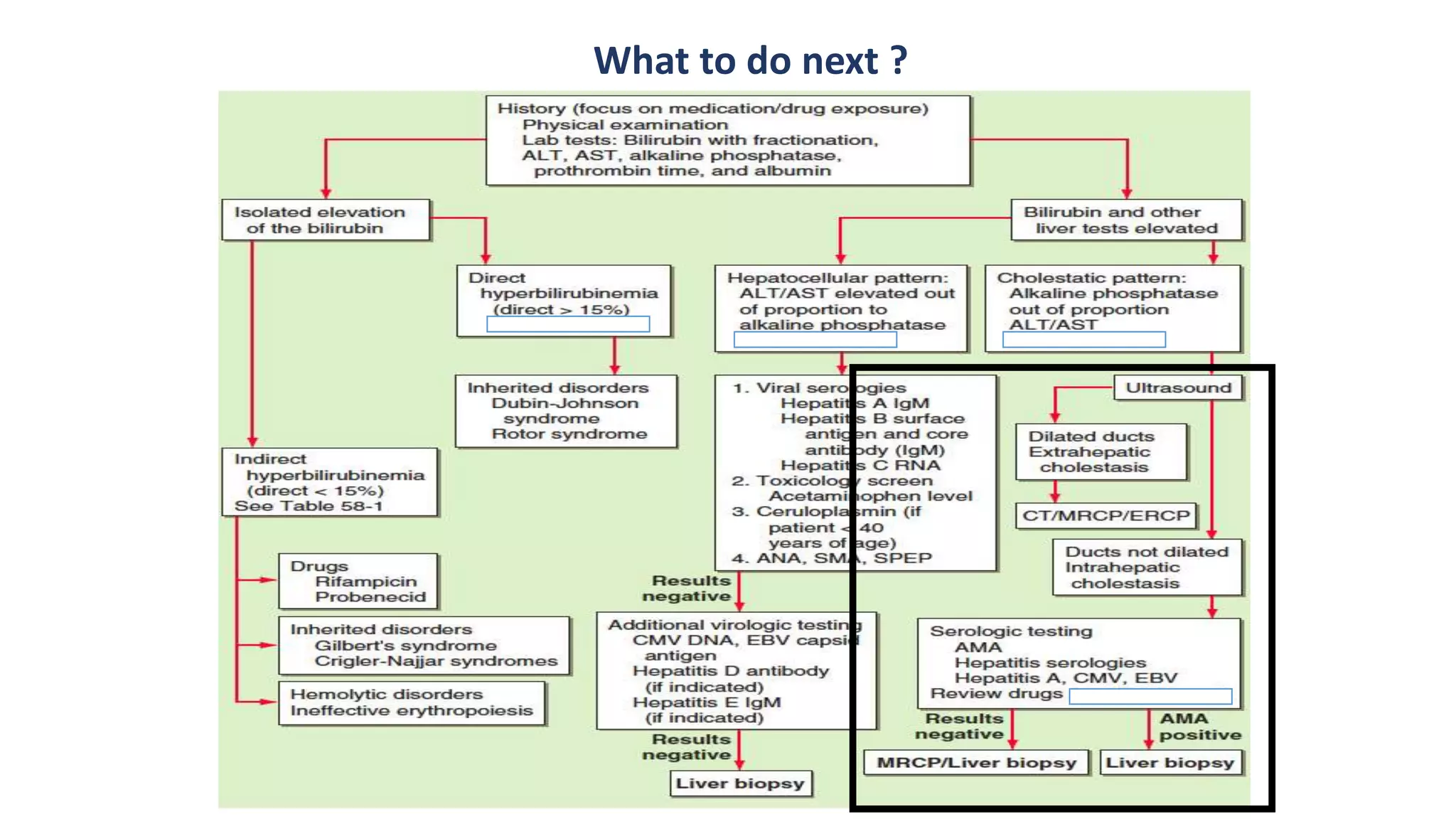
Suspected cholestatic jaundice
Cholestatic pattern:
Conjugated hyperbilirubinemia
ALP high wrt ALT/AST
Ultrasound
Dilated ducts
(Extrahepatic
cholestasis)
Non dilated ducts
(Intrahepatic
cholestasis)
CT/ MRCP/ ERCP
Serologic testing
(AMA, viral hepatitis,
Liver
biopsy
AMA +
MRCP/Live
r Biopsy
AMA -
Harrison’s principles of Internal Medicine 19th edition
What to do next ?
Choledocholithiasis
• Impaction and edema of the common bile duct
• Pain – Biliary colic or acute pancreatitis
• Rapid rise and decline (within 72 hours) in
aminotransferase
• Cholangitis – Fever with chills, abdominal pain, jaundice
(Charcot’s triad)
Benign strictures of the bile ducts
• Ask for history of gall bladder/biliary surgery
• PSC – Multiple or diffuse strictures
• Chronic alcoholic pancreatitis – A long stricture in the
intrapancreatic portion of the common bile duct
• Ampullary stenosis – Trauma during passage of a stone and AIDS
• Cholangitis – Frequent in benign than in malignant
Neoplastic obstruction
• Pancreatic carcinoma – commonest
• Other tumors – Cholangiocarcinoma,
ampulla tumors, Ca GB
• Klatskin tumor
Abdominal pain
Loss of appetite and
weight
Progressive deep and
painless jaundice
• Ampullary tumors show intermittent jaundice because of sloughing
and partial relief of the block
• Metastatic cancer , lymphoma may obstruct the bile duct
• Hepatocellular carcinoma ruptures into the biliary system throwing
tumor emboli obstructing common bile duct
• Compression by adjacent tumor/ peribiliary lymph nodes infiltrated
by lymphoma, or metastatic ca breast
• Direct infiltration by lymphoma
Drug induced cholestasis
Direct hepatotoxicity
Idiosyncratic
• May mimic viral hepatitis or biliary tract disease
• Serum – sickness like features (rash, arthralgia and eosinophilia)
Antimicrobial agents
Augmentin, Erythromycin,
Ethambutol, Dapsone,
Fluconazole, Greisofulvin,
Ketoconazole
Cardiovascular agents
Disopyramide beta blockers,
ACE inhibitors, ticlopidine,
warfarin, methyldopa
Endocrine agents
Sulfonylureas, estrogens,
tamoxifen, androgens, niacin,
OCPs, anabolic steroids
HAART
Zidovudine, protease
inhibitors
(Indinavir, Ritonavir)
Immnosupressive agents
Azathioprine, cyclosporine,
gold salts, NSAIDS
Psychopharmacological
agents
TCA, BZD, Phenytoin,
halothane
• Primary biliary cirrhosis
• Middle aged females (30 – 60
years)
• Female : Male – 9:1
• Fatigue and pruritus > Jaundice
• Progressive jaundice
• Sjogren’s, Scleroderma,
Autoimmune thyroiditis
• AMA
• Primary sclerosing cholangitis
• Middle aged males (25- 45 years)
• Males 70%
• Jaundice more common at
presentation
• Fluctuating jaundice
• Inflammatory bowel disease
(UC>CD)
• pANCA, anticardiolipin ab
• Pre malignant (Cholangio, HCC, Ca
GB, Colon)
Extrahepatic cholestasis Intrahepatic cholestasis
Abdominal pain
Jaundice
Fever
Prodrome
+++
Early onset
Present
Absent
++
Late onset
Absent
Present
Infiltrative
diseases
Sarcoidosis, lymphoma, granulomatosis
with polyangiitis, amyloidosis,
malignancies
Cholangiocyte
injury
Primary biliary cirrhosis, Graft vs host ds,
Drugs (Erythromycin, Septran), Cystic
fibrosis
Miscellaneous
conditions
Benign recurrent intrahepatic
cholestasis, Drugs (anabolic steroids),
TPN, paraneoplastic syndromes,
Cholestasis of pregnancy
Hepatic disorders with prominent cholestasis
Choledocolithiasis
Bile duct diseases
Infection
Inflammation
Neoplasm
AIDS cholangiopathy
Primary sclerosing cholangitis, Injury caused by hepatic
arterial chemotherapy, post surgery strictures
Cholangiocarcinoma
Extrinsic compression
Neoplasms
Pancreatitis
Vascular enlargement
Pancreatic carcinoma, metastatic lymphadenopathy,
hepatocellular carcinoma, ampullary
adenoma/carcinoma, lymphoma
Aneurysm, cavernous transformation of portal vein
Hyperbilirubinemia due to bile duct obstruction
Examination
General
examination
• Consciousness
• BMI
• Built
• Nutrition – Fat soluble vitamin deficiencies
(A,D,E,K)
• Hair, skin, nails
• Oral cavity - Yellowish discoloration of mucosa
Brittle teeth in Vitamin D deficiency
Oral thrush
Bitot’s Spots Phrynoderma
Scratch marks in primary
biliary cirrhosis
Shiny nails due to severe itching Xanthalesma
Vitals
Pulse rate – Bradycardia in
jaundice
Blood pressure – Shock in
cholangitis
Respiratory rate
Temperature
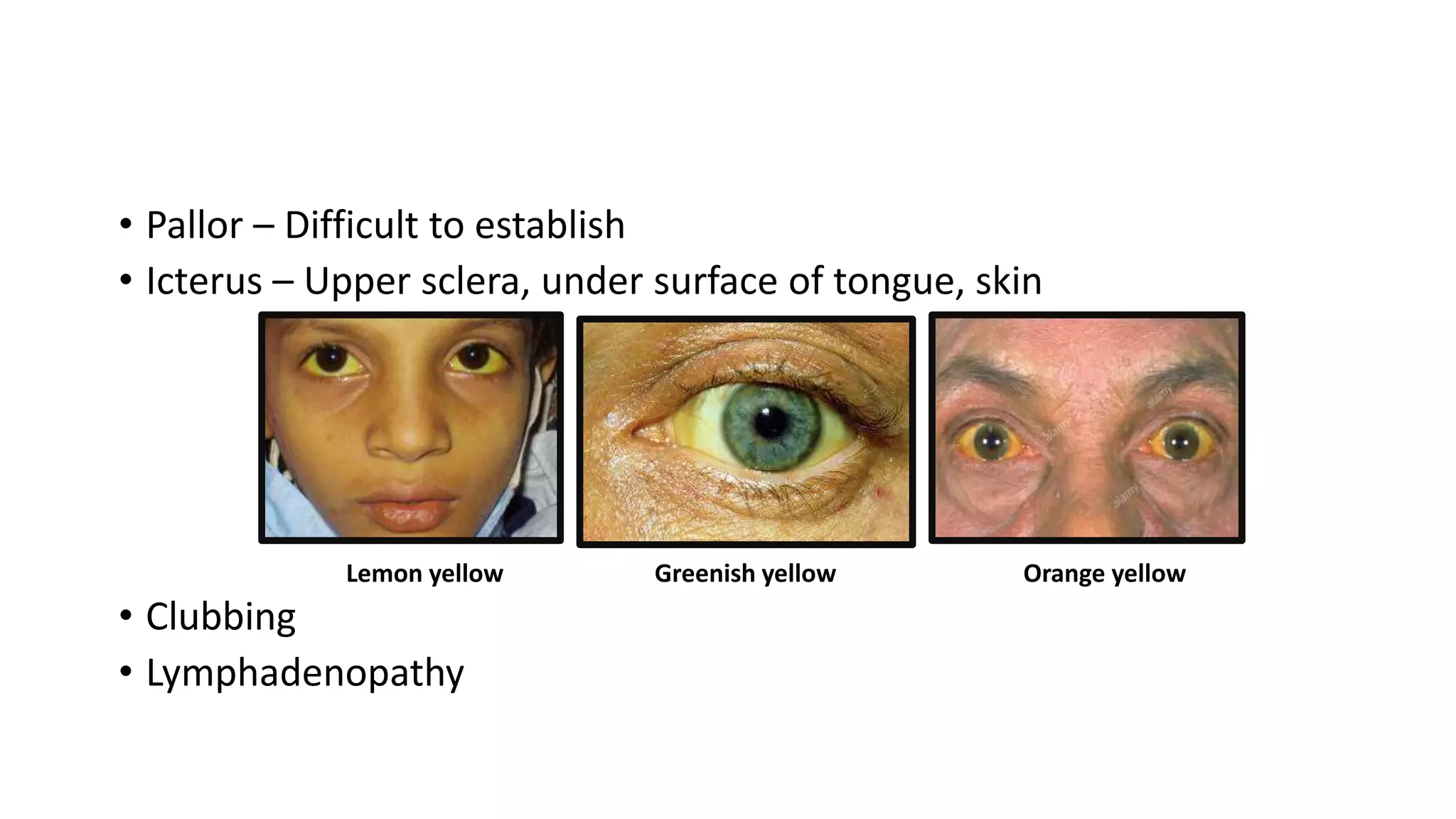
• Pallor – Difficult to establish
• Icterus – Upper sclera, under surface of tongue, skin
• Clubbing
• Lymphadenopathy
Lemon yellow Greenish yellow Orange yellow
Systemic
examination
• Gastro-intestinal system
• Respiratory system
• Cardiovascular system
• Nervous system
• Musculoskeletal system
• Reticuloendothelial system
Abdominal examination
• Inspection – Flanks
Umbilicus
Superficial veins
Visible peristalsis
Scar mark
Scar marks of laparoscopic cholecystectomy
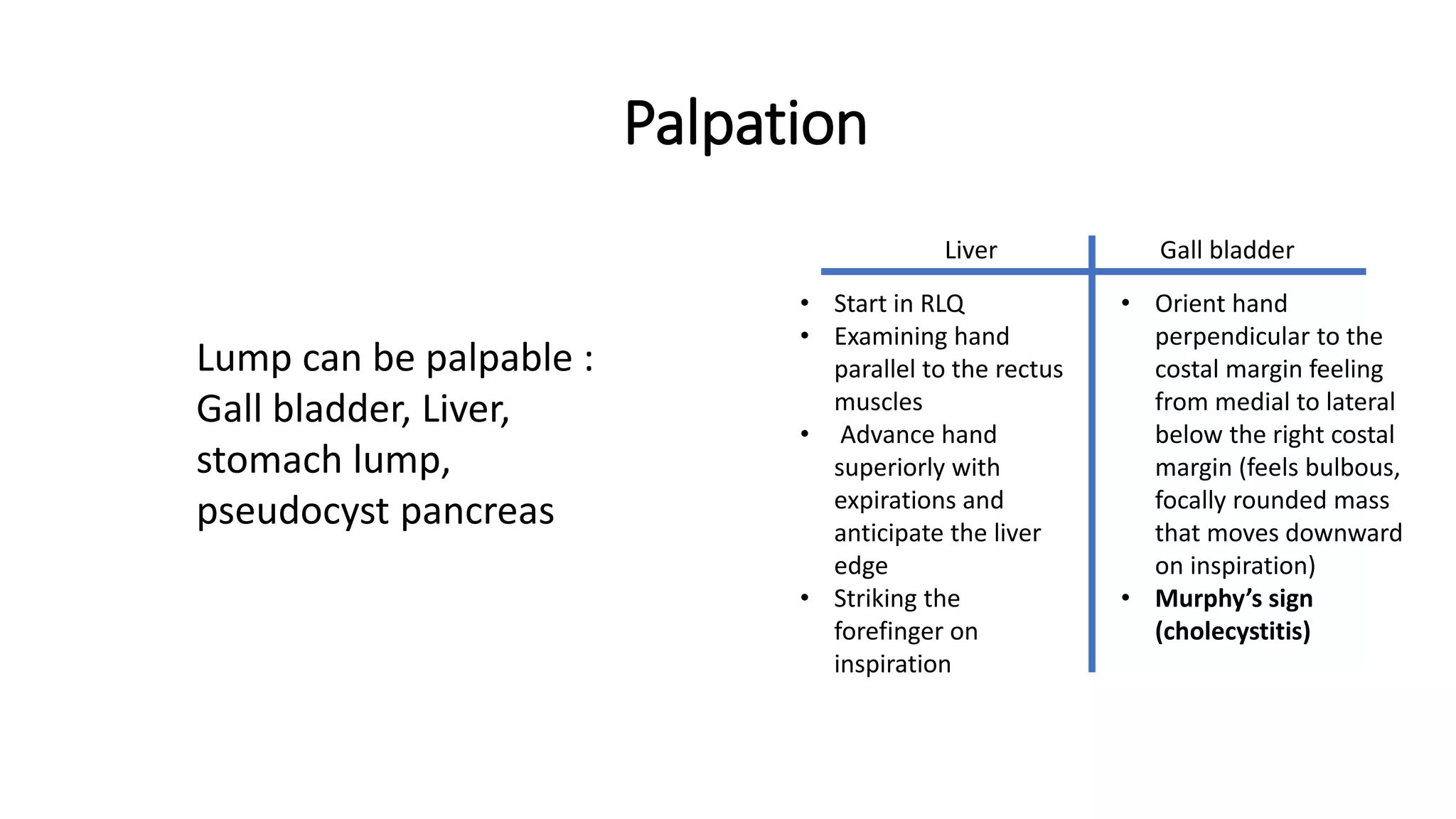
Palpation
Liver Gall bladder
• Start in RLQ
• Examining hand
parallel to the rectus
muscles
• Advance hand
superiorly with
expirations and
anticipate the liver
edge
• Striking the
forefinger on
inspiration
• Orient hand
perpendicular to the
costal margin feeling
from medial to lateral
below the right costal
margin (feels bulbous,
focally rounded mass
that moves downward
on inspiration)
• Murphy’s sign
(cholecystitis)
Lump can be palpable :
Gall bladder, Liver,
stomach lump,
pseudocyst pancreas
Biliary Obstruction Liver disease
History Abdominal pain, fever, rigor,
prior biliary surgery, older
age
Anorexia, malaise, myalgias
(viral prodrome), blood
products receipt, exposure
to known hepatotoxin,
family history of liver disease
Physical examination Fever, abdominal
tenderness, palpable
abdominal mass, abdominal
surgical scar
Spider telangiectasias,
stigmata of portal
hypertension, asterixis
Sleisenger and Fordtran's Gastrointestinal and Liver Disease, 10th ed
Benjamin classification
(Obstructive Jaundice)
Type 1 Complete obstruction :
Tumours – pancreatic head carcinoma, cholangiocarcinoma
Ligation of CBD
Type 2 Intermittent obstruction :
Choledocholithiasis, Periampullary tumour , Duodenal diverticula , Papilloma of
the bile duct, Intra biliary parasites, Haemobilia
Type 3 Chronic incomplete obstruction :
Strictures of the CBD, Congenital Traumatic Sclerosing cholangitis ,Post
radiotherapy , Stenosed biliary enteric anastomosis, Cystic fibrosis, Chronic
pancreatitis ,Stenosis of the Sphincter of Oddi
Type 4 Segmental Obstruction : Traumatic hepatodocholithiasis, Sclerosing cholangitis
Cholangiocarcinoma
Benjamin classification
(Obstructive Jaundice)
Type 1 Complete obstruction :
Tumours – pancreatic head carcinoma, cholangiocarcinoma
Ligation of CBD
Type 2 Intermittent obstruction :
Choledocholithiasis, Periampullary tumour , Duodenal diverticula , Papilloma of
the bile duct, Intra biliary parasites, Haemobilia
Type 3 Chronic incomplete obstruction :
Strictures of the CBD, Congenital Traumatic Sclerosing cholangitis ,Post
radiotherapy , Stenosed biliary enteric anastomosis, Cystic fibrosis, Chronic
pancreatitis ,Stenosis of the Sphincter of Oddi
Type 4 Segmental Obstruction : Traumatic hepatodocholithiasis, Sclerosing cholangitis
Cholangiocarcinoma

Obstructive Jaundice presentaion harsh.pptx

  • 1.
    Obstructive Jaundice :an approachDr Harsh saxena Pesenter PG 1 Department of Hepatology MMC chennai
  • 2.
    Definition • Jaundice –Yellowish discoloration of skin, mucus membranes and conjunctiva resulting from widespread tissue deposition of the pigmented metabolite bilirubin • Clinically >3mg/dl Sleisenger and Fordtran's Gastrointestinal and Liver Disease, 10th ed
  • 3.
    Haemoglobin and other haemoproteins Bilirubin BrG Canalicularmembrane OATP MRP3 Bilirubin Albumin Albumin Bile BrG Urine B-UGT MRP2 OATP – Organic anion transporter MRP – Multidrug resistant associated protein UGT – Uridine diphosphate - glucurynyl transferase BrG – Bilirubin glucuronides Sleisenger and Fordtran's Gastrointestinal and Liver Disease, 10th ed
  • 4.
    Hyperbilirubinemia Disorders of bilirubin metabolism Conjugated Unconjugated Liverdisease Hepatocellular dysfunction Hepatic disorders with prominent cholestasis Bile duct obstruction Bile duct diseases Extrinsic compression
  • 5.
    Cholestasis • Conjugated hyperbilirubinemiadue to : i. Impaired bile formation (hepatocytes) ii. Impaired bile flow (bile duct/ductules) • Consequences – Secondary liver damage i. Bile acid induced hepatocyte injury ii. Secondary biliary cirrhosis Failure of substances secreted in bile to reach intestine i. Bile acid deficiency in gut ii. Fat malabsorbtion/fat-solube vitamin malabsorbtion
  • 6.
  • 7.
    Clinically • Pruritus • Fatigue •Xanthomas • Hepatic osteodystrophy • Pale stools or steatorrhea • Evidence of fat soluble vitamin deficiency • Enlarged liver with a firm smooth non tender edge Histologically • Bile plugs • Feathery degeneration of hepatocytes • Small bile duct destruction • Peri cholangitis • Portal oedema • Bile lakes and infarcts • Biliary cirrhosis
  • 8.
    Jaundice Painless – Periampullary carcinoma Cholangiocarcinoma Painful– Ca gall bladder Ca Pancreas Cholangitis: stones, parasites • Intermittent Jaundice: Choledocholithiasis, Periampullary tumour,Duodenal diverticula ,Intra biliary parasites Haemobilia • Persistent Jaundice Onset, progression, history of prodrome
  • 9.
    Pruritus • Irritating sensationwhich arouses desire to scratch to get temporary relief 1 • Present in 80 – 100 % patients with cholestatic jaundice 2 • 25 % have presenting symptom 3 • Bile salts – Histamine release – irritation of C fibres • Marked in PBC, Cholestatic jaundice of pregnancy • History – Severity (Disturbed Sleep, ADL) 1Arch Dermatol. 2003 Nov; 139(11):1475-8 2J Dtsch Dermatol Ges. 2013 Feb; 11(2):158-68. 3Aliment Pharmacol Ther. 2003 Apr 1; 17(7):857-70. ADL – Activities of daily life
  • 10.
    Evaluation of CholestaticJaundice Decide – Intrahepatic or extrahepatic CLUES TO EXTRAHEPATIC CHOLESTASIS • Abdominal pain • Palpable GB • Upper abdominal mass • Evidence of cholangitis • H/O past biliary surgery CLUES TO INTRAHEPATIC CHOLESTASIS • Prodromal- fever, malaise, nausea • Pruritus, as in primary biliary cirrhosis (PBC) and primary sclerosing cholangitis (PSC)
  • 11.
    Extrahepatic causes ofcholestatic jaundice Benign • Choledocholithiasis • Post operative biliary strictures • Primary sclerosing cholangitis • Chronic pancreatitis • AIDS cholangiopathy • Mirizzi syndrome • Parasitic disease Malignant • Cholangiocarcinoma • Pancreatic cancer • Ca GB • Ampullary cancer • Malignant involvement of porta lymph nodes
  • 12.
    Intrahepatic causes ofcholestatic jaundice 1) Viral hepatis a. Fibrosing choleststic hepatitis – Hep B and C b. Hep A, EBV and CMV 2) Alcoholic hepatitis 3) Drug toxicity a. Pure cholestatic – Anabolic steroids and contraceptives b. Cholestatic hepatitis – Chlorpromazine, erythromycin c. Chronic cholestasis – Chlorpromazine and proclhorprazine 4) Primary biliary cirrhosis 5) Primary sclerosing cholangitis 6) Vanishing bile duct syndrome A. Chronic rejection of liver transplant B. Sarcoidosis C. Drugs 7) Non hepatobilary sepsis 8) Benign post operative cholestasis 9)Para neoplastic syndrome 10) Veno-occlusive disease 11) GVHD 12) Inherited A.Progressive familial intrahepatic cholestasis B. Benign recurrent intrahepatic cholestasis 13) Cholestasis of pregnancy 14) Total parenteral nutrition 15) Infiltrative diseases A. TB B. Lymphoma C. Amyloidosis 16) Infections A. Malaria B. Leptospirosis
  • 13.
    Clinical History andcauses of cholestasis 1. Pain – Duct stones, tumor or gall bladder disease 2. Arthralgia, myalgia predating jaundice – Hepatitis (Viral) 3. Fever and rigors – Cholangitis d/t duct stone or traumatic stricture (Charcot’s intermittent biliary fever) 4. Contaminated food/ alcohol consumptions 5. H/O hepato – toxins – Drugs/Chemicals 6. Parenteral exposure – Blood transfusion, drug abuse, tattoos, sexual activity 7. H/O Pain and blood mixed stools (Ulcerative colitis) - ?PSC 8. Joint pain, alopecia , thyroid disorders, T1DM- Autoimmune hepatitis 9. Weight loss, loss of apetite – Malignancy
  • 14.
    History • Age ,Sex, Occupation • Jaundice – Onset, progressive or intermittent • Pain – Location, radiation, fullness, palpable mass • Pruritus – Generalised • Associated symptoms – Anorexia, weight loss, fever • Gastric stasis – Early satiety, vomiting, belching • History of anaemia • Previous malignancy • Diabetes or diarrhoea of recent onset
  • 15.
    • Jaundice Early –Extrahepatic cholestasis Fluctuating – Periampullary carcinoma Choledocholithiasis Parasites Duodenal diverticula
  • 16.
    • Jaundice Painless –Periampullary carcinoma Cholangiocarcinoma Painful – Ca gall bladder Ca Pancreas Cholangitis
  • 17.
    • Fever –at onset – viral hepatitis with rigors – cholangitis low grade fever - neoplasm • Prodromal symptoms – Viral hepatitis
  • 18.
    History • Age • Sex •Occupation • Jaundice – Duration Progression
  • 19.
    History…cont • Pain abdomen– Site Nature Severity • Can you feel a lump? • Pruritus Pain Type Biliary colic Steady, usually in the epigastrium and right upper quadrant, increases over 15 minutes to 1 hour, plateaus over next 6 hours then subsides Pancreatic pain Dull aching, continuous, epigastrium radiating to the back, relieved by leaning Hepatomegaly Dull aching and dragging type of pain in the right hypochondrium
  • 20.
    History ….cont • Malena •History s/o malignancy • History s/o autoimmune disorders • Prodromal symptoms – Viral aetiology • Fever – at onset – viral hepatitis with rigors – cholangitis low grade fever - neoplasm
  • 21.
    Past history • Recurrentjaundice – relapsing hepatitis • Right upper quadrant surgery – Sticture • Recurrent biliary colic – Cholelithiasis • Hepatotoxic drugs • Contact with jaundiced person • Sexual history
  • 22.
    Risk factors 1. Alcoholintake 2. Medications 3. Pregnancy 4. Sexual contact, drug abuse, needle punctures 5. ICU – Sepsis, shock, Total parenteral nutrition 6. After BM transplantation – Veno occlusive disease or GVHD Family history 1. Benign recurrent intrahepatic cholestasis (BRIC) 2. Progressive familial intrahepatic cholestasis (PFIC)
  • 23.
    Family history • Progressivefamilial intrahepatic cholestasis (PFIC) • Alpha 1 antitrypsin deficiency • Auto immune disorders
  • 24.
    Personal history • Bowel– Pale stools Alteration in bowel habits • Bladder • Sleep – Pruritus disturbing sleep Hepatic encephalopathy
  • 25.
    Physical examination 1. Anemia– GI blood loss, nutritional deficiency, hypersplenism 2. Nails – Clubbing, shiny nails 3. Itch marks 4. Virchow’s node or sister mary joseph nodule – Abdominal malignancy 5. Jugular venous distension – Hepatic congestion 6. S/O Fat soluble vitamin deficiency • Vit D (Osteomalacia, demineralized bone, kyphosis , fracture) • Vit E (Cerebellar ataxia, posterior column dysfunction, peripheral neuropathy) • Vit A (Night blindness, thick skin) • Vit K (Easy bruisablity, gum bleeding) 6. S/O hepatic osteodystrophy – Loss of height, back pain, collapsed vertebra, fracture of ribs with minimal trauma
  • 26.
    GI system examination •Oralcavity – Yellowish discoloration, oral thrush •Hepatomegaly – Alcoholic liver disease, primary or secondary hepatic neoplasm, infiltrative disease •Hard and nodular liver – Metastatic malignancy •Murphy’s sign – Cholecystitis •Enlarged gall bladder – Non calculus biliary obstruction •Other abdominal masses – Primary Ca stomach or colon Courvoisier's law – Presence of a palpably enlarged gall bladder which is non tender and accompanied with jaundice, the cause is unlikely to be gallstones
  • 27.
    • Ascites plusjaundice – Cirrhosis or malignancy with peritoneal spread • Rectal examination and sigmoidoscopy may indicate carcinoma • Marked splenomegaly – Cirrhosis + portal HTN or lymphoproliferative disease
  • 28.
    Suspected cholestatic jaundice Cholestaticpattern: Conjugated hyperbilirubinemia ALP high wrt ALT/AST Ultrasound Dilated ducts (Extrahepatic cholestasis) Non dilated ducts (Intrahepatic cholestasis) CT/ MRCP/ ERCP Serologic testing (AMA, viral hepatitis, Liver biopsy AMA + MRCP/Live r Biopsy AMA - Harrison’s principles of Internal Medicine 19th edition
  • 29.
    What to donext ?
  • 30.
    Choledocholithiasis • Impaction andedema of the common bile duct • Pain – Biliary colic or acute pancreatitis • Rapid rise and decline (within 72 hours) in aminotransferase • Cholangitis – Fever with chills, abdominal pain, jaundice (Charcot’s triad)
  • 31.
    Benign strictures ofthe bile ducts • Ask for history of gall bladder/biliary surgery • PSC – Multiple or diffuse strictures • Chronic alcoholic pancreatitis – A long stricture in the intrapancreatic portion of the common bile duct • Ampullary stenosis – Trauma during passage of a stone and AIDS • Cholangitis – Frequent in benign than in malignant
  • 32.
    Neoplastic obstruction • Pancreaticcarcinoma – commonest • Other tumors – Cholangiocarcinoma, ampulla tumors, Ca GB • Klatskin tumor Abdominal pain Loss of appetite and weight Progressive deep and painless jaundice
  • 33.
    • Ampullary tumorsshow intermittent jaundice because of sloughing and partial relief of the block • Metastatic cancer , lymphoma may obstruct the bile duct • Hepatocellular carcinoma ruptures into the biliary system throwing tumor emboli obstructing common bile duct • Compression by adjacent tumor/ peribiliary lymph nodes infiltrated by lymphoma, or metastatic ca breast • Direct infiltration by lymphoma
  • 34.
    Drug induced cholestasis Directhepatotoxicity Idiosyncratic • May mimic viral hepatitis or biliary tract disease • Serum – sickness like features (rash, arthralgia and eosinophilia) Antimicrobial agents Augmentin, Erythromycin, Ethambutol, Dapsone, Fluconazole, Greisofulvin, Ketoconazole Cardiovascular agents Disopyramide beta blockers, ACE inhibitors, ticlopidine, warfarin, methyldopa Endocrine agents Sulfonylureas, estrogens, tamoxifen, androgens, niacin, OCPs, anabolic steroids HAART Zidovudine, protease inhibitors (Indinavir, Ritonavir) Immnosupressive agents Azathioprine, cyclosporine, gold salts, NSAIDS Psychopharmacological agents TCA, BZD, Phenytoin, halothane
  • 35.
    • Primary biliarycirrhosis • Middle aged females (30 – 60 years) • Female : Male – 9:1 • Fatigue and pruritus > Jaundice • Progressive jaundice • Sjogren’s, Scleroderma, Autoimmune thyroiditis • AMA • Primary sclerosing cholangitis • Middle aged males (25- 45 years) • Males 70% • Jaundice more common at presentation • Fluctuating jaundice • Inflammatory bowel disease (UC>CD) • pANCA, anticardiolipin ab • Pre malignant (Cholangio, HCC, Ca GB, Colon)
  • 36.
    Extrahepatic cholestasis Intrahepaticcholestasis Abdominal pain Jaundice Fever Prodrome +++ Early onset Present Absent ++ Late onset Absent Present
  • 37.
    Infiltrative diseases Sarcoidosis, lymphoma, granulomatosis withpolyangiitis, amyloidosis, malignancies Cholangiocyte injury Primary biliary cirrhosis, Graft vs host ds, Drugs (Erythromycin, Septran), Cystic fibrosis Miscellaneous conditions Benign recurrent intrahepatic cholestasis, Drugs (anabolic steroids), TPN, paraneoplastic syndromes, Cholestasis of pregnancy Hepatic disorders with prominent cholestasis
  • 38.
    Choledocolithiasis Bile duct diseases Infection Inflammation Neoplasm AIDScholangiopathy Primary sclerosing cholangitis, Injury caused by hepatic arterial chemotherapy, post surgery strictures Cholangiocarcinoma Extrinsic compression Neoplasms Pancreatitis Vascular enlargement Pancreatic carcinoma, metastatic lymphadenopathy, hepatocellular carcinoma, ampullary adenoma/carcinoma, lymphoma Aneurysm, cavernous transformation of portal vein Hyperbilirubinemia due to bile duct obstruction
  • 39.
  • 40.
    General examination • Consciousness • BMI •Built • Nutrition – Fat soluble vitamin deficiencies (A,D,E,K) • Hair, skin, nails
  • 41.
    • Oral cavity- Yellowish discoloration of mucosa Brittle teeth in Vitamin D deficiency Oral thrush
  • 42.
  • 43.
    Scratch marks inprimary biliary cirrhosis Shiny nails due to severe itching Xanthalesma
  • 44.
    Vitals Pulse rate –Bradycardia in jaundice Blood pressure – Shock in cholangitis Respiratory rate Temperature
  • 45.
    • Pallor –Difficult to establish • Icterus – Upper sclera, under surface of tongue, skin • Clubbing • Lymphadenopathy Lemon yellow Greenish yellow Orange yellow
  • 46.
    Systemic examination • Gastro-intestinal system •Respiratory system • Cardiovascular system • Nervous system • Musculoskeletal system • Reticuloendothelial system
  • 47.
    Abdominal examination • Inspection– Flanks Umbilicus Superficial veins Visible peristalsis Scar mark Scar marks of laparoscopic cholecystectomy
  • 48.
    Palpation Liver Gall bladder •Start in RLQ • Examining hand parallel to the rectus muscles • Advance hand superiorly with expirations and anticipate the liver edge • Striking the forefinger on inspiration • Orient hand perpendicular to the costal margin feeling from medial to lateral below the right costal margin (feels bulbous, focally rounded mass that moves downward on inspiration) • Murphy’s sign (cholecystitis) Lump can be palpable : Gall bladder, Liver, stomach lump, pseudocyst pancreas
  • 52.
    Biliary Obstruction Liverdisease History Abdominal pain, fever, rigor, prior biliary surgery, older age Anorexia, malaise, myalgias (viral prodrome), blood products receipt, exposure to known hepatotoxin, family history of liver disease Physical examination Fever, abdominal tenderness, palpable abdominal mass, abdominal surgical scar Spider telangiectasias, stigmata of portal hypertension, asterixis Sleisenger and Fordtran's Gastrointestinal and Liver Disease, 10th ed
  • 54.
    Benjamin classification (Obstructive Jaundice) Type1 Complete obstruction : Tumours – pancreatic head carcinoma, cholangiocarcinoma Ligation of CBD Type 2 Intermittent obstruction : Choledocholithiasis, Periampullary tumour , Duodenal diverticula , Papilloma of the bile duct, Intra biliary parasites, Haemobilia Type 3 Chronic incomplete obstruction : Strictures of the CBD, Congenital Traumatic Sclerosing cholangitis ,Post radiotherapy , Stenosed biliary enteric anastomosis, Cystic fibrosis, Chronic pancreatitis ,Stenosis of the Sphincter of Oddi Type 4 Segmental Obstruction : Traumatic hepatodocholithiasis, Sclerosing cholangitis Cholangiocarcinoma
  • 56.
    Benjamin classification (Obstructive Jaundice) Type1 Complete obstruction : Tumours – pancreatic head carcinoma, cholangiocarcinoma Ligation of CBD Type 2 Intermittent obstruction : Choledocholithiasis, Periampullary tumour , Duodenal diverticula , Papilloma of the bile duct, Intra biliary parasites, Haemobilia Type 3 Chronic incomplete obstruction : Strictures of the CBD, Congenital Traumatic Sclerosing cholangitis ,Post radiotherapy , Stenosed biliary enteric anastomosis, Cystic fibrosis, Chronic pancreatitis ,Stenosis of the Sphincter of Oddi Type 4 Segmental Obstruction : Traumatic hepatodocholithiasis, Sclerosing cholangitis Cholangiocarcinoma

Editor's Notes

  • #13 Impairment of gut mucaosal integrity, enhanced inflammation, increased cytokine expression, endotoxin associated down regulation of bile acid transportation
  • #14 Split into establishment of jaundice , etiology, complications
  • #27 Courversir’s law
  • #31 Audience - charcot
  • #34 Intermittent jaundice Jaundice more common in Ca GB, less common in HCC Infiltrative jaundice causes less jaundice Lymphoma develops deepening jaundice - porta compression