LIPIDS
Presented by….
Patel Hasti G.
M.Sc. sem 2
CBO 406
Department of Life Sciences
H.N.G.U. Patan
CONTENT:
 Introduction
 Occurrence of Lipids
 Characteristic of Lipids
 Classification of lipids
 Types of simple lipids
 Structure and function of simple lipids
(triglycerides and waxes)
INTRODUCTION
 The word lipid is derived from a greek word “Lipos”
means Fat.
 These are heterogenous group of compounds
 Unlike Protein, Nucleic acid, Polysaccherides, Lipid
not polymer rather they are small molecules.
 They are water insoluble but soluble in organic solvent
such as Ether, Benzene, chloroform etc.
 lipids serve as fuel molecule, signal molecule and
component of membranes hormons and intracellular
messengers.
 Most lipids are non-polar and are hydrophobic
because they contain hydrocarbon chains.
OCCURRENCE OF LIPID
 Lipids are present in all animal and plant tissues.
 In plants lipids are found in both vegetative and
reproductive parts.
 In reproductive structure like seed they are present in
higher amount whilst in vegetative structure in only
small amounts.
 In animals, they are found in blood muscles brain skin
membrane and other part of body.
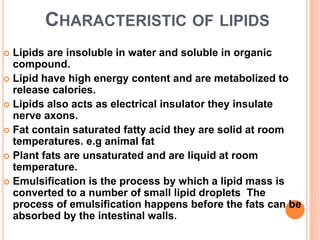
CHARACTERISTIC OF LIPIDS
 Lipids are insoluble in water and soluble in organic
compound.
 Lipid have high energy content and are metabolized to
release calories.
 Lipids also acts as electrical insulator they insulate
nerve axons.
 Fat contain saturated fatty acid they are solid at room
temperatures. e.g animal fat
 Plant fats are unsaturated and are liquid at room
temperature.
 Emulsification is the process by which a lipid mass is
converted to a number of small lipid droplets The
process of emulsification happens before the fats can be
absorbed by the intestinal walls.
CLASSIFICATION OF LIPIDS
 Based on the chemical compound classification of
lipids are bellow :
1]saturated
2] unsaturated
3] branched chain
4] cyclic
A] phospholipids
i) glycerophospholipid
ii) phosphoinositides
iii) phosphosphingosides
B] glycolipids
C] lipoprotien
TYPES OF SIMPLE LIPIDS
1] Saturated fatty acids :
 Contain only single bond in their hydrocarbon chain
 The general formula for saturated fatty acid
R-COOH
where R is CH3(CH2)n, n is varies
from 0 to 24
 Example: Butaric acid :- CH3(CH2)2COOH
cerotic acid :- CH3(CH2)24COOH
2] Unsaturated fatty acid :
 Contain one or more double bonds in their hydrocarbon
chain
 The general formula is follows:
R-CH=CH(CH2)n-COOH
 These acids are also characterized by the presences of
cis-trans isomerism at there double bonds.
 Example:- palmitoleic acid :
CH3(CH2)5CH=CH(CH2)7COOH
Archidonicacid :
CH3(CH2)4CH=CHCH2CH=CHCH2CH=CHCH2
CH=CH(CH2)3COOH
3] Branched chain fatty acids
 Contain odd number of carbon atoms
 The general formula is as follows:
CH3-CH2-CH-(CH2)n-COOH
CH3
4] Cyclic fatty acid:
 Reported from plants and bacteria and rare in higher
animal
 Example: chaulmoogic
CH=CH
CH(CH2)12COOH
CH2-CH2
STRUCTURE AND FUNCTION OF SIMPLE
LIPIDS
1] Triglycerides:
 Structure :-
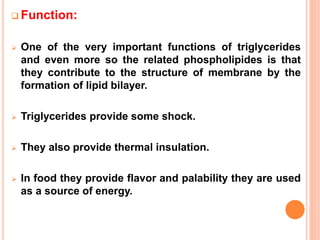
 Function:
 One of the very important functions of triglycerides
and even more so the related phospholipides is that
they contribute to the structure of membrane by the
formation of lipid bilayer.
 Triglycerides provide some shock.
 They also provide thermal insulation.
 In food they provide flavor and palability they are used
as a source of energy.
2] Waxes :
 Structure :-
Example: Carnuba wax, Beeswax etc.
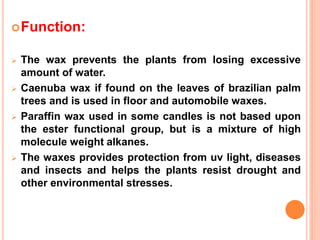
Function:
 The wax prevents the plants from losing excessive
amount of water.
 Caenuba wax if found on the leaves of brazilian palm
trees and is used in floor and automobile waxes.
 Paraffin wax used in some candles is not based upon
the ester functional group, but is a mixture of high
molecule weight alkanes.
 The waxes provides protection from uv light, diseases
and insects and helps the plants resist drought and
other environmental stresses.
References :
 Fundamental of Biochemistry
By A C Deb
 Plant Physiology, Biochemistry and Biotechnology
By Varma S K and Varma Mohit
 www. Slideshare.com
 www. Lipidsimeges.com
Lipids

Lipids

  • 1.
    LIPIDS Presented by…. Patel HastiG. M.Sc. sem 2 CBO 406 Department of Life Sciences H.N.G.U. Patan
  • 2.
    CONTENT:  Introduction  Occurrenceof Lipids  Characteristic of Lipids  Classification of lipids  Types of simple lipids  Structure and function of simple lipids (triglycerides and waxes)
  • 3.
    INTRODUCTION  The wordlipid is derived from a greek word “Lipos” means Fat.  These are heterogenous group of compounds  Unlike Protein, Nucleic acid, Polysaccherides, Lipid not polymer rather they are small molecules.  They are water insoluble but soluble in organic solvent such as Ether, Benzene, chloroform etc.  lipids serve as fuel molecule, signal molecule and component of membranes hormons and intracellular messengers.  Most lipids are non-polar and are hydrophobic because they contain hydrocarbon chains.
  • 4.
    OCCURRENCE OF LIPID Lipids are present in all animal and plant tissues.  In plants lipids are found in both vegetative and reproductive parts.  In reproductive structure like seed they are present in higher amount whilst in vegetative structure in only small amounts.  In animals, they are found in blood muscles brain skin membrane and other part of body.
  • 5.
    CHARACTERISTIC OF LIPIDS Lipids are insoluble in water and soluble in organic compound.  Lipid have high energy content and are metabolized to release calories.  Lipids also acts as electrical insulator they insulate nerve axons.  Fat contain saturated fatty acid they are solid at room temperatures. e.g animal fat  Plant fats are unsaturated and are liquid at room temperature.  Emulsification is the process by which a lipid mass is converted to a number of small lipid droplets The process of emulsification happens before the fats can be absorbed by the intestinal walls.
  • 6.
    CLASSIFICATION OF LIPIDS Based on the chemical compound classification of lipids are bellow : 1]saturated 2] unsaturated 3] branched chain 4] cyclic A] phospholipids i) glycerophospholipid ii) phosphoinositides iii) phosphosphingosides B] glycolipids C] lipoprotien
  • 7.
    TYPES OF SIMPLELIPIDS 1] Saturated fatty acids :  Contain only single bond in their hydrocarbon chain  The general formula for saturated fatty acid R-COOH where R is CH3(CH2)n, n is varies from 0 to 24  Example: Butaric acid :- CH3(CH2)2COOH cerotic acid :- CH3(CH2)24COOH
  • 8.
    2] Unsaturated fattyacid :  Contain one or more double bonds in their hydrocarbon chain  The general formula is follows: R-CH=CH(CH2)n-COOH  These acids are also characterized by the presences of cis-trans isomerism at there double bonds.  Example:- palmitoleic acid : CH3(CH2)5CH=CH(CH2)7COOH Archidonicacid : CH3(CH2)4CH=CHCH2CH=CHCH2CH=CHCH2 CH=CH(CH2)3COOH
  • 9.
    3] Branched chainfatty acids  Contain odd number of carbon atoms  The general formula is as follows: CH3-CH2-CH-(CH2)n-COOH CH3 4] Cyclic fatty acid:  Reported from plants and bacteria and rare in higher animal  Example: chaulmoogic CH=CH CH(CH2)12COOH CH2-CH2
  • 10.
    STRUCTURE AND FUNCTIONOF SIMPLE LIPIDS 1] Triglycerides:  Structure :-
  • 11.
     Function:  Oneof the very important functions of triglycerides and even more so the related phospholipides is that they contribute to the structure of membrane by the formation of lipid bilayer.  Triglycerides provide some shock.  They also provide thermal insulation.  In food they provide flavor and palability they are used as a source of energy.
  • 12.
    2] Waxes : Structure :- Example: Carnuba wax, Beeswax etc.
  • 13.
    Function:  The waxprevents the plants from losing excessive amount of water.  Caenuba wax if found on the leaves of brazilian palm trees and is used in floor and automobile waxes.  Paraffin wax used in some candles is not based upon the ester functional group, but is a mixture of high molecule weight alkanes.  The waxes provides protection from uv light, diseases and insects and helps the plants resist drought and other environmental stresses.
  • 14.
    References :  Fundamentalof Biochemistry By A C Deb  Plant Physiology, Biochemistry and Biotechnology By Varma S K and Varma Mohit  www. Slideshare.com  www. Lipidsimeges.com