LIPIDS 
• Lipids are a diverse group of organic compounds 
• Lipids contain carbon,hydrogen,oxygen,nitrogen and 
phosphorous 
• Lipids are non-polar and hydrophobic compounds i.e 
insoluble in water 
• They are easily soluble in organic solvents like ether, 
alcohol, chloroform, benzene etc 
• Lipids store double the amount of energy as compared 
to carbohydrates and proteins because 
• They contain high proportion of C-H bonds & very low 
oxygen as compared to carbohydrates and proteins 
• Act as insulating layer e.g. waxes in exoskeleton of 
insects 
Asghar khan Lecturer in Botany GDC Totakan
Classification of of lipids 
• Lipids are classified into various groups; 
• 1 Triglycerides 
• 2 Phospholipids 
• 3 Waxes 
• 4 Steroids 
• 5 Terpenoides 
• Triglycerides (tri-three, glycerides-Glycerol) 
• Also known as Acylglycerol. 
• Triglycerides are generally called Fats. 
• Chemically triglycerides are ester of fatty acids and 
alcohal 
• They are composed of : 
• Glycerol…..One molecule 
• Fatty acid….three molecules 
Asghar khan Lecturer in Botany GDC Totakan
Triglycerides 
• Glycerol: 
• It is an alcohal,consist of three carbon atoms. Hydroxyl 
(OH) is attached to each Carbon. Hydroxyl group are 
polar in nature; hence glycerol is soluble in warter 
• Fatty acids: 
• Fatty acid consist of a hydrocarbon chain, to which a 
single carboxyl (-COOH) group is attached at the 
terminal end. 
• Fatty acid contain even number of carbon atoms e.g. 
2,4,6,8,10,12,14,16,18,upto 28. 
Asghar khan Lecturer in Botany GDC Totakan
Fatty acids types 
• Two types of fatty acids 
• 1. Saturated fatty acids: 
• These fatty acids have no double bonds between carbon 
atoms 
• Can’t accommodate any more hydrogen atoms 
• Solid at room temperature 
• Stored in animals as fats. Example is Palmatic acid (16-C) 
• Unsaturated fatty acids: 
• They have one or more double bonds between carbon 
atoms.(C=C) 
• Accommodate any more hydrogen atoms 
• Liquid at room temperature 
• Stored in plant seeds. Example is Oleic acid (18-C) 
Asghar khan Lecturer in Botany GDC Totakan
2.Phospholipids 
• A class of lipids that are a major component of all cell 
membranes as they can form lipid bilayers. 
• Composition: phospholipids are composed of 
• i. Glycerol: one molecule 
• ii. Fatty acids :Two molecules 
• iii. Phosphoric acid: one molecule 
• When a nitrogen containing group is attached with phosphate 
end of phospholipids, it is known as Phosphatidyl Choline. 
• Phospholipids have two parts 
• i) Head: 
• Head is polar in nature, Soluble in water (Hydrophilic). 
• ii) Tails: 
• Tail is non-polar in nature, insoluble in water (Hydrophobic) 
Asghar khan Lecturer in Botany GDC Totakan
Phospholipids
3.WAXES 
• Waxes are derived lipids. 
• Waxes is ester of saturated fatty acid and long chain 
alcohol 
• Composition: waxes are composed of 
• i) long chain fatty acid.... One molecule 
• ii) long chain alcohol having a single hydroxyl group(-OH) e.g. 
Cetyl alcohol 
• waxes are hydrophobic in nature. 
• Have high melting point, hence solid at room temperature. 
• show stability & are resistant to degradation. 
• On the surfaces of plant parts e.g. leaves & fruit,they form 
a water proof layer, hence reduce rate of transpiration. 
• Waxes also form waxy layer, which cover animal bodies 
e.g.Sheep,insects etc. 
Asghar khan Lecturer in Botany GDC Totakan
4.Steroids 
• Steroids comes under the category of lipids 
• Steroids are derived lipids 
• Composition: Contain a characteristic arrangement of 
• 3 Cyclohaxane ring 
• 1 Cyclopentane ring, a total of 17-carbon atoms in four 
fused Carbon ring. 
• Steroids do not contain alcohol and fatty acids 
Asghar khan Lecturer in Botany GDC Totakan
Steroids 
• Examples of steroids: 
• i) Cholesterol: 
• An important component of animal cell membrane. 
• Precursor molecule of all hormones such as 
aldosterone, sex hormone and Vitamin D 
• ii) Aldosterone helps to regulate Na+ ions in the blood 
• iii) Sex hormones e.g. testosterones, progesterone, 
estrogens help to maintain male and female 
characteristics 
Asghar khan Lecturer in Botany GDC Totakan
Terpenoides 
• Are large and diverse class of naturally occurring organic 
compounds 
• Terpenoides are lipid derivatives, lipid soluble & water 
insoluble 
• Do not contain fatty acids like steroids. 
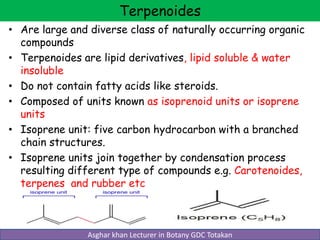
• Composed of units known as isoprenoid units or isoprene 
units 
• Isoprene unit: five carbon hydrocarbon with a branched 
chain structures. 
• Isoprene units join together by condensation process 
resulting different type of compounds e.g. Carotenoides, 
terpenes and rubber etc 
Asghar khan Lecturer in Botany GDC Totakan
Carotenoides 
• Carotenoides are yellow,orange,red or brown pigments in 
plants 
• They are of two types 
• i) Carotene: ii) xanthophylls 
• i) Carotene: 
• Orange, red in Colour, beta carotene is a type of 
carotene. Present in carrot & rice. 
• The breakdown of beta carotene in human body yields two 
molecules of Vitamin A. 
• ii) Xanthophyll: Accessory pigments 
• yellow in colour found in leaves of plants. 
Asghar khan Lecturer in Botany GDC Totakan
Functions of lipids 
• 1.Structural building material: 
• Lipids act as structural building material e.g. cell 
membrane is composed of lipo-protein molecules. 
• 2.Source of energy: 
• Contain twice the amount of energy due to greater 
number of C-H bonds as compared to Carbohydrates 
and proteins. 
• 3.As insulator: 
• Lipids provide insulation to various organs of animals 
and also act as lubricants 
• 4.Regulate of vital chemical reactions: 
• hormones which are steroids, regulate many vital 
process in both plants and animals 
Asghar khan Lecturer in Botany GDC Totakan

Lipids

  • 1.
    LIPIDS • Lipidsare a diverse group of organic compounds • Lipids contain carbon,hydrogen,oxygen,nitrogen and phosphorous • Lipids are non-polar and hydrophobic compounds i.e insoluble in water • They are easily soluble in organic solvents like ether, alcohol, chloroform, benzene etc • Lipids store double the amount of energy as compared to carbohydrates and proteins because • They contain high proportion of C-H bonds & very low oxygen as compared to carbohydrates and proteins • Act as insulating layer e.g. waxes in exoskeleton of insects Asghar khan Lecturer in Botany GDC Totakan
  • 2.
    Classification of oflipids • Lipids are classified into various groups; • 1 Triglycerides • 2 Phospholipids • 3 Waxes • 4 Steroids • 5 Terpenoides • Triglycerides (tri-three, glycerides-Glycerol) • Also known as Acylglycerol. • Triglycerides are generally called Fats. • Chemically triglycerides are ester of fatty acids and alcohal • They are composed of : • Glycerol…..One molecule • Fatty acid….three molecules Asghar khan Lecturer in Botany GDC Totakan
  • 3.
    Triglycerides • Glycerol: • It is an alcohal,consist of three carbon atoms. Hydroxyl (OH) is attached to each Carbon. Hydroxyl group are polar in nature; hence glycerol is soluble in warter • Fatty acids: • Fatty acid consist of a hydrocarbon chain, to which a single carboxyl (-COOH) group is attached at the terminal end. • Fatty acid contain even number of carbon atoms e.g. 2,4,6,8,10,12,14,16,18,upto 28. Asghar khan Lecturer in Botany GDC Totakan
  • 4.
    Fatty acids types • Two types of fatty acids • 1. Saturated fatty acids: • These fatty acids have no double bonds between carbon atoms • Can’t accommodate any more hydrogen atoms • Solid at room temperature • Stored in animals as fats. Example is Palmatic acid (16-C) • Unsaturated fatty acids: • They have one or more double bonds between carbon atoms.(C=C) • Accommodate any more hydrogen atoms • Liquid at room temperature • Stored in plant seeds. Example is Oleic acid (18-C) Asghar khan Lecturer in Botany GDC Totakan
  • 5.
    2.Phospholipids • Aclass of lipids that are a major component of all cell membranes as they can form lipid bilayers. • Composition: phospholipids are composed of • i. Glycerol: one molecule • ii. Fatty acids :Two molecules • iii. Phosphoric acid: one molecule • When a nitrogen containing group is attached with phosphate end of phospholipids, it is known as Phosphatidyl Choline. • Phospholipids have two parts • i) Head: • Head is polar in nature, Soluble in water (Hydrophilic). • ii) Tails: • Tail is non-polar in nature, insoluble in water (Hydrophobic) Asghar khan Lecturer in Botany GDC Totakan
  • 6.
  • 7.
    3.WAXES • Waxesare derived lipids. • Waxes is ester of saturated fatty acid and long chain alcohol • Composition: waxes are composed of • i) long chain fatty acid.... One molecule • ii) long chain alcohol having a single hydroxyl group(-OH) e.g. Cetyl alcohol • waxes are hydrophobic in nature. • Have high melting point, hence solid at room temperature. • show stability & are resistant to degradation. • On the surfaces of plant parts e.g. leaves & fruit,they form a water proof layer, hence reduce rate of transpiration. • Waxes also form waxy layer, which cover animal bodies e.g.Sheep,insects etc. Asghar khan Lecturer in Botany GDC Totakan
  • 8.
    4.Steroids • Steroidscomes under the category of lipids • Steroids are derived lipids • Composition: Contain a characteristic arrangement of • 3 Cyclohaxane ring • 1 Cyclopentane ring, a total of 17-carbon atoms in four fused Carbon ring. • Steroids do not contain alcohol and fatty acids Asghar khan Lecturer in Botany GDC Totakan
  • 9.
    Steroids • Examplesof steroids: • i) Cholesterol: • An important component of animal cell membrane. • Precursor molecule of all hormones such as aldosterone, sex hormone and Vitamin D • ii) Aldosterone helps to regulate Na+ ions in the blood • iii) Sex hormones e.g. testosterones, progesterone, estrogens help to maintain male and female characteristics Asghar khan Lecturer in Botany GDC Totakan
  • 10.
    Terpenoides • Arelarge and diverse class of naturally occurring organic compounds • Terpenoides are lipid derivatives, lipid soluble & water insoluble • Do not contain fatty acids like steroids. • Composed of units known as isoprenoid units or isoprene units • Isoprene unit: five carbon hydrocarbon with a branched chain structures. • Isoprene units join together by condensation process resulting different type of compounds e.g. Carotenoides, terpenes and rubber etc Asghar khan Lecturer in Botany GDC Totakan
  • 11.
    Carotenoides • Carotenoidesare yellow,orange,red or brown pigments in plants • They are of two types • i) Carotene: ii) xanthophylls • i) Carotene: • Orange, red in Colour, beta carotene is a type of carotene. Present in carrot & rice. • The breakdown of beta carotene in human body yields two molecules of Vitamin A. • ii) Xanthophyll: Accessory pigments • yellow in colour found in leaves of plants. Asghar khan Lecturer in Botany GDC Totakan
  • 12.
    Functions of lipids • 1.Structural building material: • Lipids act as structural building material e.g. cell membrane is composed of lipo-protein molecules. • 2.Source of energy: • Contain twice the amount of energy due to greater number of C-H bonds as compared to Carbohydrates and proteins. • 3.As insulator: • Lipids provide insulation to various organs of animals and also act as lubricants • 4.Regulate of vital chemical reactions: • hormones which are steroids, regulate many vital process in both plants and animals Asghar khan Lecturer in Botany GDC Totakan