LIMIT TEST FOR
SULPHATE
Shikha Agrawal
B.Pharm : Naraina Vidyapeeth Group Of
Institution
PRINCIPLE
 Limit test for sulphate is based upon reaction
between barium chloride and soluble sulphates in
the presence of dilute hydrochloric acid.
 Turbidity obtained in test solution will compared
with the standard sulphate solution.
 This results in the precipitation of sulphates as a
Barium Sulphates.
 Barium sulphates precipitate will form the solution
turbid.
REACTION
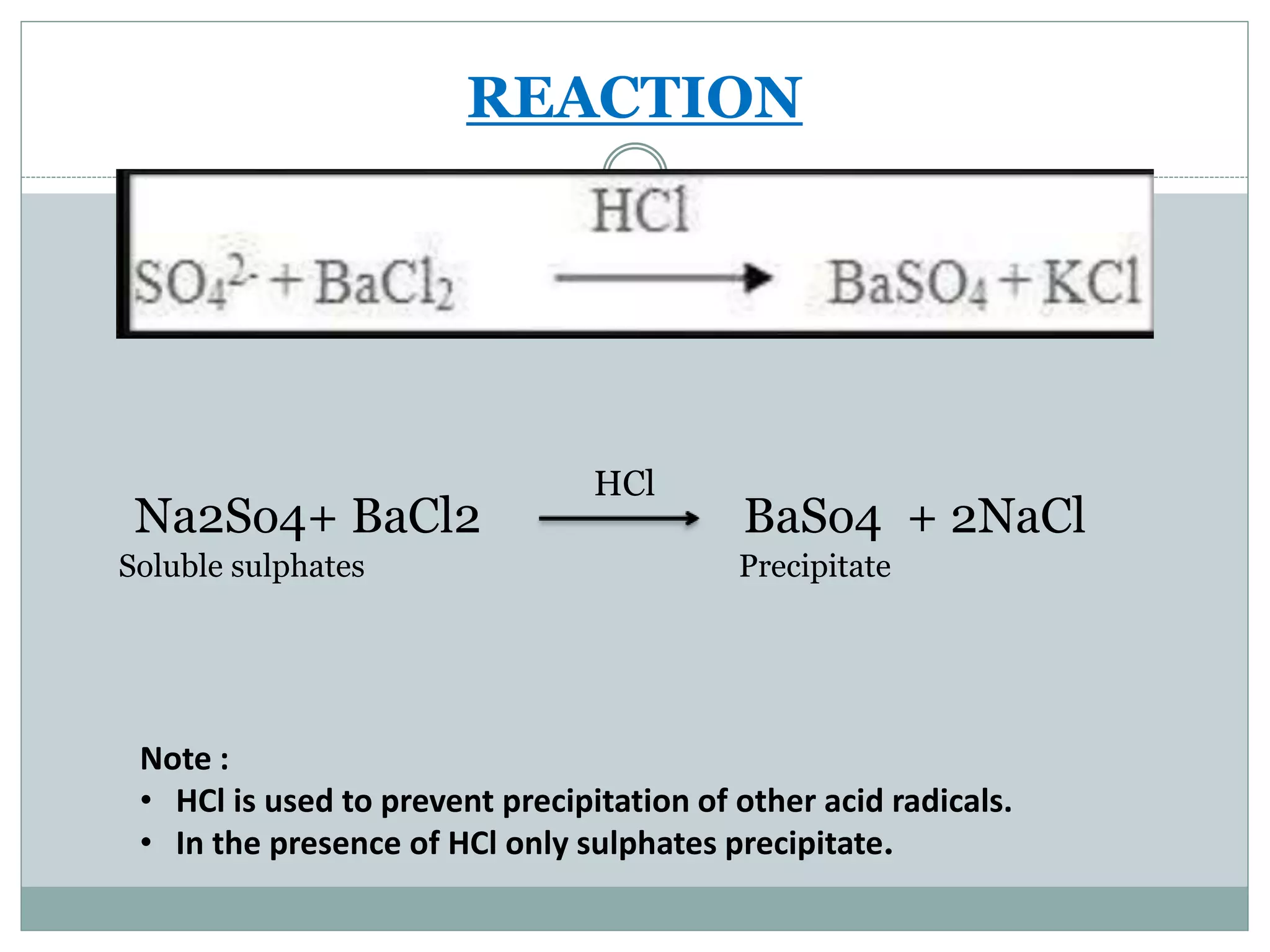
Na2So4+ BaCl2 BaSo4 + 2NaCl
HCl
Soluble sulphates Precipitate
Note :
• HCl is used to prevent precipitation of other acid radicals.
• In the presence of HCl only sulphates precipitate.
 Barium sulphate reagent is used in reaction.
 Barium sulphate reagent contains
1. Barium chloride
2. Sulphate free alcohol
3 .Potassium sulphate in water
 Potassium sulphate is used to increase the sensitivity of
reaction.
 It reacts with barium chloride and forms Barium Sulphate
in small quantity which act as a seeding agent.
.
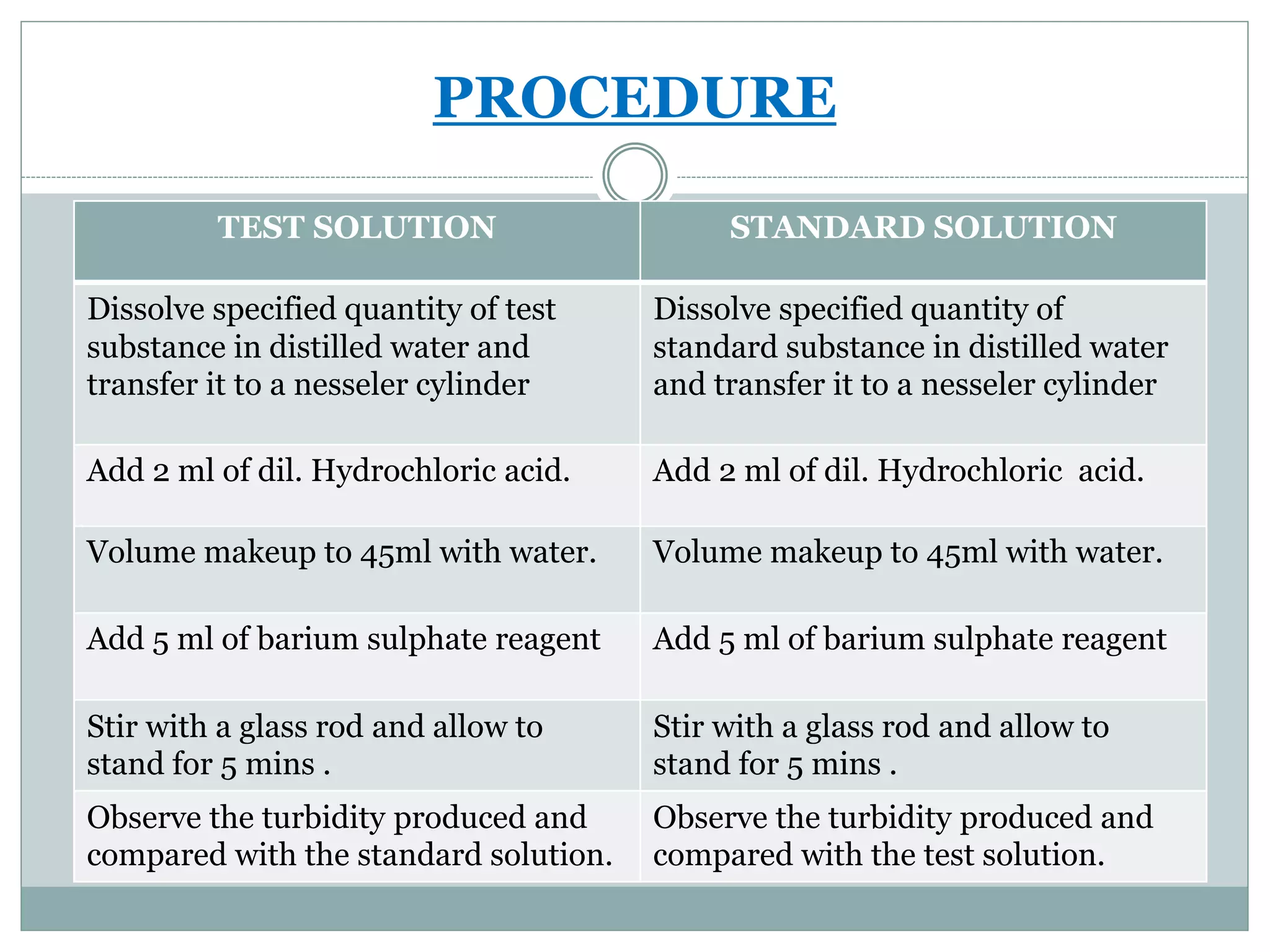
PROCEDURE
TEST SOLUTION STANDARD SOLUTION
Dissolve specified quantity of test
substance in distilled water and
transfer it to a nesseler cylinder
Dissolve specified quantity of
standard substance in distilled water
and transfer it to a nesseler cylinder
Add 2 ml of dil. Hydrochloric acid. Add 2 ml of dil. Hydrochloric acid.
Volume makeup to 45ml with water. Volume makeup to 45ml with water.
Add 5 ml of barium sulphate reagent Add 5 ml of barium sulphate reagent
Stir with a glass rod and allow to
stand for 5 mins .
Stir with a glass rod and allow to
stand for 5 mins .
Observe the turbidity produced and
compared with the standard solution.
Observe the turbidity produced and
compared with the test solution.
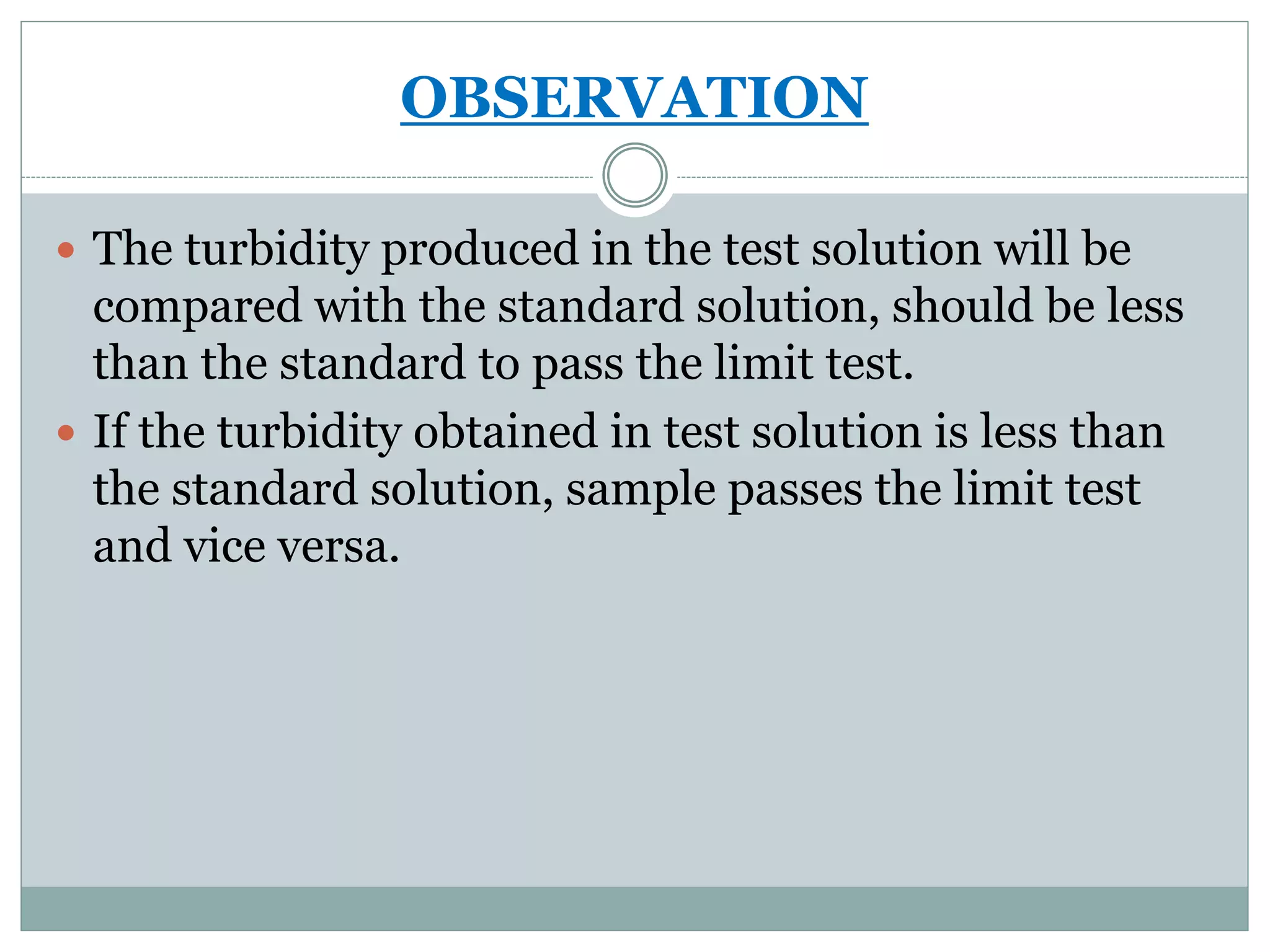
OBSERVATION
 The turbidity produced in the test solution will be
compared with the standard solution, should be less
than the standard to pass the limit test.
 If the turbidity obtained in test solution is less than
the standard solution, sample passes the limit test
and vice versa.
Thank you

Limit test for sulphate

  • 1.
    LIMIT TEST FOR SULPHATE ShikhaAgrawal B.Pharm : Naraina Vidyapeeth Group Of Institution
  • 2.
    PRINCIPLE  Limit testfor sulphate is based upon reaction between barium chloride and soluble sulphates in the presence of dilute hydrochloric acid.  Turbidity obtained in test solution will compared with the standard sulphate solution.  This results in the precipitation of sulphates as a Barium Sulphates.  Barium sulphates precipitate will form the solution turbid.
  • 3.
    REACTION Na2So4+ BaCl2 BaSo4+ 2NaCl HCl Soluble sulphates Precipitate Note : • HCl is used to prevent precipitation of other acid radicals. • In the presence of HCl only sulphates precipitate.
  • 4.
     Barium sulphatereagent is used in reaction.  Barium sulphate reagent contains 1. Barium chloride 2. Sulphate free alcohol 3 .Potassium sulphate in water  Potassium sulphate is used to increase the sensitivity of reaction.  It reacts with barium chloride and forms Barium Sulphate in small quantity which act as a seeding agent. .
  • 5.
    PROCEDURE TEST SOLUTION STANDARDSOLUTION Dissolve specified quantity of test substance in distilled water and transfer it to a nesseler cylinder Dissolve specified quantity of standard substance in distilled water and transfer it to a nesseler cylinder Add 2 ml of dil. Hydrochloric acid. Add 2 ml of dil. Hydrochloric acid. Volume makeup to 45ml with water. Volume makeup to 45ml with water. Add 5 ml of barium sulphate reagent Add 5 ml of barium sulphate reagent Stir with a glass rod and allow to stand for 5 mins . Stir with a glass rod and allow to stand for 5 mins . Observe the turbidity produced and compared with the standard solution. Observe the turbidity produced and compared with the test solution.
  • 6.
    OBSERVATION  The turbidityproduced in the test solution will be compared with the standard solution, should be less than the standard to pass the limit test.  If the turbidity obtained in test solution is less than the standard solution, sample passes the limit test and vice versa.
  • 7.