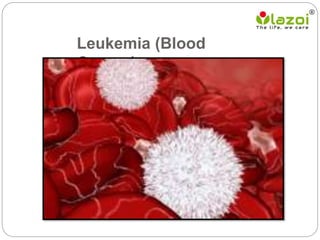
Leukemia (Blood
Cancer)
Leukemia (Blood Cancer)
Leukemia is a cancer of the early blood-forming
cells. Most often, leukemia is a cancer of the
white blood cells, but some leukemia's start in
other blood cell types. A person who has
leukemia suffers from an abnormal production of
blood cells, generally leukocytes (white blood
cells). WBCs are a vital part of your immune
system. They protect your body from invasion by
bacteria, viruses, and fungi, as well as from
abnormal cells and other foreign substances.
There are two divisions if leukemias:
 Chronic and acute leukemia-There are several stages of
maturation in a white blood cells lifespan.
 Acute leukemia is a rapidly progressing disease that results in the
accumulation of immature, useless cells in the marrow and blood.
They are squeezed out of the bone marrow too early and are not
functional.
 Chronic progresses more slowly and allows more mature, useful
cells to be made. Acute leukemia crowds out the good cells more
quickly than chronic leukemia.
 Lymphocytic and myelogenous leukemia-Leukemias are also
subdivided into the type of affected blood cell.
 If the cancerous transformation occurs in the type of marrow that
makes lymphocytes, the disease is called lymphocytic leukemia. A
lymphocyte is a kind of white blood cell inside the vertebrae immune
system.
 If the cancerous change occurs in the type of marrow cells that go on
to produce red blood cells, other types of white cells, and platelets,
the disease is called
 Rarely seen in children. About 15,000 new cases of CLL are
diagnosed annually. myelogenous leukemia.
 Excessive sweating, especially at night (called "night
sweats")
 Fatigue and weakness that don't go away with rest
 Unintentional weight loss
 Bone pain and tenderness
 Painless, swollen lymph nodes (especially in the neck
and armpits)
 Enlargement of the liver or spleen
 Red spots on the skin, called petechiae
 Bleeding and bruising easily
 Fever or chills
 Frequent infections
Persons affected by
leukemia
 Acute Myelogenous Leukemia (AML) -Acute
myelogenous leukemia (AML) can occur in children
and adults. About 21,000 new cases of AML are
diagnosed annually .This is the most common form of
leukemia.
 Acute Lymphocytic Leukemia (ALL) -Acute
lymphocytic leukemia (ALL) occurs mostly in children.
About 6,000 new cases of ALL are diagnosed
annually.
 Chronic Myelogenous Leukemia (CML) -Chronic
myelogenous leukemia (CML) affects mostly adults.
About 7,000 new cases of CML are diagnosed
annually.
 Chronic Lymphocytic Leukemia (CLL)-Chronic
lymphocytic leukemia (CLL) is most likely to affect
people over the age of 55. It's very rarely seen in
children. About 15,000 new cases of CLL are
Causes of Leukemia
 The exact cause of leukemia is not known, but it
is thought to involve a combination of genetic and
environmental factors.
 Leukemia cells have acquired mutations in their
DNA that cause them to grow abnormally and
lose functions of typical white blood cells.
 It is not clear what causes these mutations to
occur. One type of change in the cells' DNA that
is common in leukemia's is known as a
chromosome translocation
Risk factors of Leukemia:
Some of the risk factors may be:
 Artificial ionizing radiation
 Viruses - HTLV-1 (human T-lymphotropic virus) and HIV
(human immunodeficiency virus)
 Benzene and some petrochemicals
 Alkylating chemotherapy agents used in previous
cancers
 Maternal fetal transmission (rare)
 Smoking
 Twins may have a greater risk of having leukemia due to
single gene or multiple gene.
 People with Down syndrome have a significantly higher
risk of developing leukemia, compared with people who
do not have Down syndrome.
Treatments of leukemia
There are certain treatments which can be used for treating
leukemia, this are:
 Chemotherapy uses drugs to kill leukemia cells. Depending
on the type of leukemia, patient may take either a single
drug or a combination of different drugs.
 Radiation therapy uses high-energy radiation to damage
leukemia cells and inhibit their growth. Radiation can be
applied to a specific area or the entire body.
 Stem cell transplantation replaces diseased bone marrow
with healthy bone marrow, either from other part of the
body, or from a donor. This procedure is also called a bone
marrow transplant.
 Biological or immune therapy uses treatments that help the
immune system recognize and attack cancer cells.
 Targeted therapy uses medications that take advantage of
vulnerabilities in cancer cells. For example, imatinib
(Gleevec) is a targeted drug that is commonly used against
CML.
Diagnosis of Leukemia
The primary diagnosis of leukemia is done by looking at the family history and
by doing physical examination. Certain blood test, biopsy and imaging
techniques are useful for the diagnosis.
 Blood tests -A complete blood count which may determine the number of WCs,
RBCs, and platelets in the blood. The blood is also seen under the microscope in
case of certain cute condition.
 Biopsy- Tissue biopsy is done by taking one marrow or lymph nodes and looking
for it under the microscope.
 Other test can be done, which are:
 Flow cytometry examines the DNA of the cancer cells and determines their
growth rate.
 Liver function tests show whether leukemia cells are affecting or invading the
liver.
 Lumbar puncture is performed by inserting a thin needle between the vertebrae
of your lower back. This allows the doctor to collect spinal fluid and determine if
cancer has spread to the central nervous system.
 Imaging studies, such as X-rays, ultrasounds, and CT scans, help doctors look
for any damage to other organs that's caused by the leukemia.
Leukemia can be controlled if diagnosed in early stage. Certain tests should be
done for diagnosis as soon as a person starts to get early symptoms which may
CONNECT WITH US
Logon to
www.lazoi.com
Like us on facebook
https://www.facebook.com/LazoiTheLife
Follow us on Twitter
https://www.twitter.com/lazoithelife
Follow us on Pinterest
https://www.in.pinterest.com/lazoithelife

Leukemia

  • 1.
  • 2.
    Leukemia (Blood Cancer) Leukemiais a cancer of the early blood-forming cells. Most often, leukemia is a cancer of the white blood cells, but some leukemia's start in other blood cell types. A person who has leukemia suffers from an abnormal production of blood cells, generally leukocytes (white blood cells). WBCs are a vital part of your immune system. They protect your body from invasion by bacteria, viruses, and fungi, as well as from abnormal cells and other foreign substances.
  • 3.
    There are twodivisions if leukemias:  Chronic and acute leukemia-There are several stages of maturation in a white blood cells lifespan.  Acute leukemia is a rapidly progressing disease that results in the accumulation of immature, useless cells in the marrow and blood. They are squeezed out of the bone marrow too early and are not functional.  Chronic progresses more slowly and allows more mature, useful cells to be made. Acute leukemia crowds out the good cells more quickly than chronic leukemia.  Lymphocytic and myelogenous leukemia-Leukemias are also subdivided into the type of affected blood cell.  If the cancerous transformation occurs in the type of marrow that makes lymphocytes, the disease is called lymphocytic leukemia. A lymphocyte is a kind of white blood cell inside the vertebrae immune system.  If the cancerous change occurs in the type of marrow cells that go on to produce red blood cells, other types of white cells, and platelets, the disease is called  Rarely seen in children. About 15,000 new cases of CLL are diagnosed annually. myelogenous leukemia.
  • 4.
     Excessive sweating,especially at night (called "night sweats")  Fatigue and weakness that don't go away with rest  Unintentional weight loss  Bone pain and tenderness  Painless, swollen lymph nodes (especially in the neck and armpits)  Enlargement of the liver or spleen  Red spots on the skin, called petechiae  Bleeding and bruising easily  Fever or chills  Frequent infections
  • 5.
    Persons affected by leukemia Acute Myelogenous Leukemia (AML) -Acute myelogenous leukemia (AML) can occur in children and adults. About 21,000 new cases of AML are diagnosed annually .This is the most common form of leukemia.  Acute Lymphocytic Leukemia (ALL) -Acute lymphocytic leukemia (ALL) occurs mostly in children. About 6,000 new cases of ALL are diagnosed annually.  Chronic Myelogenous Leukemia (CML) -Chronic myelogenous leukemia (CML) affects mostly adults. About 7,000 new cases of CML are diagnosed annually.  Chronic Lymphocytic Leukemia (CLL)-Chronic lymphocytic leukemia (CLL) is most likely to affect people over the age of 55. It's very rarely seen in children. About 15,000 new cases of CLL are
  • 6.
    Causes of Leukemia The exact cause of leukemia is not known, but it is thought to involve a combination of genetic and environmental factors.  Leukemia cells have acquired mutations in their DNA that cause them to grow abnormally and lose functions of typical white blood cells.  It is not clear what causes these mutations to occur. One type of change in the cells' DNA that is common in leukemia's is known as a chromosome translocation
  • 8.
    Risk factors ofLeukemia: Some of the risk factors may be:  Artificial ionizing radiation  Viruses - HTLV-1 (human T-lymphotropic virus) and HIV (human immunodeficiency virus)  Benzene and some petrochemicals  Alkylating chemotherapy agents used in previous cancers  Maternal fetal transmission (rare)  Smoking  Twins may have a greater risk of having leukemia due to single gene or multiple gene.  People with Down syndrome have a significantly higher risk of developing leukemia, compared with people who do not have Down syndrome.
  • 9.
    Treatments of leukemia Thereare certain treatments which can be used for treating leukemia, this are:  Chemotherapy uses drugs to kill leukemia cells. Depending on the type of leukemia, patient may take either a single drug or a combination of different drugs.  Radiation therapy uses high-energy radiation to damage leukemia cells and inhibit their growth. Radiation can be applied to a specific area or the entire body.  Stem cell transplantation replaces diseased bone marrow with healthy bone marrow, either from other part of the body, or from a donor. This procedure is also called a bone marrow transplant.  Biological or immune therapy uses treatments that help the immune system recognize and attack cancer cells.  Targeted therapy uses medications that take advantage of vulnerabilities in cancer cells. For example, imatinib (Gleevec) is a targeted drug that is commonly used against CML.
  • 10.
    Diagnosis of Leukemia Theprimary diagnosis of leukemia is done by looking at the family history and by doing physical examination. Certain blood test, biopsy and imaging techniques are useful for the diagnosis.  Blood tests -A complete blood count which may determine the number of WCs, RBCs, and platelets in the blood. The blood is also seen under the microscope in case of certain cute condition.  Biopsy- Tissue biopsy is done by taking one marrow or lymph nodes and looking for it under the microscope.  Other test can be done, which are:  Flow cytometry examines the DNA of the cancer cells and determines their growth rate.  Liver function tests show whether leukemia cells are affecting or invading the liver.  Lumbar puncture is performed by inserting a thin needle between the vertebrae of your lower back. This allows the doctor to collect spinal fluid and determine if cancer has spread to the central nervous system.  Imaging studies, such as X-rays, ultrasounds, and CT scans, help doctors look for any damage to other organs that's caused by the leukemia. Leukemia can be controlled if diagnosed in early stage. Certain tests should be done for diagnosis as soon as a person starts to get early symptoms which may
  • 11.
    CONNECT WITH US Logonto www.lazoi.com Like us on facebook https://www.facebook.com/LazoiTheLife Follow us on Twitter https://www.twitter.com/lazoithelife Follow us on Pinterest https://www.in.pinterest.com/lazoithelife