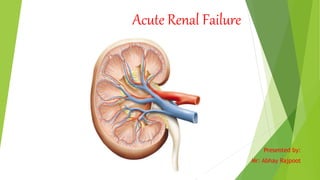




Acute Renal Failure
Presented by:
Mr: Abhay Rajpoot
INTRODUCTION
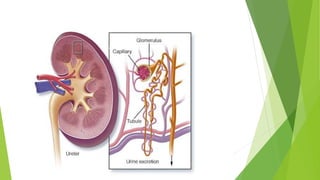
 Acute kidney failure occurs when your kidneys suddenly become unable to
filter waste products from your blood. When your kidneys lose their
filtering ability, dangerous levels of wastes may accumulate, and your
blood's chemical makeup may get out of balance.
 Acute kidney failure — also called acute renal failure or acute kidney
injury — develops rapidly, usually in less than a few days. Acute kidney
failure is most common in people who are already hospitalized,
particularly in critically ill people who need intensive care
DEFINITION
Acute renal failure is a sudden reduction in kidney function that results
in nitrogenous wastes accumulating in the blood.
OR
Acute kidney injury (AKI), previously called acute renal failure (ARF),
is an abrupt loss of kidney function that develops within 7 days Generally
it occurs because of damage to the kidney tissue caused by
decreased kidney blood flow (kidney ischemia) from any cause (e.g., low
blood pressure), exposure to substances harmful to the kidney,
an inflammatory process in the kidney, or an obstruction of the urinary
tract that impedes the flow of urine.
INCIDENCE
The incidence of acute kidney injury was 50.1%, and 14.1% of the patients
suffered from chronic kidney disease. The incidence of acute septic kidney
injury was 75.3%. Mortality in patients with or without acute kidney
injury was 41.8%.
RISK FACTOR
 Being hospitalized, especially for a serious condition that requires
intensive care
 Advanced age
 Blockages in the blood vessels in your arms or legs (peripheral artery
disease)
 Diabetes
 High blood pressure
 Heart failure
 Kidney diseases
 Liver diseases
 Certain cancers and their treatments
CAUSES
Impaired blood flow to the kidneys
 Blood or fluid loss
 Blood pressure medications
 Heart attack
 Heart disease
 Infection
 Liver failure
 Use of aspirin, ibuprofen (Advil, Motrin IB, others), naproxen sodium
(Aleve, others) or related drugs
 Severe allergic reaction (anaphylaxis)
 Severe burns
 Severe dehydration
Damage to the kidneys
 Blood clots in the veins and arteries in and around the kidneys
 Cholesterol deposits that block blood flow in the kidneys
 Glomerulonephritis, inflammation of the tiny filters in the kidneys (glomeruli)
 Haemolytic uremic syndrome, a condition that results from premature destruction of
red blood cells
 Infection
 Lupus, an immune system disorder causing glomerulonephritis
 Medications, such as certain chemotherapy drugs, antibiotics and dyes used during
imaging tests
 Scleroderma, a group of rare diseases affecting the skin and connective tissues
 Thrombotic thrombocytopenic purpura, a rare blood disorder
 Toxins, such as alcohol, heavy metals and cocaine
 Muscle tissue breakdown (rhabdomyolysis) that leads to kidney damage caused by
toxins from muscle tissue destruction
 Breakdown of tumour cells (tumour lysis syndrome), which leads to the release of
toxins that can cause kidney injury
Urine blockage in the kidneys
 Bladder cancer
 Blood clots in the urinary tract
 Cervical cancer
 Colon cancer
 Enlarged prostate
 Kidney stones
 Nerve damage involving the nerves that control the bladder
 Prostate cancer
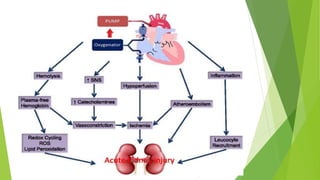
PATHOPHYSIOLOGY
SIGN AND SYMPTOMS
 Decreased urine output, although occasionally urine output remains normal
 Fluid retention, causing swelling in your legs, ankles or feet
 Shortness of breath
 Fatigue
 Confusion
 Nausea
 Weakness
 Irregular heartbeat
 Chest pain or pressure
 Seizures or coma in severe cases
DIAGNOSTIC EVALUATION
 History collection
 Physical Examination
 Urine output measurements. Measuring how much urinate in 24 hrs.
 Urine tests. Analyzing a sample of the urine (urinalysis) may reveal abnormalities that
suggest kidney failure.
 Blood tests. A sample of the blood may reveal rapidly rising levels of urea and creatinine
two substances used to measure kidney function.
 Imaging tests. Imaging tests such as ultrasound and computerized tomography may be
used to help the doctor see your kidneys.
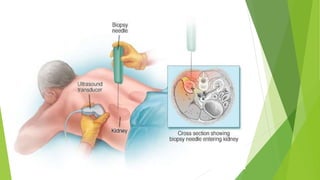
 Removing a sample of kidney tissue for testing. In some situations a kidney biopsy to
remove a small sample of kidney tissue for lab testing. Your doctor inserts a needle
through the skin and into the kidney to remove the sample
COMPLICATION
 Fluid buildup. Acute kidney failure may lead to a buildup of fluid in the
lungs, which can cause shortness of breath.
 Chest pain. If the lining that covers your heart (pericardium) becomes
inflamed, you may experience chest pain.
 Muscle weakness. When your body's fluids and electrolytes — your body's
blood chemistry — are out of balance, muscle weakness can result.
CONTI…..
 Permanent kidney damage. Occasionally, acute kidney failure causes
permanent loss of kidney function, or end-stage renal disease. People with
end-stage renal disease require either permanent dialysis — a mechanical
filtration process used to remove toxins and wastes from the body — or a
kidney transplant to survive.
 Death. Acute kidney failure can lead to loss of kidney function and,
ultimately, death
PREVENTION
 Pay attention to labels when taking over-the-counter (OTC) pain
medications. Follow the instructions for OTC pain medications, such as
aspirin, acetaminophen (Tylenol, others), ibuprofen (Advil, Motrin IB,
others) and naproxen sodium (Aleve, others). Taking too much of these
medications may increase your risk of kidney injury. This is especially true if
you have pre-existing kidney disease, diabetes or high blood pressure.
 Make a healthy lifestyle a priority. Be active; eat a sensible, balanced
diet; and drink alcohol only in moderation — if at all
MANAGEMENT
 Treatments to balance the amount of fluids in the blood. If the acute
kidney failure is caused by a lack of fluids in your blood, doctor may
recommend intravenous (IV) fluids. In other cases, acute kidney failure
may cause to have too much fluid, leading to swelling in the arms and
legs. In these cases, doctor may recommend medications (diuretics) to
cause your body to expel extra fluids.
 Medications to control blood potassium. If the kidneys aren't properly
filtering potassium from the blood, doctor may prescribe calcium, glucose
or sodium polystyrene sulfonate (Kionex) to prevent the accumulation of
high levels of potassium in the blood. Too much potassium in the blood
can cause dangerous irregular heartbeats (arrhythmias) and muscle
weakness.
CONTI…
 Medications to restore blood calcium levels. If the levels of calcium in the
blood drop too low, doctor may recommend an infusion of calcium.
 Dialysis to remove toxins from the blood. If toxins build up in the blood.
Dialysis — to help remove toxins and excess fluids from the body while
kidneys heal. Dialysis may also help remove excess potassium from your
body. During dialysis, a machine pumps blood out of your body through an
artificial kidney (dialyzer) that filters out waste. The blood is then returned
to the body
NURSING MANAGEMENT
 Excess fluid volume related to decreased Glomerular filtration
rate and sodium retention as evidenced by edema
 Risk for infection related to alterations in the immune system
and host
 Risk for injury related to GI bleeding
 Sleep pattern disturbances related to disease condition defenses
 Imbalanced nutrition: less than body requirements related to
less intake of food
Acute renal failure
Acute renal failure

Acute renal failure

  • 1.
    Acute Renal Failure Presentedby: Mr: Abhay Rajpoot
  • 2.
    INTRODUCTION  Acute kidneyfailure occurs when your kidneys suddenly become unable to filter waste products from your blood. When your kidneys lose their filtering ability, dangerous levels of wastes may accumulate, and your blood's chemical makeup may get out of balance.  Acute kidney failure — also called acute renal failure or acute kidney injury — develops rapidly, usually in less than a few days. Acute kidney failure is most common in people who are already hospitalized, particularly in critically ill people who need intensive care
  • 4.
    DEFINITION Acute renal failureis a sudden reduction in kidney function that results in nitrogenous wastes accumulating in the blood. OR Acute kidney injury (AKI), previously called acute renal failure (ARF), is an abrupt loss of kidney function that develops within 7 days Generally it occurs because of damage to the kidney tissue caused by decreased kidney blood flow (kidney ischemia) from any cause (e.g., low blood pressure), exposure to substances harmful to the kidney, an inflammatory process in the kidney, or an obstruction of the urinary tract that impedes the flow of urine.
  • 5.
    INCIDENCE The incidence ofacute kidney injury was 50.1%, and 14.1% of the patients suffered from chronic kidney disease. The incidence of acute septic kidney injury was 75.3%. Mortality in patients with or without acute kidney injury was 41.8%.
  • 6.
    RISK FACTOR  Beinghospitalized, especially for a serious condition that requires intensive care  Advanced age  Blockages in the blood vessels in your arms or legs (peripheral artery disease)  Diabetes  High blood pressure  Heart failure  Kidney diseases  Liver diseases  Certain cancers and their treatments
  • 7.
    CAUSES Impaired blood flowto the kidneys  Blood or fluid loss  Blood pressure medications  Heart attack  Heart disease  Infection  Liver failure  Use of aspirin, ibuprofen (Advil, Motrin IB, others), naproxen sodium (Aleve, others) or related drugs  Severe allergic reaction (anaphylaxis)  Severe burns  Severe dehydration
  • 8.
    Damage to thekidneys  Blood clots in the veins and arteries in and around the kidneys  Cholesterol deposits that block blood flow in the kidneys  Glomerulonephritis, inflammation of the tiny filters in the kidneys (glomeruli)  Haemolytic uremic syndrome, a condition that results from premature destruction of red blood cells  Infection  Lupus, an immune system disorder causing glomerulonephritis  Medications, such as certain chemotherapy drugs, antibiotics and dyes used during imaging tests  Scleroderma, a group of rare diseases affecting the skin and connective tissues  Thrombotic thrombocytopenic purpura, a rare blood disorder  Toxins, such as alcohol, heavy metals and cocaine  Muscle tissue breakdown (rhabdomyolysis) that leads to kidney damage caused by toxins from muscle tissue destruction  Breakdown of tumour cells (tumour lysis syndrome), which leads to the release of toxins that can cause kidney injury
  • 9.
    Urine blockage inthe kidneys  Bladder cancer  Blood clots in the urinary tract  Cervical cancer  Colon cancer  Enlarged prostate  Kidney stones  Nerve damage involving the nerves that control the bladder  Prostate cancer
  • 10.
  • 12.
    SIGN AND SYMPTOMS Decreased urine output, although occasionally urine output remains normal  Fluid retention, causing swelling in your legs, ankles or feet  Shortness of breath  Fatigue  Confusion  Nausea  Weakness  Irregular heartbeat  Chest pain or pressure  Seizures or coma in severe cases
  • 13.
    DIAGNOSTIC EVALUATION  Historycollection  Physical Examination  Urine output measurements. Measuring how much urinate in 24 hrs.  Urine tests. Analyzing a sample of the urine (urinalysis) may reveal abnormalities that suggest kidney failure.  Blood tests. A sample of the blood may reveal rapidly rising levels of urea and creatinine two substances used to measure kidney function.  Imaging tests. Imaging tests such as ultrasound and computerized tomography may be used to help the doctor see your kidneys.  Removing a sample of kidney tissue for testing. In some situations a kidney biopsy to remove a small sample of kidney tissue for lab testing. Your doctor inserts a needle through the skin and into the kidney to remove the sample
  • 15.
    COMPLICATION  Fluid buildup.Acute kidney failure may lead to a buildup of fluid in the lungs, which can cause shortness of breath.  Chest pain. If the lining that covers your heart (pericardium) becomes inflamed, you may experience chest pain.  Muscle weakness. When your body's fluids and electrolytes — your body's blood chemistry — are out of balance, muscle weakness can result.
  • 16.
    CONTI…..  Permanent kidneydamage. Occasionally, acute kidney failure causes permanent loss of kidney function, or end-stage renal disease. People with end-stage renal disease require either permanent dialysis — a mechanical filtration process used to remove toxins and wastes from the body — or a kidney transplant to survive.  Death. Acute kidney failure can lead to loss of kidney function and, ultimately, death
  • 17.
    PREVENTION  Pay attentionto labels when taking over-the-counter (OTC) pain medications. Follow the instructions for OTC pain medications, such as aspirin, acetaminophen (Tylenol, others), ibuprofen (Advil, Motrin IB, others) and naproxen sodium (Aleve, others). Taking too much of these medications may increase your risk of kidney injury. This is especially true if you have pre-existing kidney disease, diabetes or high blood pressure.  Make a healthy lifestyle a priority. Be active; eat a sensible, balanced diet; and drink alcohol only in moderation — if at all
  • 18.
    MANAGEMENT  Treatments tobalance the amount of fluids in the blood. If the acute kidney failure is caused by a lack of fluids in your blood, doctor may recommend intravenous (IV) fluids. In other cases, acute kidney failure may cause to have too much fluid, leading to swelling in the arms and legs. In these cases, doctor may recommend medications (diuretics) to cause your body to expel extra fluids.  Medications to control blood potassium. If the kidneys aren't properly filtering potassium from the blood, doctor may prescribe calcium, glucose or sodium polystyrene sulfonate (Kionex) to prevent the accumulation of high levels of potassium in the blood. Too much potassium in the blood can cause dangerous irregular heartbeats (arrhythmias) and muscle weakness.
  • 19.
    CONTI…  Medications torestore blood calcium levels. If the levels of calcium in the blood drop too low, doctor may recommend an infusion of calcium.  Dialysis to remove toxins from the blood. If toxins build up in the blood. Dialysis — to help remove toxins and excess fluids from the body while kidneys heal. Dialysis may also help remove excess potassium from your body. During dialysis, a machine pumps blood out of your body through an artificial kidney (dialyzer) that filters out waste. The blood is then returned to the body
  • 20.
    NURSING MANAGEMENT  Excessfluid volume related to decreased Glomerular filtration rate and sodium retention as evidenced by edema  Risk for infection related to alterations in the immune system and host  Risk for injury related to GI bleeding  Sleep pattern disturbances related to disease condition defenses  Imbalanced nutrition: less than body requirements related to less intake of food