HEMOPHILIA
Presenter
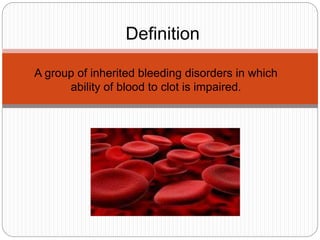
A group of inherited bleeding disorders in which
ability of blood to clot is impaired.
Definition
Type of Hemophilia
 Hemophilia A ( Classic hemophilia )
 Hemophilia B ( Christmas disease )
 von Willebrand’s Disease
 Hemophilia C
Phathophysiology
 Hemophilia A
 Deficiency of coagulation factor VIII
 Hemophilia B
 Deficiency of coagulation factor IX
 von Willebrand Disease
 Deficiency of von Willebrand protein
 Hemophilia C
 After 3 coagulation factor ( hemophilia A and B, von
Willebrand )
Clinical Manifestation
 Hemarthrosis
 Easy bruising and cutaneous hematoma
formation with minor trauma
 Bleeding from gums and prolonged bleeding
following minor injuries or cuts
 GIT bleeding with hematemesis, occult blood in
stools, gastric pain or abdominal pain
 Spontaneous hematuria or epistaxis
 Pain or paralysis due to pressure
hematomas on nerves
 Intracranial hemorrhage
Investigation
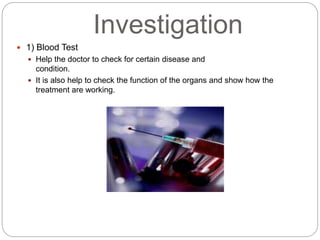
 1) Blood Test
 Help the doctor to check for certain disease and
condition.
 It is also help to check the function of the organs and show how the
treatment are working.
2) Coagulations Study
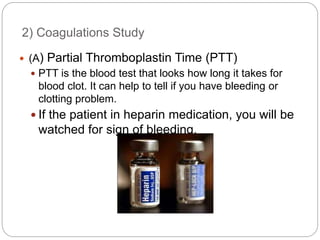
 (A) Partial Thromboplastin Time (PTT)
 PTT is the blood test that looks how long it takes for
blood clot. It can help to tell if you have bleeding or
clotting problem.
 If the patient in heparin medication, you will be
watched for sign of bleeding.
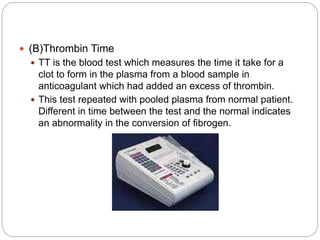
 (B)Thrombin Time
 TT is the blood test which measures the time it take for a
clot to form in the plasma from a blood sample in
anticoagulant which had added an excess of thrombin.
 This test repeated with pooled plasma from normal patient.
Different in time between the test and the normal indicates
an abnormality in the conversion of fibrogen.
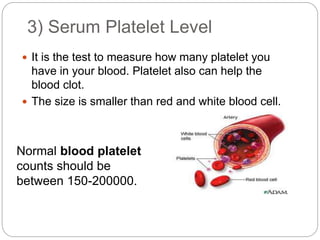
 It is the test to measure how many platelet you
have in your blood. Platelet also can help the
blood clot.
 The size is smaller than red and white blood cell.
Normal blood platelet
counts should be
between 150-200000.
3) Serum Platelet Level
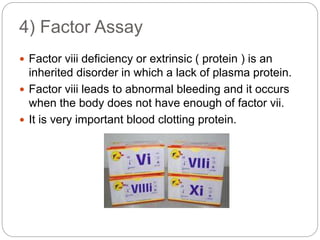
 Factor viii deficiency or extrinsic ( protein ) is an
inherited disorder in which a lack of plasma protein.
 Factor viii leads to abnormal bleeding and it occurs
when the body does not have enough of factor vii.
 It is very important blood clotting protein.
4) Factor Assay
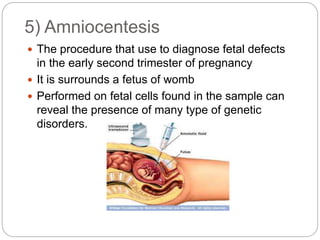
 The procedure that use to diagnose fetal defects
in the early second trimester of pregnancy
 It is surrounds a fetus of womb
 Performed on fetal cells found in the sample can
reveal the presence of many type of genetic
disorders.
5) Amniocentesis
Medical Treatment
1. Fresh frozen plasma (FFP)
 Replace all clotting factor except platelets
2. For Hemophilia A
 Human blood serum
3. For Hemophilia B
 Factor IX concentrate (only when needed as can
cause thrombosis)
4. For Hemophilia C
 Fresh frozen plasma daily
5. For Von Willebrand’s disease
 Factor VIII concentrate
 Aspirin is avoided in Hemophilia
Nursing Care Plan 1
Nursing Diagnosis
 Ineffective body protection related to lack of
clotting factor
Goal
 Increasing patient body protection
 Asses patient body protection by taking CBC to
evaluate patient condition
 Instruct patient on bleeding precaution to promote
early intervention to prevent injury
 Assist with administration of factor concentration,
fresh frozen plasma, cryoprecipitate or blood to
treat acute of bleeding.
 If bleeding, apply cold compress at bleeding site
to help slow bleeding
 Avoid any route of injection ( IM, IV,
Subcutaneous ) or rectal medication that cause
bleeding into tissue
Nursing Care Plan 2
Nursing Diagnosis
 Risk of aspiration related to uncontrolled nose
bleeding.
Goal
 Reduce risk of aspiration
 Control nose bleeding
Nursing Intervention
 Asses patient nose bleeding to evaluate
patient condition
 Apply cold compress to reduce nose bleeding
 Avoid patient from expose with high
temperature to avoid nose bleeding
 Avoid patient in doing major surgery to avoid
excessive bleeding (aspiration)
 Replace clotting factor and blood product to
increase patient blood clotting.
 Avoid all anticoagulant medication ( Heparin,
Aspirin )to control excessive bleeding.
Nursing Care Plan 3
Nursing diagnosis
 Pain related bleeding into tissue
Goal
 Patient will verbalize that pain is relieved to a
satisfactory level
 Asses patient pain by report the location,
intensity, and rate of pain (pain scale) to provide
caregiver with data for treatment plan.
 Administer opiod (morphine) as prescribe to
control pain from severe to moderate.
 Avoid IM injection because the risk of bleeding
into the muscle which can cause more pain
 Reassess the level of pain within 1 hour after
administer opiod to determine the effectiveness
of treatment ordered.
 Monitor sedation and respiratory status of the
patient receiving opiod of pain because opiod
can cause depress respiratory center of the brain

Hemophilia

  • 1.
  • 2.
  • 3.
    A group ofinherited bleeding disorders in which ability of blood to clot is impaired. Definition
  • 4.
    Type of Hemophilia Hemophilia A ( Classic hemophilia )  Hemophilia B ( Christmas disease )  von Willebrand’s Disease  Hemophilia C
  • 5.
    Phathophysiology  Hemophilia A Deficiency of coagulation factor VIII  Hemophilia B  Deficiency of coagulation factor IX  von Willebrand Disease  Deficiency of von Willebrand protein  Hemophilia C  After 3 coagulation factor ( hemophilia A and B, von Willebrand )
  • 6.
    Clinical Manifestation  Hemarthrosis Easy bruising and cutaneous hematoma formation with minor trauma  Bleeding from gums and prolonged bleeding following minor injuries or cuts  GIT bleeding with hematemesis, occult blood in stools, gastric pain or abdominal pain
  • 7.
     Spontaneous hematuriaor epistaxis  Pain or paralysis due to pressure hematomas on nerves  Intracranial hemorrhage
  • 8.
    Investigation  1) BloodTest  Help the doctor to check for certain disease and condition.  It is also help to check the function of the organs and show how the treatment are working.
  • 9.
    2) Coagulations Study (A) Partial Thromboplastin Time (PTT)  PTT is the blood test that looks how long it takes for blood clot. It can help to tell if you have bleeding or clotting problem.  If the patient in heparin medication, you will be watched for sign of bleeding.
  • 10.
     (B)Thrombin Time TT is the blood test which measures the time it take for a clot to form in the plasma from a blood sample in anticoagulant which had added an excess of thrombin.  This test repeated with pooled plasma from normal patient. Different in time between the test and the normal indicates an abnormality in the conversion of fibrogen.
  • 11.
     It isthe test to measure how many platelet you have in your blood. Platelet also can help the blood clot.  The size is smaller than red and white blood cell. Normal blood platelet counts should be between 150-200000. 3) Serum Platelet Level
  • 12.
     Factor viiideficiency or extrinsic ( protein ) is an inherited disorder in which a lack of plasma protein.  Factor viii leads to abnormal bleeding and it occurs when the body does not have enough of factor vii.  It is very important blood clotting protein. 4) Factor Assay
  • 13.
     The procedurethat use to diagnose fetal defects in the early second trimester of pregnancy  It is surrounds a fetus of womb  Performed on fetal cells found in the sample can reveal the presence of many type of genetic disorders. 5) Amniocentesis
  • 14.
    Medical Treatment 1. Freshfrozen plasma (FFP)  Replace all clotting factor except platelets 2. For Hemophilia A  Human blood serum
  • 15.
    3. For HemophiliaB  Factor IX concentrate (only when needed as can cause thrombosis) 4. For Hemophilia C  Fresh frozen plasma daily 5. For Von Willebrand’s disease  Factor VIII concentrate  Aspirin is avoided in Hemophilia
  • 16.
    Nursing Care Plan1 Nursing Diagnosis  Ineffective body protection related to lack of clotting factor Goal  Increasing patient body protection
  • 17.
     Asses patientbody protection by taking CBC to evaluate patient condition  Instruct patient on bleeding precaution to promote early intervention to prevent injury  Assist with administration of factor concentration, fresh frozen plasma, cryoprecipitate or blood to treat acute of bleeding.  If bleeding, apply cold compress at bleeding site to help slow bleeding  Avoid any route of injection ( IM, IV, Subcutaneous ) or rectal medication that cause bleeding into tissue
  • 18.
    Nursing Care Plan2 Nursing Diagnosis  Risk of aspiration related to uncontrolled nose bleeding. Goal  Reduce risk of aspiration  Control nose bleeding
  • 19.
    Nursing Intervention  Assespatient nose bleeding to evaluate patient condition  Apply cold compress to reduce nose bleeding  Avoid patient from expose with high temperature to avoid nose bleeding  Avoid patient in doing major surgery to avoid excessive bleeding (aspiration)  Replace clotting factor and blood product to increase patient blood clotting.  Avoid all anticoagulant medication ( Heparin, Aspirin )to control excessive bleeding.
  • 20.
    Nursing Care Plan3 Nursing diagnosis  Pain related bleeding into tissue Goal  Patient will verbalize that pain is relieved to a satisfactory level
  • 21.
     Asses patientpain by report the location, intensity, and rate of pain (pain scale) to provide caregiver with data for treatment plan.  Administer opiod (morphine) as prescribe to control pain from severe to moderate.  Avoid IM injection because the risk of bleeding into the muscle which can cause more pain  Reassess the level of pain within 1 hour after administer opiod to determine the effectiveness of treatment ordered.  Monitor sedation and respiratory status of the patient receiving opiod of pain because opiod can cause depress respiratory center of the brain