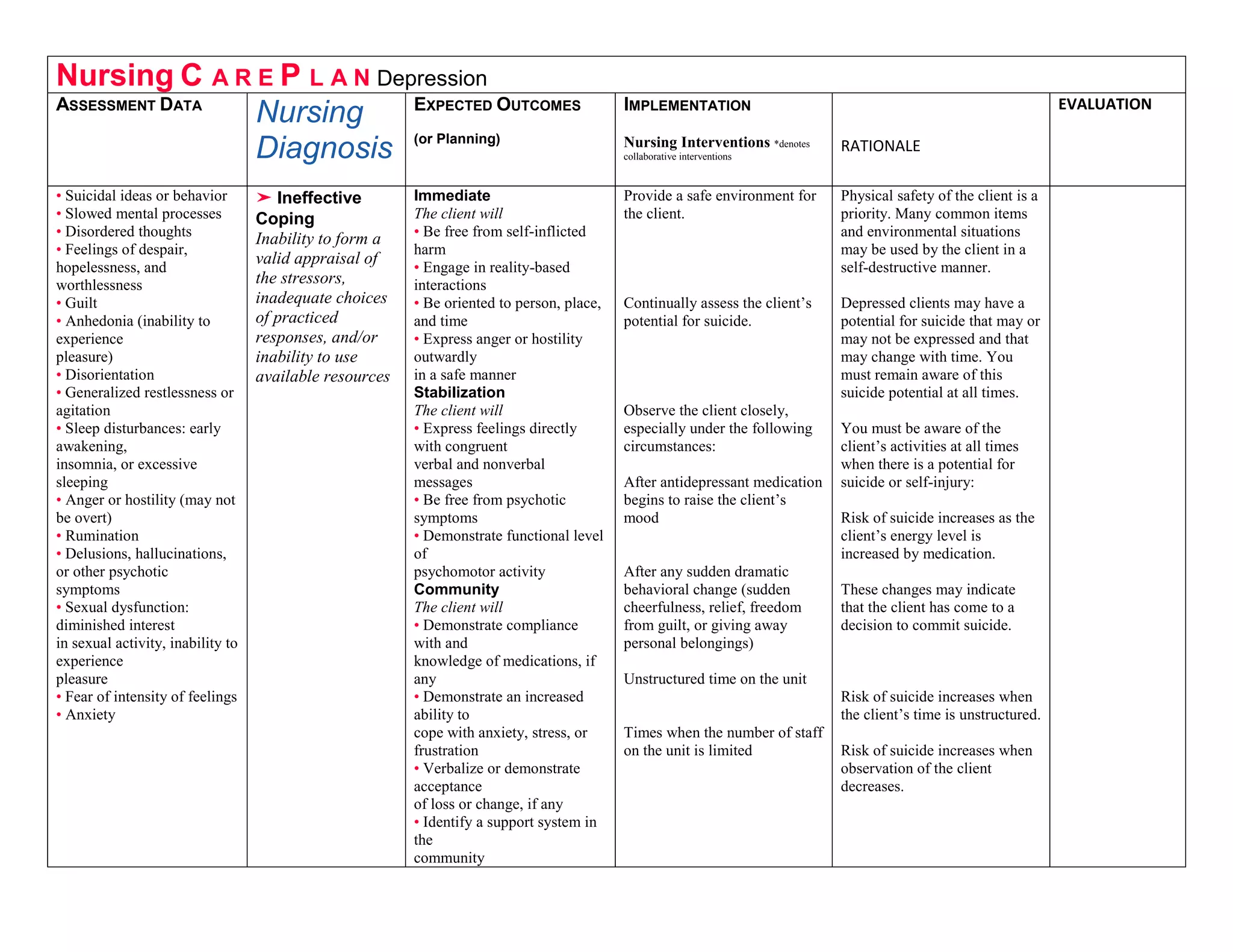
Nursing C A R E P L A N Depression
ASSESSMENT DATA
EXPECTED OUTCOMES
Nursing
Diagnosis (or Planning)
• Suicidal ideas or behavior
• Slowed mental processes
• Disordered thoughts
• Feelings of despair,
hopelessness, and
worthlessness
• Guilt
• Anhedonia (inability to
experience
pleasure)
• Disorientation
• Generalized restlessness or
agitation
• Sleep disturbances: early
awakening,
insomnia, or excessive
sleeping
• Anger or hostility (may not
be overt)
• Rumination
• Delusions, hallucinations,
or other psychotic
symptoms
• Sexual dysfunction:
diminished interest
in sexual activity, inability to
experience
pleasure
• Fear of intensity of feelings
• Anxiety

➤ Ineffective
Coping
Inability to form a
valid appraisal of
the stressors,
inadequate choices
of practiced
responses, and/or
inability to use
available resources

Immediate
The client will
• Be free from self-inflicted
harm
• Engage in reality-based
interactions
• Be oriented to person, place,
and time
• Express anger or hostility
outwardly
in a safe manner
Stabilization
The client will
• Express feelings directly
with congruent
verbal and nonverbal
messages
• Be free from psychotic
symptoms
• Demonstrate functional level
of
psychomotor activity
Community
The client will
• Demonstrate compliance
with and
knowledge of medications, if
any
• Demonstrate an increased
ability to
cope with anxiety, stress, or
frustration
• Verbalize or demonstrate
acceptance
of loss or change, if any
• Identify a support system in
the
community

EVALUATION

IMPLEMENTATION
Nursing Interventions *denotes
collaborative interventions

RATIONALE

Provide a safe environment for
the client.

Physical safety of the client is a
priority. Many common items
and environmental situations
may be used by the client in a
self-destructive manner.

Continually assess the client’s
potential for suicide.

Depressed clients may have a
potential for suicide that may or
may not be expressed and that
may change with time. You
must remain aware of this
suicide potential at all times.

Observe the client closely,
especially under the following
circumstances:
After antidepressant medication
begins to raise the client’s
mood

After any sudden dramatic
behavioral change (sudden
cheerfulness, relief, freedom
from guilt, or giving away
personal belongings)

You must be aware of the
client’s activities at all times
when there is a potential for
suicide or self-injury:
Risk of suicide increases as the
client’s energy level is
increased by medication.
These changes may indicate
that the client has come to a
decision to commit suicide.

Unstructured time on the unit
Risk of suicide increases when
the client’s time is unstructured.
Times when the number of staff
on the unit is limited

Risk of suicide increases when
observation of the client
decreases.
Prep by: Dr. James M. Alo, RN,MAN,MAPsycho,PhD.

Nursing c a r e p l a n depression.drjma

  • 1.
    Nursing C AR E P L A N Depression ASSESSMENT DATA EXPECTED OUTCOMES Nursing Diagnosis (or Planning) • Suicidal ideas or behavior • Slowed mental processes • Disordered thoughts • Feelings of despair, hopelessness, and worthlessness • Guilt • Anhedonia (inability to experience pleasure) • Disorientation • Generalized restlessness or agitation • Sleep disturbances: early awakening, insomnia, or excessive sleeping • Anger or hostility (may not be overt) • Rumination • Delusions, hallucinations, or other psychotic symptoms • Sexual dysfunction: diminished interest in sexual activity, inability to experience pleasure • Fear of intensity of feelings • Anxiety ➤ Ineffective Coping Inability to form a valid appraisal of the stressors, inadequate choices of practiced responses, and/or inability to use available resources Immediate The client will • Be free from self-inflicted harm • Engage in reality-based interactions • Be oriented to person, place, and time • Express anger or hostility outwardly in a safe manner Stabilization The client will • Express feelings directly with congruent verbal and nonverbal messages • Be free from psychotic symptoms • Demonstrate functional level of psychomotor activity Community The client will • Demonstrate compliance with and knowledge of medications, if any • Demonstrate an increased ability to cope with anxiety, stress, or frustration • Verbalize or demonstrate acceptance of loss or change, if any • Identify a support system in the community EVALUATION IMPLEMENTATION Nursing Interventions *denotes collaborative interventions RATIONALE Provide a safe environment for the client. Physical safety of the client is a priority. Many common items and environmental situations may be used by the client in a self-destructive manner. Continually assess the client’s potential for suicide. Depressed clients may have a potential for suicide that may or may not be expressed and that may change with time. You must remain aware of this suicide potential at all times. Observe the client closely, especially under the following circumstances: After antidepressant medication begins to raise the client’s mood After any sudden dramatic behavioral change (sudden cheerfulness, relief, freedom from guilt, or giving away personal belongings) You must be aware of the client’s activities at all times when there is a potential for suicide or self-injury: Risk of suicide increases as the client’s energy level is increased by medication. These changes may indicate that the client has come to a decision to commit suicide. Unstructured time on the unit Risk of suicide increases when the client’s time is unstructured. Times when the number of staff on the unit is limited Risk of suicide increases when observation of the client decreases.
  • 2.
    Prep by: Dr.James M. Alo, RN,MAN,MAPsycho,PhD.