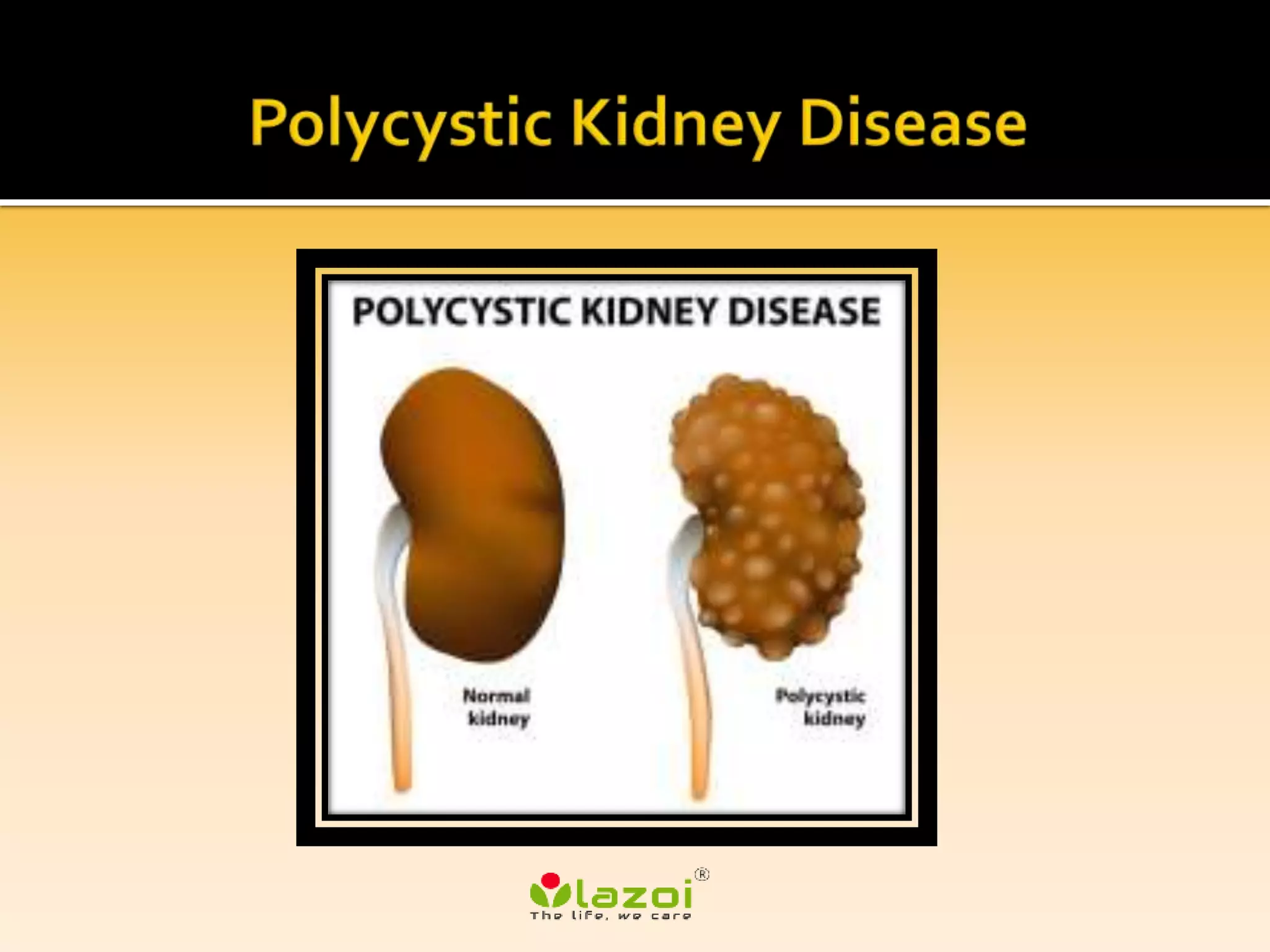
Polycystic kidney disease (PKD) is an inherited kidney disease.
It is denoted by cysts formation in the kidney and enlargement
of the kidney.
 It is the 4th leading cause of kidney failure
 It can also cause developing cysts in the liver and other
complication
 It impairs kidney function and eventually lead to kidney
damage and failure
Certain symptoms of polycystic kidney disease may
include:
 Blood in urine
 Frequent urination
 Pain in the abdomen and back
 Slight feeling of heaviness in the back
 Kidney stones
 Pale skin colour
 Skin that bruises easily
 Joint pain
 Nail abnormalities
 Fatigue
 Urinary tract infections
The cause of Polycystic Kidney Disease is mostly inherited, But less
commonly, it can occur in person who can previously any kidney
diseases.
There are three types of Polycystic Kidney Disease:
 Autosomal dominant polycystic kidney disease - Also called adult
polycystic kidney disease and account for 90% of cases. Someone
who has a parent with polycystic kidney disease has 50% chance of
developing such condition
 Autosomal recessive polycystic kidney disease - It is a much less
common type of polycystic kidney disease. Here, both the parent
should have polycystic kidney disease to develop polycystic kidney
disease for children.The person will have no symptom for polycystic
kidney disease if one gene is present.
 Acquired cystic kidney disease- It is not inherited and usually occurs in
life. It may develop to patients who have other kidney problems.
A family history and knowing the symptoms can help the
doctor to diagnose polycystic kidney disease. Certain diagnose
techniques may include:
 Abdominal ultrasound- Imaging technique to look for the cysts
in kidney
 Abdominal CT scan- Imaging technique which can detect small
cysts in the kidney
 Abdominal MRI scan-Technique which visualize kidney
structures and look for cysts
 Intravenous pyleogram- Contrast dye which is used to look for
blood vessels more clearly in X-ray.
Some treatments can be used to decrease certain symptoms,
which may include:
 Pain medication to decrease pain I abdomen and back
 Blood pressure medication to decrease blood pressure
 Antibiotics which will treat urinary tract infection (UTI)
 A low sodium diet
 Surgery to cut cysts and can relieve symptoms
 Diuretics to help remove excess fluid from the body.
Certain complications can occur due to polycystic kidney
disease, such as:
 Cysts in liver, pancreas and testicles
 Cataracts and blindness
 Liver failure
 Kidney stones
 Cardiovascular diseases
 Bleeding and bursting of cysts
 Brain or aortic aneurysms
 Anaemia
Logon to
www.lazoi.com
Like us on Facebook
https://www.facebook.com/LazoiTheLife
Follow us on Twitter
https://www.twitter.com/lazoithelife
Follow us on Pinterest
https://www.in.pinterest.com/lazoithelife

Polycystic kidney disease

  • 2.
    Polycystic kidney disease(PKD) is an inherited kidney disease. It is denoted by cysts formation in the kidney and enlargement of the kidney.  It is the 4th leading cause of kidney failure  It can also cause developing cysts in the liver and other complication  It impairs kidney function and eventually lead to kidney damage and failure
  • 3.
    Certain symptoms ofpolycystic kidney disease may include:  Blood in urine  Frequent urination  Pain in the abdomen and back  Slight feeling of heaviness in the back  Kidney stones  Pale skin colour  Skin that bruises easily  Joint pain  Nail abnormalities  Fatigue  Urinary tract infections
  • 4.
    The cause ofPolycystic Kidney Disease is mostly inherited, But less commonly, it can occur in person who can previously any kidney diseases. There are three types of Polycystic Kidney Disease:  Autosomal dominant polycystic kidney disease - Also called adult polycystic kidney disease and account for 90% of cases. Someone who has a parent with polycystic kidney disease has 50% chance of developing such condition  Autosomal recessive polycystic kidney disease - It is a much less common type of polycystic kidney disease. Here, both the parent should have polycystic kidney disease to develop polycystic kidney disease for children.The person will have no symptom for polycystic kidney disease if one gene is present.  Acquired cystic kidney disease- It is not inherited and usually occurs in life. It may develop to patients who have other kidney problems.
  • 5.
    A family historyand knowing the symptoms can help the doctor to diagnose polycystic kidney disease. Certain diagnose techniques may include:  Abdominal ultrasound- Imaging technique to look for the cysts in kidney  Abdominal CT scan- Imaging technique which can detect small cysts in the kidney  Abdominal MRI scan-Technique which visualize kidney structures and look for cysts  Intravenous pyleogram- Contrast dye which is used to look for blood vessels more clearly in X-ray.
  • 6.
    Some treatments canbe used to decrease certain symptoms, which may include:  Pain medication to decrease pain I abdomen and back  Blood pressure medication to decrease blood pressure  Antibiotics which will treat urinary tract infection (UTI)  A low sodium diet  Surgery to cut cysts and can relieve symptoms  Diuretics to help remove excess fluid from the body.
  • 7.
    Certain complications canoccur due to polycystic kidney disease, such as:  Cysts in liver, pancreas and testicles  Cataracts and blindness  Liver failure  Kidney stones  Cardiovascular diseases  Bleeding and bursting of cysts  Brain or aortic aneurysms  Anaemia
  • 8.
    Logon to www.lazoi.com Like uson Facebook https://www.facebook.com/LazoiTheLife Follow us on Twitter https://www.twitter.com/lazoithelife Follow us on Pinterest https://www.in.pinterest.com/lazoithelife