SEIZURES /EPILEPSY
Mr.VEERABHADRA.B.B
ASST PROFESSOR
DEPT OF MEDICAL SURGICAL NSG
SEIZURES /EPILEPSY
 Seizures are episodes of abnormal motor, sensory,
autonomic, or psychic activity resulting from sudden
excessive discharge from cerebral neurons.
 Epilepsy is a condition of the brain characterized by
sudden, brief attacks of altered consciousness,
motor activity, sensory phenomena, or
inappropriate behavior
ETIOLOGY
*About half the cases of epilepsy are
unknown.
*Possible causes include the following:
 Disorder of the Brain: Tumor, Abscess,
Atrioventricular malformation [AVM], aneurysm, or
hematoma
 Genetic /Family History.
 Congenital Abnormalities.
 Perinatal Factors:- Birth trauma and asphyxia
neonatorum
.
 Infectious Diseases: Meningitis , Encephalitis.
 Toxic Factors:- Lead poisoning, alcohol, and drugs
 Trauma and Physical Agents:- Cerebral injuries
 Circulatory Disturbances
 Neoplasms
INCIDENCE OF SEIZURE
 300,000 people have a first convulsion each year.
 120,000 of them are under the age of 18
 75,000 - 100,000 of them are children under the age of 5
who have experienced a febrile (fever-caused) seizure .
RISK FACTORS
 Babies who are small for their gestational age.
 Babies who have seizures in the first month of life
 Babies who are born with abnormal brain structure
 Abnormal blood vessels in the brain
 Serious brain injury or lack of oxygen to the brain.
 Brain tumors.
 Infections of the brain: abscess, meningitis, or
encephalitis
 Stroke resulting from blockage of arteries
CONTINUED…..
• Cerebral palsy.
• Mental handicap
• Seizures occurring within days after head injury
("early posttraumatic seizures")
• Family history of epilepsy or fever-related
seizures
• Alzheimer's disease (late in the illness)
• Fever-related (febrile) seizures that are unusually
long
• Use of illegal drugs such as cocaine.
• Mild head injuries, such as a concussion with
just a very brief loss of consciousness, do not
cause epilepsy
SEIZURE-PROVOKING FACTORS
 Missed medication
 Lack of sleep
 Illness (both with and without fever)
 Severe psychological stress
 Heavy alcohol use.
 Use of cocaine and other recreational drugs such
as Ecstasy
 Over-the-counter or prescription medications or
supplements that decrease the effectiveness of
seizure medicines
 Nutritional deficiencies: vitamins and minerals
 The menstrual cycle
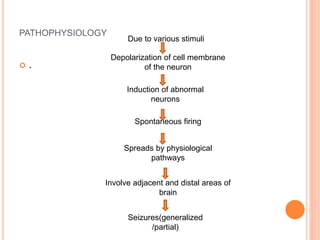
PATHOPHYSIOLOGY
 .
Due to various stimuli
Depolarization of cell membrane
of the neuron
Induction of abnormal
neurons
Spontaneous firing
Spreads by physiological
pathways
Involve adjacent and distal areas of
brain
Seizures(generalized
/partial)
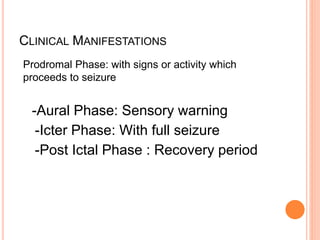
CLINICAL MANIFESTATIONS
Prodromal Phase: with signs or activity which
proceeds to seizure
-Aural Phase: Sensory warning
-Icter Phase: With full seizure
-Post Ictal Phase : Recovery period
.
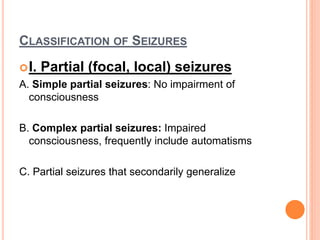
CLASSIFICATION OF SEIZURES
I. Partial (focal, local) seizures
A. Simple partial seizures: No impairment of
consciousness
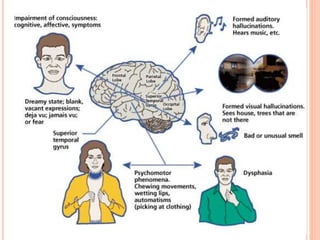
B. Complex partial seizures: Impaired
consciousness, frequently include automatisms
C. Partial seizures that secondarily generalize
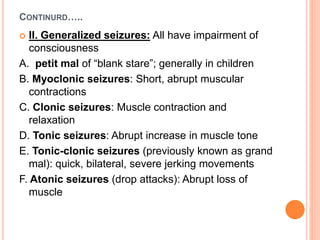
CONTINURD…..
 II. Generalized seizures: All have impairment of
consciousness
A. petit mal of “blank stare”; generally in children
B. Myoclonic seizures: Short, abrupt muscular
contractions
C. Clonic seizures: Muscle contraction and
relaxation
D. Tonic seizures: Abrupt increase in muscle tone
E. Tonic-clonic seizures (previously known as grand
mal): quick, bilateral, severe jerking movements
F. Atonic seizures (drop attacks): Abrupt loss of
muscle
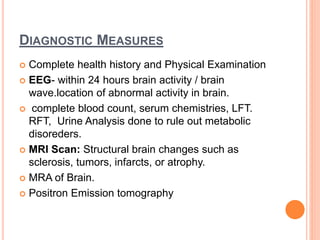
DIAGNOSTIC MEASURES
 Complete health history and Physical Examination
 EEG- within 24 hours brain activity / brain
wave.location of abnormal activity in brain.
 complete blood count, serum chemistries, LFT.
RFT, Urine Analysis done to rule out metabolic
disoreders.
 MRI Scan: Structural brain changes such as
sclerosis, tumors, infarcts, or atrophy.
 MRA of Brain.
 Positron Emission tomography
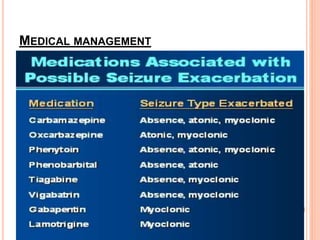
MEDICAL MANAGEMENT
SURGICAL MANGEMENT
 Limbic resection
 Primarily anterior temporal lobe resection.
 Neocortical resection
 Hemispherectomies
 Multilobar resections
 Corpus collosum sections
.
 Vagal nerve stimulation:Transmission of
electrical stimulation to reduce frequency and
intensity of seizures.
 Psychosocial counseling: Biofeedback
aimed at teaching the patient to maintain a certain
brain wave frequency that is refractory to seizure
activity.
NURSING DIAGNOSIS
 Ineffective breathing pattern related to neuromuscular
impairement secondary to tonic phase of Seizure
 Ineffective coping related to perceived loss of control
and denial of diagnosis
 Ineffective therapeutic regimen related to lack of
knowledge about the disease management as evidenced
by verbalization of lack of knowledge.
 Risk for injury related to seizure activity.
.
Seizure activity
 HOME CARE
 Maintain adequate rest and nutrition; check with a
physician before dieting.
 Limit alcohol intake.
 Report infections promptly.
 Avoid trigger factors (flashing lights, hyperventilation,
loud noises, video games, television).
 Brush the teeth regularly with a soft toothbrush.
 Avoid activities that precipitate seizure activity.
 Keep follow-up appointments.
 Lead as normal a life as possible.

Seizure and nursing care.

  • 1.
  • 2.
    SEIZURES /EPILEPSY  Seizuresare episodes of abnormal motor, sensory, autonomic, or psychic activity resulting from sudden excessive discharge from cerebral neurons.  Epilepsy is a condition of the brain characterized by sudden, brief attacks of altered consciousness, motor activity, sensory phenomena, or inappropriate behavior
  • 3.
    ETIOLOGY *About half thecases of epilepsy are unknown. *Possible causes include the following:  Disorder of the Brain: Tumor, Abscess, Atrioventricular malformation [AVM], aneurysm, or hematoma  Genetic /Family History.  Congenital Abnormalities.  Perinatal Factors:- Birth trauma and asphyxia neonatorum
  • 4.
    .  Infectious Diseases:Meningitis , Encephalitis.  Toxic Factors:- Lead poisoning, alcohol, and drugs  Trauma and Physical Agents:- Cerebral injuries  Circulatory Disturbances  Neoplasms
  • 5.
    INCIDENCE OF SEIZURE 300,000 people have a first convulsion each year.  120,000 of them are under the age of 18  75,000 - 100,000 of them are children under the age of 5 who have experienced a febrile (fever-caused) seizure .
  • 6.
    RISK FACTORS  Babieswho are small for their gestational age.  Babies who have seizures in the first month of life  Babies who are born with abnormal brain structure  Abnormal blood vessels in the brain  Serious brain injury or lack of oxygen to the brain.  Brain tumors.  Infections of the brain: abscess, meningitis, or encephalitis  Stroke resulting from blockage of arteries
  • 7.
    CONTINUED….. • Cerebral palsy. •Mental handicap • Seizures occurring within days after head injury ("early posttraumatic seizures") • Family history of epilepsy or fever-related seizures • Alzheimer's disease (late in the illness) • Fever-related (febrile) seizures that are unusually long • Use of illegal drugs such as cocaine. • Mild head injuries, such as a concussion with just a very brief loss of consciousness, do not cause epilepsy
  • 8.
    SEIZURE-PROVOKING FACTORS  Missedmedication  Lack of sleep  Illness (both with and without fever)  Severe psychological stress  Heavy alcohol use.  Use of cocaine and other recreational drugs such as Ecstasy  Over-the-counter or prescription medications or supplements that decrease the effectiveness of seizure medicines  Nutritional deficiencies: vitamins and minerals  The menstrual cycle
  • 9.
    PATHOPHYSIOLOGY  . Due tovarious stimuli Depolarization of cell membrane of the neuron Induction of abnormal neurons Spontaneous firing Spreads by physiological pathways Involve adjacent and distal areas of brain Seizures(generalized /partial)
  • 10.
    CLINICAL MANIFESTATIONS Prodromal Phase:with signs or activity which proceeds to seizure -Aural Phase: Sensory warning -Icter Phase: With full seizure -Post Ictal Phase : Recovery period
  • 11.
  • 12.
    CLASSIFICATION OF SEIZURES I.Partial (focal, local) seizures A. Simple partial seizures: No impairment of consciousness B. Complex partial seizures: Impaired consciousness, frequently include automatisms C. Partial seizures that secondarily generalize
  • 13.
    CONTINURD…..  II. Generalizedseizures: All have impairment of consciousness A. petit mal of “blank stare”; generally in children B. Myoclonic seizures: Short, abrupt muscular contractions C. Clonic seizures: Muscle contraction and relaxation D. Tonic seizures: Abrupt increase in muscle tone E. Tonic-clonic seizures (previously known as grand mal): quick, bilateral, severe jerking movements F. Atonic seizures (drop attacks): Abrupt loss of muscle
  • 14.
    DIAGNOSTIC MEASURES  Completehealth history and Physical Examination  EEG- within 24 hours brain activity / brain wave.location of abnormal activity in brain.  complete blood count, serum chemistries, LFT. RFT, Urine Analysis done to rule out metabolic disoreders.  MRI Scan: Structural brain changes such as sclerosis, tumors, infarcts, or atrophy.  MRA of Brain.  Positron Emission tomography
  • 15.
  • 16.
    SURGICAL MANGEMENT  Limbicresection  Primarily anterior temporal lobe resection.  Neocortical resection  Hemispherectomies  Multilobar resections  Corpus collosum sections
  • 17.
    .  Vagal nervestimulation:Transmission of electrical stimulation to reduce frequency and intensity of seizures.  Psychosocial counseling: Biofeedback aimed at teaching the patient to maintain a certain brain wave frequency that is refractory to seizure activity.
  • 18.
    NURSING DIAGNOSIS  Ineffectivebreathing pattern related to neuromuscular impairement secondary to tonic phase of Seizure  Ineffective coping related to perceived loss of control and denial of diagnosis  Ineffective therapeutic regimen related to lack of knowledge about the disease management as evidenced by verbalization of lack of knowledge.  Risk for injury related to seizure activity.
  • 19.
    . Seizure activity  HOMECARE  Maintain adequate rest and nutrition; check with a physician before dieting.  Limit alcohol intake.  Report infections promptly.  Avoid trigger factors (flashing lights, hyperventilation, loud noises, video games, television).  Brush the teeth regularly with a soft toothbrush.  Avoid activities that precipitate seizure activity.  Keep follow-up appointments.  Lead as normal a life as possible.