By,
Ms. Ekta S Patel
II Year M.Sc Nursing
MSN(Neuroscience)
Introduction:
• Neurocysticercosis is most common parasitic disease of
nervous system and it is main cause of acquired
epilepsy in developing countries.
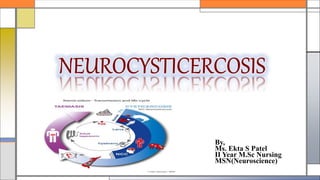
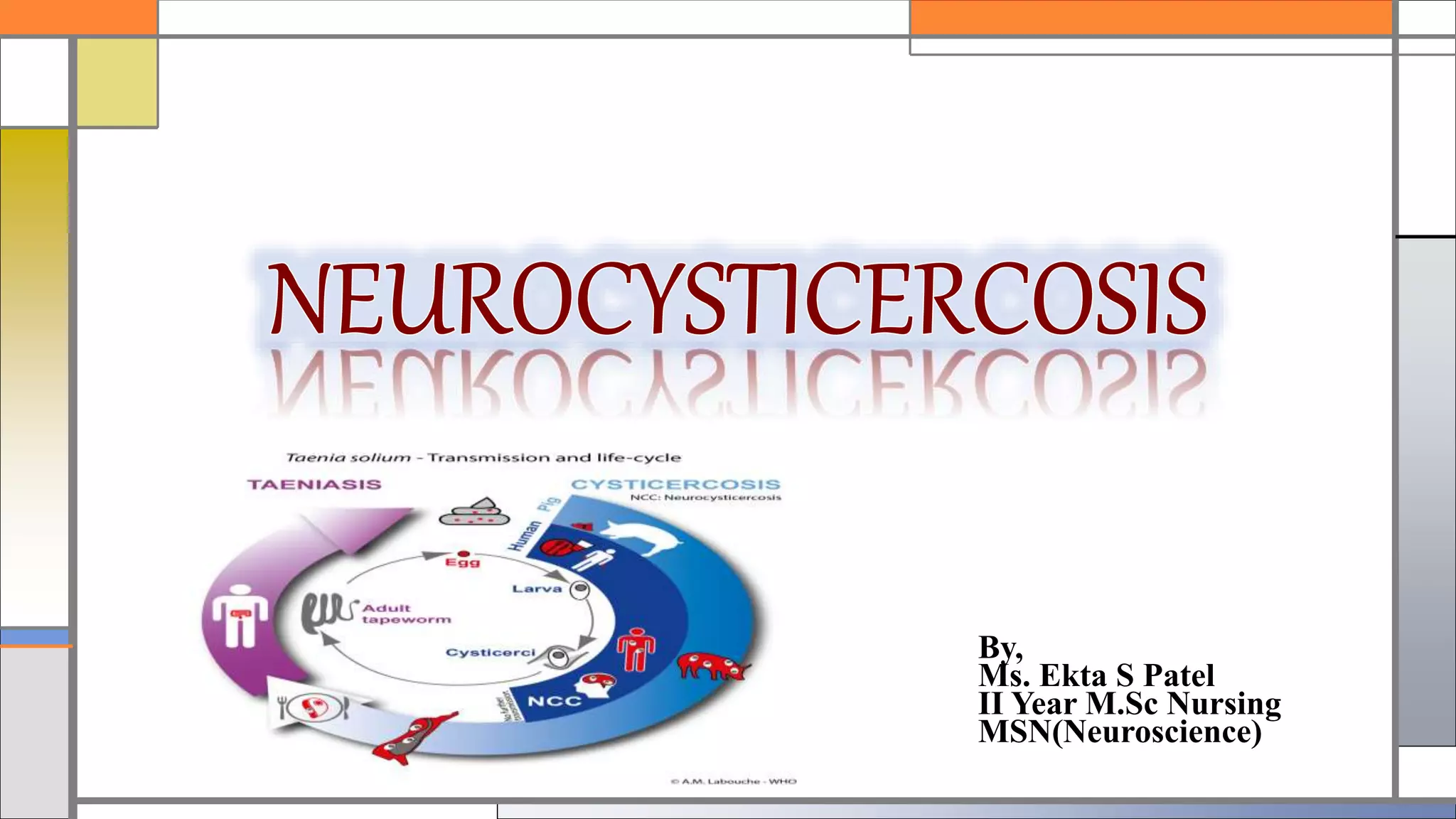
• Neurocysticercosis can be acquired via fecal-oral
contact with carries adult tape worm Taenia solium. This
usually indicates the presence of tap worm carrier in
immediate environment or by accidental ingestion of
contaminated food.
Definition:
• NCC is the condition in which results from
encystment of the larva of T.Solium, the pork
tapeworm in the tissue of the brain.
Epidemiology:
• NCC is most frequent neurological disorders in
several countries of Latin America, Africa and Asia.
• Its relevance to socioeconomic factors and feeding
habits.
• It is almost unnoticed in Muslims as Quran
prohibits the consumption of pork.
• It is endemic in areas, where pork is massively
consumed.
• In Asia this conditions most disease, but its
prevalence is still underestimated because of lack
of diagnostic facilities in rural areas, where the
reported cases only represent the tip of the
iceberg.
• CNS involvement occurs in 50-70% of all cases.
Clinical Manifestation:
• Seizures.
• Focal neurological signs: pyramidal tract sign,
sensory deficits, cerebellar ataxia, sign of brain
stem dysfunction, involuntary movement.
• Increased intracranial pressure.
• Hydrocephalus.
• Encephalitis.
• Psychotic reaction.
• Diffuse muscle involvement may result in pseudo
hypertrophic myopathy swelling and hypertrophy of
muscle.
Diagnostic evaluation:
• History collection
• Physical examination
• CT Scan and MRI
• Stool studies
Management:
• Before the treatment the viability of cyst and
location of parasite is to be confirmed. Treatment
consist of:
• Symptomatic
• Specific anticysticercus agent
• Surgical treatment
Pharmacological management:
• Praziquantel 25 mg/kg every
2 hours per day
• Albendazole 15 mg/kg of 1
month.
Surgical management:
• For patient with hydrocephalus
secondary to cysticercosis
ventricular shunt is done.
• Freely mobile ventricular cyst may
be removed by surgical excision or
endoscopic aspiration.
Nursing management:
• Observe patient’s condition, vital
signs and symptoms of increased
intracranial pressure.
• Provide seizures precaution.
• Anticipate behavioural change and
observe for it.
• Give health education about the
disease condition, treatment and
prevention.
Complication:
• Seizure
• Stroke
• Vision changes
• Cognitive problems
• Death
Summary
Thank you

Neurocysticercosis

  • 1.
    By, Ms. Ekta SPatel II Year M.Sc Nursing MSN(Neuroscience)
  • 2.
  • 3.
    • Neurocysticercosis ismost common parasitic disease of nervous system and it is main cause of acquired epilepsy in developing countries. • Neurocysticercosis can be acquired via fecal-oral contact with carries adult tape worm Taenia solium. This usually indicates the presence of tap worm carrier in immediate environment or by accidental ingestion of contaminated food.
  • 4.
  • 5.
    • NCC isthe condition in which results from encystment of the larva of T.Solium, the pork tapeworm in the tissue of the brain.
  • 6.
  • 7.
    • NCC ismost frequent neurological disorders in several countries of Latin America, Africa and Asia. • Its relevance to socioeconomic factors and feeding habits. • It is almost unnoticed in Muslims as Quran prohibits the consumption of pork.
  • 8.
    • It isendemic in areas, where pork is massively consumed. • In Asia this conditions most disease, but its prevalence is still underestimated because of lack of diagnostic facilities in rural areas, where the reported cases only represent the tip of the iceberg. • CNS involvement occurs in 50-70% of all cases.
  • 9.
  • 10.
    • Seizures. • Focalneurological signs: pyramidal tract sign, sensory deficits, cerebellar ataxia, sign of brain stem dysfunction, involuntary movement. • Increased intracranial pressure. • Hydrocephalus.
  • 11.
    • Encephalitis. • Psychoticreaction. • Diffuse muscle involvement may result in pseudo hypertrophic myopathy swelling and hypertrophy of muscle.
  • 12.
  • 13.
    • History collection •Physical examination • CT Scan and MRI • Stool studies
  • 14.
  • 15.
    • Before thetreatment the viability of cyst and location of parasite is to be confirmed. Treatment consist of: • Symptomatic • Specific anticysticercus agent • Surgical treatment
  • 16.
    Pharmacological management: • Praziquantel25 mg/kg every 2 hours per day • Albendazole 15 mg/kg of 1 month.
  • 17.
    Surgical management: • Forpatient with hydrocephalus secondary to cysticercosis ventricular shunt is done. • Freely mobile ventricular cyst may be removed by surgical excision or endoscopic aspiration.
  • 18.
    Nursing management: • Observepatient’s condition, vital signs and symptoms of increased intracranial pressure. • Provide seizures precaution. • Anticipate behavioural change and observe for it. • Give health education about the disease condition, treatment and prevention.
  • 19.
  • 20.
    • Seizure • Stroke •Vision changes • Cognitive problems • Death
  • 21.
  • 23.