Unit 5 - Enzymes
Learning Objectives
• Define the term catalyst.
• Describe what an enzyme is.
• Describe why enzymes are important.
• Describe how enzymes work.
• Describe the effect of pH and temperature on
enzyme activity.
Catalysts
• A catalyst is a substance that speeds up the rate of a
chemical reaction but is not itself changed by the
reaction.
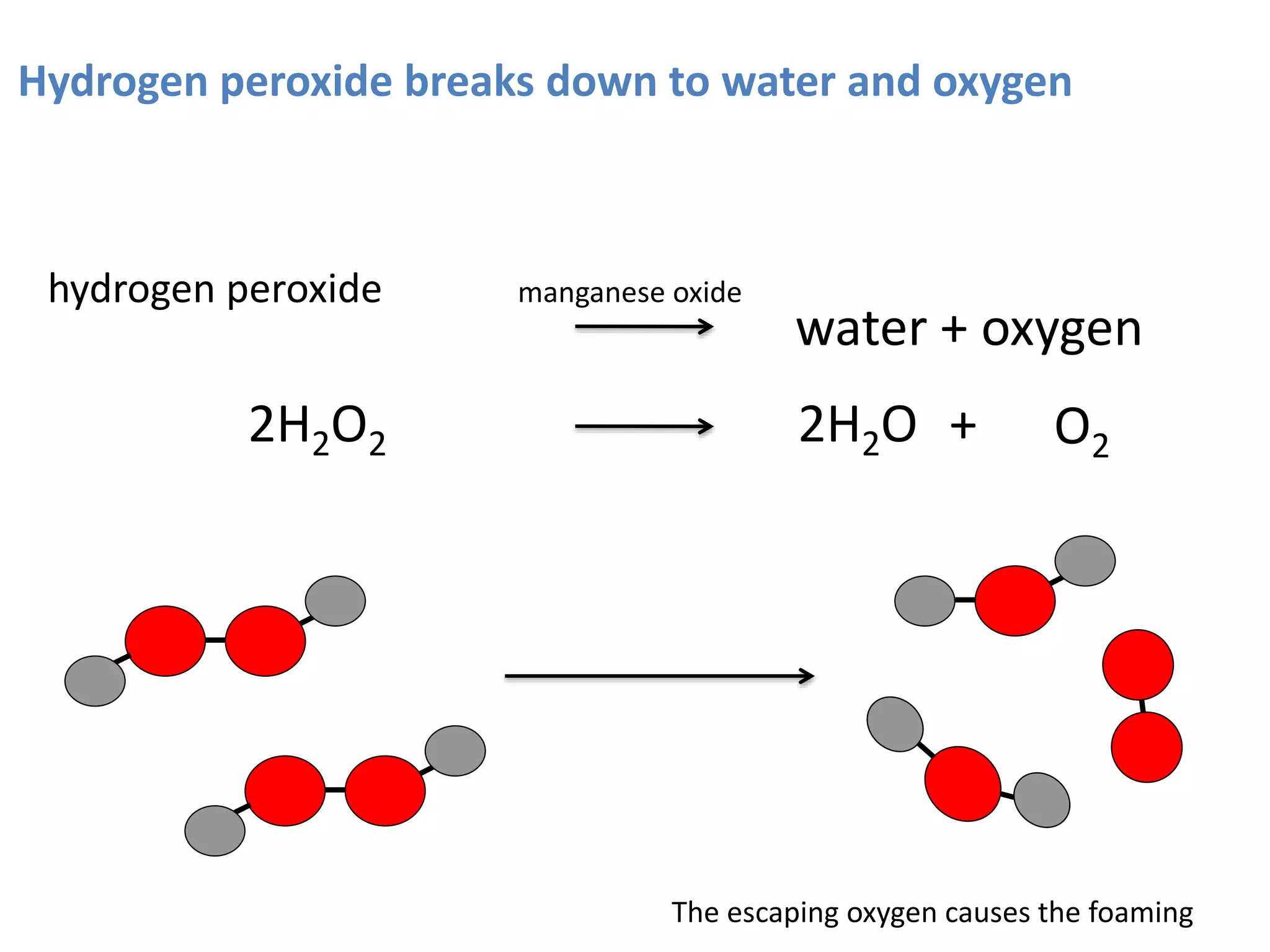
hydrogen peroxide
Hydrogen peroxide breaks down to water and oxygen
The escaping oxygen causes the foaming
2H2O2 2H2O O2+
water + oxygen
manganese oxide
• They occur inside cells or are secreted by the cells.
• Catalase is the enzyme that catalyses the break
down of hydrogen peroxide.
Enzymes act as biological catalysts
Catalase
• Proteins are long molecules that are folded into a specific shape.
catalase amylase trypsinpepsin
Enzymes are proteins
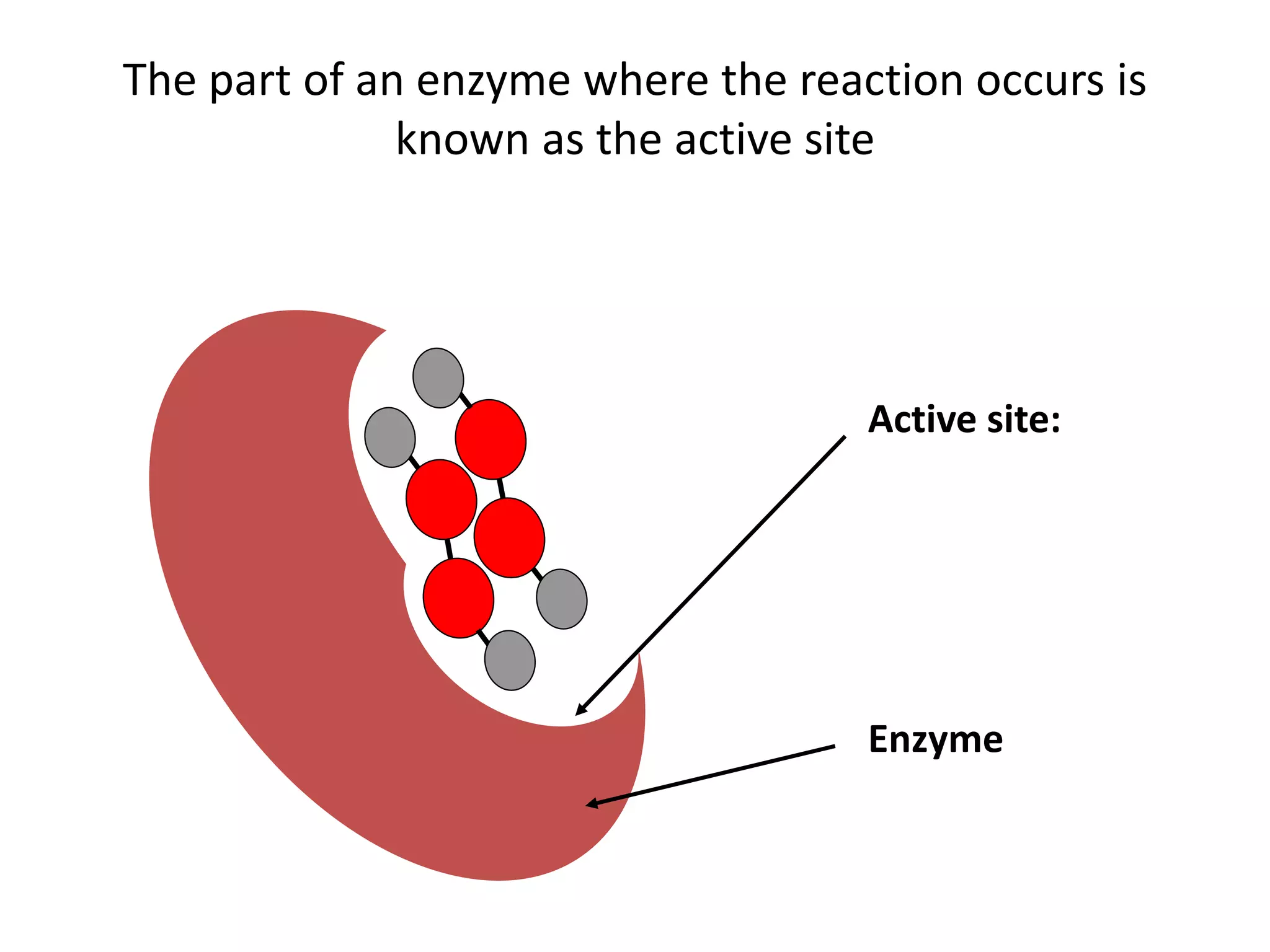
The part of an enzyme where the reaction occurs is
known as the active site
Active site:
Enzyme
The molecule the enzyme acts on is known as the
substrate molecule
Active site:
The site on the
enzyme where the
reaction occurs
Enzyme
Substrate molecules
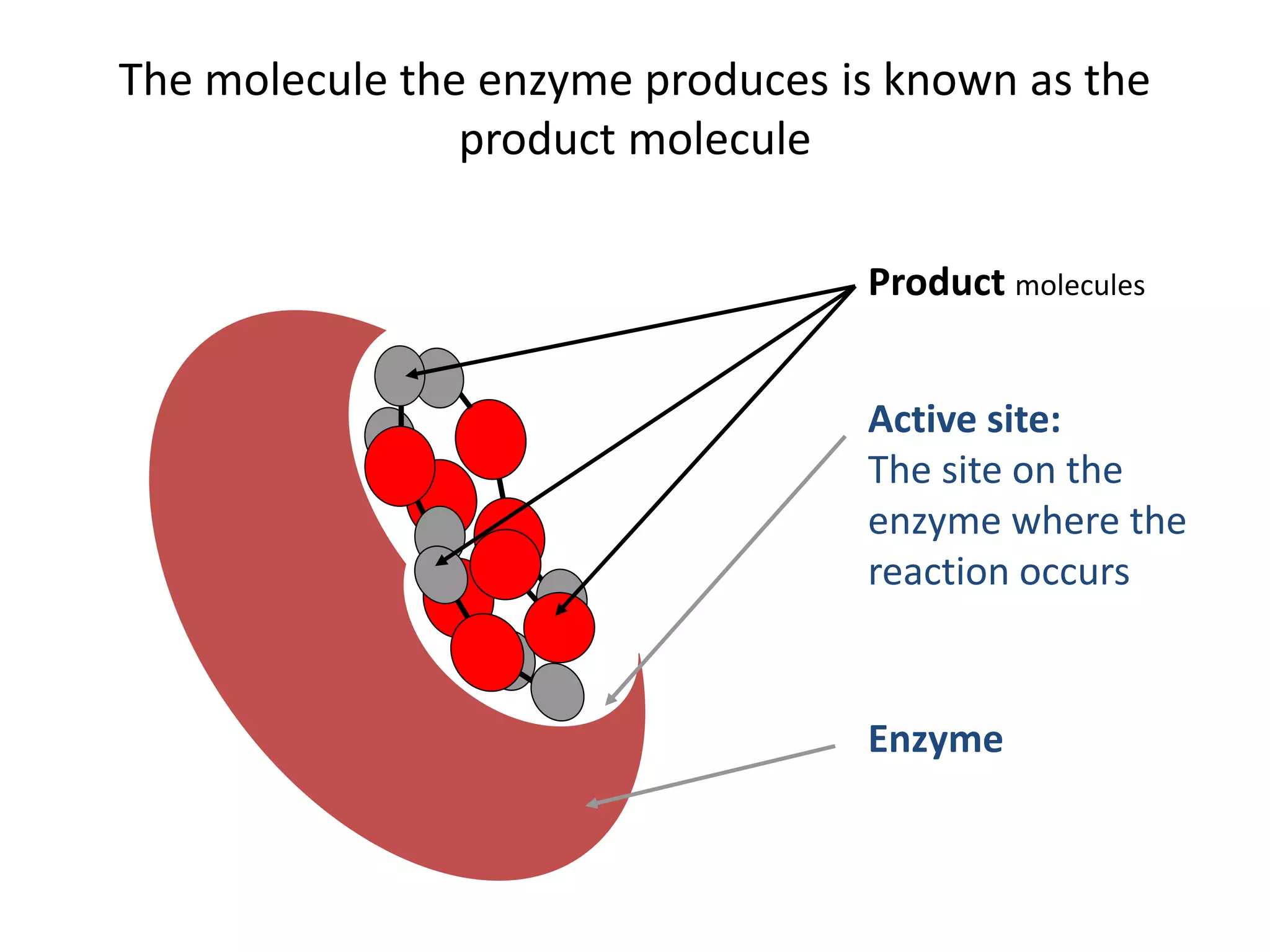
The molecule the enzyme produces is known as the
product molecule
Active site:
The site on the
enzyme where the
reaction occurs
Enzyme
Product molecules
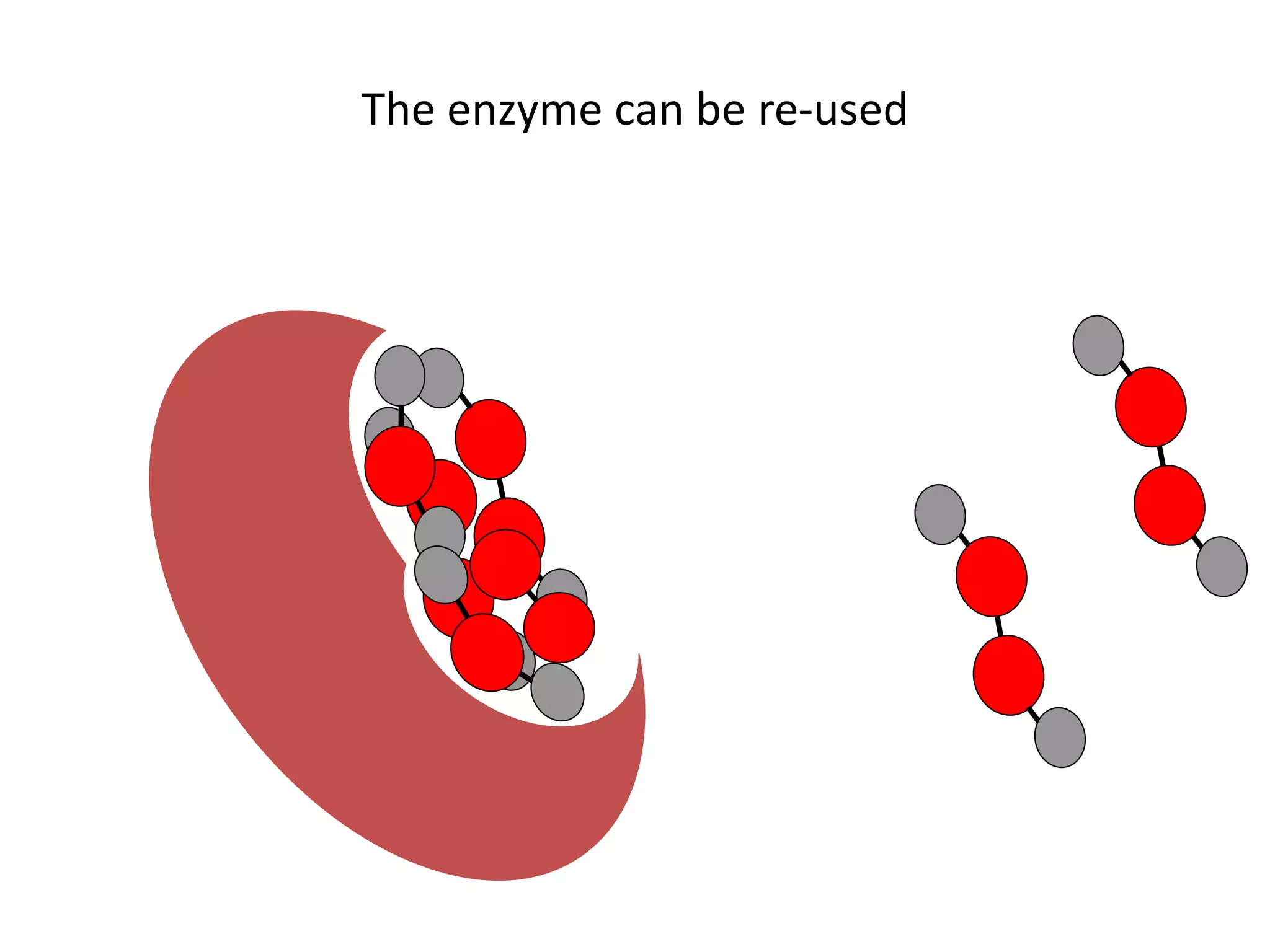
The enzyme can be re-used
• The lock and key hypothesis states that the active site specifically
matches the shape of the substrate molecule
enzyme
Each enzyme is specific to one substrate molecule or type of
molecule
active site
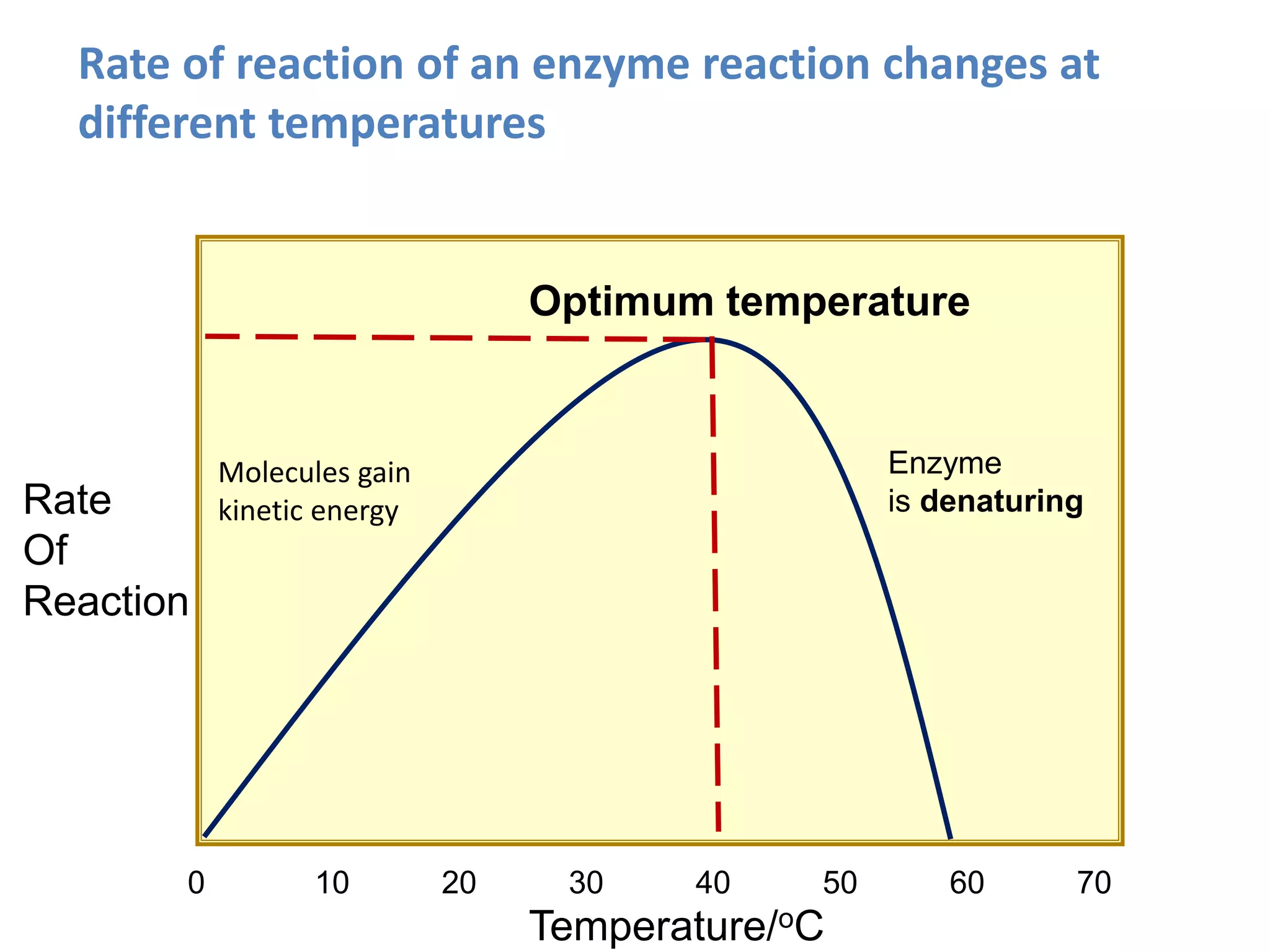
• At low temperatures enzyme controlled reactions go slowly
because the molecules have low kinetic energy.
The rate of an enzyme controlled reaction is
affected by temperature
But this only occurs up to the
optimum temperature (usually
about 40oC)
The temperature at which
the rate of reaction is
fastest is known as the
optimum temperature
When temperature increases the reaction also increases as the
molecules have more kinetic energy
After the optimum temperature the heat causes the
enzyme to denature
 The enzyme changes shape and the active site no longer matches
the shape of the substrate molecule
Rates of enzyme reactions can be measured by recording the
time for a substrate to disappear or a product appears
protein polypeptides
trypsin
white clear
Controlled variables:
•Volume and concentration of substrate (milk)
•Volume and concentration of enzyme (trypsin)
•pH (controlled by buffers)
•Temperature
Rate
Of
Reaction
Temperature/oC
0 10 20 30 40 50 60 70
Optimum temperature
Enzyme
is denaturing
Rate of reaction of an enzyme reaction changes at
different temperatures
Molecules gain
kinetic energy
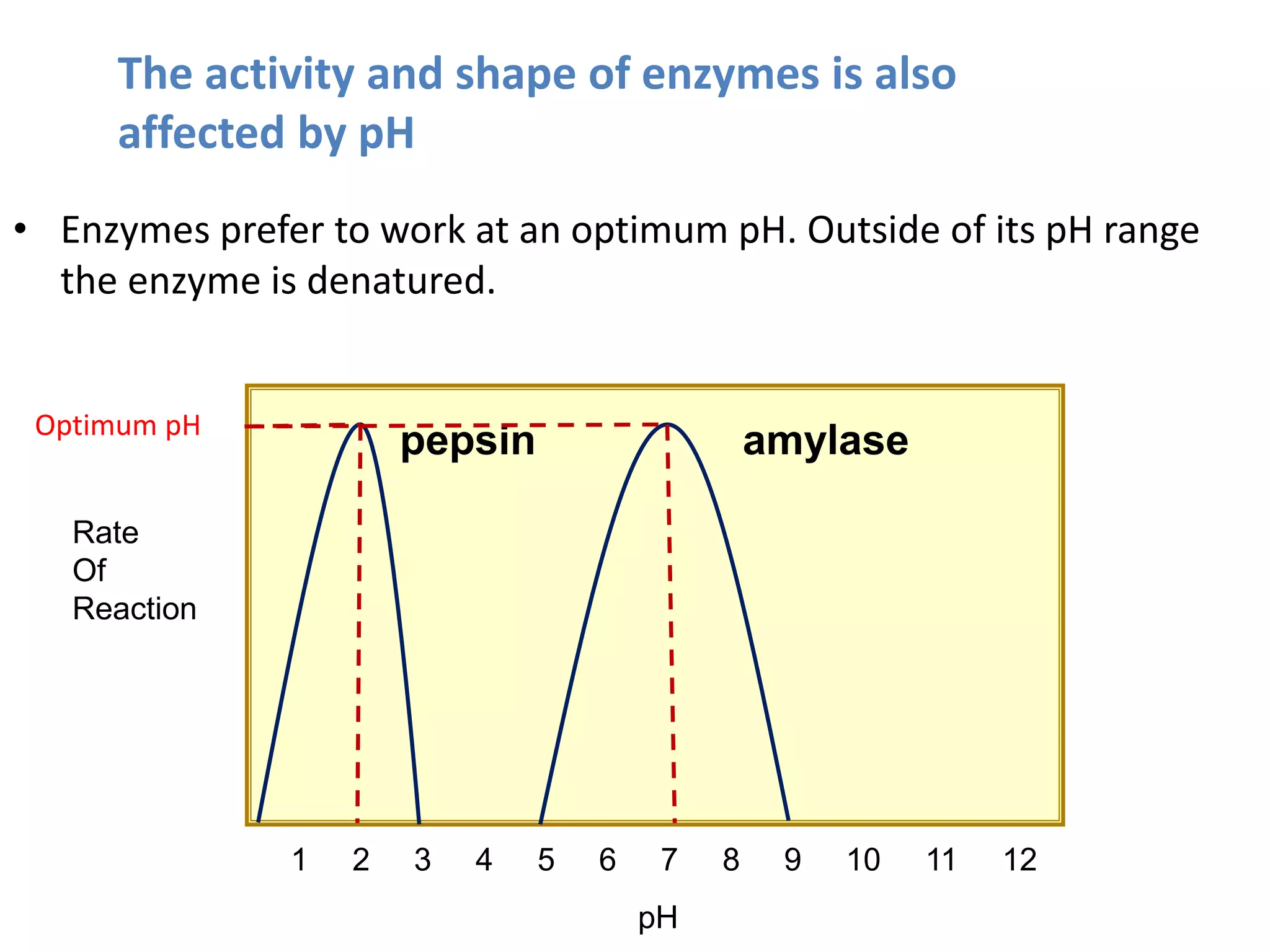
• Enzymes prefer to work at an optimum pH. Outside of its pH range
the enzyme is denatured.
Rate
Of
Reaction
pH
1 2 3 4 5 6 7 8 9 10 11 12
pepsin amylase
The activity and shape of enzymes is also
affected by pH
Optimum pH
Enzymes are used in biological washing powders
• Proteases break down the coloured, insoluble proteins that
cause stains to smaller, colourless soluble polypeptides.
• Can wash at lower temperatures
Enzymes are used in the food industry
• Pectinase break down substances in
apple cell walls and enable greater
juice extraction.
 Lactase breaks down lactose in milk
into glucose and galactose.
This makes milk drinkable for lactose
intolerant people.
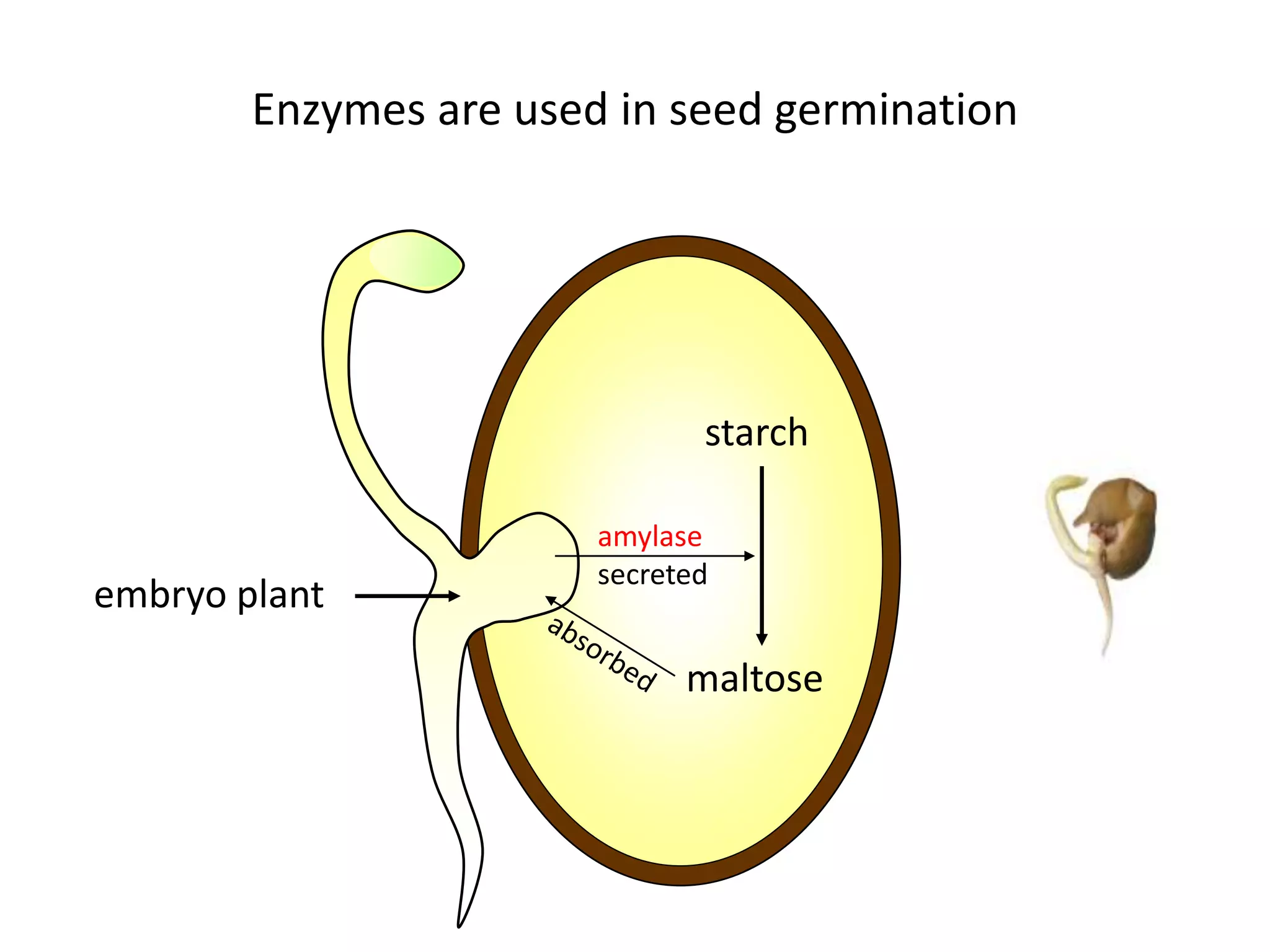
Enzymes are used in seed germination
starch
embryo plant
amylase
secreted
maltose
Summary
• Keywords:
enzyme
active sitesubstrate product
denaturetemperature
pH
optimum
catalase amylase
trypsin pepsinpectinase
lactase
protease
catalyst catalyse protein

Lesson 21 enzymes

  • 1.
    Unit 5 -Enzymes
  • 2.
    Learning Objectives • Definethe term catalyst. • Describe what an enzyme is. • Describe why enzymes are important. • Describe how enzymes work. • Describe the effect of pH and temperature on enzyme activity.
  • 3.
    Catalysts • A catalystis a substance that speeds up the rate of a chemical reaction but is not itself changed by the reaction.
  • 4.
    hydrogen peroxide Hydrogen peroxidebreaks down to water and oxygen The escaping oxygen causes the foaming 2H2O2 2H2O O2+ water + oxygen manganese oxide
  • 5.
    • They occurinside cells or are secreted by the cells. • Catalase is the enzyme that catalyses the break down of hydrogen peroxide. Enzymes act as biological catalysts Catalase
  • 6.
    • Proteins arelong molecules that are folded into a specific shape. catalase amylase trypsinpepsin Enzymes are proteins
  • 7.
    The part ofan enzyme where the reaction occurs is known as the active site Active site: Enzyme
  • 8.
    The molecule theenzyme acts on is known as the substrate molecule Active site: The site on the enzyme where the reaction occurs Enzyme Substrate molecules
  • 9.
    The molecule theenzyme produces is known as the product molecule Active site: The site on the enzyme where the reaction occurs Enzyme Product molecules
  • 10.
    The enzyme canbe re-used
  • 11.
    • The lockand key hypothesis states that the active site specifically matches the shape of the substrate molecule enzyme Each enzyme is specific to one substrate molecule or type of molecule active site
  • 12.
    • At lowtemperatures enzyme controlled reactions go slowly because the molecules have low kinetic energy. The rate of an enzyme controlled reaction is affected by temperature
  • 13.
    But this onlyoccurs up to the optimum temperature (usually about 40oC) The temperature at which the rate of reaction is fastest is known as the optimum temperature When temperature increases the reaction also increases as the molecules have more kinetic energy
  • 14.
    After the optimumtemperature the heat causes the enzyme to denature  The enzyme changes shape and the active site no longer matches the shape of the substrate molecule
  • 15.
    Rates of enzymereactions can be measured by recording the time for a substrate to disappear or a product appears protein polypeptides trypsin white clear Controlled variables: •Volume and concentration of substrate (milk) •Volume and concentration of enzyme (trypsin) •pH (controlled by buffers) •Temperature
  • 16.
    Rate Of Reaction Temperature/oC 0 10 2030 40 50 60 70 Optimum temperature Enzyme is denaturing Rate of reaction of an enzyme reaction changes at different temperatures Molecules gain kinetic energy
  • 17.
    • Enzymes preferto work at an optimum pH. Outside of its pH range the enzyme is denatured. Rate Of Reaction pH 1 2 3 4 5 6 7 8 9 10 11 12 pepsin amylase The activity and shape of enzymes is also affected by pH Optimum pH
  • 18.
    Enzymes are usedin biological washing powders • Proteases break down the coloured, insoluble proteins that cause stains to smaller, colourless soluble polypeptides. • Can wash at lower temperatures
  • 19.
    Enzymes are usedin the food industry • Pectinase break down substances in apple cell walls and enable greater juice extraction.  Lactase breaks down lactose in milk into glucose and galactose. This makes milk drinkable for lactose intolerant people.
  • 20.
    Enzymes are usedin seed germination starch embryo plant amylase secreted maltose
  • 21.
    Summary • Keywords: enzyme active sitesubstrateproduct denaturetemperature pH optimum catalase amylase trypsin pepsinpectinase lactase protease catalyst catalyse protein