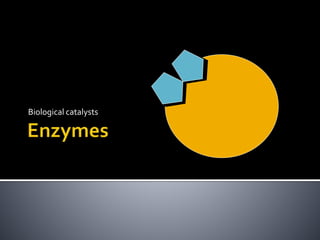
Biological catalysts
 A protein which acts as a catalyst, which
speeds up the rate of
reaction.
*All proteins are composed of sub-units
called amino acids.
*Proteins contain the elements carbon,
hydrogen, oxygen, nitrogen and sulphur.
Enzymes are special proteins
*There are hundreds of different enzymes but
*With the right enzyme present, the reaction happens
10
faster
each enzyme
speeds up only one kind of reaction
*Like all proteins, each enzyme molecule has a particular shape
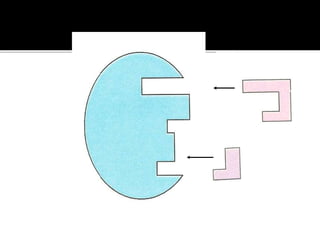
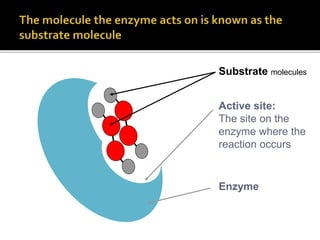
*Any substance an enzyme acts on is called a substrate
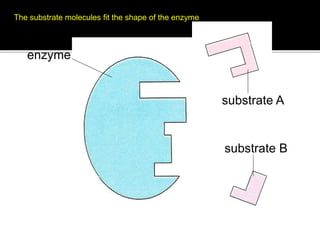
enzyme
substrate A
substrate B
The substrate molecules fit the shape of the enzyme
12
13
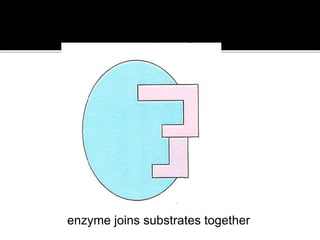
substrates combine temporarily with enzyme
enzyme joins substrates together
14
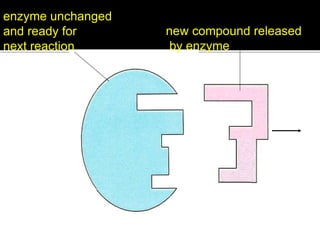
new compound released
by enzyme
enzyme unchanged
and ready for
next reaction
15
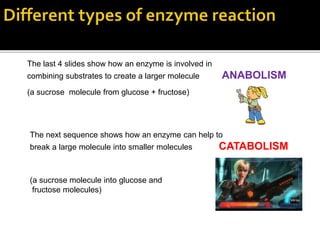
The last 4 slides show how an enzyme is involved in
combining substrates to create a larger molecule ANABOLISM
(a sucrose molecule from glucose + fructose)
The next sequence shows how an enzyme can help to
break a large molecule into smaller molecules CATABOLISM
(a sucrose molecule into glucose and
fructose molecules)
16
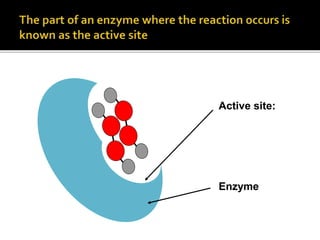
the shape of the substrate
molecule fits the enzyme shapethis is called
the active site
of the enzyme
17
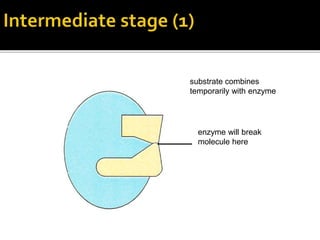
substrate combines
temporarily with enzyme
enzyme will break
molecule here
18
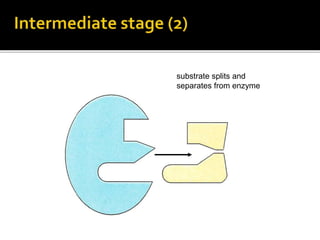
substrate splits and
separates from enzyme
19
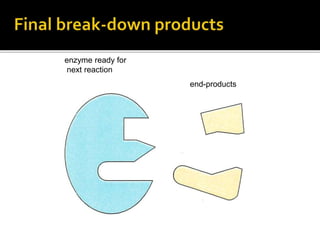
end-products
enzyme ready for
next reaction
20
They always produce the same end products
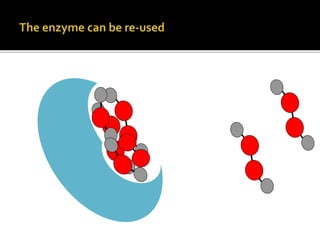
Although they take part in the reaction, they are not used up
Because enzymes are proteins, they are denatured by heat
or some chemicals
Denaturing involves a change of shape in the enzyme
molecule so that it cannot combine with the substrate
Individual enzymes work best at a particular temperature
and pH (acidity or alkalinity)
21
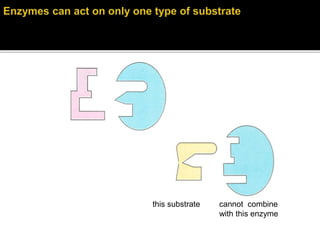
this substrate cannot combine
with this enzyme
this substrate cannot combine
with this enzyme
22
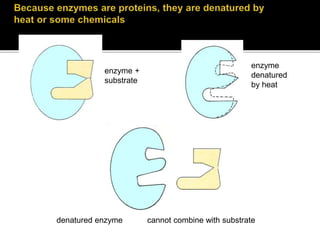
enzyme
denatured
by heat
denatured enzyme cannot combine with substrate
enzyme +
substrate
23
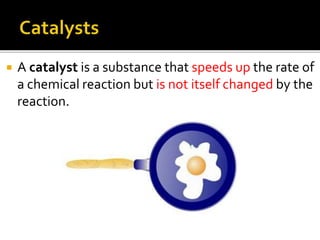
 A catalyst is a substance that speeds up the rate of
a chemical reaction but is not itself changed by the
reaction.
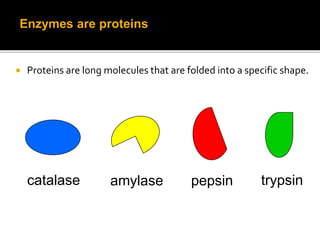
 Proteins are long molecules that are folded into a specific shape.
catalase amylase trypsinpepsin
Enzymes are proteins
Active site:
Enzyme
Active site:
The site on the
enzyme where the
reaction occurs
Enzyme
Substrate molecules
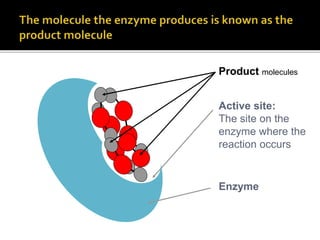
Active site:
The site on the
enzyme where the
reaction occurs
Enzyme
Product molecules
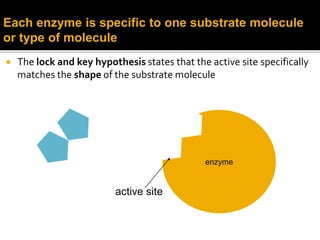
 The lock and key hypothesis states that the active site specifically
matches the shape of the substrate molecule
enzyme
Each enzyme is specific to one substrate molecule
or type of molecule
active site
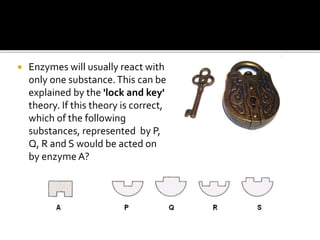
 Enzymes will usually react with
only one substance.This can be
explained by the 'lock and key'
theory. If this theory is correct,
which of the following
substances, represented by P,
Q, R and S would be acted on
by enzyme A?
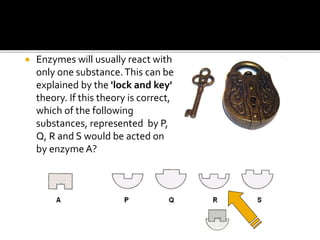
 Enzymes will usually react with
only one substance.This can be
explained by the 'lock and key'
theory. If this theory is correct,
which of the following
substances, represented by P,
Q, R and S would be acted on
by enzyme A?
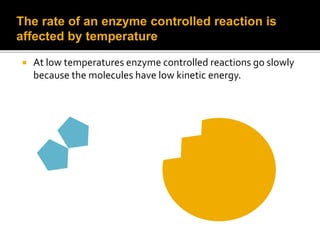
 At low temperatures enzyme controlled reactions go slowly
because the molecules have low kinetic energy.
The rate of an enzyme controlled reaction is
affected by temperature
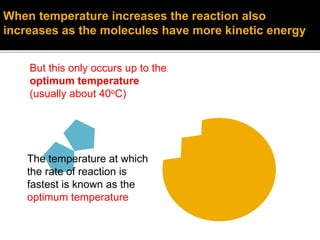
But this only occurs up to the
optimum temperature
(usually about 40oC)
The temperature at which
the rate of reaction is
fastest is known as the
optimum temperature
When temperature increases the reaction also
increases as the molecules have more kinetic energy
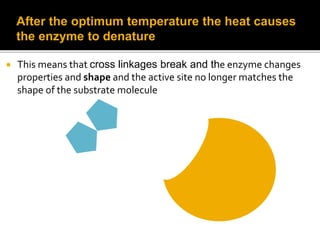
After the optimum temperature the heat causes
the enzyme to denature
 This means that cross linkages break and the enzyme changes
properties and shape and the active site no longer matches the
shape of the substrate molecule
+ than 40° C => cross linkages break down/loses shape and properties DENATURALIZATION
(HOW HOT SHOULD HE BE?)
Rate
Of
Reaction
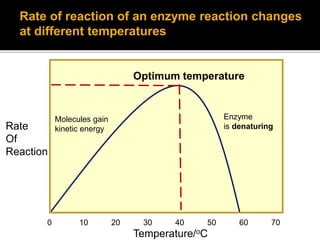
Temperature/oC
0 10 20 30 40 50 60 70
Optimum temperature
Enzyme
is denaturing
Rate of reaction of an enzyme reaction changes
at different temperatures
Molecules gain
kinetic energy
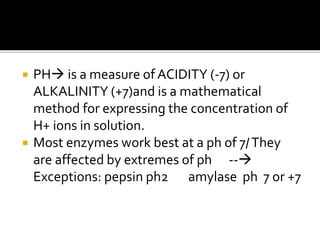
 PH is a measure of ACIDITY (-7) or
ALKALINITY (+7)and is a mathematical
method for expressing the concentration of
H+ ions in solution.
 Most enzymes work best at a ph of 7/They
are affected by extremes of ph --
Exceptions: pepsin ph2 amylase ph 7 or +7
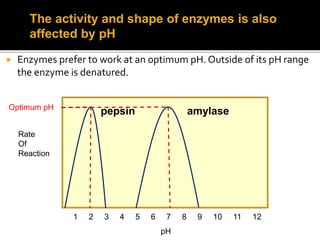
 Enzymes prefer to work at an optimum pH. Outside of its pH range
the enzyme is denatured.
Rate
Of
Reaction
pH
1 2 3 4 5 6 7 8 9 10 11 12
pepsin amylase
The activity and shape of enzymes is also
affected by pH
Optimum pH
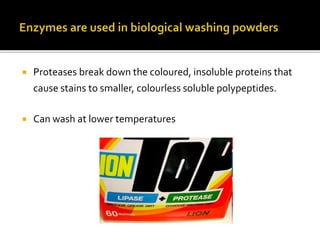
 Proteases break down the coloured, insoluble proteins that
cause stains to smaller, colourless soluble polypeptides.
 Can wash at lower temperatures
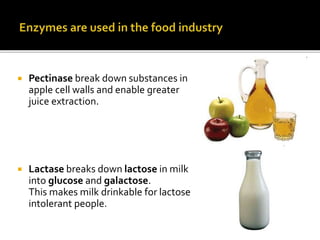
 Pectinase break down substances in
apple cell walls and enable greater
juice extraction.
 Lactase breaks down lactose in milk
into glucose and galactose.
This makes milk drinkable for lactose
intolerant people.
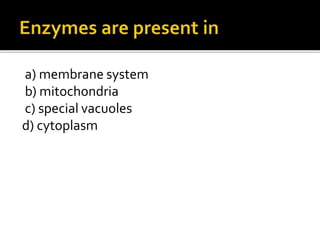
a) membrane system
b) mitochondria
c) special vacuoles
d) cytoplasm
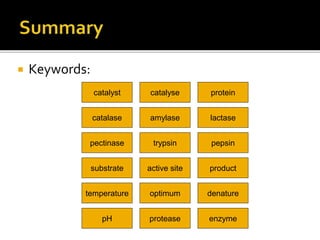
 Keywords:
enzyme
active sitesubstrate product
denaturetemperature
pH
optimum
catalase amylase
trypsin pepsinpectinase
lactase
protease
catalyst catalyse protein

3ero 4 enzymes mine

  • 1.
  • 2.
     A proteinwhich acts as a catalyst, which speeds up the rate of reaction. *All proteins are composed of sub-units called amino acids. *Proteins contain the elements carbon, hydrogen, oxygen, nitrogen and sulphur.
  • 3.
    Enzymes are specialproteins *There are hundreds of different enzymes but *With the right enzyme present, the reaction happens 10 faster each enzyme speeds up only one kind of reaction *Like all proteins, each enzyme molecule has a particular shape *Any substance an enzyme acts on is called a substrate
  • 4.
    enzyme substrate A substrate B Thesubstrate molecules fit the shape of the enzyme 12
  • 5.
  • 6.
    substrates combine temporarilywith enzyme enzyme joins substrates together 14
  • 7.
    new compound released byenzyme enzyme unchanged and ready for next reaction 15
  • 8.
    The last 4slides show how an enzyme is involved in combining substrates to create a larger molecule ANABOLISM (a sucrose molecule from glucose + fructose) The next sequence shows how an enzyme can help to break a large molecule into smaller molecules CATABOLISM (a sucrose molecule into glucose and fructose molecules) 16
  • 9.
    the shape ofthe substrate molecule fits the enzyme shapethis is called the active site of the enzyme 17
  • 10.
    substrate combines temporarily withenzyme enzyme will break molecule here 18
  • 11.
  • 12.
  • 13.
    They always producethe same end products Although they take part in the reaction, they are not used up Because enzymes are proteins, they are denatured by heat or some chemicals Denaturing involves a change of shape in the enzyme molecule so that it cannot combine with the substrate Individual enzymes work best at a particular temperature and pH (acidity or alkalinity) 21
  • 14.
    this substrate cannotcombine with this enzyme this substrate cannot combine with this enzyme 22
  • 15.
    enzyme denatured by heat denatured enzymecannot combine with substrate enzyme + substrate 23
  • 16.
     A catalystis a substance that speeds up the rate of a chemical reaction but is not itself changed by the reaction.
  • 17.
     Proteins arelong molecules that are folded into a specific shape. catalase amylase trypsinpepsin Enzymes are proteins
  • 18.
  • 19.
    Active site: The siteon the enzyme where the reaction occurs Enzyme Substrate molecules
  • 20.
    Active site: The siteon the enzyme where the reaction occurs Enzyme Product molecules
  • 22.
     The lockand key hypothesis states that the active site specifically matches the shape of the substrate molecule enzyme Each enzyme is specific to one substrate molecule or type of molecule active site
  • 23.
     Enzymes willusually react with only one substance.This can be explained by the 'lock and key' theory. If this theory is correct, which of the following substances, represented by P, Q, R and S would be acted on by enzyme A?
  • 24.
     Enzymes willusually react with only one substance.This can be explained by the 'lock and key' theory. If this theory is correct, which of the following substances, represented by P, Q, R and S would be acted on by enzyme A?
  • 25.
     At lowtemperatures enzyme controlled reactions go slowly because the molecules have low kinetic energy. The rate of an enzyme controlled reaction is affected by temperature
  • 26.
    But this onlyoccurs up to the optimum temperature (usually about 40oC) The temperature at which the rate of reaction is fastest is known as the optimum temperature When temperature increases the reaction also increases as the molecules have more kinetic energy
  • 27.
    After the optimumtemperature the heat causes the enzyme to denature  This means that cross linkages break and the enzyme changes properties and shape and the active site no longer matches the shape of the substrate molecule + than 40° C => cross linkages break down/loses shape and properties DENATURALIZATION
  • 28.
  • 29.
    Rate Of Reaction Temperature/oC 0 10 2030 40 50 60 70 Optimum temperature Enzyme is denaturing Rate of reaction of an enzyme reaction changes at different temperatures Molecules gain kinetic energy
  • 30.
     PH isa measure of ACIDITY (-7) or ALKALINITY (+7)and is a mathematical method for expressing the concentration of H+ ions in solution.  Most enzymes work best at a ph of 7/They are affected by extremes of ph -- Exceptions: pepsin ph2 amylase ph 7 or +7
  • 31.
     Enzymes preferto work at an optimum pH. Outside of its pH range the enzyme is denatured. Rate Of Reaction pH 1 2 3 4 5 6 7 8 9 10 11 12 pepsin amylase The activity and shape of enzymes is also affected by pH Optimum pH
  • 32.
     Proteases breakdown the coloured, insoluble proteins that cause stains to smaller, colourless soluble polypeptides.  Can wash at lower temperatures
  • 33.
     Pectinase breakdown substances in apple cell walls and enable greater juice extraction.  Lactase breaks down lactose in milk into glucose and galactose. This makes milk drinkable for lactose intolerant people.
  • 34.
    a) membrane system b)mitochondria c) special vacuoles d) cytoplasm
  • 35.
     Keywords: enzyme active sitesubstrateproduct denaturetemperature pH optimum catalase amylase trypsin pepsinpectinase lactase protease catalyst catalyse protein