METHODS OF INTRODUCTION OF
FOREIGN DNA IN HOST
Dr. Manikandan Kathirvel M.Sc., Ph.D., (NET)
Assistant Professor,
Department of Life Sciences,
Kristu Jayanti College (Autonomous),
(Reaccredited with "A" Grade by NAAC)
Affiliated to Bengaluru North University,
K. Narayanapura, Kothanur (PO)
Bengaluru 560077
CHEMICAL METHOD OF TRANSFORMATION
METHODS OF INTRODUCTION OF FOREIGN DNA IN HOST:
1. Chemical method: Calcium chloride mediated transformation
Polyethylene glycol (PEG) method
Liposome fusion
2. Physical method: Electroporation,
Microinjection,
Particle gun bombardment
3. Biological method: Agrobacterium mediated transformation
Viral mediated gene transfer
Screening and selection of recombinant host cells–
Direct selection and indirect selection:
-Insertional inactivation,
- in situ colony hybridization and
- Immunological assay.
CHEMICAL METHOD OF TRANSFORMATION:
Introduction
Cell membrane is a sheet like assembly of amphipathic molecules (having both
hydrophilic and hydrophobic parts) that separate cells from their environment. These
physical structures allow only the controlled exchange of materials among the different
parts of a cell and with its immediate surroundings.
DNA is an anionic polymer, larger molecular weight, hydrophilic and sensitive to nuclease
degradation in biological matrices. They cannot easily cross the physical barrier of
membrane and enter the cells unless assisted.
Various charged chemical compounds can be used to facilitate DNA transfer directly to
the cell.
These synthetic compounds are treated with the recipient cells and followed by
disturbing the cell membranes, widening the pore size and allowing the passage of the
DNA into the cell.
An ideal chemical used for DNA transfer should have the ability to-
• Protect DNA against nuclease degradation.
• Transport DNA to the target cells.
• Facilitate transport of DNA across the plasma membrane.
• Promote the import of DNA into the nucleus.
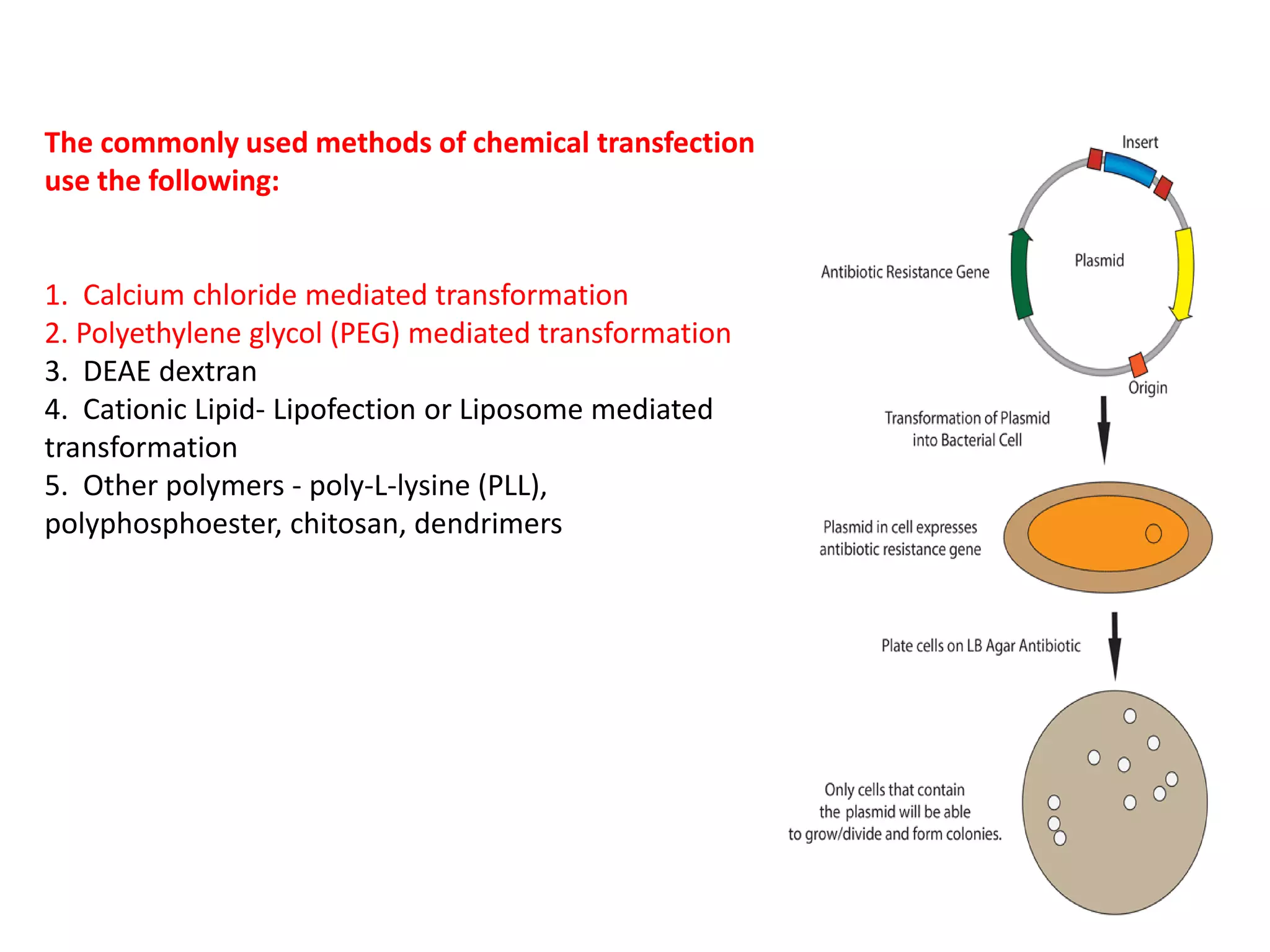
The commonly used methods of chemical transfection
use the following:
1. Calcium chloride mediated transformation
2. Polyethylene glycol (PEG) mediated transformation
3. DEAE dextran
4. Cationic Lipid- Lipofection or Liposome mediated
transformation
5. Other polymers - poly-L-lysine (PLL),
polyphosphoester, chitosan, dendrimers
I.) CALCIUM CHLORIDE INDUCED TRANSFORMATION
Introduction: Calcium chloride induced transformation involves making the E. coli cells
competent to take up the plasmid DNA. Since DNA is a very hydrophilic molecule, it won't
normally pass through a bacterial cell's membrane. In order to make bacteria take up the
plasmid, they must first be made "competent" to take up DNA.
This involves addition of calcium chloride to the cell suspension which enhances the
binding of plasmid DNA to lipopolysaccharide (LPS).
Transformation Strains of E. coli such as DH5α, JM109, JM101- Competent bacteria yields 5x10⁶ to
2x10⁷ transformed colonies per µg of plasmid DNA.
Principle:
i) Competent cell preparation
Competence is a process by which a cell is able to take in DNA from its surrounding
medium. It occurs naturally or can be induced artificially by treating cells with chemicals
such as calcium chloride and then shocking the cells with heat treatment.
It is believed that the cell walls and membranes of bacteria repel the negatively
charged DNA.
Positively charged calcium ions attract both the negatively charged DNA and the
negatively charged groups in the lipopolysaccharide LPS inner core and can help attach
the DNA onto the cell surface followed by providing heat shock or electrical voltage,
cell membrane became transiently porous allowing the entry of extragenous DNA
molecules.
ii) Transformation
The plasmid DNA can then pass into the cell upon heat shock, to a high temperature
(42°C) for a short time.
This causes the bacteria to take up the DNA. The cells are then plated on LB agar (Luria
Bertani) medium containing appropriate antibiotics after incubation at 37ºC for one hr,
to enable the transferred genes to express in E. coli on recovery of cells.
CALCIUM CHLORIDE INDUCED
TRANSFORMATION
MATERIALS AND METHODS:
•Calcium chloride (0.1 M)
•Nutrient agar plates containing ampicillin (100 µg/ml)
•E. coli Culture DH5α
•Plasmid (pBSKS+)
•Nutrient Broth (NB)
Transformation Strains of E. coli such as DH5α, JM109, JM101- Competent bacteria yields 5x10⁶ to
2x10⁷ transformed colonies per µg of plasmid DNA.
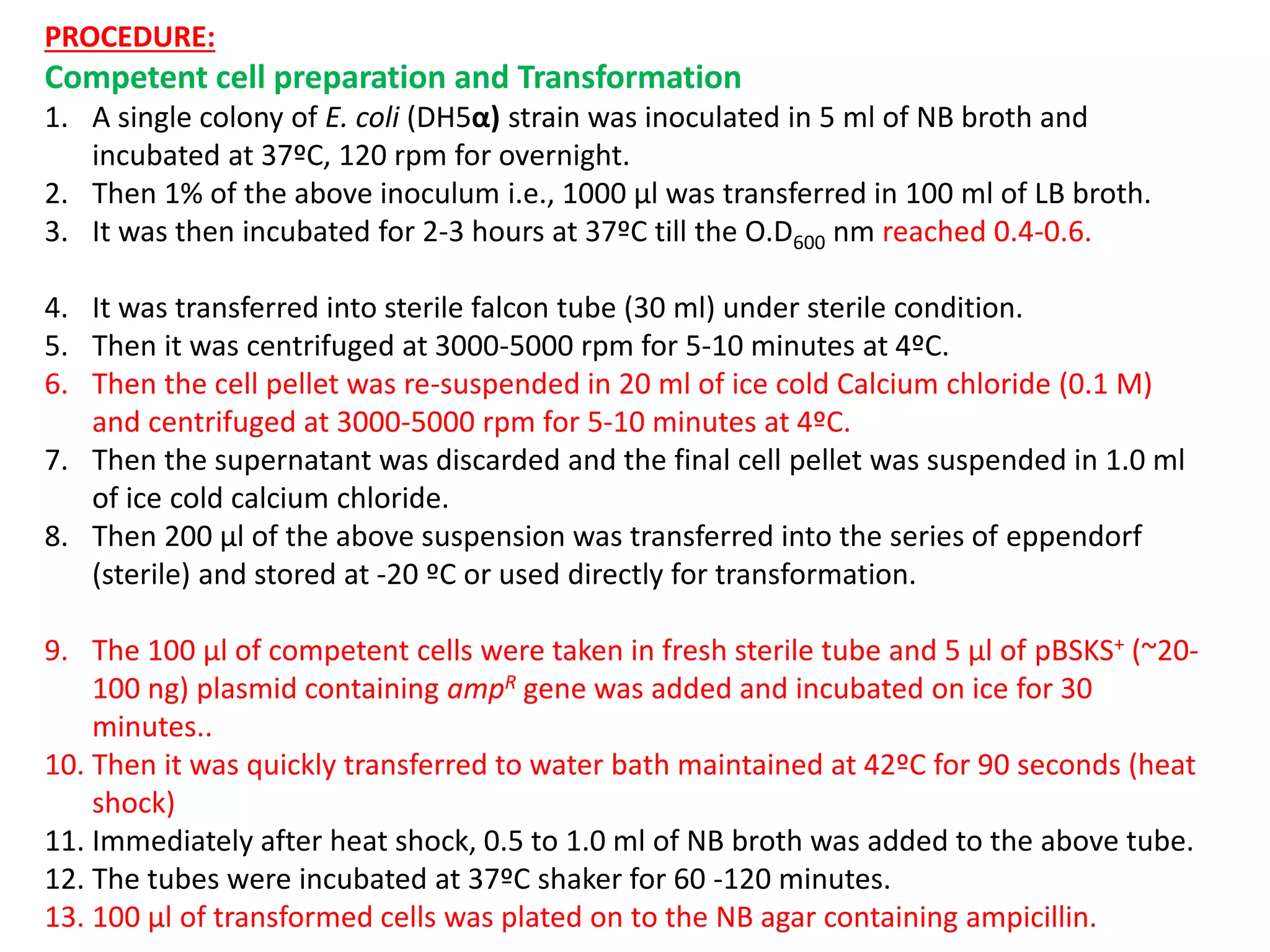
PROCEDURE:
Competent cell preparation and Transformation
1. A single colony of E. coli (DH5α) strain was inoculated in 5 ml of NB broth and
incubated at 37ºC, 120 rpm for overnight.
2. Then 1% of the above inoculum i.e., 1000 µl was transferred in 100 ml of LB broth.
3. It was then incubated for 2-3 hours at 37ºC till the O.D600 nm reached 0.4-0.6.
4. It was transferred into sterile falcon tube (30 ml) under sterile condition.
5. Then it was centrifuged at 3000-5000 rpm for 5-10 minutes at 4ºC.
6. Then the cell pellet was re-suspended in 20 ml of ice cold Calcium chloride (0.1 M)
and centrifuged at 3000-5000 rpm for 5-10 minutes at 4ºC.
7. Then the supernatant was discarded and the final cell pellet was suspended in 1.0 ml
of ice cold calcium chloride.
8. Then 200 µl of the above suspension was transferred into the series of eppendorf
(sterile) and stored at -20 ºC or used directly for transformation.
9. The 100 µl of competent cells were taken in fresh sterile tube and 5 µl of pBSKS+ (~20-
100 ng) plasmid containing ampR gene was added and incubated on ice for 30
minutes..
10. Then it was quickly transferred to water bath maintained at 42ºC for 90 seconds (heat
shock)
11. Immediately after heat shock, 0.5 to 1.0 ml of NB broth was added to the above tube.
12. The tubes were incubated at 37ºC shaker for 60 -120 minutes.
13. 100 µl of transformed cells was plated on to the NB agar containing ampicillin.
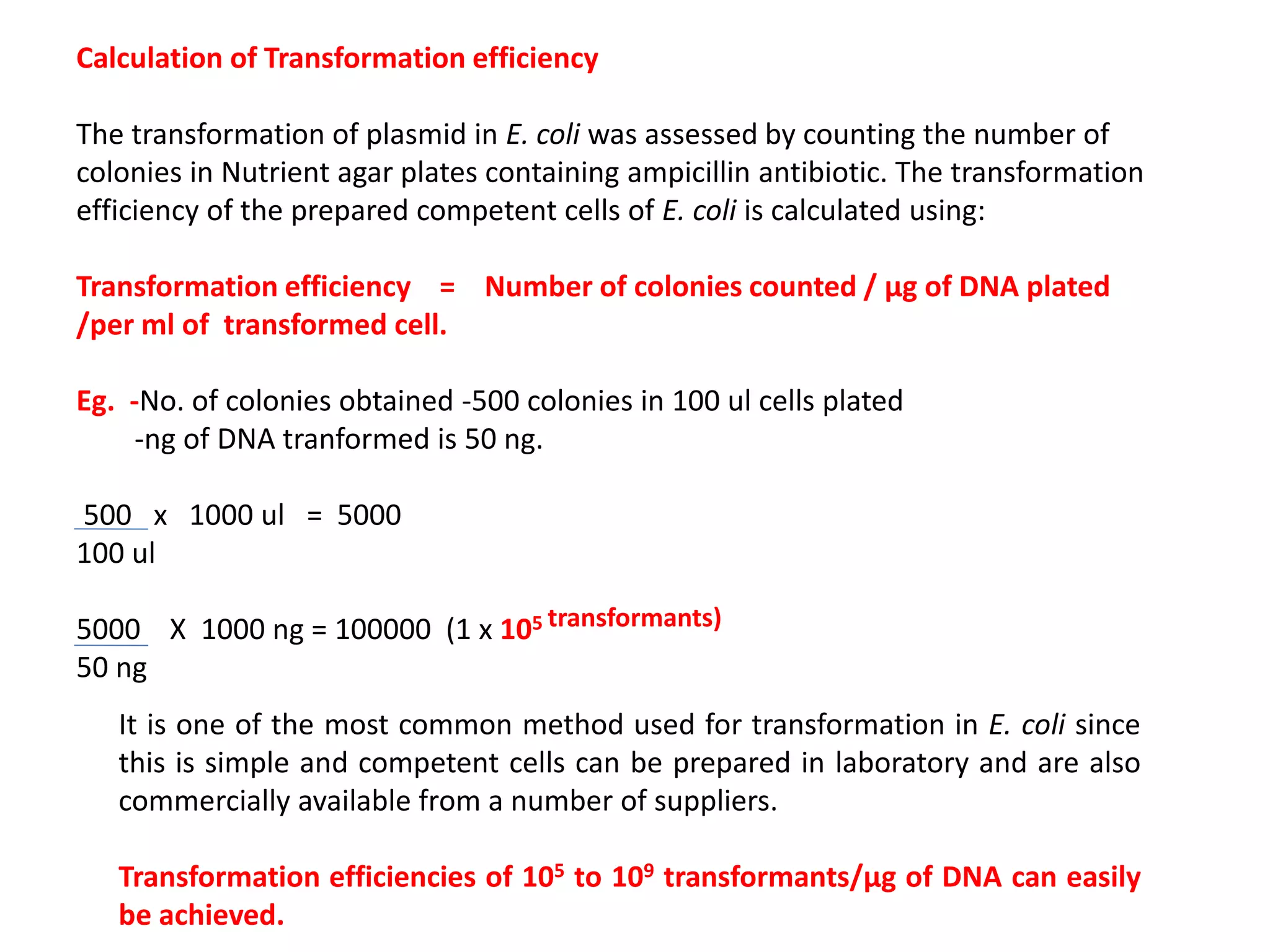
Calculation of Transformation efficiency
The transformation of plasmid in E. coli was assessed by counting the number of
colonies in Nutrient agar plates containing ampicillin antibiotic. The transformation
efficiency of the prepared competent cells of E. coli is calculated using:
Transformation efficiency = Number of colonies counted / µg of DNA plated
/per ml of transformed cell.
Eg. -No. of colonies obtained -500 colonies in 100 ul cells plated
-ng of DNA tranformed is 50 ng.
500 x 1000 ul = 5000
100 ul
5000 X 1000 ng = 100000 (1 x 10⁵ transformants)
50 ng
It is one of the most common method used for transformation in E. coli since
this is simple and competent cells can be prepared in laboratory and are also
commercially available from a number of suppliers.
Transformation efficiencies of 105 to 109 transformants/μg of DNA can easily
be achieved.
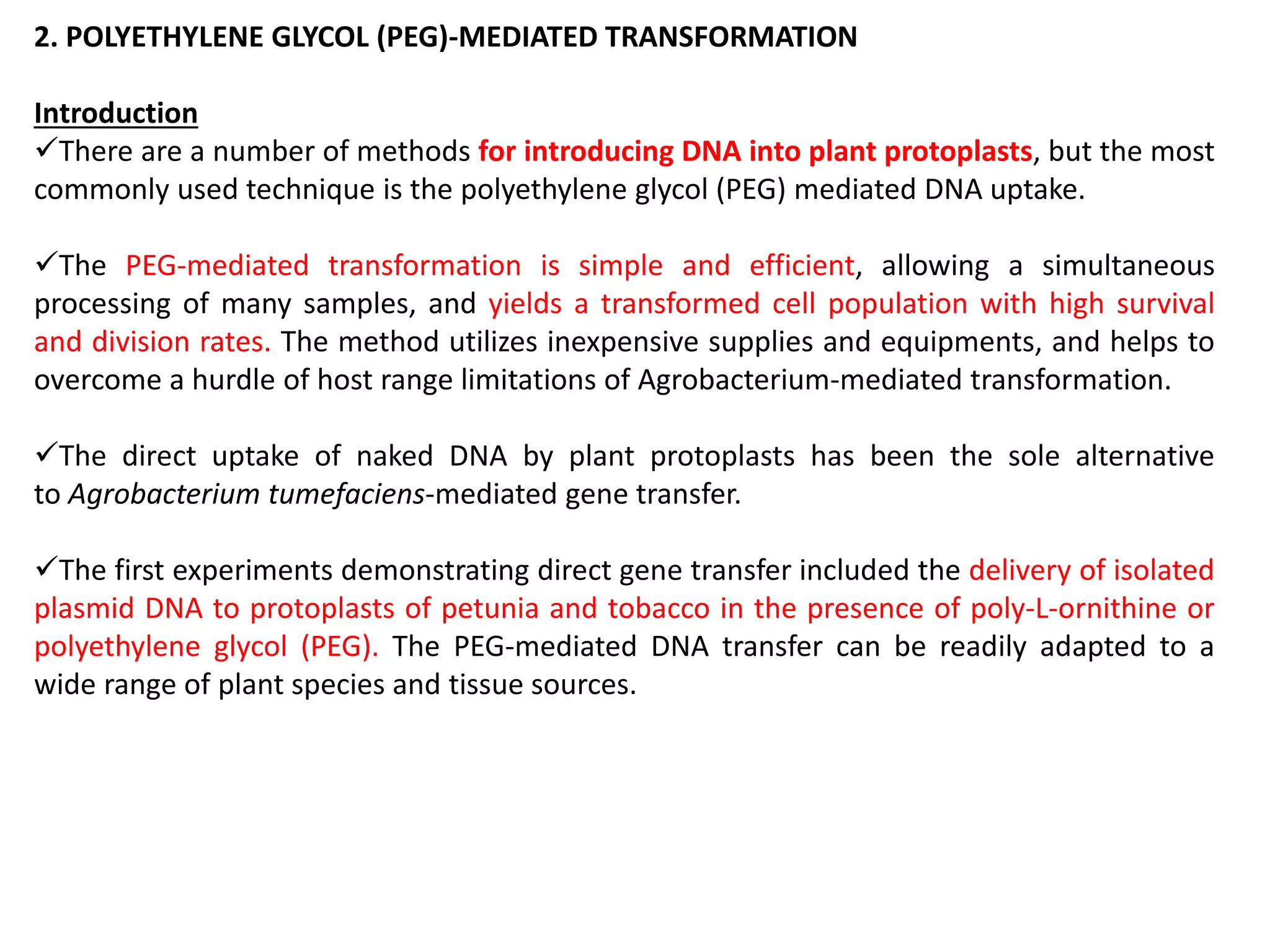
2. POLYETHYLENE GLYCOL (PEG)-MEDIATED TRANSFORMATION
Introduction
There are a number of methods for introducing DNA into plant protoplasts, but the most
commonly used technique is the polyethylene glycol (PEG) mediated DNA uptake.
The PEG-mediated transformation is simple and efficient, allowing a simultaneous
processing of many samples, and yields a transformed cell population with high survival
and division rates. The method utilizes inexpensive supplies and equipments, and helps to
overcome a hurdle of host range limitations of Agrobacterium-mediated transformation.
The direct uptake of naked DNA by plant protoplasts has been the sole alternative
to Agrobacterium tumefaciens-mediated gene transfer.
The first experiments demonstrating direct gene transfer included the delivery of isolated
plasmid DNA to protoplasts of petunia and tobacco in the presence of poly-L-ornithine or
polyethylene glycol (PEG). The PEG-mediated DNA transfer can be readily adapted to a
wide range of plant species and tissue sources.
Procedure:
The PEG-mediated DNA transfer method is a most reliable method for gene-targeting.
1. Plant protoplast can be transformed with naked DNA by treatment with PEG in the
presence of divalent cations. e. g., Calcium.
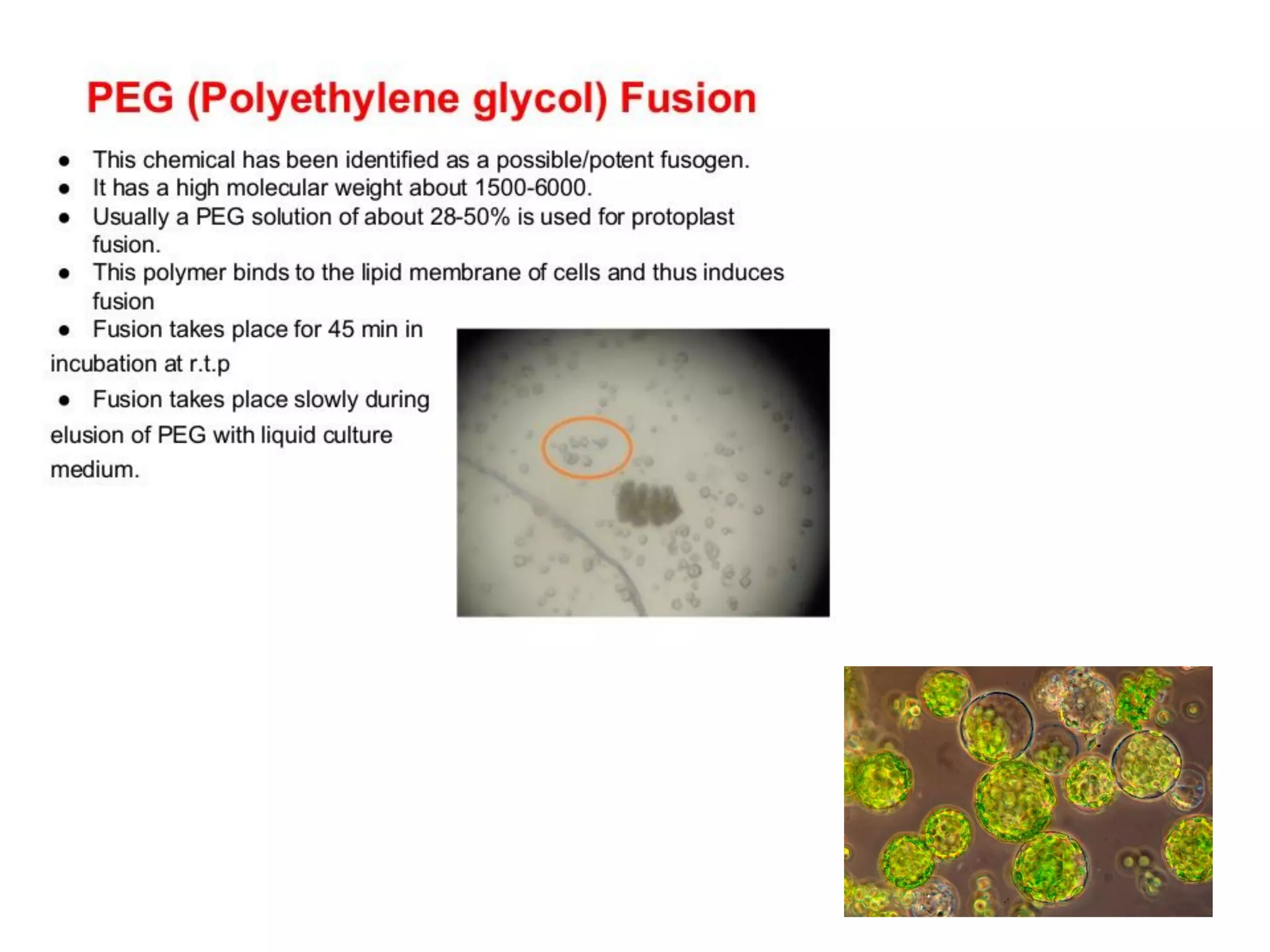
2. PEG and divalent cations destabilize the plasma membrane of the plant protoplast and
rendered it permeable to naked DNA. PEG acts as a fusogen
3. Chemicals used , i.e. Polyethylene glycol stimulate “Endocytosis” and therefore DNA
uptake occurs.
4. The target protoplast are put in the solution containing Polyethylene glycol (PEG).
5. Exposure of protoplast to exogenous DNA in the presence of PEG allows the DNA enters
the nucleus and integrates into the host genome.
7. Intact surviving protoplasts are then cultured to form cells with cell wall.
8. The method has been successfully applied to Petunia, Nicotiana, rice, maize etc.,
Disadvantage and advantages of PEG:
1. Regeneration of fertile plants from protoplasts is a problematic for some species
because of secondary metabolites accumulation or any compounds.
2. The DNA used for transformation is also susceptible to degradation and
rearrangement.
3. Despite the limitations, the technique have the advantage i.e., protoplast can be
isolated and transformed in number of plants species.
III. LIPOSOME MEDIATED GENE TRANSFORMATION
Lipofection
• Lipofection is a method of transformation first described in 1965 as a model of
cellular membranes using liposomes.
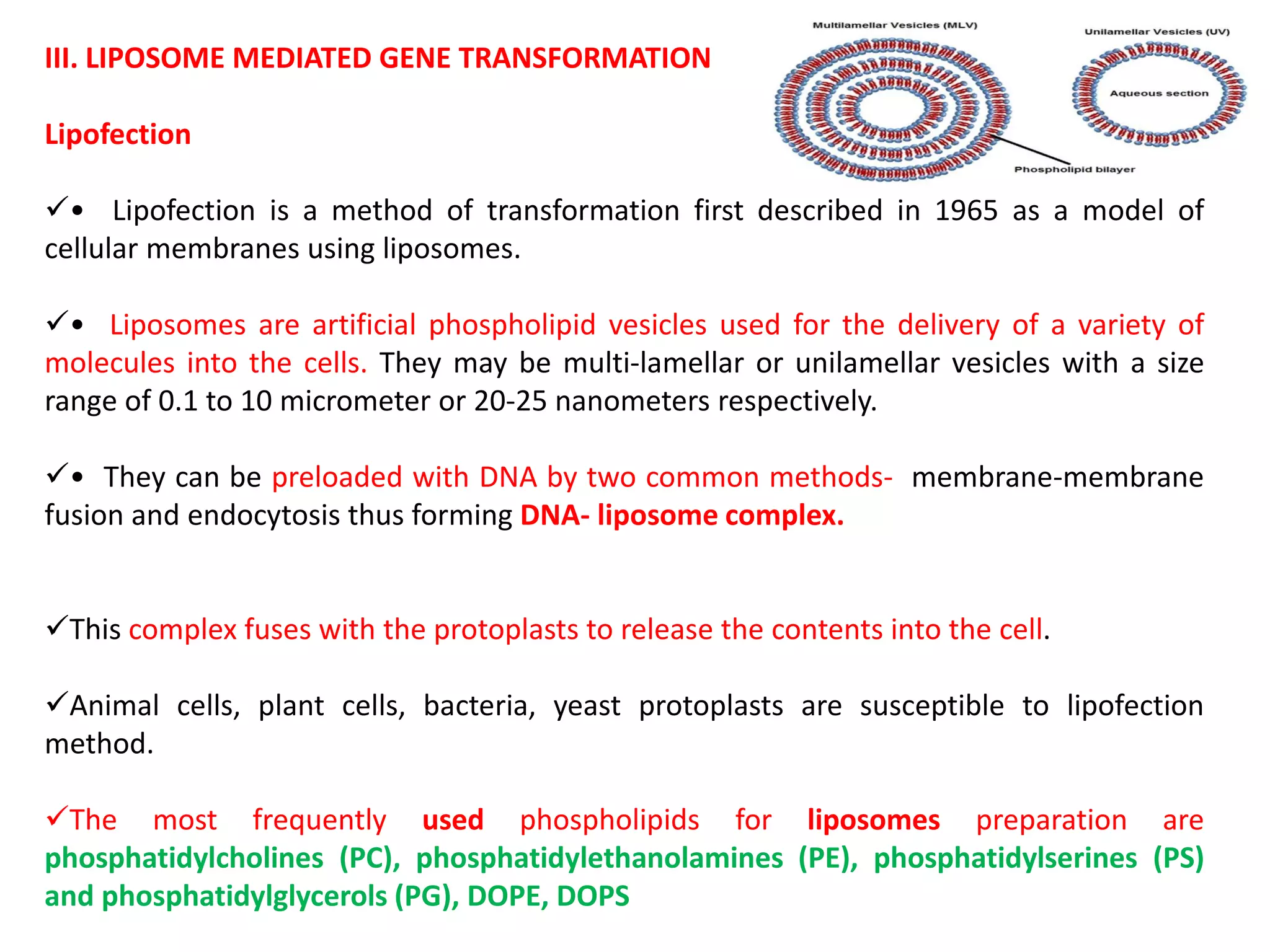
• Liposomes are artificial phospholipid vesicles used for the delivery of a variety of
molecules into the cells. They may be multi-lamellar or unilamellar vesicles with a size
range of 0.1 to 10 micrometer or 20-25 nanometers respectively.
• They can be preloaded with DNA by two common methods- membrane-membrane
fusion and endocytosis thus forming DNA- liposome complex.
This complex fuses with the protoplasts to release the contents into the cell.
Animal cells, plant cells, bacteria, yeast protoplasts are susceptible to lipofection
method.
The most frequently used phospholipids for liposomes preparation are
phosphatidylcholines (PC), phosphatidylethanolamines (PE), phosphatidylserines (PS)
and phosphatidylglycerols (PG), DOPE, DOPS
Classification of Liposomes:
Liposomes can be classified as either cationic liposome or pH-sensitive.
Cationic liposomes- Positively charged liposomes:
• Cationic liposomes are positively charged liposomes which associate with the negatively
charged DNA molecules by electrostatic interactions forming a stable complex.
• Dioleoylphosphatidyl ethanolamine (DOPE) or dioleoylphosphatidyl choline (DOPC) are
some commonly used co-lipids.
• The negatively charged DNA molecule interacts with the positively charged groups of the
DOPE or DOPC.
Anionic liposomes - Negatively charged liposomes:
• Generally pH-sensitive or negatively-charged liposomes are not efficient for gene
transfer.
• They do not form a complex with it due to repulsive electrostatic interactions between
the phosphate backbone of DNA and negatively charged groups of the lipids.
•However, formation of lipoplex, a complex between DNA and anionic lipids can occur by
using divalent cations (e.g. Ca2+, Mg2+, Mn2+ and Ba2+)
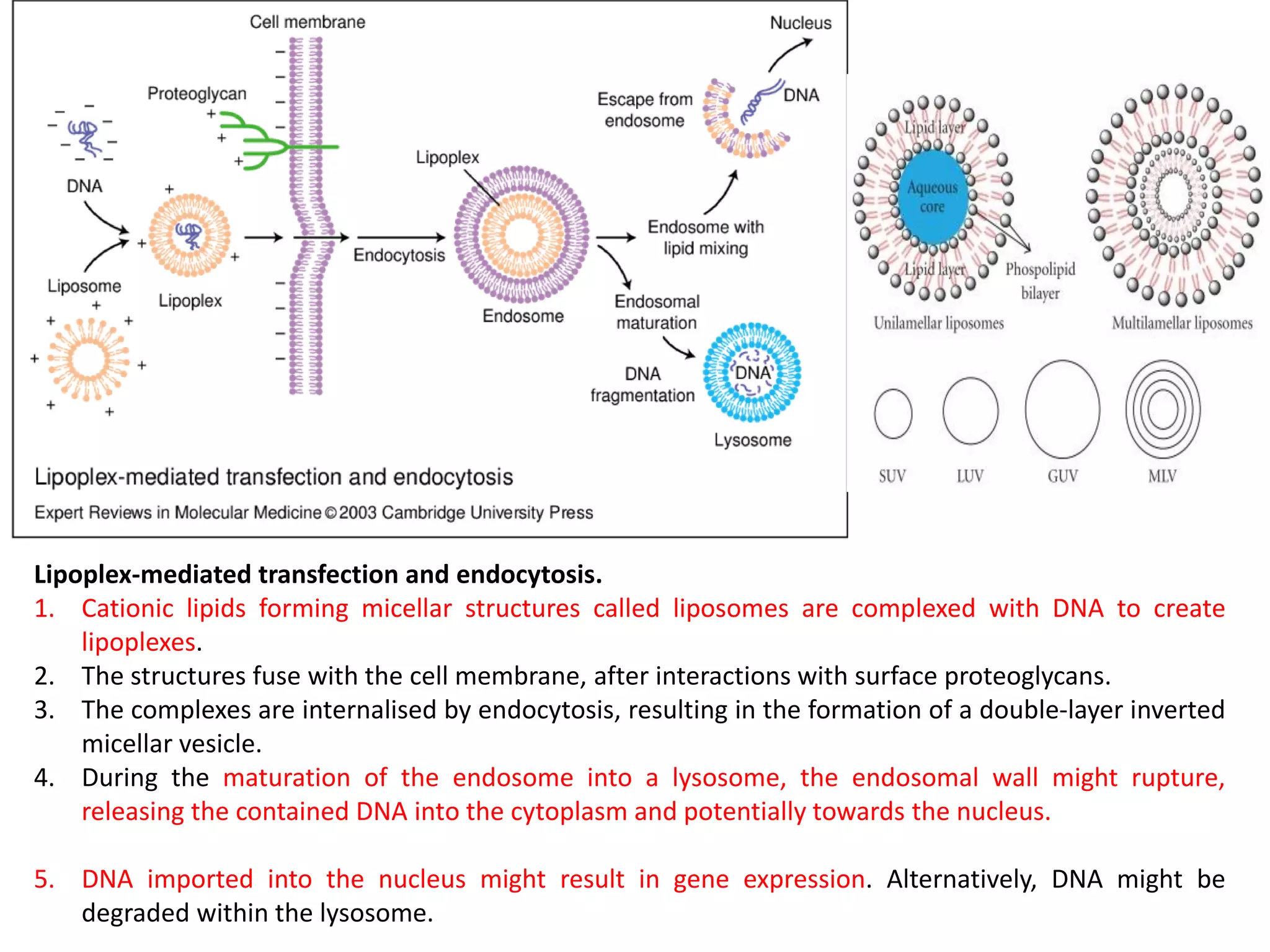
Lipoplex-mediated transfection and endocytosis.
1. Cationic lipids forming micellar structures called liposomes are complexed with DNA to create
lipoplexes.
2. The structures fuse with the cell membrane, after interactions with surface proteoglycans.
3. The complexes are internalised by endocytosis, resulting in the formation of a double-layer inverted
micellar vesicle.
4. During the maturation of the endosome into a lysosome, the endosomal wall might rupture,
releasing the contained DNA into the cytoplasm and potentially towards the nucleus.
5. DNA imported into the nucleus might result in gene expression. Alternatively, DNA might be
degraded within the lysosome.
Advantages
• Economic
• Efficient delivery of nucleic acids to cells in a culture dish.
• Delivery of the nucleic acids with minimal toxicity.
• Protection of nucleic acids from degradation.
• Measurable changes due to transfected nucleic acids in sequential processes.
• Easy to use, requirement of minimal steps and adaptable to high-throughput systems.
Disadvantages
• It is not applicable to all cell types.
• It fails for the transfection of some cell lines with lipids.

Chemical method of transformation

  • 1.
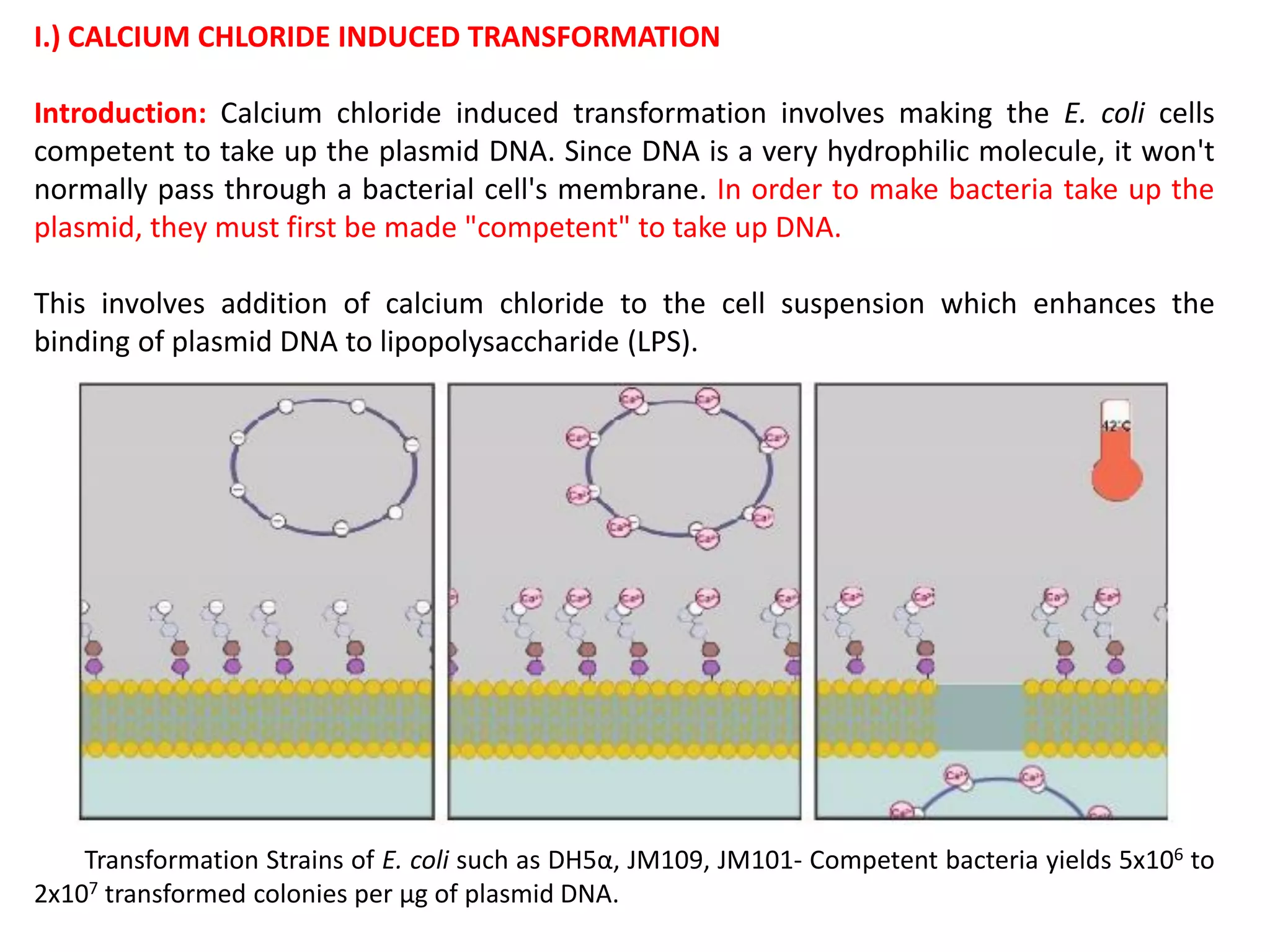
    METHODS OF INTRODUCTIONOF FOREIGN DNA IN HOST Dr. Manikandan Kathirvel M.Sc., Ph.D., (NET) Assistant Professor, Department of Life Sciences, Kristu Jayanti College (Autonomous), (Reaccredited with "A" Grade by NAAC) Affiliated to Bengaluru North University, K. Narayanapura, Kothanur (PO) Bengaluru 560077 CHEMICAL METHOD OF TRANSFORMATION
  • 2.
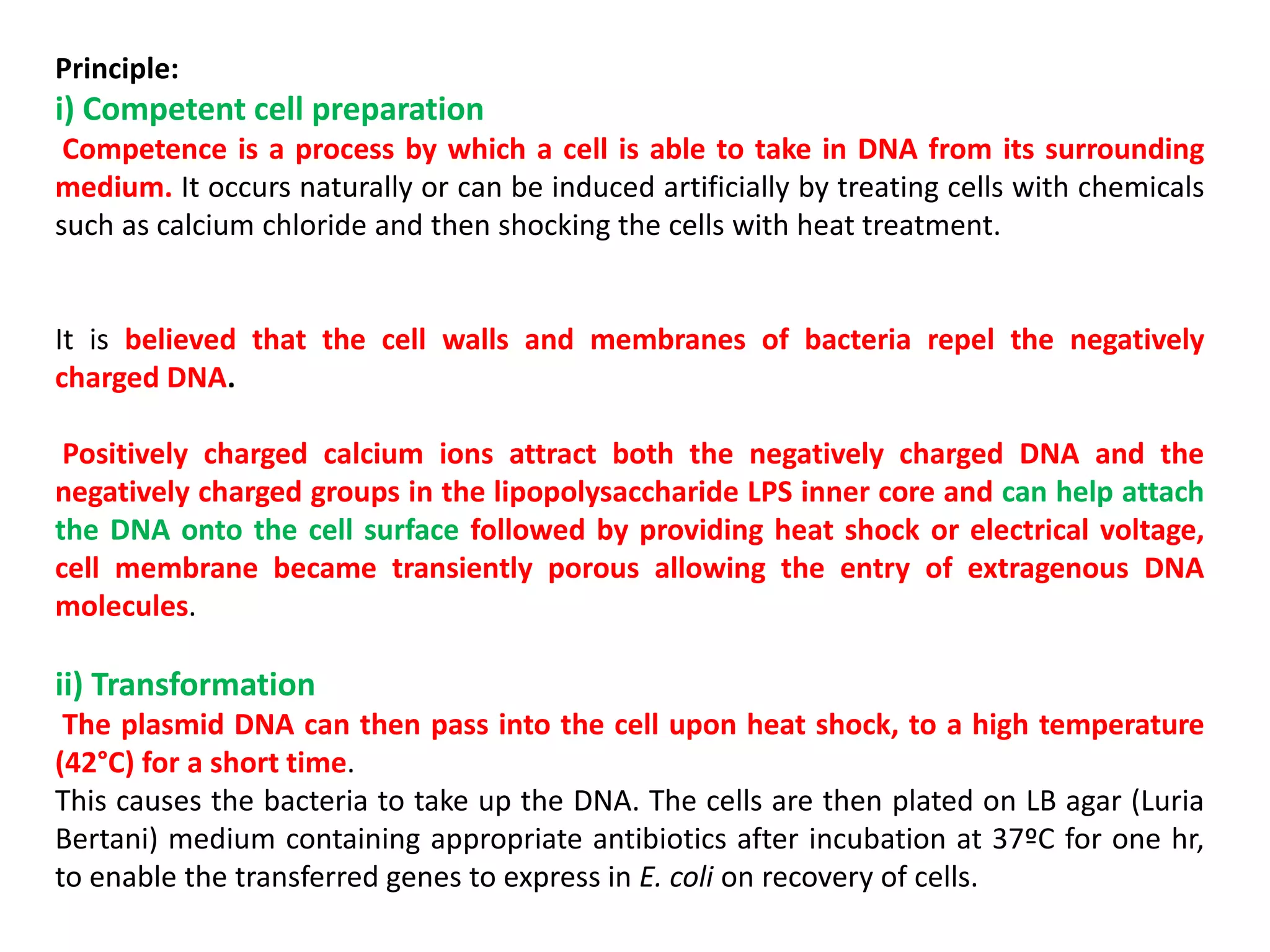
    METHODS OF INTRODUCTIONOF FOREIGN DNA IN HOST: 1. Chemical method: Calcium chloride mediated transformation Polyethylene glycol (PEG) method Liposome fusion 2. Physical method: Electroporation, Microinjection, Particle gun bombardment 3. Biological method: Agrobacterium mediated transformation Viral mediated gene transfer Screening and selection of recombinant host cells– Direct selection and indirect selection: -Insertional inactivation, - in situ colony hybridization and - Immunological assay.
  • 3.
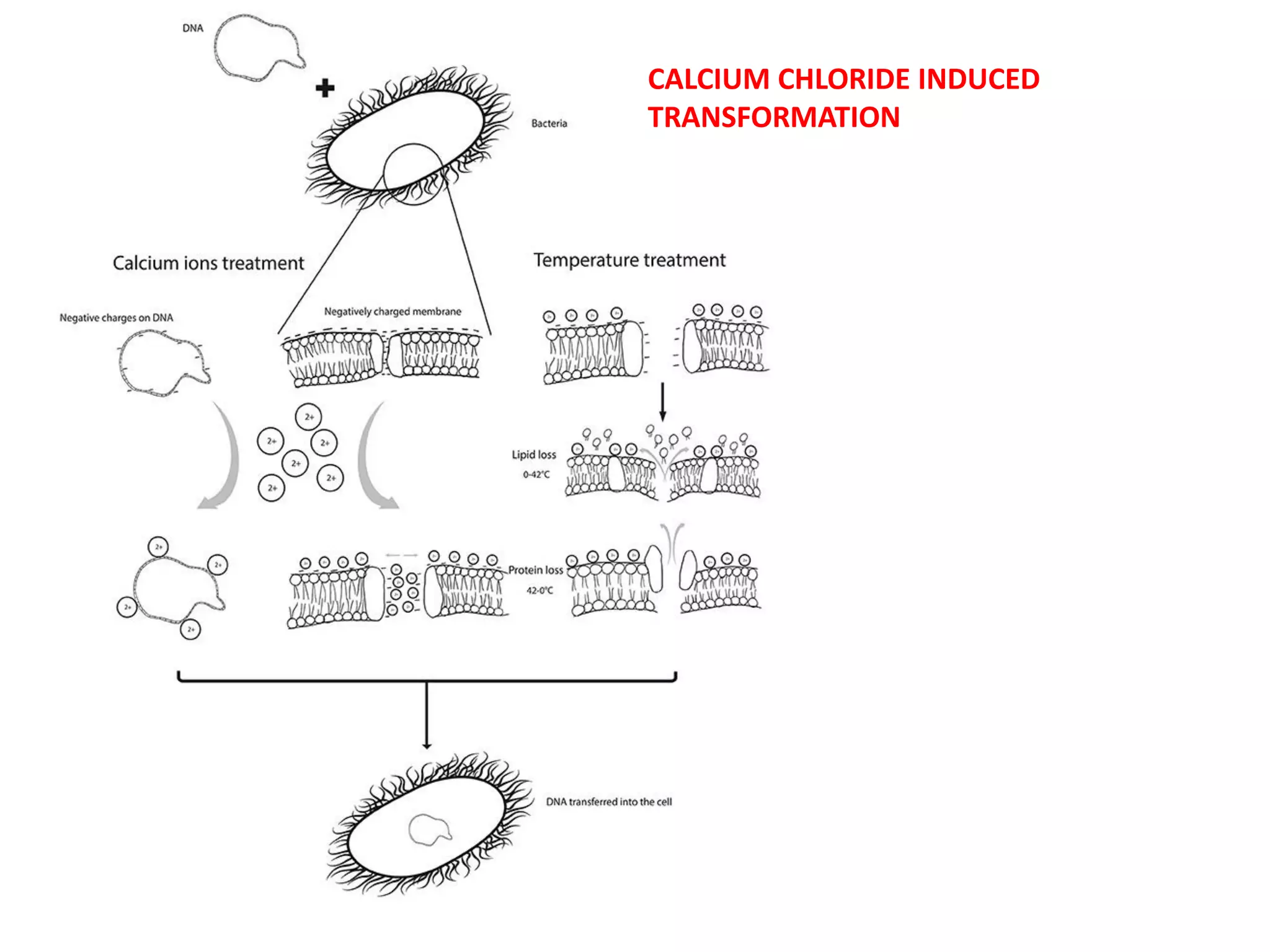
    CHEMICAL METHOD OFTRANSFORMATION: Introduction Cell membrane is a sheet like assembly of amphipathic molecules (having both hydrophilic and hydrophobic parts) that separate cells from their environment. These physical structures allow only the controlled exchange of materials among the different parts of a cell and with its immediate surroundings. DNA is an anionic polymer, larger molecular weight, hydrophilic and sensitive to nuclease degradation in biological matrices. They cannot easily cross the physical barrier of membrane and enter the cells unless assisted. Various charged chemical compounds can be used to facilitate DNA transfer directly to the cell. These synthetic compounds are treated with the recipient cells and followed by disturbing the cell membranes, widening the pore size and allowing the passage of the DNA into the cell. An ideal chemical used for DNA transfer should have the ability to- • Protect DNA against nuclease degradation. • Transport DNA to the target cells. • Facilitate transport of DNA across the plasma membrane. • Promote the import of DNA into the nucleus.
  • 4.
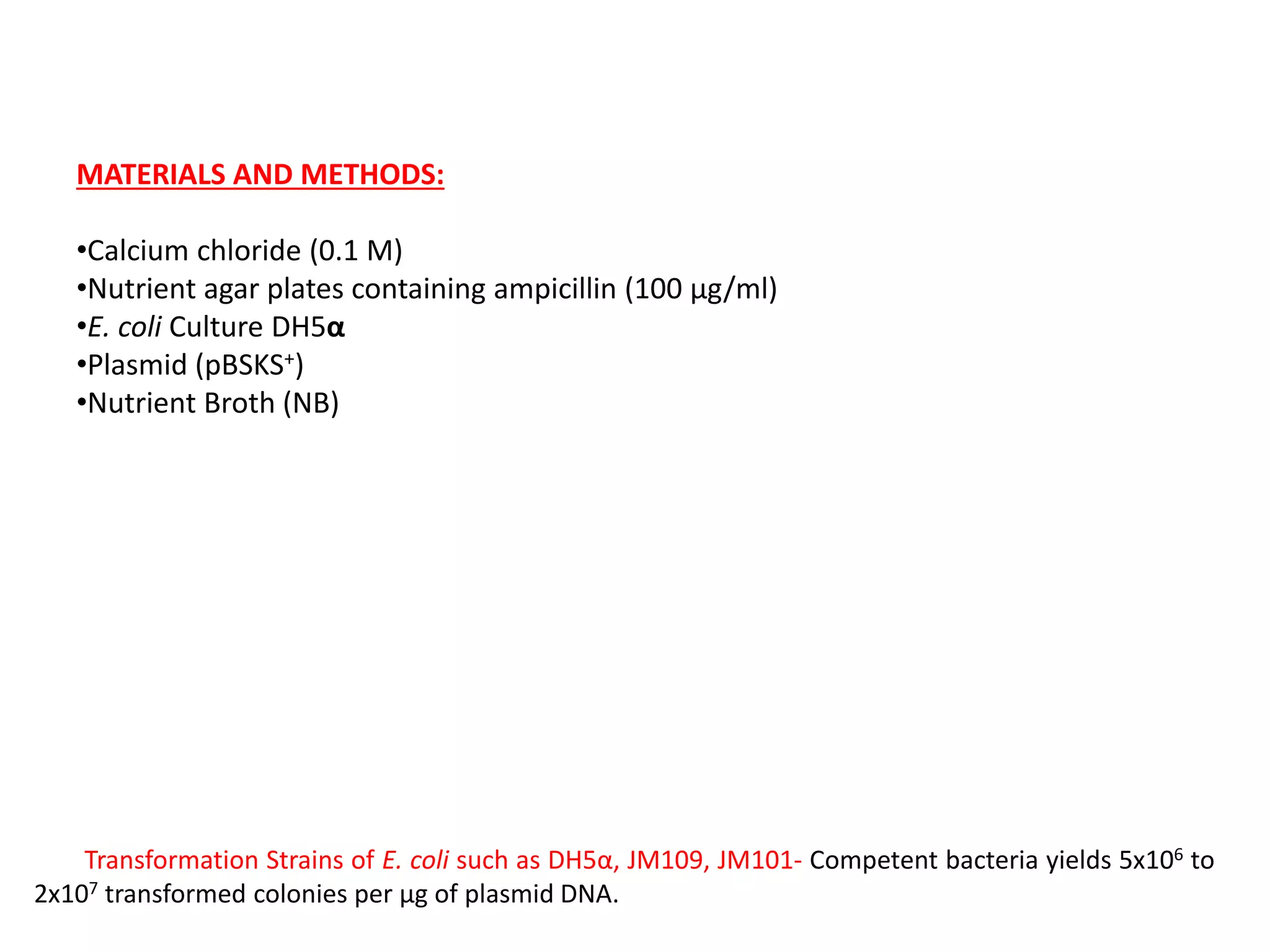
    The commonly usedmethods of chemical transfection use the following: 1. Calcium chloride mediated transformation 2. Polyethylene glycol (PEG) mediated transformation 3. DEAE dextran 4. Cationic Lipid- Lipofection or Liposome mediated transformation 5. Other polymers - poly-L-lysine (PLL), polyphosphoester, chitosan, dendrimers
  • 5.
    I.) CALCIUM CHLORIDEINDUCED TRANSFORMATION Introduction: Calcium chloride induced transformation involves making the E. coli cells competent to take up the plasmid DNA. Since DNA is a very hydrophilic molecule, it won't normally pass through a bacterial cell's membrane. In order to make bacteria take up the plasmid, they must first be made "competent" to take up DNA. This involves addition of calcium chloride to the cell suspension which enhances the binding of plasmid DNA to lipopolysaccharide (LPS). Transformation Strains of E. coli such as DH5α, JM109, JM101- Competent bacteria yields 5x10⁶ to 2x10⁷ transformed colonies per µg of plasmid DNA.
  • 6.
    Principle: i) Competent cellpreparation Competence is a process by which a cell is able to take in DNA from its surrounding medium. It occurs naturally or can be induced artificially by treating cells with chemicals such as calcium chloride and then shocking the cells with heat treatment. It is believed that the cell walls and membranes of bacteria repel the negatively charged DNA. Positively charged calcium ions attract both the negatively charged DNA and the negatively charged groups in the lipopolysaccharide LPS inner core and can help attach the DNA onto the cell surface followed by providing heat shock or electrical voltage, cell membrane became transiently porous allowing the entry of extragenous DNA molecules. ii) Transformation The plasmid DNA can then pass into the cell upon heat shock, to a high temperature (42°C) for a short time. This causes the bacteria to take up the DNA. The cells are then plated on LB agar (Luria Bertani) medium containing appropriate antibiotics after incubation at 37ºC for one hr, to enable the transferred genes to express in E. coli on recovery of cells.
  • 7.
  • 8.
    MATERIALS AND METHODS: •Calciumchloride (0.1 M) •Nutrient agar plates containing ampicillin (100 µg/ml) •E. coli Culture DH5α •Plasmid (pBSKS+) •Nutrient Broth (NB) Transformation Strains of E. coli such as DH5α, JM109, JM101- Competent bacteria yields 5x10⁶ to 2x10⁷ transformed colonies per µg of plasmid DNA.
  • 9.
    PROCEDURE: Competent cell preparationand Transformation 1. A single colony of E. coli (DH5α) strain was inoculated in 5 ml of NB broth and incubated at 37ºC, 120 rpm for overnight. 2. Then 1% of the above inoculum i.e., 1000 µl was transferred in 100 ml of LB broth. 3. It was then incubated for 2-3 hours at 37ºC till the O.D600 nm reached 0.4-0.6. 4. It was transferred into sterile falcon tube (30 ml) under sterile condition. 5. Then it was centrifuged at 3000-5000 rpm for 5-10 minutes at 4ºC. 6. Then the cell pellet was re-suspended in 20 ml of ice cold Calcium chloride (0.1 M) and centrifuged at 3000-5000 rpm for 5-10 minutes at 4ºC. 7. Then the supernatant was discarded and the final cell pellet was suspended in 1.0 ml of ice cold calcium chloride. 8. Then 200 µl of the above suspension was transferred into the series of eppendorf (sterile) and stored at -20 ºC or used directly for transformation. 9. The 100 µl of competent cells were taken in fresh sterile tube and 5 µl of pBSKS+ (~20- 100 ng) plasmid containing ampR gene was added and incubated on ice for 30 minutes.. 10. Then it was quickly transferred to water bath maintained at 42ºC for 90 seconds (heat shock) 11. Immediately after heat shock, 0.5 to 1.0 ml of NB broth was added to the above tube. 12. The tubes were incubated at 37ºC shaker for 60 -120 minutes. 13. 100 µl of transformed cells was plated on to the NB agar containing ampicillin.
  • 10.
    Calculation of Transformationefficiency The transformation of plasmid in E. coli was assessed by counting the number of colonies in Nutrient agar plates containing ampicillin antibiotic. The transformation efficiency of the prepared competent cells of E. coli is calculated using: Transformation efficiency = Number of colonies counted / µg of DNA plated /per ml of transformed cell. Eg. -No. of colonies obtained -500 colonies in 100 ul cells plated -ng of DNA tranformed is 50 ng. 500 x 1000 ul = 5000 100 ul 5000 X 1000 ng = 100000 (1 x 10⁵ transformants) 50 ng It is one of the most common method used for transformation in E. coli since this is simple and competent cells can be prepared in laboratory and are also commercially available from a number of suppliers. Transformation efficiencies of 105 to 109 transformants/μg of DNA can easily be achieved.
  • 11.
    2. POLYETHYLENE GLYCOL(PEG)-MEDIATED TRANSFORMATION Introduction There are a number of methods for introducing DNA into plant protoplasts, but the most commonly used technique is the polyethylene glycol (PEG) mediated DNA uptake. The PEG-mediated transformation is simple and efficient, allowing a simultaneous processing of many samples, and yields a transformed cell population with high survival and division rates. The method utilizes inexpensive supplies and equipments, and helps to overcome a hurdle of host range limitations of Agrobacterium-mediated transformation. The direct uptake of naked DNA by plant protoplasts has been the sole alternative to Agrobacterium tumefaciens-mediated gene transfer. The first experiments demonstrating direct gene transfer included the delivery of isolated plasmid DNA to protoplasts of petunia and tobacco in the presence of poly-L-ornithine or polyethylene glycol (PEG). The PEG-mediated DNA transfer can be readily adapted to a wide range of plant species and tissue sources.
  • 13.
    Procedure: The PEG-mediated DNAtransfer method is a most reliable method for gene-targeting. 1. Plant protoplast can be transformed with naked DNA by treatment with PEG in the presence of divalent cations. e. g., Calcium. 2. PEG and divalent cations destabilize the plasma membrane of the plant protoplast and rendered it permeable to naked DNA. PEG acts as a fusogen 3. Chemicals used , i.e. Polyethylene glycol stimulate “Endocytosis” and therefore DNA uptake occurs. 4. The target protoplast are put in the solution containing Polyethylene glycol (PEG). 5. Exposure of protoplast to exogenous DNA in the presence of PEG allows the DNA enters the nucleus and integrates into the host genome. 7. Intact surviving protoplasts are then cultured to form cells with cell wall. 8. The method has been successfully applied to Petunia, Nicotiana, rice, maize etc.,
  • 14.
    Disadvantage and advantagesof PEG: 1. Regeneration of fertile plants from protoplasts is a problematic for some species because of secondary metabolites accumulation or any compounds. 2. The DNA used for transformation is also susceptible to degradation and rearrangement. 3. Despite the limitations, the technique have the advantage i.e., protoplast can be isolated and transformed in number of plants species.
  • 15.
    III. LIPOSOME MEDIATEDGENE TRANSFORMATION Lipofection • Lipofection is a method of transformation first described in 1965 as a model of cellular membranes using liposomes. • Liposomes are artificial phospholipid vesicles used for the delivery of a variety of molecules into the cells. They may be multi-lamellar or unilamellar vesicles with a size range of 0.1 to 10 micrometer or 20-25 nanometers respectively. • They can be preloaded with DNA by two common methods- membrane-membrane fusion and endocytosis thus forming DNA- liposome complex. This complex fuses with the protoplasts to release the contents into the cell. Animal cells, plant cells, bacteria, yeast protoplasts are susceptible to lipofection method. The most frequently used phospholipids for liposomes preparation are phosphatidylcholines (PC), phosphatidylethanolamines (PE), phosphatidylserines (PS) and phosphatidylglycerols (PG), DOPE, DOPS
  • 16.
    Classification of Liposomes: Liposomescan be classified as either cationic liposome or pH-sensitive. Cationic liposomes- Positively charged liposomes: • Cationic liposomes are positively charged liposomes which associate with the negatively charged DNA molecules by electrostatic interactions forming a stable complex. • Dioleoylphosphatidyl ethanolamine (DOPE) or dioleoylphosphatidyl choline (DOPC) are some commonly used co-lipids. • The negatively charged DNA molecule interacts with the positively charged groups of the DOPE or DOPC. Anionic liposomes - Negatively charged liposomes: • Generally pH-sensitive or negatively-charged liposomes are not efficient for gene transfer. • They do not form a complex with it due to repulsive electrostatic interactions between the phosphate backbone of DNA and negatively charged groups of the lipids. •However, formation of lipoplex, a complex between DNA and anionic lipids can occur by using divalent cations (e.g. Ca2+, Mg2+, Mn2+ and Ba2+)
  • 17.
    Lipoplex-mediated transfection andendocytosis. 1. Cationic lipids forming micellar structures called liposomes are complexed with DNA to create lipoplexes. 2. The structures fuse with the cell membrane, after interactions with surface proteoglycans. 3. The complexes are internalised by endocytosis, resulting in the formation of a double-layer inverted micellar vesicle. 4. During the maturation of the endosome into a lysosome, the endosomal wall might rupture, releasing the contained DNA into the cytoplasm and potentially towards the nucleus. 5. DNA imported into the nucleus might result in gene expression. Alternatively, DNA might be degraded within the lysosome.
  • 18.
    Advantages • Economic • Efficientdelivery of nucleic acids to cells in a culture dish. • Delivery of the nucleic acids with minimal toxicity. • Protection of nucleic acids from degradation. • Measurable changes due to transfected nucleic acids in sequential processes. • Easy to use, requirement of minimal steps and adaptable to high-throughput systems. Disadvantages • It is not applicable to all cell types. • It fails for the transfection of some cell lines with lipids.