Downloaded 24 times
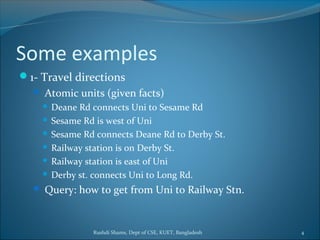
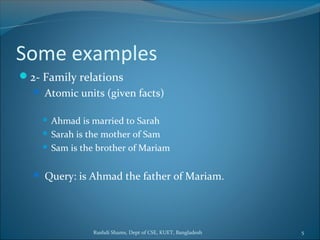

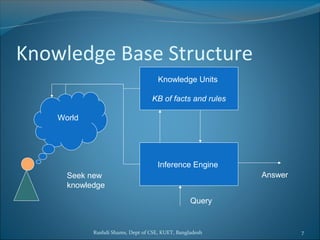
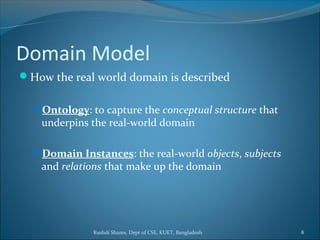
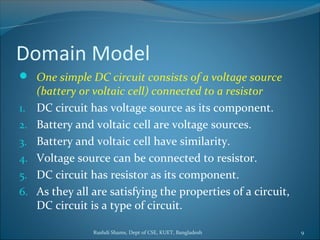
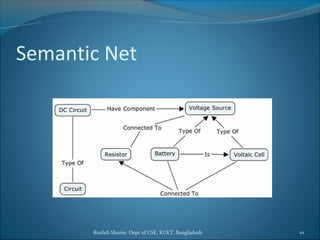
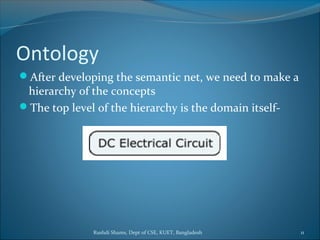
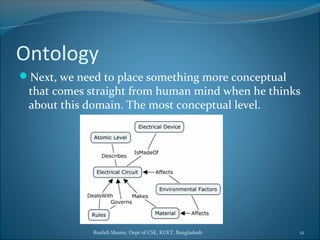
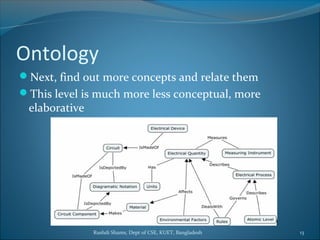


This document discusses knowledge representation and artificial intelligence. It describes how knowledge can be captured in atomic units and represented in a knowledge base that allows for inference of new facts. Examples of representing travel directions, family relationships, and employment status are provided. The structure of a knowledge base that contains facts and rules to seek new knowledge through queries is described. The document also discusses representing domain knowledge through semantic networks and ontologies that organize concepts in a hierarchy from abstract to specific.


