Downloaded 60 times

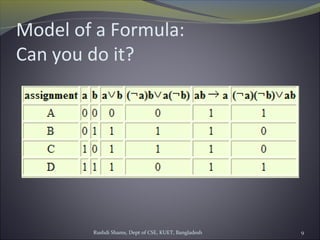
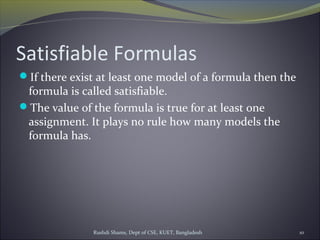
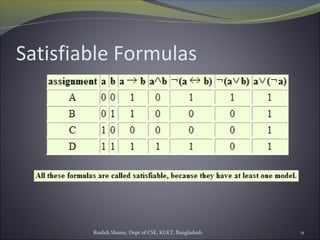
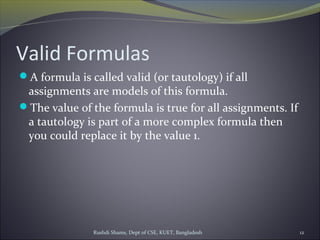



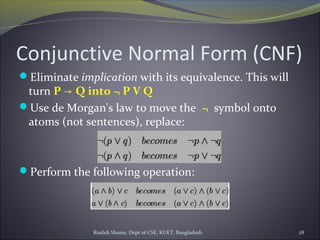
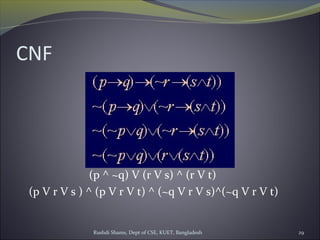
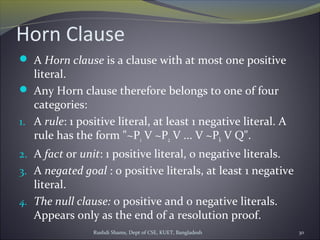






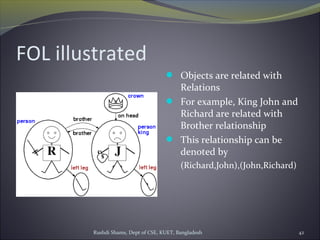
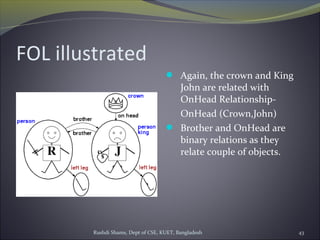


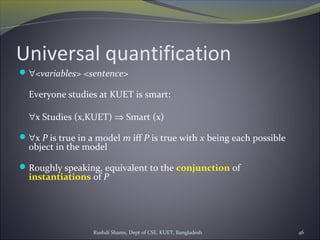
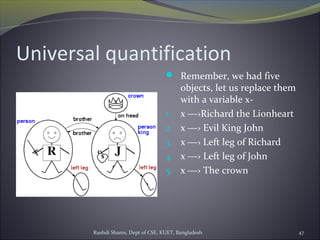
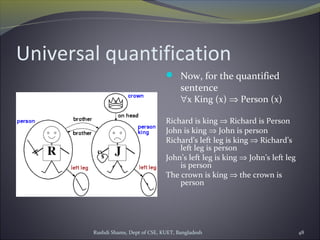
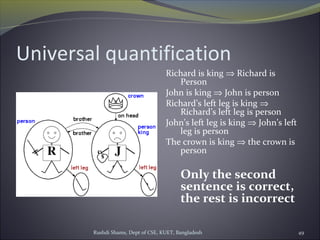
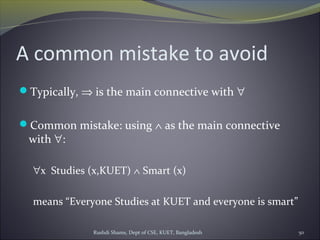
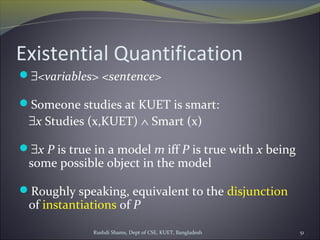
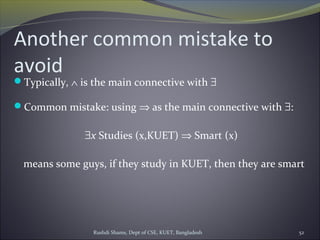
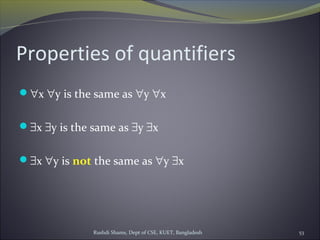
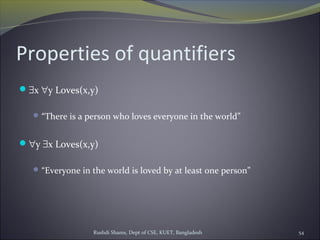
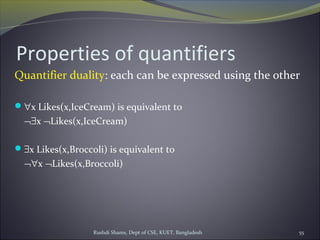
![Rushdi Shams, Dept of CSE, KUET, Bangladesh 57
Equality
term1 = term2 is true under a given interpretation if and only if
term1 and term2 refer to the same object
E.g., definition of Sibling in terms of Parent:
∀x,y Sibling(x,y) ⇔ [¬(x = y) ∧ ∃m,f ¬ (m = f) ∧ Parent(m,x) ∧
Parent(f,x) ∧ Parent(m,y) ∧ Parent(f,y)]](https://image.slidesharecdn.com/knowledgerepresentationall-130930084620-phpapp01/85/Knowledge-representation-57-320.jpg)










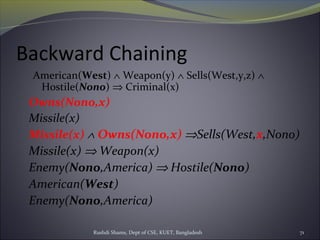
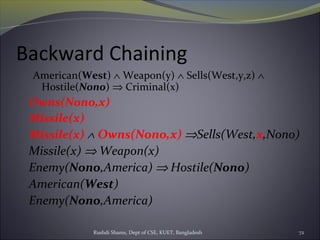
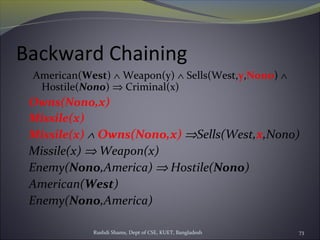
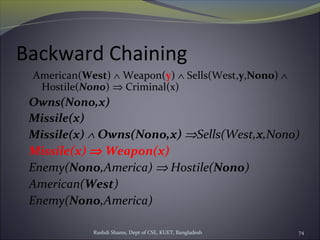
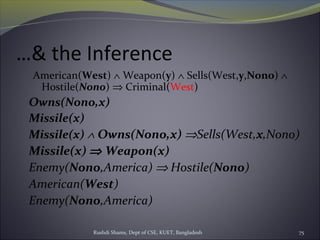




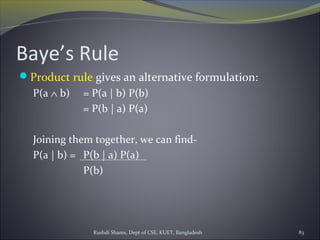
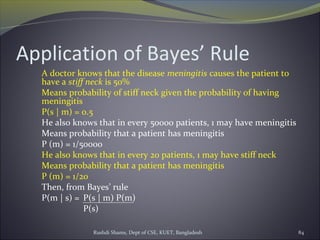
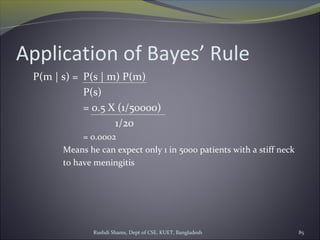



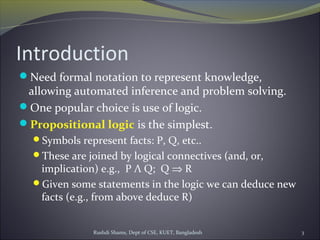
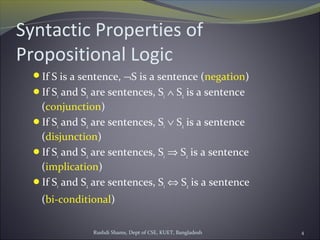
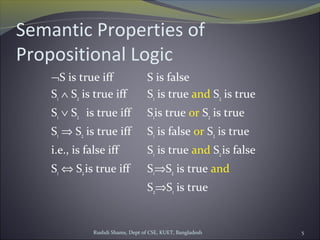
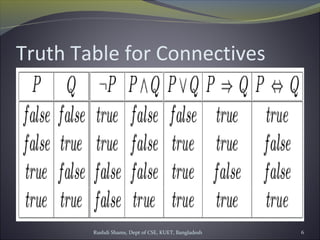
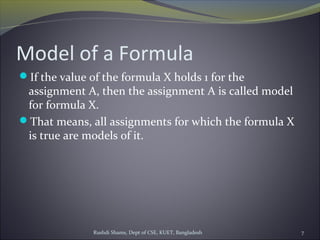
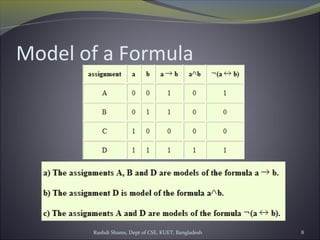
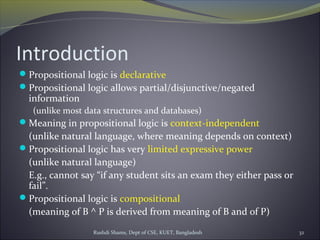
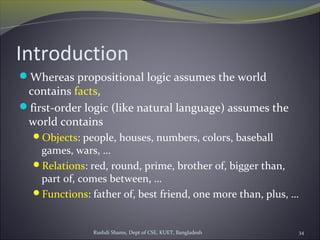
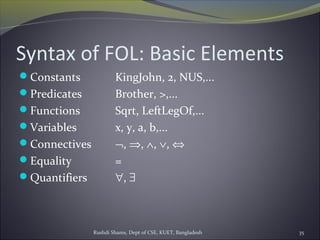
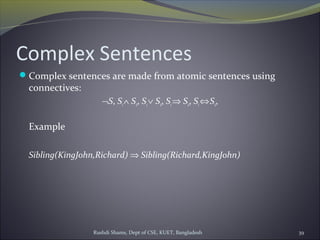
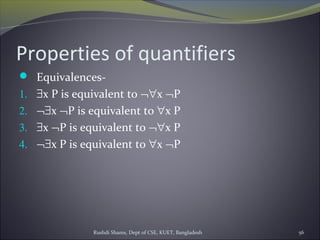
This document discusses propositional and first-order logic. It begins by introducing propositional logic and its limitations in representing knowledge. It then describes how first-order logic builds on propositional logic by adding objects, relations, and functions to increase its expressiveness. The syntax of first-order logic is explained, including constants, predicates, functions, variables, and quantifiers. Examples are given of atomic and complex sentences in first-order logic. Universal and existential quantification are defined along with common mistakes to avoid when using them. The document aims to explain the key concepts and differences between propositional and first-order logic.


