 Importance of Computers
 Introduction to ICT
 Definition of ICT
 Examples of ICTs
 Impact of ICT in Education
 Benefits of ICT
 Challenges(General)
 Drawbacks
 Conclusion
 Computers are used in everyday life for
personal, official, social, educational and
recreational use.
 Computers are not only sold in markets at a
large scale but also transactions and records
are maintained by the help of it in most of the
field nowadays.
 Thus, the ability to use computer effectively
has become an essential part of everyone’s
education and has re-defined literacy to
include the ability to use computers and not
just be able to read and write.
 ICT stands for Information and Communication
Technology.
 ICT are basically information handling tools-a
varied set of equipment, applications and
services that are used to produce, store,
process, distribute and exchange information.
 “Old ICT” include radio, television, telephone,
tapes and cassettes, video cassettes, etc.
 “New ICT” include computers, satellite,
wireless technology and the internet.
 UNESCO defines ICT as “the scientific,
technological and engineering disciplines and the
management technique used to handle transmit
information with men and machines.”
 According to the DIGITAL VIDEO TECHNICAL
GLOSSARY, “ICT is the computing and
communication facilities and features that support
teaching, learning and a range of activities in
education.”
 According to the official IBM GLOSSARY, “ICT is
the use of computer based information systems
and communication systems to , transmit and
store data and information.”
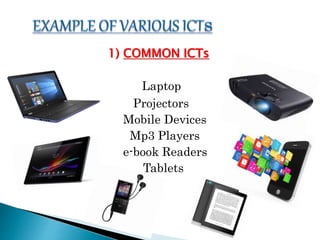
1) COMMON ICTs
Laptop
Projectors
Mobile Devices
Mp3 Players
e-book Readers
Tablets
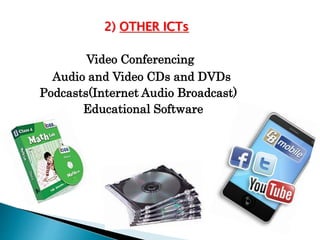
2) OTHER ICTs
Video Conferencing
Audio and Video CDs and DVDs
Podcasts(Internet Audio Broadcast)
Educational Software
3) INTERNET BASED ICTs AND CHANNELS
 Email
 Chat
 Text Messaging
 Skype
 Social Networking
 Tweeting
 Blogs
 No nation can develop without ICT based education. It is regarded as
the fuel of development.
 ICT based education is the essential ingredient in developing new
ideas, in course content and curriculum and in the creation of
materials and methods of learning and teaching.
 Students need ICT for pursuing academic studies where as teachers
need ICT based information for teaching.
 ICT has made more easier to process and disseminate knowledge. It
has increased the efficiency of the knowledge professionals in
organizing and managing knowledge.
 It has saved the space of library by creating the library materials in
digital formats.
1) BENEFITS OF ICT IN EDUCATION
 Extends learning opportunities
beyond the classroom.
 Access to global learning resources
and information.
 Makes learning interesting and enjoyable.
 Improves presentation standards.
 Can serve multiple audiences.
 Uniform quality of content.
 Collaboration with other students globally.
2) BENEFITS TO STUDENTS
 Students can learn as individuals and
not as a group.
 Higher quality lessons through greater
collaboration between teachers in
planning and preparing resources.
 Development of writing skills(including
spelling, grammar, punctuation, editing).
 Encouragement of independent and active
learning and self responsibility for learning
and self confidence.
 Technology enhanced setting more stimulating
and student centered than in a traditional
room.
 Computer used during lessons motivates
students to continue learning outside school
hours.
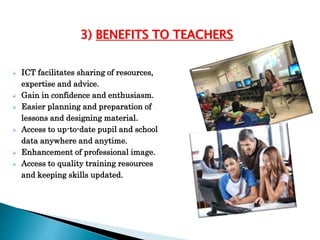
3) BENEFITS TO TEACHERS
 ICT facilitates sharing of resources,
expertise and advice.
 Gain in confidence and enthusiasm.
 Easier planning and preparation of
lessons and designing material.
 Access to up-to-date pupil and school
data anywhere and anytime.
 Enhancement of professional image.
 Access to quality training resources
and keeping skills updated.
4) BENEFITS TO PARENTS
 Easier communication with teachers.
 Higher quality student reports – more
legible, more detailed and better
presented.
 Greater access to more accurate
attendance.
 Increased knowledge of children’s
learning and capabilities, owing to
increase in learning activity situated
at homes.
 Parents would more likely to be engaged
in the school community.
 Lack of facilities.
 Cost of implementation and maintenance.
 Reluctance to use ICT.
 Lack of computer literate teachers.
 Lack of internet access and connection.
 Outdated learning methods and curriculum.
 Security of system and data:
*Hackers, System crash and Virus
*Lost/Stolen information, Password
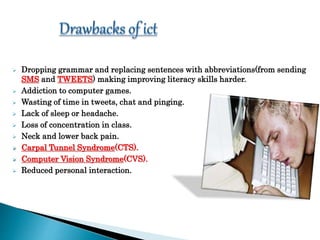
 Dropping grammar and replacing sentences with abbreviations(from sending
SMS and TWEETS) making improving literacy skills harder.
 Addiction to computer games.
 Wasting of time in tweets, chat and pinging.
 Lack of sleep or headache.
 Loss of concentration in class.
 Neck and lower back pain.
 Carpal Tunnel Syndrome(CTS).
 Computer Vision Syndrome(CVS).
 Reduced personal interaction.
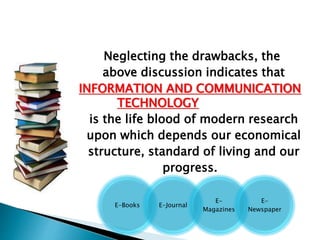
Neglecting the drawbacks, the
above discussion indicates that
INFORMATION AND COMMUNICATION
TECHNOLOGY
is the life blood of modern research
upon which depends our economical
structure, standard of living and our
progress.
E-Books E-Journal
E-
Magazines
E-
Newspaper
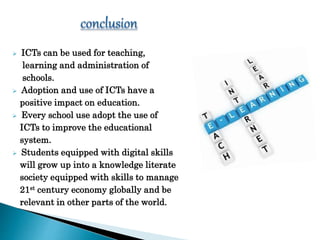
 ICTs can be used for teaching,
learning and administration of
schools.
 Adoption and use of ICTs have a
positive impact on education.
 Every school use adopt the use of
ICTs to improve the educational
system.
 Students equipped with digital skills
will grow up into a knowledge literate
society equipped with skills to manage
21st century economy globally and be
relevant in other parts of the world.
Google
Slide Share
Wikipedia
You tube
role of ICT in education

role of ICT in education

  • 2.
     Importance ofComputers  Introduction to ICT  Definition of ICT  Examples of ICTs  Impact of ICT in Education  Benefits of ICT  Challenges(General)  Drawbacks  Conclusion
  • 3.
     Computers areused in everyday life for personal, official, social, educational and recreational use.  Computers are not only sold in markets at a large scale but also transactions and records are maintained by the help of it in most of the field nowadays.  Thus, the ability to use computer effectively has become an essential part of everyone’s education and has re-defined literacy to include the ability to use computers and not just be able to read and write.
  • 4.
     ICT standsfor Information and Communication Technology.  ICT are basically information handling tools-a varied set of equipment, applications and services that are used to produce, store, process, distribute and exchange information.  “Old ICT” include radio, television, telephone, tapes and cassettes, video cassettes, etc.  “New ICT” include computers, satellite, wireless technology and the internet.
  • 5.
     UNESCO definesICT as “the scientific, technological and engineering disciplines and the management technique used to handle transmit information with men and machines.”  According to the DIGITAL VIDEO TECHNICAL GLOSSARY, “ICT is the computing and communication facilities and features that support teaching, learning and a range of activities in education.”  According to the official IBM GLOSSARY, “ICT is the use of computer based information systems and communication systems to , transmit and store data and information.”
  • 6.
    1) COMMON ICTs Laptop Projectors MobileDevices Mp3 Players e-book Readers Tablets
  • 7.
    2) OTHER ICTs VideoConferencing Audio and Video CDs and DVDs Podcasts(Internet Audio Broadcast) Educational Software
  • 8.
    3) INTERNET BASEDICTs AND CHANNELS  Email  Chat  Text Messaging  Skype  Social Networking  Tweeting  Blogs
  • 9.
     No nationcan develop without ICT based education. It is regarded as the fuel of development.  ICT based education is the essential ingredient in developing new ideas, in course content and curriculum and in the creation of materials and methods of learning and teaching.  Students need ICT for pursuing academic studies where as teachers need ICT based information for teaching.  ICT has made more easier to process and disseminate knowledge. It has increased the efficiency of the knowledge professionals in organizing and managing knowledge.  It has saved the space of library by creating the library materials in digital formats.
  • 10.
    1) BENEFITS OFICT IN EDUCATION  Extends learning opportunities beyond the classroom.  Access to global learning resources and information.  Makes learning interesting and enjoyable.  Improves presentation standards.  Can serve multiple audiences.  Uniform quality of content.  Collaboration with other students globally.
  • 11.
    2) BENEFITS TOSTUDENTS  Students can learn as individuals and not as a group.  Higher quality lessons through greater collaboration between teachers in planning and preparing resources.  Development of writing skills(including spelling, grammar, punctuation, editing).  Encouragement of independent and active learning and self responsibility for learning and self confidence.  Technology enhanced setting more stimulating and student centered than in a traditional room.  Computer used during lessons motivates students to continue learning outside school hours.
  • 12.
    3) BENEFITS TOTEACHERS  ICT facilitates sharing of resources, expertise and advice.  Gain in confidence and enthusiasm.  Easier planning and preparation of lessons and designing material.  Access to up-to-date pupil and school data anywhere and anytime.  Enhancement of professional image.  Access to quality training resources and keeping skills updated.
  • 13.
    4) BENEFITS TOPARENTS  Easier communication with teachers.  Higher quality student reports – more legible, more detailed and better presented.  Greater access to more accurate attendance.  Increased knowledge of children’s learning and capabilities, owing to increase in learning activity situated at homes.  Parents would more likely to be engaged in the school community.
  • 14.
     Lack offacilities.  Cost of implementation and maintenance.  Reluctance to use ICT.  Lack of computer literate teachers.  Lack of internet access and connection.  Outdated learning methods and curriculum.  Security of system and data: *Hackers, System crash and Virus *Lost/Stolen information, Password
  • 15.
     Dropping grammarand replacing sentences with abbreviations(from sending SMS and TWEETS) making improving literacy skills harder.  Addiction to computer games.  Wasting of time in tweets, chat and pinging.  Lack of sleep or headache.  Loss of concentration in class.  Neck and lower back pain.  Carpal Tunnel Syndrome(CTS).  Computer Vision Syndrome(CVS).  Reduced personal interaction.
  • 16.
    Neglecting the drawbacks,the above discussion indicates that INFORMATION AND COMMUNICATION TECHNOLOGY is the life blood of modern research upon which depends our economical structure, standard of living and our progress. E-Books E-Journal E- Magazines E- Newspaper
  • 17.
     ICTs canbe used for teaching, learning and administration of schools.  Adoption and use of ICTs have a positive impact on education.  Every school use adopt the use of ICTs to improve the educational system.  Students equipped with digital skills will grow up into a knowledge literate society equipped with skills to manage 21st century economy globally and be relevant in other parts of the world.
  • 18.