PRESENTED BY: - PRESENTED TO: -
MEENAL GUPTA MR. AMIT GARG
827
MBA 2ND SEM
Kanban System
What is Kanban
 Kanban means many things.
 Literally, Kanban is a Japanese word that means
"visual card".
 Kanban is referred to as a card system.
 Kanban as used in Lean Production and JIT is over a
half century old.
 Toyota originally used Kanban cards to limit the
amount of inventory tied up in “work in progress” on
a manufacturing floor.
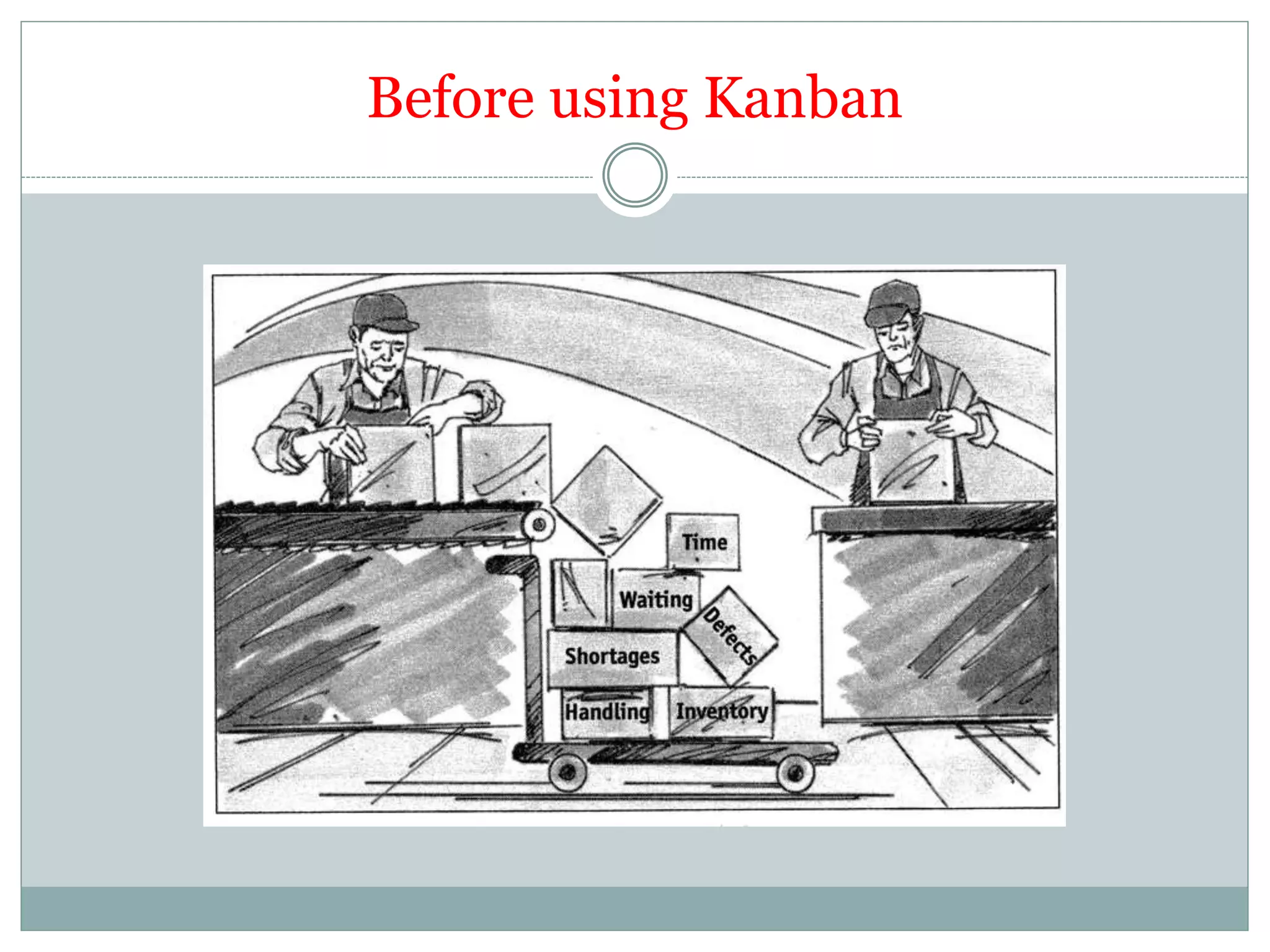
Before using Kanban
Types of Kanban
 Withdrawal Kanban:- Its function is to pass the
authorization for the movement of parts from one
stage to another.
It carries the following information:-
Example of Kanban
SupplierPull From
ContainerCard 1Order Quan.
Part Number Description
Kanban Card
Special Instructions
 Production Kanban:- Its function is to release an
order to the preceding stage to build the lot size
indicated on the card.
Card should have the following information:-
1. Materials required as inputs at the preceding stage,
2. Parts required as inputs at the preceding stage’
3. Information stated on withdrawals Kanban.
Other types of Kanban
 Express Kanban:- It is used when shortage of parts
occur.
 Emergency Kanban:- It is used to replace defective
parts.
 Through Kanban:- It is used when adjacent work
centers are located close to each other.
Measurement of Kanban
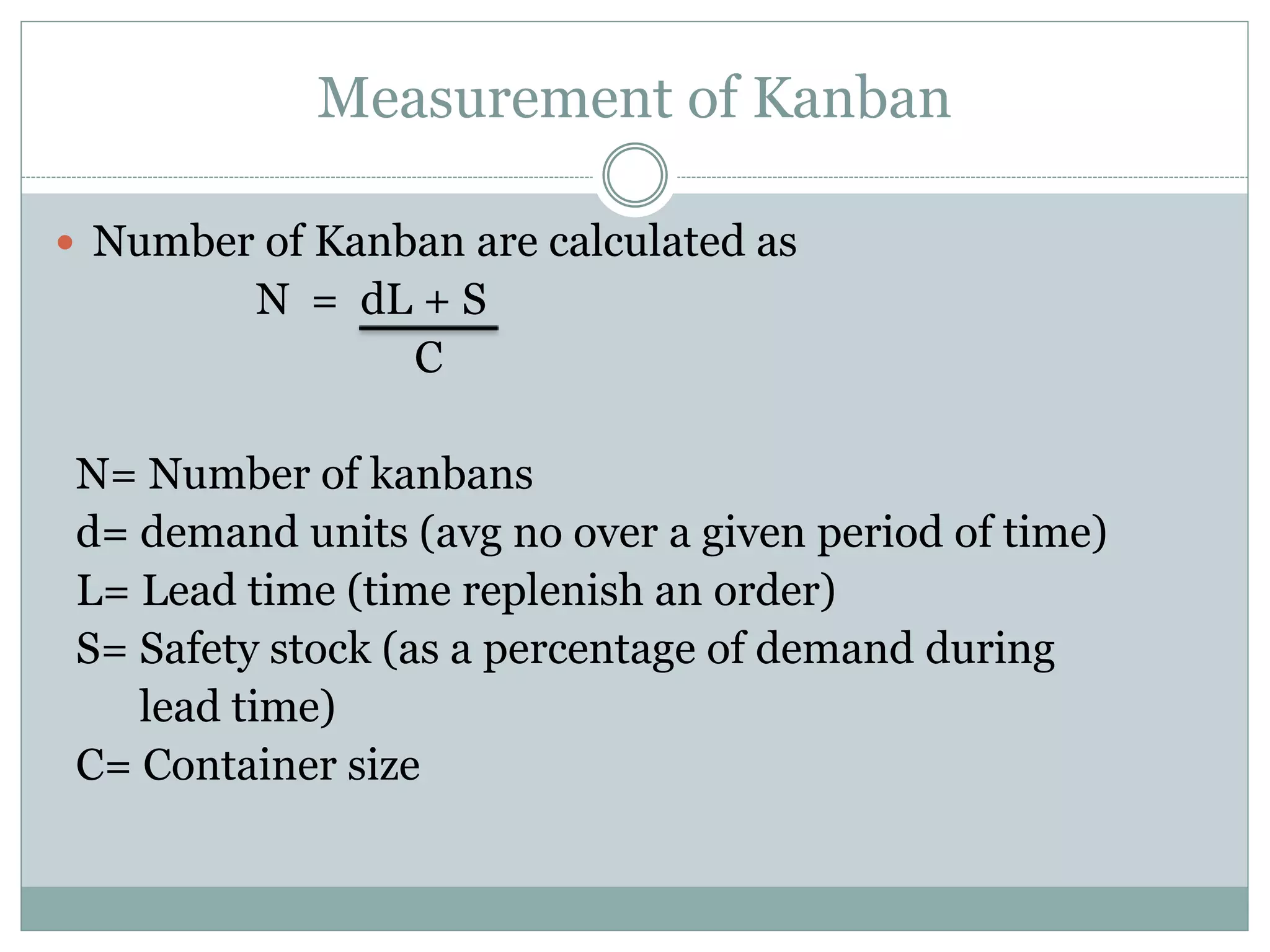
 Number of Kanban are calculated as
N = dL + S
C
N= Number of kanbans
d= demand units (avg no over a given period of time)
L= Lead time (time replenish an order)
S= Safety stock (as a percentage of demand during
lead time)
C= Container size
Benefits of Kanban
 Reduce Inventory and Product Obsolescence
 Reduces Waste and Scrap
 Provides Flexibility in Production
 Increases Output
 Reduces Total Cost
Kanban system

Kanban system

  • 1.
    PRESENTED BY: -PRESENTED TO: - MEENAL GUPTA MR. AMIT GARG 827 MBA 2ND SEM Kanban System
  • 2.
    What is Kanban Kanban means many things.  Literally, Kanban is a Japanese word that means "visual card".  Kanban is referred to as a card system.  Kanban as used in Lean Production and JIT is over a half century old.  Toyota originally used Kanban cards to limit the amount of inventory tied up in “work in progress” on a manufacturing floor.
  • 3.
  • 4.
    Types of Kanban Withdrawal Kanban:- Its function is to pass the authorization for the movement of parts from one stage to another. It carries the following information:-
  • 5.
    Example of Kanban SupplierPullFrom ContainerCard 1Order Quan. Part Number Description Kanban Card Special Instructions
  • 6.
     Production Kanban:-Its function is to release an order to the preceding stage to build the lot size indicated on the card. Card should have the following information:- 1. Materials required as inputs at the preceding stage, 2. Parts required as inputs at the preceding stage’ 3. Information stated on withdrawals Kanban.
  • 7.
    Other types ofKanban  Express Kanban:- It is used when shortage of parts occur.  Emergency Kanban:- It is used to replace defective parts.  Through Kanban:- It is used when adjacent work centers are located close to each other.
  • 8.
    Measurement of Kanban Number of Kanban are calculated as N = dL + S C N= Number of kanbans d= demand units (avg no over a given period of time) L= Lead time (time replenish an order) S= Safety stock (as a percentage of demand during lead time) C= Container size
  • 9.
    Benefits of Kanban Reduce Inventory and Product Obsolescence  Reduces Waste and Scrap  Provides Flexibility in Production  Increases Output  Reduces Total Cost