VIDYALANKAR SCHOOL OF
INFORMATION TECHNOLOGY

      TOPIC – KAIZEN


   PRESENTATION DONE BY
         GROUP-5

                   DATE OF PRESENTATION- 20TH JANUARY 2009
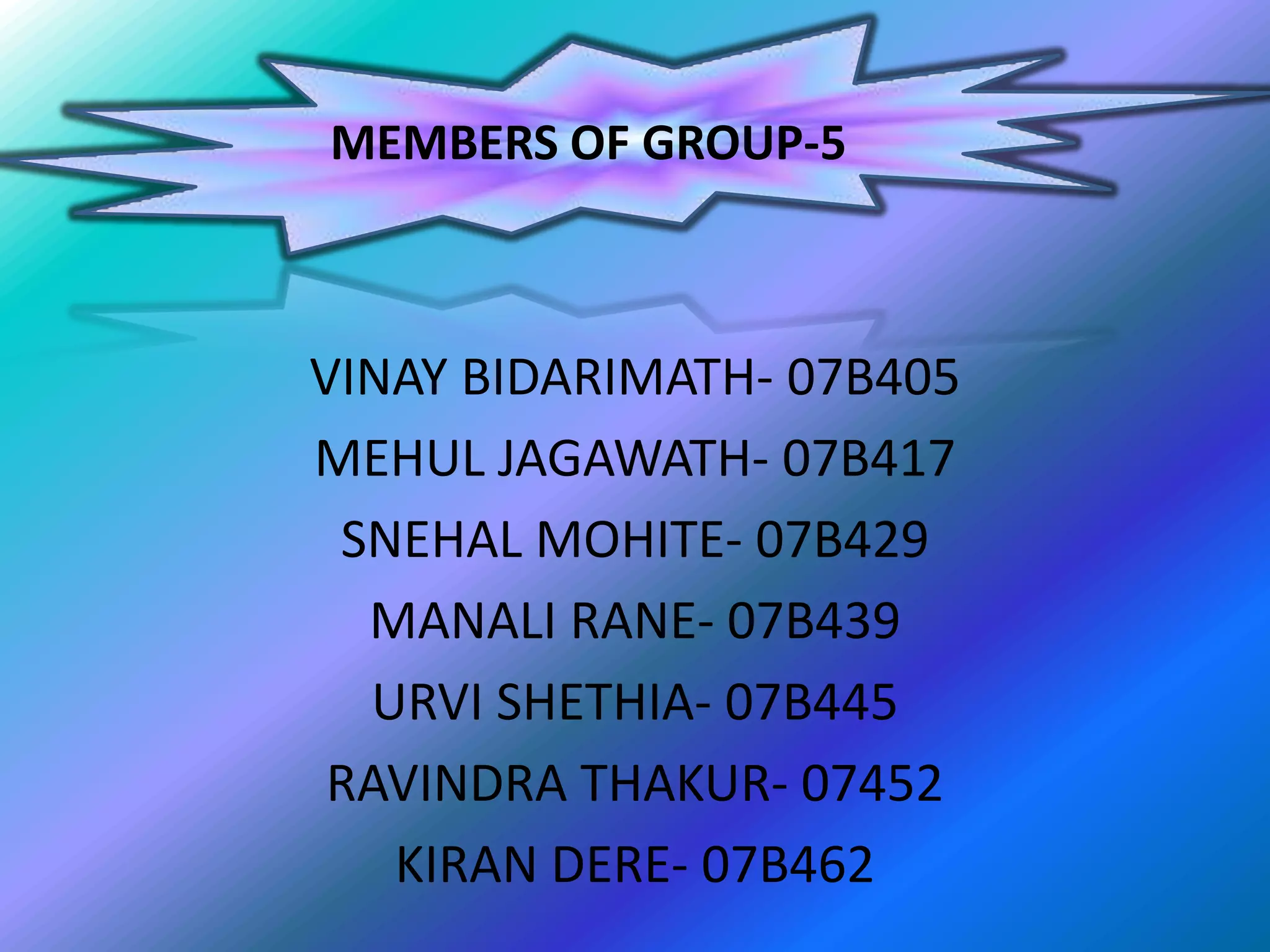
MEMBERS OF GROUP-5


VINAY BIDARIMATH- 07B405
MEHUL JAGAWATH- 07B417
 SNEHAL MOHITE- 07B429
  MANALI RANE- 07B439
  URVI SHETHIA- 07B445
 RAVINDRA THAKUR- 07452
   KIRAN DERE- 07B462
KAIZEN
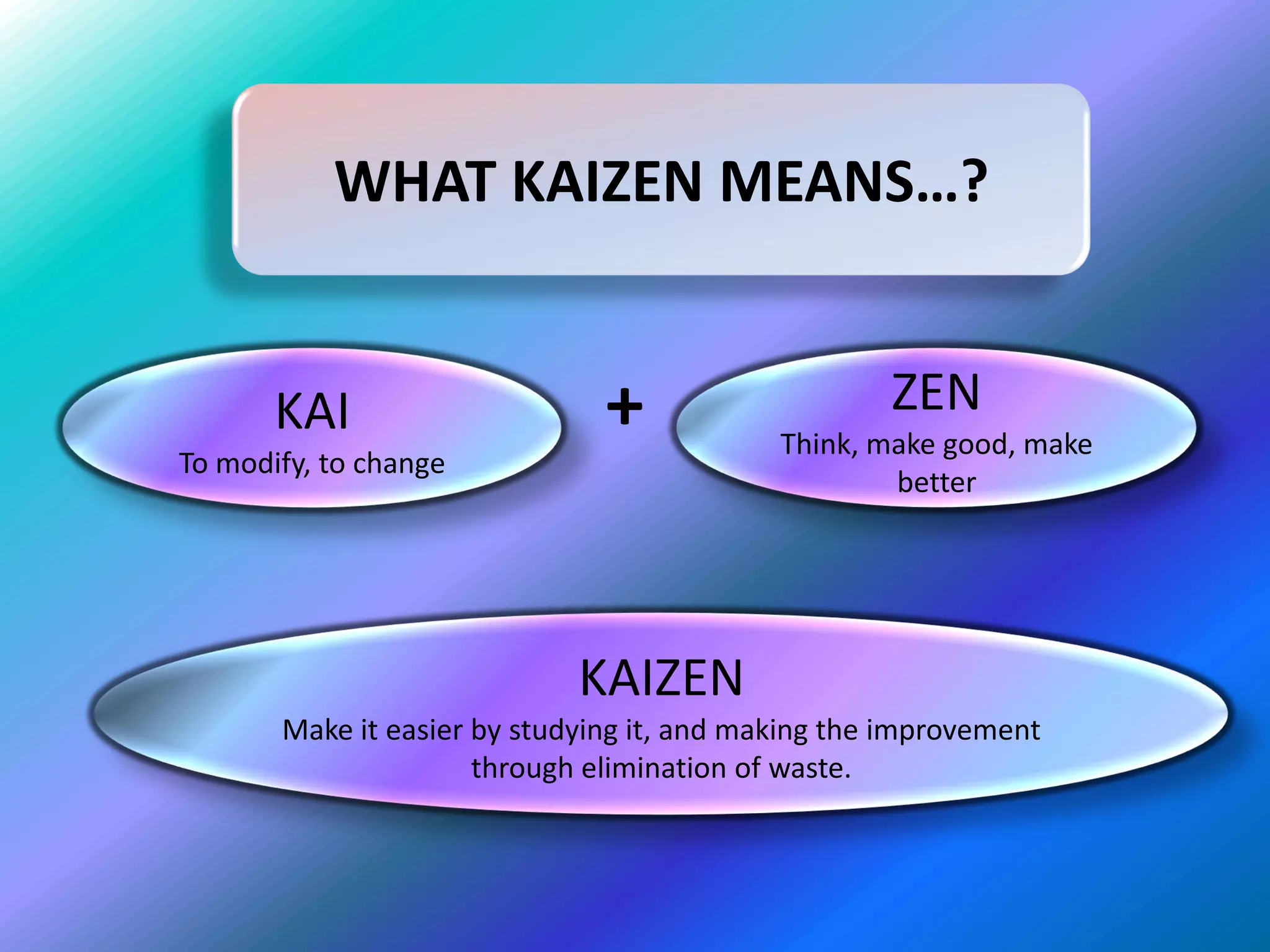
WHAT KAIZEN MEANS…?


       KAI                     +                    ZEN
                                            Think, make good, make
To modify, to change
                                                    better


                             KAIZEN
       Make it easier by studying it, and making the improvement
                      through elimination of waste.
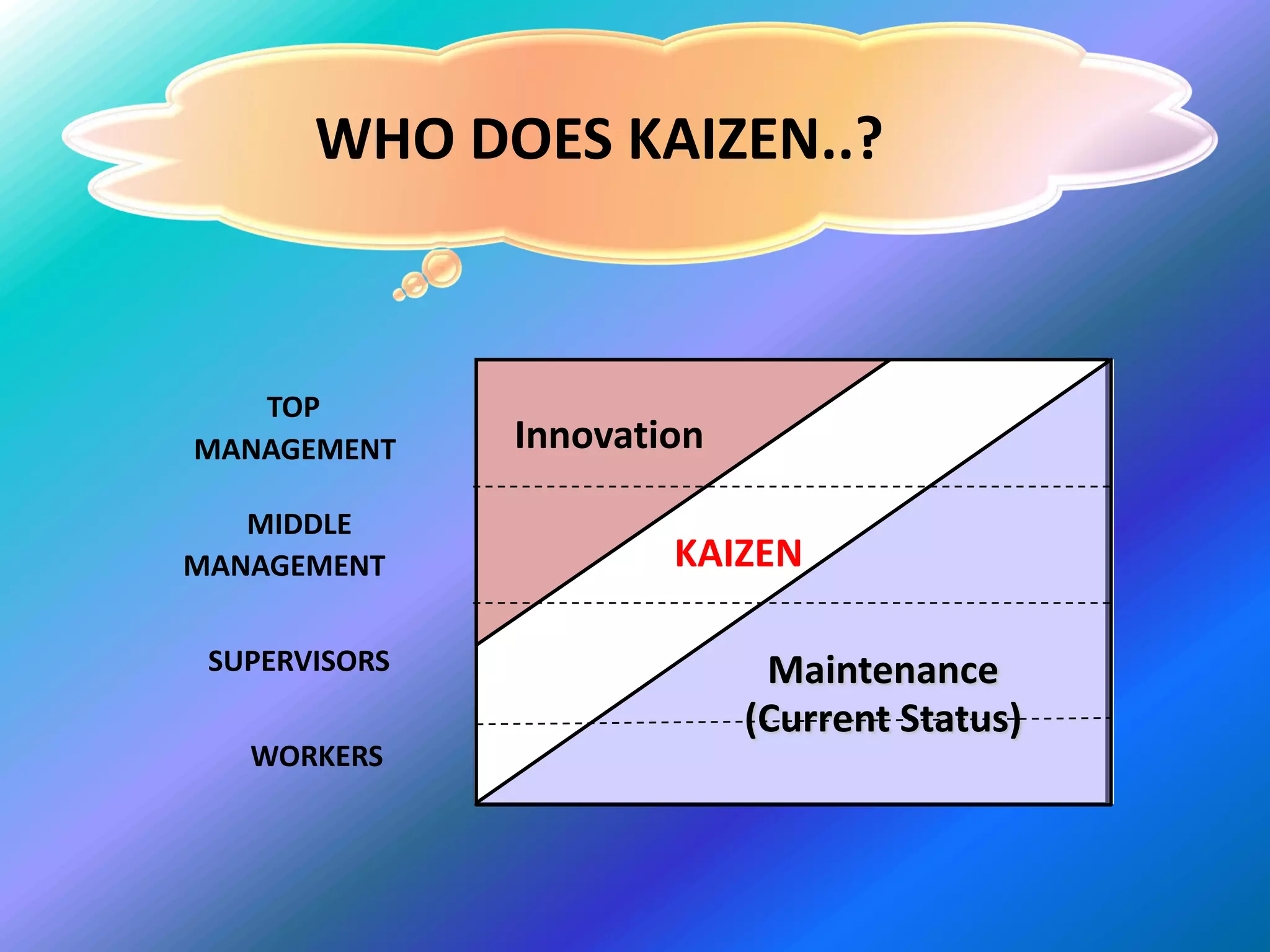
WHO DOES KAIZEN..?


   TOP
MANAGEMENT     Innovation

   MIDDLE
MANAGEMENT             KAIZEN

 SUPERVISORS                 Maintenance
                            (Current Status)
   WORKERS
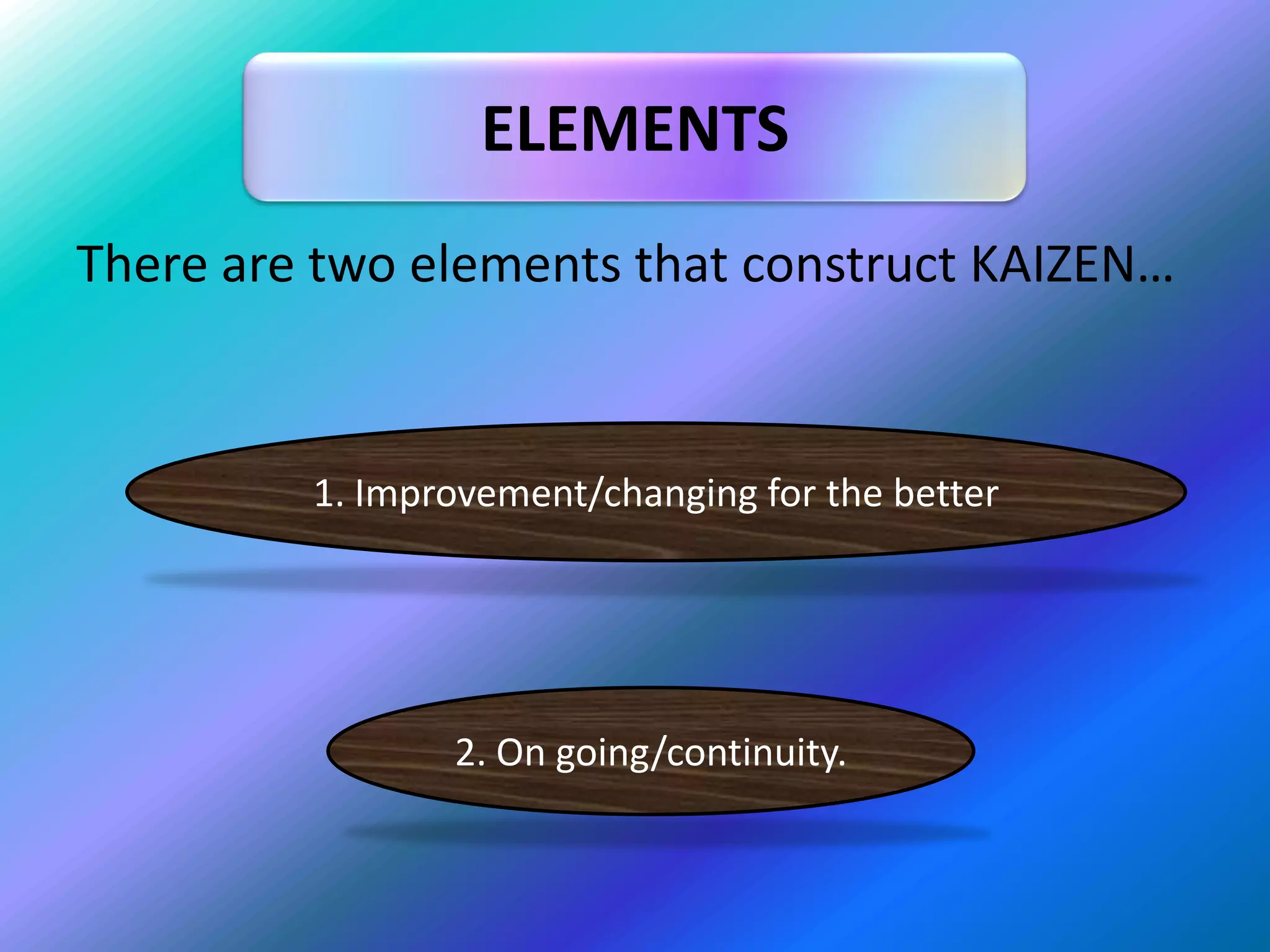
ELEMENTS
There are two elements that construct KAIZEN…


         1. Improvement/changing for the better


                2. On going/continuity.
METHODOLOGY


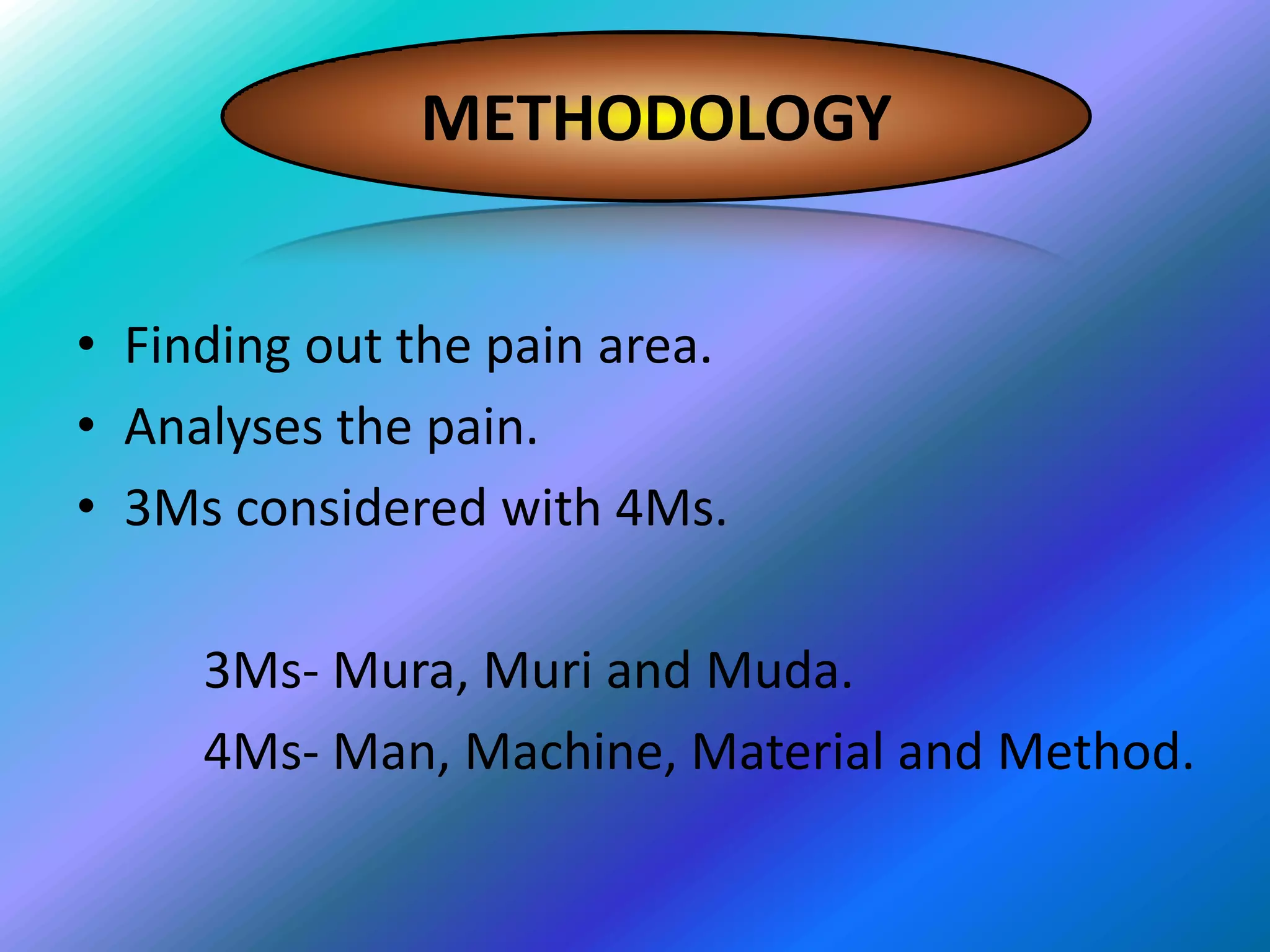
• Finding out the pain area.
• Analyses the pain.
• 3Ms considered with 4Ms.

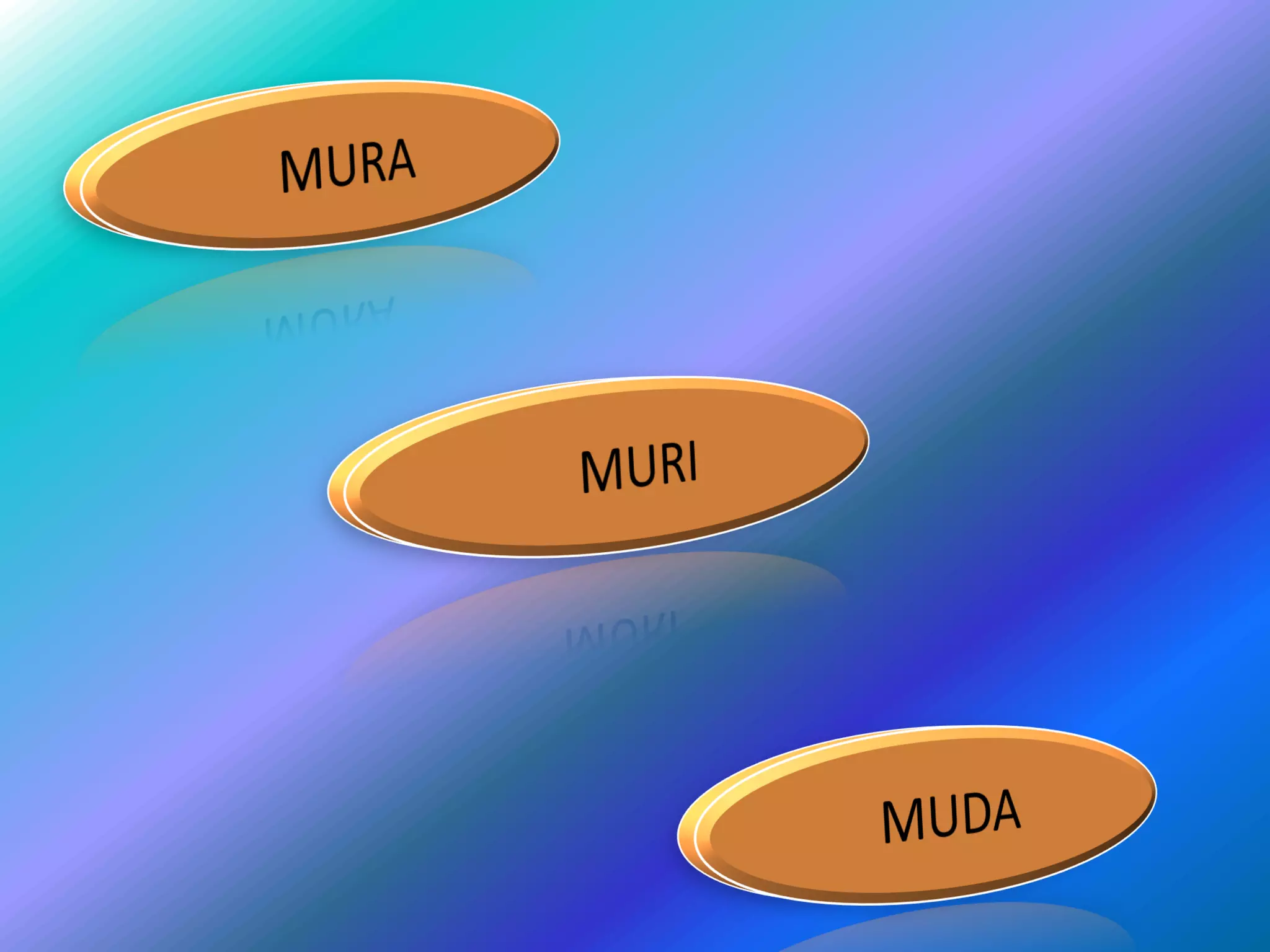
     3Ms- Mura, Muri and Muda.
     4Ms- Man, Machine, Material and Method.
GEMBA KAIZEN

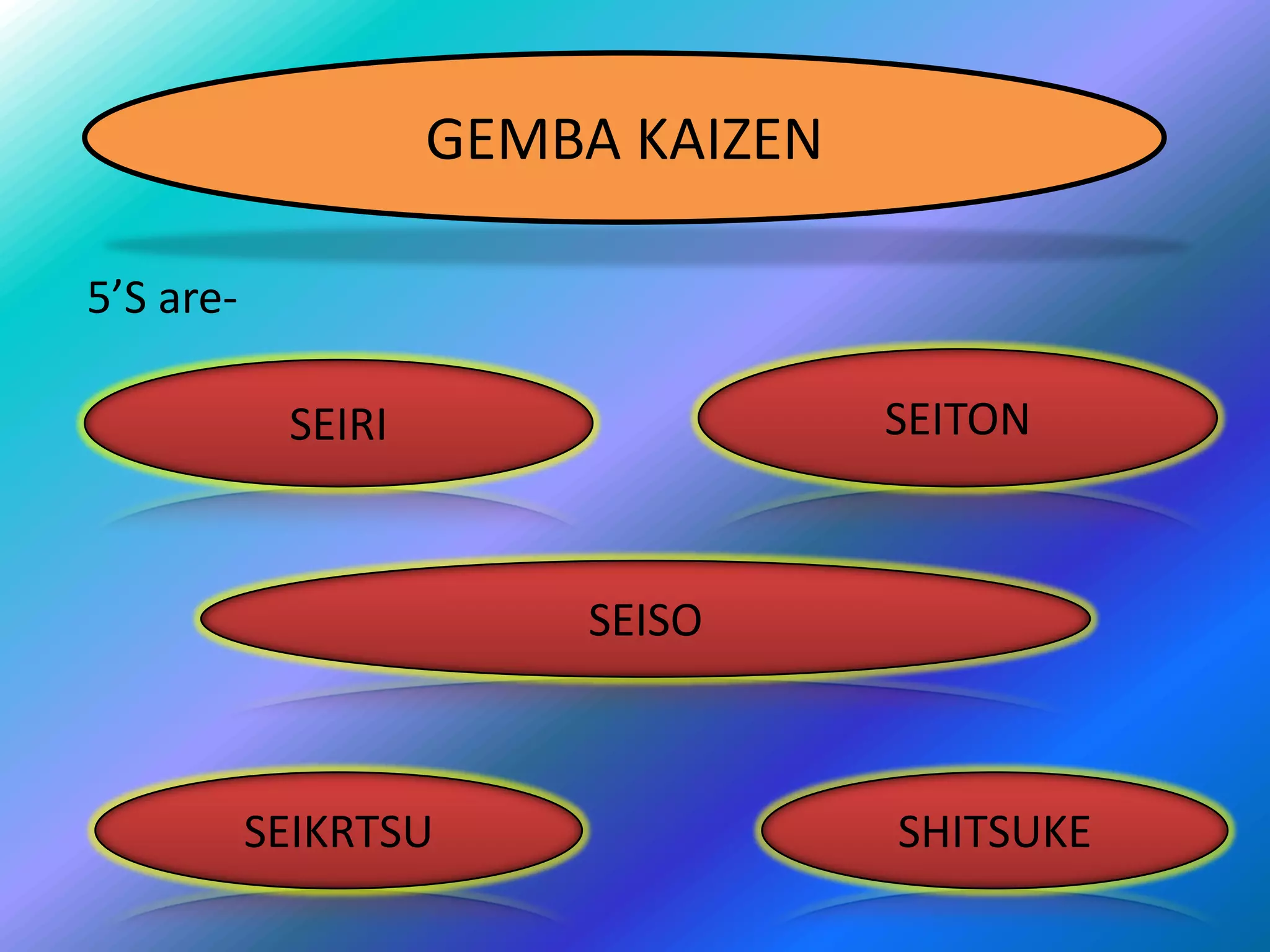
5’S are-

            SEIRI                  SEITON


                        SEISO


           SEIKRTSU                SHITSUKE
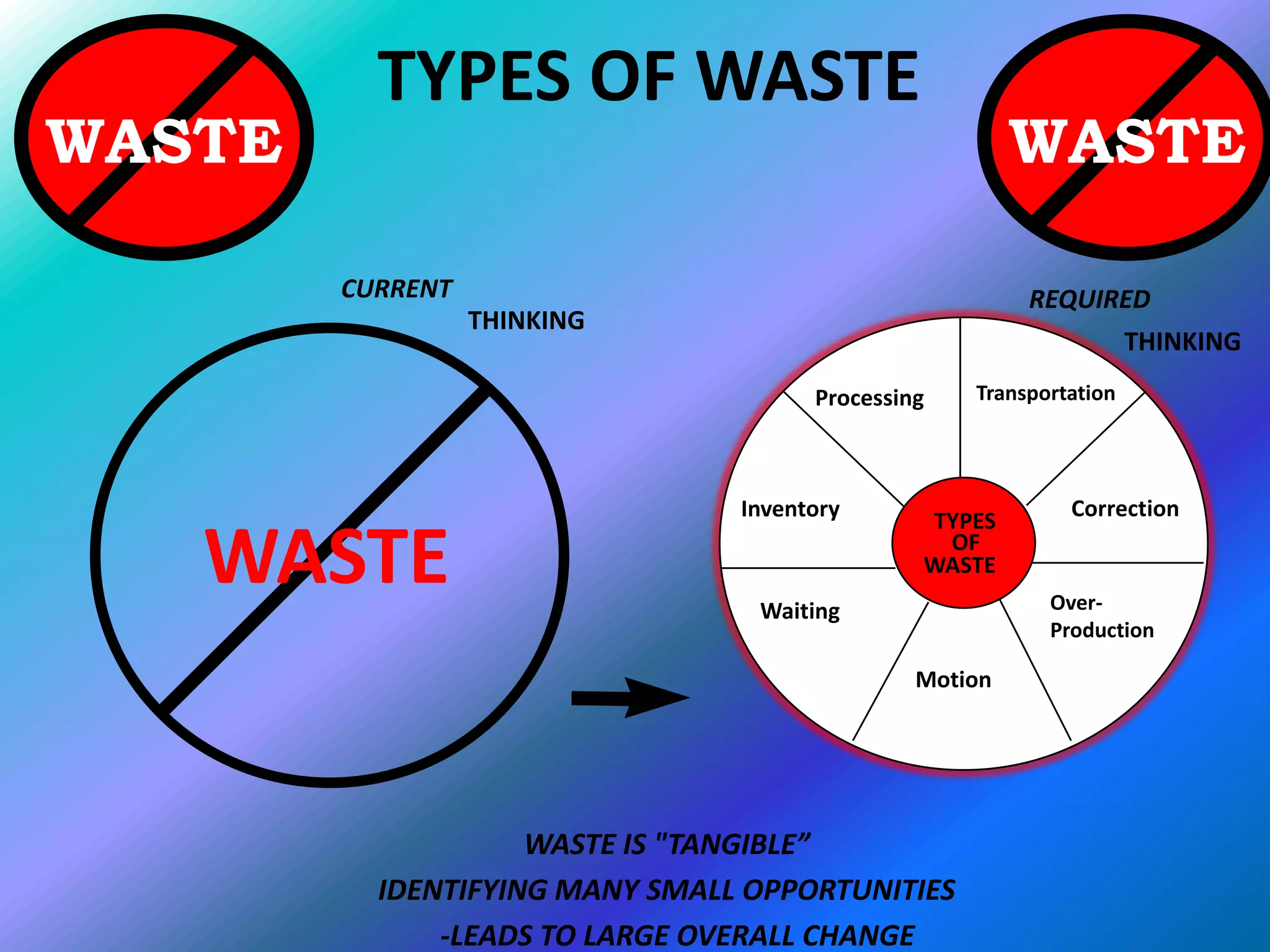
TYPES OF WASTE
WASTE                                                   WASTE

        CURRENT                                         REQUIRED
                  THINKING
                                                                    THINKING
                                      Processing   Transportation


                                Inventory                   Correction
                                               TYPES

   WASTE                         Waiting
                                                OF
                                               WASTE
                                                          Over-
                                                          Production

                                               Motion


                    WASTE IS "TANGIBLE”
          IDENTIFYING MANY SMALL OPPORTUNITIES
              -LEADS TO LARGE OVERALL CHANGE
EXAMPLES
• INTRODUCTION.

• IMPLEMENTATION OF KAIZEN.

• TOYOTA’S PRODUCTION SYSTEM.

• BENEFITS OCCURRED.
INTRODUCTION

As of 2008,Toyota employs approximately 316,000 people around the
                             world.
IMPLEMENTATION
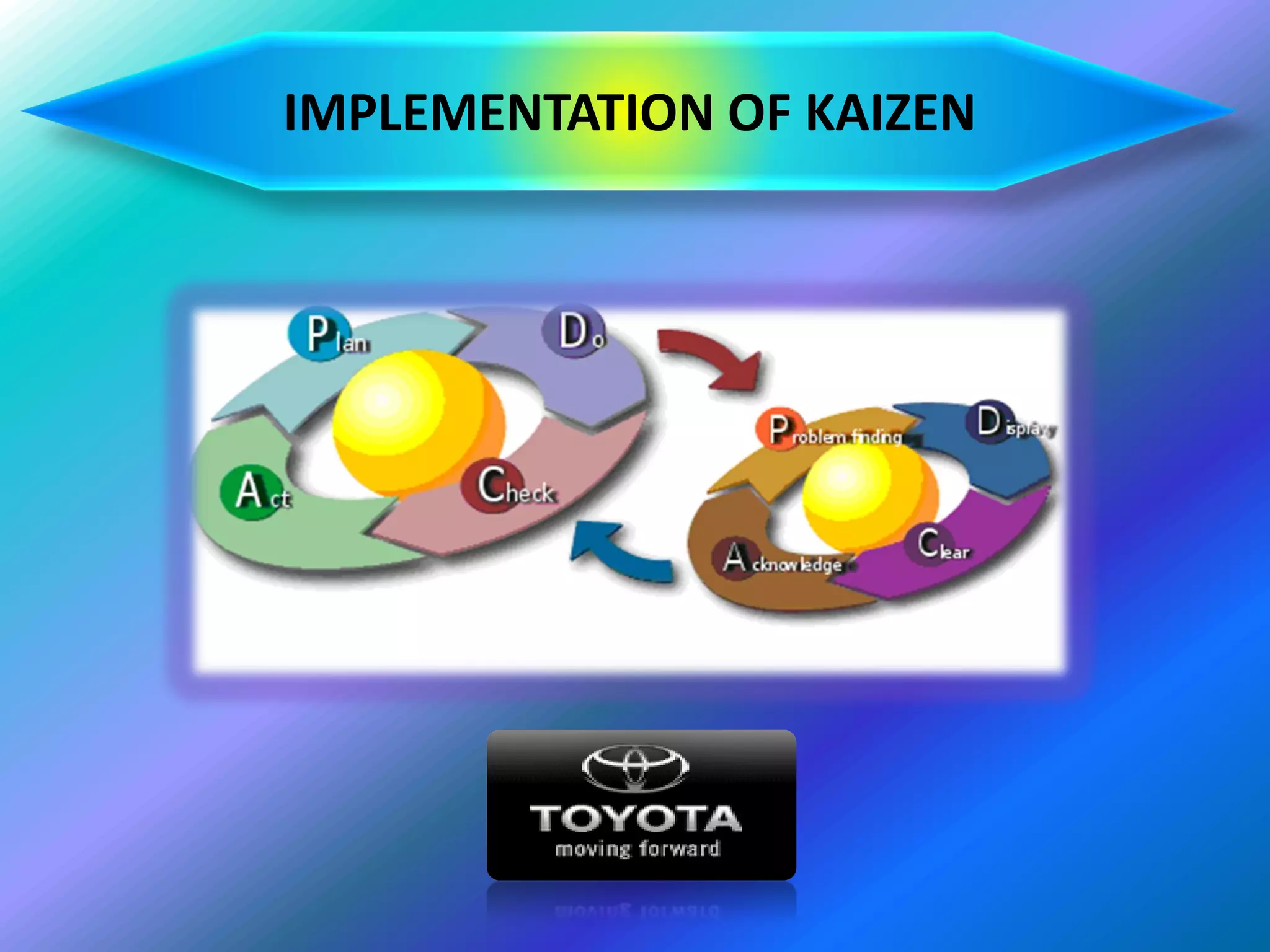
IMPLEMENTATION OF KAIZEN
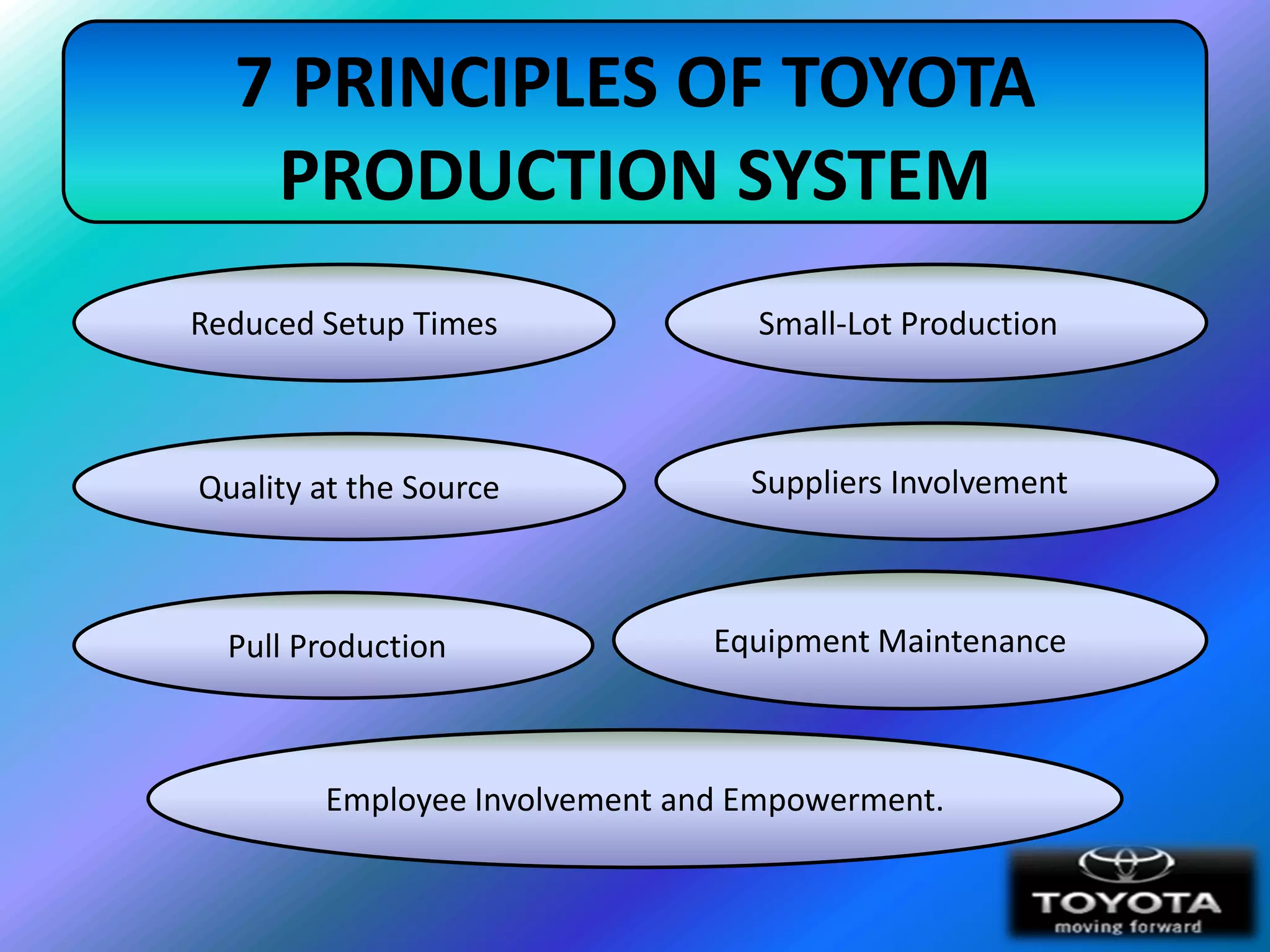
7 PRINCIPLES OF TOYOTA
   PRODUCTION SYSTEM
Reduced Setup Times              Small-Lot Production


Quality at the Source            Suppliers Involvement


  Pull Production              Equipment Maintenance


        Employee Involvement and Empowerment.
WHY TOYOTA USES KAIZEN
              TECHNIQUE?


• To remain competitive.
• To improve customer service and make him
  happy.
• To work smarter, and not harder.
• To improve productivity and quality.
• To become world class.
Toyota Culture and Management
                Philosophy

• The Toyota Way is not the Toyota Production
  System (TPS).

• The Toyota Way consists of the foundational
  principles of the Toyota culture.

• Allows TPS to function properly.
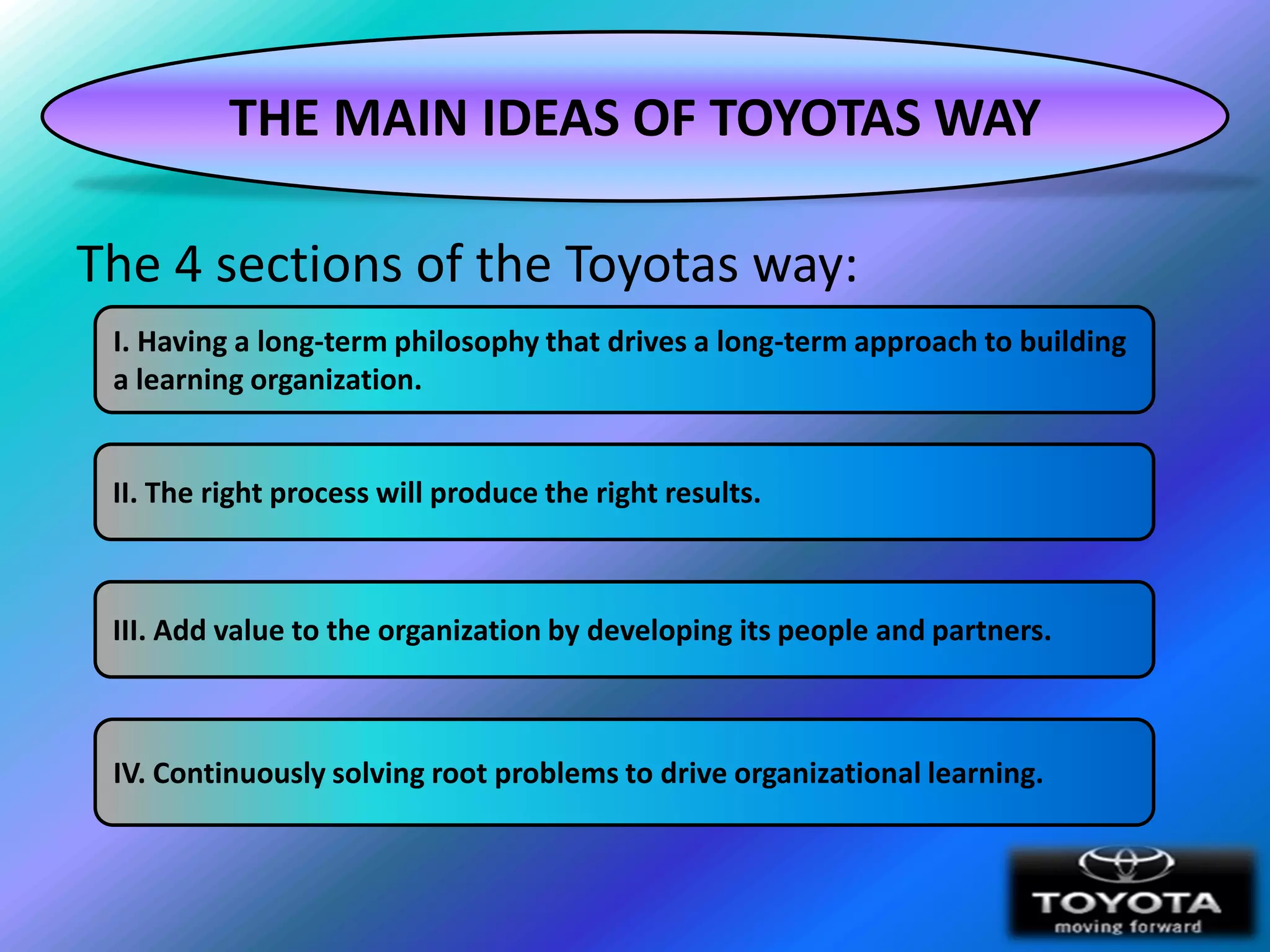
THE MAIN IDEAS OF TOYOTAS WAY

The 4 sections of the Toyotas way:
 I. Having a long-term philosophy that drives a long-term approach to building
 a learning organization.


 II. The right process will produce the right results.


 III. Add value to the organization by developing its people and partners.


 IV. Continuously solving root problems to drive organizational learning.
PRINCIPLES OF TOYOTAS
                    WAY


    I. Having a long-term philosophy that drives a
       long-term approach to building a learning
                      organization


• Base your management decisions on a long-
  term philosophy, even at the expense of short-
  term financial goals
II. The right process will produce the right results


• Create a continuous process flow to bring problems
  to the surface
• Use "pull" systems to avoid overproduction.
• Level out the workload.
• Build a culture of stopping to fix problems, to get
  quality right the first time
• Use visual control so no problems are hidden.
• Use only reliable, thoroughly tested technology that
  serves your people and processes
III. Add value to the organization by developing its
                  people and partners.


• Grow leaders who thoroughly understand the work,
  live the philosophy, and teach it to others

• Develop exceptional people and teams who follow
  your company's philosophy

• Respect your extended network of partners and
  suppliers by challenging them and helping them to
  improve
IV. Continuously solving root problems to drive
                organizational learning


• Go and see for yourself to thoroughly understand the
  situation (Genchi Genbutsu).


• Make decisions slowly by consensus, thoroughly
  considering all options; implement decisions rapidly
  (Nemawashi).
BENEFITS FROM KAIZEN

• Kaizen reduces waste.
• Kaizen improves: Space utilization.
                     Product quality.
                     Use of capita.
                     Communications.
                     Production capacity.
                     Employee retention.
• Kaizen provides immediate results.
CONCLUSION
Kaizen Ppt

Kaizen Ppt

  • 1.
    VIDYALANKAR SCHOOL OF INFORMATIONTECHNOLOGY TOPIC – KAIZEN PRESENTATION DONE BY GROUP-5 DATE OF PRESENTATION- 20TH JANUARY 2009
  • 2.
    MEMBERS OF GROUP-5 VINAYBIDARIMATH- 07B405 MEHUL JAGAWATH- 07B417 SNEHAL MOHITE- 07B429 MANALI RANE- 07B439 URVI SHETHIA- 07B445 RAVINDRA THAKUR- 07452 KIRAN DERE- 07B462
  • 3.
  • 4.
    WHAT KAIZEN MEANS…? KAI + ZEN Think, make good, make To modify, to change better KAIZEN Make it easier by studying it, and making the improvement through elimination of waste.
  • 5.
    WHO DOES KAIZEN..? TOP MANAGEMENT Innovation MIDDLE MANAGEMENT KAIZEN SUPERVISORS Maintenance (Current Status) WORKERS
  • 6.
    ELEMENTS There are twoelements that construct KAIZEN… 1. Improvement/changing for the better 2. On going/continuity.
  • 7.
    METHODOLOGY • Finding outthe pain area. • Analyses the pain. • 3Ms considered with 4Ms. 3Ms- Mura, Muri and Muda. 4Ms- Man, Machine, Material and Method.
  • 9.
    GEMBA KAIZEN 5’S are- SEIRI SEITON SEISO SEIKRTSU SHITSUKE
  • 10.
    TYPES OF WASTE WASTE WASTE CURRENT REQUIRED THINKING THINKING Processing Transportation Inventory Correction TYPES WASTE Waiting OF WASTE Over- Production Motion WASTE IS "TANGIBLE” IDENTIFYING MANY SMALL OPPORTUNITIES -LEADS TO LARGE OVERALL CHANGE
  • 11.
  • 13.
    • INTRODUCTION. • IMPLEMENTATIONOF KAIZEN. • TOYOTA’S PRODUCTION SYSTEM. • BENEFITS OCCURRED.
  • 14.
    INTRODUCTION As of 2008,Toyotaemploys approximately 316,000 people around the world.
  • 15.
  • 16.
  • 17.
    7 PRINCIPLES OFTOYOTA PRODUCTION SYSTEM Reduced Setup Times Small-Lot Production Quality at the Source Suppliers Involvement Pull Production Equipment Maintenance Employee Involvement and Empowerment.
  • 18.
    WHY TOYOTA USESKAIZEN TECHNIQUE? • To remain competitive. • To improve customer service and make him happy. • To work smarter, and not harder. • To improve productivity and quality. • To become world class.
  • 19.
    Toyota Culture andManagement Philosophy • The Toyota Way is not the Toyota Production System (TPS). • The Toyota Way consists of the foundational principles of the Toyota culture. • Allows TPS to function properly.
  • 20.
    THE MAIN IDEASOF TOYOTAS WAY The 4 sections of the Toyotas way: I. Having a long-term philosophy that drives a long-term approach to building a learning organization. II. The right process will produce the right results. III. Add value to the organization by developing its people and partners. IV. Continuously solving root problems to drive organizational learning.
  • 21.
    PRINCIPLES OF TOYOTAS WAY I. Having a long-term philosophy that drives a long-term approach to building a learning organization • Base your management decisions on a long- term philosophy, even at the expense of short- term financial goals
  • 22.
    II. The rightprocess will produce the right results • Create a continuous process flow to bring problems to the surface • Use "pull" systems to avoid overproduction. • Level out the workload. • Build a culture of stopping to fix problems, to get quality right the first time • Use visual control so no problems are hidden. • Use only reliable, thoroughly tested technology that serves your people and processes
  • 23.
    III. Add valueto the organization by developing its people and partners. • Grow leaders who thoroughly understand the work, live the philosophy, and teach it to others • Develop exceptional people and teams who follow your company's philosophy • Respect your extended network of partners and suppliers by challenging them and helping them to improve
  • 24.
    IV. Continuously solvingroot problems to drive organizational learning • Go and see for yourself to thoroughly understand the situation (Genchi Genbutsu). • Make decisions slowly by consensus, thoroughly considering all options; implement decisions rapidly (Nemawashi).
  • 25.
    BENEFITS FROM KAIZEN •Kaizen reduces waste. • Kaizen improves: Space utilization. Product quality. Use of capita. Communications. Production capacity. Employee retention. • Kaizen provides immediate results.
  • 26.