Flow Process chart
Presented By:
Submitted To:
Dr. Awadesh Bhardwaj,
Mech. Engg. Deptt.,
MNIT,Jaipur
Dated: 11-sept-2013

•
•
•
•
•
•

Kapil jain
abhimanyu meena
Shubhender Singh
Mohit vats
Rajender kumar
Areesha Nafees

2013pie5199
2013pie5071
2013pie5244
2013pie5090
2013pie5122
2013pie5141

M.Tech (IE),Mech. Engg. Deptt.,
MNIT,Jaipur
What is the
purpose
of a flow chart?
• It is a picture of a process
• It is drawn with symbols

representing different types
of activities
• It defines the system
being studied.
• It documents changes to
the process.
Why are flow
charts useful?
• They provide a visual for

students to see steps in a process.
• They can be used as an
assessment to check for
student understanding.
• They can help organize classrooms
and minimize transition times.
Flow Diagram
Definition
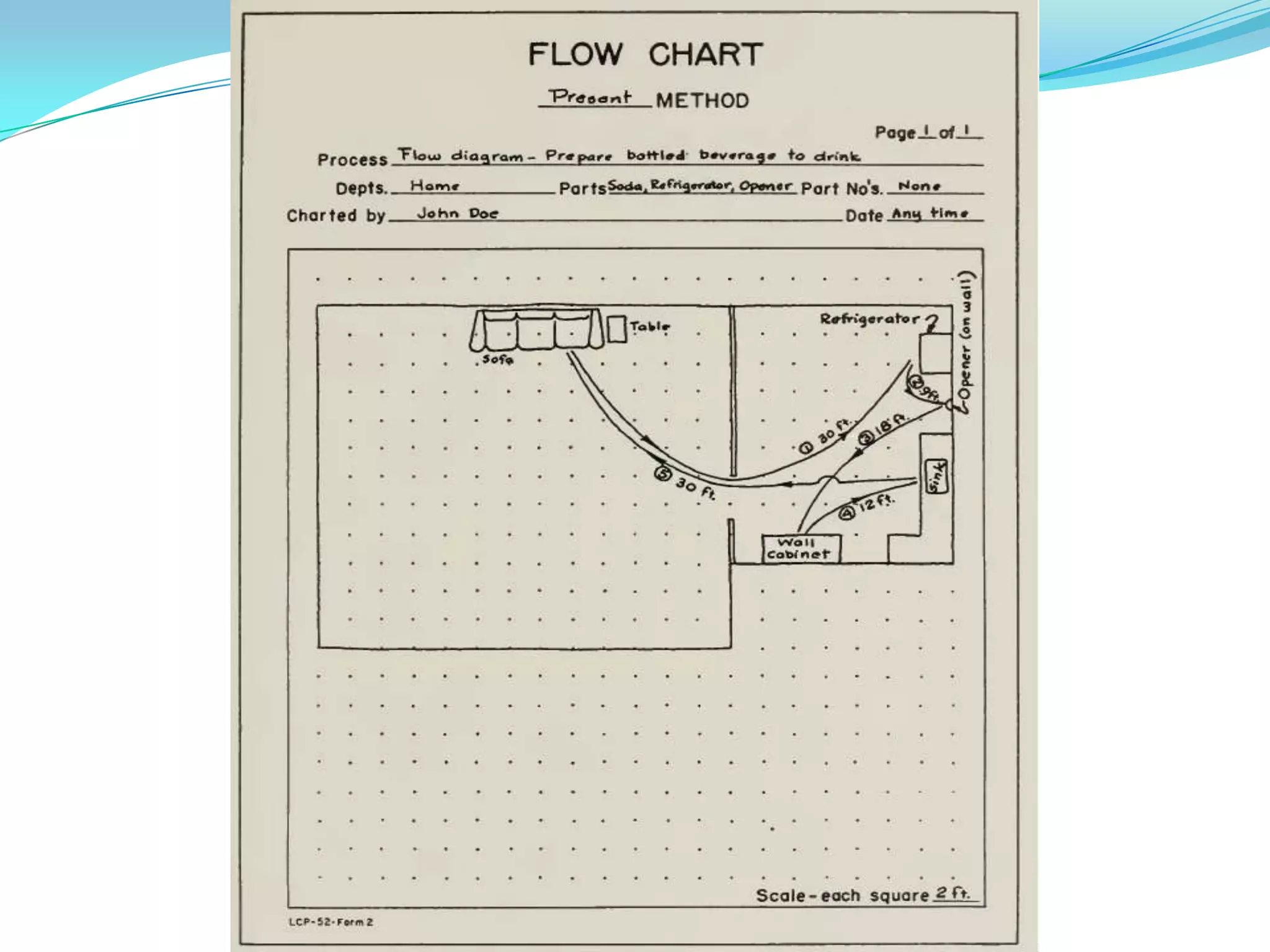
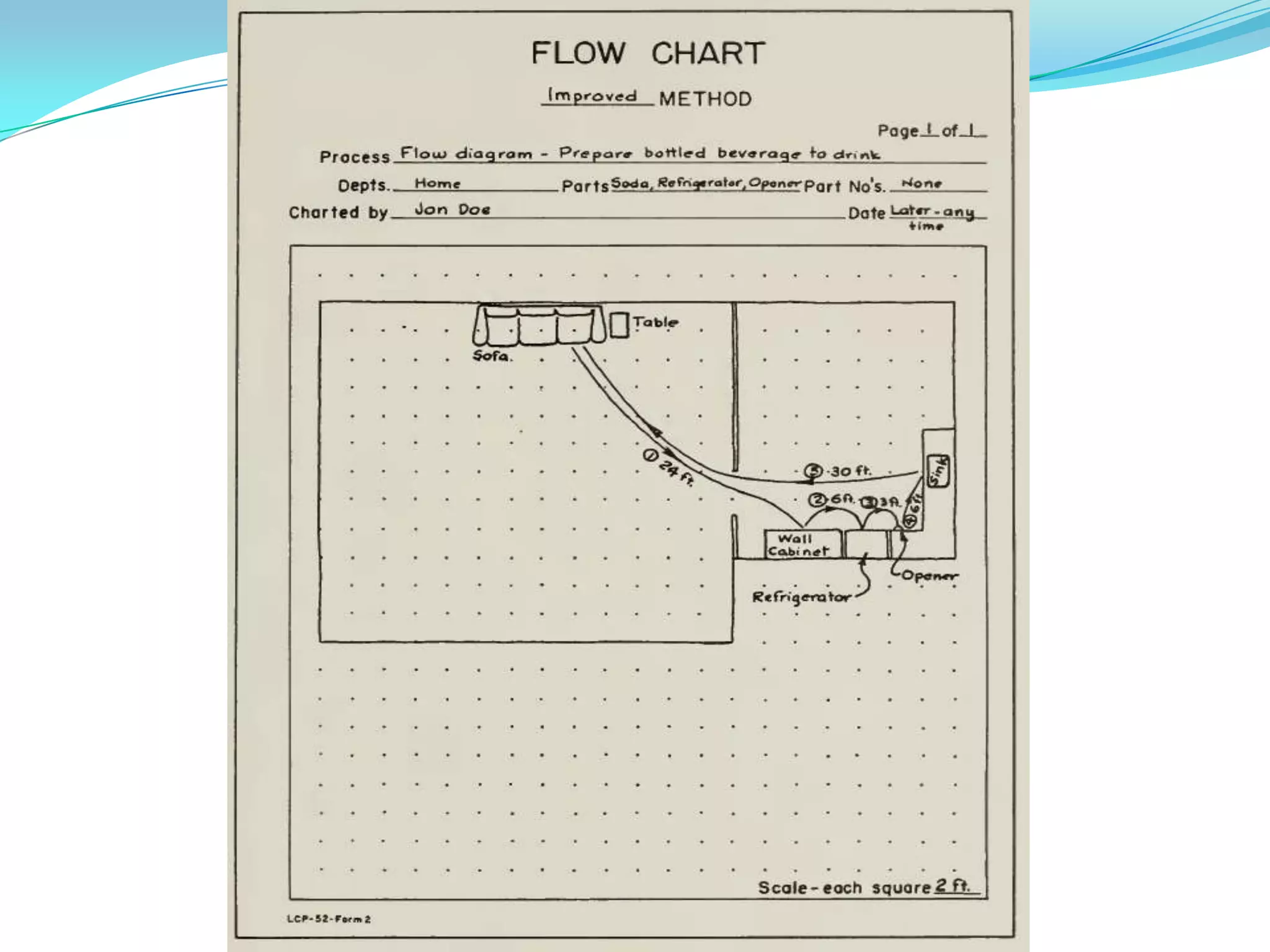
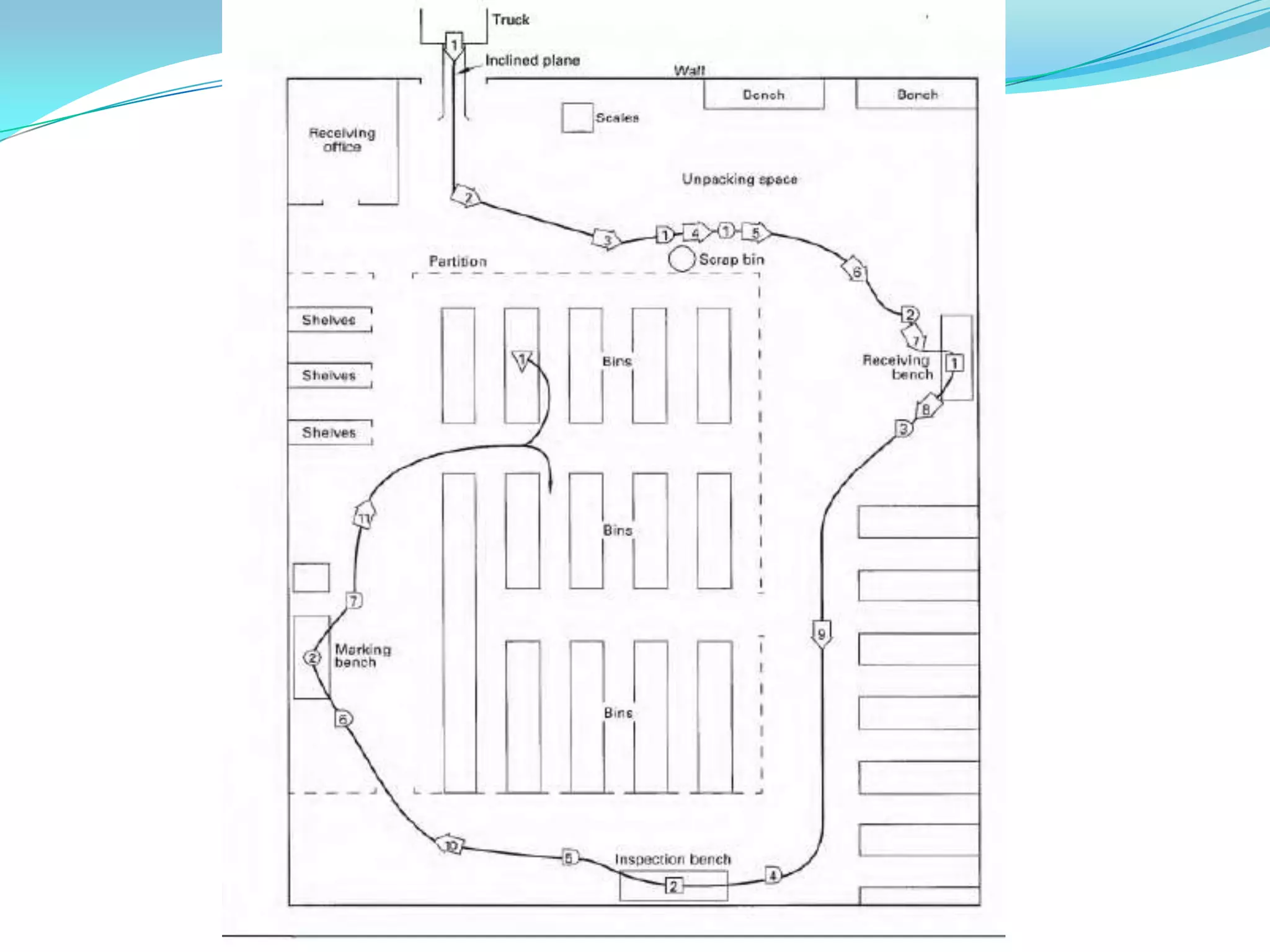
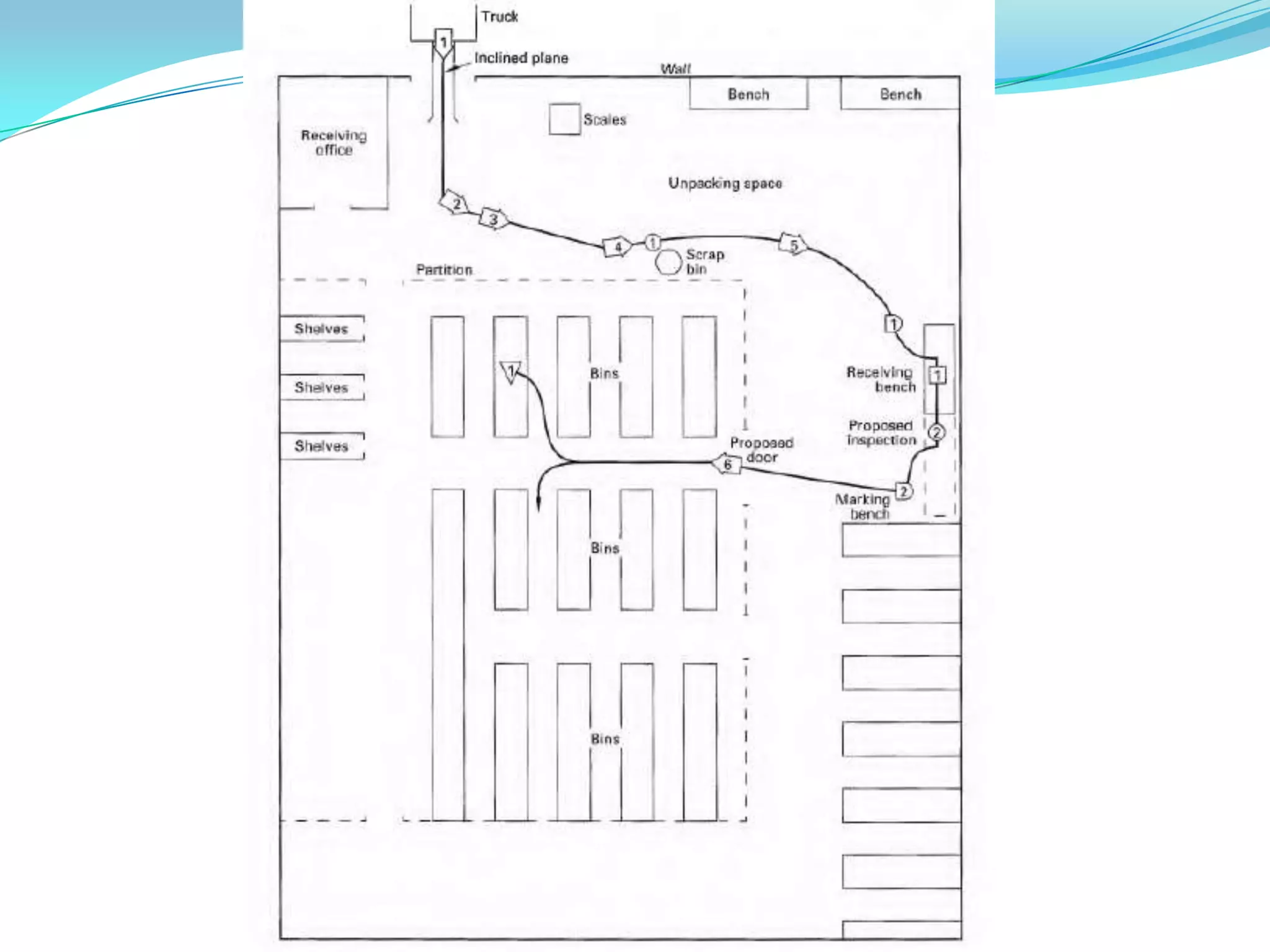
 A flow diagram is a graphical means of presenting,

describing, or analyzing a process & movement of
material, men etc.
 This is done with the help of all five symbols which
represent steps in a chain of steps.
 These all symbols are connected to other one by lines and
arrows which represent sequence and dependency
relationships (i.e., X must be done before Y can be done).
Objectives Of Flow Diagram
 The flow charts indicates the sequence of events they do

not show the movement of men, material etc but the
path of movement can be better visualized by a flow
diagram.
 Flow diagram is drawn to scale.
 It shows the relative position of machines, jigs, fixture,
gangway etc and mark the paths followed by men and
material.
 Distances between two location is indicated in flow
diagram.
Steps in drawing a Flow Diagram
 Draw to scale the plan of the work area.
 Mark the relative position of machine tools, benches,

store, racks, inspection tables etc.
 From the different observations, draw the actual
movement of the material or worker on the diagram.
 Indicate the direction of movement.
 Mark the distances between consequence two locations.
CHARTS AND DIAGRAMS
USED IN METHOD STUDY
Following chart are used in method study :(1) OPC - Outline process chart
(2) FPC - Flow process chart
Man type
Material type
Equipment type
(3) Two handed process chart
(4) Multiple activity chart like man and machine chart
(5) SIMO chart
The following diagram are also used in method study.
(1) Flow diagram
(2) String diagram
(3) Cycle graph
(4) Cronocycle diagram
(5) Travel diagram
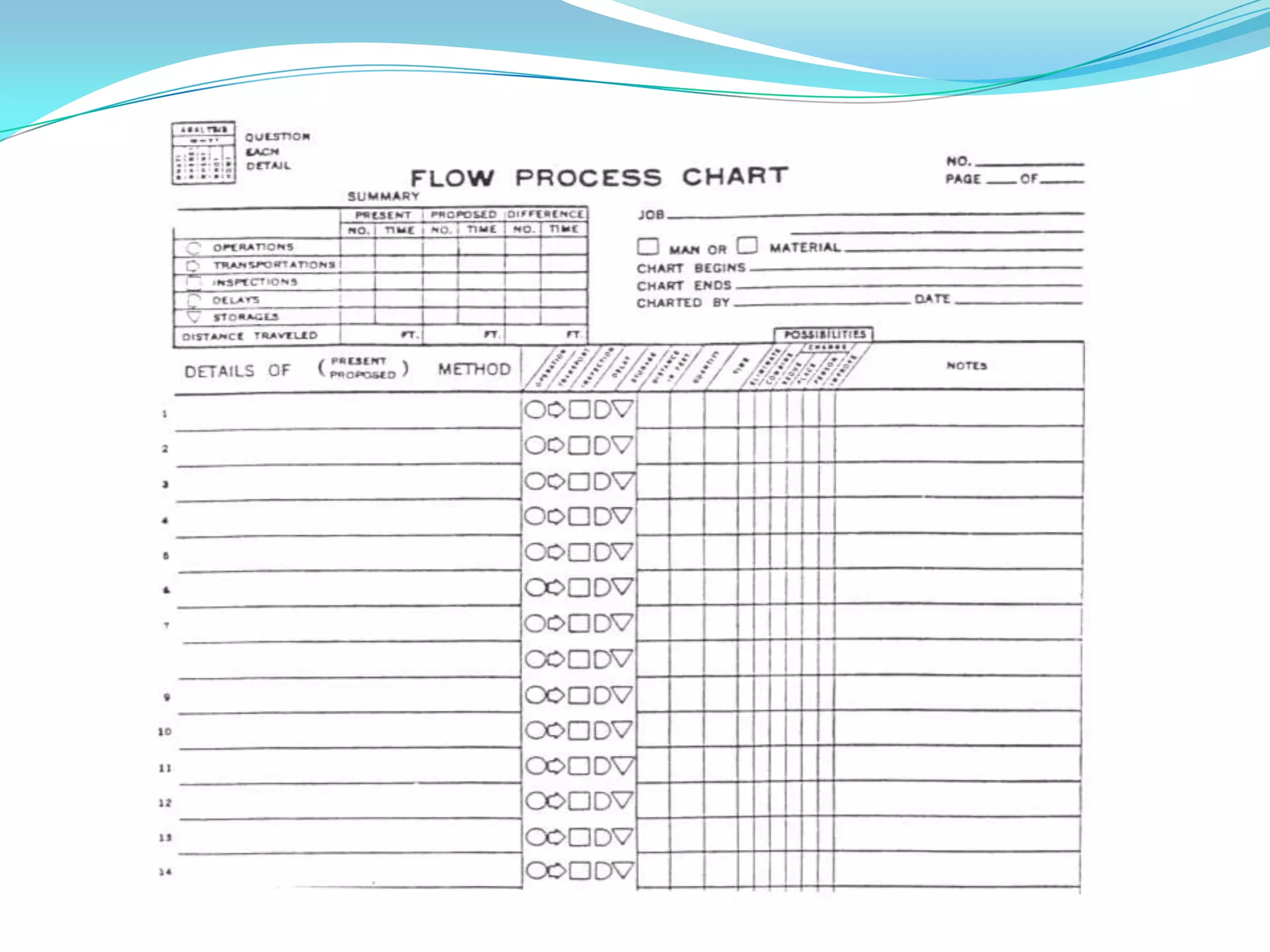
FLOW PROCESS CHART
FLOW PROCESS CHART
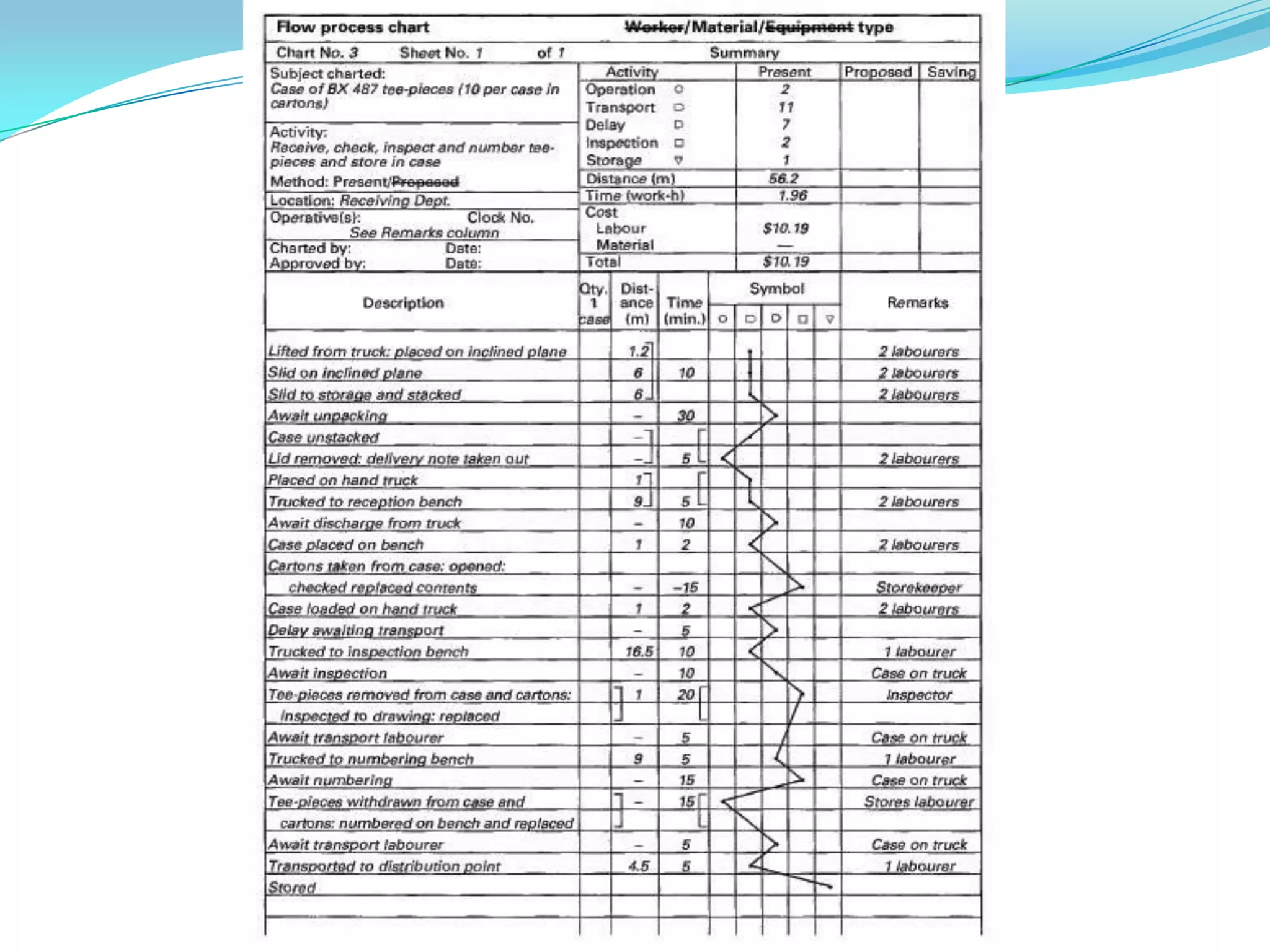
 When the overall idea of the process has been established it is

possible to go into greater details. Flow process chart can be
defined as a graphical presentation of all operations,
inspections, delays and storages occurring during a process or
procedure which includes information considered necessary
for analysis like time required, quantity and distance moved
etc.
TYPES OF FLOW PROCESS
CHART


Man type

-



Material type
material.

- It records what happens to the



Equipment type

- It records how the equipment is used.

It records what the worker does.
Flow Process Charts
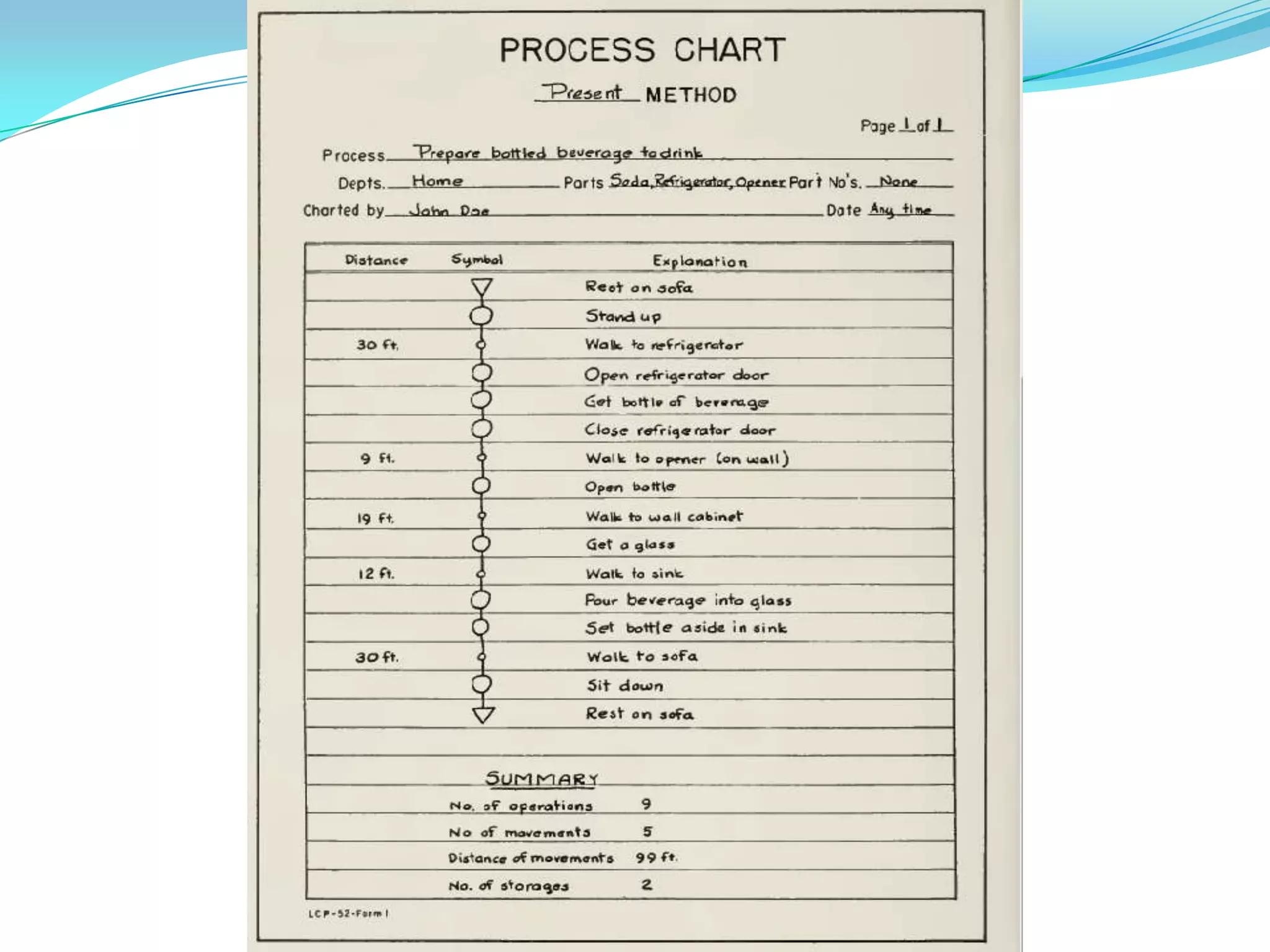
A flow process chart is a chart of all the activities

involved in a process.
It is similar to an operations process chart, except that
more detail is shown by including transportations and
delays as well as operations, inspections, and storages.
Not usually used for entire assemblies, it is used for
just one component (or operator)
Add in information on:
 Operation duration (time to complete)
 Distance traveled (for transport operations)

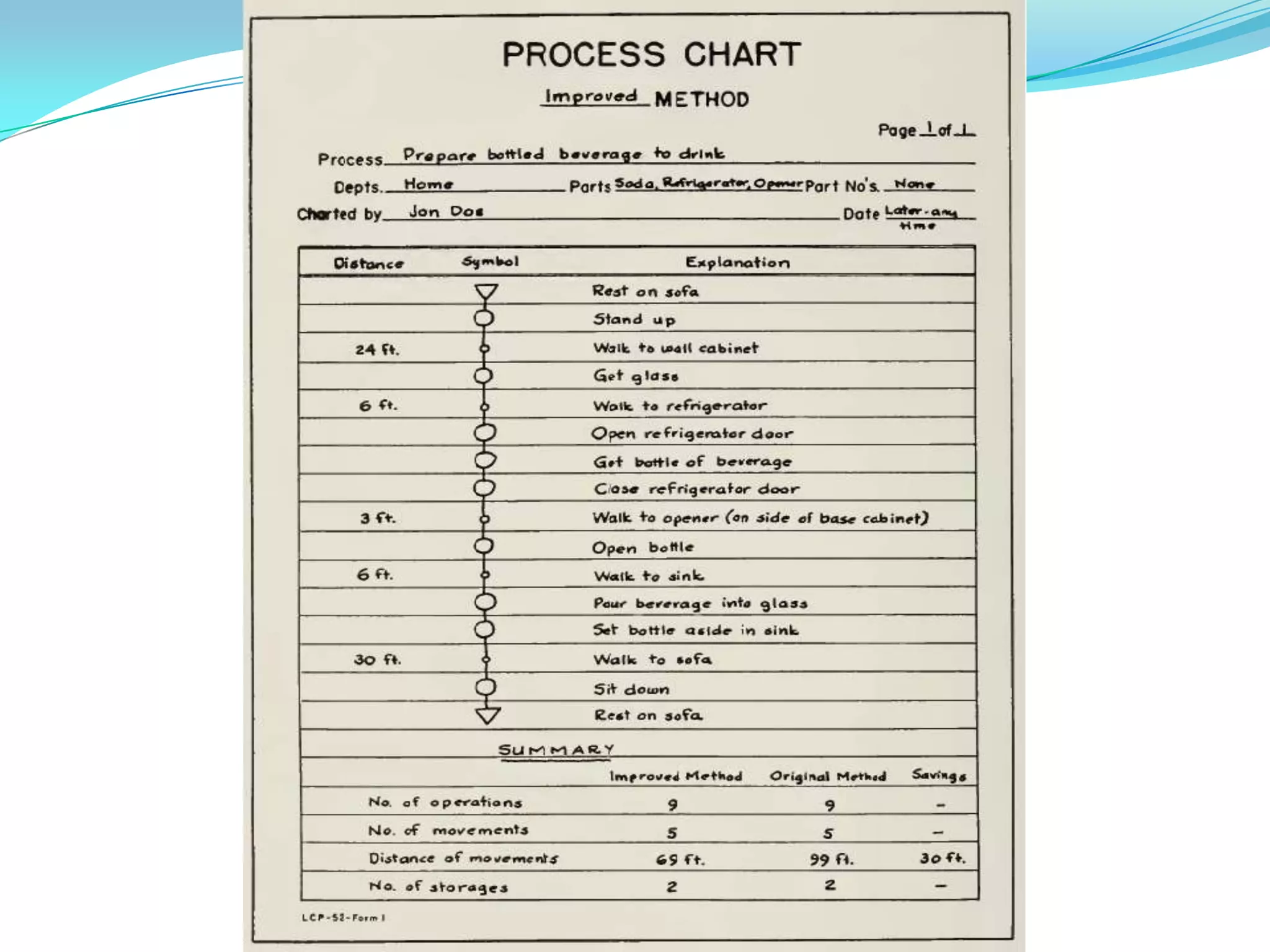
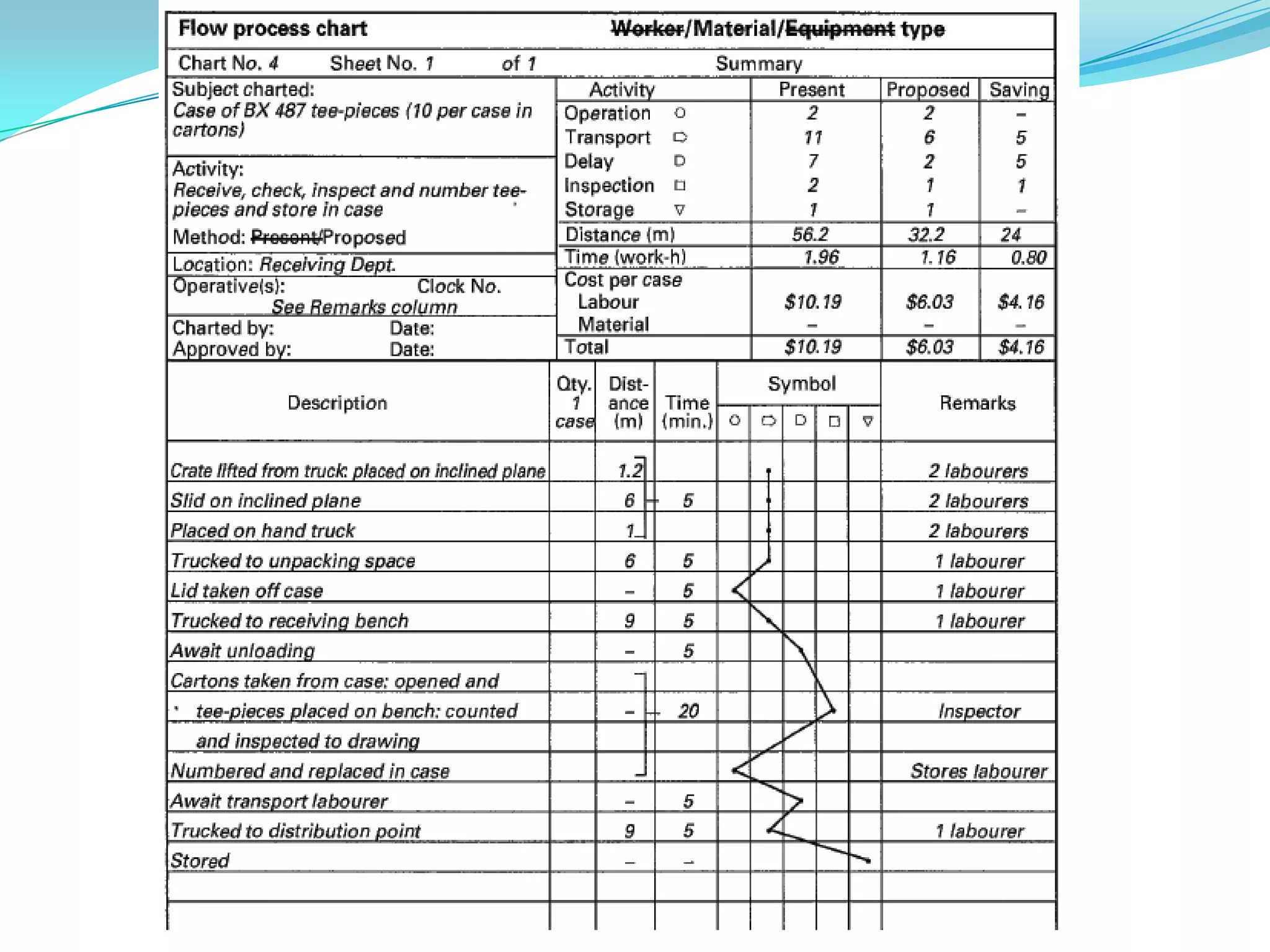
Good for showing savings of a new method.
Flow Process Charts (Cont.)
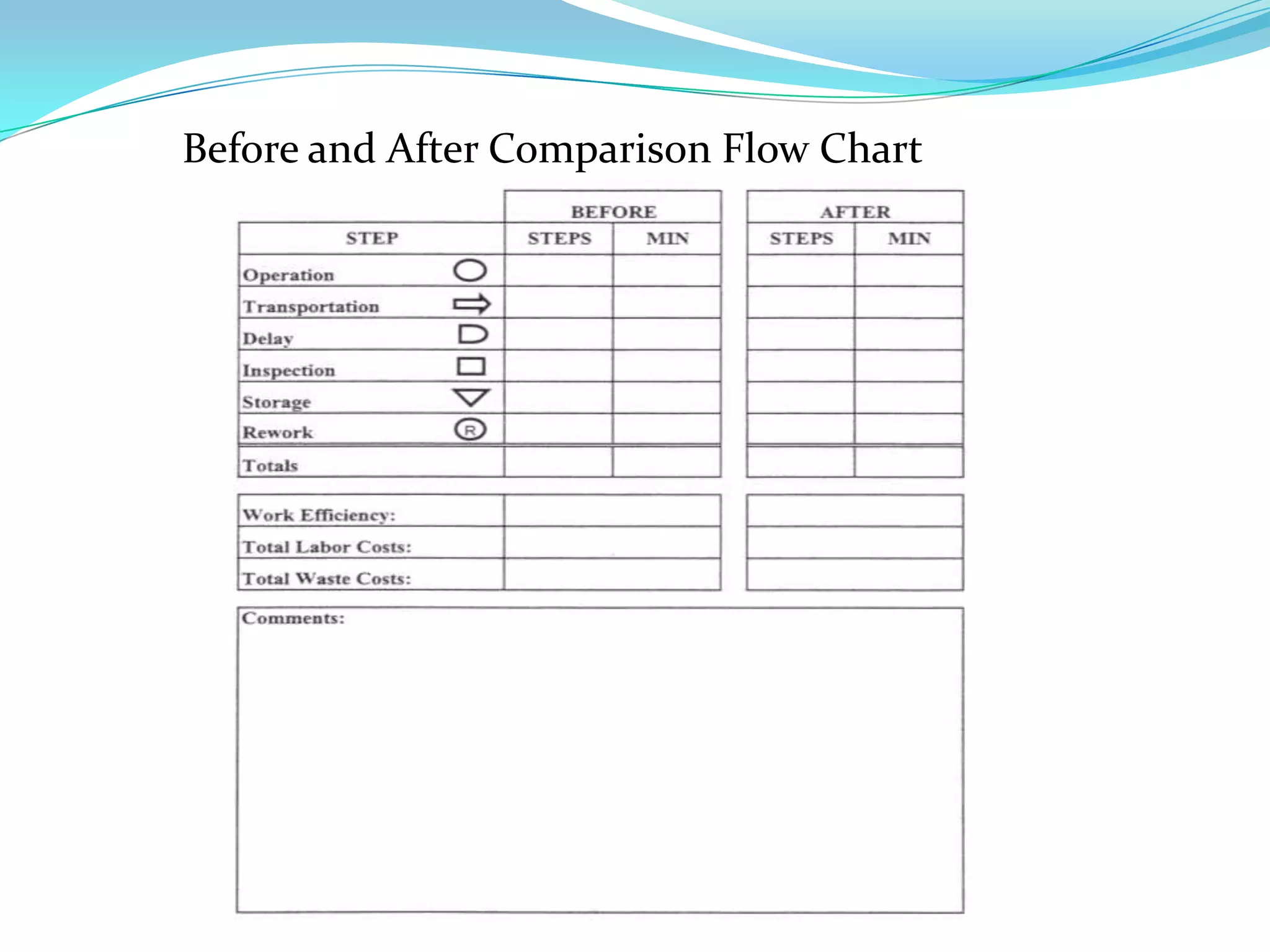
Process charts summarizes the whole process
They are used to compare the existing and the
proposed methods
Process is observed, who, what, where, when, and

how questions are asked
Every detail is understood and the chart of the
existing situation is drawn
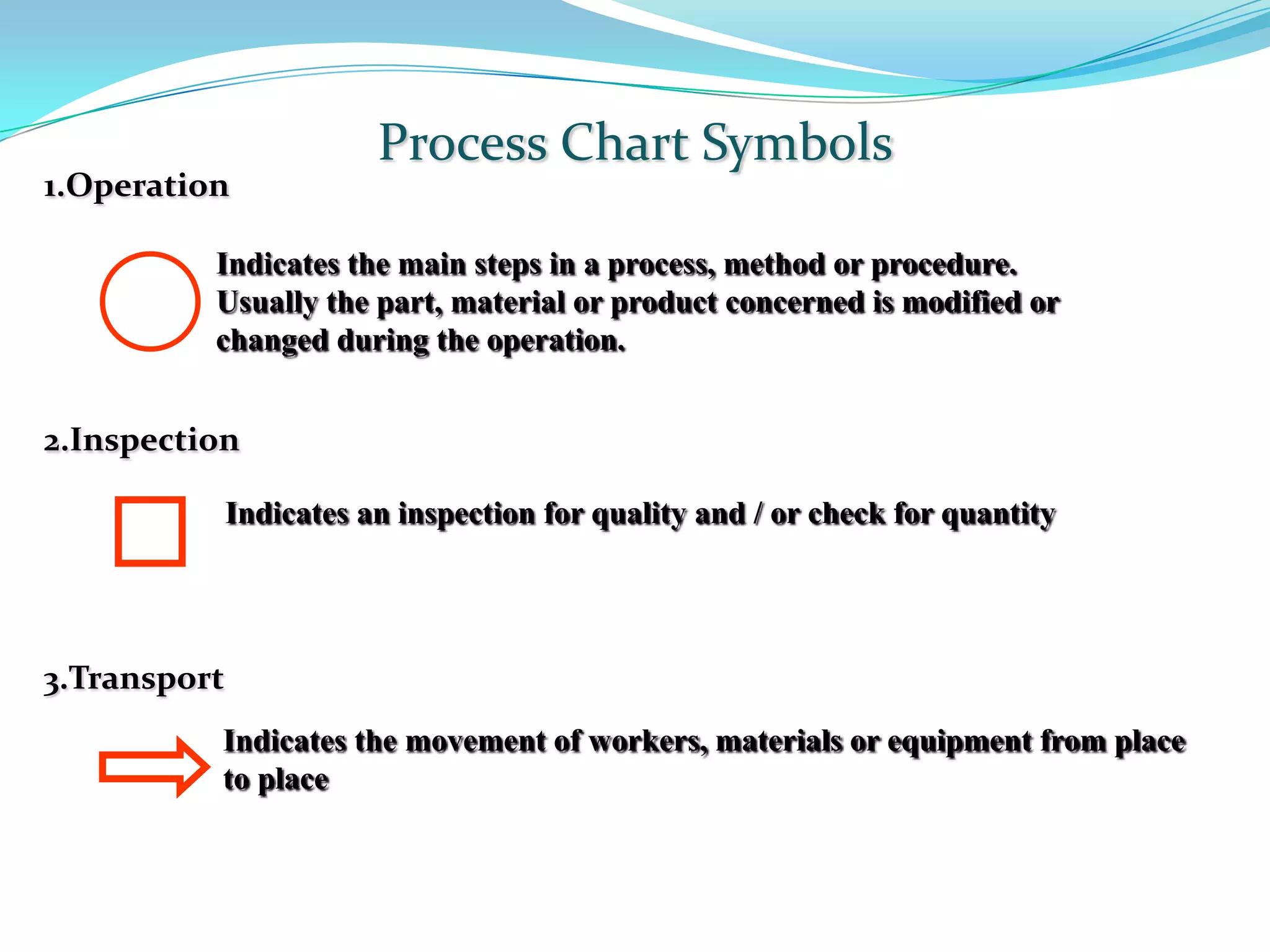
1.Operation

Process Chart Symbols

Indicates the main steps in a process, method or procedure.
Usually the part, material or product concerned is modified or
changed during the operation.

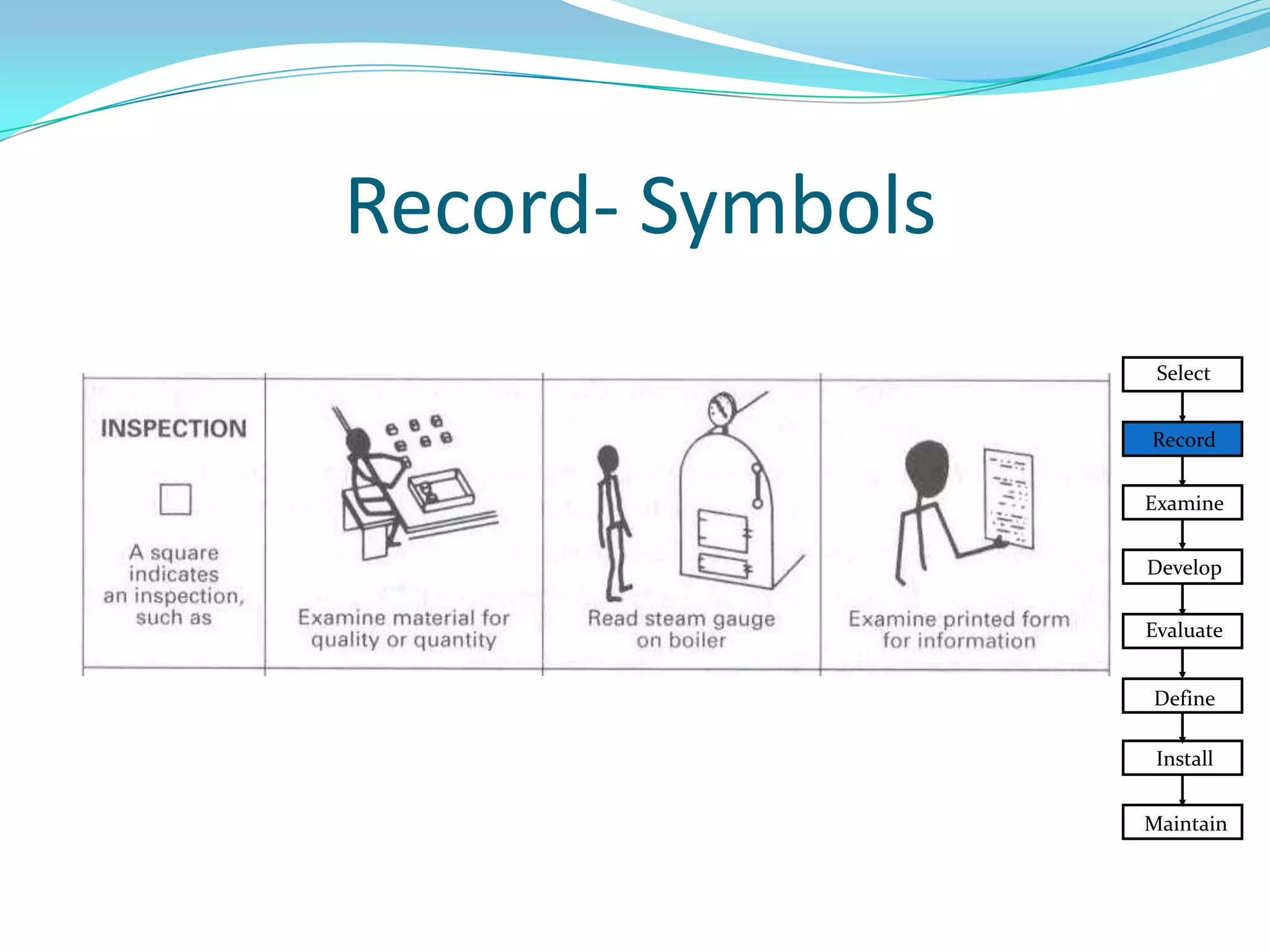
2.Inspection
Indicates an inspection for quality and / or check for quantity

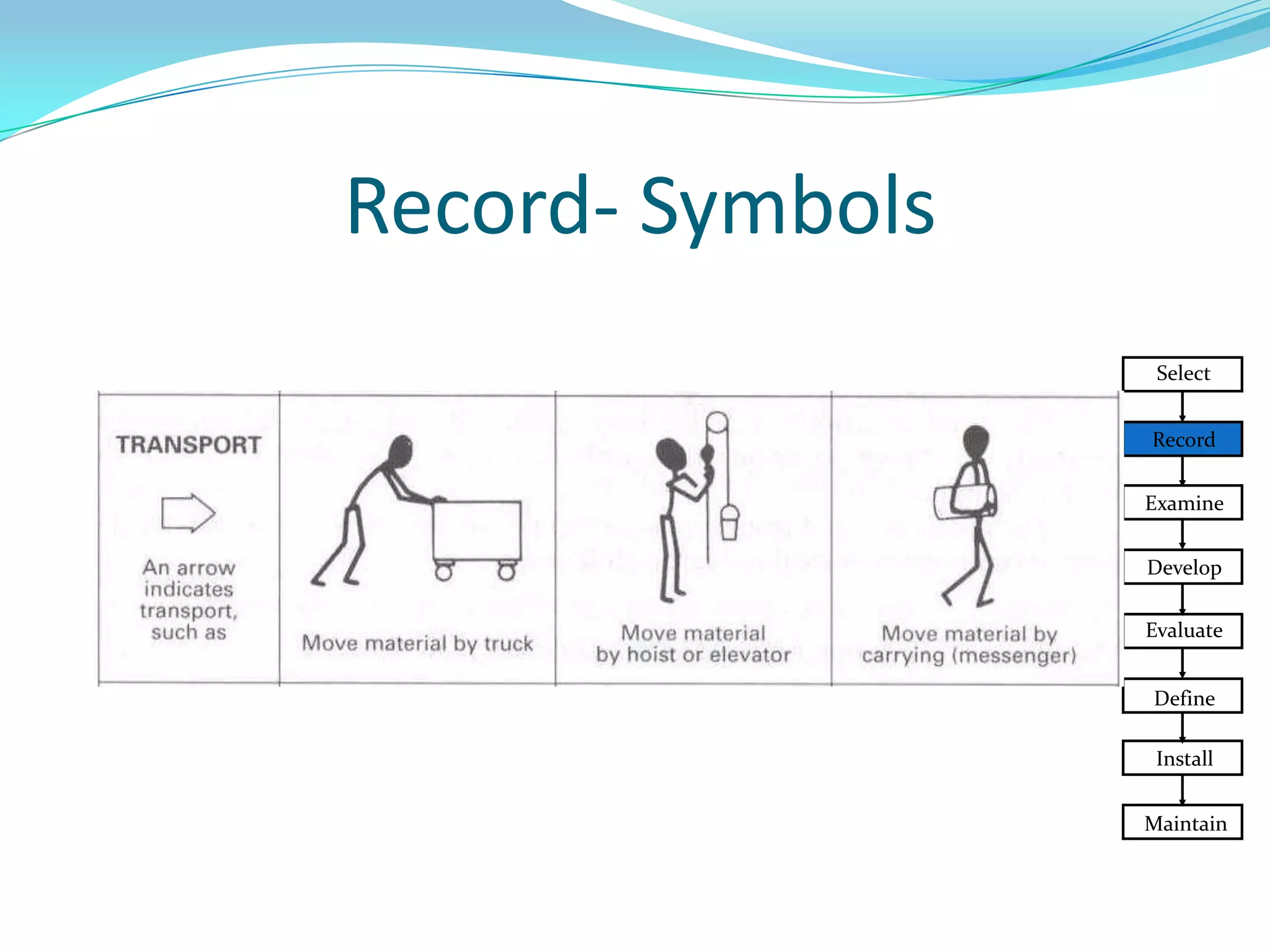
3.Transport
Indicates the movement of workers, materials or equipment from place
to place
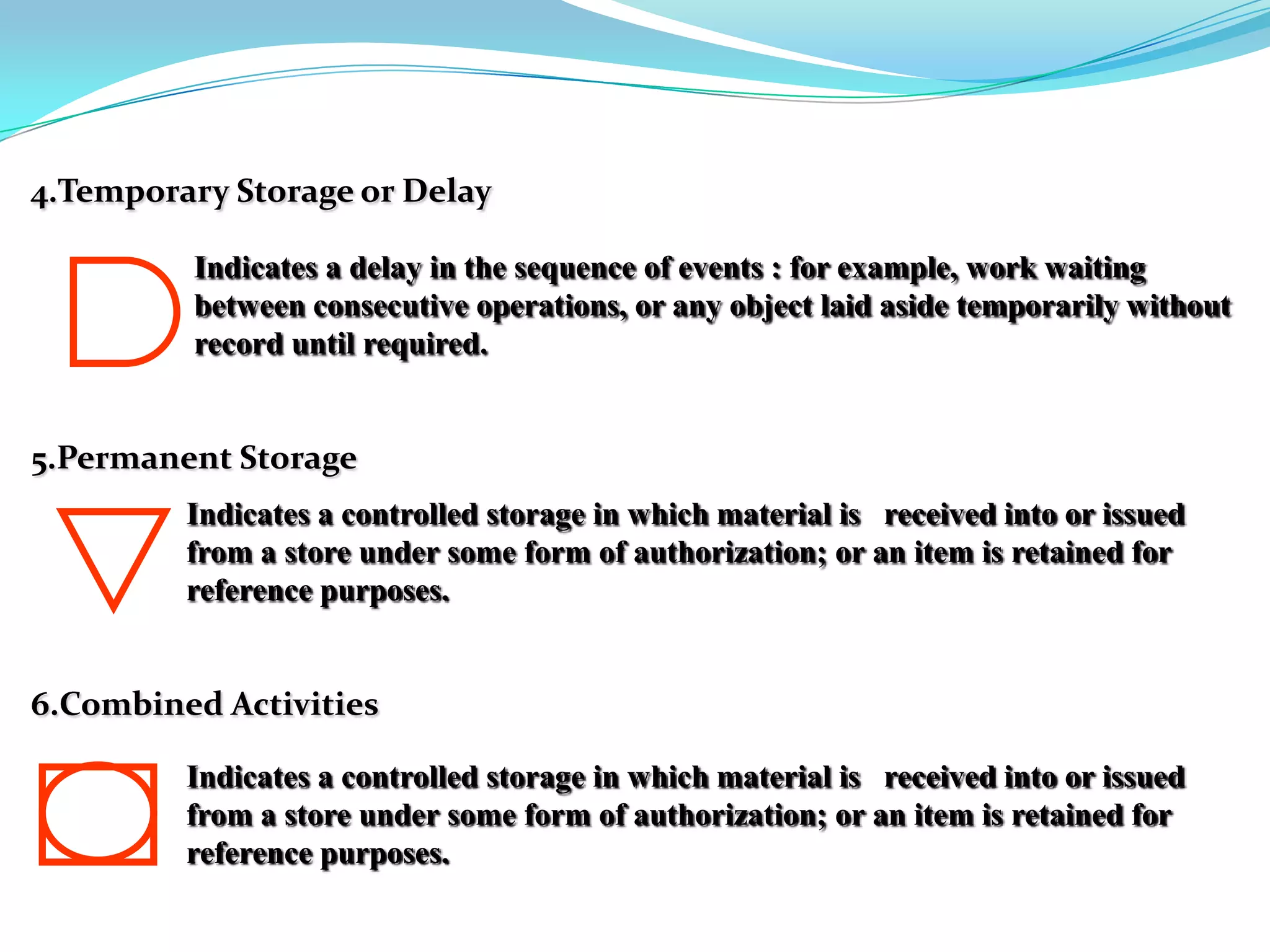
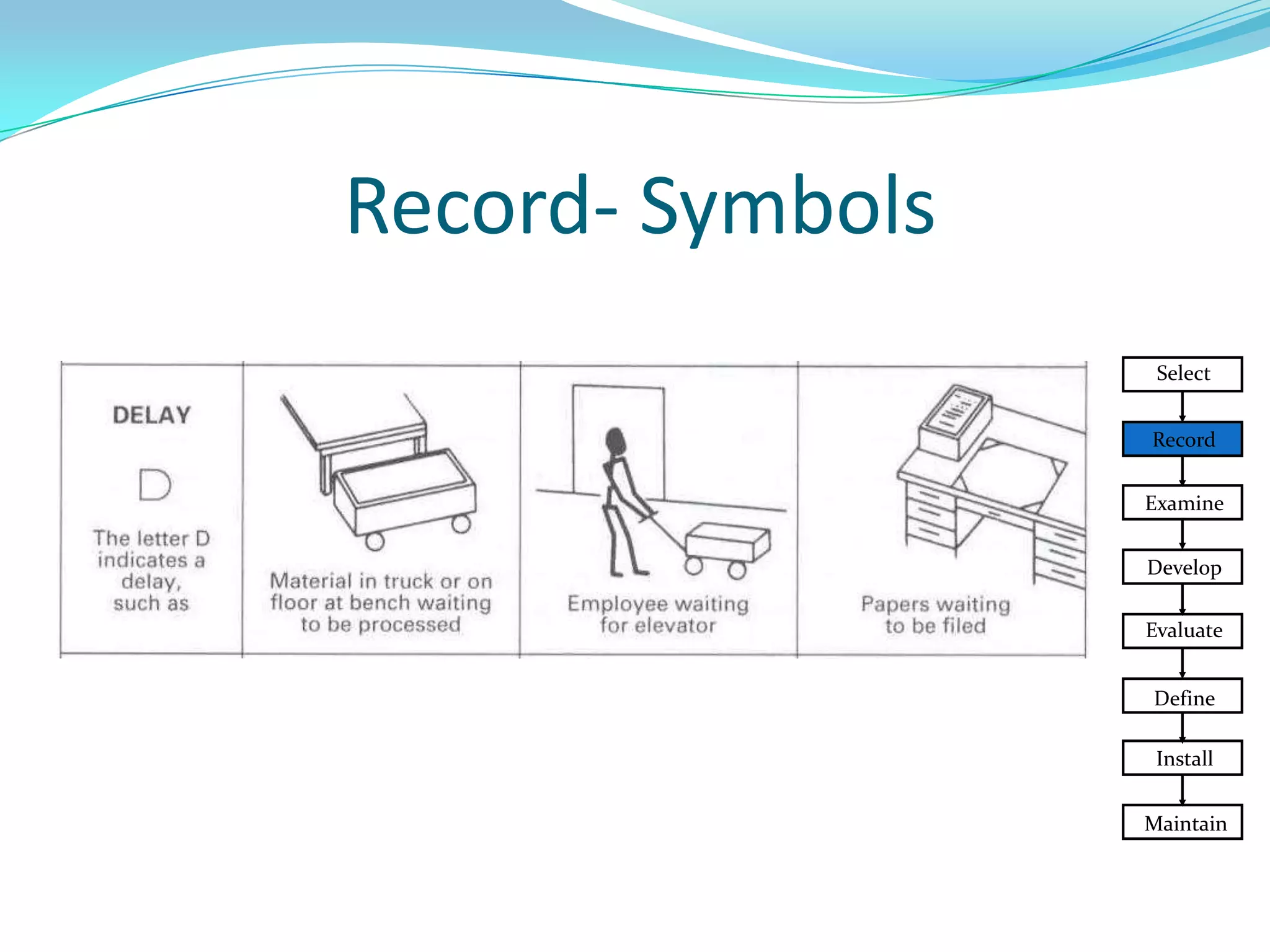
4.Temporary Storage or Delay
Indicates a delay in the sequence of events : for example, work waiting
between consecutive operations, or any object laid aside temporarily without
record until required.

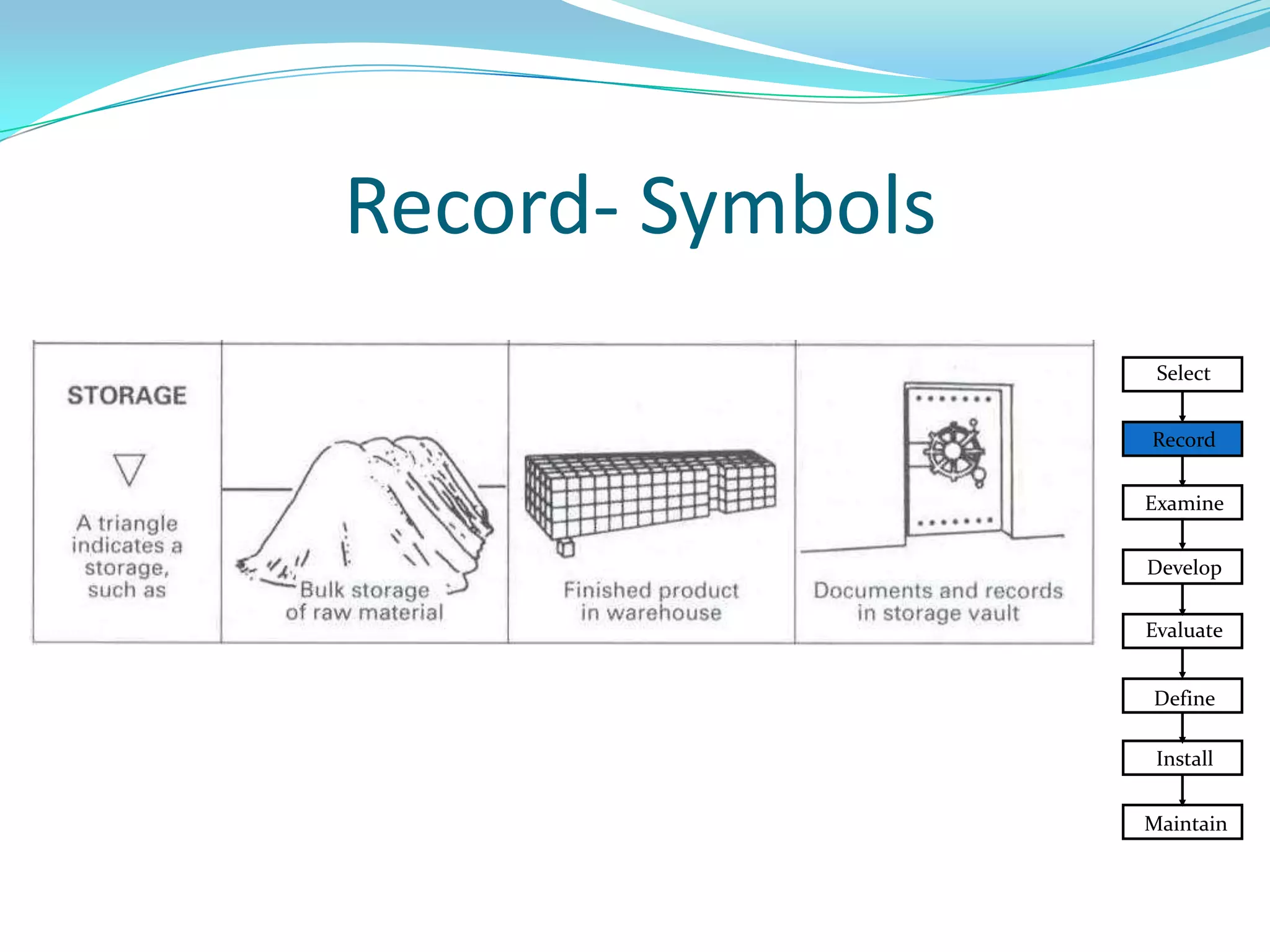
5.Permanent Storage
Indicates a controlled storage in which material is received into or issued
from a store under some form of authorization; or an item is retained for
reference purposes.

6.Combined Activities
Indicates a controlled storage in which material is received into or issued
from a store under some form of authorization; or an item is retained for
reference purposes.
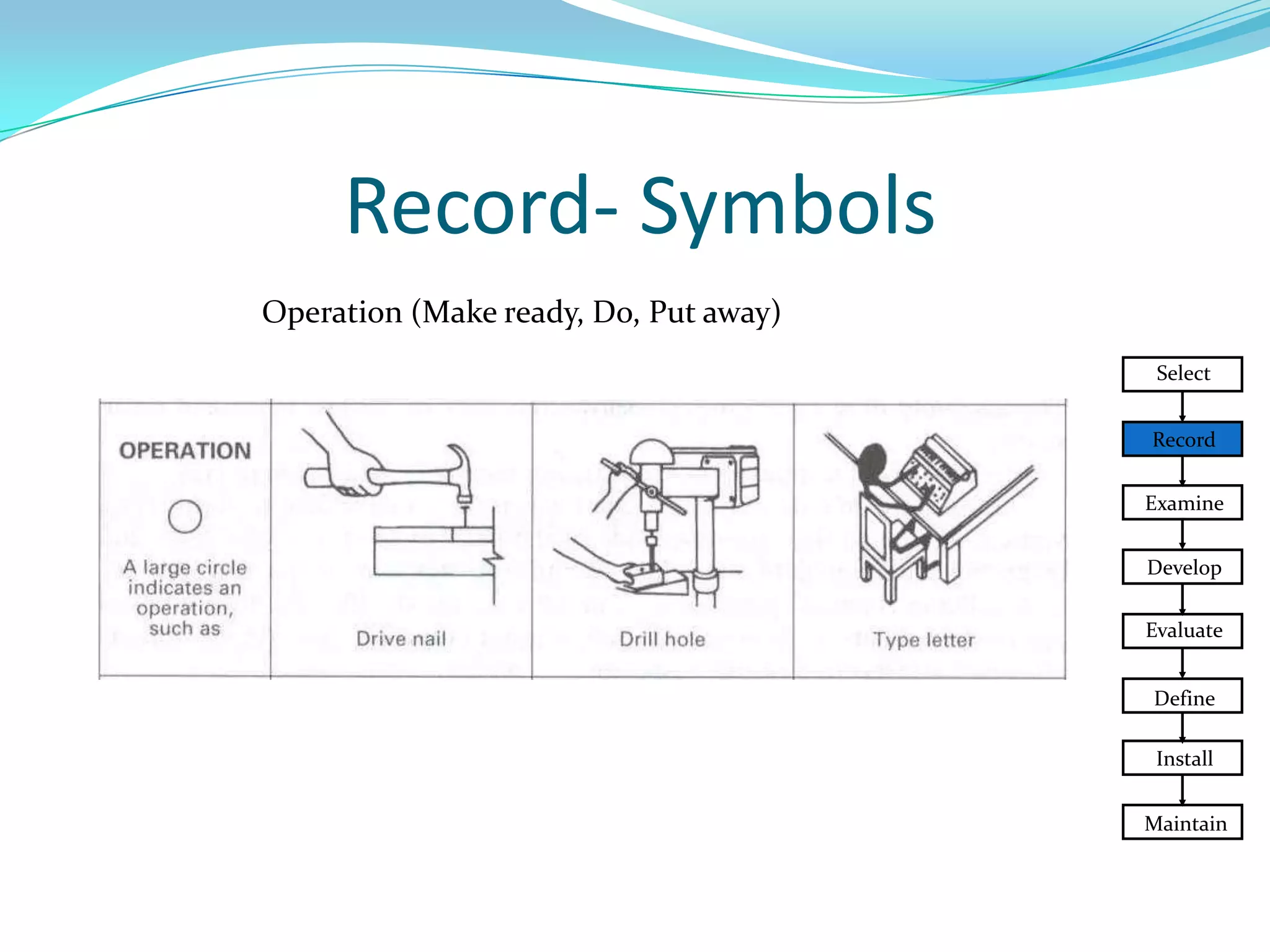
Record- Symbols
Operation (Make ready, Do, Put away)
Select
Record
Examine
Develop
Evaluate
Define
Install
Maintain
Record- Symbols
Select
Record
Examine
Develop
Evaluate
Define
Install
Maintain
Record- Symbols
Select
Record
Examine
Develop
Evaluate
Define
Install
Maintain
Record- Symbols
Select
Record
Examine
Develop
Evaluate
Define
Install
Maintain
Record- Symbols
Select
Record
Examine
Develop
Evaluate
Define
Install
Maintain
EXAMPLES
OF
FLOW PROCESS CHART
Before and After Comparison Flow Chart
Example
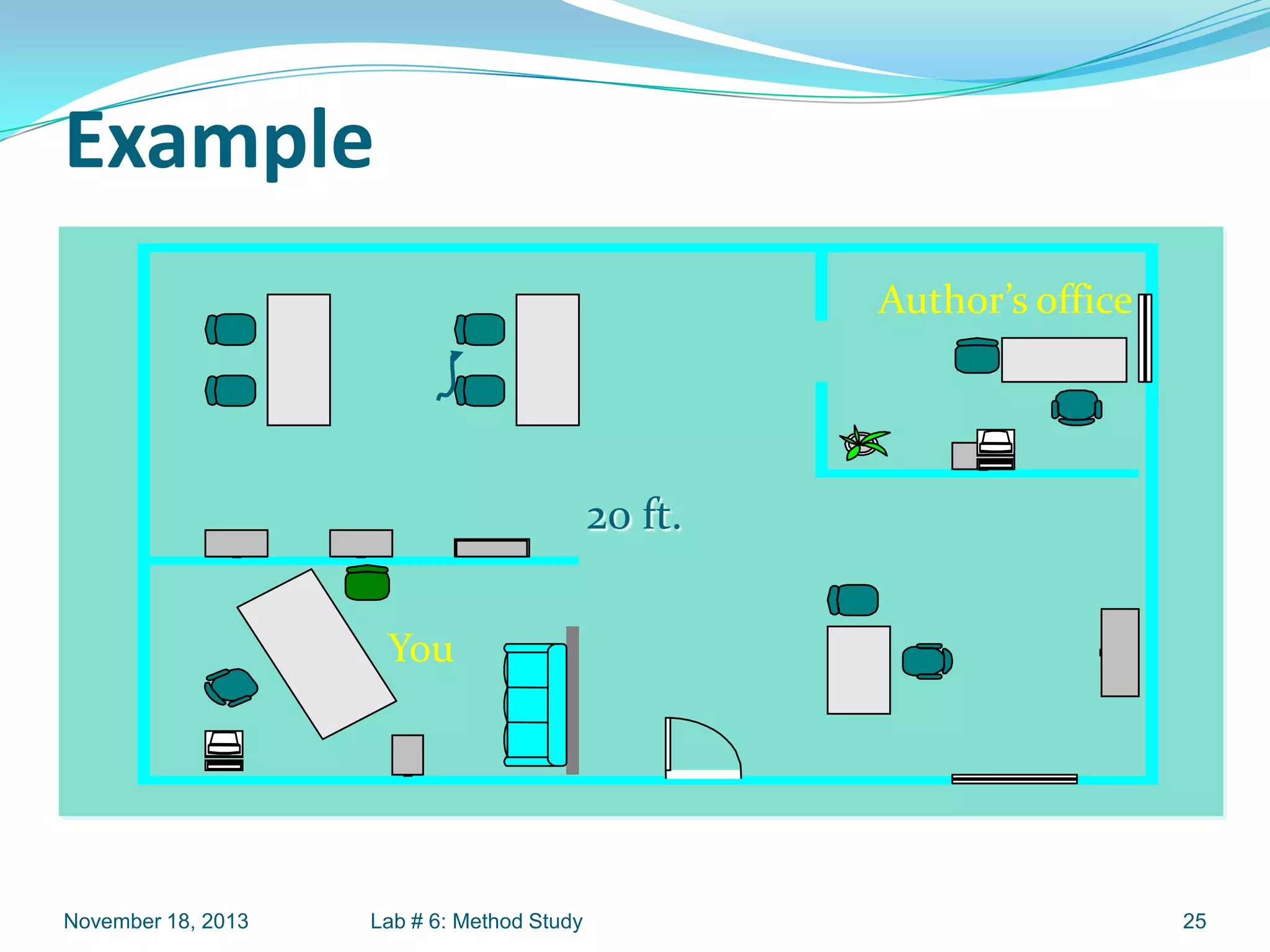
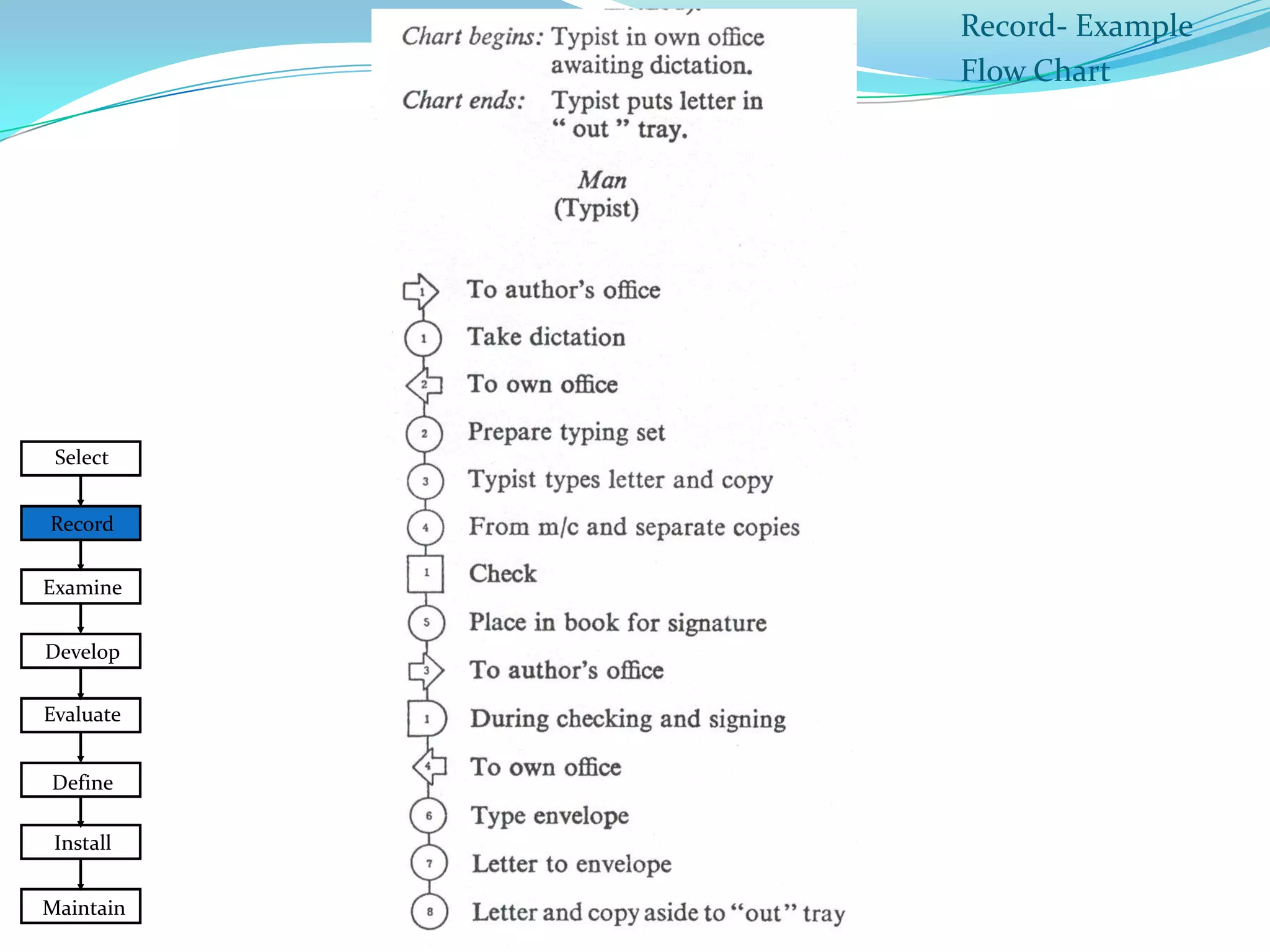
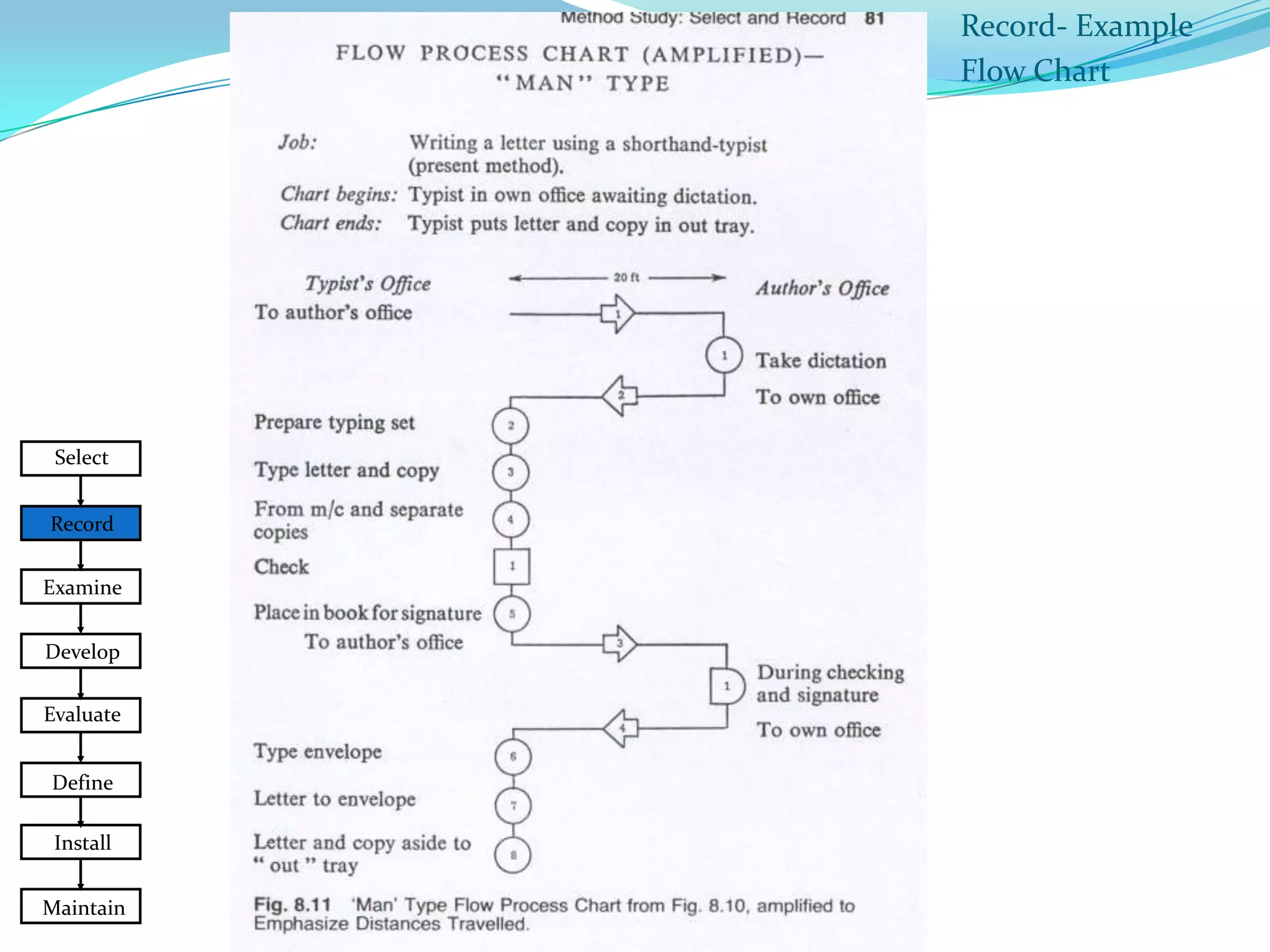
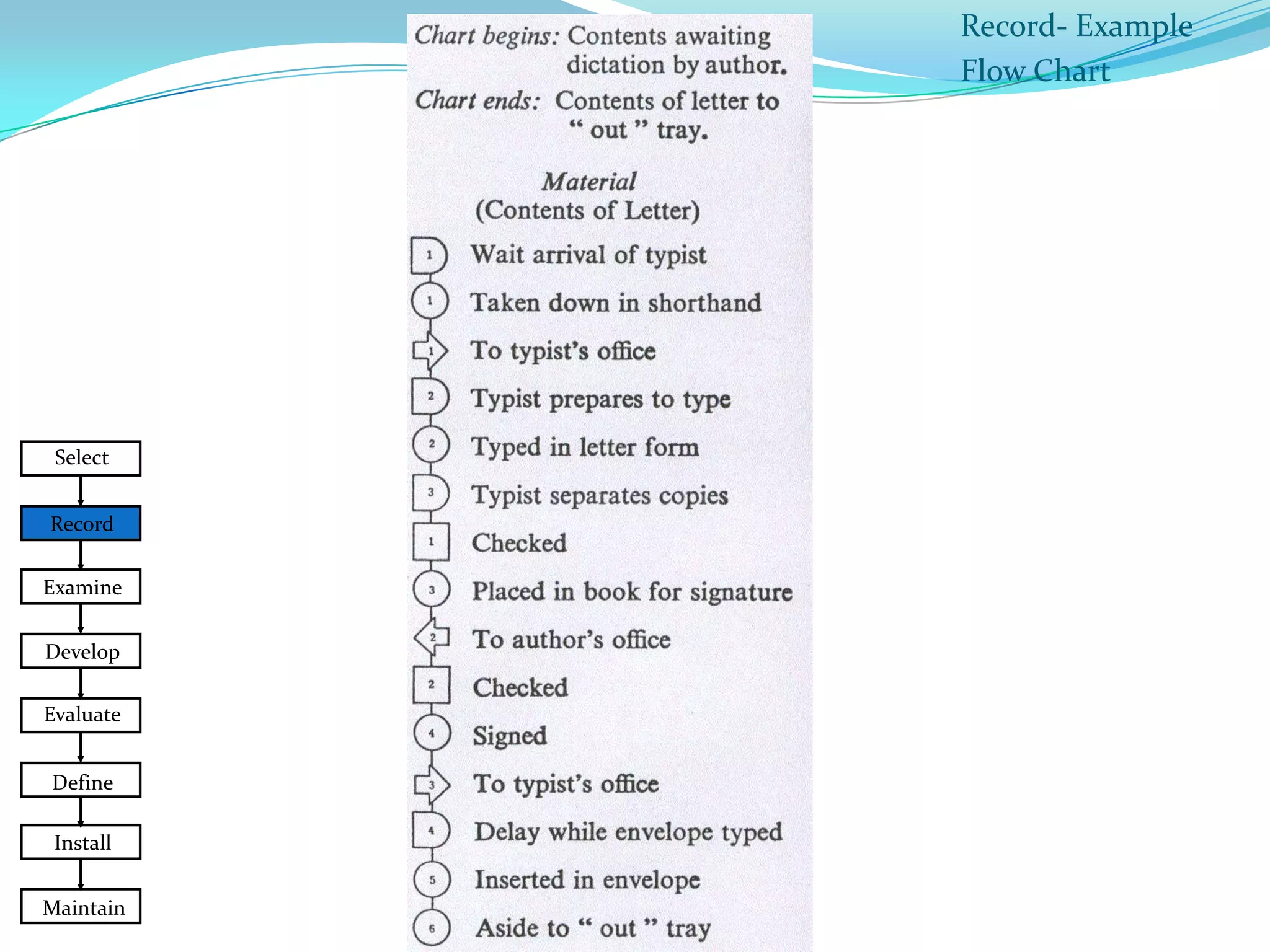
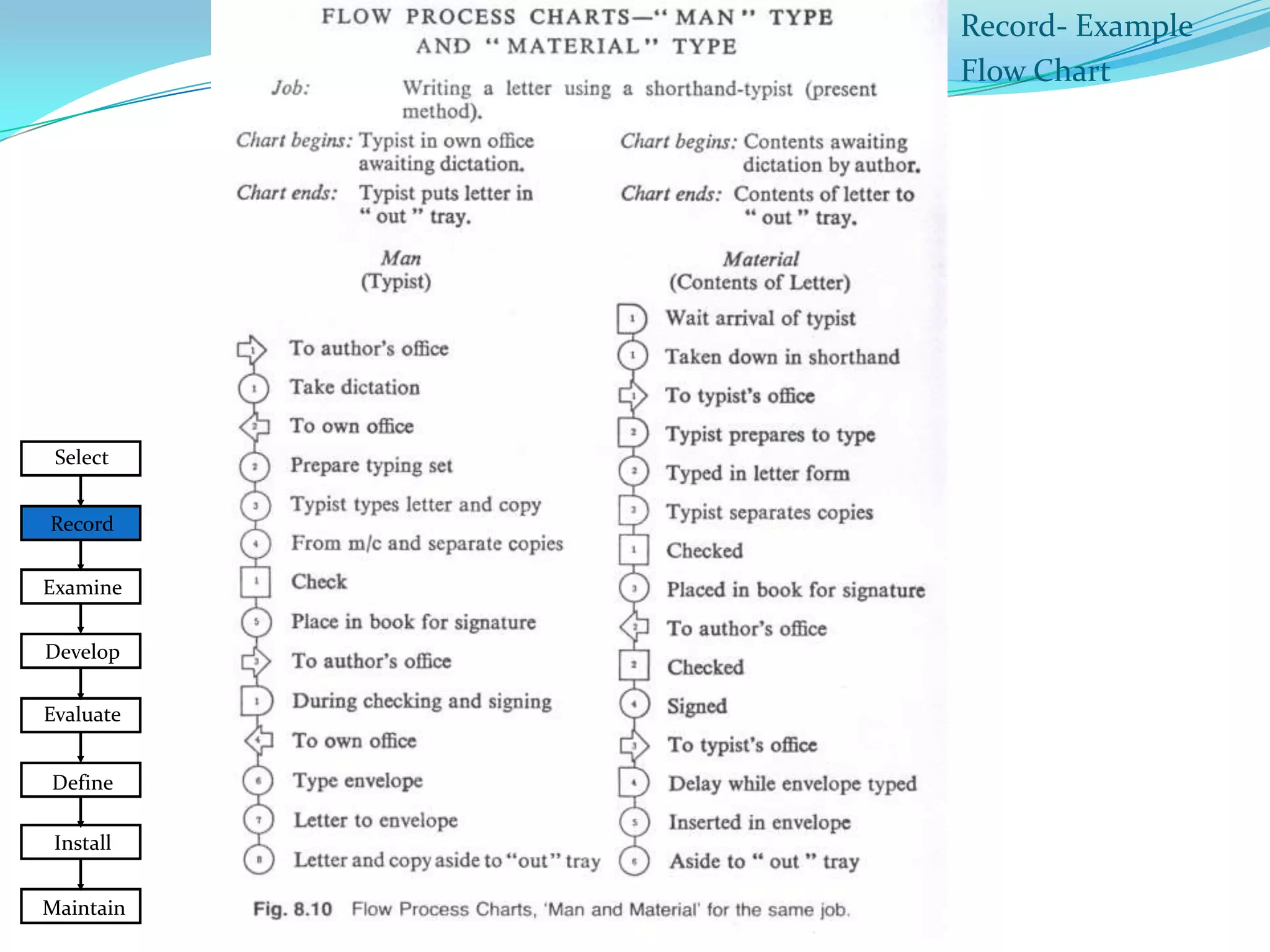
Typist has to take dictation from the author’s office. He
has to type the letter, copy the letter and get letters
attested by the author. He has to prepare the envelope
and put these letters in the envelope. Finally place the
letter and copy aside the tray. Author’s office is 20 feet
away from typist office.
Example
Author’s office

20 ft.
You

November 18, 2013

Lab # 6: Method Study

25
Record- Example
Flow Chart

Select
Record
Examine
Develop
Evaluate
Define
Install
Maintain
Record- Example
Flow Chart

Select
Record
Examine
Develop
Evaluate
Define
Install
Maintain
Record- Example
Flow Chart

Select
Record
Examine
Develop
Evaluate
Define
Install
Maintain
Record- Example
Flow Chart

Select
Record
Examine
Develop
Evaluate
Define
Install
Maintain
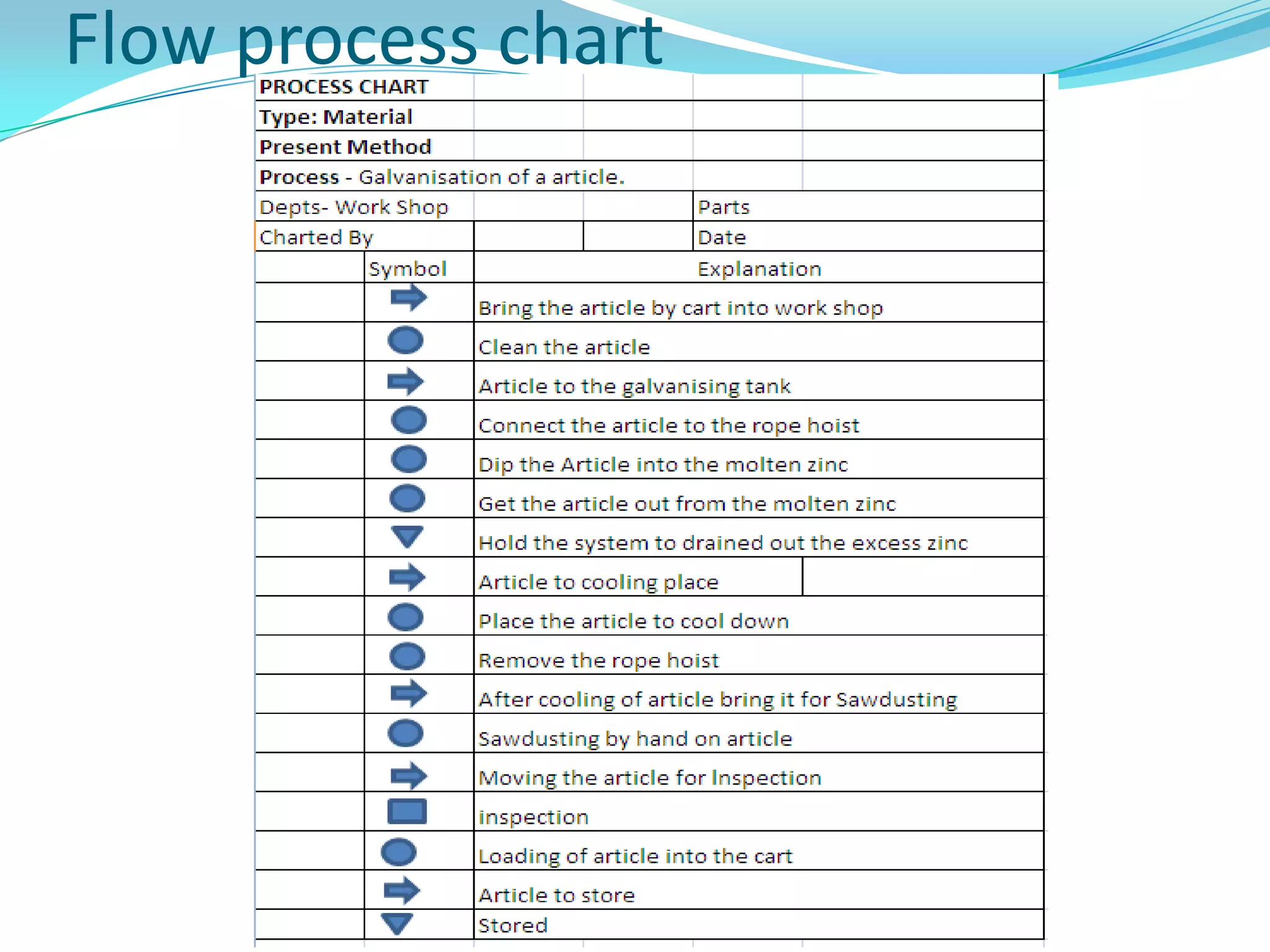
Flow process chart
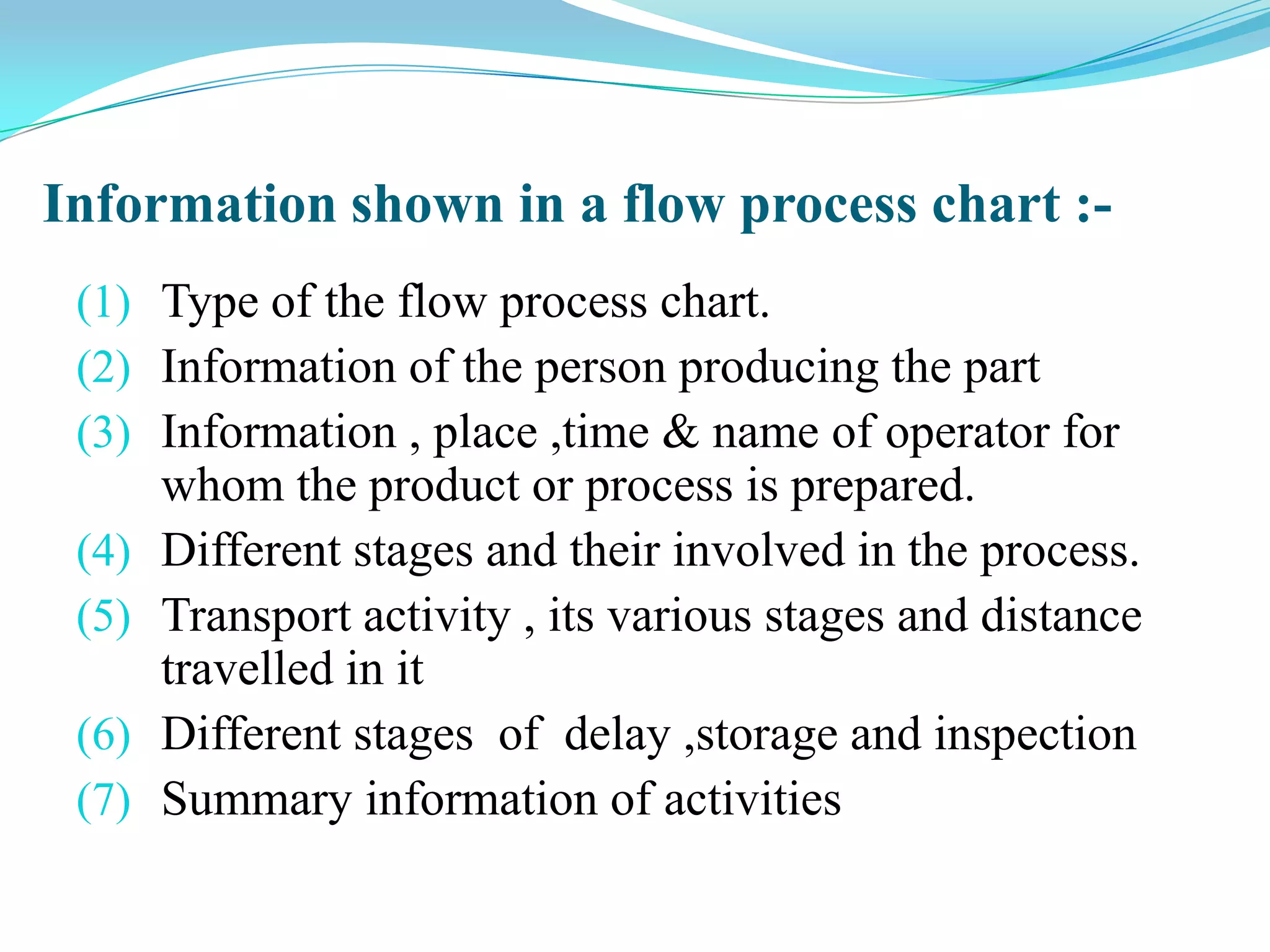
Information shown in a flow process chart :(1) Type of the flow process chart.
(2) Information of the person producing the part
(3) Information , place ,time & name of operator for
whom the product or process is prepared.
(4) Different stages and their involved in the process.
(5) Transport activity , its various stages and distance
travelled in it
(6) Different stages of delay ,storage and inspection
(7) Summary information of activities
References
 K.Narasimhan, “Handbook of Industrial Engineering: Technology and






Operations Management 3rd edition” Volume: 14 Issue: 6 2002.
RALPH M. BARNES , “MOTION AND TIME STUDY DESIGN AND
MEASUREMENT OF WORK” (7th EDITION)
Mahajan M.S., “Industrial management” 3rd Edition, 2008, Dhanpat Rai & Co.
(p) Ltd.
Khanna O.P., “Work Study (Time & motion Study),Reprint : 2003, Dhanpat Rai
& Co. (p) Ltd.
http://www.sil.org/lingualinks/literacy/ReferenceMaterials/glossaryofliteracyt
erms/WhatIsAFlowDiagram.htm
Flow process chart

Flow process chart

  • 1.
    Flow Process chart PresentedBy: Submitted To: Dr. Awadesh Bhardwaj, Mech. Engg. Deptt., MNIT,Jaipur Dated: 11-sept-2013 • • • • • • Kapil jain abhimanyu meena Shubhender Singh Mohit vats Rajender kumar Areesha Nafees 2013pie5199 2013pie5071 2013pie5244 2013pie5090 2013pie5122 2013pie5141 M.Tech (IE),Mech. Engg. Deptt., MNIT,Jaipur
  • 2.
    What is the purpose ofa flow chart? • It is a picture of a process • It is drawn with symbols representing different types of activities • It defines the system being studied. • It documents changes to the process.
  • 3.
    Why are flow chartsuseful? • They provide a visual for students to see steps in a process. • They can be used as an assessment to check for student understanding. • They can help organize classrooms and minimize transition times.
  • 4.
    Flow Diagram Definition  Aflow diagram is a graphical means of presenting, describing, or analyzing a process & movement of material, men etc.  This is done with the help of all five symbols which represent steps in a chain of steps.  These all symbols are connected to other one by lines and arrows which represent sequence and dependency relationships (i.e., X must be done before Y can be done).
  • 5.
    Objectives Of FlowDiagram  The flow charts indicates the sequence of events they do not show the movement of men, material etc but the path of movement can be better visualized by a flow diagram.  Flow diagram is drawn to scale.  It shows the relative position of machines, jigs, fixture, gangway etc and mark the paths followed by men and material.  Distances between two location is indicated in flow diagram.
  • 6.
    Steps in drawinga Flow Diagram  Draw to scale the plan of the work area.  Mark the relative position of machine tools, benches, store, racks, inspection tables etc.  From the different observations, draw the actual movement of the material or worker on the diagram.  Indicate the direction of movement.  Mark the distances between consequence two locations.
  • 7.
    CHARTS AND DIAGRAMS USEDIN METHOD STUDY Following chart are used in method study :(1) OPC - Outline process chart (2) FPC - Flow process chart Man type Material type Equipment type (3) Two handed process chart (4) Multiple activity chart like man and machine chart (5) SIMO chart
  • 8.
    The following diagramare also used in method study. (1) Flow diagram (2) String diagram (3) Cycle graph (4) Cronocycle diagram (5) Travel diagram
  • 9.
  • 10.
    FLOW PROCESS CHART When the overall idea of the process has been established it is possible to go into greater details. Flow process chart can be defined as a graphical presentation of all operations, inspections, delays and storages occurring during a process or procedure which includes information considered necessary for analysis like time required, quantity and distance moved etc.
  • 11.
    TYPES OF FLOWPROCESS CHART  Man type -  Material type material. - It records what happens to the  Equipment type - It records how the equipment is used. It records what the worker does.
  • 12.
    Flow Process Charts Aflow process chart is a chart of all the activities involved in a process. It is similar to an operations process chart, except that more detail is shown by including transportations and delays as well as operations, inspections, and storages. Not usually used for entire assemblies, it is used for just one component (or operator) Add in information on:  Operation duration (time to complete)  Distance traveled (for transport operations) Good for showing savings of a new method.
  • 13.
    Flow Process Charts(Cont.) Process charts summarizes the whole process They are used to compare the existing and the proposed methods Process is observed, who, what, where, when, and how questions are asked Every detail is understood and the chart of the existing situation is drawn
  • 14.
    1.Operation Process Chart Symbols Indicatesthe main steps in a process, method or procedure. Usually the part, material or product concerned is modified or changed during the operation. 2.Inspection Indicates an inspection for quality and / or check for quantity 3.Transport Indicates the movement of workers, materials or equipment from place to place
  • 15.
    4.Temporary Storage orDelay Indicates a delay in the sequence of events : for example, work waiting between consecutive operations, or any object laid aside temporarily without record until required. 5.Permanent Storage Indicates a controlled storage in which material is received into or issued from a store under some form of authorization; or an item is retained for reference purposes. 6.Combined Activities Indicates a controlled storage in which material is received into or issued from a store under some form of authorization; or an item is retained for reference purposes.
  • 16.
    Record- Symbols Operation (Makeready, Do, Put away) Select Record Examine Develop Evaluate Define Install Maintain
  • 17.
  • 18.
  • 19.
  • 20.
  • 21.
  • 23.
    Before and AfterComparison Flow Chart
  • 24.
    Example Typist has totake dictation from the author’s office. He has to type the letter, copy the letter and get letters attested by the author. He has to prepare the envelope and put these letters in the envelope. Finally place the letter and copy aside the tray. Author’s office is 20 feet away from typist office.
  • 25.
    Example Author’s office 20 ft. You November18, 2013 Lab # 6: Method Study 25
  • 26.
  • 27.
  • 28.
  • 29.
  • 39.
  • 40.
    Information shown ina flow process chart :(1) Type of the flow process chart. (2) Information of the person producing the part (3) Information , place ,time & name of operator for whom the product or process is prepared. (4) Different stages and their involved in the process. (5) Transport activity , its various stages and distance travelled in it (6) Different stages of delay ,storage and inspection (7) Summary information of activities
  • 41.
    References  K.Narasimhan, “Handbookof Industrial Engineering: Technology and     Operations Management 3rd edition” Volume: 14 Issue: 6 2002. RALPH M. BARNES , “MOTION AND TIME STUDY DESIGN AND MEASUREMENT OF WORK” (7th EDITION) Mahajan M.S., “Industrial management” 3rd Edition, 2008, Dhanpat Rai & Co. (p) Ltd. Khanna O.P., “Work Study (Time & motion Study),Reprint : 2003, Dhanpat Rai & Co. (p) Ltd. http://www.sil.org/lingualinks/literacy/ReferenceMaterials/glossaryofliteracyt erms/WhatIsAFlowDiagram.htm