KANBAN SYSTEMS
Presented By Anupam Sharma
What is Kanban?
   Kanban, a Japanese word, literally meaning
    “signboard” or “billboard”
   Means of achieving JIT production
   System of continuous supply of components &
    parts
   Enables workers to have
     What they need
     Where they need it, and
     When they need it
What is Kanban?
   Can be used by
     ManufacturingOrganizations
     Non Manufacturing Organizations

   Kanban system can be implemented either
     Manually  or
     Through oracle based applications, or
     A hybrid of Oracle and Manual techniques
Why Kanban?
   Visualize workflow
   Lower inventory investment
   Better “customer” service
   Reduced administrative costs
Starting with Kanban
 Start with what you do know
 Modify it slightly to implement pull

 Use a transparent method for viewing work, and organising
  the team
 Limit WIP and pull work when the team has capacity

 Evolve from there by recognising bottlenecks, waste and
  variability that affect performance
Kanban will support the team’s journey of process Improvement
  and will expose the best solution
Manual Kanban
   Manual Information system to control
    production, material transportation, and
    inventory
   A visual record is left at the site to achieve
    replenishment
   In the broad sense it is a communication
    signal from a downstream process (customer)
    to an upstream process
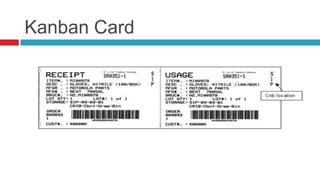
Kanban Card
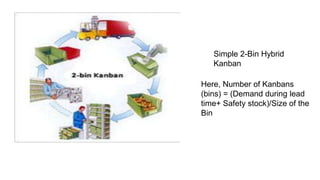
Simple 2-Bin Hybrid
   Kanban

Here, Number of Kanbans
(bins) = (Demand during lead
time+ Safety stock)/Size of the
Bin
Types of Kanban
   Production Kanban (P-Kanban)
   Transportation Kanban (T-Kanban)
   Kanban Square
   Material Kanban
   Supplier Kanban
Implementable
Elsewhere?

   IT industry?
   Service Industry (hotels, restaurants)?
   TAPMI?
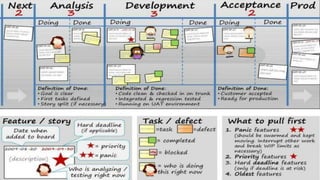
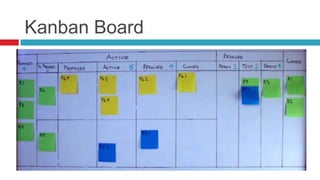
Kanban Board
Kanban References:
   Anderson, Kanban in Action:
         http://www.agilemanagement.net/Articles/Weblog/KanbaninAction.ht
    ml
   Hiranabe, Kanban Applied to Software Development: from Agile to
    Lean: http://www.infoq.com/articles/hiranabe-lean-agile-kanban
   Ladas, Scrumban - Essays on Kanban Systems for Lean Software
    Development: http://www.lulu.com/content/3864767
   Ladas, Scrum-ban:
         http://leansoftwareengineering.com/ksse/scrum-ban/
   Belshee, Naked Planning, Kanban Simplified:
         http://joearnold.com/2008/03/naked-planning-kanban-simplified/

Kanban Systems

  • 1.
  • 2.
    What is Kanban?  Kanban, a Japanese word, literally meaning “signboard” or “billboard”  Means of achieving JIT production  System of continuous supply of components & parts  Enables workers to have  What they need  Where they need it, and  When they need it
  • 3.
    What is Kanban?  Can be used by  ManufacturingOrganizations  Non Manufacturing Organizations  Kanban system can be implemented either  Manually or  Through oracle based applications, or  A hybrid of Oracle and Manual techniques
  • 4.
    Why Kanban?  Visualize workflow  Lower inventory investment  Better “customer” service  Reduced administrative costs
  • 5.
    Starting with Kanban Start with what you do know  Modify it slightly to implement pull  Use a transparent method for viewing work, and organising the team  Limit WIP and pull work when the team has capacity  Evolve from there by recognising bottlenecks, waste and variability that affect performance Kanban will support the team’s journey of process Improvement and will expose the best solution
  • 6.
    Manual Kanban  Manual Information system to control production, material transportation, and inventory  A visual record is left at the site to achieve replenishment  In the broad sense it is a communication signal from a downstream process (customer) to an upstream process
  • 7.
  • 8.
    Simple 2-Bin Hybrid Kanban Here, Number of Kanbans (bins) = (Demand during lead time+ Safety stock)/Size of the Bin
  • 9.
    Types of Kanban  Production Kanban (P-Kanban)  Transportation Kanban (T-Kanban)  Kanban Square  Material Kanban  Supplier Kanban
  • 10.
    Implementable Elsewhere?  IT industry?  Service Industry (hotels, restaurants)?  TAPMI?
  • 12.
  • 13.
    Kanban References:  Anderson, Kanban in Action: http://www.agilemanagement.net/Articles/Weblog/KanbaninAction.ht ml  Hiranabe, Kanban Applied to Software Development: from Agile to Lean: http://www.infoq.com/articles/hiranabe-lean-agile-kanban  Ladas, Scrumban - Essays on Kanban Systems for Lean Software Development: http://www.lulu.com/content/3864767  Ladas, Scrum-ban: http://leansoftwareengineering.com/ksse/scrum-ban/  Belshee, Naked Planning, Kanban Simplified: http://joearnold.com/2008/03/naked-planning-kanban-simplified/

Editor's Notes

  • #7 Video for Manual Kanbanyahaanpedekhna
  • #10 Speaker notes (refer to these for providing explanation)Production Kanban- authorizes production of goodsTransportation Kanban- authorizes transporting a fixed amount of product to downstreamKanban Square- its like an area marked to hold designated itemsMaterial kanban-used to order material in advance of a processSupplier Kanban- Rotates between the factory and suppliers
  • #13 Proposed change requestsResolved issues