
By Group -10
Cherry Agarwal PA1314
Minal Kashyap PA1326
Priyaranjan Gupta PA1333
Continuous improvement is the result of continuous involvement
KAIZEN- AN INTRODUCTION
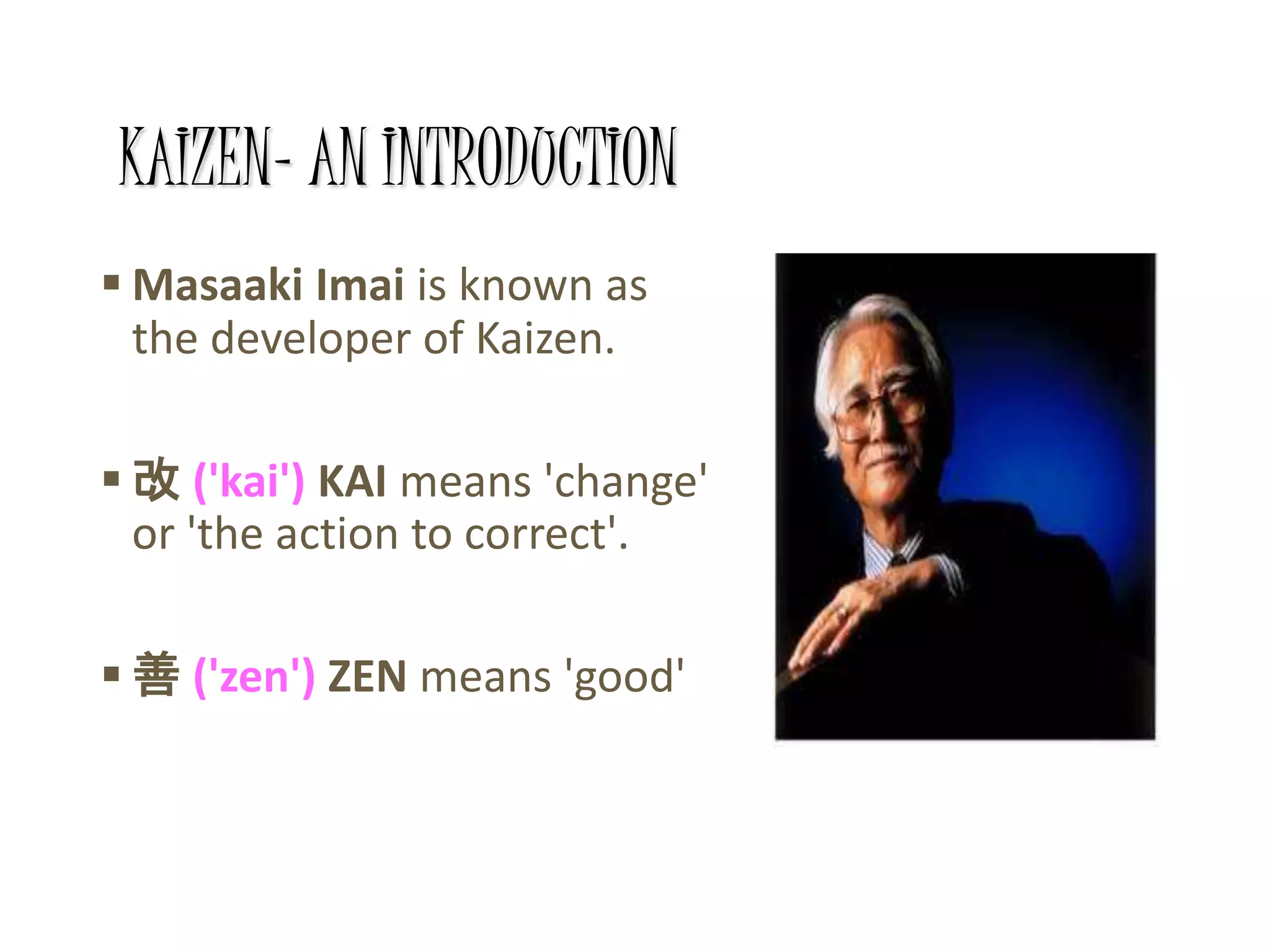
 Masaaki Imai is known as
the developer of Kaizen.
 改 ('kai') KAI means 'change'
or 'the action to correct'.
 善 ('zen') ZEN means 'good'
What is kaizen ?
• KAIZEN means improvement:
Kaizen is small incremental changes
made for improving productivity and
minimizing waste. Improvements
without spending much money,
involving everyone from managers to
employees, and using much common
sense.
 It is a method that strives toward
perfection by eliminating waste
(MUDA) in the work place
(GEMBA).
The Origin of Kaizen
 The foundation of Kaizen was laid in Japan after the
Second World War, when the country was
attempting to rebuild infrastructure and rethink
many systems.
 Several American experts on workplace
improvement including W. Edwards Deming and
Joseph Juran came to Japan to lecture and teach.
 Using information from these individuals regarding
the TWI (Training Within Industry) programs , the
concept of Kaizen began to be formed and it took
off in the 1950s.
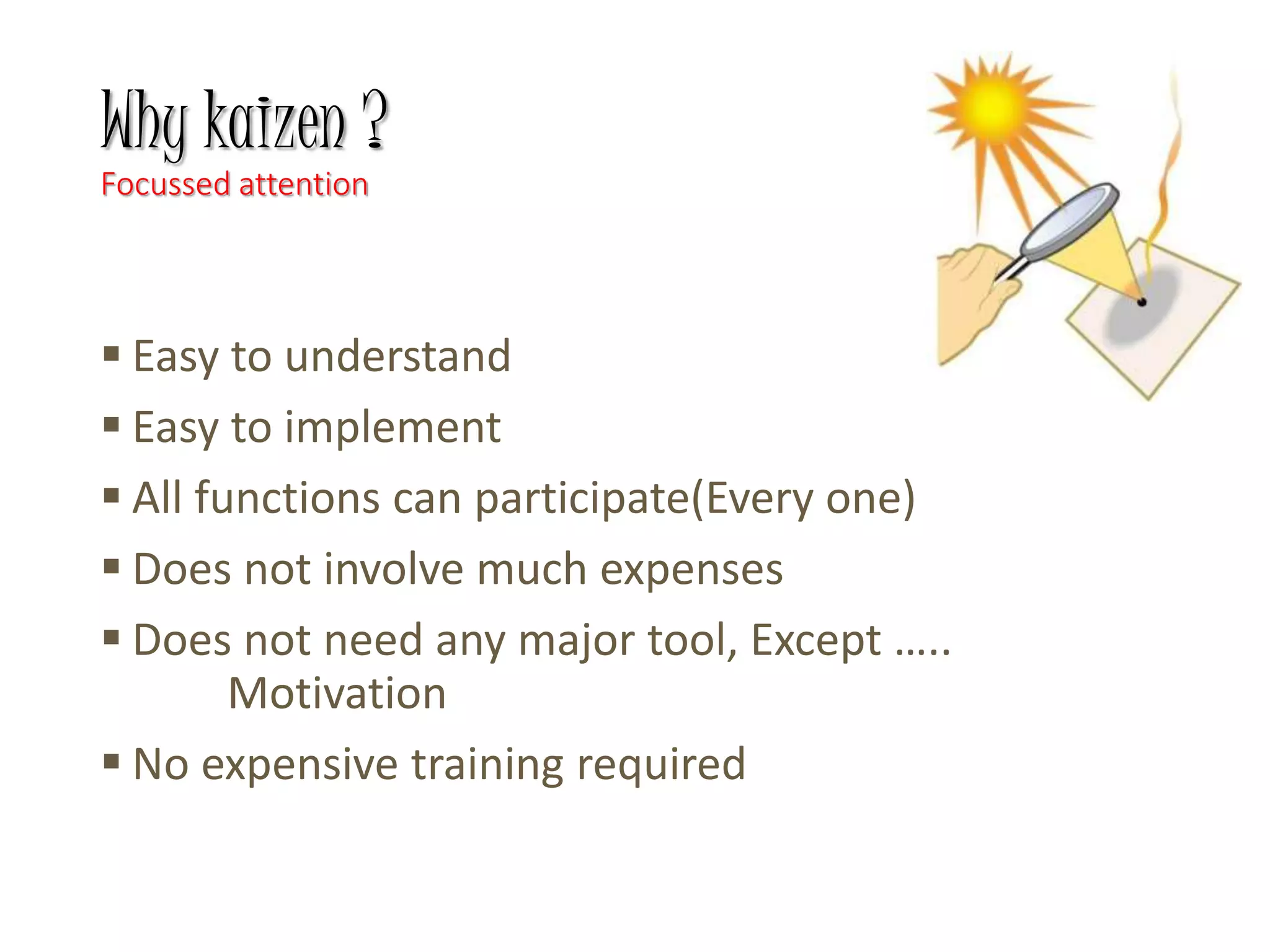
Why kaizen ?
Focussed attention
 Easy to understand
 Easy to implement
 All functions can participate(Every one)
 Does not involve much expenses
 Does not need any major tool, Except …..
Motivation
 No expensive training required
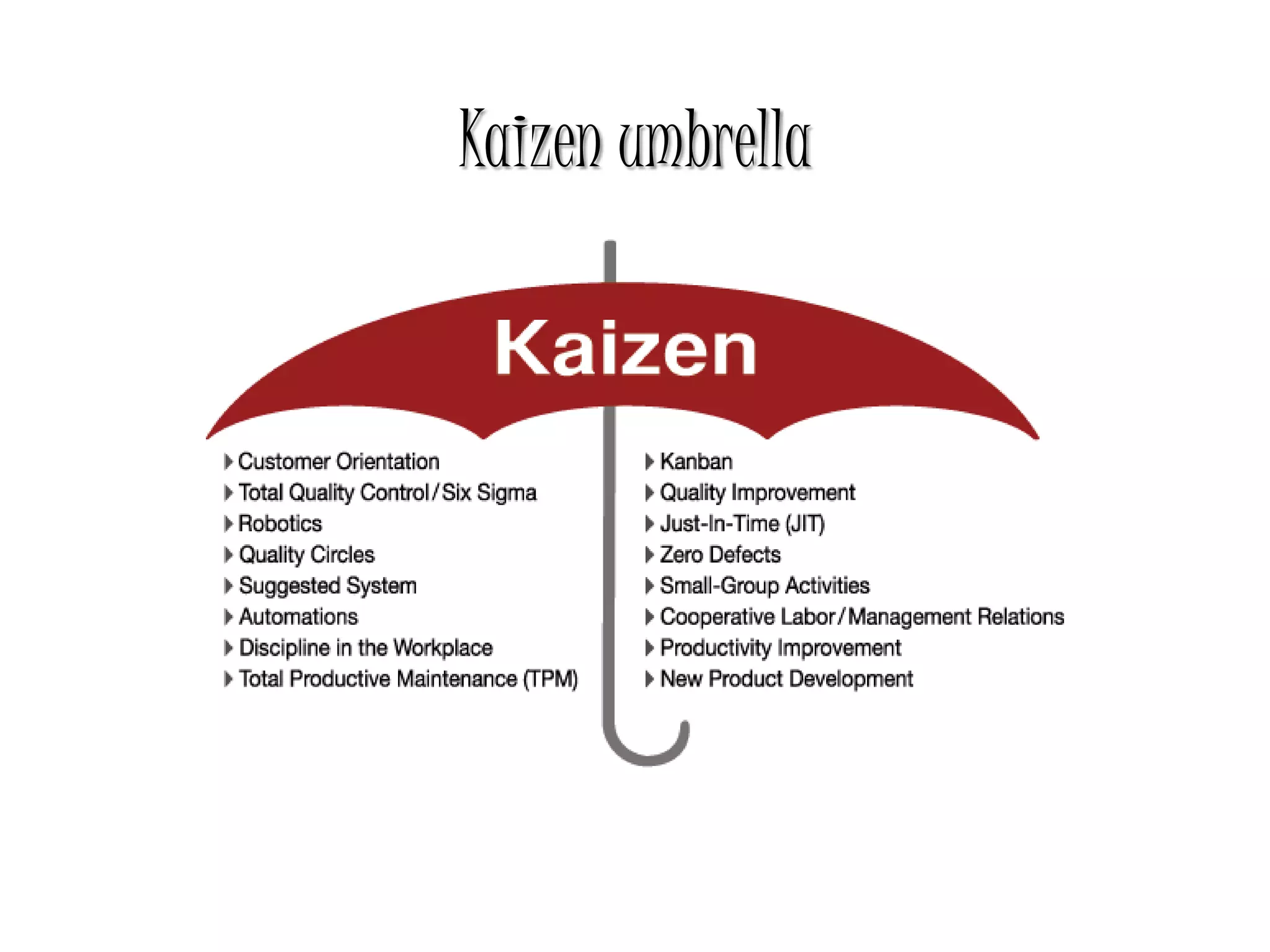
Kaizen umbrella
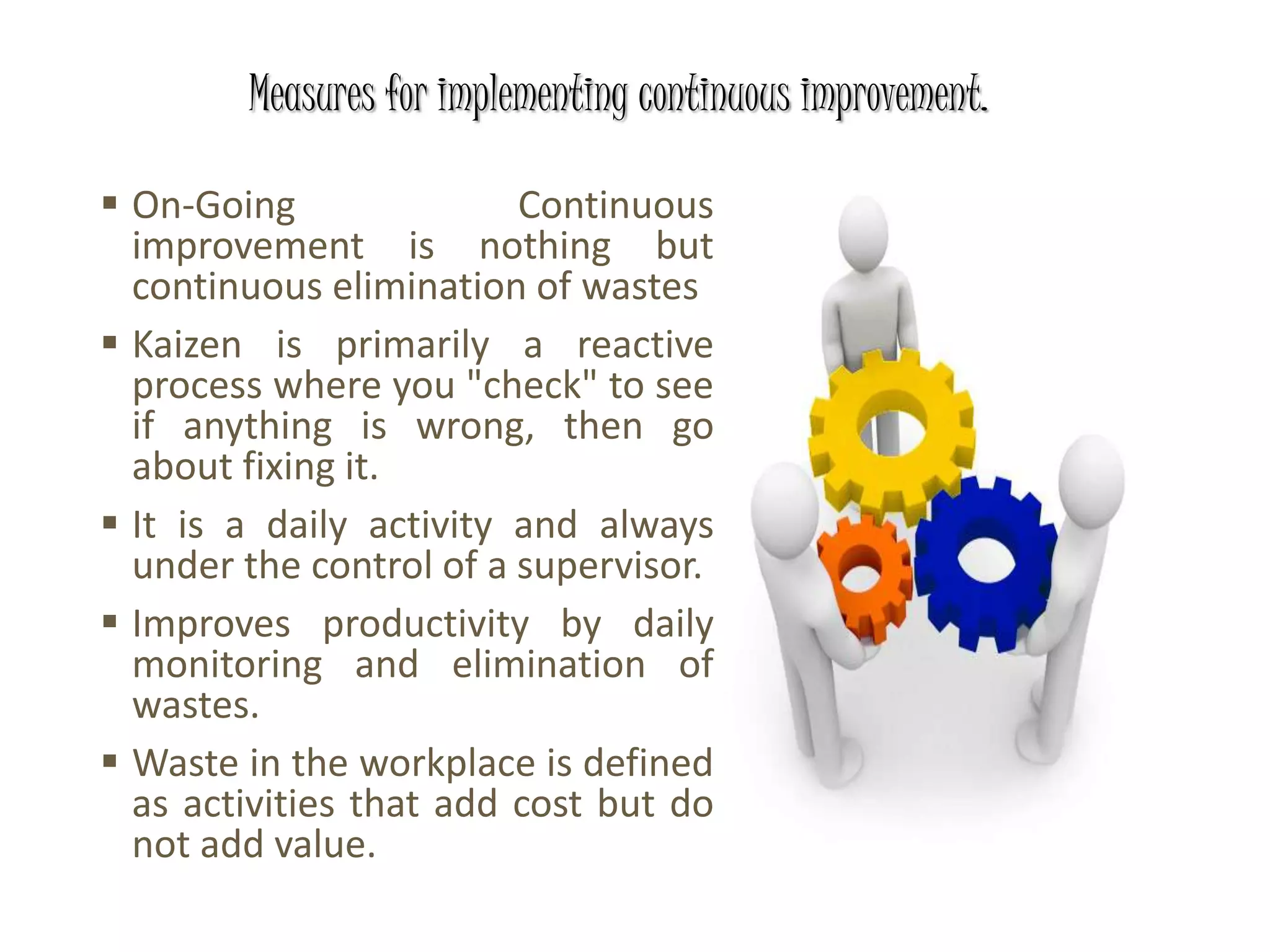
 On-Going Continuous
improvement is nothing but
continuous elimination of wastes
 Kaizen is primarily a reactive
process where you "check" to see
if anything is wrong, then go
about fixing it.
 It is a daily activity and always
under the control of a supervisor.
 Improves productivity by daily
monitoring and elimination of
wastes.
 Waste in the workplace is defined
as activities that add cost but do
not add value.
Measures for implementing continuous improvement.
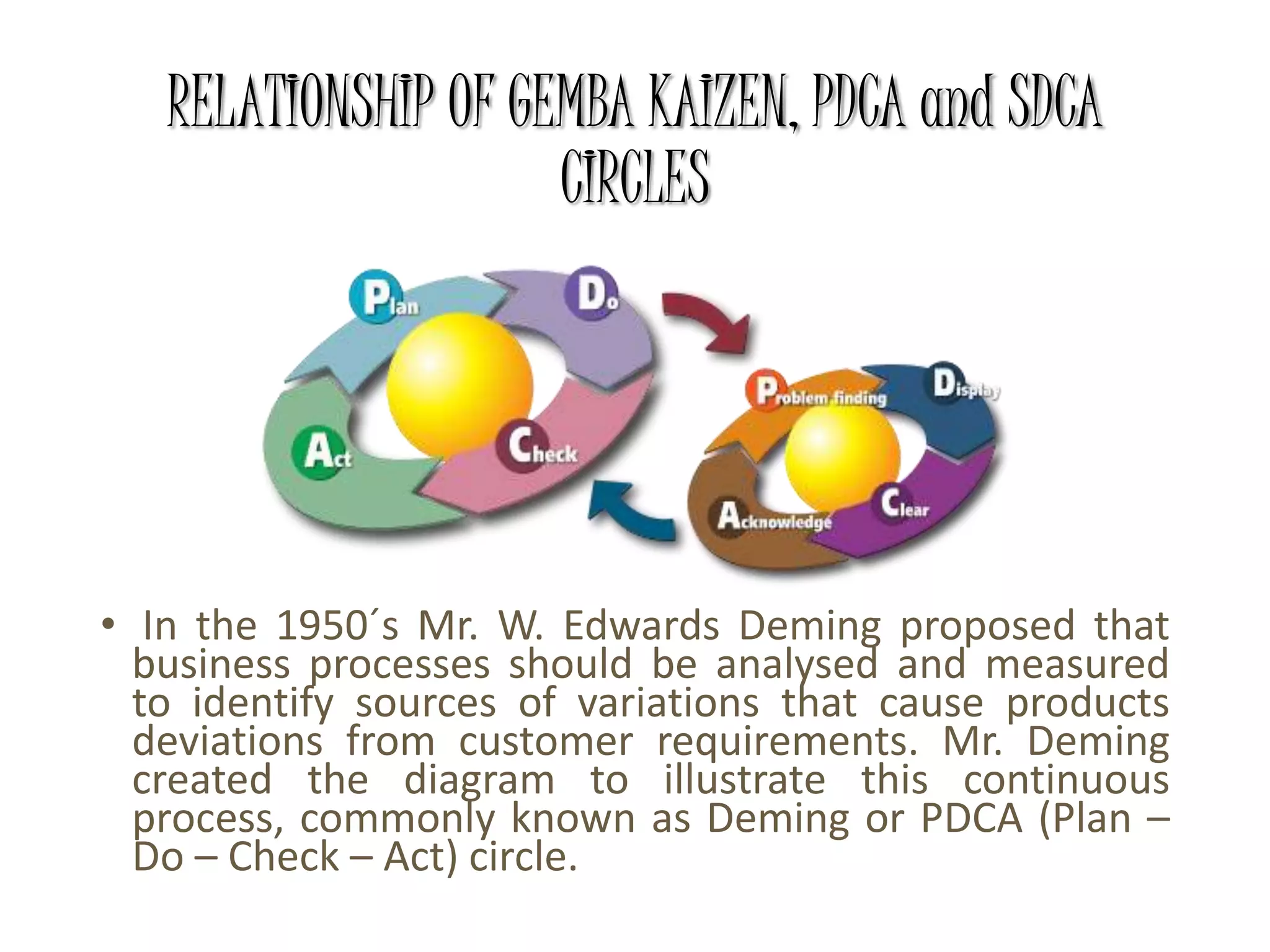
RELATIONSHIP OF GEMBA KAIZEN, PDCA and SDCA
CIRCLES
• In the 1950´s Mr. W. Edwards Deming proposed that
business processes should be analysed and measured
to identify sources of variations that cause products
deviations from customer requirements. Mr. Deming
created the diagram to illustrate this continuous
process, commonly known as Deming or PDCA (Plan –
Do – Check – Act) circle.
 Plan means definition of problem, analyses of actual
state, data collection, identification of causes, planning
counter-measures, definition of targets, definition of
sources and propose of plan for next steps.
 Do means realization of the implementation phase to
solve a well-defined problem.
 Check means validation of results from designed and
implemented improvements, controlling of aims and
possible final tuning.
 Act means work on sustainability of implemented
improvements.
Mr. Deming travelled through the East countries and
taught their companies about this methodology. They
started to use this tool and now we can see it
incorporated also in Gemba Kaizen philosophy.
Other techniques
Other techniques used in conjunction with PDCA include
5 Whys,
which is a form of root cause analysis in which the user asks
"why" a failure occurred five successive times, basing each
subsequent question on the answer to the previous. There are
normally a series of root causes stemming from one
problem, and they can be visualized using fishbone diagrams
or tables.
Masaaki Imai made the term famous in his book Kaizen: The
Key to Japan's Competitive Success.
Kaizen has three main principles:
1.Consider the process and the results!
2.The need to look at the entire process of the job at
hand and to evaluate the job as to the best way to
get the job done.
3.Kaizen must be approached in such a way that no
one is blamed and that the best process is put into
place.
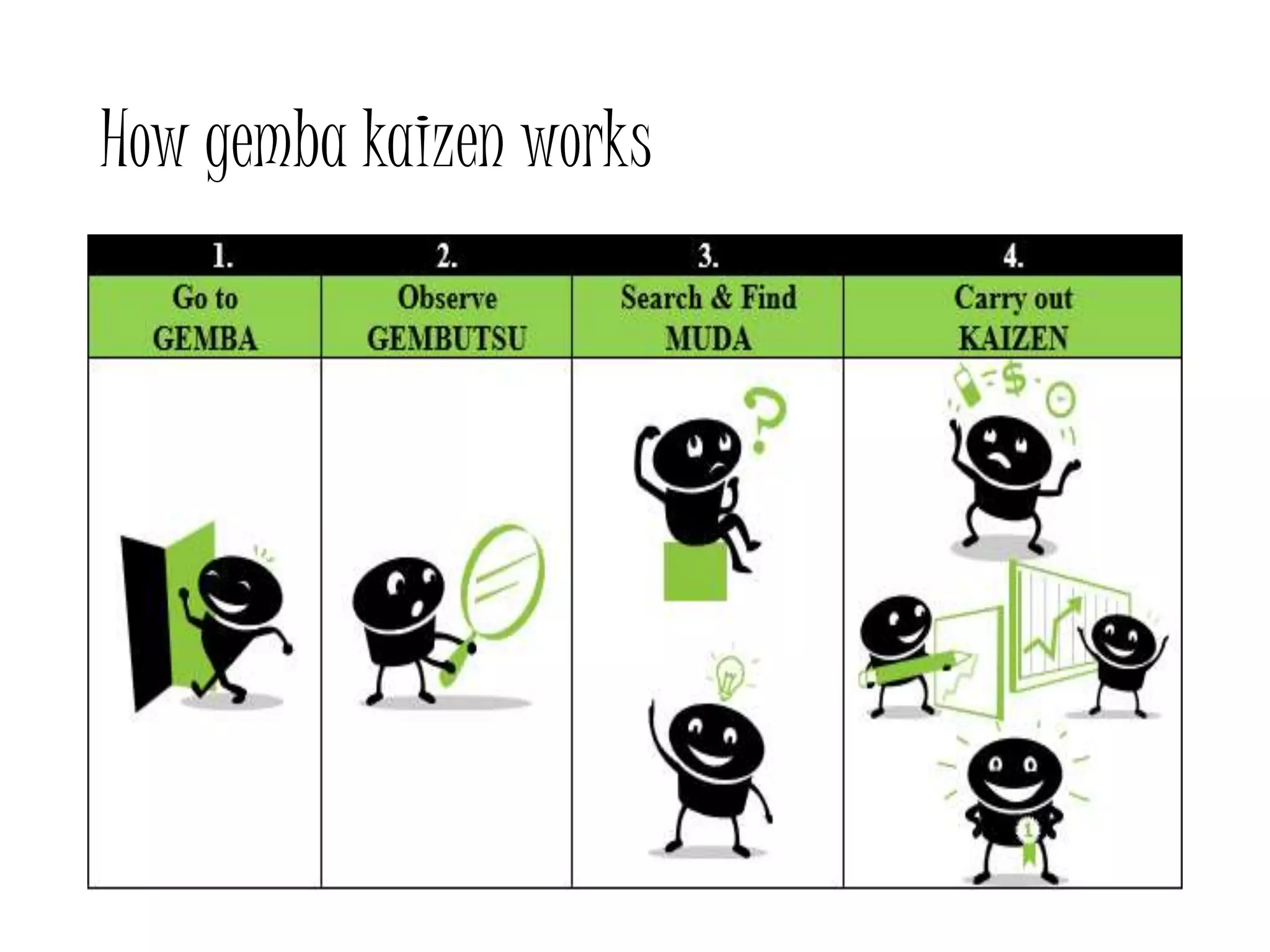
How gemba kaizen works
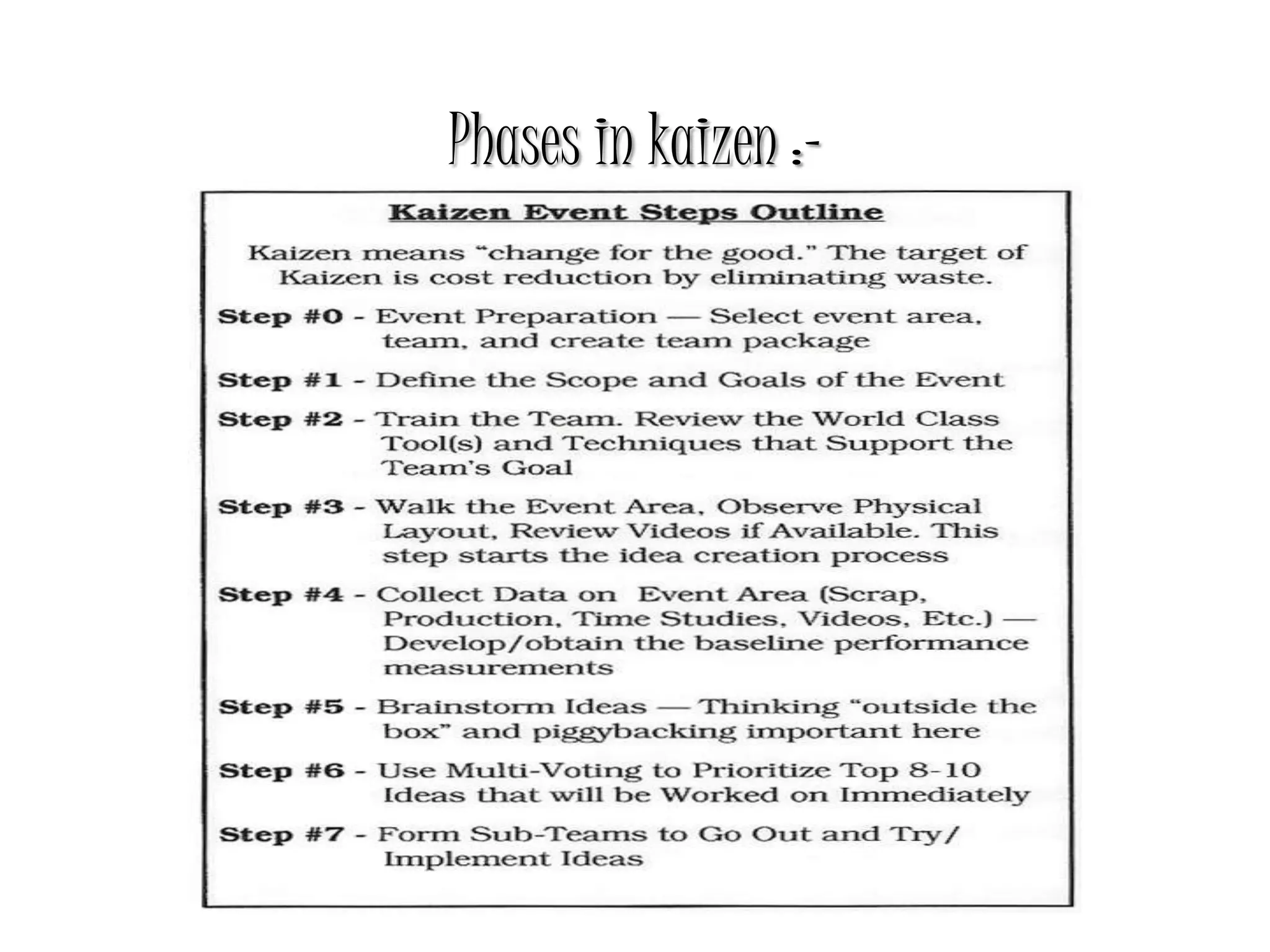
Phases in kaizen :-
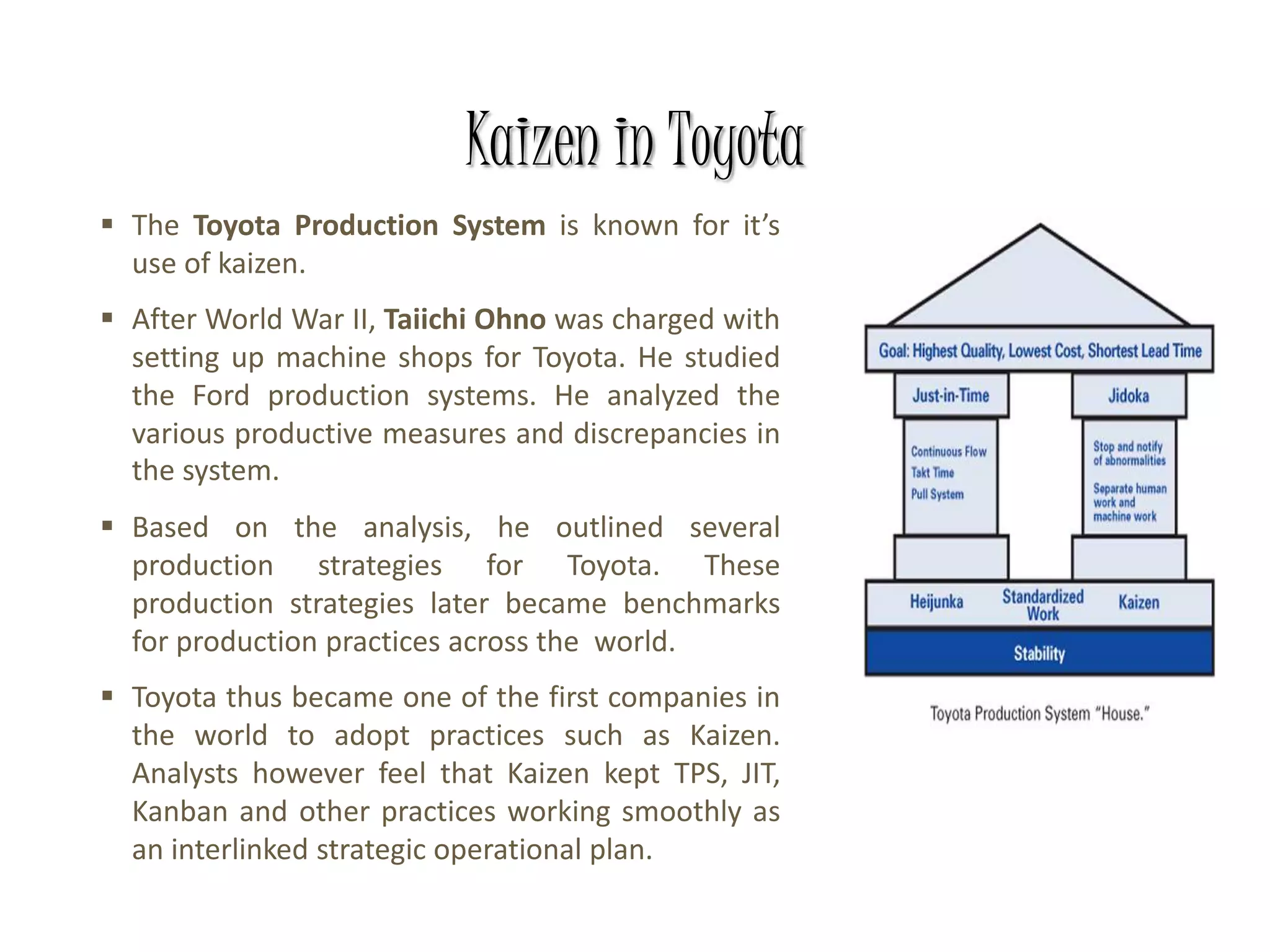
Kaizen in Toyota
 The Toyota Production System is known for it’s
use of kaizen.
 After World War II, Taiichi Ohno was charged with
setting up machine shops for Toyota. He studied
the Ford production systems. He analyzed the
various productive measures and discrepancies in
the system.
 Based on the analysis, he outlined several
production strategies for Toyota. These
production strategies later became benchmarks
for production practices across the world.
 Toyota thus became one of the first companies in
the world to adopt practices such as Kaizen.
Analysts however feel that Kaizen kept TPS, JIT,
Kanban and other practices working smoothly as
an interlinked strategic operational plan.
Toyota’s use of Kaizen to solve labor crisis
 In the early 1990s, Toyota was facing acute labor shortage
 Toyota’s initial management focus was on increasing production efficiency
through higher production levels with less number of workers. This resulted
in increased stress and worker exodus
 The global upsurge in car demand during 1987-1991 led to drastic increase
in demand for labors
 Toyota realized that it would have to rely on Kaizen for modifying its existing
assembly lines to attract workers.
 The company decided to change its working conditions to accommodate
workers of more diverse nature
 The management decided to allow plants to set their own annual
production efficiency targets. Production efficiency measurement was based
on worker’s production time rather than on best production time
Kaizen to Toyota is the elimination of three basic
things like:
 Muri (Overburden on employees)
 Mura(Unevenness in production)
 Muda (Waste)
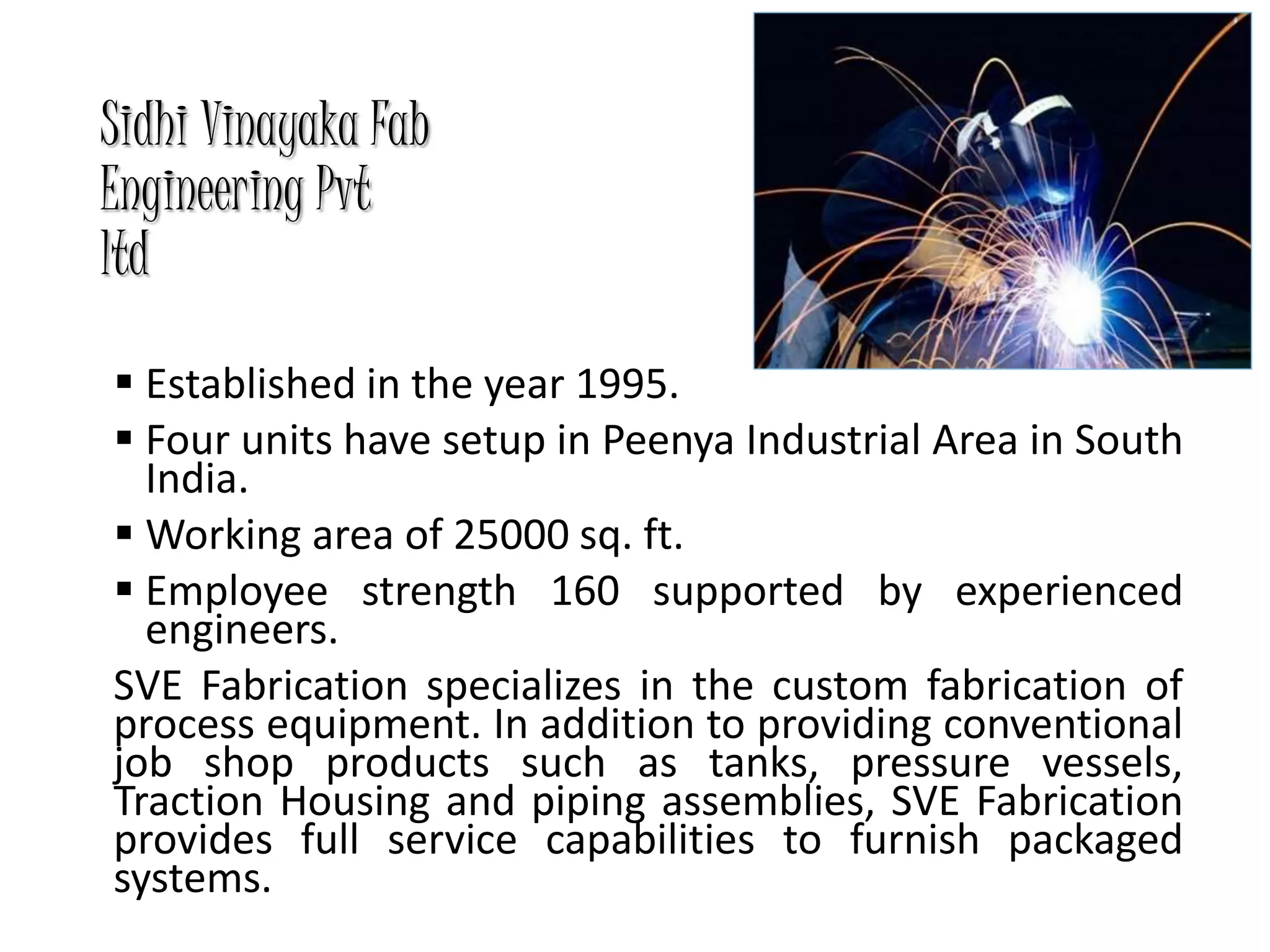
Sidhi Vinayaka Fab
Engineering Pvt
ltd
 Established in the year 1995.
 Four units have setup in Peenya Industrial Area in South
India.
 Working area of 25000 sq. ft.
 Employee strength 160 supported by experienced
engineers.
SVE Fabrication specializes in the custom fabrication of
process equipment. In addition to providing conventional
job shop products such as tanks, pressure vessels,
Traction Housing and piping assemblies, SVE Fabrication
provides full service capabilities to furnish packaged
systems.
 Beginning from flow diagrams, P&IDs, or schematics,
SVE can deliver complete turnkey shop fabricated, skid
mounted modular process systems which meet the
client's schedule and budget demands.
 Typically, SVE's services include project planning, cost
estimates, scheduling, layout, drafting, procurement,
quality control, fabrication, testing, inspection and
shipment; all of which are performed in close
compliance with ASME standards.
 Major projects on which SVE has worked are :-
1. Akash launchers
2. Agni II
3. Agni III
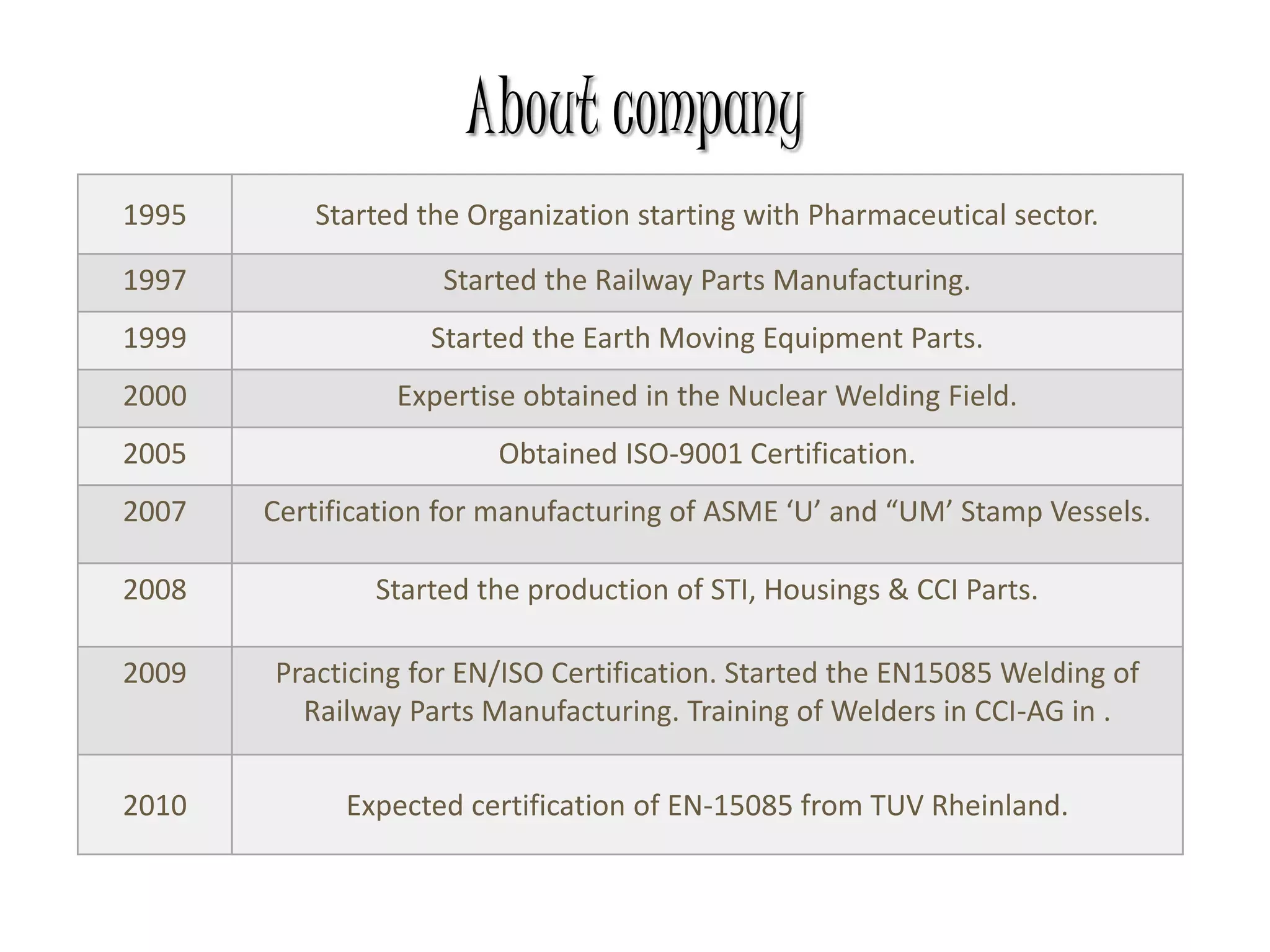
1995 Started the Organization starting with Pharmaceutical sector.
1997 Started the Railway Parts Manufacturing.
1999 Started the Earth Moving Equipment Parts.
2000 Expertise obtained in the Nuclear Welding Field.
2005 Obtained ISO-9001 Certification.
2007 Certification for manufacturing of ASME ‘U’ and “UM’ Stamp Vessels.
2008 Started the production of STI, Housings & CCI Parts.
2009 Practicing for EN/ISO Certification. Started the EN15085 Welding of
Railway Parts Manufacturing. Training of Welders in CCI-AG in .
2010 Expected certification of EN-15085 from TUV Rheinland.
About company
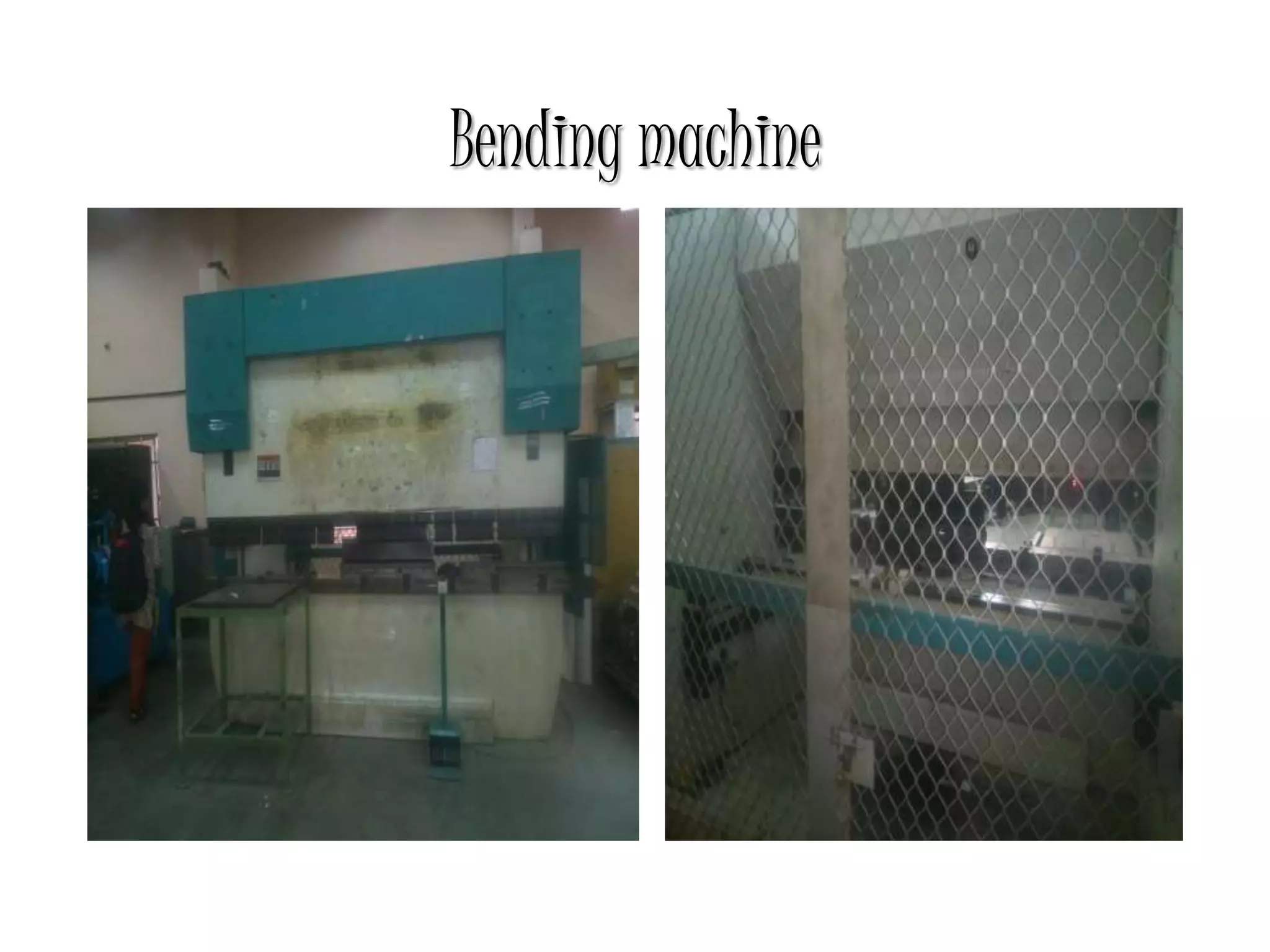
Bending machine
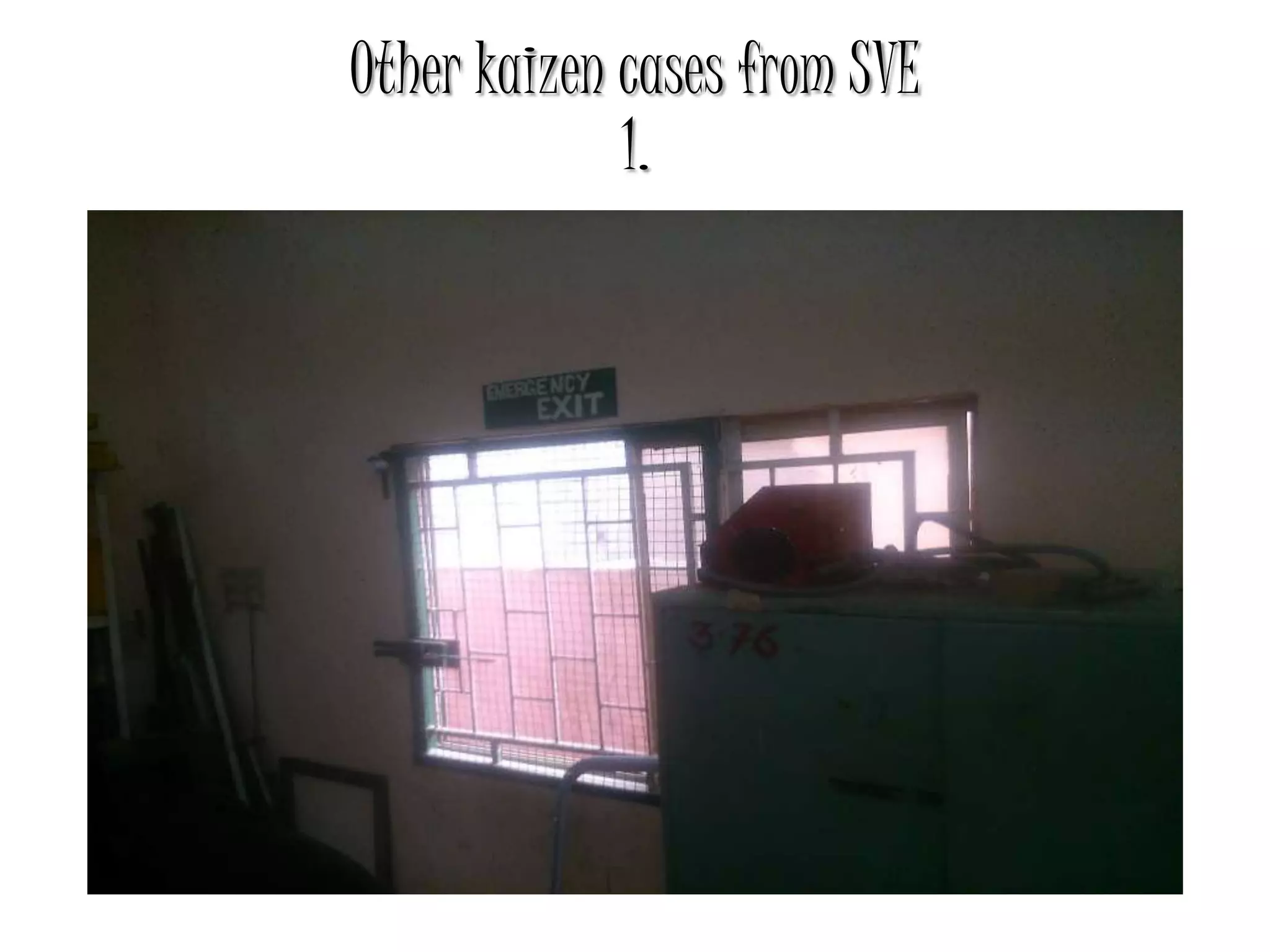
Other kaizen cases from SVE
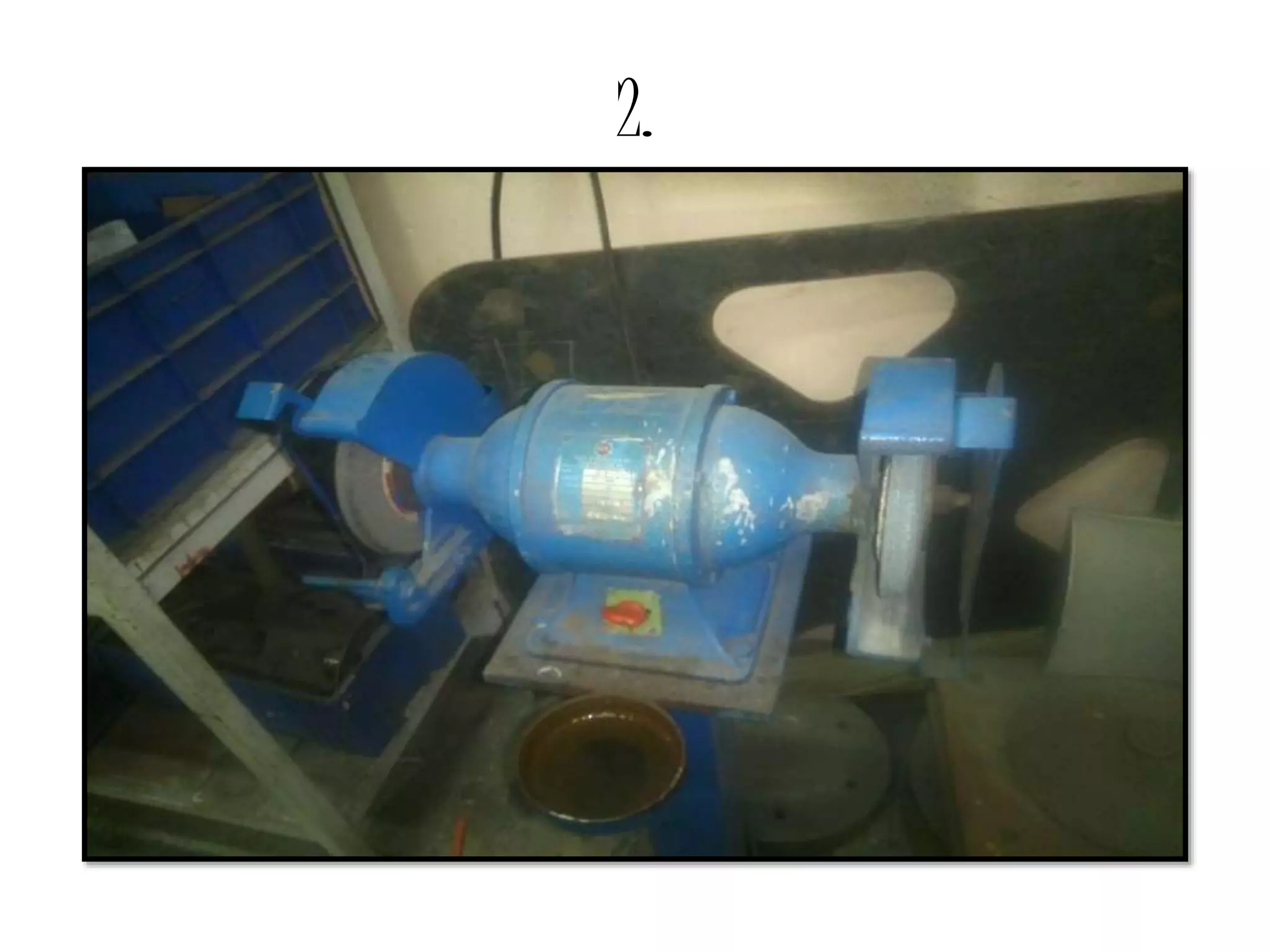
1.
2.
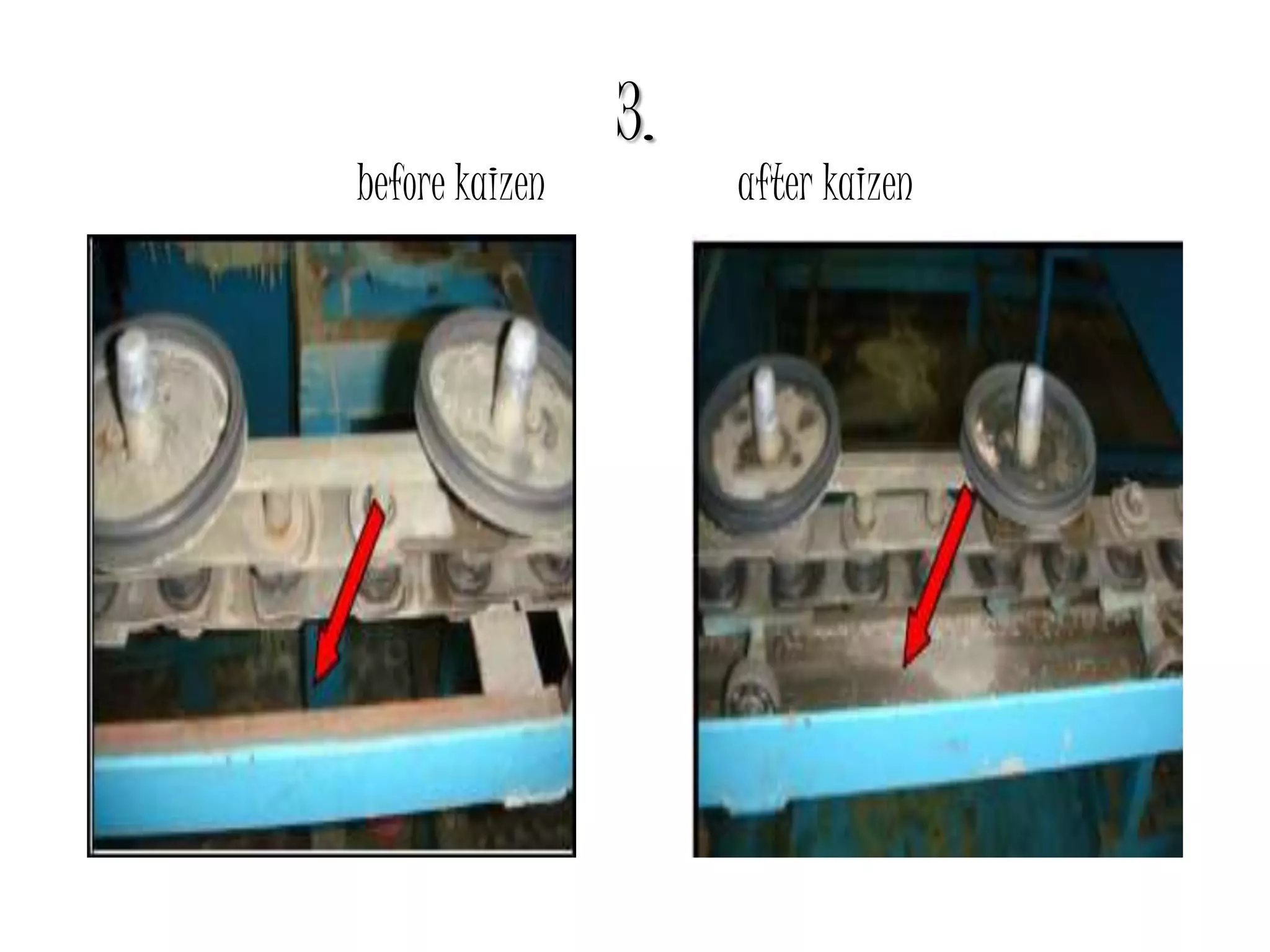
3.
before kaizen after kaizen
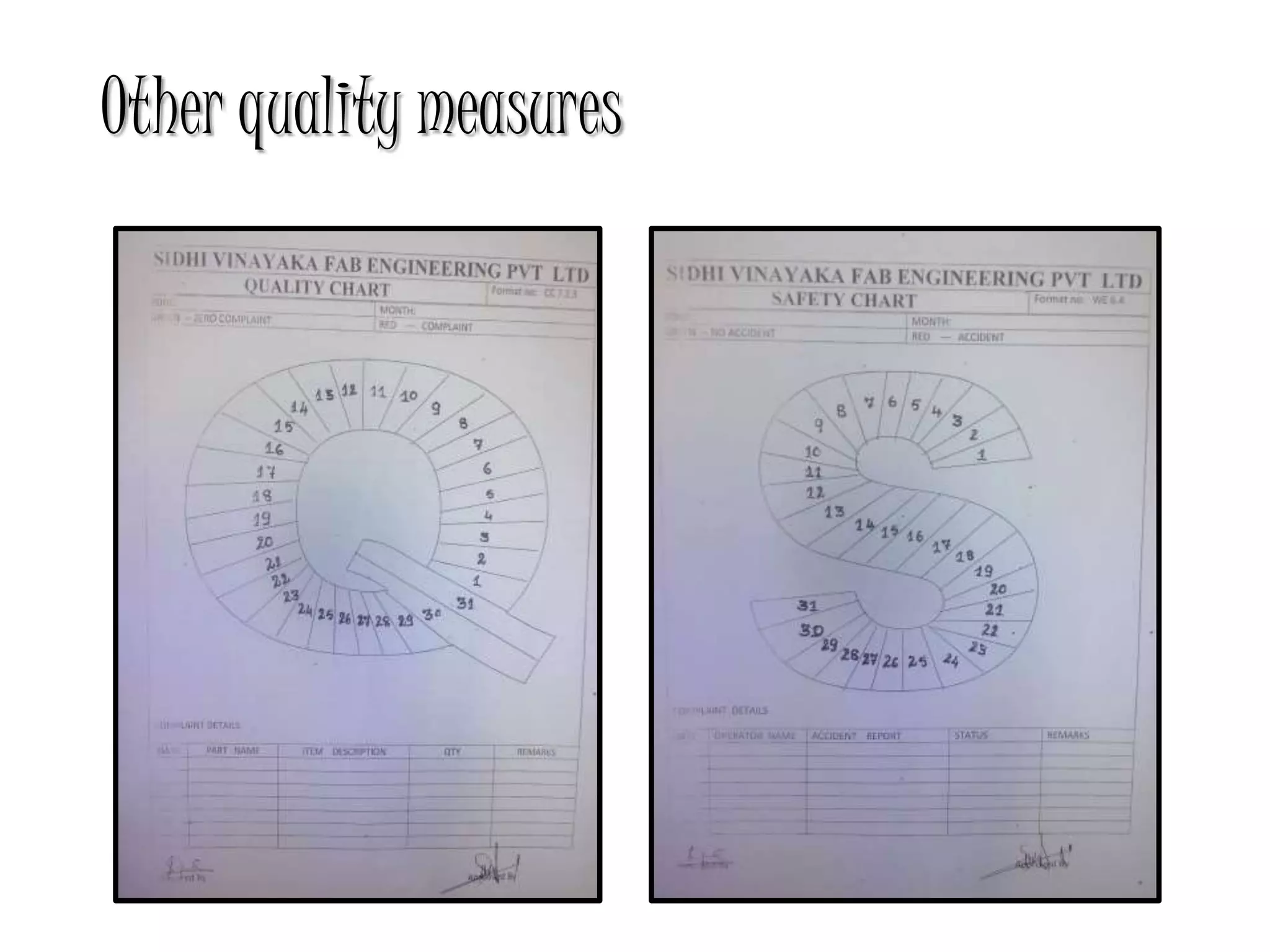
Other quality measures
Madura Fashion and Lifestyle
 Madura Fashion & Lifestyle, a division of Aditya Birla Nuvo Ltd, is one of India’s
fastest growing branded apparel companies and a premium lifestyle player in
the retail sector.
 After consolidating its market leadership with its own brands, it introduced
premier international labels, enabling Indian consumers to buy the most
prestigious global fashion wear and accessories within the country.
 The company’s brand portfolio includes product lines that range from affordable
and mass-market to luxurious, high-end style and cater to every age group, from
children and youth to men and women.
 Madura Fashion & Lifestyle is defined by its brands — Louis Philippe, Van
Heusen, Allen Solly, Peter England and People — that personify style, attitude,
luxury and comfort.
MADURA CLOTHING(FASHION CRAFT)
World Class Manufacturing- by Aditya Birla Group
COUNTER MEASURE/AFTER IMPLEMENTATION
Mr.Sundarrajan –
Maintenance
CHAMPION
July- 2008
IMPLEMENTED DATE
Mr.Sundarrajan
TEAM MEMBERS
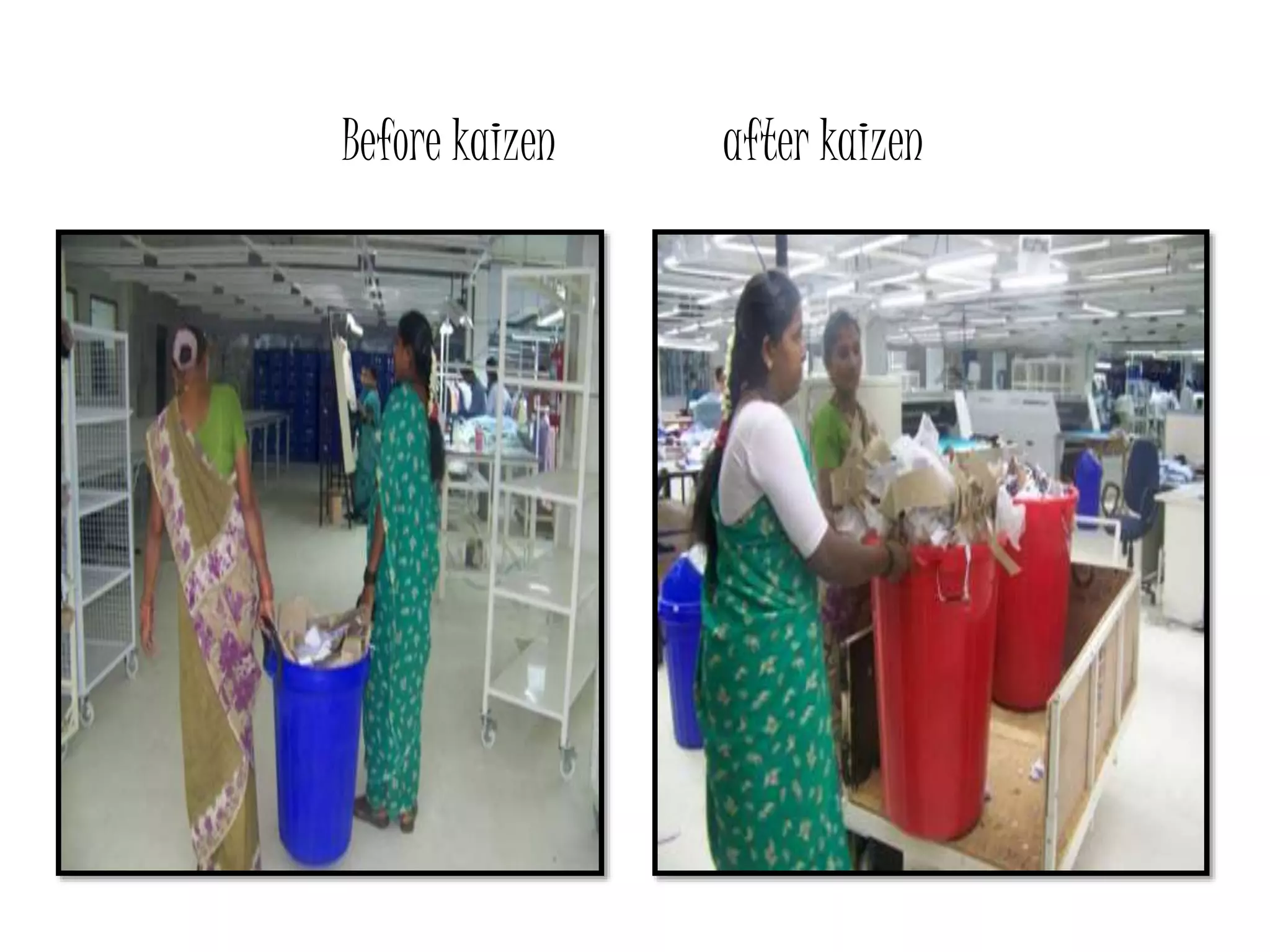
The filled up dust bin was too heavy & it could not be handled manually.
PROBLEM BEFORE IMPROVEMENT
A separate trolley was made & it holds multiple containers. Hence easy
to load the filled up dust bins.
Work aid improvisation.
• Ease of handling for operators.
BENEFITS
LEARNING AND SHARING
Before kaizen after kaizen
MADURA CLOTHING (FASHION CRAFT)
World Class Manufacturing-by Aditya Birla Group
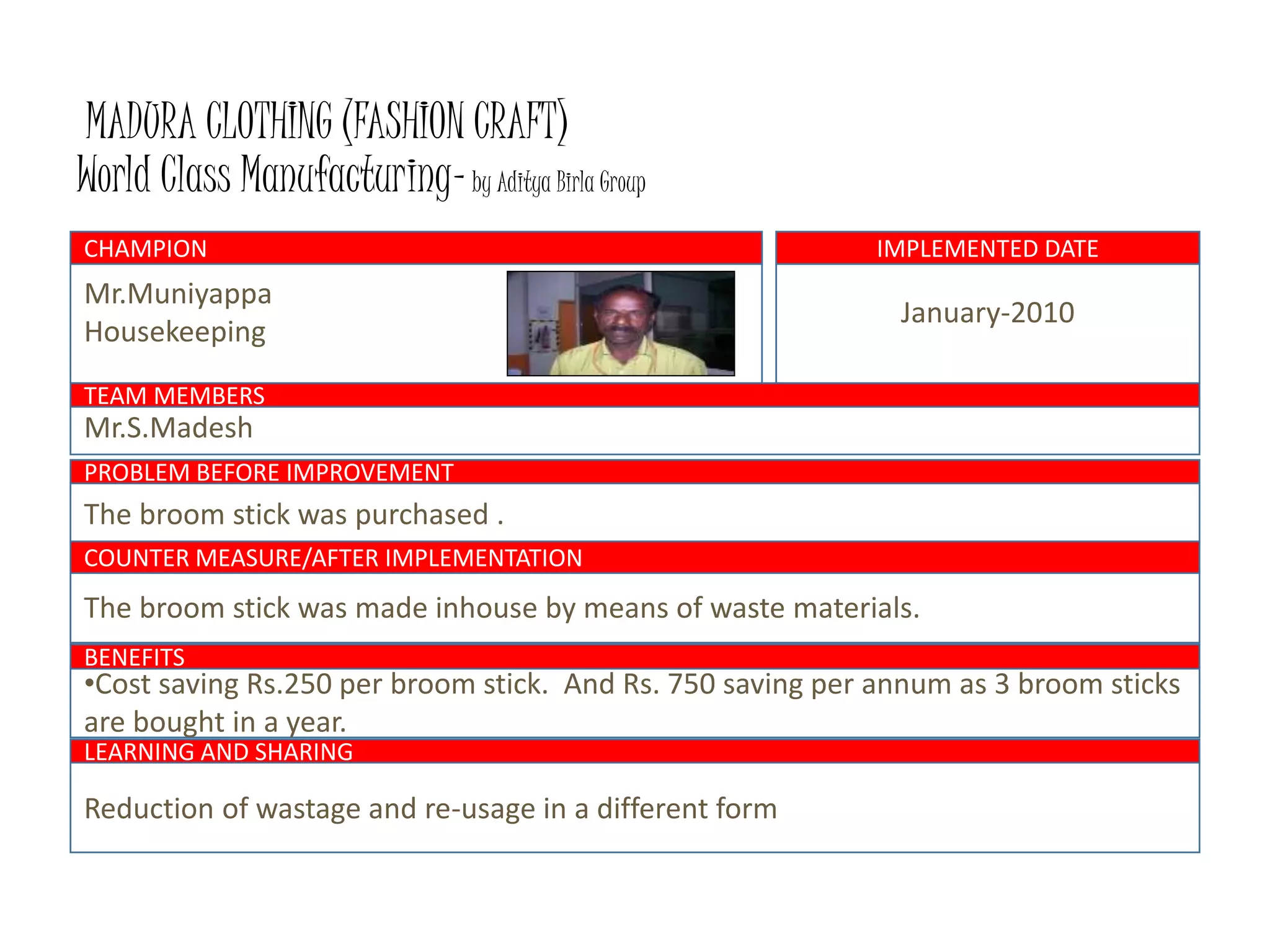
Mr.Muniyappa
Housekeeping
CHAMPION
January-2010
IMPLEMENTED DATE
Mr.S.Madesh
TEAM MEMBERS
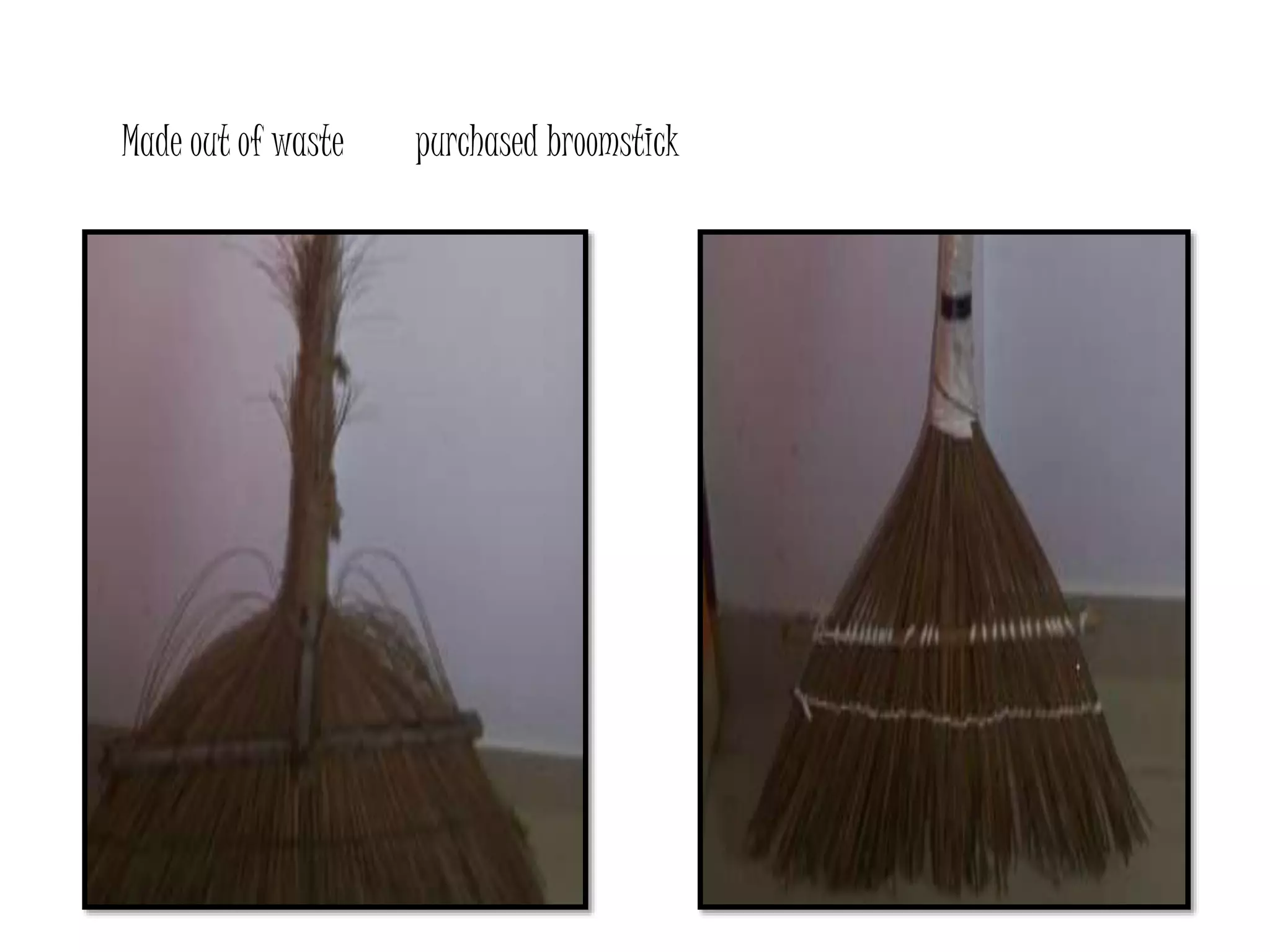
The broom stick was purchased .
PROBLEM BEFORE IMPROVEMENT
The broom stick was made inhouse by means of waste materials.
Reduction of wastage and re-usage in a different form
LEARNING AND SHARING
•Cost saving Rs.250 per broom stick. And Rs. 750 saving per annum as 3 broom sticks
are bought in a year.
COUNTER MEASURE/AFTER IMPLEMENTATION
BENEFITS
Made out of waste purchased broomstick
 1.Resistance to change
 2.Lack of proper procedure
to implement
 3.Too much suggestion may
lead to confusion and time
wastage
33
 Widely applicable – Can be used in both
manufacturing and non-manufacturing
environments
 Highly effective & results oriented - Kaizen events
will generate quick results, Measurable results,
Establish the baseline, and measure the change
 Higher operational efficiency –
 Reduces wastage, like inventory waste, time
waste, workers motion
 Improves space utilization and product quality
 A Learning Experience – Every member of a Kaizen
Team will walk away from the event learning
something new.
 Encourages big picture thinking
 Results in higher employee morale and job
satisfaction, and lower turn-over.
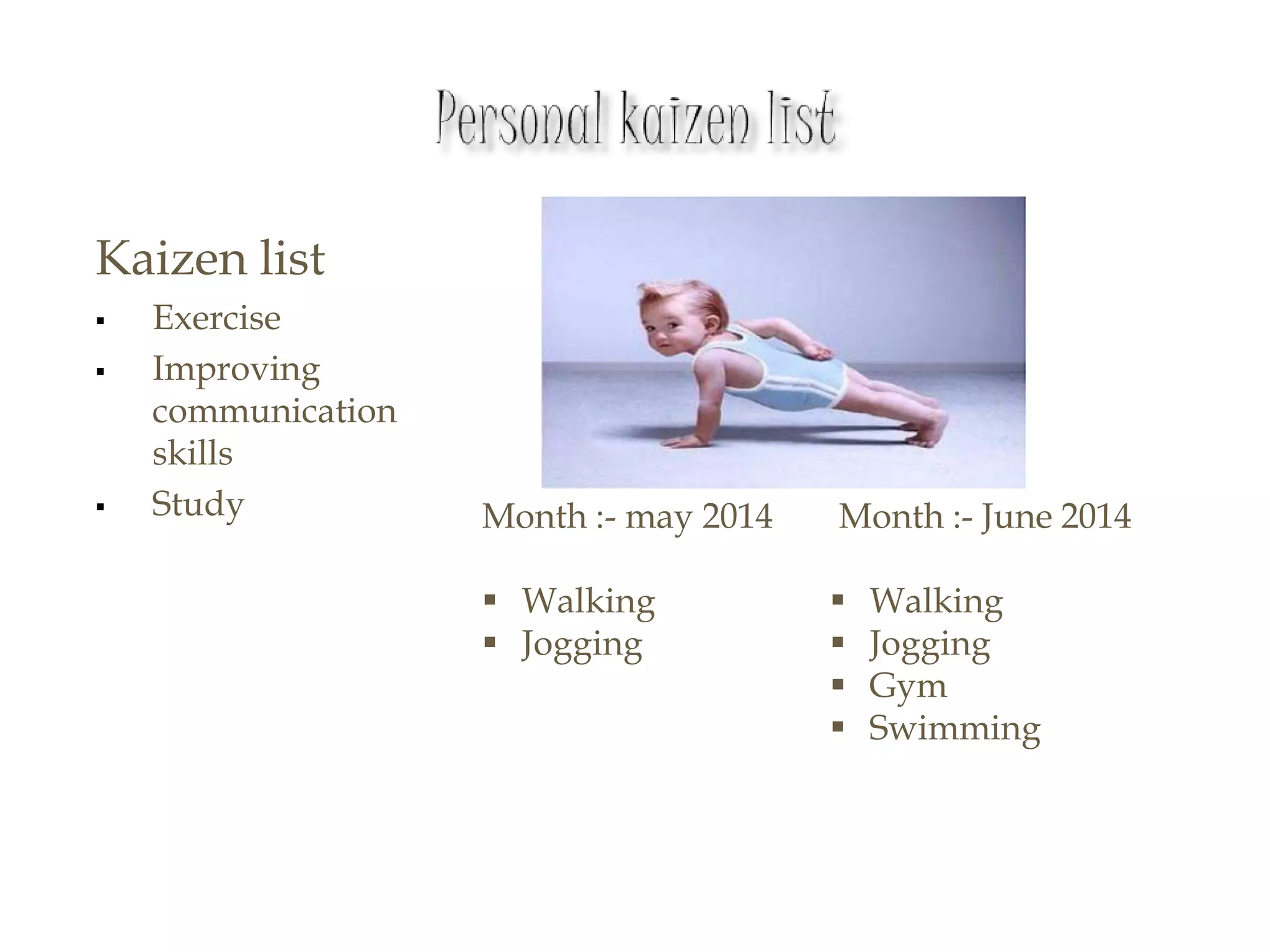
Kaizen list
 Exercise
 Improving
communication
skills
 Study Month :- may 2014
 Walking
 Jogging
Month :- June 2014
 Walking
 Jogging
 Gym
 Swimming
Conclusion
• “Kaizen” or “continuous improvement” should be a part of our
everyday life.
• The concept is simple but if properly applied can lead to
significant efficiency improvements for organizations.
• Kaizen and its associated concepts like PDCA, Kanban and
Quality Circles have been critical to the success of large
organizations like Toyota, Sidhivinayak fab Engineering, TVS
and Sons pvt ltd .
• Kaizen strategy is the single most important concept in
Japanese management - the key to Japanese competitive
success.
Good changes with small
step
KAIZEN

Kaizen pom presentation

  • 1.
    By Group -10 CherryAgarwal PA1314 Minal Kashyap PA1326 Priyaranjan Gupta PA1333 Continuous improvement is the result of continuous involvement
  • 3.
    KAIZEN- AN INTRODUCTION Masaaki Imai is known as the developer of Kaizen.  改 ('kai') KAI means 'change' or 'the action to correct'.  善 ('zen') ZEN means 'good'
  • 4.
    What is kaizen? • KAIZEN means improvement: Kaizen is small incremental changes made for improving productivity and minimizing waste. Improvements without spending much money, involving everyone from managers to employees, and using much common sense.  It is a method that strives toward perfection by eliminating waste (MUDA) in the work place (GEMBA).
  • 5.
    The Origin ofKaizen  The foundation of Kaizen was laid in Japan after the Second World War, when the country was attempting to rebuild infrastructure and rethink many systems.  Several American experts on workplace improvement including W. Edwards Deming and Joseph Juran came to Japan to lecture and teach.  Using information from these individuals regarding the TWI (Training Within Industry) programs , the concept of Kaizen began to be formed and it took off in the 1950s.
  • 6.
    Why kaizen ? Focussedattention  Easy to understand  Easy to implement  All functions can participate(Every one)  Does not involve much expenses  Does not need any major tool, Except ….. Motivation  No expensive training required
  • 7.
  • 8.
     On-Going Continuous improvementis nothing but continuous elimination of wastes  Kaizen is primarily a reactive process where you "check" to see if anything is wrong, then go about fixing it.  It is a daily activity and always under the control of a supervisor.  Improves productivity by daily monitoring and elimination of wastes.  Waste in the workplace is defined as activities that add cost but do not add value. Measures for implementing continuous improvement.
  • 9.
    RELATIONSHIP OF GEMBAKAIZEN, PDCA and SDCA CIRCLES • In the 1950´s Mr. W. Edwards Deming proposed that business processes should be analysed and measured to identify sources of variations that cause products deviations from customer requirements. Mr. Deming created the diagram to illustrate this continuous process, commonly known as Deming or PDCA (Plan – Do – Check – Act) circle.
  • 10.
     Plan meansdefinition of problem, analyses of actual state, data collection, identification of causes, planning counter-measures, definition of targets, definition of sources and propose of plan for next steps.  Do means realization of the implementation phase to solve a well-defined problem.  Check means validation of results from designed and implemented improvements, controlling of aims and possible final tuning.  Act means work on sustainability of implemented improvements. Mr. Deming travelled through the East countries and taught their companies about this methodology. They started to use this tool and now we can see it incorporated also in Gemba Kaizen philosophy.
  • 11.
    Other techniques Other techniquesused in conjunction with PDCA include 5 Whys, which is a form of root cause analysis in which the user asks "why" a failure occurred five successive times, basing each subsequent question on the answer to the previous. There are normally a series of root causes stemming from one problem, and they can be visualized using fishbone diagrams or tables. Masaaki Imai made the term famous in his book Kaizen: The Key to Japan's Competitive Success.
  • 12.
    Kaizen has threemain principles: 1.Consider the process and the results! 2.The need to look at the entire process of the job at hand and to evaluate the job as to the best way to get the job done. 3.Kaizen must be approached in such a way that no one is blamed and that the best process is put into place.
  • 13.
  • 14.
  • 15.
    Kaizen in Toyota The Toyota Production System is known for it’s use of kaizen.  After World War II, Taiichi Ohno was charged with setting up machine shops for Toyota. He studied the Ford production systems. He analyzed the various productive measures and discrepancies in the system.  Based on the analysis, he outlined several production strategies for Toyota. These production strategies later became benchmarks for production practices across the world.  Toyota thus became one of the first companies in the world to adopt practices such as Kaizen. Analysts however feel that Kaizen kept TPS, JIT, Kanban and other practices working smoothly as an interlinked strategic operational plan.
  • 16.
    Toyota’s use ofKaizen to solve labor crisis  In the early 1990s, Toyota was facing acute labor shortage  Toyota’s initial management focus was on increasing production efficiency through higher production levels with less number of workers. This resulted in increased stress and worker exodus  The global upsurge in car demand during 1987-1991 led to drastic increase in demand for labors  Toyota realized that it would have to rely on Kaizen for modifying its existing assembly lines to attract workers.  The company decided to change its working conditions to accommodate workers of more diverse nature  The management decided to allow plants to set their own annual production efficiency targets. Production efficiency measurement was based on worker’s production time rather than on best production time
  • 17.
    Kaizen to Toyotais the elimination of three basic things like:  Muri (Overburden on employees)  Mura(Unevenness in production)  Muda (Waste)
  • 18.
    Sidhi Vinayaka Fab EngineeringPvt ltd  Established in the year 1995.  Four units have setup in Peenya Industrial Area in South India.  Working area of 25000 sq. ft.  Employee strength 160 supported by experienced engineers. SVE Fabrication specializes in the custom fabrication of process equipment. In addition to providing conventional job shop products such as tanks, pressure vessels, Traction Housing and piping assemblies, SVE Fabrication provides full service capabilities to furnish packaged systems.
  • 19.
     Beginning fromflow diagrams, P&IDs, or schematics, SVE can deliver complete turnkey shop fabricated, skid mounted modular process systems which meet the client's schedule and budget demands.  Typically, SVE's services include project planning, cost estimates, scheduling, layout, drafting, procurement, quality control, fabrication, testing, inspection and shipment; all of which are performed in close compliance with ASME standards.  Major projects on which SVE has worked are :- 1. Akash launchers 2. Agni II 3. Agni III
  • 20.
    1995 Started theOrganization starting with Pharmaceutical sector. 1997 Started the Railway Parts Manufacturing. 1999 Started the Earth Moving Equipment Parts. 2000 Expertise obtained in the Nuclear Welding Field. 2005 Obtained ISO-9001 Certification. 2007 Certification for manufacturing of ASME ‘U’ and “UM’ Stamp Vessels. 2008 Started the production of STI, Housings & CCI Parts. 2009 Practicing for EN/ISO Certification. Started the EN15085 Welding of Railway Parts Manufacturing. Training of Welders in CCI-AG in . 2010 Expected certification of EN-15085 from TUV Rheinland. About company
  • 23.
  • 24.
    Other kaizen casesfrom SVE 1.
  • 25.
  • 26.
  • 27.
  • 28.
    Madura Fashion andLifestyle  Madura Fashion & Lifestyle, a division of Aditya Birla Nuvo Ltd, is one of India’s fastest growing branded apparel companies and a premium lifestyle player in the retail sector.  After consolidating its market leadership with its own brands, it introduced premier international labels, enabling Indian consumers to buy the most prestigious global fashion wear and accessories within the country.  The company’s brand portfolio includes product lines that range from affordable and mass-market to luxurious, high-end style and cater to every age group, from children and youth to men and women.  Madura Fashion & Lifestyle is defined by its brands — Louis Philippe, Van Heusen, Allen Solly, Peter England and People — that personify style, attitude, luxury and comfort.
  • 29.
    MADURA CLOTHING(FASHION CRAFT) WorldClass Manufacturing- by Aditya Birla Group COUNTER MEASURE/AFTER IMPLEMENTATION Mr.Sundarrajan – Maintenance CHAMPION July- 2008 IMPLEMENTED DATE Mr.Sundarrajan TEAM MEMBERS The filled up dust bin was too heavy & it could not be handled manually. PROBLEM BEFORE IMPROVEMENT A separate trolley was made & it holds multiple containers. Hence easy to load the filled up dust bins. Work aid improvisation. • Ease of handling for operators. BENEFITS LEARNING AND SHARING
  • 30.
  • 31.
    MADURA CLOTHING (FASHIONCRAFT) World Class Manufacturing-by Aditya Birla Group Mr.Muniyappa Housekeeping CHAMPION January-2010 IMPLEMENTED DATE Mr.S.Madesh TEAM MEMBERS The broom stick was purchased . PROBLEM BEFORE IMPROVEMENT The broom stick was made inhouse by means of waste materials. Reduction of wastage and re-usage in a different form LEARNING AND SHARING •Cost saving Rs.250 per broom stick. And Rs. 750 saving per annum as 3 broom sticks are bought in a year. COUNTER MEASURE/AFTER IMPLEMENTATION BENEFITS
  • 32.
    Made out ofwaste purchased broomstick
  • 33.
     1.Resistance tochange  2.Lack of proper procedure to implement  3.Too much suggestion may lead to confusion and time wastage 33
  • 34.
     Widely applicable– Can be used in both manufacturing and non-manufacturing environments  Highly effective & results oriented - Kaizen events will generate quick results, Measurable results, Establish the baseline, and measure the change  Higher operational efficiency –  Reduces wastage, like inventory waste, time waste, workers motion  Improves space utilization and product quality  A Learning Experience – Every member of a Kaizen Team will walk away from the event learning something new.  Encourages big picture thinking  Results in higher employee morale and job satisfaction, and lower turn-over.
  • 35.
    Kaizen list  Exercise Improving communication skills  Study Month :- may 2014  Walking  Jogging Month :- June 2014  Walking  Jogging  Gym  Swimming
  • 36.
    Conclusion • “Kaizen” or“continuous improvement” should be a part of our everyday life. • The concept is simple but if properly applied can lead to significant efficiency improvements for organizations. • Kaizen and its associated concepts like PDCA, Kanban and Quality Circles have been critical to the success of large organizations like Toyota, Sidhivinayak fab Engineering, TVS and Sons pvt ltd . • Kaizen strategy is the single most important concept in Japanese management - the key to Japanese competitive success.
  • 37.
    Good changes withsmall step KAIZEN

Editor's Notes

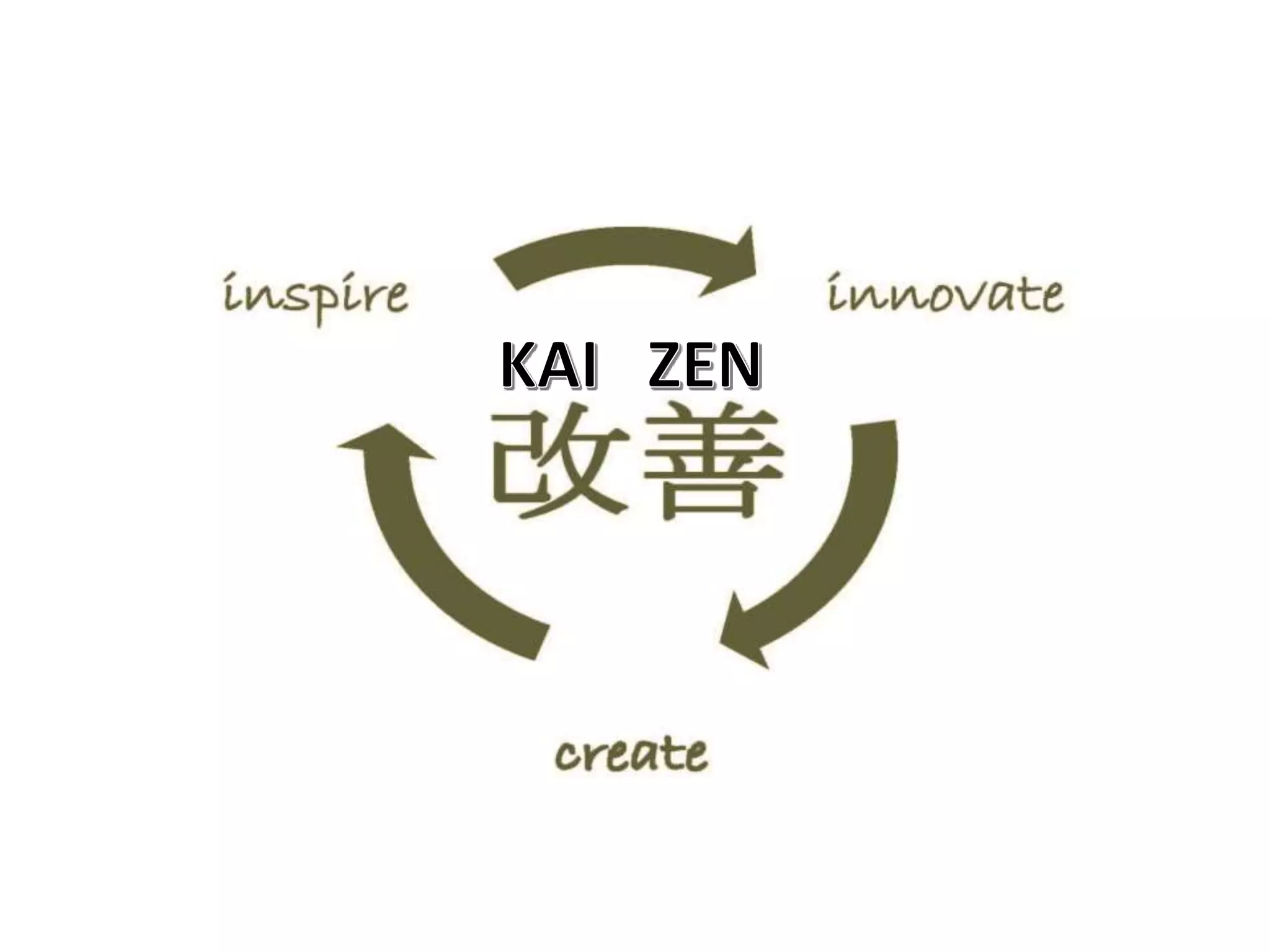
  • #3 Kaizen three words mantra Inspire people to innovate and create better everyday
  • #8 Kaizen forms an umbrella that covers many techniques including Kanban, total productive maintenance, six sigma, automation, just-in-time, suggestion system and productivity improvement
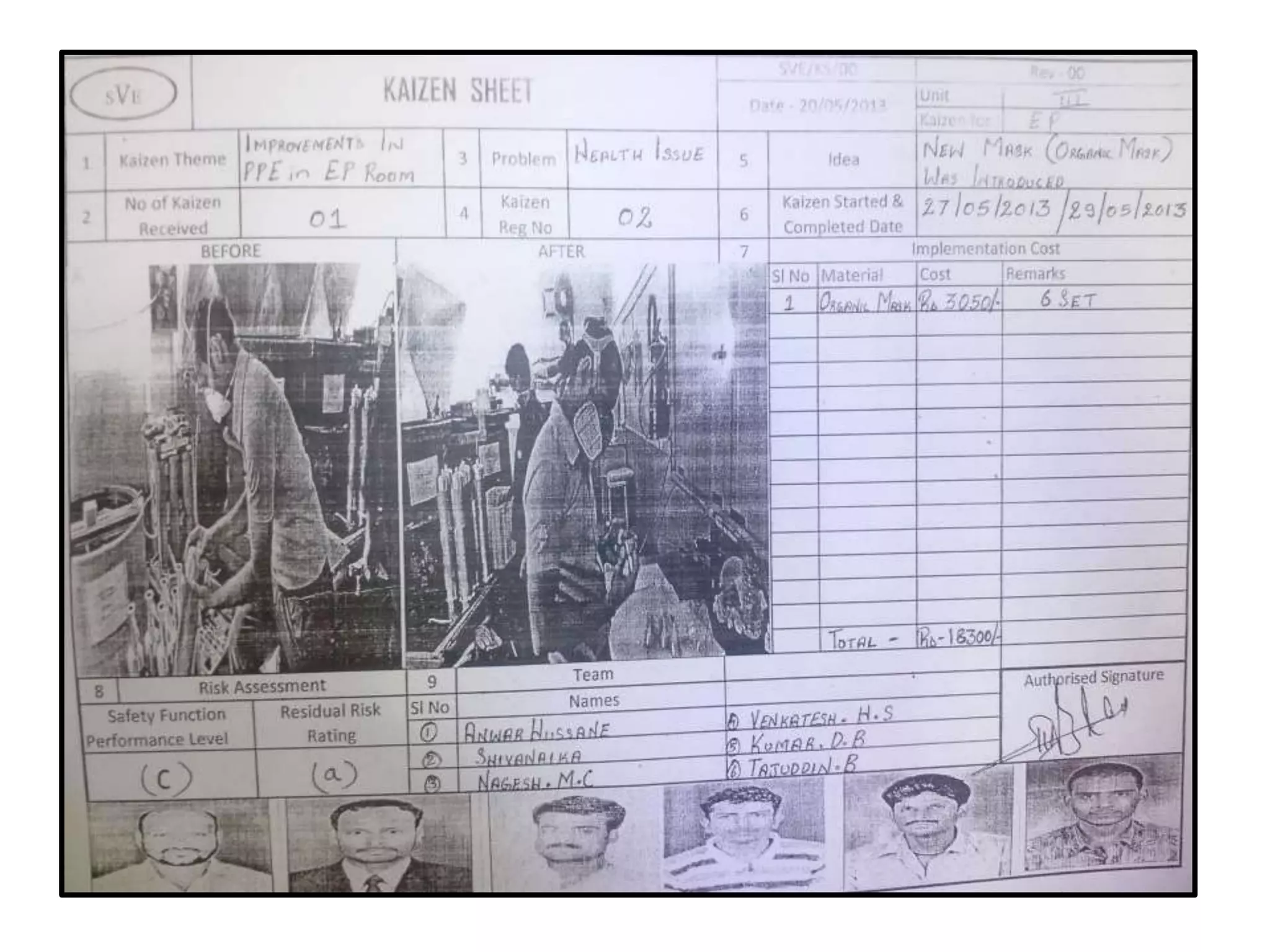
  • #22 Organic masks which filters atmosphere To avoid the fumes coming out from welding procedure. Personal protective equipment in the engine pressure room
  • #27 Water drops on floor from the space between the two sides of conveyor Sheet is welded combining the two sides of conveyor & water is drained out at the end. Kaizen Viewpoint was to To drain the water from one end. Theme - To avoid accident due to water spillage.
  • #34 Kaizen – A mixed bag Why Kaizen works well for some… It has been suggested that Kaizen works particularly well in Japan because it has a collective culture, and Kaizen relies on collective values. The focus is more on improvement and refinement of existing methods, rather newer innovations. And not so for others… People in more individualistic cultures (like in Western corporations) may struggle with some of the basic principles of Kaizen. Kaizen idea of improvement is contrary to the beliefs of some Westerners, who place a high value on the achievement and maintenance of perfection.
  • #35 Kaizen Strategy Benefits * Reduces waste or non value add activities * Reduces cycle times * Improves quality * Improves productivity * Reduces cost of operations * Improves throughput * Improves customer satisfaction * Improves profits
  • #36 People have a misconception that kaizen is only for companies or manufacturing plants , but kaizen can also be applied in your personal life .
  • #37  Japanese managers have generally decided that at least 50 % of their time should be spent at activities which are related to improving and developing .