Data Communication
and Networks
Topic : IPv6 Addresses
IPv6 Addresses
An Internet Protocol version 6 address
(IPv6 address) is a numerical label that is used
to identify a network interface of a computer or
other network node participating in an IPv6
computer network.
Structure
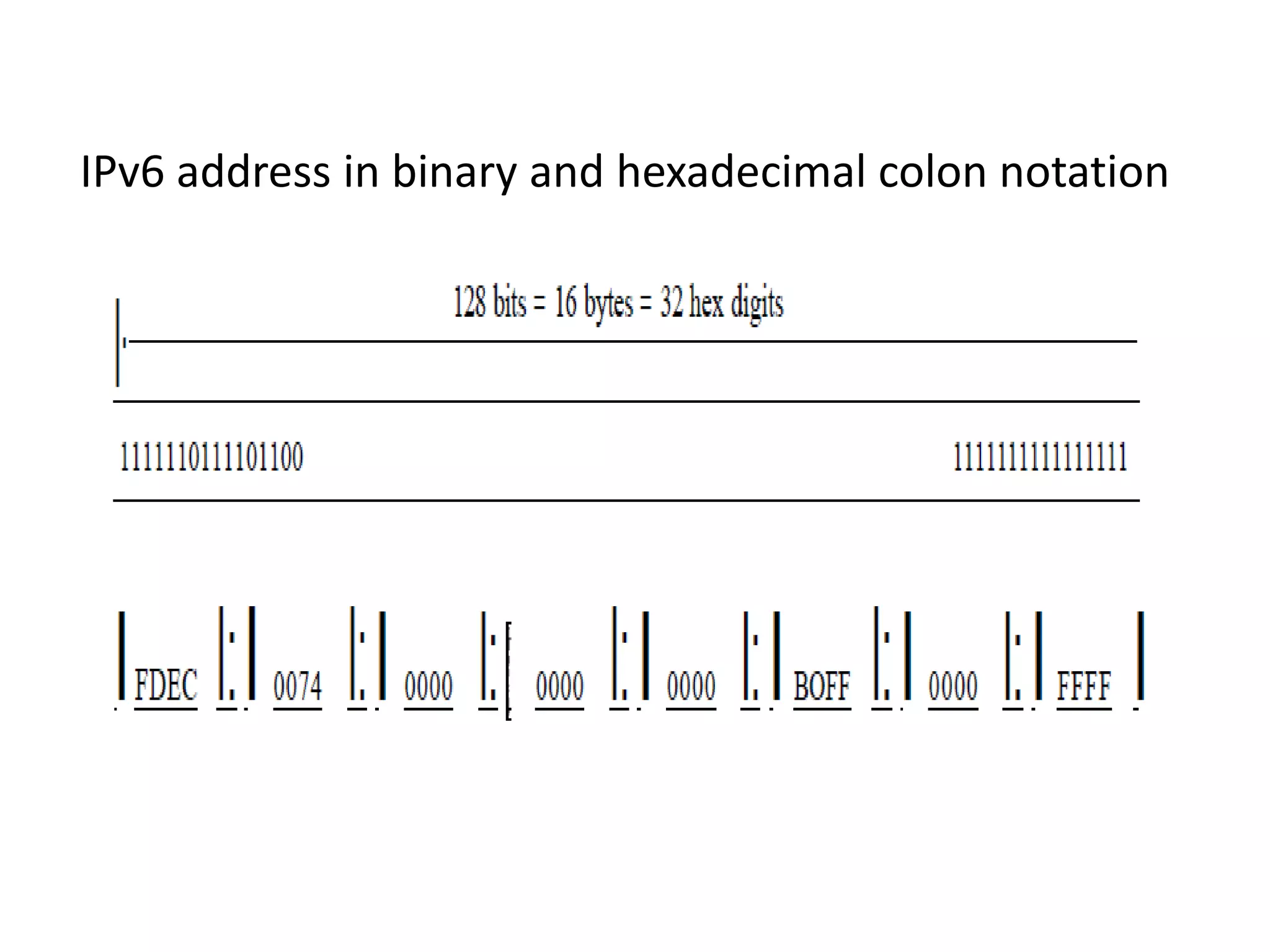
An IPv6 address consists of 16 bytes
(octets); it is 128 bits long
Hexadecimal Colon Notation
More readable
128 bit is divided into 8 sections ,each bytes in length
2 bytes in hexadecimal notation requires 4 hexadecimal digits
Address consists of 32 hexadecimal digits
Every 4 digits separated by a colon
IPv6 address in binary and hexadecimal colon notation
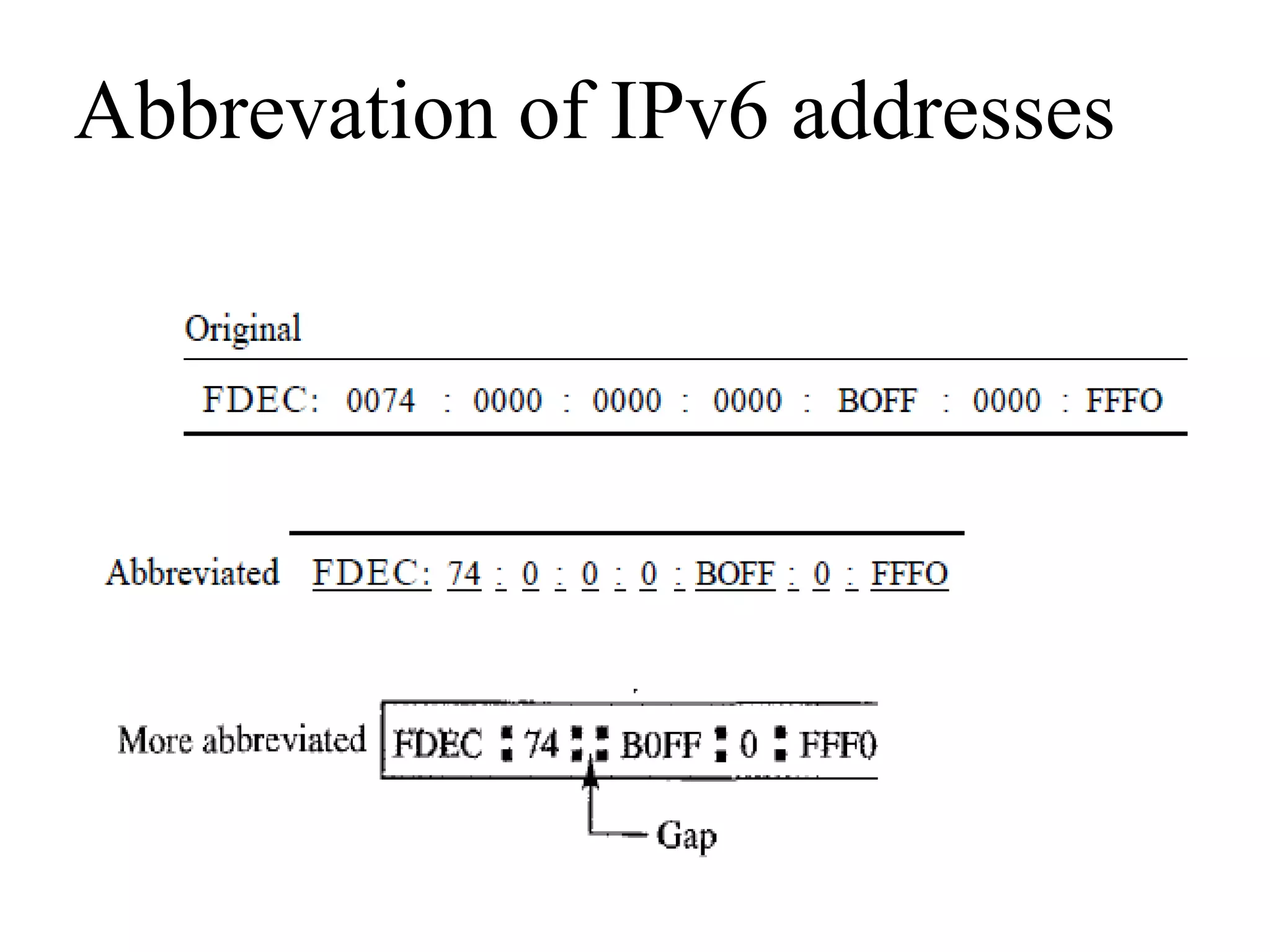
Abbreviation
•Hexadecimal format is very long.
•Many of the digits are zeros.
•Leading zeros of a section can be omitted.
•Only leading zeros can be dropped ,not the
trailing zeros.
Abbrevation of IPv6 addresses
IPv6 has a much larger address space .
The designers of IPv6 divided the
address into several categories.
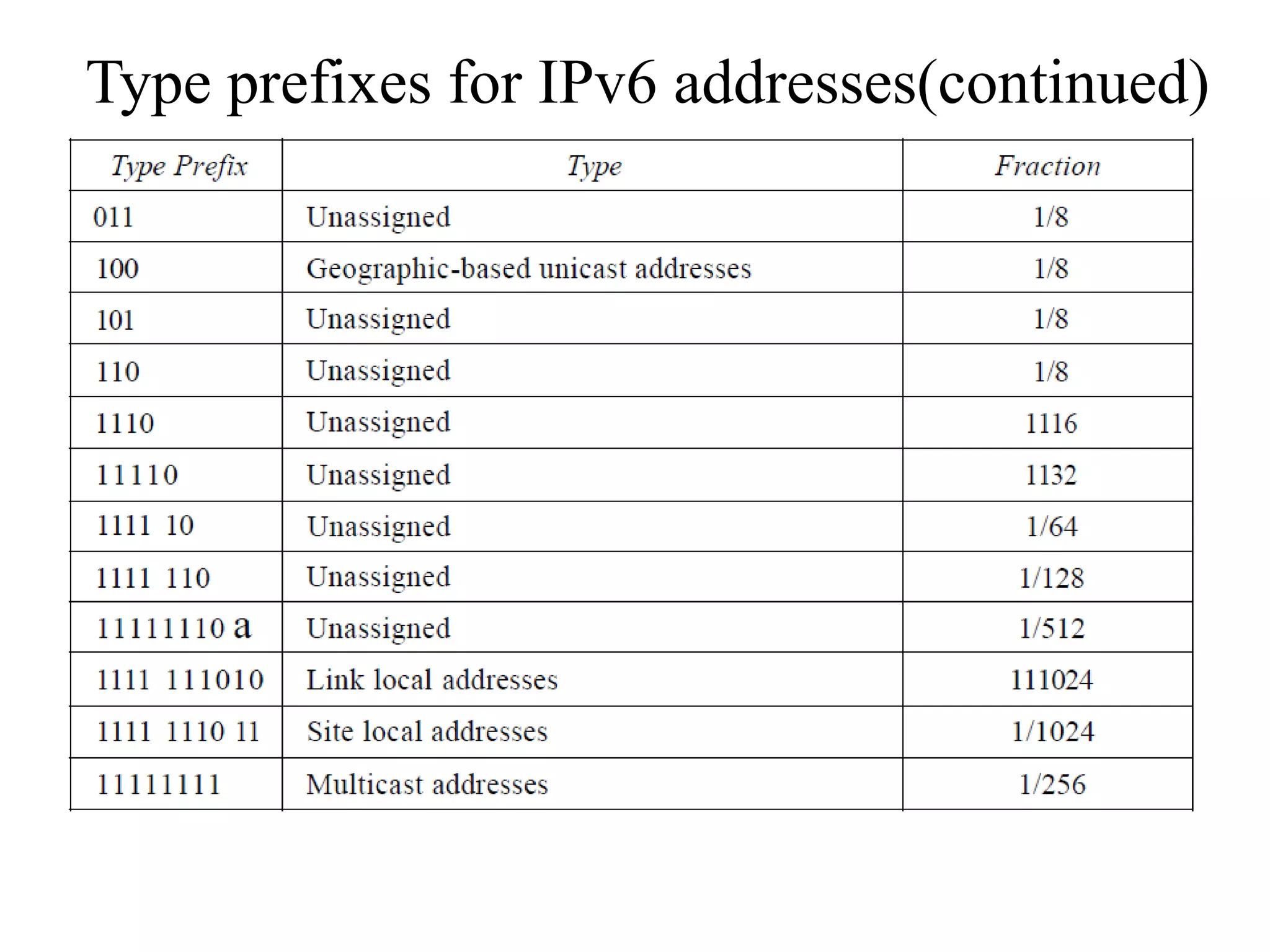
A few leftmost bits, called the type
prefix in each address define its category
Address Space
Type prefixes for IPv6 addresses
Type prefixes for IPv6 addresses(continued)
Types of IPv6 address
-Unicast Addresses
-Multicast Addresses
-Anycast Addresses
Unicast Addresses
A unicast address defines a single computer.
The packet sent to a unicast address must be
delivered to that specific computer.
IPv6 defines two types of unicast address:
Geo-graphically based
Provider-based
Unicast address
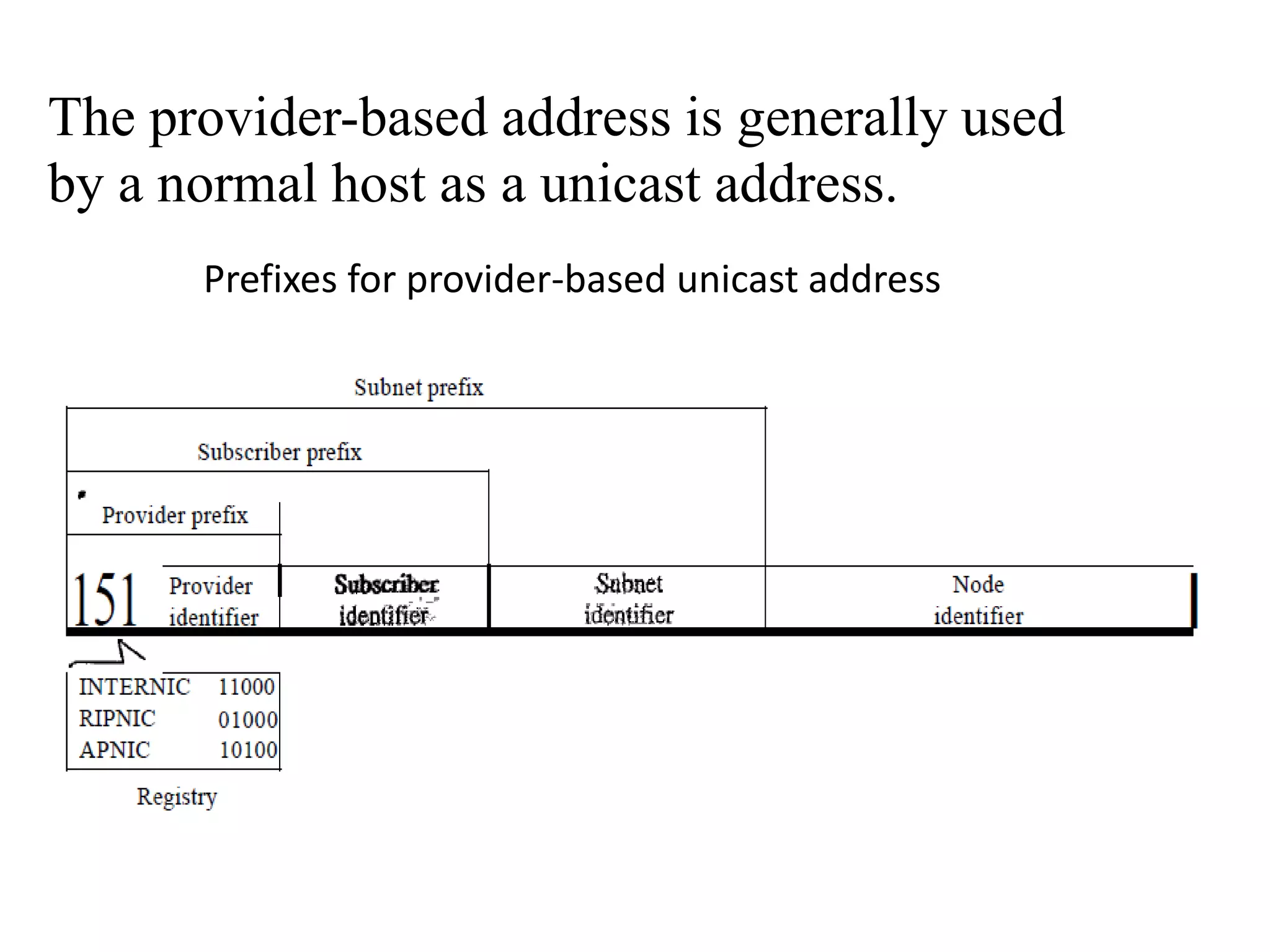
The provider-based address is generally used
by a normal host as a unicast address.
Prefixes for provider-based unicast address
Fields for the provider based are as
follows:
Type identifier:-
3 bit field
Address as the provider based address
Registry identifier:-
5 bit field
3 registry centers : INTERNIC ,RIPNIC
,APNIC
Provider identifier:-
16 bit field
(Continued….)
Subscriber identifier:-
24 bit field
when organization subscribes to the
internet through a provider ,it is assigned.
Subnet identifier:-
32 bit field
Defines a specific subnetwork under the
territory of the subscriber.
Node identifier:-
48 bit field
Defines the identity of the node
connected to a subnet
Multicast Addresses
Used to define a group of hosts instead of just
one.
Multicast address
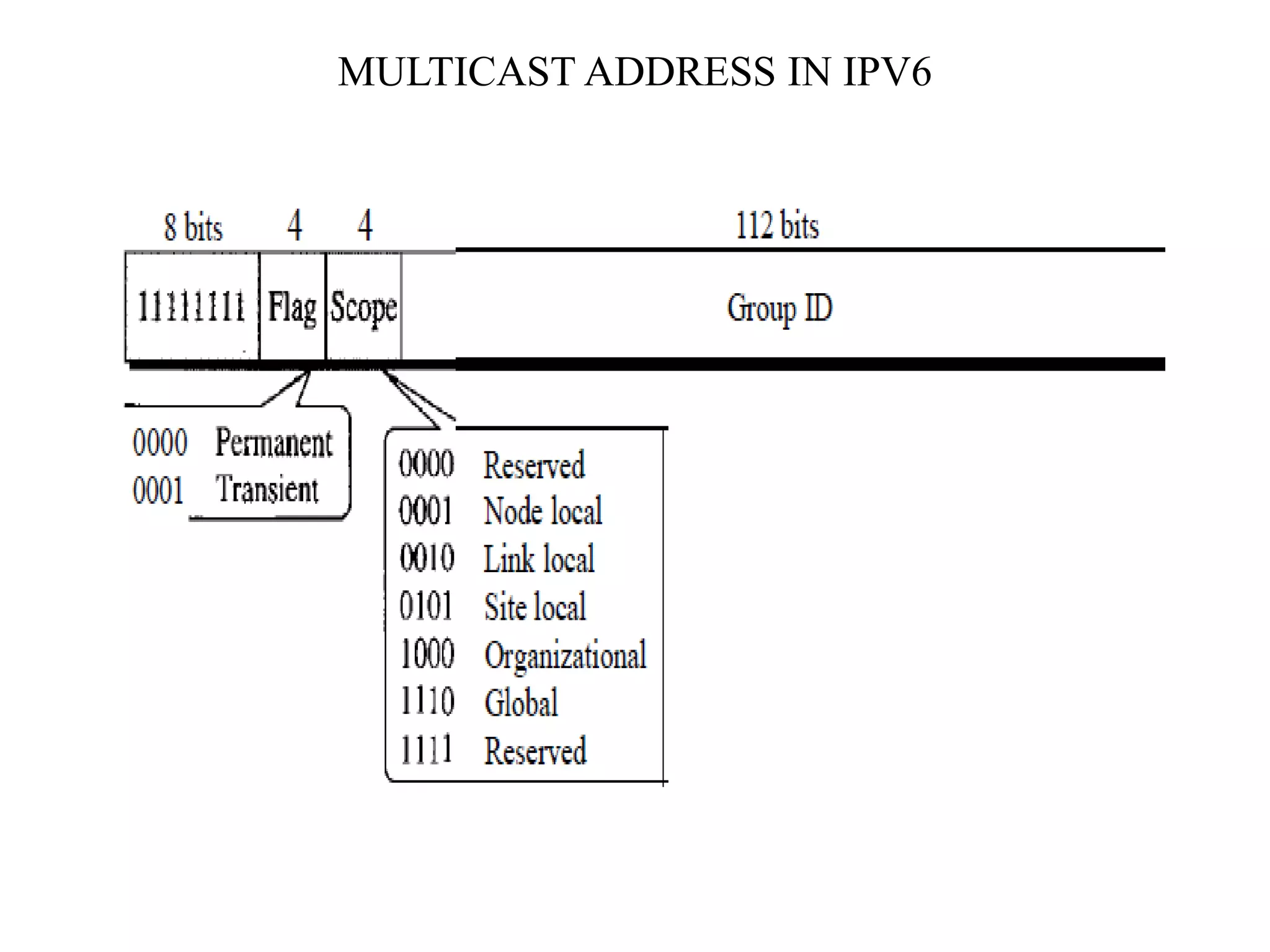
MULTICAST ADDRESS IN IPV6
A packet sent to a multicast address must be
delivered to each member of the group.
Second field is a flag that defines the group
address , either permanent or transient.
A permenent group address is defined by the
Internet authorities and can be accessed at all
times.
A transient group address, on the other hand is
used only temporarily.
Anycast Addresses
Address is delivered to only one of the members
of the anycast group,the nearest one .
One possible use is to assign an anycast address
to all routers of an ISP that covers a large logical
area in the internet.
The router outside the ISP deliver a packet
destined for the ISP to the nearest ISP router.
No block is assigned for anycast addresses.
Anycast address
Reserved Addresses
• It start with eight 0s (type prefix is 0000 0000).
Reserved addresses in IPv6
 An Unspecified address is used when a host
does not know its own address and sends an
inquiry to finds its address.
 A Loopback address is used by a host to test
itself without going into network.
A Compatible address is used during the
transition from IPv4 to IPv6.
A Mapped address is also used during the
transition.
Local Addresses
It is used when an organization wants to use
IPv6 protocol without being connected to the
global Internet.
They provide addressing for private network.
Local addresses in IPv6
A link local address is used in an isolated subnet.
A site local address is used in an isolated site with
several subnet.
FEATURES
•Larger Address Space
•No Broadcast
•Anycast Support
•Mobility
•Extensibility
THANK YOU

IPV6 ADDRESS

  • 1.
  • 2.
    IPv6 Addresses An InternetProtocol version 6 address (IPv6 address) is a numerical label that is used to identify a network interface of a computer or other network node participating in an IPv6 computer network.
  • 3.
    Structure An IPv6 addressconsists of 16 bytes (octets); it is 128 bits long Hexadecimal Colon Notation More readable 128 bit is divided into 8 sections ,each bytes in length 2 bytes in hexadecimal notation requires 4 hexadecimal digits Address consists of 32 hexadecimal digits Every 4 digits separated by a colon
  • 4.
    IPv6 address inbinary and hexadecimal colon notation
  • 5.
    Abbreviation •Hexadecimal format isvery long. •Many of the digits are zeros. •Leading zeros of a section can be omitted. •Only leading zeros can be dropped ,not the trailing zeros.
  • 6.
  • 7.
    IPv6 has amuch larger address space . The designers of IPv6 divided the address into several categories. A few leftmost bits, called the type prefix in each address define its category Address Space
  • 8.
    Type prefixes forIPv6 addresses
  • 9.
    Type prefixes forIPv6 addresses(continued)
  • 10.
    Types of IPv6address -Unicast Addresses -Multicast Addresses -Anycast Addresses
  • 11.
    Unicast Addresses A unicastaddress defines a single computer. The packet sent to a unicast address must be delivered to that specific computer. IPv6 defines two types of unicast address: Geo-graphically based Provider-based
  • 12.
  • 13.
    The provider-based addressis generally used by a normal host as a unicast address. Prefixes for provider-based unicast address
  • 14.
    Fields for theprovider based are as follows: Type identifier:- 3 bit field Address as the provider based address Registry identifier:- 5 bit field 3 registry centers : INTERNIC ,RIPNIC ,APNIC Provider identifier:- 16 bit field
  • 15.
    (Continued….) Subscriber identifier:- 24 bitfield when organization subscribes to the internet through a provider ,it is assigned. Subnet identifier:- 32 bit field Defines a specific subnetwork under the territory of the subscriber. Node identifier:- 48 bit field Defines the identity of the node connected to a subnet
  • 16.
    Multicast Addresses Used todefine a group of hosts instead of just one. Multicast address
  • 17.
  • 18.
    A packet sentto a multicast address must be delivered to each member of the group. Second field is a flag that defines the group address , either permanent or transient. A permenent group address is defined by the Internet authorities and can be accessed at all times. A transient group address, on the other hand is used only temporarily.
  • 19.
    Anycast Addresses Address isdelivered to only one of the members of the anycast group,the nearest one . One possible use is to assign an anycast address to all routers of an ISP that covers a large logical area in the internet. The router outside the ISP deliver a packet destined for the ISP to the nearest ISP router. No block is assigned for anycast addresses.
  • 20.
  • 21.
    Reserved Addresses • Itstart with eight 0s (type prefix is 0000 0000). Reserved addresses in IPv6
  • 22.
     An Unspecifiedaddress is used when a host does not know its own address and sends an inquiry to finds its address.  A Loopback address is used by a host to test itself without going into network. A Compatible address is used during the transition from IPv4 to IPv6. A Mapped address is also used during the transition.
  • 23.
    Local Addresses It isused when an organization wants to use IPv6 protocol without being connected to the global Internet. They provide addressing for private network.
  • 24.
    Local addresses inIPv6 A link local address is used in an isolated subnet. A site local address is used in an isolated site with several subnet.
  • 25.
    FEATURES •Larger Address Space •NoBroadcast •Anycast Support •Mobility •Extensibility
  • 26.