Mr. Manikandan.T,
RN., RM., M.Sc(N)., D.C.A .,(Ph.D)
Assistant Professor,
Dept. of Medical Surgical Nursing,
VMCON, Puducherry.
Administration of medication into muscle
• Faster rate of absorption
• Muscle tissue can hold large volume of fluid
• This is favorable for some medication
ADVANTAGES & DISADVANTAGES
Advantages:
• Reliable
• Absorption is rapid
Disadvantages:
• Painful & sometimes it causes abscess
• Chance of sciatic Nerve injury
• In case of some drugs absorption by IM route is
slower than oral (e.x) diazepam
• For some drugs IM route should be avoided (e.g)
heparin, diazepam
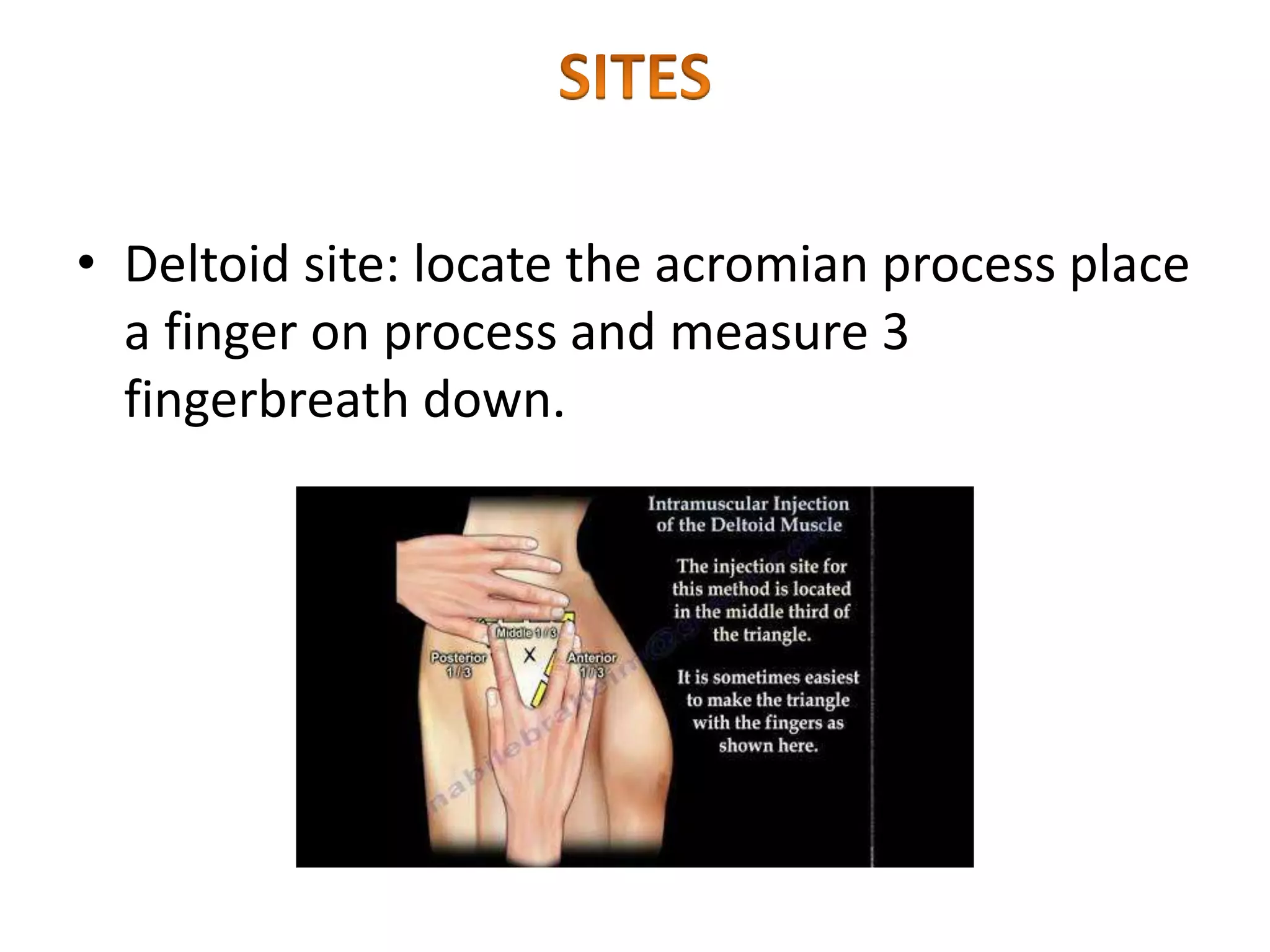
• Deltoid site: locate the acromian process place
a finger on process and measure 3
fingerbreath down.
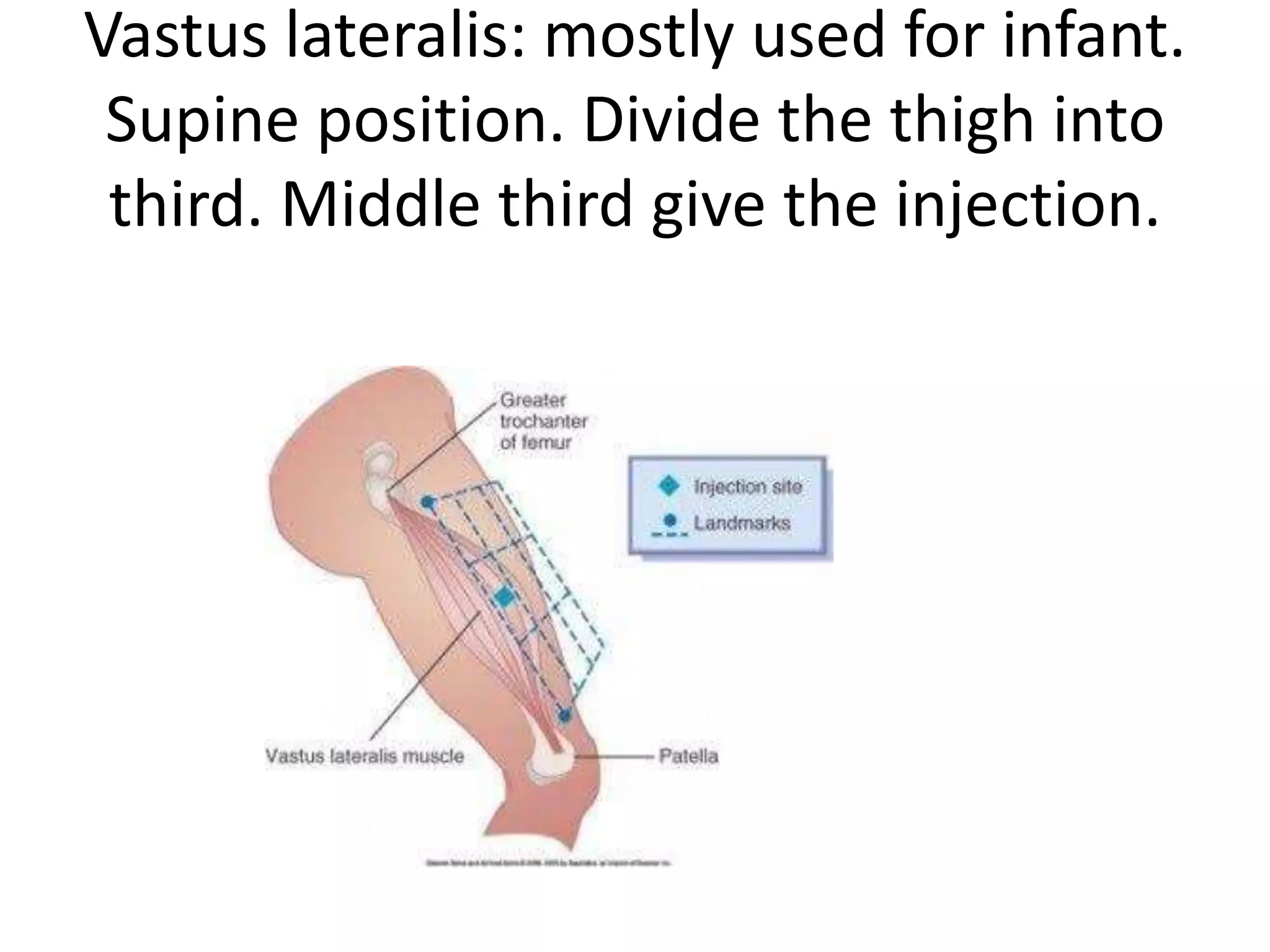
Vastus lateralis: mostly used for infant.
Supine position. Divide the thigh into
third. Middle third give the injection.
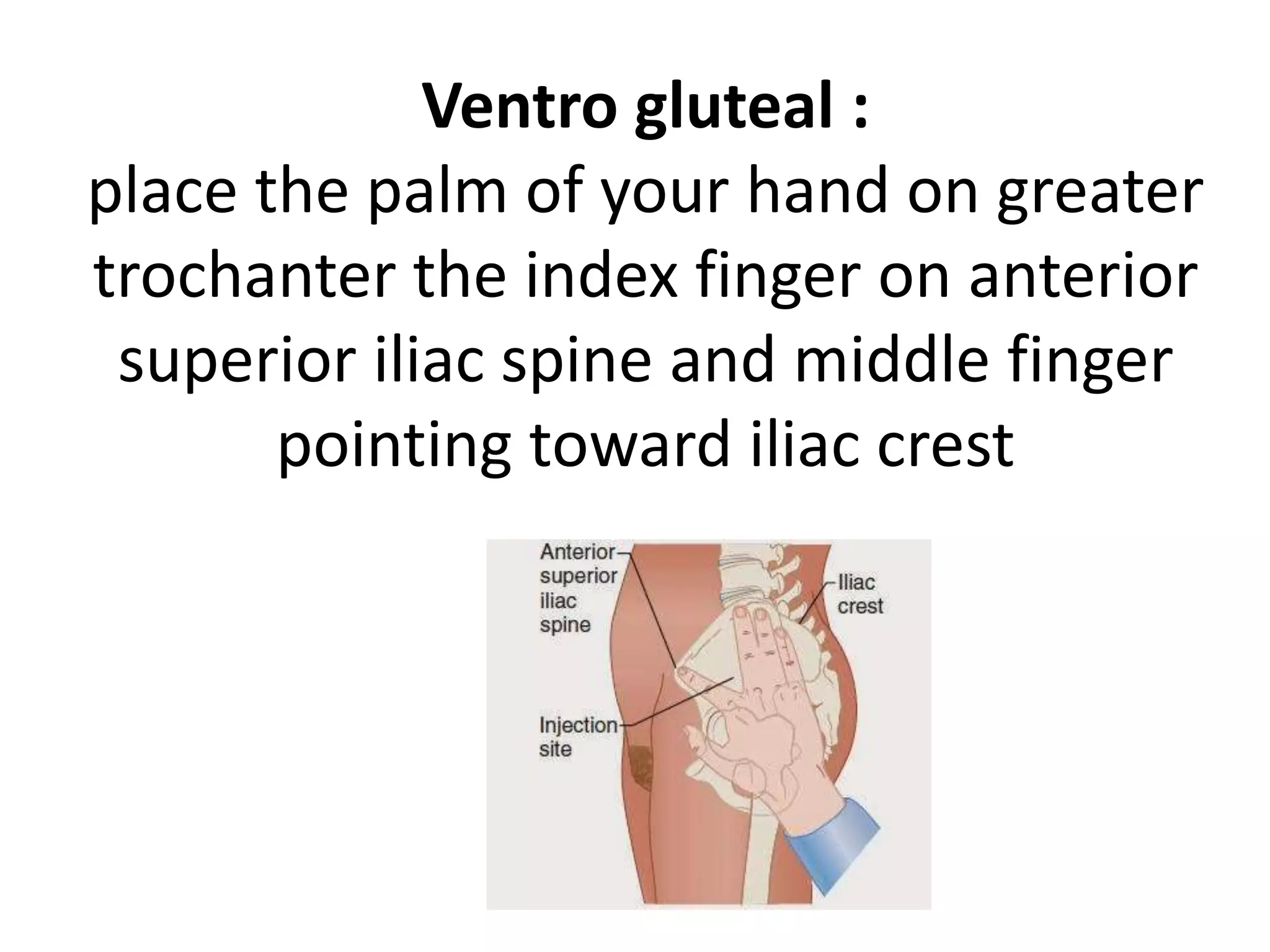
Ventro gluteal :
place the palm of your hand on greater
trochanter the index finger on anterior
superior iliac spine and middle finger
pointing toward iliac crest
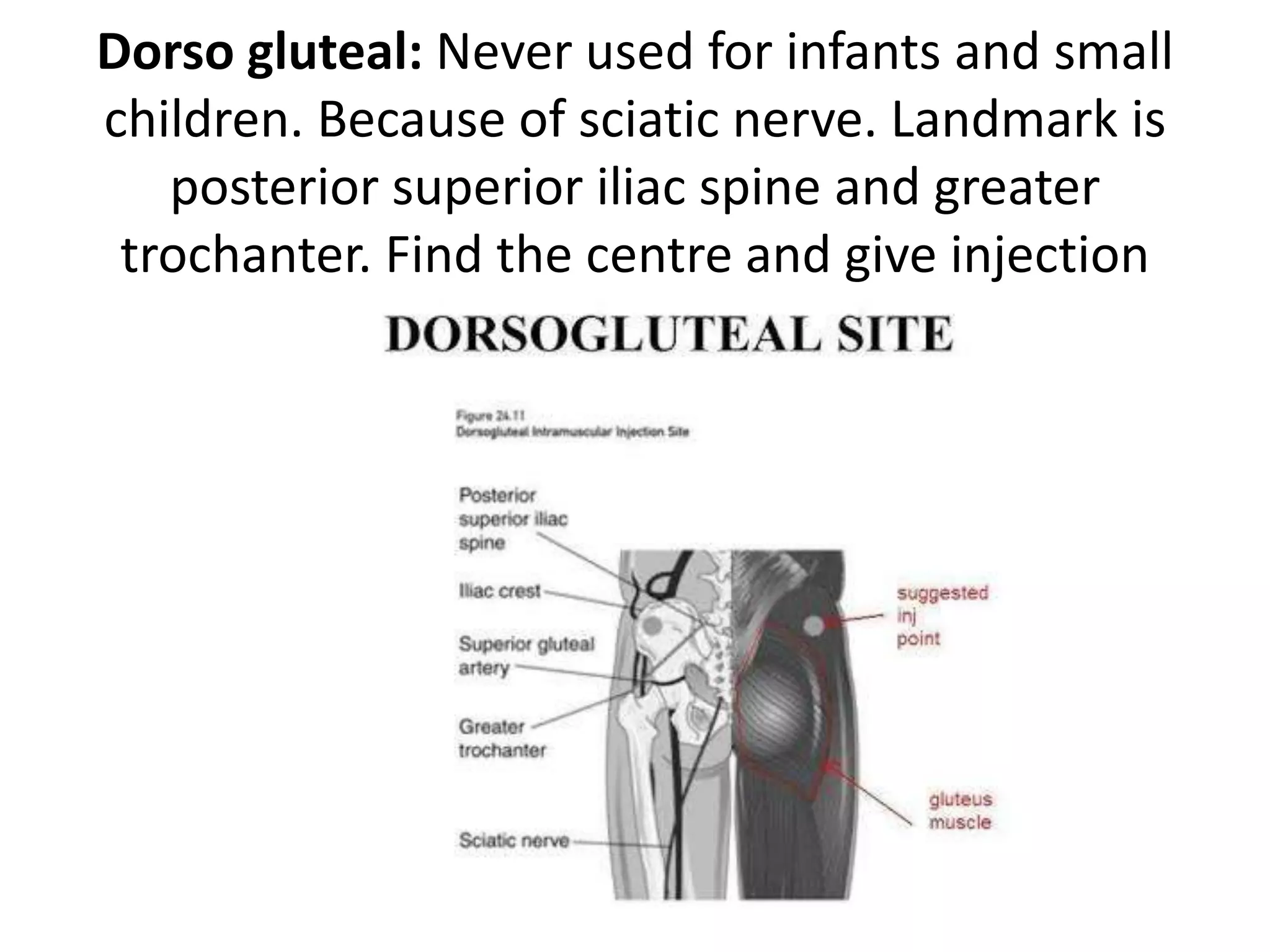
Dorso gluteal: Never used for infants and small
children. Because of sciatic nerve. Landmark is
posterior superior iliac spine and greater
trochanter. Find the centre and give injection
EQUIPMENT
• Medication record or card
• Pen
• Two alcohol swabs
• Disposable gloves
• Medication tray
• Medication to be administered
• 3-ml syringe with 1-, 1.5-, or 2-inch needle
(21,22, or 23 gauge)
PROCEDURE
• Wash hands.
• Prepare medication, adhering to the rights of
drug administration .
• Identify client by reading identification bracelet
and addressing client by name.
• Explain procedure and purpose of drug.
• Verify allergies listed on medication record or
card.
• Don gloves.
Cont.,
• Assist client into position for comfort and easy visibility
of injection site.
• Clean site with alcohol. Expel the air
• Remove needle cap.
• Pull skin taut at insertion area by using the following
sequence:
• Place thumb and index finger of non dominant hand
over injection site (taking care not to touch cleaned
area ) to form a V.
• Pull thumb and index finger in opposing directions,
spreading fingers about 3 inches apart.
Cont.,
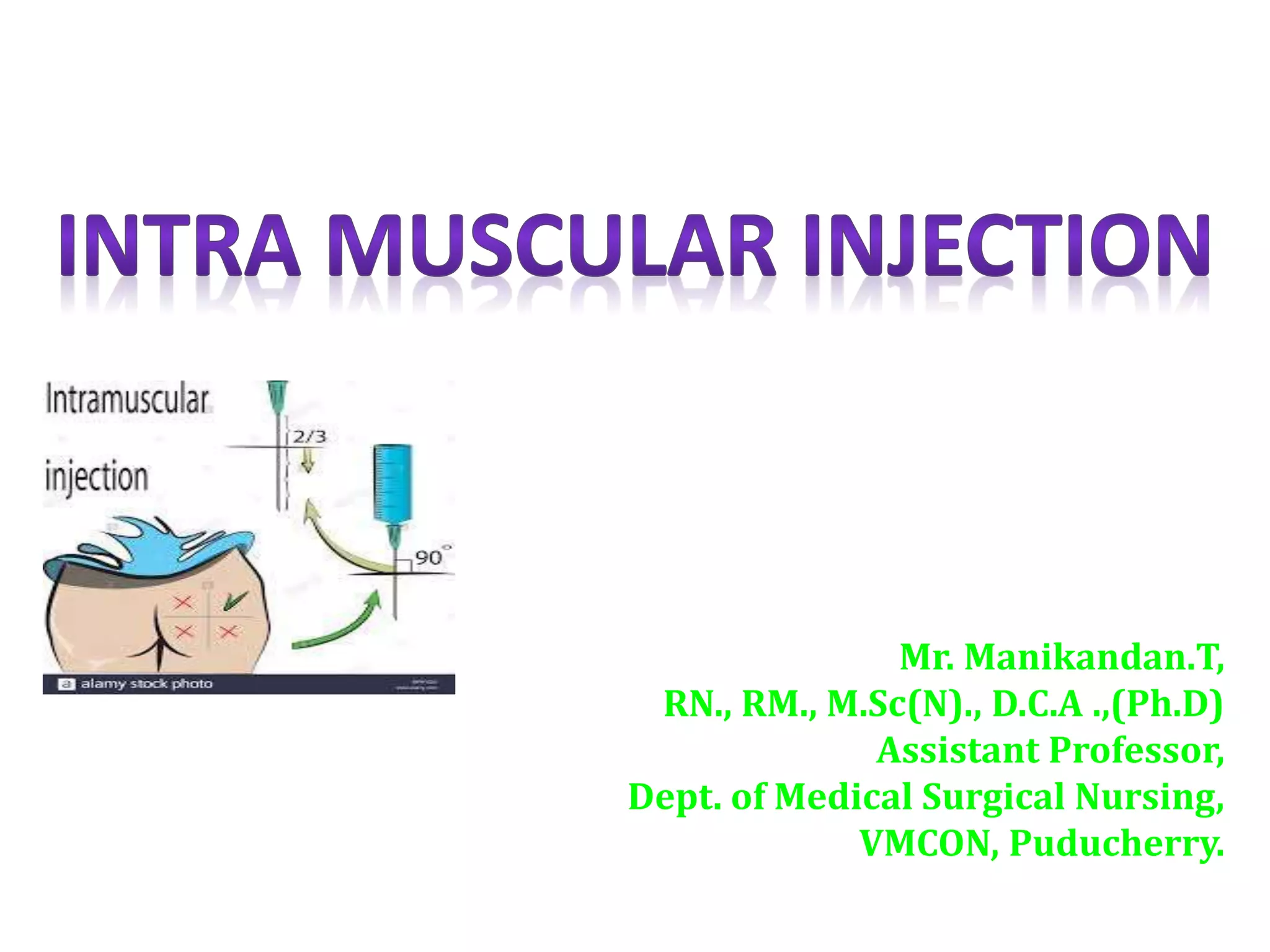
• Quickly insert needle at a 90-dgree angle with
dominant hand (as if throwing a dart).
• Move thumb and first finger of non dominant
hand from skin to support barrel of syringe;
fingers should be placed on barrel so that
when you can see the barrel clearly
• Pull back on plunger and observe for possible
blood return in syringe
Cont.,
• If blood does return when aspirating, pull the needle
out, apply pressure to the insertion site, Withdraw and
start over with a new needle, syringe, and injection site.
• If no blood returns, push plunger down slowly and
smoothly; encourage client to talk.
• Remove needle
• Quickly remove the needle at same angle as angle of
insertion from the skin and dispose of it in a puncture-
resistant container.
• Massage and clean insertion area with second alcohol
wipe (if contraindicated for drug, apply firm pressure
instead)
Cont.,
• Replace the articles
• Remove gloves. needle on tray; do not recap.
• Reposition client, raise side rails and place bed
in lowest position with call button within
reach.
• Wash hands.
• Document administration on medication
record.
Z track:
• Displacing the skin and subcutaneous tissue 1-
1.5 inches laterally prior to injection and
releasing the tissue immediately after
injection
Complications
• Abscess or collection of pus
• Tissue necrosis, or tissue death
• Granuloma, or inflammation in the tissue
• Muscle fibrosis, or scarring of muscle tissue
• Hematoma, where blood seeps out of blood vessels into the
surrounding tissue
• Injury to blood vessels and nerves
OTHER SYMPTOMS:
• Severe pain at the injection site
• Tingling or numbness
• Redness, swelling, or warmth at the injection site
• Drainage at the injection site
• Prolonged bleeding
• Signs of an allergic reaction, such as difficulty breathing or facial
swelling

Intra Muscular Injection

  • 1.
    Mr. Manikandan.T, RN., RM.,M.Sc(N)., D.C.A .,(Ph.D) Assistant Professor, Dept. of Medical Surgical Nursing, VMCON, Puducherry.
  • 2.
  • 3.
    • Faster rateof absorption • Muscle tissue can hold large volume of fluid • This is favorable for some medication
  • 4.
    ADVANTAGES & DISADVANTAGES Advantages: •Reliable • Absorption is rapid Disadvantages: • Painful & sometimes it causes abscess • Chance of sciatic Nerve injury • In case of some drugs absorption by IM route is slower than oral (e.x) diazepam • For some drugs IM route should be avoided (e.g) heparin, diazepam
  • 5.
    • Deltoid site:locate the acromian process place a finger on process and measure 3 fingerbreath down.
  • 6.
    Vastus lateralis: mostlyused for infant. Supine position. Divide the thigh into third. Middle third give the injection.
  • 7.
    Ventro gluteal : placethe palm of your hand on greater trochanter the index finger on anterior superior iliac spine and middle finger pointing toward iliac crest
  • 8.
    Dorso gluteal: Neverused for infants and small children. Because of sciatic nerve. Landmark is posterior superior iliac spine and greater trochanter. Find the centre and give injection
  • 9.
    EQUIPMENT • Medication recordor card • Pen • Two alcohol swabs • Disposable gloves • Medication tray • Medication to be administered • 3-ml syringe with 1-, 1.5-, or 2-inch needle (21,22, or 23 gauge)
  • 10.
    PROCEDURE • Wash hands. •Prepare medication, adhering to the rights of drug administration . • Identify client by reading identification bracelet and addressing client by name. • Explain procedure and purpose of drug. • Verify allergies listed on medication record or card. • Don gloves.
  • 11.
    Cont., • Assist clientinto position for comfort and easy visibility of injection site. • Clean site with alcohol. Expel the air • Remove needle cap. • Pull skin taut at insertion area by using the following sequence: • Place thumb and index finger of non dominant hand over injection site (taking care not to touch cleaned area ) to form a V. • Pull thumb and index finger in opposing directions, spreading fingers about 3 inches apart.
  • 12.
    Cont., • Quickly insertneedle at a 90-dgree angle with dominant hand (as if throwing a dart). • Move thumb and first finger of non dominant hand from skin to support barrel of syringe; fingers should be placed on barrel so that when you can see the barrel clearly • Pull back on plunger and observe for possible blood return in syringe
  • 13.
    Cont., • If blooddoes return when aspirating, pull the needle out, apply pressure to the insertion site, Withdraw and start over with a new needle, syringe, and injection site. • If no blood returns, push plunger down slowly and smoothly; encourage client to talk. • Remove needle • Quickly remove the needle at same angle as angle of insertion from the skin and dispose of it in a puncture- resistant container. • Massage and clean insertion area with second alcohol wipe (if contraindicated for drug, apply firm pressure instead)
  • 14.
    Cont., • Replace thearticles • Remove gloves. needle on tray; do not recap. • Reposition client, raise side rails and place bed in lowest position with call button within reach. • Wash hands. • Document administration on medication record.
  • 15.
    Z track: • Displacingthe skin and subcutaneous tissue 1- 1.5 inches laterally prior to injection and releasing the tissue immediately after injection
  • 16.
    Complications • Abscess orcollection of pus • Tissue necrosis, or tissue death • Granuloma, or inflammation in the tissue • Muscle fibrosis, or scarring of muscle tissue • Hematoma, where blood seeps out of blood vessels into the surrounding tissue • Injury to blood vessels and nerves OTHER SYMPTOMS: • Severe pain at the injection site • Tingling or numbness • Redness, swelling, or warmth at the injection site • Drainage at the injection site • Prolonged bleeding • Signs of an allergic reaction, such as difficulty breathing or facial swelling