Intradermal injections
BY,
MS. EKTA S PATEL
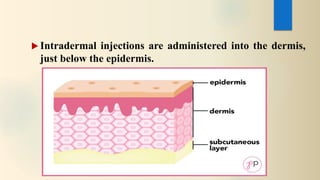
 Intradermal injections are administered into the dermis,
just below the epidermis.
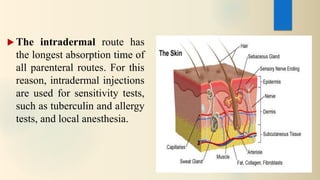
 The intradermal route has
the longest absorption time of
all parenteral routes. For this
reason, intradermal injections
are used for sensitivity tests,
such as tuberculin and allergy
tests, and local anesthesia.
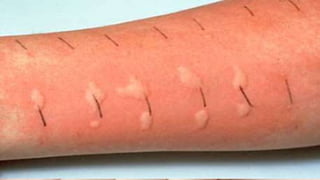
 The advantage of the intradermal route for these
tests is that the body’s reaction to substances is
easily visible, and degrees of reaction are
discernible by comparative study.
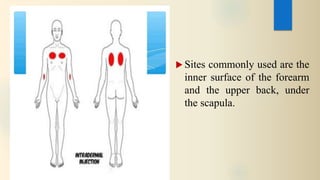
 Sites commonly used are the
inner surface of the forearm
and the upper back, under
the scapula.
 Equipment used for an intradermal injection
includes a tuberculin syringe calibrated in tenths
and hundredths of a milliliter and a 1⁄4- to 1⁄2-inch,
26- or 27-gauge needle.
 The dose given intradermally is small, usually less
than 0.5 mL.
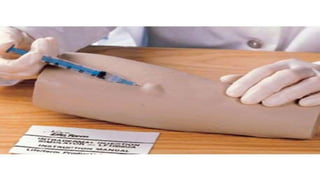
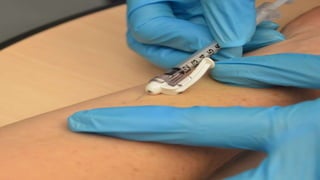
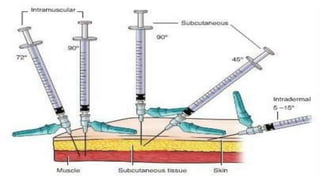
 The angle of administration for an intradermal
injection is 5 to 15 degrees
Equipments:
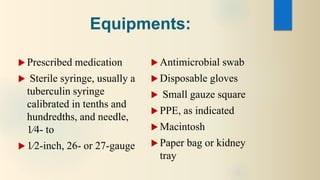
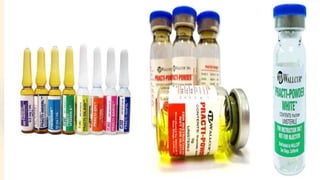
 Prescribed medication
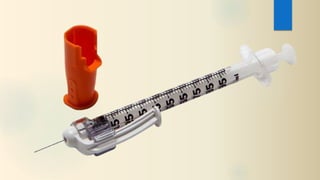
 Sterile syringe, usually a
tuberculin syringe
calibrated in tenths and
hundredths, and needle,
1⁄4- to
 1⁄2-inch, 26- or 27-gauge
 Antimicrobial swab
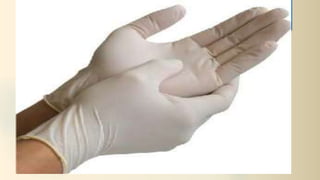
 Disposable gloves
 Small gauze square
 PPE, as indicated
 Macintosh
 Paper bag or kidney
tray
Assessment:
 Assess the patient for any allergies.
 Check expiration date before administering
medication.
 Assess the appropriateness of the drug for the
patient.
 Review assessment and laboratory data that may
influence drug administration.
 Assess the site on the patient where the injection is
to be given.
 Avoid areas of broken or open skin.
 Avoid areas that are highly pigmented, and those
that have lesions, bruises, or scars and are hairy.
 Assess the patient’s knowledge of the medication.
 This may provide an opportune time for patient
education.
 Verify the patient’s name, dose, route, and time of
administration.

Intradermal injections

  • 1.
  • 3.
     Intradermal injectionsare administered into the dermis, just below the epidermis.
  • 4.
     The intradermalroute has the longest absorption time of all parenteral routes. For this reason, intradermal injections are used for sensitivity tests, such as tuberculin and allergy tests, and local anesthesia.
  • 7.
     The advantageof the intradermal route for these tests is that the body’s reaction to substances is easily visible, and degrees of reaction are discernible by comparative study.
  • 8.
     Sites commonlyused are the inner surface of the forearm and the upper back, under the scapula.
  • 9.
     Equipment usedfor an intradermal injection includes a tuberculin syringe calibrated in tenths and hundredths of a milliliter and a 1⁄4- to 1⁄2-inch, 26- or 27-gauge needle.
  • 10.
     The dosegiven intradermally is small, usually less than 0.5 mL.
  • 11.
     The angleof administration for an intradermal injection is 5 to 15 degrees
  • 14.
    Equipments:  Prescribed medication Sterile syringe, usually a tuberculin syringe calibrated in tenths and hundredths, and needle, 1⁄4- to  1⁄2-inch, 26- or 27-gauge  Antimicrobial swab  Disposable gloves  Small gauze square  PPE, as indicated  Macintosh  Paper bag or kidney tray
  • 21.
    Assessment:  Assess thepatient for any allergies.  Check expiration date before administering medication.  Assess the appropriateness of the drug for the patient.
  • 22.
     Review assessmentand laboratory data that may influence drug administration.  Assess the site on the patient where the injection is to be given.  Avoid areas of broken or open skin.
  • 23.
     Avoid areasthat are highly pigmented, and those that have lesions, bruises, or scars and are hairy.  Assess the patient’s knowledge of the medication.  This may provide an opportune time for patient education.  Verify the patient’s name, dose, route, and time of administration.