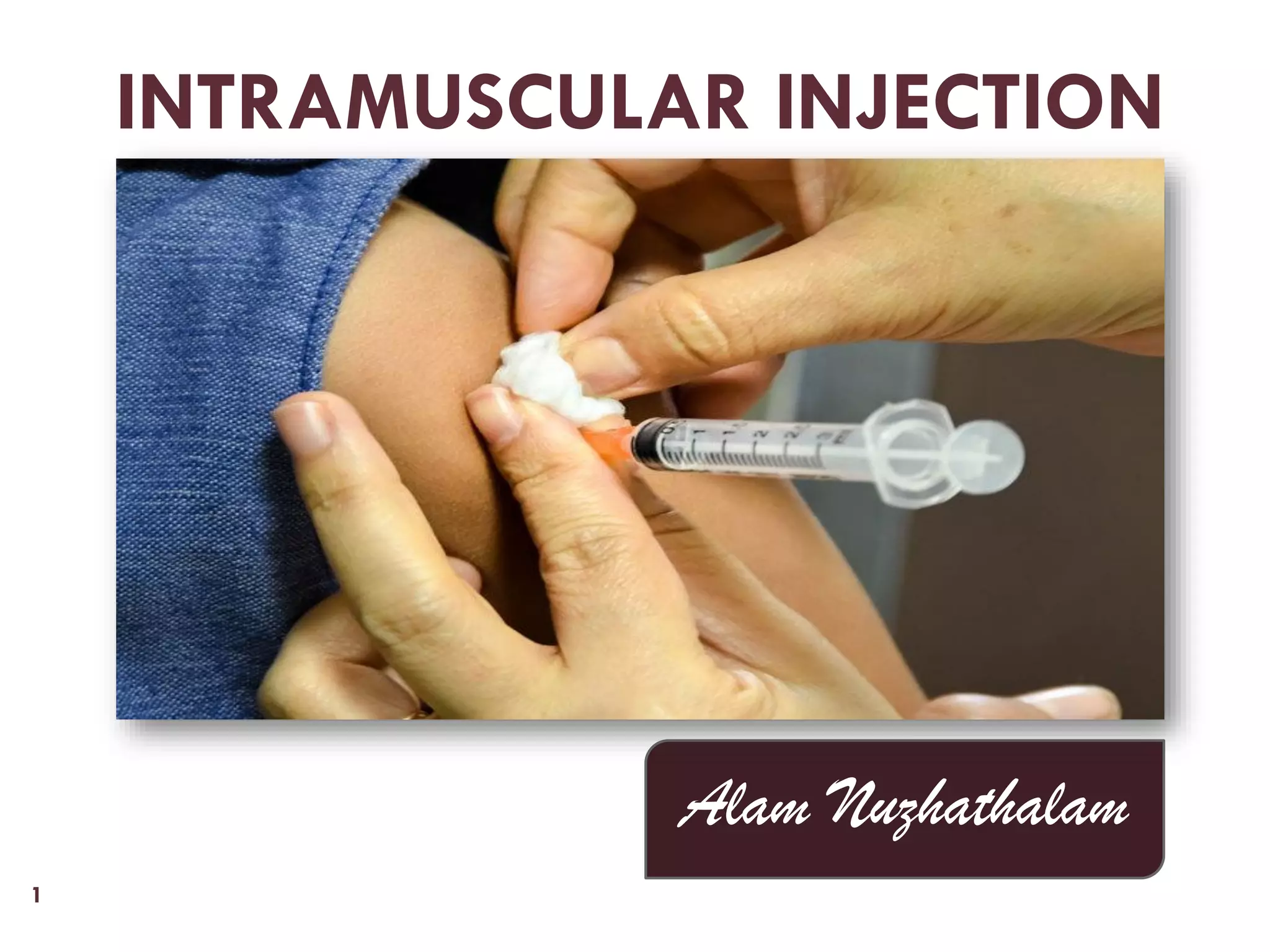

INTRAMUSCULAR INJECTION
1
Alam Nuzhathalam
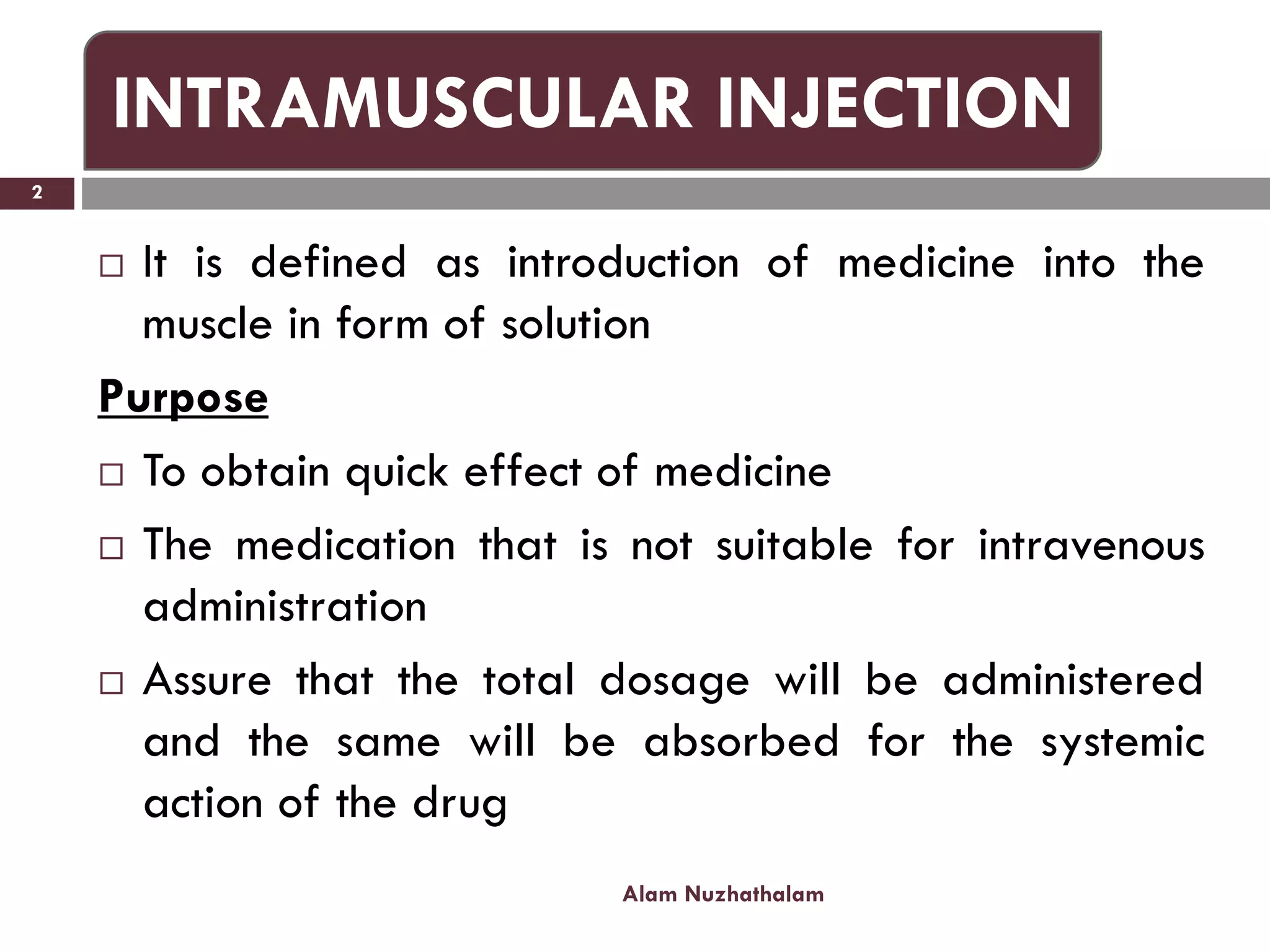
 It is defined as introduction of medicine into the
muscle in form of solution
Purpose
 To obtain quick effect of medicine
 The medication that is not suitable for intravenous
administration
 Assure that the total dosage will be administered
and the same will be absorbed for the systemic
action of the drug
Alam Nuzhathalam
2
INTRAMUSCULAR INJECTION
Alam Nuzhathalam
3
INJECTION TECHNIQUE
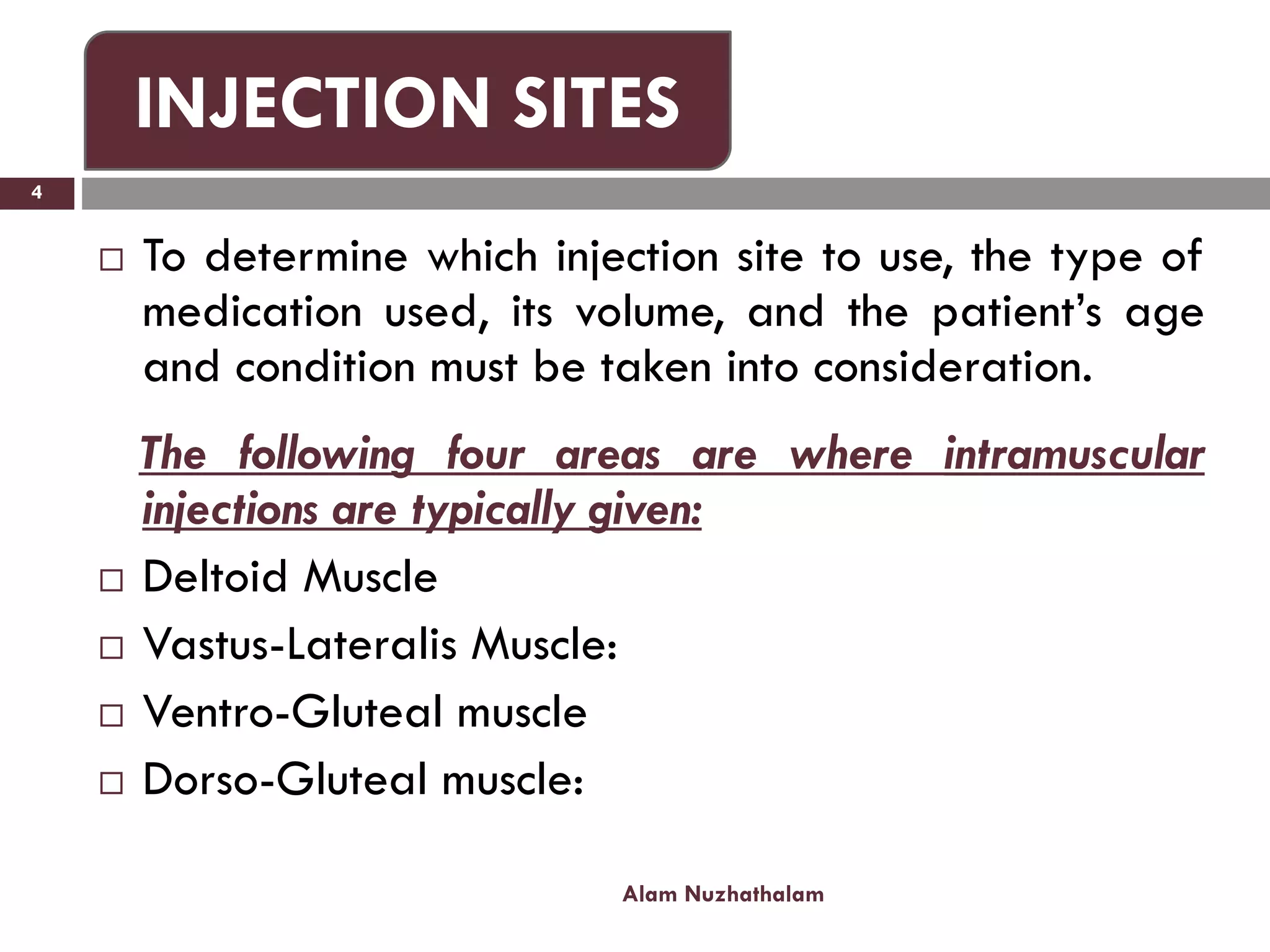
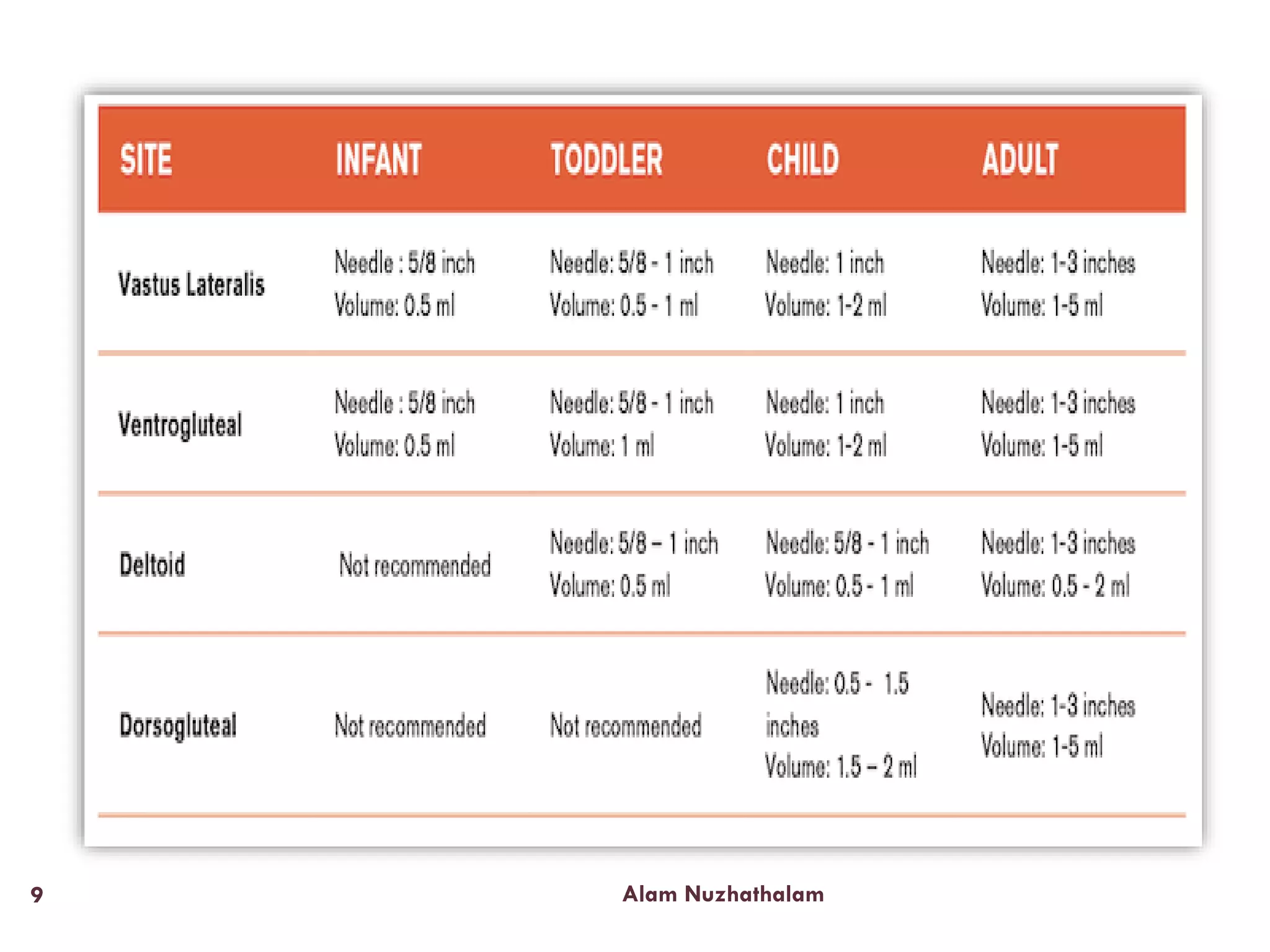
 To determine which injection site to use, the type of
medication used, its volume, and the patient’s age
and condition must be taken into consideration.
The following four areas are where intramuscular
injections are typically given:
 Deltoid Muscle
 Vastus-Lateralis Muscle:
 Ventro-Gluteal muscle
 Dorso-Gluteal muscle:
Alam Nuzhathalam
4
INJECTION SITES
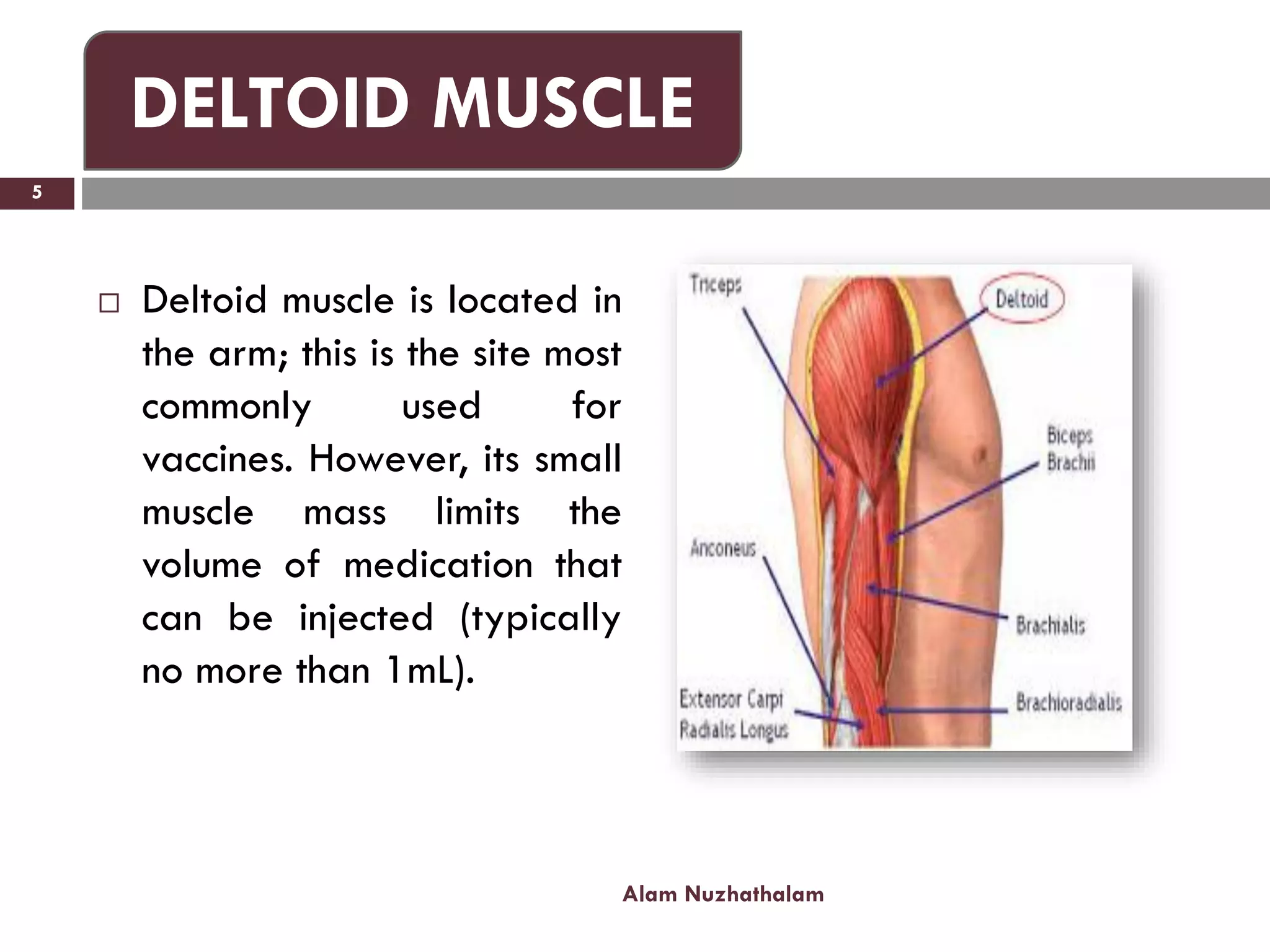
 Deltoid muscle is located in
the arm; this is the site most
commonly used for
vaccines. However, its small
muscle mass limits the
volume of medication that
can be injected (typically
no more than 1mL).
Alam Nuzhathalam
5
DELTOID MUSCLE
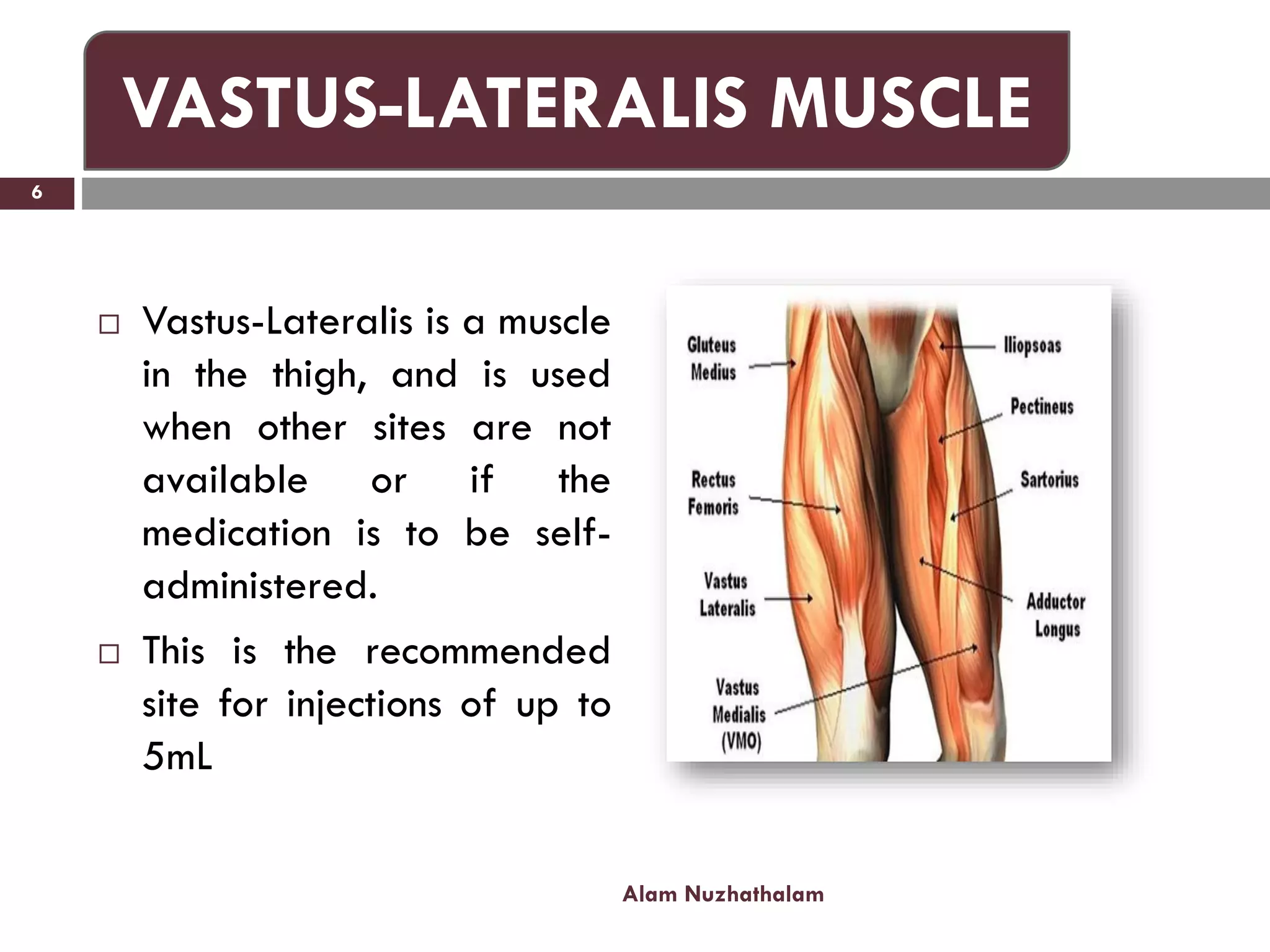
 Vastus-Lateralis is a muscle
in the thigh, and is used
when other sites are not
available or if the
medication is to be self-
administered.
 This is the recommended
site for injections of up to
5mL
Alam Nuzhathalam
6
VASTUS-LATERALIS MUSCLE
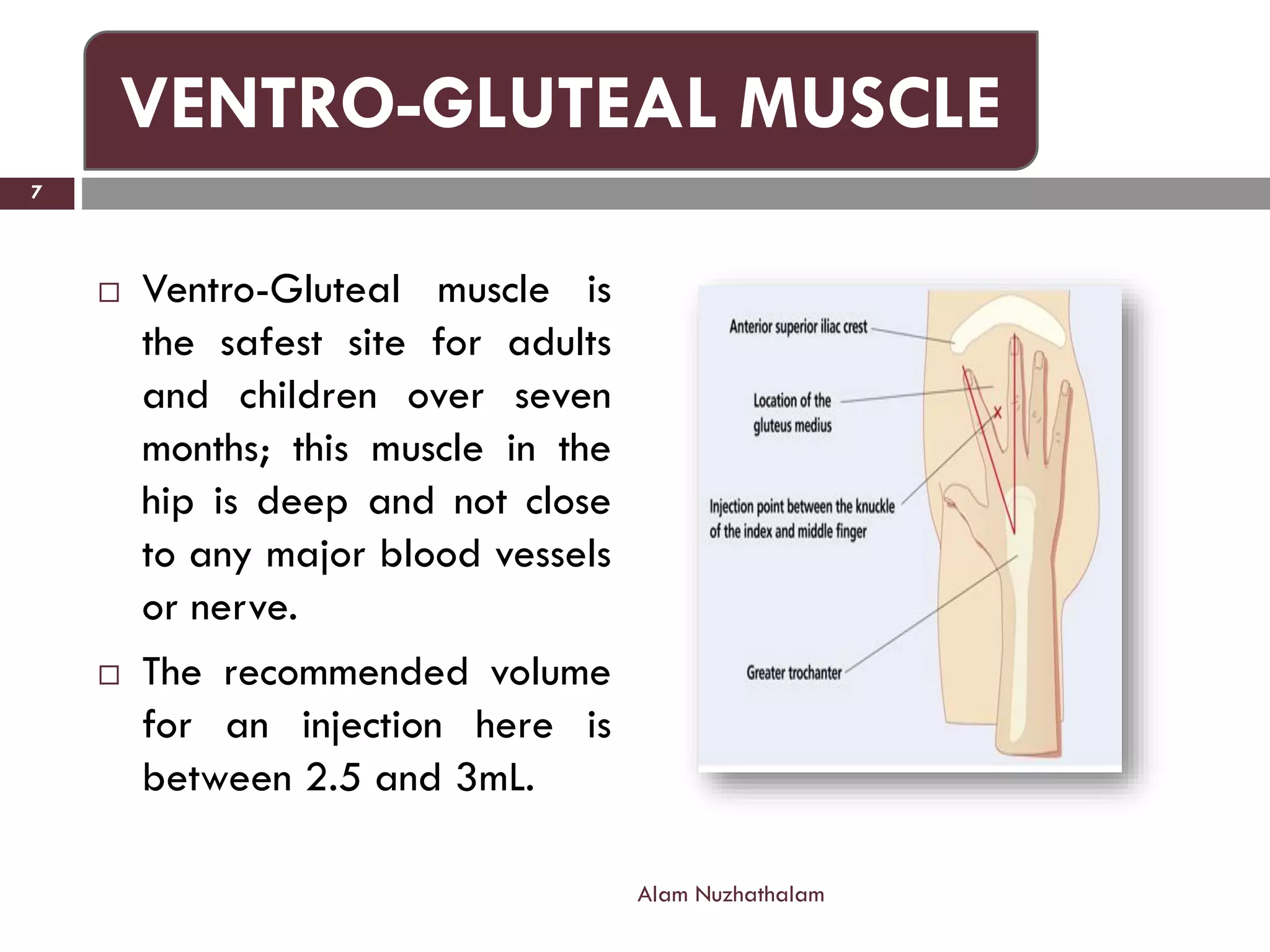
 Ventro-Gluteal muscle is
the safest site for adults
and children over seven
months; this muscle in the
hip is deep and not close
to any major blood vessels
or nerve.
 The recommended volume
for an injection here is
between 2.5 and 3mL.
Alam Nuzhathalam
7
VENTRO-GLUTEAL MUSCLE
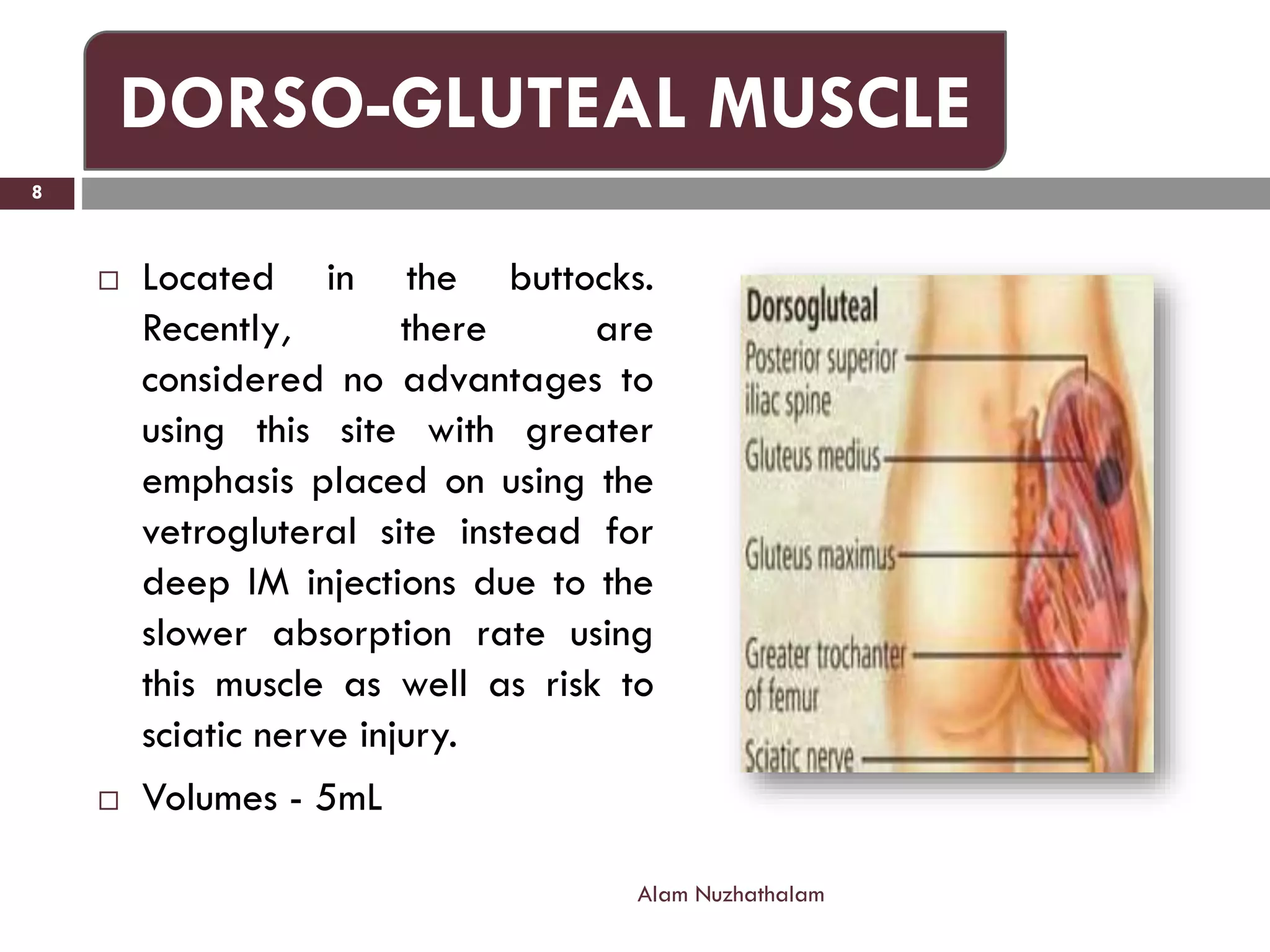
 Located in the buttocks.
Recently, there are
considered no advantages to
using this site with greater
emphasis placed on using the
vetrogluteral site instead for
deep IM injections due to the
slower absorption rate using
this muscle as well as risk to
sciatic nerve injury.
 Volumes - 5mL
Alam Nuzhathalam
8
DORSO-GLUTEAL MUSCLE
Alam Nuzhathalam
9
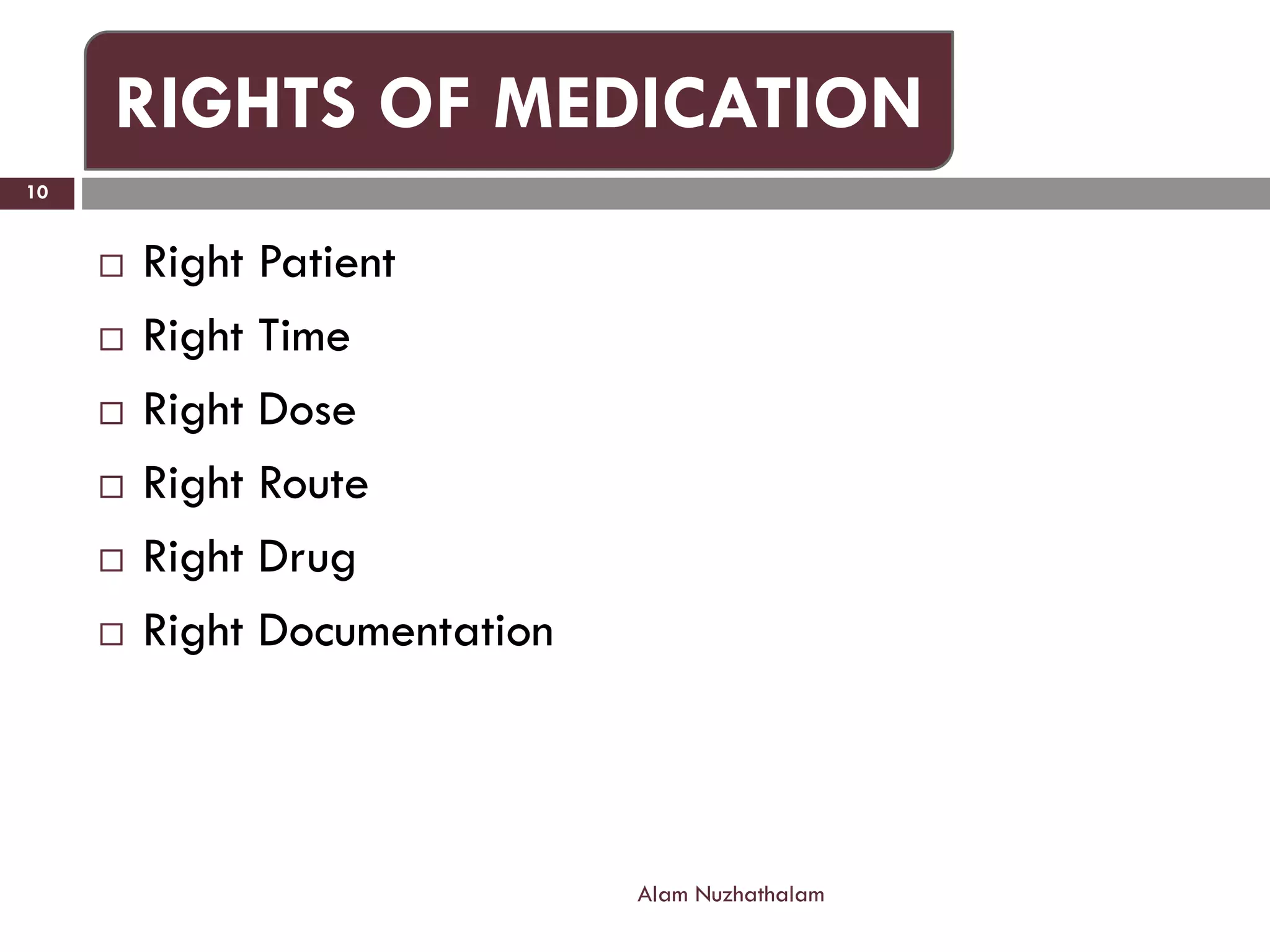
 Right Patient
 Right Time
 Right Dose
 Right Route
 Right Drug
 Right Documentation
Alam Nuzhathalam
10
RIGHTS OF MEDICATION
Alam Nuzhathalam
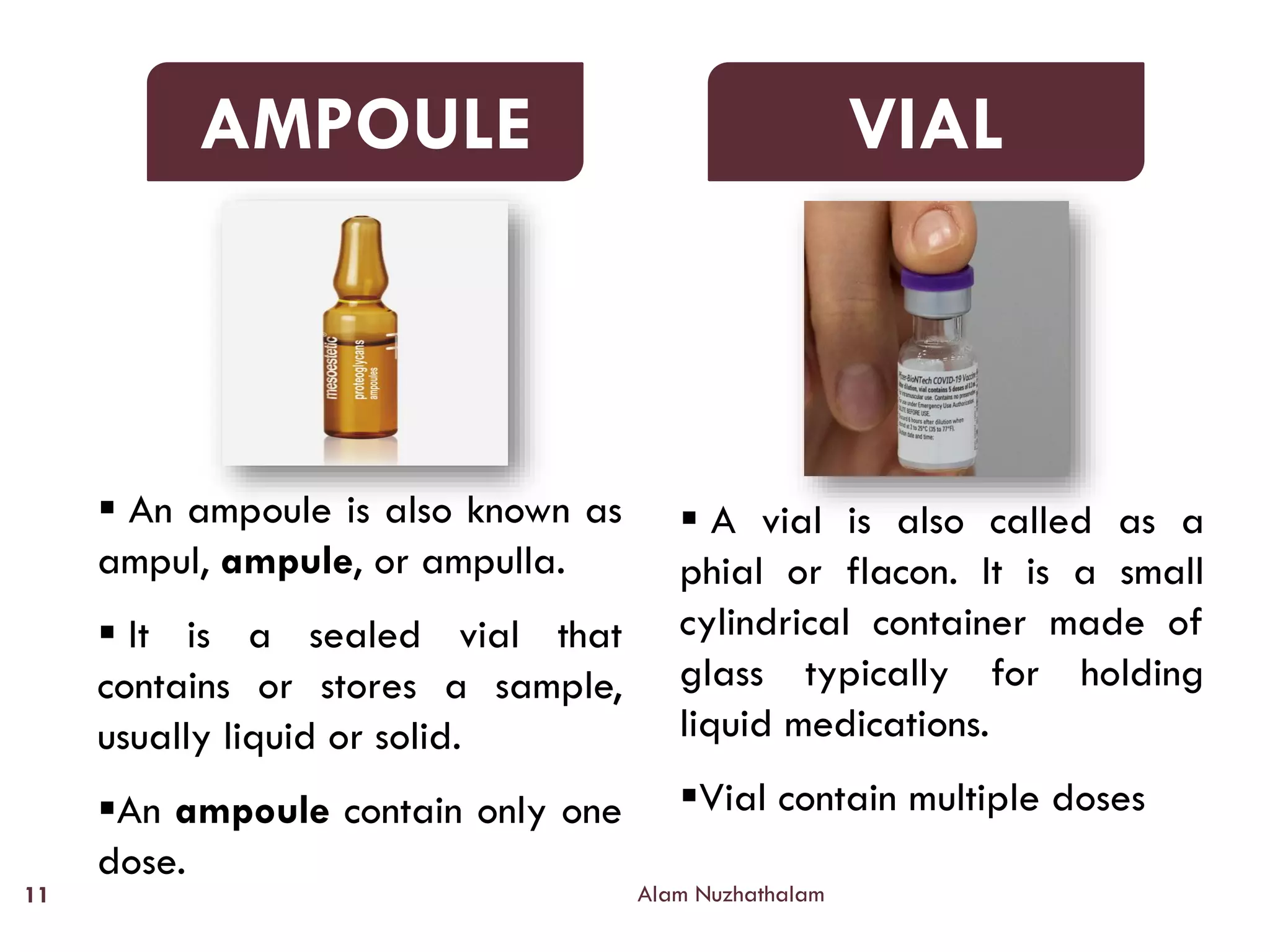
AMPOULE VIAL
▪ An ampoule is also known as
ampul, ampule, or ampulla.
▪ It is a sealed vial that
contains or stores a sample,
usually liquid or solid.
▪An ampoule contain only one
dose.
▪ A vial is also called as a
phial or flacon. It is a small
cylindrical container made of
glass typically for holding
liquid medications.
▪Vial contain multiple doses
11
 The Z track method is a technique for intramuscular injections
that helps to keep the medication in the muscle. Learn more
about the purpose of the test as well as what to expect
before, during, and after the procedure.
Purpose of Test
 The idea behind the Z track method of IM injections is to put
medications into the muscle tissue and not allow them to leak
(track) back into the subcutaneous tissue layer over the muscle.
 The Z Track method is only used for intramuscular injections,
and not other types of injections. The type and amount of
medication given will help determine the length and gauge of
the needle as well as the proper location of the injection.
Alam Nuzhathalam
12
Z-TRACK METHOD
A tray containing
 Syringe and needle
 Sterile cotton swabs and gauze pieces in sterile
container
 Methylated spirit in a container
 Bowl with water
 Kidney tray and paper bag
 Drug order sheet
 Ampoule Cutter
 Small covered tray to carry the prepared injection to
the bed side
Alam Nuzhathalam
13
EQUIPMENT
 Identify the patient correctly
 Explain the procedure to the patient
 Provide privacy
 Keep the patient attention away from the injection
by friendly conversation
 Place the patient in comfortable and relaxed
position
 Select a suitable site for the route of administration
Alam Nuzhathalam
14
PREPARATION
 Select the medication
 Wash hands
 Prepare the medication
 Keep the syringe with medication in the sterile tray
and cover it
 Make sure that the medication taken right and
correct dosage
 Carry medication to the patient in sterile tray
Alam Nuzhathalam
15
PROCEDURE
 Identify the right patient
 Prepare the site of injection
 Inject the medication by correct technique
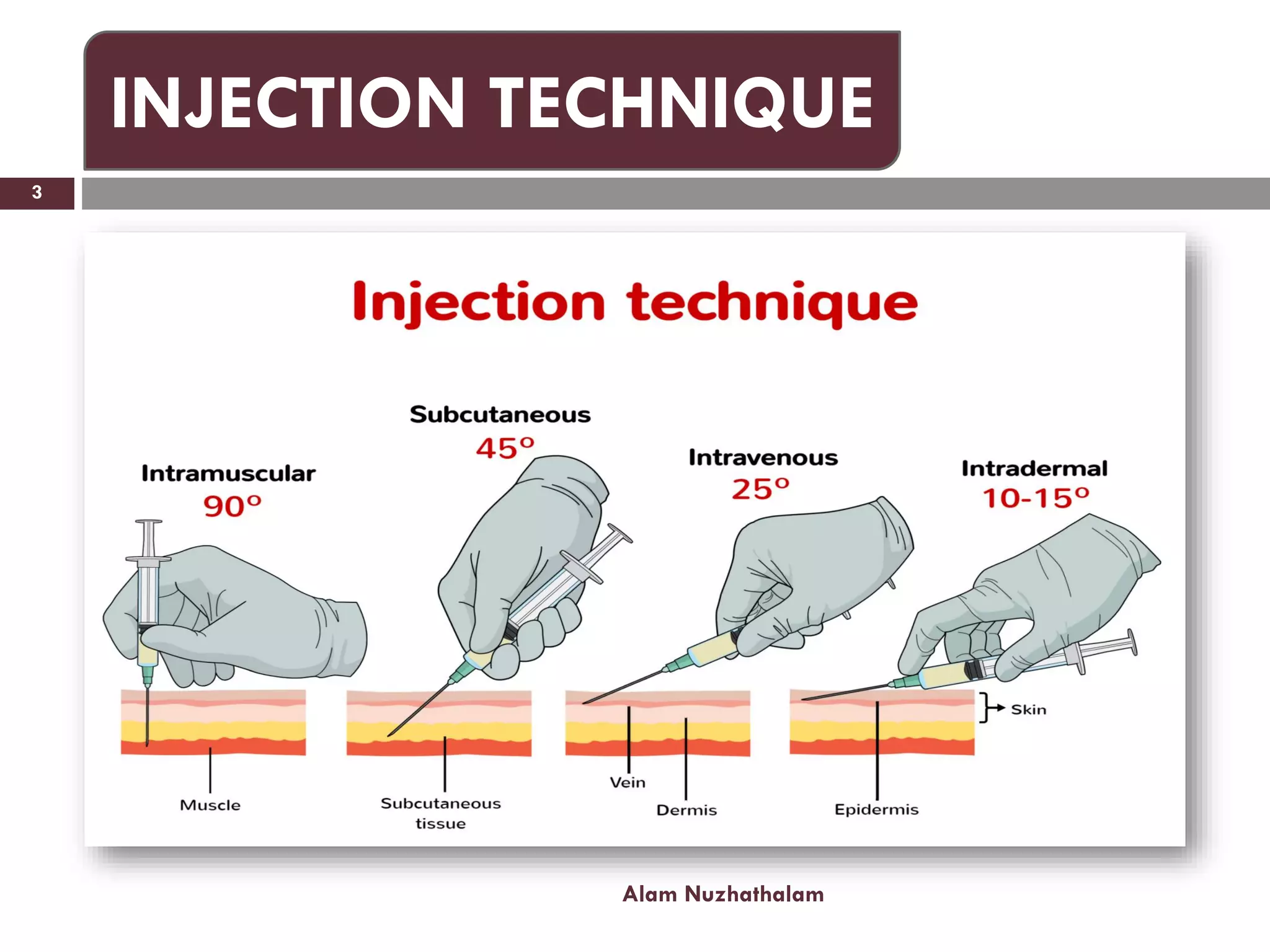
 Needle is inserted at a 90O
 If no blood comes give the medication slowly
 Remove the needle gently
Alam Nuzhathalam
16
Cont....
 Inspect the area for bleeding
 Help the patient to dress up
 Ask the patient to take rest for 15 mins
 Check the limb movements
 Watch for signs and symptoms
 Replace the equipments
 Hand wash
 Record the procedure
Alam Nuzhathalam
17
AFTER CARE
Check
 Doctors order
 Purpose of injection
 Patient details
 Diagnosis and age of the patient
 Allergic reactions
 Site of injection
 Patients previous experience
Alam Nuzhathalam
18
NURSES RESPONSIBILITY
Alam Nuzhathalam
19
Thank You

Intramuscular Injection or IM Injection

  • 1.
  • 2.
     It isdefined as introduction of medicine into the muscle in form of solution Purpose  To obtain quick effect of medicine  The medication that is not suitable for intravenous administration  Assure that the total dosage will be administered and the same will be absorbed for the systemic action of the drug Alam Nuzhathalam 2 INTRAMUSCULAR INJECTION
  • 3.
  • 4.
     To determinewhich injection site to use, the type of medication used, its volume, and the patient’s age and condition must be taken into consideration. The following four areas are where intramuscular injections are typically given:  Deltoid Muscle  Vastus-Lateralis Muscle:  Ventro-Gluteal muscle  Dorso-Gluteal muscle: Alam Nuzhathalam 4 INJECTION SITES
  • 5.
     Deltoid muscleis located in the arm; this is the site most commonly used for vaccines. However, its small muscle mass limits the volume of medication that can be injected (typically no more than 1mL). Alam Nuzhathalam 5 DELTOID MUSCLE
  • 6.
     Vastus-Lateralis isa muscle in the thigh, and is used when other sites are not available or if the medication is to be self- administered.  This is the recommended site for injections of up to 5mL Alam Nuzhathalam 6 VASTUS-LATERALIS MUSCLE
  • 7.
     Ventro-Gluteal muscleis the safest site for adults and children over seven months; this muscle in the hip is deep and not close to any major blood vessels or nerve.  The recommended volume for an injection here is between 2.5 and 3mL. Alam Nuzhathalam 7 VENTRO-GLUTEAL MUSCLE
  • 8.
     Located inthe buttocks. Recently, there are considered no advantages to using this site with greater emphasis placed on using the vetrogluteral site instead for deep IM injections due to the slower absorption rate using this muscle as well as risk to sciatic nerve injury.  Volumes - 5mL Alam Nuzhathalam 8 DORSO-GLUTEAL MUSCLE
  • 9.
  • 10.
     Right Patient Right Time  Right Dose  Right Route  Right Drug  Right Documentation Alam Nuzhathalam 10 RIGHTS OF MEDICATION
  • 11.
    Alam Nuzhathalam AMPOULE VIAL ▪An ampoule is also known as ampul, ampule, or ampulla. ▪ It is a sealed vial that contains or stores a sample, usually liquid or solid. ▪An ampoule contain only one dose. ▪ A vial is also called as a phial or flacon. It is a small cylindrical container made of glass typically for holding liquid medications. ▪Vial contain multiple doses 11
  • 12.
     The Ztrack method is a technique for intramuscular injections that helps to keep the medication in the muscle. Learn more about the purpose of the test as well as what to expect before, during, and after the procedure. Purpose of Test  The idea behind the Z track method of IM injections is to put medications into the muscle tissue and not allow them to leak (track) back into the subcutaneous tissue layer over the muscle.  The Z Track method is only used for intramuscular injections, and not other types of injections. The type and amount of medication given will help determine the length and gauge of the needle as well as the proper location of the injection. Alam Nuzhathalam 12 Z-TRACK METHOD
  • 13.
    A tray containing Syringe and needle  Sterile cotton swabs and gauze pieces in sterile container  Methylated spirit in a container  Bowl with water  Kidney tray and paper bag  Drug order sheet  Ampoule Cutter  Small covered tray to carry the prepared injection to the bed side Alam Nuzhathalam 13 EQUIPMENT
  • 14.
     Identify thepatient correctly  Explain the procedure to the patient  Provide privacy  Keep the patient attention away from the injection by friendly conversation  Place the patient in comfortable and relaxed position  Select a suitable site for the route of administration Alam Nuzhathalam 14 PREPARATION
  • 15.
     Select themedication  Wash hands  Prepare the medication  Keep the syringe with medication in the sterile tray and cover it  Make sure that the medication taken right and correct dosage  Carry medication to the patient in sterile tray Alam Nuzhathalam 15 PROCEDURE
  • 16.
     Identify theright patient  Prepare the site of injection  Inject the medication by correct technique  Needle is inserted at a 90O  If no blood comes give the medication slowly  Remove the needle gently Alam Nuzhathalam 16 Cont....
  • 17.
     Inspect thearea for bleeding  Help the patient to dress up  Ask the patient to take rest for 15 mins  Check the limb movements  Watch for signs and symptoms  Replace the equipments  Hand wash  Record the procedure Alam Nuzhathalam 17 AFTER CARE
  • 18.
    Check  Doctors order Purpose of injection  Patient details  Diagnosis and age of the patient  Allergic reactions  Site of injection  Patients previous experience Alam Nuzhathalam 18 NURSES RESPONSIBILITY
  • 19.