Intramuscular injections
By,
Ms. Ekta S Patel
Introduction:
• Intramuscular injections deliver medication through
the skin and subcutaneous tissues into certain
muscles.
• Muscles have a larger and a greater number of blood
vessels than subcutaneous tissue, allowing faster
onset of action than with subcutaneous injections.
• An intramuscular injection is chosen when a
reasonably rapid systemic uptake of the drug is
needed by the body and when a relatively prolonged
action is required.
• To administer an intramuscular injection correctly
and effectively, choose the right equipment, select
the appropriate location, use the correct technique,
and deliver the correct dose.
• Inject the medication into the denser part of the
muscle fascia below the subcutaneous tissues.
• This is ideal because skeletal muscles have fewer
pain-sensing nerves than subcutaneous tissue and
can absorb larger volumes of solution because of the
rapid uptake of the drug into the bloodstream via the
muscle fibers.
• 23G of needle is used for IM injections.
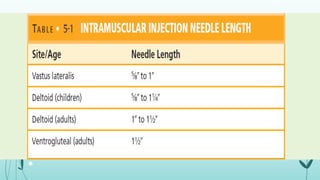
• It is important to choose the right needle length for a
particular intramuscular injection.
• Needle length should be based on the site for
injection and the patient’s age.

• Patients who are obese may require a longer needle,
and emaciated patients may require a shorter needle.
• Generally, biologic agents and medications in
aqueous solutions should be administered with a 20-
to 25-gauge needle.
• Medications in oil-based solutions should be
administered with an 18-to 25-gauge needle.
• Many medications come in prefilled syringe units.
• If a needle is provided on the prefilled unit, ensure
that the needle on the unit is the appropriate length
for the patient and situation.
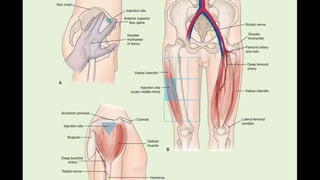
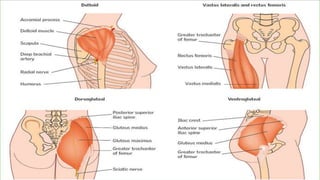
• To avoid complications, be able to identify anatomic
landmarks and site boundaries.
• Consider the age of the patient, medication type, and
medication volume when selecting a site for
intramuscular injection.
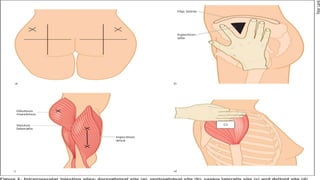
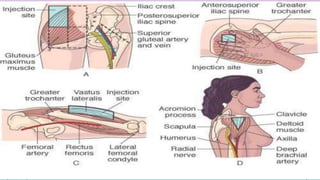
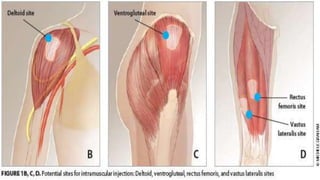
• Rotate the sites used to administer intramuscular
medications when therapy requires repeated
injections.
• Whatever pattern of rotating sites is used, a
description of it should appear in the patient’s plan of
nursing care.
• Depending on the site selected, it may be necessary
to reposition the patient
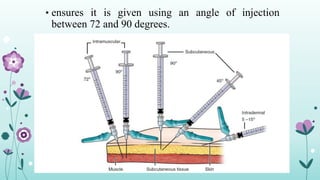
• ensures it is given using an angle of injection
between 72 and 90 degrees.
• The volume of medication that can be administered
intramuscularly varies based on the intended site.
• Generally, 1 to 4 mL is the accepted volume range,
with no more than 1 to 2 mL given at the
• deltoid site.
• The less-developed muscles of children and elderly
people limit the intramuscular injection to 1 to 2 mL.
• A previously included practice associated with
intramuscular injections is the inclusion of
aspiration; the process of pulling back on the plunger
of the syringe before injection to ensure the
medication is not injected into a blood vessel.
Equipments:
• Disposable gloves
• Additional PPE, as indicated
• Medication
• Sterile syringe and needle of appropriate size and gauge
• Antimicrobial swab
• Small gauze square
• Medication Administration Record (MAR)
• Use accurate, careful technique when administering
intramuscular injections.
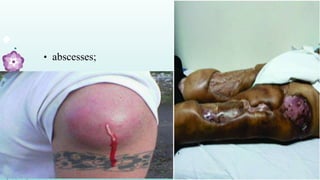
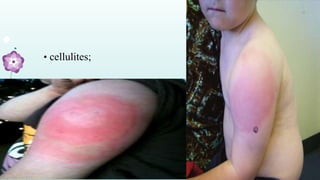
• If care is not taken, possible complications include
• abscesses;
• cellulites;
• injury to blood vessels, bones, and nerves;
• lingering pain;
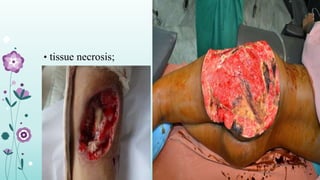
• tissue necrosis;
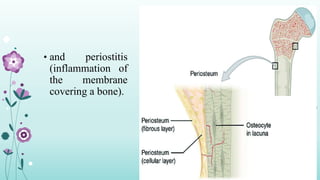
• and periostitis (inflammation of the membrane covering a
bone).
• Administer the intramuscular injection so that the needle is
perpendicular to the patient’s body.
• abscesses;
• cellulites;
• injury to blood vessels, bones, and nerves;
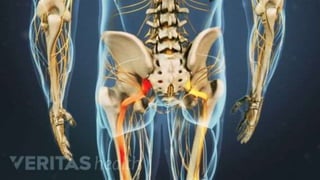
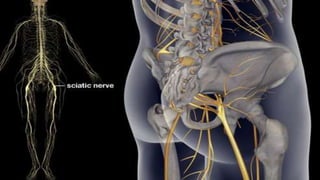
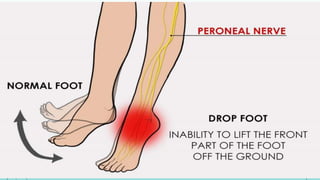
• (sciatic nerve injury)
• tissue necrosis;
• and periostitis
(inflammation of
the membrane
covering a bone).
1. IM refers to ?
1. Subcutaneous
2. Intramuscular
3. Intradermal
4. Intravenous
2. What is the Gauge size for IM Injection?
1. 23
2. 24
3. 25
4. 26
3. Maximum amount can be administered in IM
route?
• 1
• 2
• 3
• 4
4. What is the angle for IM injection?
• 72-90
• 40
• 50
• 45
5. Damage to the sciatic nerve is known as?
1. Foot drop
2. Periostitis
3. Abscess
4. Cellulites
Answer
• 2
• 1
• 4
• 1
• 1

Administration of IM medication

  • 1.
  • 2.
    Introduction: • Intramuscular injectionsdeliver medication through the skin and subcutaneous tissues into certain muscles. • Muscles have a larger and a greater number of blood vessels than subcutaneous tissue, allowing faster onset of action than with subcutaneous injections.
  • 4.
    • An intramuscularinjection is chosen when a reasonably rapid systemic uptake of the drug is needed by the body and when a relatively prolonged action is required.
  • 5.
    • To administeran intramuscular injection correctly and effectively, choose the right equipment, select the appropriate location, use the correct technique, and deliver the correct dose.
  • 6.
    • Inject themedication into the denser part of the muscle fascia below the subcutaneous tissues. • This is ideal because skeletal muscles have fewer pain-sensing nerves than subcutaneous tissue and can absorb larger volumes of solution because of the rapid uptake of the drug into the bloodstream via the muscle fibers.
  • 7.
    • 23G ofneedle is used for IM injections. • It is important to choose the right needle length for a particular intramuscular injection. • Needle length should be based on the site for injection and the patient’s age. • Patients who are obese may require a longer needle, and emaciated patients may require a shorter needle.


  • 9.

    • Generally, biologicagents and medications in aqueous solutions should be administered with a 20- to 25-gauge needle. • Medications in oil-based solutions should be administered with an 18-to 25-gauge needle. • Many medications come in prefilled syringe units.
  • 10.
    • If aneedle is provided on the prefilled unit, ensure that the needle on the unit is the appropriate length for the patient and situation. • To avoid complications, be able to identify anatomic landmarks and site boundaries.
  • 12.
    • Consider theage of the patient, medication type, and medication volume when selecting a site for intramuscular injection.
  • 18.
    • Rotate thesites used to administer intramuscular medications when therapy requires repeated injections. • Whatever pattern of rotating sites is used, a description of it should appear in the patient’s plan of nursing care. • Depending on the site selected, it may be necessary to reposition the patient
  • 20.
    • ensures itis given using an angle of injection between 72 and 90 degrees.
  • 21.
    • The volumeof medication that can be administered intramuscularly varies based on the intended site. • Generally, 1 to 4 mL is the accepted volume range, with no more than 1 to 2 mL given at the • deltoid site. • The less-developed muscles of children and elderly people limit the intramuscular injection to 1 to 2 mL.
  • 22.
    • A previouslyincluded practice associated with intramuscular injections is the inclusion of aspiration; the process of pulling back on the plunger of the syringe before injection to ensure the medication is not injected into a blood vessel.
  • 23.
    Equipments: • Disposable gloves •Additional PPE, as indicated • Medication • Sterile syringe and needle of appropriate size and gauge • Antimicrobial swab • Small gauze square • Medication Administration Record (MAR)
  • 24.
    • Use accurate,careful technique when administering intramuscular injections. • If care is not taken, possible complications include • abscesses; • cellulites; • injury to blood vessels, bones, and nerves; • lingering pain; • tissue necrosis; • and periostitis (inflammation of the membrane covering a bone). • Administer the intramuscular injection so that the needle is perpendicular to the patient’s body.
  • 25.
  • 26.
  • 27.
    • injury toblood vessels, bones, and nerves; • (sciatic nerve injury)
  • 31.
  • 32.
    • and periostitis (inflammationof the membrane covering a bone).
  • 33.
    1. IM refersto ? 1. Subcutaneous 2. Intramuscular 3. Intradermal 4. Intravenous
  • 34.
    2. What isthe Gauge size for IM Injection? 1. 23 2. 24 3. 25 4. 26
  • 35.
    3. Maximum amountcan be administered in IM route? • 1 • 2 • 3 • 4
  • 36.
    4. What isthe angle for IM injection? • 72-90 • 40 • 50 • 45
  • 37.
    5. Damage tothe sciatic nerve is known as? 1. Foot drop 2. Periostitis 3. Abscess 4. Cellulites
  • 38.