INTRAMUSCULAR INJECTION
Intramuscular Injection
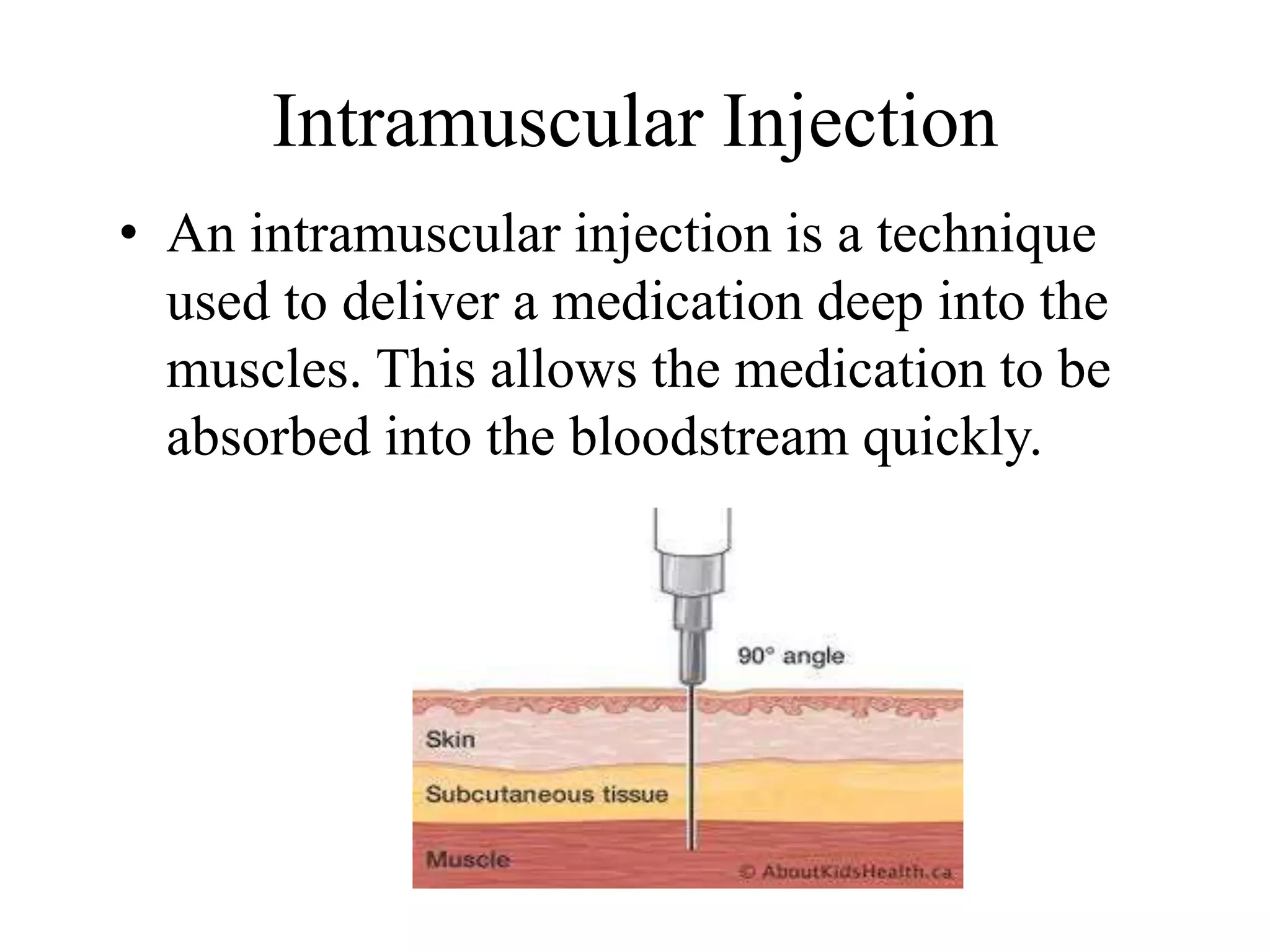
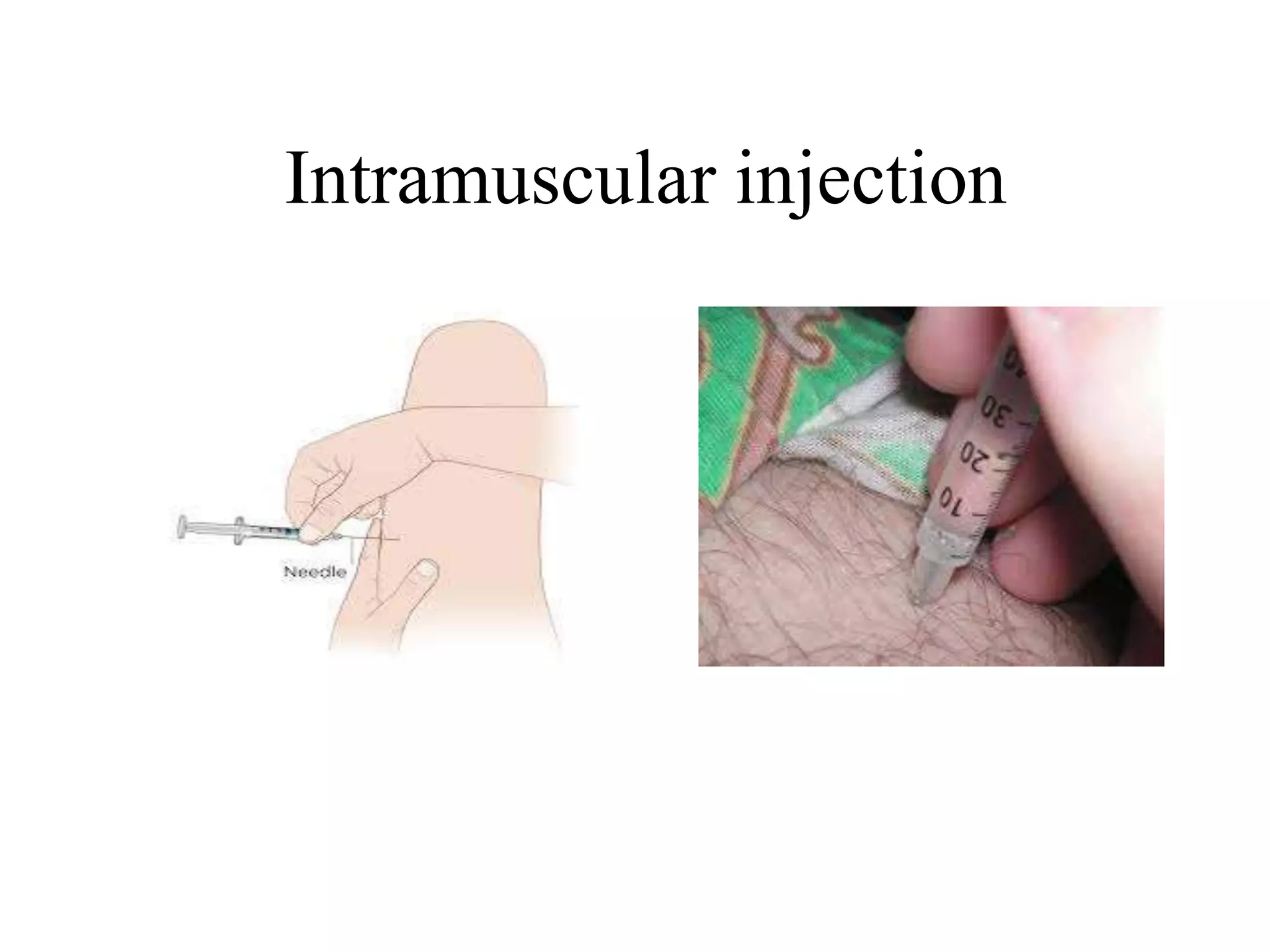
• An intramuscular injection is a technique
used to deliver a medication deep into the
muscles. This allows the medication to be
absorbed into the bloodstream quickly.
Purpose of Intramuscular Injection
• Intramuscular injections are used when other types of delivery
methods are not recommended.
• Intramuscular injections may be used instead of intravenous
injections because some drugs are irritating to veins, or because a
suitable vein can’t be located.
• It may be used instead of oral delivery because some drugs are
destroyed by the digestive system when a drug is swallowed.
• Intramuscular injections are absorbed faster than subcutaneous
injections. This is because muscle tissue has a greater blood supply
than the tissue just under the skin.
• Muscle tissue can also hold a larger volume of medication than
subcutaneous tissue.
Sites of Intramuscular Injection
• Deltoid muscle of the arm
• Vastus lateralis muscle of the thigh
• Ventrogluteal muscle of the hip
• Dorsogluteal muscles of the buttocks
Sites of Intramuscular Injection
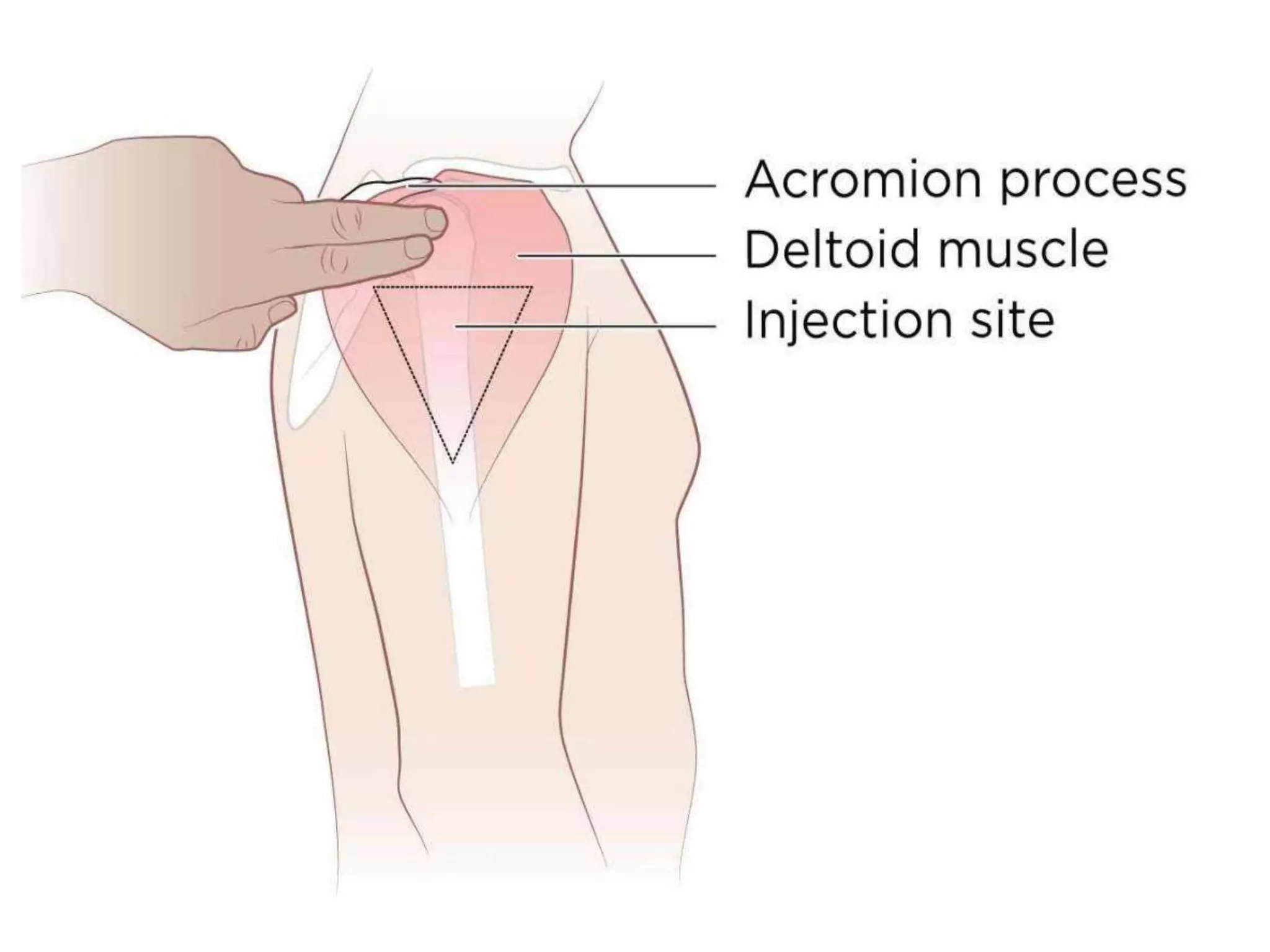
Deltoid muscle
• The deltoid muscle is the site most typically used for
vaccines.
• This site is not common for self-injection, because its small
muscle mass limits the volume of medication that can be
injected — typically no more than 1 milliliter.
• To locate this site, feel for the bone (acromion process) that’s
located at the top of the upper arm. The correct area to give
the injection is two finger widths below the acromion
process. At the bottom of the two fingers, will be an upside-
down triangle. Give the injection in the center of the triangle.
Sites of Intramuscular Injection
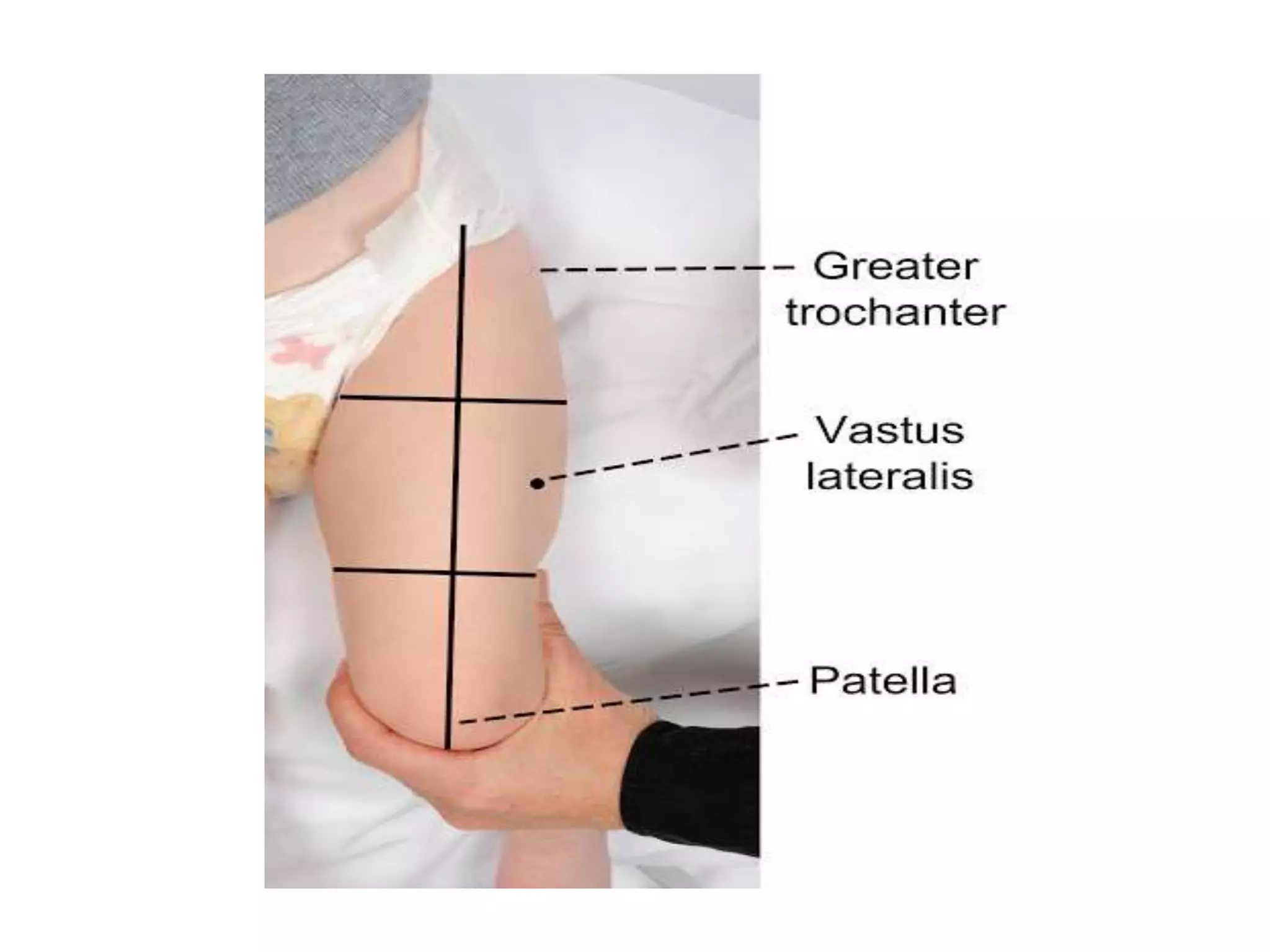
Vastus lateralis muscle of the thigh
• The thigh may be used when the other sites
aren’t available or if you need to administer
the medication on your own.
• Divide the upper thigh into three equal parts.
Locate the middle of these three sections.
The injection should go into the outer top
portion of this section.
Sites of Intramuscular Injection
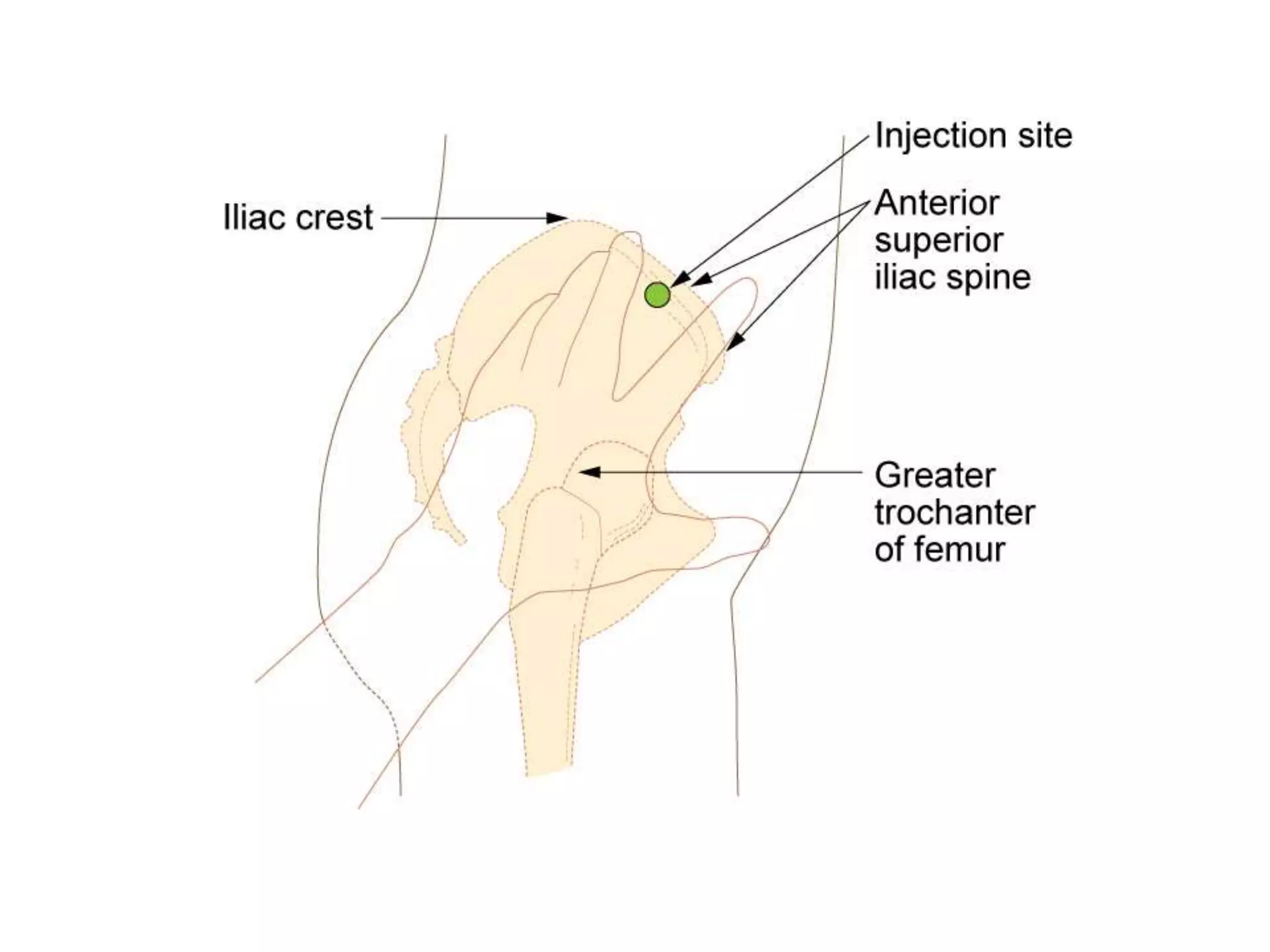
• Ventrogluteal muscle of the hip
• The ventrogluteal muscle is the safest site for adults and
children older than 7 months.
• It’s deep and not close to any major blood vessels and
nerves.
• Place the heel of your hand on the hip of the person
receiving the injection, with the fingers pointing
towards their head.
• Position the fingers so the thumb points toward the
groin and you feel the pelvis under your pinky finger.
Spread your index and middle fingers in a slight V
shape, and inject the needle into the middle of that V.
Sites of Intramuscular Injection
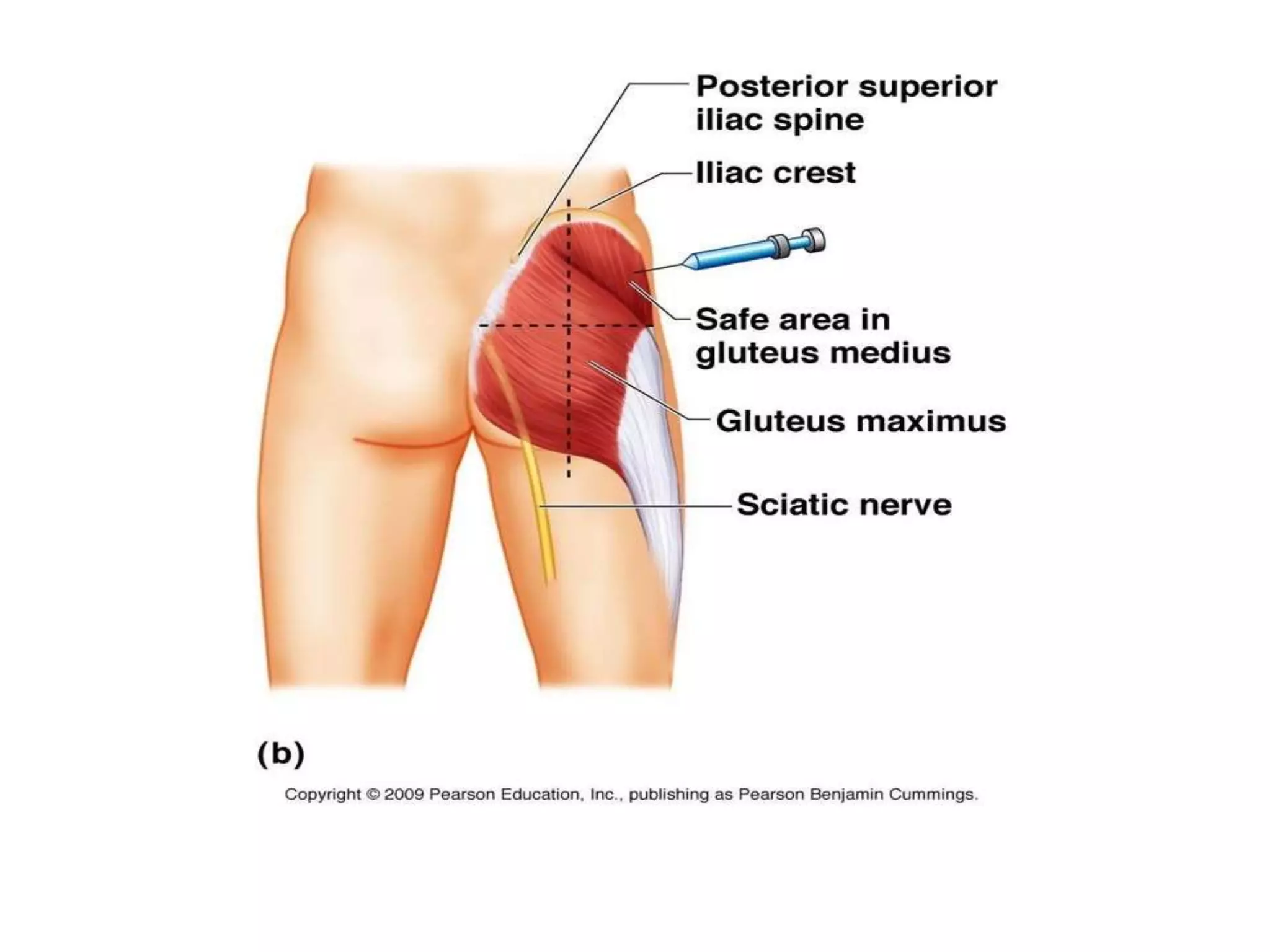
Dorsogluteal muscles of the buttocks
• The dorsogluteal muscle of the buttocks
was the site most commonly selected by
healthcare providers for many years.
• Due to the potential for injury to
the sciatic nerve, the ventrogluteal is most
often used now.
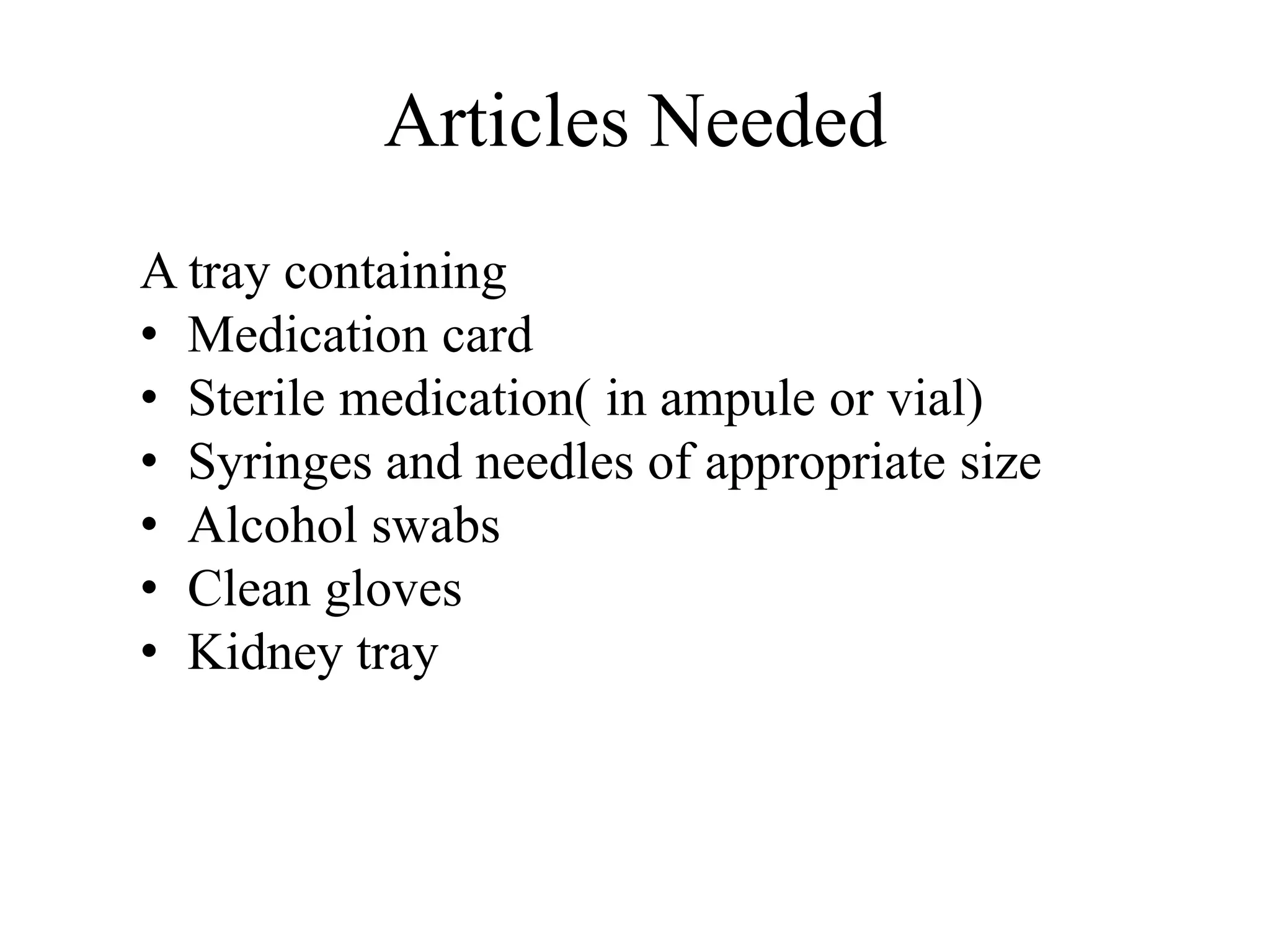
Articles Needed
A tray containing
• Medication card
• Sterile medication( in ampule or vial)
• Syringes and needles of appropriate size
• Alcohol swabs
• Clean gloves
• Kidney tray
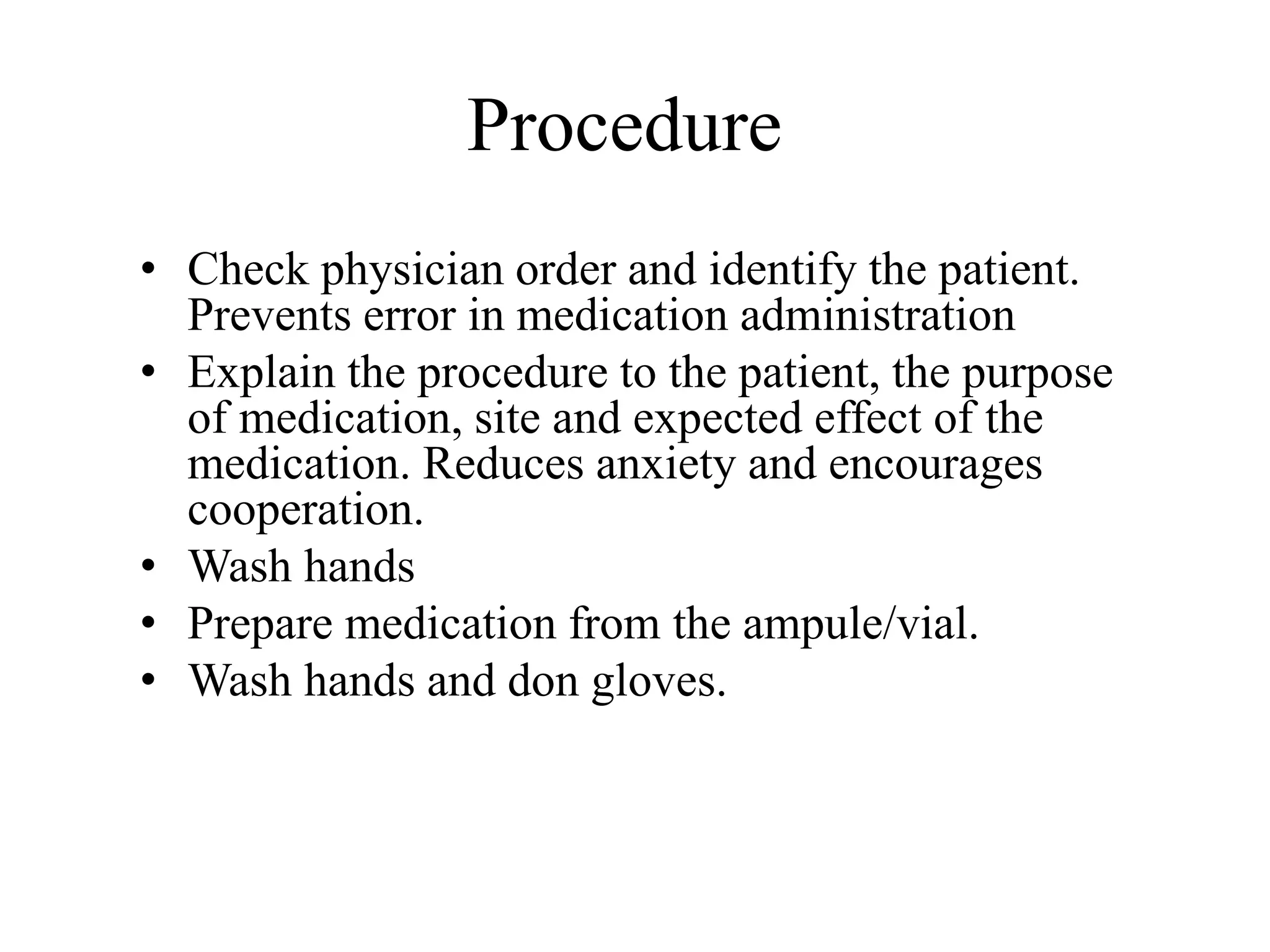
Procedure
• Check physician order and identify the patient.
Prevents error in medication administration
• Explain the procedure to the patient, the purpose
of medication, site and expected effect of the
medication. Reduces anxiety and encourages
cooperation.
• Wash hands
• Prepare medication from the ampule/vial.
• Wash hands and don gloves.
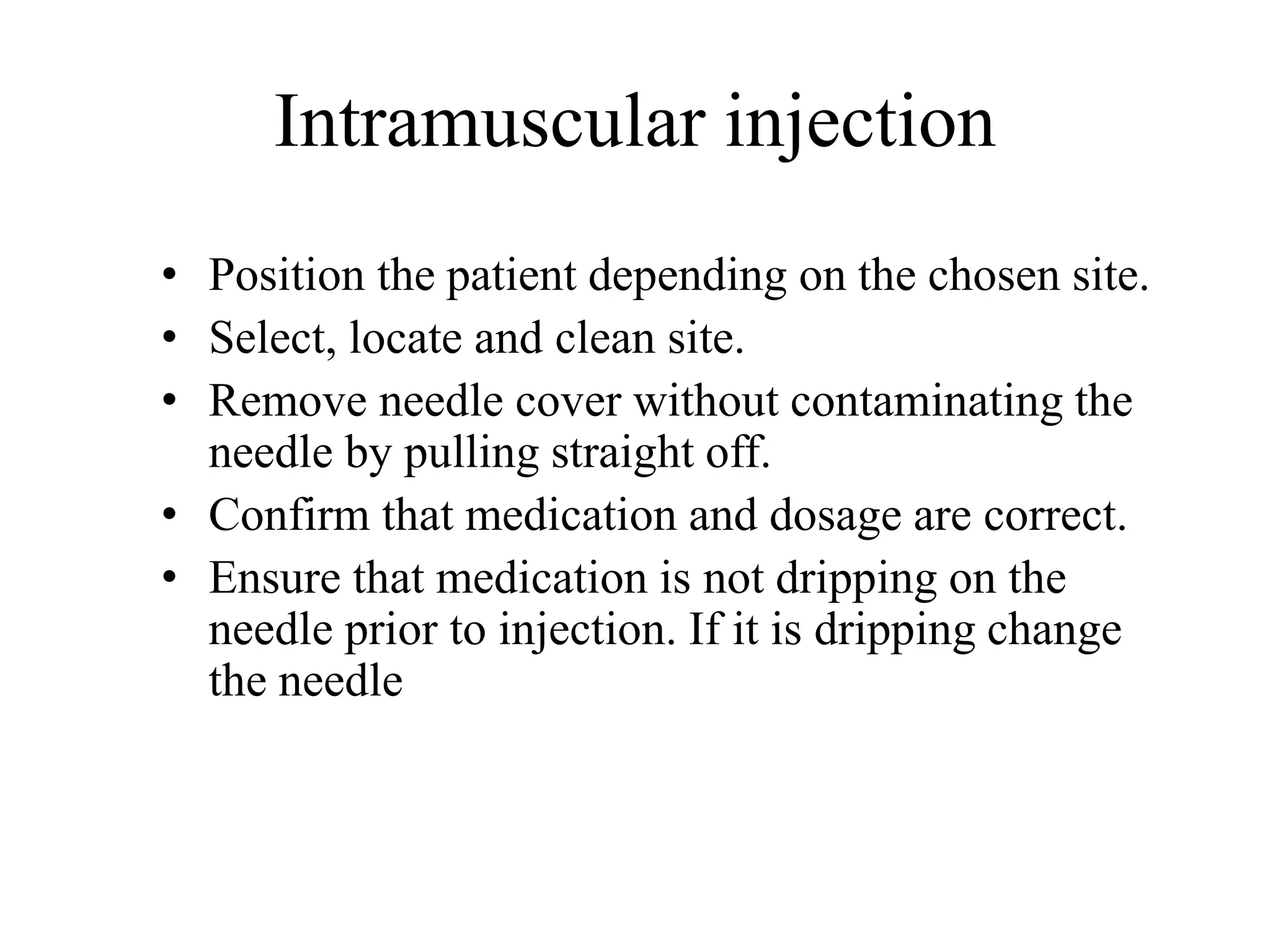
Intramuscular injection
• Position the patient depending on the chosen site.
• Select, locate and clean site.
• Remove needle cover without contaminating the
needle by pulling straight off.
• Confirm that medication and dosage are correct.
• Ensure that medication is not dripping on the
needle prior to injection. If it is dripping change
the needle
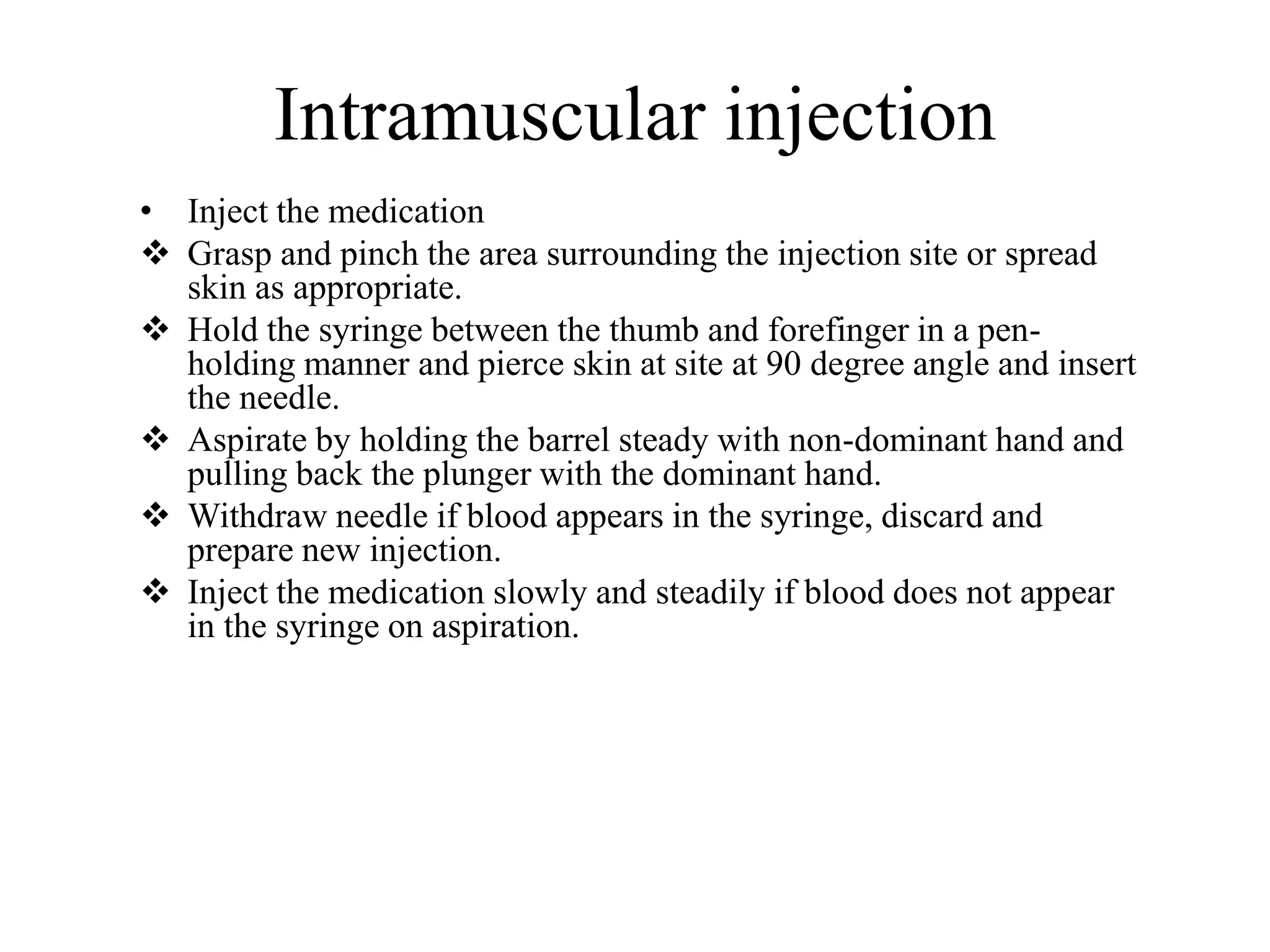
Intramuscular injection
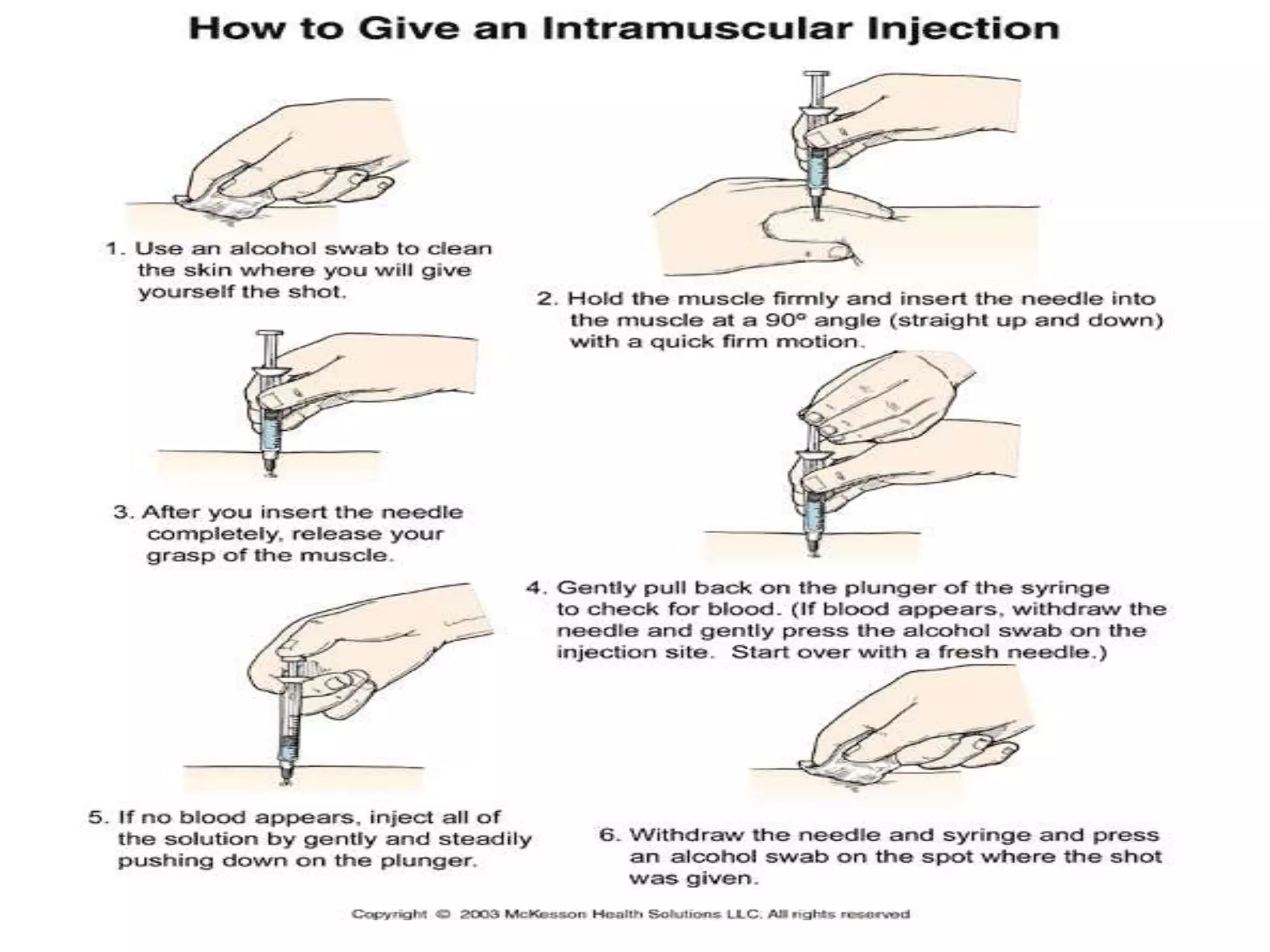
• Inject the medication
 Grasp and pinch the area surrounding the injection site or spread
skin as appropriate.
 Hold the syringe between the thumb and forefinger in a pen-
holding manner and pierce skin at site at 90 degree angle and insert
the needle.
 Aspirate by holding the barrel steady with non-dominant hand and
pulling back the plunger with the dominant hand.
 Withdraw needle if blood appears in the syringe, discard and
prepare new injection.
 Inject the medication slowly and steadily if blood does not appear
in the syringe on aspiration.
Intramuscular injection
• Withdraw the needle slowly and steadily while
supporting at the hub of the syringe and needle.
With non-dominant hand, support the skin
surface using the cotton swab for applying
counter traction at the site.
• Apply gentle pressure at the site with a dry
sponge anf if bleeding is present, continue
applying pressure till bleeding stops.do not
massage.
Intramuscular injection
• Discard uncapped needle and syringe into
appropriate receptacle.
• Remove gloves. Wash hands.
• Record procedure including name of
medication, dose, site and response of the
patient.
• Assess effectiveness of the medication.
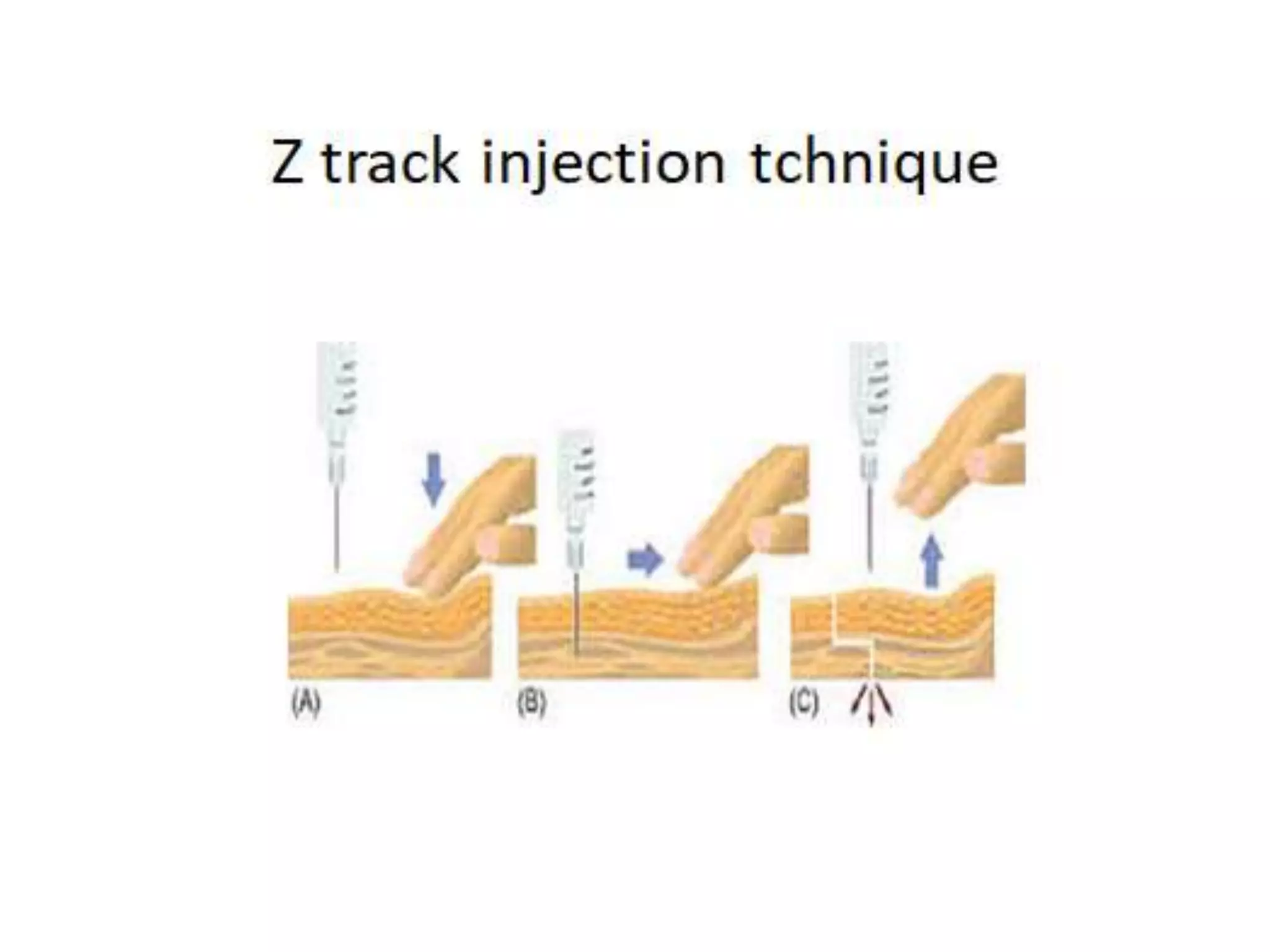
Z TRACK INJECTION TECHNIQUE
• The Z-track method is a type of IM injection
technique used to prevent tracking (leakage) of the
medication into the subcutaneous tissue (underneath
the skin).
• It also helps to prevent medication from seeping into
the subcutaneous tissue and ensures a full dosage.
• Some medications are dark colored and can cause
staining of the skin.
Points to remember
• Maximum volume to be administered in a
single site is 1 ml for older infants and
small children
• If the medication to be drawn from a vial
use a new needle to inject into the muscle.
• Avoid tracking any medication through
superficial tissues.
INTRAMUSCULAR INJECTION.pptx

INTRAMUSCULAR INJECTION.pptx

  • 1.
  • 2.
    Intramuscular Injection • Anintramuscular injection is a technique used to deliver a medication deep into the muscles. This allows the medication to be absorbed into the bloodstream quickly.
  • 3.
    Purpose of IntramuscularInjection • Intramuscular injections are used when other types of delivery methods are not recommended. • Intramuscular injections may be used instead of intravenous injections because some drugs are irritating to veins, or because a suitable vein can’t be located. • It may be used instead of oral delivery because some drugs are destroyed by the digestive system when a drug is swallowed. • Intramuscular injections are absorbed faster than subcutaneous injections. This is because muscle tissue has a greater blood supply than the tissue just under the skin. • Muscle tissue can also hold a larger volume of medication than subcutaneous tissue.
  • 4.
    Sites of IntramuscularInjection • Deltoid muscle of the arm • Vastus lateralis muscle of the thigh • Ventrogluteal muscle of the hip • Dorsogluteal muscles of the buttocks
  • 5.
    Sites of IntramuscularInjection Deltoid muscle • The deltoid muscle is the site most typically used for vaccines. • This site is not common for self-injection, because its small muscle mass limits the volume of medication that can be injected — typically no more than 1 milliliter. • To locate this site, feel for the bone (acromion process) that’s located at the top of the upper arm. The correct area to give the injection is two finger widths below the acromion process. At the bottom of the two fingers, will be an upside- down triangle. Give the injection in the center of the triangle.
  • 7.
    Sites of IntramuscularInjection Vastus lateralis muscle of the thigh • The thigh may be used when the other sites aren’t available or if you need to administer the medication on your own. • Divide the upper thigh into three equal parts. Locate the middle of these three sections. The injection should go into the outer top portion of this section.
  • 9.
    Sites of IntramuscularInjection • Ventrogluteal muscle of the hip • The ventrogluteal muscle is the safest site for adults and children older than 7 months. • It’s deep and not close to any major blood vessels and nerves. • Place the heel of your hand on the hip of the person receiving the injection, with the fingers pointing towards their head. • Position the fingers so the thumb points toward the groin and you feel the pelvis under your pinky finger. Spread your index and middle fingers in a slight V shape, and inject the needle into the middle of that V.
  • 11.
    Sites of IntramuscularInjection Dorsogluteal muscles of the buttocks • The dorsogluteal muscle of the buttocks was the site most commonly selected by healthcare providers for many years. • Due to the potential for injury to the sciatic nerve, the ventrogluteal is most often used now.
  • 13.
    Articles Needed A traycontaining • Medication card • Sterile medication( in ampule or vial) • Syringes and needles of appropriate size • Alcohol swabs • Clean gloves • Kidney tray
  • 14.
    Procedure • Check physicianorder and identify the patient. Prevents error in medication administration • Explain the procedure to the patient, the purpose of medication, site and expected effect of the medication. Reduces anxiety and encourages cooperation. • Wash hands • Prepare medication from the ampule/vial. • Wash hands and don gloves.
  • 15.
    Intramuscular injection • Positionthe patient depending on the chosen site. • Select, locate and clean site. • Remove needle cover without contaminating the needle by pulling straight off. • Confirm that medication and dosage are correct. • Ensure that medication is not dripping on the needle prior to injection. If it is dripping change the needle
  • 16.
    Intramuscular injection • Injectthe medication  Grasp and pinch the area surrounding the injection site or spread skin as appropriate.  Hold the syringe between the thumb and forefinger in a pen- holding manner and pierce skin at site at 90 degree angle and insert the needle.  Aspirate by holding the barrel steady with non-dominant hand and pulling back the plunger with the dominant hand.  Withdraw needle if blood appears in the syringe, discard and prepare new injection.  Inject the medication slowly and steadily if blood does not appear in the syringe on aspiration.
  • 17.
  • 19.
    Intramuscular injection • Withdrawthe needle slowly and steadily while supporting at the hub of the syringe and needle. With non-dominant hand, support the skin surface using the cotton swab for applying counter traction at the site. • Apply gentle pressure at the site with a dry sponge anf if bleeding is present, continue applying pressure till bleeding stops.do not massage.
  • 20.
    Intramuscular injection • Discarduncapped needle and syringe into appropriate receptacle. • Remove gloves. Wash hands. • Record procedure including name of medication, dose, site and response of the patient. • Assess effectiveness of the medication.
  • 21.
    Z TRACK INJECTIONTECHNIQUE • The Z-track method is a type of IM injection technique used to prevent tracking (leakage) of the medication into the subcutaneous tissue (underneath the skin). • It also helps to prevent medication from seeping into the subcutaneous tissue and ensures a full dosage. • Some medications are dark colored and can cause staining of the skin.
  • 23.
    Points to remember •Maximum volume to be administered in a single site is 1 ml for older infants and small children • If the medication to be drawn from a vial use a new needle to inject into the muscle. • Avoid tracking any medication through superficial tissues.