Downloaded 215 times






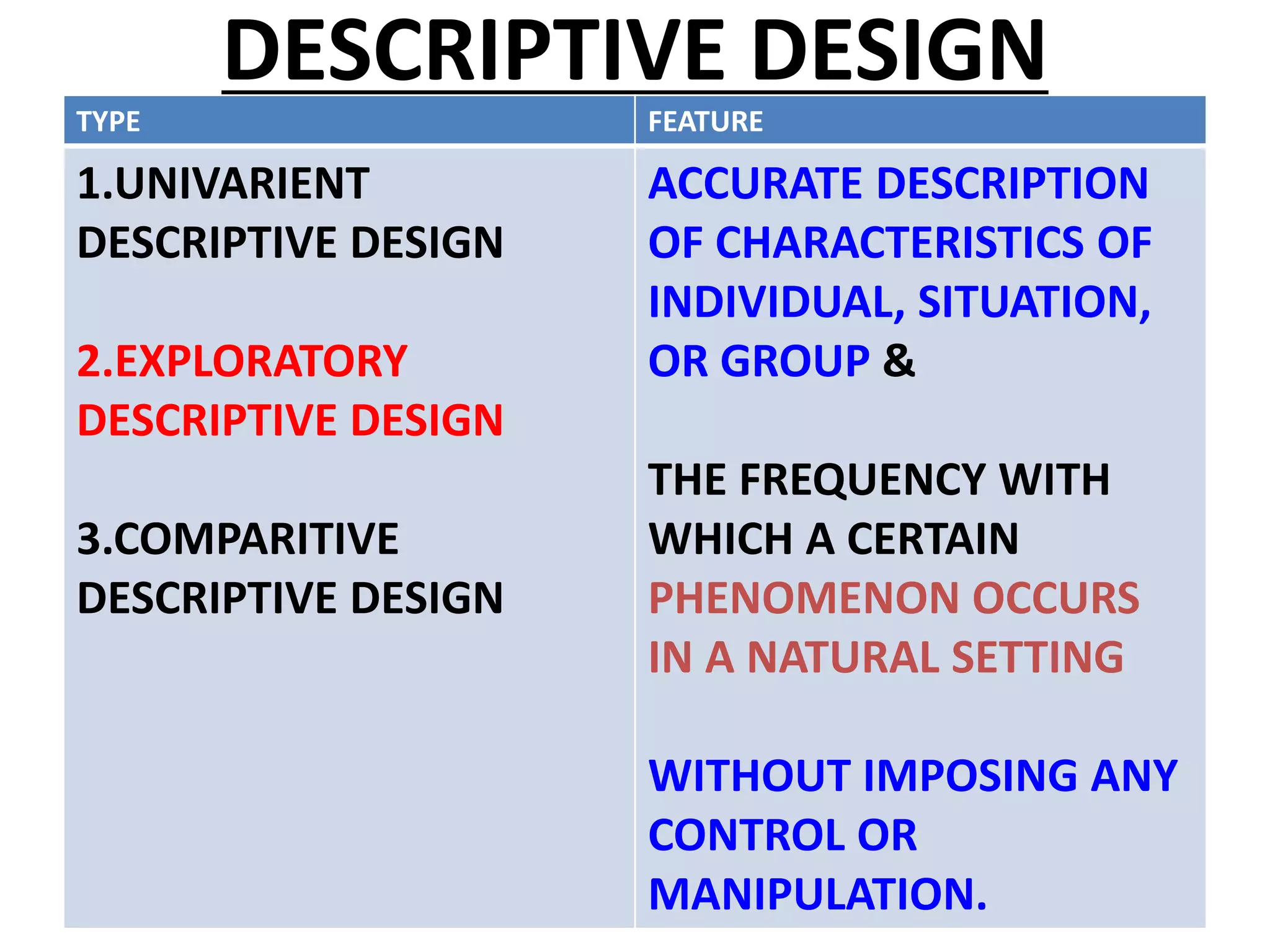
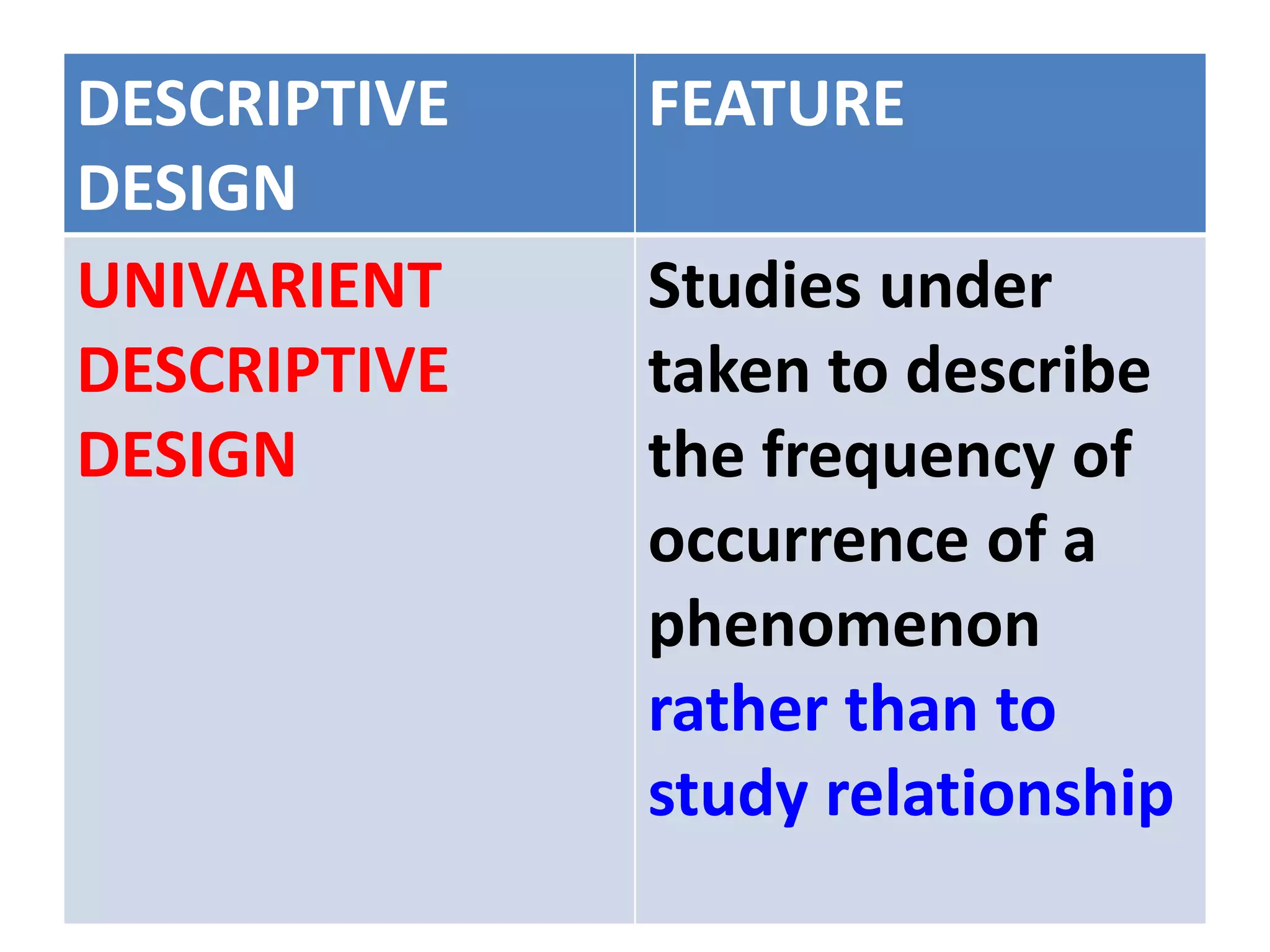
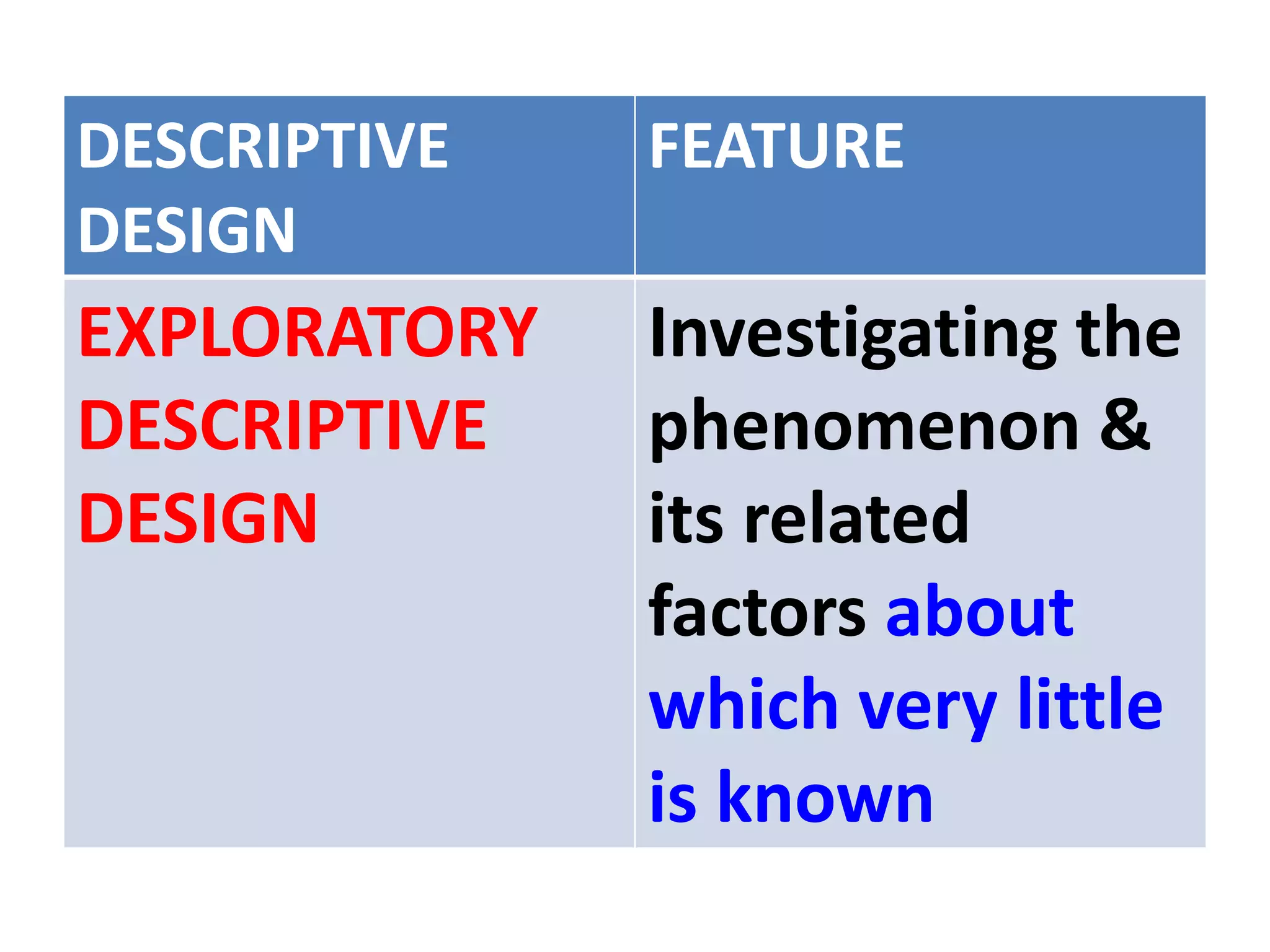
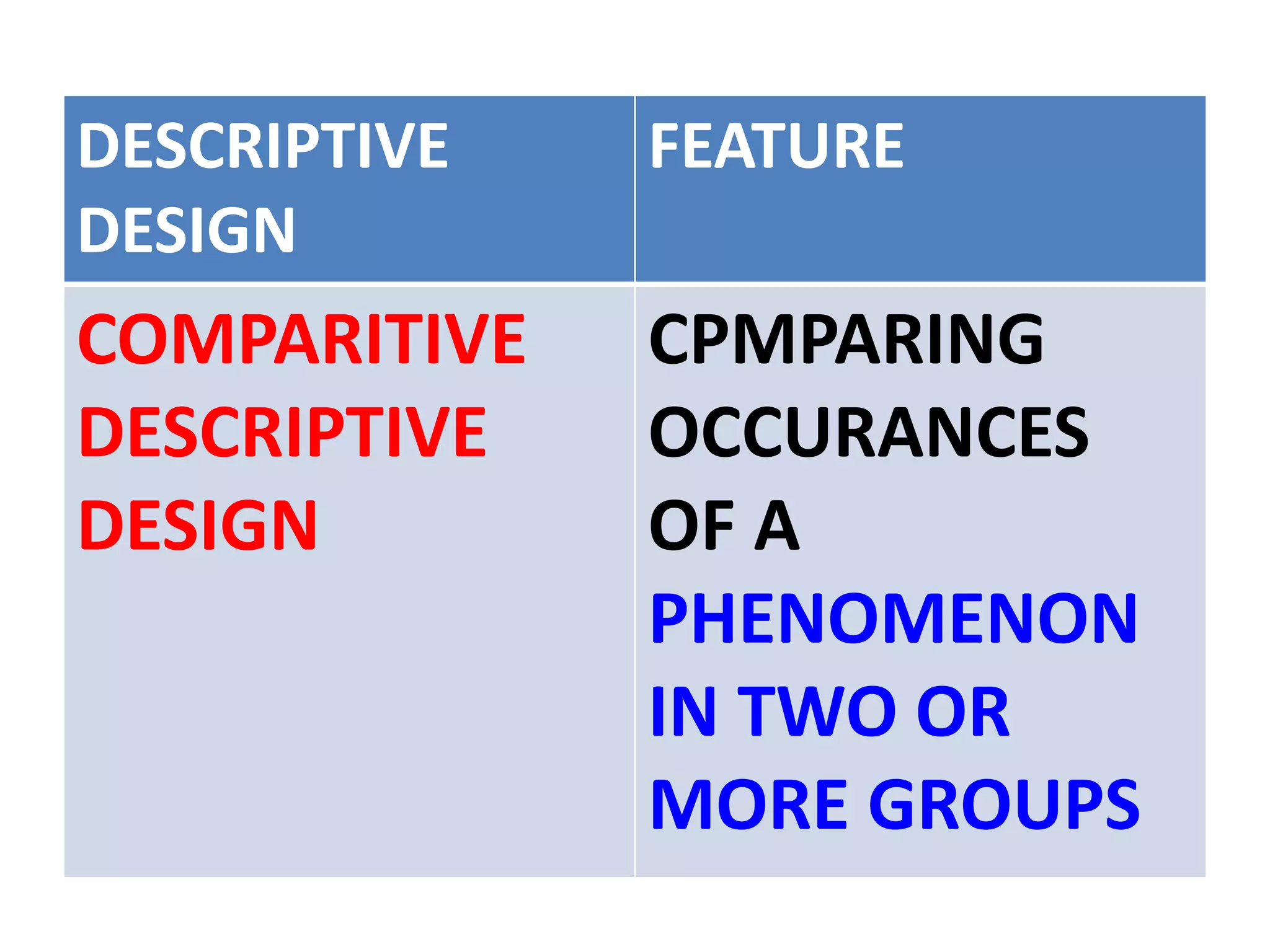
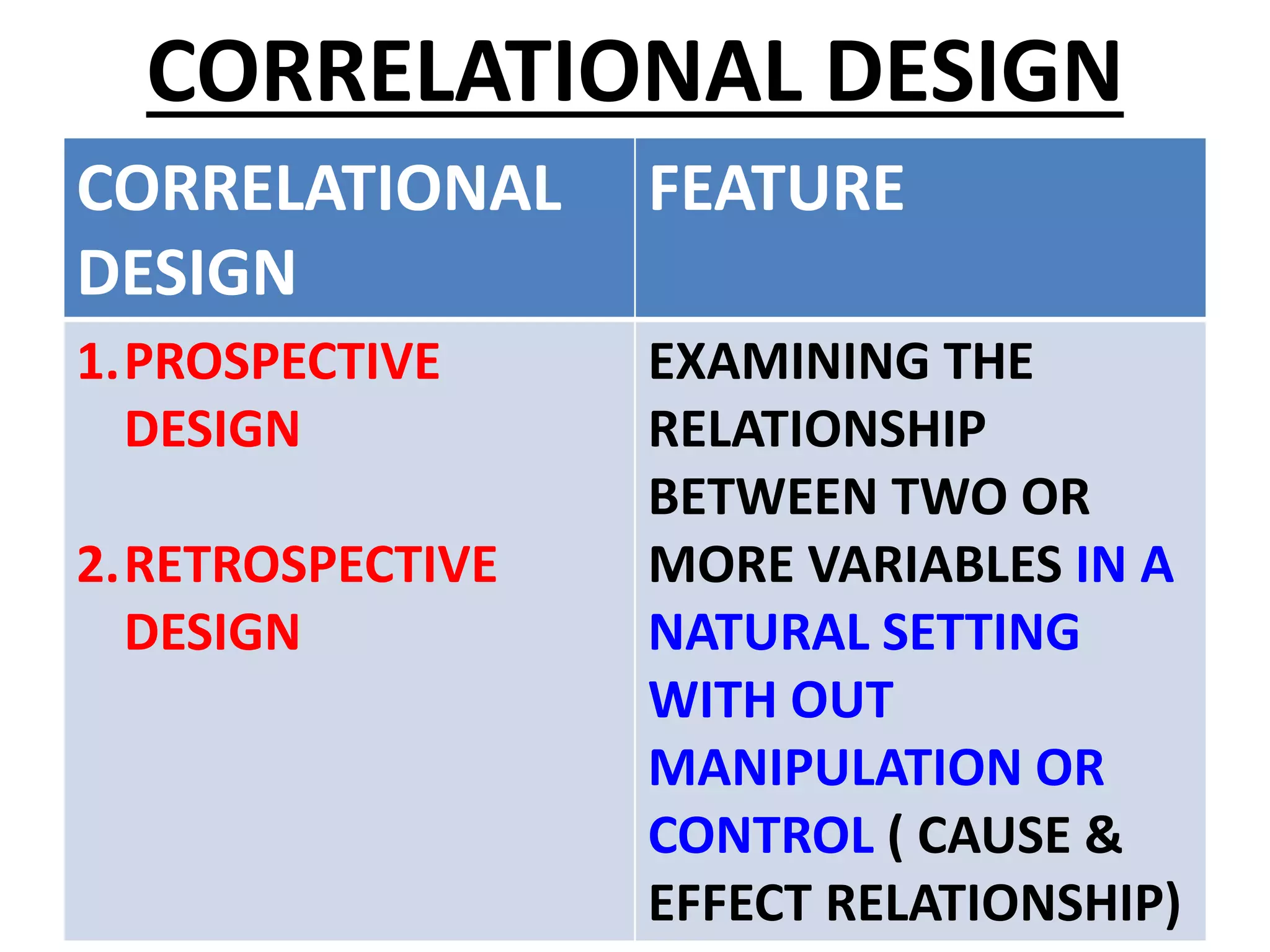

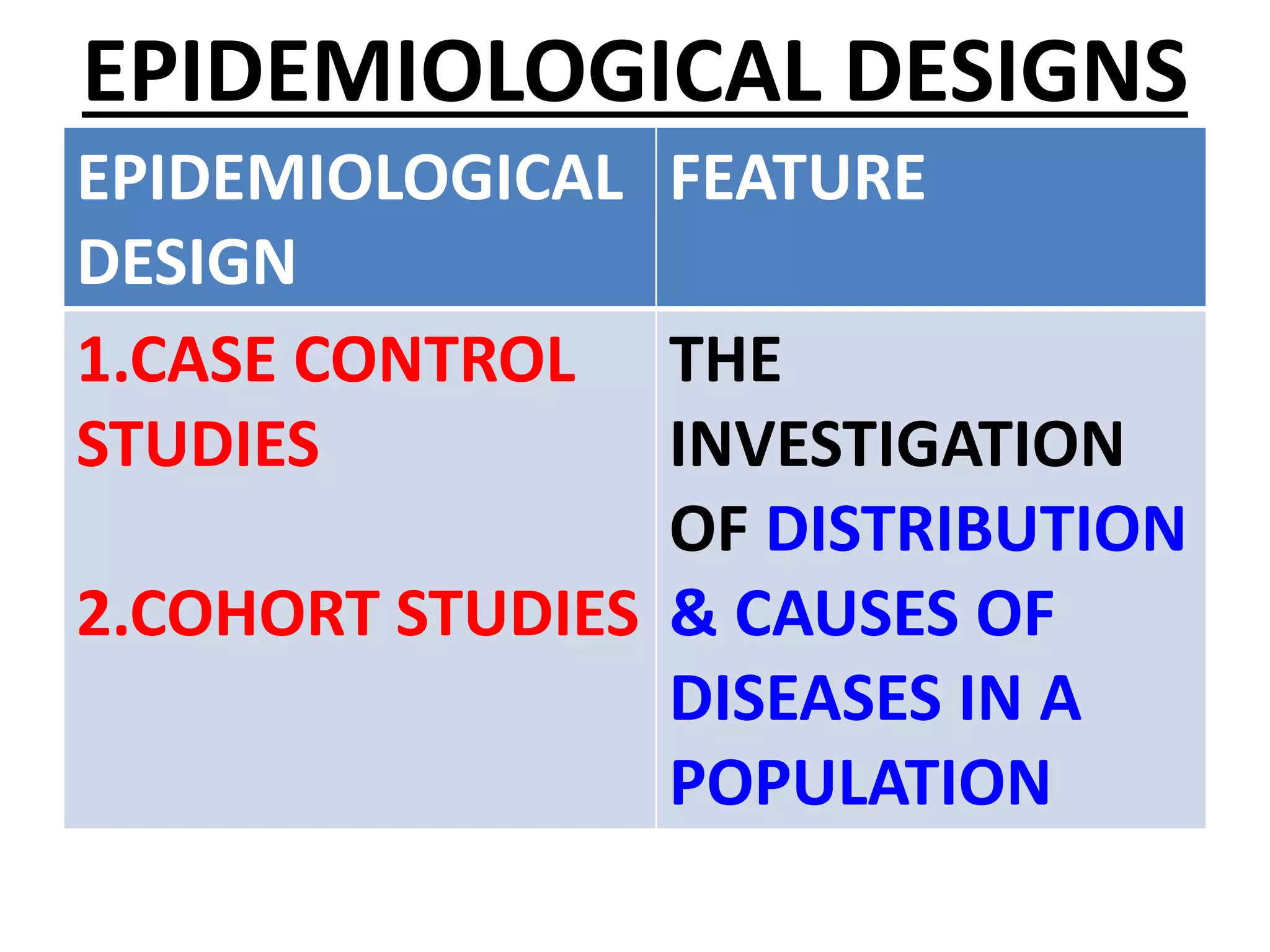
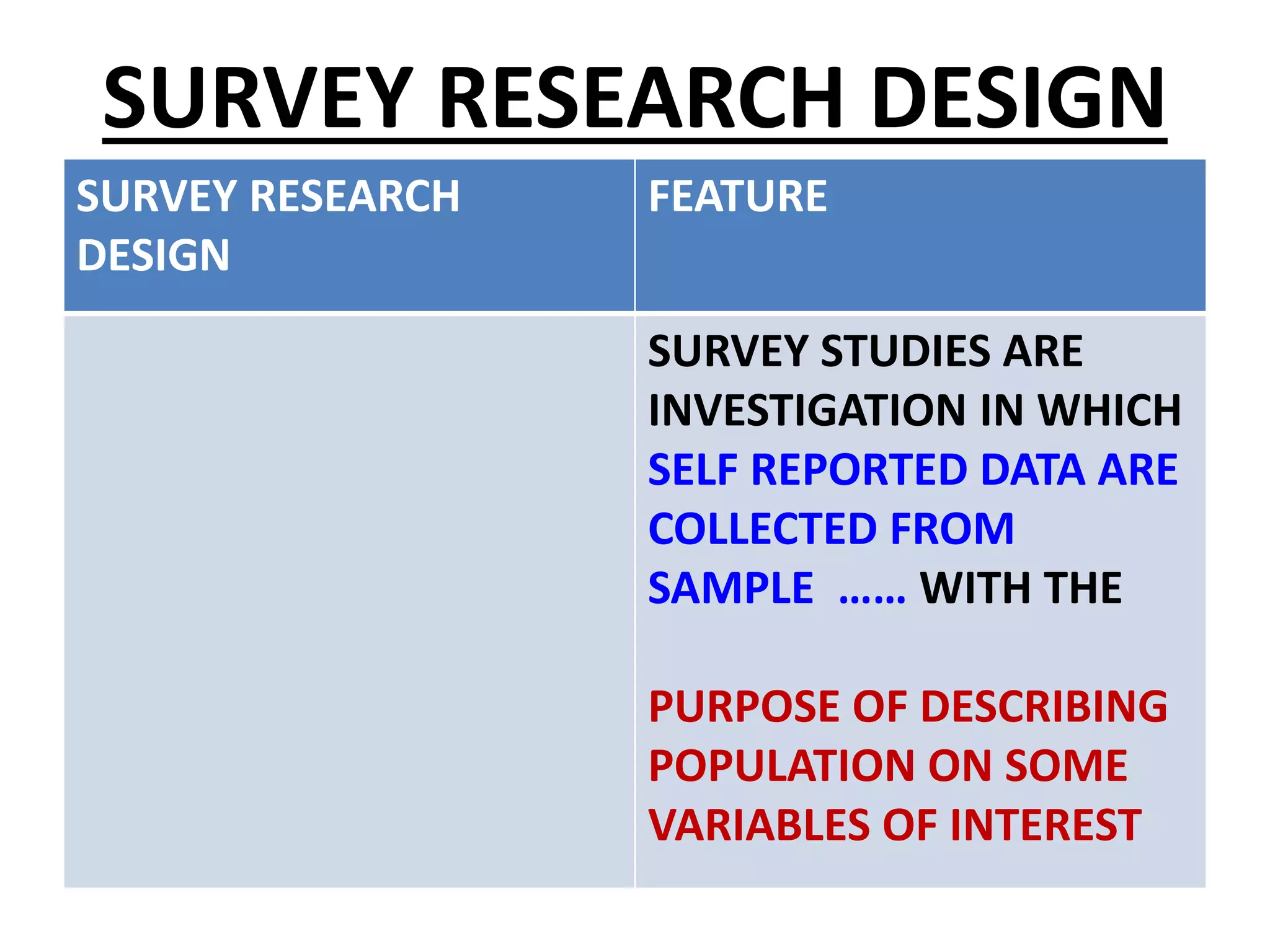




This document discusses non-experimental research design. It defines non-experimental design as research where variables are observed as they naturally occur without manipulation. It lists several types of non-experimental designs including descriptive, correlational, developmental, epidemiological, and survey designs. Descriptive design aims to accurately describe characteristics of individuals, situations, or groups. Correlational design examines relationships between variables without manipulation. Developmental design studies phenomena over time. Epidemiological design investigates disease distribution and causes. Survey design collects self-reported data from a sample to describe populations. Advantages are that they study real-world situations, but disadvantages are relationships between variables cannot be definitely concluded as causal.


