Download to read offline





The document discusses several integral transforms - the Laplace transform, Fourier transform, and Hankel transform. The Laplace transform was introduced in 1790 and is used to solve differential equations. The Fourier transform decomposes periodic signals into sinusoids and is widely used in fields like signal processing. The Hankel transform expresses functions depending on distance from the origin as a weighted sum of Bessel functions and appears in problems with cylindrical/spherical symmetry.
Overview of the history and significance of Laplace, Fourier, and Hankel transforms.
Explains integral transforms as mappings that simplify the characterization of functions.
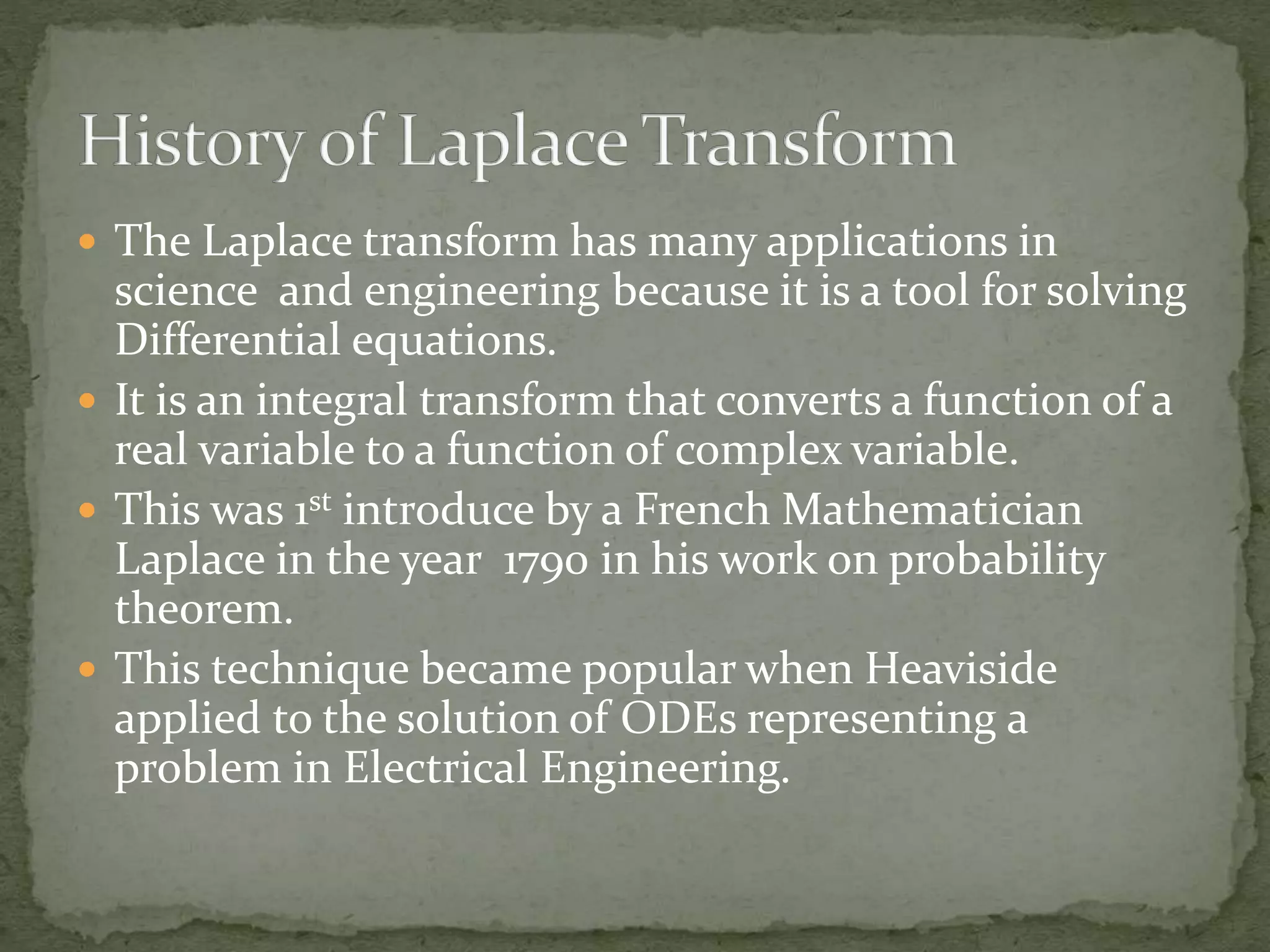
Laplace transform's role in solving differential equations and its historical context.
Applications of Laplace transform in electronic circuits, system modeling, and signal processing.
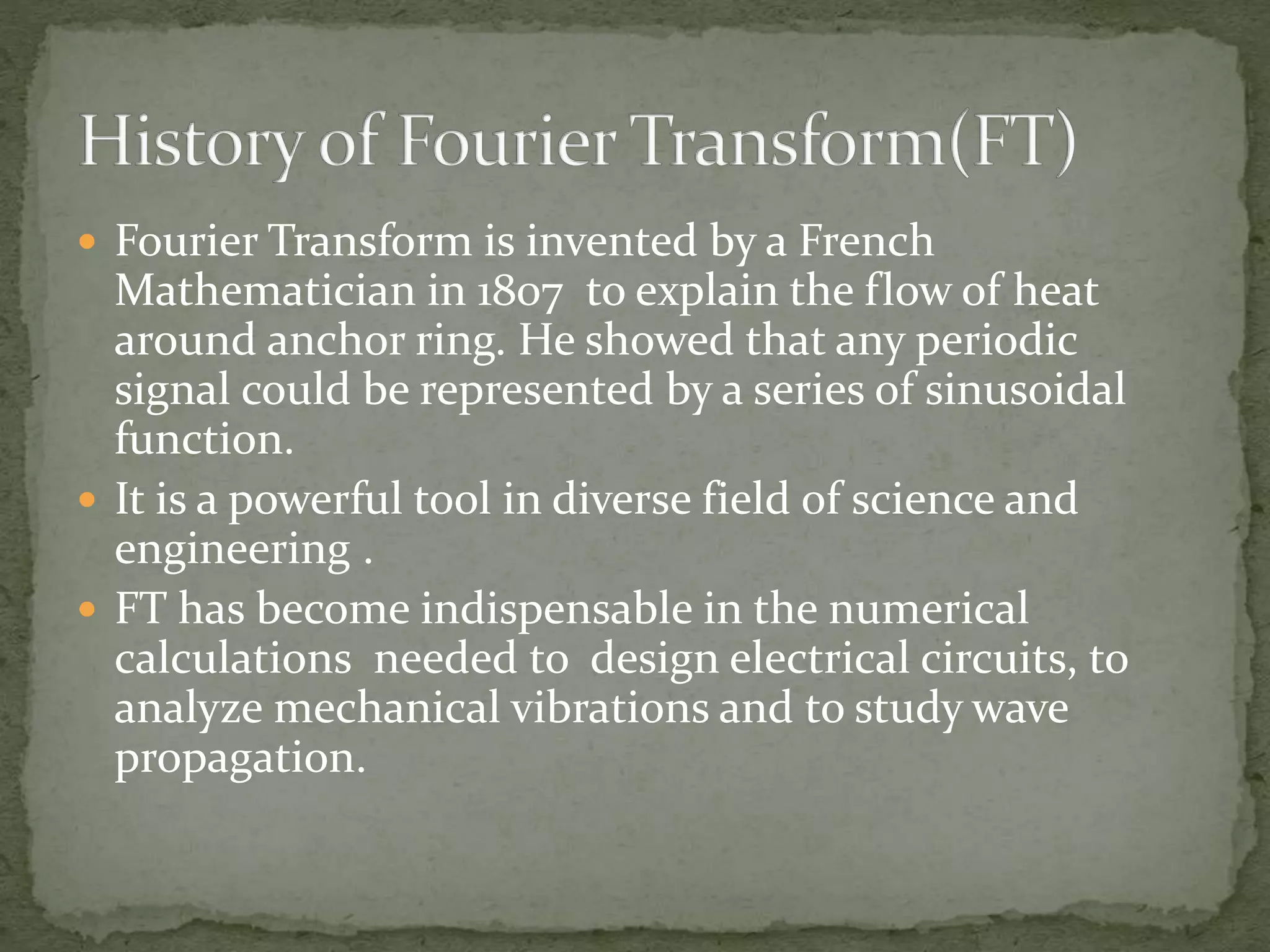
History of Fourier transform, its invention by Fourier, and its application across various fields.
Diverse applications of Fourier transform including signal processing and oceanography.
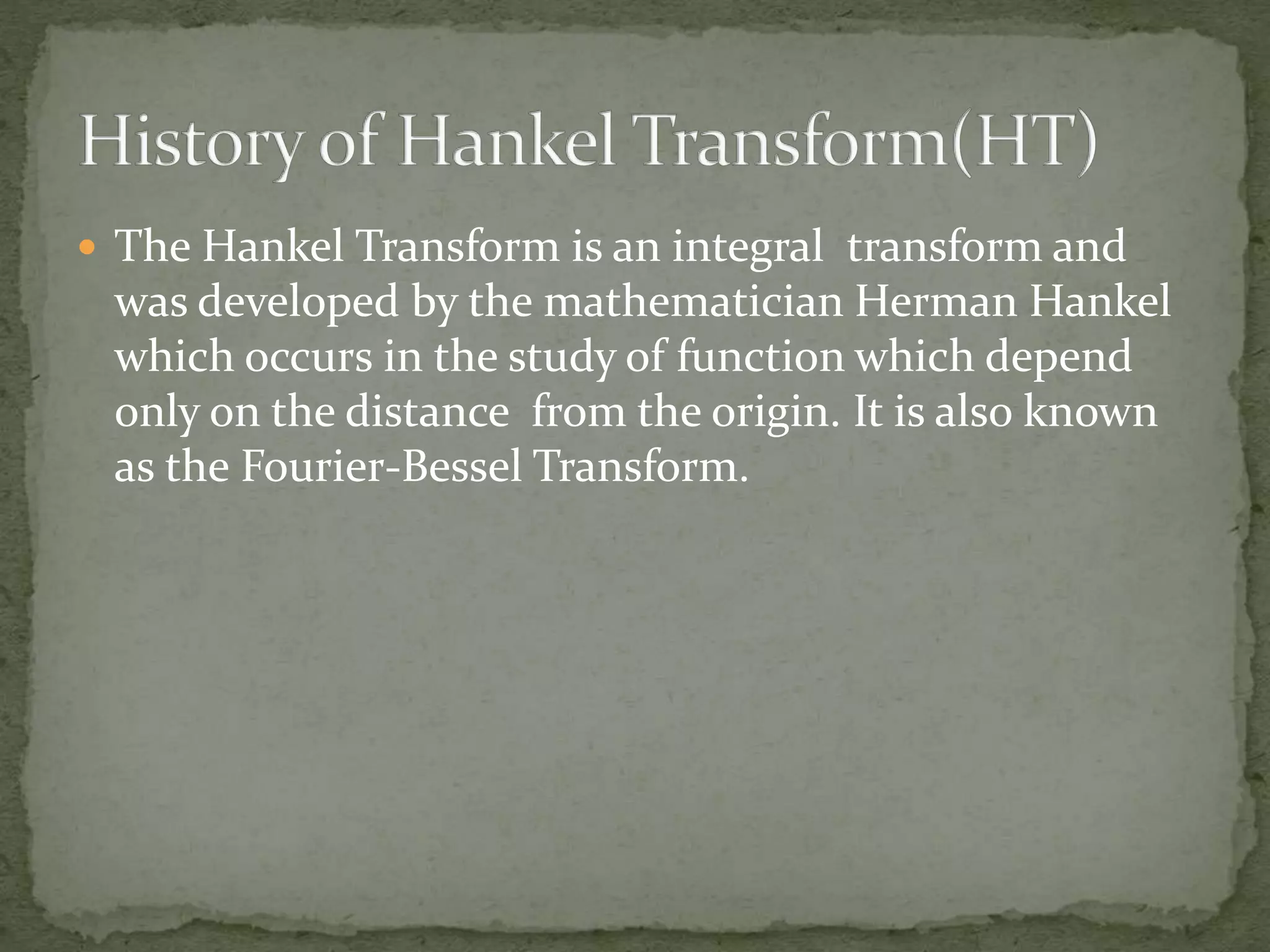
Introduction to Hankel transform, its origin from mathematician Herman Hankel and its properties.
Hankel transform expresses functions as weighted sums of Bessel functions, relating to Fourier series.
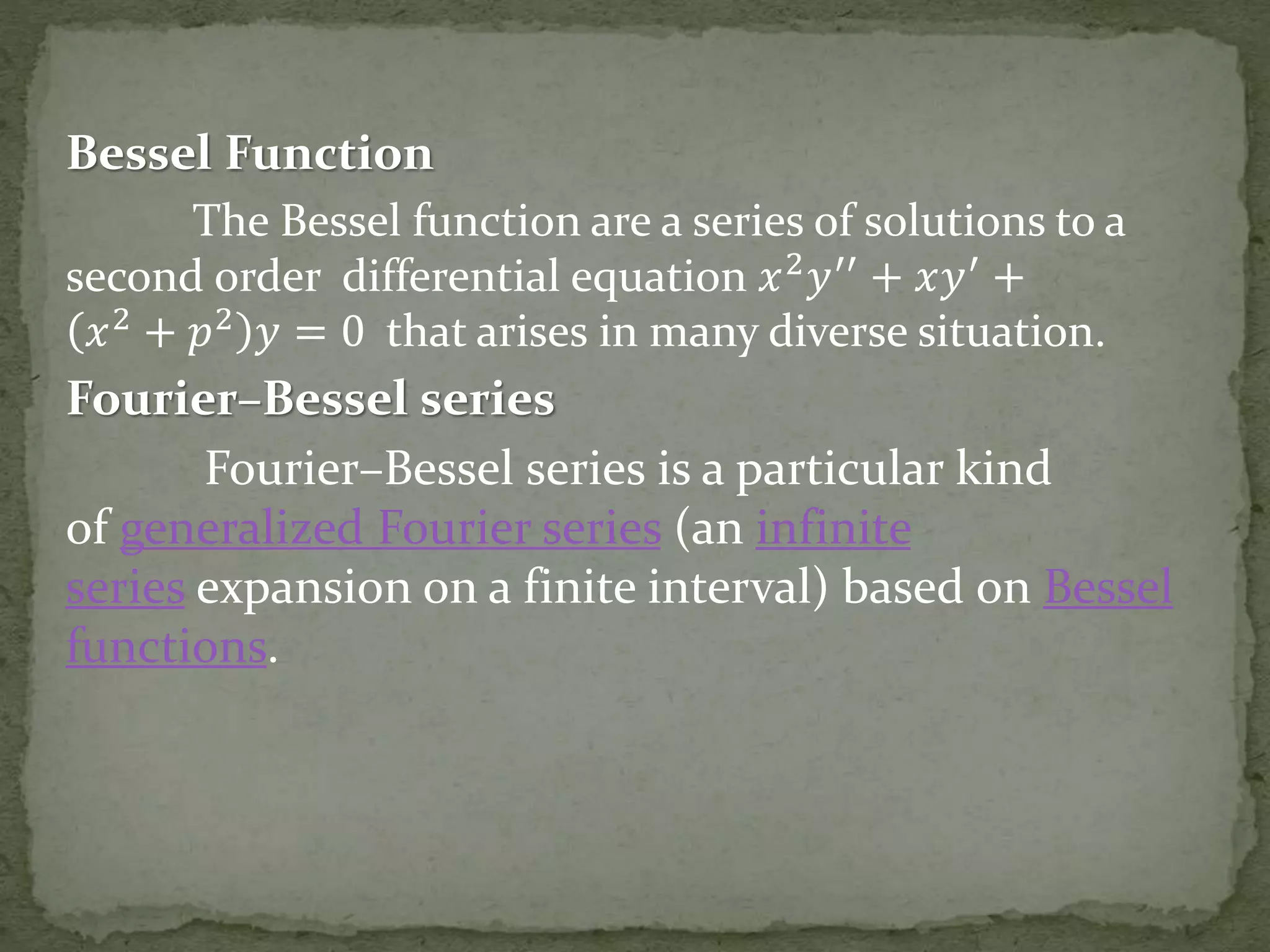
Definition and significance of Bessel functions and Fourier-Bessel series in solving differential equations.
Hankel transform's relevance in multidimensional Fourier transforms and problems with cylindrical symmetry.
Benefits of using Hankel transform for homogeneous and inhomogeneous problems, simplifying calculations.


