Inflammation
and Repair - 8

  Dr.CSBR.Prasad, M.D.


       v3-CSBRP-May-2012
Tissue renewal
 Regeneration
     and
    Repair

    v3-CSBRP-May-2012
Regeneration
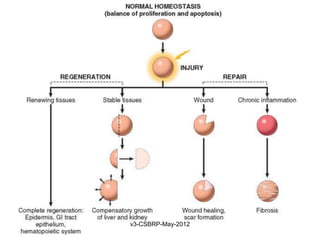
Regeneration refers to the proliferation of
  cells and tissues to replace lost structures
 Whole organs and complex tissues rarely
  regenerate after injury
  Exceptions are liver, epithelia of GIT, Skin,
   Hemopoietic tissue
 Compensatory growth Vs Regeneration


                   v3-CSBRP-May-2012
Repair

 Repair is a healing process
 It’s a combination of regeneration and
  scar formation


               v3-CSBRP-May-2012
Repair

Tissue repair depends on:

  the ability of the tissue to
   regenerate and
  the extent of the injury


            v3-CSBRP-May-2012
Repair


 Chronic inflammation > growth factors
  and cytokines > Scar
 FIBROSIS is used to describe the
  extensive deposition of collagen


               v3-CSBRP-May-2012
Repair

ECM components are essential for wound
 healing:
   Provide the framework for cell migration
   Facilitate Angiogenesis
   Cells in the ECM produce growth factors


                   v3-CSBRP-May-2012
Repair

Although repair is a healing
          process,
    it may cause tissue
         dysfunction

          v3-CSBRP-May-2012
Repair
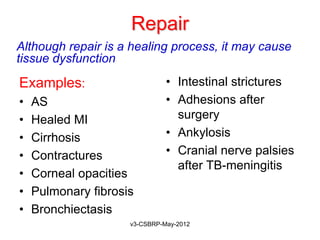
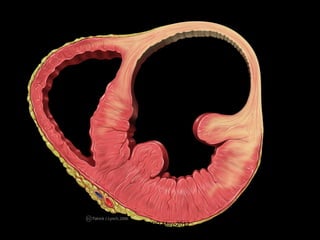
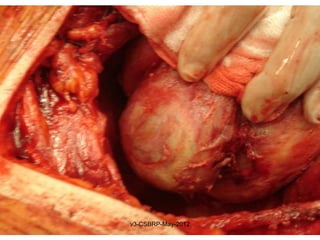
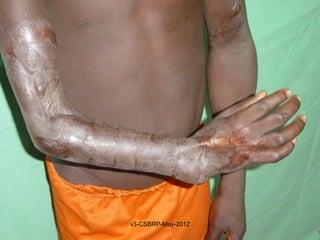
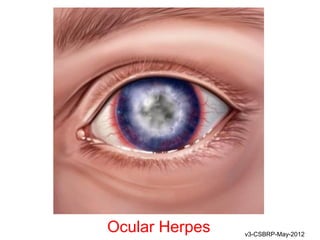
Although repair is a healing process, it may cause
tissue dysfunction

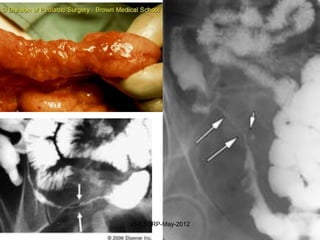
Examples:                      • Intestinal strictures
•   AS                         • Adhesions after
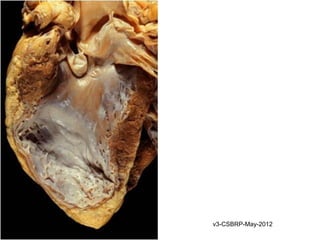
•   Healed MI                    surgery
•   Cirrhosis                  • Ankylosis
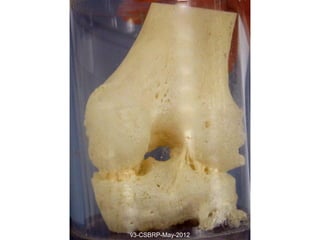
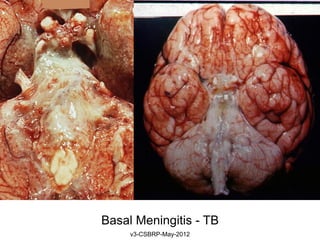
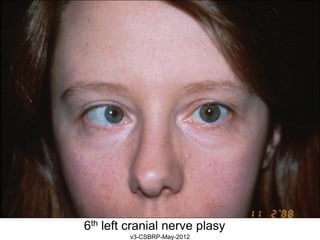
•   Contractures               • Cranial nerve palsies
                                 after TB-meningitis
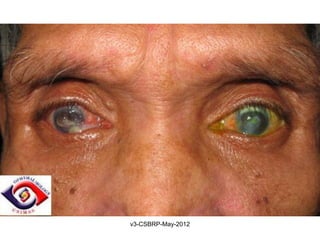
•   Corneal opacities
•   Pulmonary fibrosis
•   Bronchiectasis
                     v3-CSBRP-May-2012
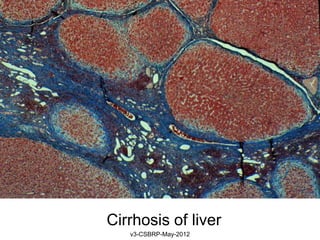
Cirrhosis of liver
   v3-CSBRP-May-2012
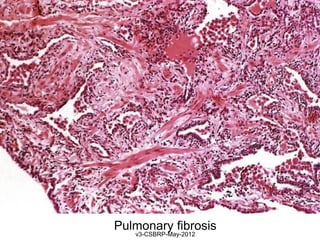
Pulmonary fibrosis
   v3-CSBRP-May-2012
v3-CSBRP-May-2012
v3-CSBRP-May-2012
Basal Meningitis - TB
     v3-CSBRP-May-2012
6th left cranial nerve plasy
         v3-CSBRP-May-2012
v3-CSBRP-May-2012
v3-CSBRP-May-2012
v3-CSBRP-May-2012
v3-CSBRP-May-2012
Ocular Herpes   v3-CSBRP-May-2012
v3-CSBRP-May-2012
Understanding the mechanisms of regeneration
and repair requires:
  •knowledge of the control of cell proliferation
  •signal transduction pathways, and
  •functions of ECM components


                    v3-CSBRP-May-2012
Principles of cell proliferation
Control of Normal Cell Proliferation and
  Tissue Growth
• In adult tissues the size of cell
  populations is determined by the rates
  of cell proliferation, differentiation, and
  death by apoptosis
• Cell proliferation can be stimulated by
  physiologic and pathologic conditions

                  v3-CSBRP-May-2012
Principles of cell proliferation
Control of Normal Cell Proliferation and Tissue Growth
Cell proliferation can be stimulated by physiologic
and pathologic conditions


Physiological:                  Pathological:
EM to Estrogen                  • NPH to
Thyroid to TSH,                   dihydrotestosterone
  pregnancy                     • Nodular goitres to
                                  TSH


                      v3-CSBRP-May-2012
Why thyroid enlarges in
       pregnancy?


α-chain of HCG is identical to
     the α-chain of TSH


           v3-CSBRP-May-2012
Principles of cell proliferation

 Cell proliferation is largely controlled by signals
(soluble or contact-dependent) from the
microenvironment that either stimulate or inhibit
proliferation

 An excess of stimulators or a deficiency of
inhibitors leads to net growth and, in the case of
cancer, uncontrolled growth

                     v3-CSBRP-May-2012
TISSUE PROLIFERATIVE
           ACTIVITY
The tissues of the body are divided into
   three groups on the basis of the
   proliferative activity of their cells:

1. Continuously dividing (labile tissues)
2. Quiescent (stable tissues) and
3. Nondividing (permanent tissues)

                  v3-CSBRP-May-2012
TISSUE PROLIFERATIVE ACTIVITY
1. Continuously dividing (labile tissues)
Cells proliferate throughout life, replacing those that are destroyed

Examples include:

Surface epithelia, such as stratified squamous epithelia of the skin, oral
      cavity, vagina, and cervix; the lining mucosa of all the excretory
      ducts of the glands of the body (e.g., salivary glands, pancreas,
      biliary tract)
The columnar epithelium of the GI tract and uterus; the transitional
      epithelium of the urinary tract
Cells of the bone marrow and hematopoietic tissues

In most of these tissues mature cells are derived from adult stem cells,
     which have a tremendous capacity to proliferate

                             v3-CSBRP-May-2012
TISSUE PROLIFERATIVE ACTIVITY
1. Continuously dividing (labile tissues)
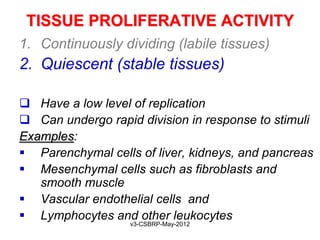
2. Quiescent (stable tissues)

 Have a low level of replication
 Can undergo rapid division in response to stimuli
Examples:
 Parenchymal cells of liver, kidneys, and pancreas
 Mesenchymal cells such as fibroblasts and
   smooth muscle
 Vascular endothelial cells and
 Lymphocytes and other leukocytes
                   v3-CSBRP-May-2012
TISSUE PROLIFERATIVE ACTIVITY
1. Continuously dividing (labile tissues)
2. Quiescent (stable tissues)
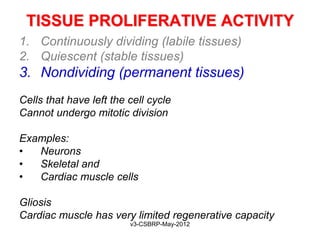
3. Nondividing (permanent tissues)
Cells that have left the cell cycle
Cannot undergo mitotic division

Examples:
•  Neurons
•  Skeletal and
•  Cardiac muscle cells

Gliosis
Cardiac muscle has very limited regenerative capacity
                         v3-CSBRP-May-2012
v3-CSBRP-May-2012
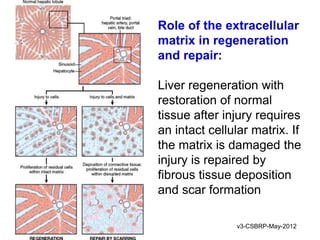
Role of the extracellular
matrix in regeneration
and repair:

Liver regeneration with
restoration of normal
tissue after injury requires
an intact cellular matrix. If
the matrix is damaged the
injury is repaired by
fibrous tissue deposition
and scar formation

               v3-CSBRP-May-2012
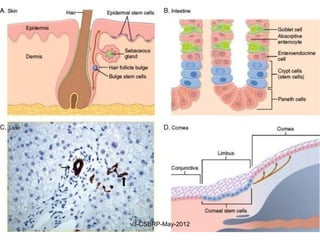
STEM CELLS


• Stem cells are characterized by their self-
  renewal properties and by their capacity to
     generate differentiated cell lineages


                 v3-CSBRP-May-2012
Stem cells
Maintainance of stem cells is achieved by
   two mechanisms:
1. Obligatory asymmetric replication
   with each cell division, one of the daughter
    cells retains its self-renewing capacity while
    the other enters a differentiation pathway
2. Stochastic differentiation:
   cell division may generate either two self-
    renewing stem cells or two cells that will
    differentiate
                   v3-CSBRP-May-2012
v3-CSBRP-May-2012
Terms
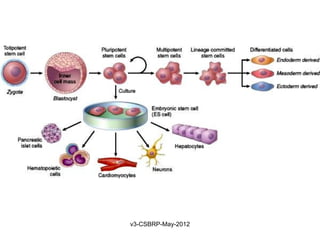
o Pluripotent stem cells: can generate all tissues of the
  body
o Multipotent stem cells: which have more restricted
  developmental potential, and eventually produce
  differentiated cells from the three embryonic layers
o Transdifferentiation: indicates a change in the lineage
  commitment of a stem cell
o Adult stem cells or somatic stem cells: have a more
  restricted capacity to generate different cell types have
  been identified in many tissues
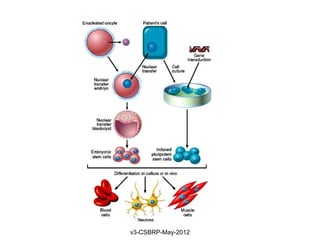
o Induced pluripotent stem cells: differentiated cells of
  humans can be reprogrammed into pluripotent cells,
  similar to ES cells, by the transduction of genes
  encoding ES cell transcription factor
                        v3-CSBRP-May-2012
v3-CSBRP-May-2012
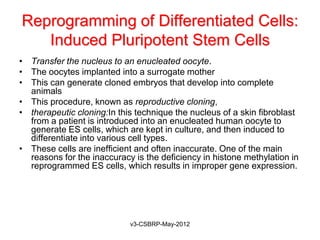
Reprogramming of Differentiated Cells:
   Induced Pluripotent Stem Cells
• Transfer the nucleus to an enucleated oocyte.
• The oocytes implanted into a surrogate mother
• This can generate cloned embryos that develop into complete
  animals
• This procedure, known as reproductive cloning,
• therapeutic cloning:In this technique the nucleus of a skin fibroblast
  from a patient is introduced into an enucleated human oocyte to
  generate ES cells, which are kept in culture, and then induced to
  differentiate into various cell types.
• These cells are inefficient and often inaccurate. One of the main
  reasons for the inaccuracy is the deficiency in histone methylation in
  reprogrammed ES cells, which results in improper gene expression.


                            v3-CSBRP-May-2012
v3-CSBRP-May-2012
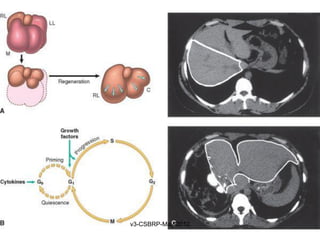
LIVER REGENERATION
Hepatocyte proliferation in the regenerating
 liver is triggered by the combined actions of
 cytokines and polypeptide growth factors

  – Priming phase – TNF, IL-6 & C – system
  – DNA synthesis – HGF, TGFα, and HB-EGF
  – Adjuvants - Norepinephrine, serotonin, insulin,
    thyroxin and growth hormone

                   v3-CSBRP-May-2012
• Individual hepatocytes replicate once or twice
  during regeneration and then return to
  quiescence
• Growth inhibitors, such as TGF-β and activins,
  may be involved in terminating hepatocyte
  replication
• Intrahepatic stem or progenitor cells do not play
  a role in the compensatory growth that occurs
  after partial hepatectomy
• Endothelial cells and other nonparenchymal
  cells in the regenerating liver may originate from
  bone marrow precursors
                    v3-CSBRP-May-2012
v3-CSBRP-May-2012
Extracellular Matrix and
       Cell-Matrix Interactions
Tissue repair and regeneration depends on:
• Cytokines
• Interactions between cells & ECM
The ECM regulates the growth, proliferation,
  movement, and differentiation of the cells
  living within it


                 v3-CSBRP-May-2012
ECM - various functions
• Mechanical support
• Control of cell growth
• Maintenance of cell differentiation
• Scaffolding for tissue renewal
• Establishment of tissue
  microenvironments
• Storage and presentation of regulatory
  molecules
                 v3-CSBRP-May-2012
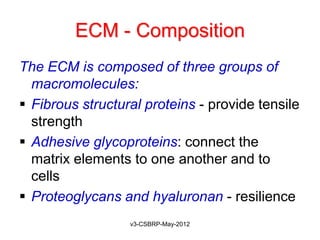
ECM - Composition
The ECM is composed of three groups of
  macromolecules:
 Fibrous structural proteins - provide tensile
  strength
 Adhesive glycoproteins: connect the
  matrix elements to one another and to
  cells
 Proteoglycans and hyaluronan - resilience
                  v3-CSBRP-May-2012
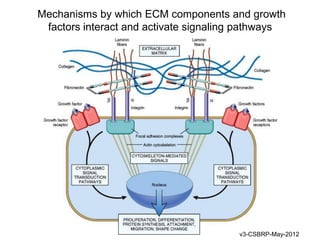
Mechanisms by which ECM components and growth
 factors interact and activate signaling pathways


                                       v3-CSBRP-May-2012
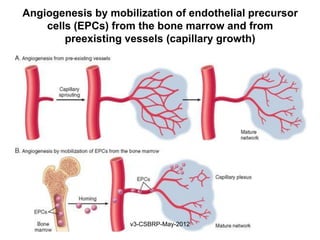
Angiogenesis by mobilization of endothelial precursor
    cells (EPCs) from the bone marrow and from
        preexisting vessels (capillary growth)


                    v3-CSBRP-May-2012
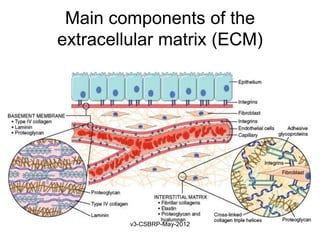
Main components of the
extracellular matrix (ECM)


         v3-CSBRP-May-2012
Healing by Repair,
Scar Formation and Fibrosis


          v3-CSBRP-May-2012
Healing by Repair,
  Scar Formation and Fibrosis

Repair occurs by fibrosis & scar formation
  when:
• There is loss of parenchyma & frame work

Here lost tissue will be replaced by collagen

                  v3-CSBRP-May-2012
Repair by connective tissue deposition
  includes the following basic features:
• Inflammation
• Angiogenesis
• Migration and proliferation of fibroblasts
• Scar formation
• Connective tissue remodeling

                  v3-CSBRP-May-2012
Angiogenesis
During embryonic development:
Vasculogenesis:

• Angioblasts
• Hemangioblasts

In adults:
Angiogenesis or Neovascularization

• Endothelium of adjacent pre-existing vessels
• BM endothelial progenitor cells (EPCs)
                   v3-CSBRP-May-2012
Angiogenesis
Angiogenesis from Preexisting Vessels:
• Vasodilation
• Degradation of the BM
• Migration of endothelial cells
• Proliferation of endothelial cells
• Maturation of endothelial cells
• Recruitment of periendothelial cells
               v3-CSBRP-May-2012
Angiogenesis
Angiogenesis from Endothelial Precursor
  Cells (EPCs):
• EPCs can be recruited from the bone
  marrow
• The number of circulating EPCs increases
  greatly in patients with ischemic conditions
• Examples:
  – Re-endothelization of vascular implants
  – Neovascularization of ischemic organs
  – Neovascularization of cutaneous wounds
  – Neovascularization of tumors
                  v3-CSBRP-May-2012
Angiogenesis
Growth Factors and Receptors Involved in
  Angiogenesis
VEGF is the most important growth factor in adult
  tissues
Newly formed vessels are fragile and need to
  become “stabilized”
   – Pericytes
   – Smooth muscle cells
Factors that participate in the stabilization process:
   – Angiopoietins 1 and 2
   – PDGF, and
   – TGF-β
                      v3-CSBRP-May-2012
END


v3-CSBRP-May-2012
v3-CSBRP-May-2012

Inflammation 8

  • 1.
    Inflammation and Repair -8 Dr.CSBR.Prasad, M.D. v3-CSBRP-May-2012
  • 2.
    Tissue renewal Regeneration and Repair v3-CSBRP-May-2012
  • 3.
    Regeneration Regeneration refers tothe proliferation of cells and tissues to replace lost structures  Whole organs and complex tissues rarely regenerate after injury Exceptions are liver, epithelia of GIT, Skin, Hemopoietic tissue  Compensatory growth Vs Regeneration v3-CSBRP-May-2012
  • 4.
    Repair  Repair isa healing process  It’s a combination of regeneration and scar formation v3-CSBRP-May-2012
  • 5.
    Repair Tissue repair dependson:  the ability of the tissue to regenerate and  the extent of the injury v3-CSBRP-May-2012
  • 6.
    Repair  Chronic inflammation> growth factors and cytokines > Scar  FIBROSIS is used to describe the extensive deposition of collagen v3-CSBRP-May-2012
  • 7.
    Repair ECM components areessential for wound healing:  Provide the framework for cell migration  Facilitate Angiogenesis  Cells in the ECM produce growth factors v3-CSBRP-May-2012
  • 8.
    Repair Although repair isa healing process, it may cause tissue dysfunction v3-CSBRP-May-2012
  • 9.
    Repair Although repair isa healing process, it may cause tissue dysfunction Examples: • Intestinal strictures • AS • Adhesions after • Healed MI surgery • Cirrhosis • Ankylosis • Contractures • Cranial nerve palsies after TB-meningitis • Corneal opacities • Pulmonary fibrosis • Bronchiectasis v3-CSBRP-May-2012
  • 10.
    Cirrhosis of liver v3-CSBRP-May-2012
  • 11.
    Pulmonary fibrosis v3-CSBRP-May-2012
  • 12.
  • 13.
  • 14.
    Basal Meningitis -TB v3-CSBRP-May-2012
  • 15.
    6th left cranialnerve plasy v3-CSBRP-May-2012
  • 16.
  • 17.
  • 18.
  • 19.
  • 20.
    Ocular Herpes v3-CSBRP-May-2012
  • 21.
  • 22.
    Understanding the mechanismsof regeneration and repair requires: •knowledge of the control of cell proliferation •signal transduction pathways, and •functions of ECM components v3-CSBRP-May-2012
  • 23.
    Principles of cellproliferation Control of Normal Cell Proliferation and Tissue Growth • In adult tissues the size of cell populations is determined by the rates of cell proliferation, differentiation, and death by apoptosis • Cell proliferation can be stimulated by physiologic and pathologic conditions v3-CSBRP-May-2012
  • 24.
    Principles of cellproliferation Control of Normal Cell Proliferation and Tissue Growth Cell proliferation can be stimulated by physiologic and pathologic conditions Physiological: Pathological: EM to Estrogen • NPH to Thyroid to TSH, dihydrotestosterone pregnancy • Nodular goitres to TSH v3-CSBRP-May-2012
  • 25.
    Why thyroid enlargesin pregnancy? α-chain of HCG is identical to the α-chain of TSH v3-CSBRP-May-2012
  • 26.
    Principles of cellproliferation  Cell proliferation is largely controlled by signals (soluble or contact-dependent) from the microenvironment that either stimulate or inhibit proliferation  An excess of stimulators or a deficiency of inhibitors leads to net growth and, in the case of cancer, uncontrolled growth v3-CSBRP-May-2012
  • 27.
    TISSUE PROLIFERATIVE ACTIVITY The tissues of the body are divided into three groups on the basis of the proliferative activity of their cells: 1. Continuously dividing (labile tissues) 2. Quiescent (stable tissues) and 3. Nondividing (permanent tissues) v3-CSBRP-May-2012
  • 28.
    TISSUE PROLIFERATIVE ACTIVITY 1.Continuously dividing (labile tissues) Cells proliferate throughout life, replacing those that are destroyed Examples include: Surface epithelia, such as stratified squamous epithelia of the skin, oral cavity, vagina, and cervix; the lining mucosa of all the excretory ducts of the glands of the body (e.g., salivary glands, pancreas, biliary tract) The columnar epithelium of the GI tract and uterus; the transitional epithelium of the urinary tract Cells of the bone marrow and hematopoietic tissues In most of these tissues mature cells are derived from adult stem cells, which have a tremendous capacity to proliferate v3-CSBRP-May-2012
  • 29.
    TISSUE PROLIFERATIVE ACTIVITY 1.Continuously dividing (labile tissues) 2. Quiescent (stable tissues)  Have a low level of replication  Can undergo rapid division in response to stimuli Examples:  Parenchymal cells of liver, kidneys, and pancreas  Mesenchymal cells such as fibroblasts and smooth muscle  Vascular endothelial cells and  Lymphocytes and other leukocytes v3-CSBRP-May-2012
  • 30.
    TISSUE PROLIFERATIVE ACTIVITY 1.Continuously dividing (labile tissues) 2. Quiescent (stable tissues) 3. Nondividing (permanent tissues) Cells that have left the cell cycle Cannot undergo mitotic division Examples: • Neurons • Skeletal and • Cardiac muscle cells Gliosis Cardiac muscle has very limited regenerative capacity v3-CSBRP-May-2012
  • 31.
  • 32.
    Role of theextracellular matrix in regeneration and repair: Liver regeneration with restoration of normal tissue after injury requires an intact cellular matrix. If the matrix is damaged the injury is repaired by fibrous tissue deposition and scar formation v3-CSBRP-May-2012
  • 33.
    STEM CELLS • Stemcells are characterized by their self- renewal properties and by their capacity to generate differentiated cell lineages v3-CSBRP-May-2012
  • 34.
    Stem cells Maintainance ofstem cells is achieved by two mechanisms: 1. Obligatory asymmetric replication  with each cell division, one of the daughter cells retains its self-renewing capacity while the other enters a differentiation pathway 2. Stochastic differentiation:  cell division may generate either two self- renewing stem cells or two cells that will differentiate v3-CSBRP-May-2012
  • 35.
  • 36.
    Terms o Pluripotent stemcells: can generate all tissues of the body o Multipotent stem cells: which have more restricted developmental potential, and eventually produce differentiated cells from the three embryonic layers o Transdifferentiation: indicates a change in the lineage commitment of a stem cell o Adult stem cells or somatic stem cells: have a more restricted capacity to generate different cell types have been identified in many tissues o Induced pluripotent stem cells: differentiated cells of humans can be reprogrammed into pluripotent cells, similar to ES cells, by the transduction of genes encoding ES cell transcription factor v3-CSBRP-May-2012
  • 37.
  • 38.
    Reprogramming of DifferentiatedCells: Induced Pluripotent Stem Cells • Transfer the nucleus to an enucleated oocyte. • The oocytes implanted into a surrogate mother • This can generate cloned embryos that develop into complete animals • This procedure, known as reproductive cloning, • therapeutic cloning:In this technique the nucleus of a skin fibroblast from a patient is introduced into an enucleated human oocyte to generate ES cells, which are kept in culture, and then induced to differentiate into various cell types. • These cells are inefficient and often inaccurate. One of the main reasons for the inaccuracy is the deficiency in histone methylation in reprogrammed ES cells, which results in improper gene expression. v3-CSBRP-May-2012
  • 39.
  • 40.
    LIVER REGENERATION Hepatocyte proliferationin the regenerating liver is triggered by the combined actions of cytokines and polypeptide growth factors – Priming phase – TNF, IL-6 & C – system – DNA synthesis – HGF, TGFα, and HB-EGF – Adjuvants - Norepinephrine, serotonin, insulin, thyroxin and growth hormone v3-CSBRP-May-2012
  • 41.
    • Individual hepatocytesreplicate once or twice during regeneration and then return to quiescence • Growth inhibitors, such as TGF-β and activins, may be involved in terminating hepatocyte replication • Intrahepatic stem or progenitor cells do not play a role in the compensatory growth that occurs after partial hepatectomy • Endothelial cells and other nonparenchymal cells in the regenerating liver may originate from bone marrow precursors v3-CSBRP-May-2012
  • 42.
  • 43.
    Extracellular Matrix and Cell-Matrix Interactions Tissue repair and regeneration depends on: • Cytokines • Interactions between cells & ECM The ECM regulates the growth, proliferation, movement, and differentiation of the cells living within it v3-CSBRP-May-2012
  • 44.
    ECM - variousfunctions • Mechanical support • Control of cell growth • Maintenance of cell differentiation • Scaffolding for tissue renewal • Establishment of tissue microenvironments • Storage and presentation of regulatory molecules v3-CSBRP-May-2012
  • 45.
    ECM - Composition TheECM is composed of three groups of macromolecules:  Fibrous structural proteins - provide tensile strength  Adhesive glycoproteins: connect the matrix elements to one another and to cells  Proteoglycans and hyaluronan - resilience v3-CSBRP-May-2012
  • 46.
    Mechanisms by whichECM components and growth factors interact and activate signaling pathways v3-CSBRP-May-2012
  • 47.
    Angiogenesis by mobilizationof endothelial precursor cells (EPCs) from the bone marrow and from preexisting vessels (capillary growth) v3-CSBRP-May-2012
  • 48.
    Main components ofthe extracellular matrix (ECM) v3-CSBRP-May-2012
  • 49.
    Healing by Repair, ScarFormation and Fibrosis v3-CSBRP-May-2012
  • 50.
    Healing by Repair, Scar Formation and Fibrosis Repair occurs by fibrosis & scar formation when: • There is loss of parenchyma & frame work Here lost tissue will be replaced by collagen v3-CSBRP-May-2012
  • 51.
    Repair by connectivetissue deposition includes the following basic features: • Inflammation • Angiogenesis • Migration and proliferation of fibroblasts • Scar formation • Connective tissue remodeling v3-CSBRP-May-2012
  • 52.
    Angiogenesis During embryonic development: Vasculogenesis: •Angioblasts • Hemangioblasts In adults: Angiogenesis or Neovascularization • Endothelium of adjacent pre-existing vessels • BM endothelial progenitor cells (EPCs) v3-CSBRP-May-2012
  • 53.
    Angiogenesis Angiogenesis from PreexistingVessels: • Vasodilation • Degradation of the BM • Migration of endothelial cells • Proliferation of endothelial cells • Maturation of endothelial cells • Recruitment of periendothelial cells v3-CSBRP-May-2012
  • 54.
    Angiogenesis Angiogenesis from EndothelialPrecursor Cells (EPCs): • EPCs can be recruited from the bone marrow • The number of circulating EPCs increases greatly in patients with ischemic conditions • Examples: – Re-endothelization of vascular implants – Neovascularization of ischemic organs – Neovascularization of cutaneous wounds – Neovascularization of tumors v3-CSBRP-May-2012
  • 55.
    Angiogenesis Growth Factors andReceptors Involved in Angiogenesis VEGF is the most important growth factor in adult tissues Newly formed vessels are fragile and need to become “stabilized” – Pericytes – Smooth muscle cells Factors that participate in the stabilization process: – Angiopoietins 1 and 2 – PDGF, and – TGF-β v3-CSBRP-May-2012
  • 56.
  • 57.