IMMUNITY
Immunity
 Resistance of the body against the pathogenic
agents
 ability of the body to resist different types of
foreign bodies like bacteria, virus, toxic
substances etc which enter the body.
 Antigen
 Antibody
Types
 Broadly divided into 2:
1. Nonspecific or Innate immunity
2. Specific or Acquired Immunity
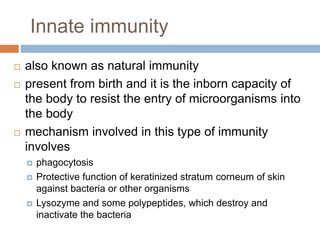
Innate immunity
 also known as natural immunity
 present from birth and it is the inborn capacity of
the body to resist the entry of microorganisms into
the body
 mechanism involved in this type of immunity
involves
 phagocytosis
 Protective function of keratinized stratum corneum of skin
against bacteria or other organisms
 Lysozyme and some polypeptides, which destroy and
inactivate the bacteria
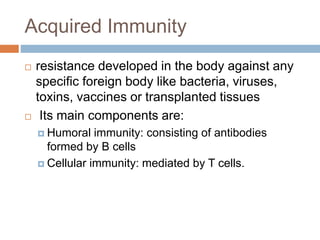
Acquired Immunity
 resistance developed in the body against any
specific foreign body like bacteria, viruses,
toxins, vaccines or transplanted tissues
 Its main components are:
 Humoral immunity: consisting of antibodies
formed by B cells
 Cellular immunity: mediated by T cells.
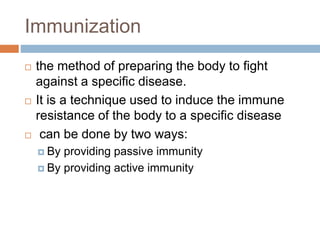
Immunization
 the method of preparing the body to fight
against a specific disease.
 It is a technique used to induce the immune
resistance of the body to a specific disease
 can be done by two ways:
 By providing passive immunity
 By providing active immunity
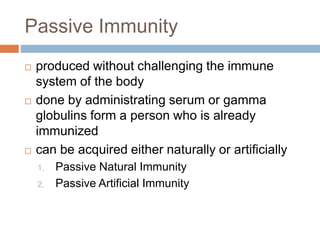
Passive Immunity
 produced without challenging the immune
system of the body
 done by administrating serum or gamma
globulins form a person who is already
immunized
 can be acquired either naturally or artificially
1. Passive Natural Immunity
2. Passive Artificial Immunity
Active Immunity
 acquired by activating immune system of the
body.
 The body develops resistance against
diseases by producing antibodies following the
exposure to antigens.
 Active immunity can be acquired naturally or
artificially.
1. Active Natural Immunity
2. Active Passive Immunity
IMMUNODEFICIENCY
DISEASES
IMMUNODEFICIENCY DISEASES
 caused by
 inherited defects affecting immune system
development or
 secondary effects of other diseases ( infection,
malnutrition, aging, immunosuppression,
autoimmunity or chemotherapy)
Classification
1. Primary Immunodeficiencies
1. X-linked agammaglobulinemia
2. Common variable immunodeficiency
3. Isolated IgA deficiency
4. Hyper IgM Syndrome
5. Digeorge Syndrome
2. Secondary Immunodeficiencies
1. Acquired Immunodeficiency Syndrome
Acquired Immunodeficiency
Syndrome
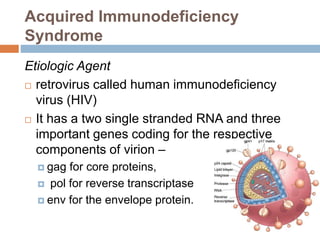
Etiologic Agent
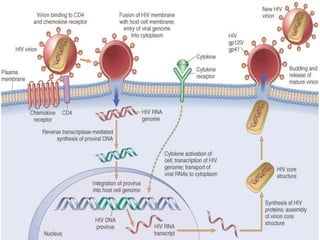
 retrovirus called human immunodeficiency
virus (HIV)
 It has a two single stranded RNA and three
important genes coding for the respective
components of virion –
 gag for core proteins,
 pol for reverse transcriptase
 env for the envelope protein.
Routes of Transmission
1. Sexual Contact
2. Parenteral Transmission
3. Perinatal Transmission
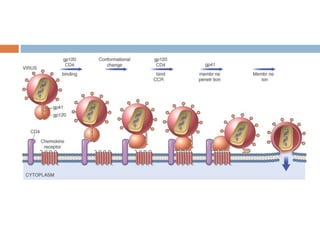
Pathogenesis
1. Selective tropism and internalisation
2. Uncoating and proviral DNA integration
3. Budding Syncytia formation
4. Cytopathic effects
5. Effects on monocytes and macrophages
6. B cell dysfunction
Clinical Features
 at least two major signs associated with at
least one minor sign.
 Major signs
 Wight loss of >10% of body weight
 Chronic diarrhea of > 1month duration and
 Prolonged fever for >1 month
 Minor Signs
 Recurrent oropharyngeal candidiasis
 Persistent generalized lymphadenopathy
 Persistent cough for >1month
 Generalized pruritic dermatitis
 Recurrent herpes zoster infection
 Progressive disseminated herpes simplex
infection
Laboratory Diagnosis of AIDS
 Specific Tests
 Serologic test by ELISA, Western blot and
immunofluorescence test
 Antigen detection test
 Virus isolation
 Polymerase chain reaction
 Indirect Tests
 CD4 and CD8 cell count
 Lymphopenia
 Lymph node biopsy
 Platelet count revealing thrombocytopenia
 Increased b-2 microglobulin levels
IMMUNE MEDIATED
INJURY
(HYPERSENSITIVITY
REACTIONS)
Hypersensitivity reactions
 State of exaggerated immune response to an
antigen
 The lesion of hypersensitivity are produced
due to interaction between antigen and the
product of the immune responses.
 Hypersensitivity reactions depends upon:
 chemical nature of allergen
 route involved in sensitization ie inhalation,
ingestion, injection etc .
 physiological state of individual / genetic potential
Type
 Immediate type:
 type I, II, III.
 Delayed type:
 Type IV reaction
Type I Hypersensitivity (Allergy and
Anaphylaxis)
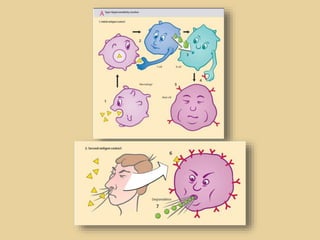
 Rapid occurance
 Depending upon the portal of entry it may
occur as a local reaction or severely
debilitating or may occur as a fatal systemic
disorder
Phases
 Initial response characterized by vasodilation,
vascular leakage and smooth muscle spasm
usually evident within 5-30mins after exposure
to an allergen and subsiding by 60 minutes.
 Late phase reaction that sets in 2 to 8hrs and
lasts for several days
Clinical Presentation
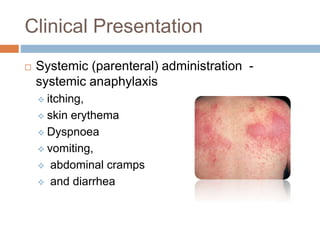
 Systemic (parenteral) administration -
systemic anaphylaxis
 itching,
 skin erythema
 Dyspnoea
 vomiting,
 abdominal cramps
 and diarrhea
 Local Administration
 skin (contact, urticaria),
 GI tract(ingestion, causing diarrhea),
 lung (inhalation causing bronchoconstriction)
Examples
 Systemic anaphylaxis – administration of
antisera, drugs, stings
 Local anaphylaxis – bronchial asthma, food
allergy, angioedema
Type II Hypersensitivity Reaction
 mediated by antibodies directed against target
antigens on the surface of cells or other tissue
components.
 The hypersensitivity response results from
antibody binding followed by one of 3 different
antibody dependent mechanisms:
1. Complement dependent reactions - either by
lysis or opsonization
2. Antibody-dependent cell-mediated cytotoxicity
3. Antibody mediated cellular dysfunction
Examples
 Transfusion reactions
 Erythroblastosis fetalis
 Autoimmune Hemolytic anemia
 Drug reactions
Type III Hypersensitivity (Immune
Complex- Mediated)
 by the deposition of antigen-antibody
(immune) complexes, followed by complement
activation and accumulation of
polymorphonuclear leukocytes
 reaction may be
 general (e.g., serum sickness) or
 may involve individual organ
 mediated by soluble immune complexes. They
are mostly of the IgG class, although IgM may
also be involved
Type IV Hypersensitivity (Cell-
Mediated)
 also known as cell mediated or delayed type
hypersensitivity.
 mediated by specifically sensitized T cells
rather than by antibodies
 subdivided into two types :
1. Delayed type hypersensitivity intiated by CD4 +
T cells
2. Direct cell cytotoxicity mediated by CD8+T cells
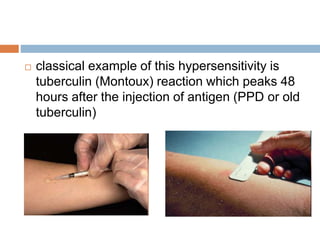
 classical example of this hypersensitivity is
tuberculin (Montoux) reaction which peaks 48
hours after the injection of antigen (PPD or old
tuberculin)
Examples
 Tuberculosis
 Leprosy
 Blastomycosis
 Histoplasmosis
 Leishmaniasis

Immunity, immune def, hypersensitivity

  • 1.
  • 2.
    Immunity  Resistance ofthe body against the pathogenic agents  ability of the body to resist different types of foreign bodies like bacteria, virus, toxic substances etc which enter the body.
  • 3.
  • 4.
    Types  Broadly dividedinto 2: 1. Nonspecific or Innate immunity 2. Specific or Acquired Immunity
  • 5.
    Innate immunity  alsoknown as natural immunity  present from birth and it is the inborn capacity of the body to resist the entry of microorganisms into the body  mechanism involved in this type of immunity involves  phagocytosis  Protective function of keratinized stratum corneum of skin against bacteria or other organisms  Lysozyme and some polypeptides, which destroy and inactivate the bacteria
  • 6.
    Acquired Immunity  resistancedeveloped in the body against any specific foreign body like bacteria, viruses, toxins, vaccines or transplanted tissues  Its main components are:  Humoral immunity: consisting of antibodies formed by B cells  Cellular immunity: mediated by T cells.
  • 7.
    Immunization  the methodof preparing the body to fight against a specific disease.  It is a technique used to induce the immune resistance of the body to a specific disease  can be done by two ways:  By providing passive immunity  By providing active immunity
  • 8.
    Passive Immunity  producedwithout challenging the immune system of the body  done by administrating serum or gamma globulins form a person who is already immunized  can be acquired either naturally or artificially 1. Passive Natural Immunity 2. Passive Artificial Immunity
  • 9.
    Active Immunity  acquiredby activating immune system of the body.  The body develops resistance against diseases by producing antibodies following the exposure to antigens.  Active immunity can be acquired naturally or artificially. 1. Active Natural Immunity 2. Active Passive Immunity
  • 10.
  • 11.
    IMMUNODEFICIENCY DISEASES  causedby  inherited defects affecting immune system development or  secondary effects of other diseases ( infection, malnutrition, aging, immunosuppression, autoimmunity or chemotherapy)
  • 12.
    Classification 1. Primary Immunodeficiencies 1.X-linked agammaglobulinemia 2. Common variable immunodeficiency 3. Isolated IgA deficiency 4. Hyper IgM Syndrome 5. Digeorge Syndrome 2. Secondary Immunodeficiencies 1. Acquired Immunodeficiency Syndrome
  • 13.
    Acquired Immunodeficiency Syndrome Etiologic Agent retrovirus called human immunodeficiency virus (HIV)  It has a two single stranded RNA and three important genes coding for the respective components of virion –  gag for core proteins,  pol for reverse transcriptase  env for the envelope protein.
  • 14.
    Routes of Transmission 1.Sexual Contact 2. Parenteral Transmission 3. Perinatal Transmission
  • 15.
    Pathogenesis 1. Selective tropismand internalisation 2. Uncoating and proviral DNA integration 3. Budding Syncytia formation 4. Cytopathic effects 5. Effects on monocytes and macrophages 6. B cell dysfunction
  • 18.
    Clinical Features  atleast two major signs associated with at least one minor sign.  Major signs  Wight loss of >10% of body weight  Chronic diarrhea of > 1month duration and  Prolonged fever for >1 month
  • 19.
     Minor Signs Recurrent oropharyngeal candidiasis  Persistent generalized lymphadenopathy  Persistent cough for >1month  Generalized pruritic dermatitis  Recurrent herpes zoster infection  Progressive disseminated herpes simplex infection
  • 20.
    Laboratory Diagnosis ofAIDS  Specific Tests  Serologic test by ELISA, Western blot and immunofluorescence test  Antigen detection test  Virus isolation  Polymerase chain reaction  Indirect Tests  CD4 and CD8 cell count  Lymphopenia  Lymph node biopsy  Platelet count revealing thrombocytopenia  Increased b-2 microglobulin levels
  • 21.
  • 22.
    Hypersensitivity reactions  Stateof exaggerated immune response to an antigen  The lesion of hypersensitivity are produced due to interaction between antigen and the product of the immune responses.
  • 23.
     Hypersensitivity reactionsdepends upon:  chemical nature of allergen  route involved in sensitization ie inhalation, ingestion, injection etc .  physiological state of individual / genetic potential
  • 24.
    Type  Immediate type: type I, II, III.  Delayed type:  Type IV reaction
  • 25.
    Type I Hypersensitivity(Allergy and Anaphylaxis)  Rapid occurance  Depending upon the portal of entry it may occur as a local reaction or severely debilitating or may occur as a fatal systemic disorder
  • 27.
    Phases  Initial responsecharacterized by vasodilation, vascular leakage and smooth muscle spasm usually evident within 5-30mins after exposure to an allergen and subsiding by 60 minutes.  Late phase reaction that sets in 2 to 8hrs and lasts for several days
  • 28.
    Clinical Presentation  Systemic(parenteral) administration - systemic anaphylaxis  itching,  skin erythema  Dyspnoea  vomiting,  abdominal cramps  and diarrhea
  • 29.
     Local Administration skin (contact, urticaria),  GI tract(ingestion, causing diarrhea),  lung (inhalation causing bronchoconstriction)
  • 30.
    Examples  Systemic anaphylaxis– administration of antisera, drugs, stings  Local anaphylaxis – bronchial asthma, food allergy, angioedema
  • 31.
    Type II HypersensitivityReaction  mediated by antibodies directed against target antigens on the surface of cells or other tissue components.  The hypersensitivity response results from antibody binding followed by one of 3 different antibody dependent mechanisms: 1. Complement dependent reactions - either by lysis or opsonization 2. Antibody-dependent cell-mediated cytotoxicity 3. Antibody mediated cellular dysfunction
  • 32.
    Examples  Transfusion reactions Erythroblastosis fetalis  Autoimmune Hemolytic anemia  Drug reactions
  • 33.
    Type III Hypersensitivity(Immune Complex- Mediated)  by the deposition of antigen-antibody (immune) complexes, followed by complement activation and accumulation of polymorphonuclear leukocytes  reaction may be  general (e.g., serum sickness) or  may involve individual organ  mediated by soluble immune complexes. They are mostly of the IgG class, although IgM may also be involved
  • 34.
    Type IV Hypersensitivity(Cell- Mediated)  also known as cell mediated or delayed type hypersensitivity.  mediated by specifically sensitized T cells rather than by antibodies  subdivided into two types : 1. Delayed type hypersensitivity intiated by CD4 + T cells 2. Direct cell cytotoxicity mediated by CD8+T cells
  • 35.
     classical exampleof this hypersensitivity is tuberculin (Montoux) reaction which peaks 48 hours after the injection of antigen (PPD or old tuberculin)
  • 36.
    Examples  Tuberculosis  Leprosy Blastomycosis  Histoplasmosis  Leishmaniasis