INFECTIONA     MICROBIOLOGY 	TOPIC
DEFINITIONS INFECTIONINFECTIOUS DISEASEPARASITECOMMENSALSPATHOGENOPPORTUNISTIC PATHOGEN
SAPROPHYtEFree-living microbes that live on dead or decaying matter.PARASITEMicrobes that can establish themselves and multiply in hostsCommensalMicrobes that live with the host in complete harmony without causing any damage.Eg:	streptococcus salivarius		E. coli
Opportunistic pathogenPathogen that is normally safe but when host’s immunity is lowered, thay can be dangerous.Eg:	bacilllusbactillus	streptococcus sp.
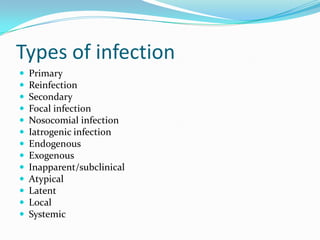
Types of infectionPrimaryReinfectionSecondaryFocal infectionNosocomial infectionIatrogenic infectionEndogenous ExogenousInapparent/subclinicalAtypicalLatentLocalSystemic
Primary infectionExposure of pathogen for the first timeReinfectionExposure of the same pathogen for second or many times.SecondaryInfected by a pathogen, immunity lowered and cause invasion by other pathogen
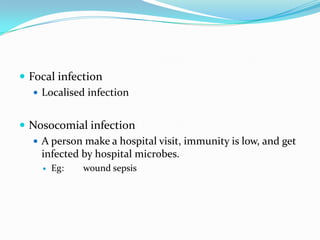
Focal infectionLocalised infectionNosocomial infectionA person make a hospital visit, immunity is low, and get infected by hospital microbes.Eg:	wound sepsis
Iatrogenic infectionDrug induced infection during course of treatmentEg:	muscle sepsis caused by unsterilized equipment used.Endogenous infectiomWhen a commensal enter places it should not be.Eg:	entrance of E. coli to urinary tract cause infection.Exogenous infectionWhen a pathogen comes from other sourceEg:	soil
Inapparent /subclinicalAsymptomaticAtypical infectionSymptoms are atypicalLatent infectionParasites remains in tissues in latent or hidden  form, proliferating and producing clinical disease when the host resistance is lowered.Eg:	herpes infection
Systemic infectionSpread throughout the bodyEg:	streptococcus infection
Source of infectionHumanAnimalVectorsInsects Food, water, soil
From humanCarrier-	a person who harbours the pathogenic 			microorganism without suffering any ill effect 		because of it.Types of carrierHealthy carrier- never get infected.Convalescent carrier- the one that recovered from the disease.Temporary carrier- <6 monthsChronic carrier- several years or the rest of the life
PatientContact carrier- someone who acquires pathogen from a 		patient.Paradoxical carrier-someone who acquires pathogen from 			   a carrier.AnimalsZoonoses-infectious disease transmitted from animals to 		   humansZoonoses could beBacterial (plague from rats)Viral (rabies from dogs)Protozoal (toxoplasmosis from cats)Helminthic (hydatid disease from dogs)Fungal (zoophilicdermatophytes from cats and dogs)
InsectsArthropod-borne disease-disease cause by blood 					      sucking insects.Vectors- insects like mosquitoes, ticks, mites, flies, fleas, 		and lice.Types of vectorsMechanical vectors- transmission of dysentry by fliesBiological vectors- anopheles mosquito in malaria“Extrinsic incubation period”Time of entry of the pathogen into the vector and the vector becoming infective.
SoilsHas fungi(eg: histoplasmacapsulatum) and parasites(eg: hookworm, roundworm)WaterContaminated with pathogenic microbesEg: cholera vibrio, infective hepatitis virusFoodContaminated due to external contamination or pre-existent infection in meat or othe animal product.
Modes of infectionContactDirectIndirectInhalationIngestionInoculationCongenital transmission
Types of infectious diseaseEndemic-constantly present in particular areaEpidemic-	spreads rapidly and infect many persons in 		an area at a time.Pandemic- epidemic that spreads through many areas 		of the world, very large number of persons 		in short period.Prosodemic- creeping and smouldering epidemicsSporadic

Infection

  • 1.
    INFECTIONA MICROBIOLOGY TOPIC
  • 2.
  • 3.
    SAPROPHYtEFree-living microbes thatlive on dead or decaying matter.PARASITEMicrobes that can establish themselves and multiply in hostsCommensalMicrobes that live with the host in complete harmony without causing any damage.Eg: streptococcus salivarius E. coli
  • 4.
    Opportunistic pathogenPathogen thatis normally safe but when host’s immunity is lowered, thay can be dangerous.Eg: bacilllusbactillus streptococcus sp.
  • 5.
    Types of infectionPrimaryReinfectionSecondaryFocalinfectionNosocomial infectionIatrogenic infectionEndogenous ExogenousInapparent/subclinicalAtypicalLatentLocalSystemic
  • 6.
    Primary infectionExposure ofpathogen for the first timeReinfectionExposure of the same pathogen for second or many times.SecondaryInfected by a pathogen, immunity lowered and cause invasion by other pathogen
  • 7.
    Focal infectionLocalised infectionNosocomialinfectionA person make a hospital visit, immunity is low, and get infected by hospital microbes.Eg: wound sepsis
  • 8.
    Iatrogenic infectionDrug inducedinfection during course of treatmentEg: muscle sepsis caused by unsterilized equipment used.Endogenous infectiomWhen a commensal enter places it should not be.Eg: entrance of E. coli to urinary tract cause infection.Exogenous infectionWhen a pathogen comes from other sourceEg: soil
  • 9.
    Inapparent /subclinicalAsymptomaticAtypical infectionSymptomsare atypicalLatent infectionParasites remains in tissues in latent or hidden form, proliferating and producing clinical disease when the host resistance is lowered.Eg: herpes infection
  • 10.
    Systemic infectionSpread throughoutthe bodyEg: streptococcus infection
  • 11.
  • 12.
    From humanCarrier- a personwho harbours the pathogenic microorganism without suffering any ill effect because of it.Types of carrierHealthy carrier- never get infected.Convalescent carrier- the one that recovered from the disease.Temporary carrier- <6 monthsChronic carrier- several years or the rest of the life
  • 13.
    PatientContact carrier- someonewho acquires pathogen from a patient.Paradoxical carrier-someone who acquires pathogen from a carrier.AnimalsZoonoses-infectious disease transmitted from animals to humansZoonoses could beBacterial (plague from rats)Viral (rabies from dogs)Protozoal (toxoplasmosis from cats)Helminthic (hydatid disease from dogs)Fungal (zoophilicdermatophytes from cats and dogs)
  • 14.
    InsectsArthropod-borne disease-disease causeby blood sucking insects.Vectors- insects like mosquitoes, ticks, mites, flies, fleas, and lice.Types of vectorsMechanical vectors- transmission of dysentry by fliesBiological vectors- anopheles mosquito in malaria“Extrinsic incubation period”Time of entry of the pathogen into the vector and the vector becoming infective.
  • 15.
    SoilsHas fungi(eg: histoplasmacapsulatum)and parasites(eg: hookworm, roundworm)WaterContaminated with pathogenic microbesEg: cholera vibrio, infective hepatitis virusFoodContaminated due to external contamination or pre-existent infection in meat or othe animal product.
  • 16.
  • 17.
    Types of infectiousdiseaseEndemic-constantly present in particular areaEpidemic- spreads rapidly and infect many persons in an area at a time.Pandemic- epidemic that spreads through many areas of the world, very large number of persons in short period.Prosodemic- creeping and smouldering epidemicsSporadic