IMMUNOPROPHYLAXIS
DR.M.MALATHI
• What is prophylaxis?
• Types of prophylaxis?
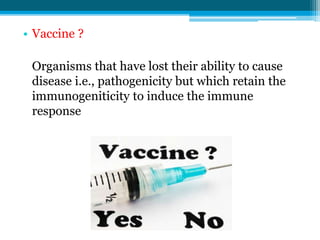
• Vaccine ?
Organisms that have lost their ability to cause
disease i.e., pathogenicity but which retain the
immunogeniticity to induce the immune
response
VPD
• Vaccine Preventable Diseases :
1. Diphtheria
2. Pertussis
3. Tetanus
4. Measles
5. Poliomyelitis
6. Mumps
7. Rubella
Types of immunisation
• Active immunisation
• Passive immunisation
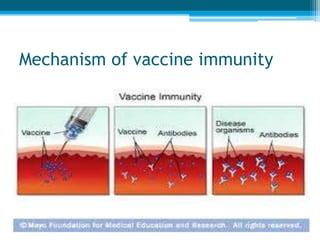
Mechanism of vaccine immunity
ACTIVE IMMUNISATION
• Basis – involves both humoral and cell mediated
immunity
• Specificity and Immunological memory
• Types:
1. Live attenuated vaccines
2. Killed inactivated vaccines
3. Toxoids
4. Cellular fractions
5. Subunit vaccines
6. Recombinant vaccines
Live attenuated vaccine
• Attenuation?
• More potent than killed vaccines
• The live organisms multiply in the host –
antigenic dose is higher than killed vaccine
• Eg: Oral Polio, Measles, Mumps and BCG
vaccines
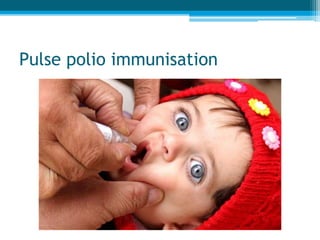
Pulse polio immunisation
Killed inactivated vaccine
• Less efficacious
• Pathogens are inactivated by heat or chemicals
• Require primary and booster doses
• Stable and safer
• Do not require cold facilities for storage
• Eg: Rabies, pertussis, influenza, hepatitis A
vaccines and Cholera vaccine
Toxoids
• Certain organisms like diphteria and tetanus –
produce exotoxins
• Purified toxins inactivated by treatment with
formaldehyde – TOXOID
• Toxoids are mixed with other vaccines to
enhance their antigenicitty
• Eg: DPT ( Pertussis is adjuvant)
Cellular fractions
• Bacterial polysaccharides
• Safety and efficacy is high
• Limited usage
• Eg: Meningococcal vaccine – from the
polysaccharide antigen of the cell wall
• Pneumococcal vaccine – polysaccharides
contained in the capsule of the organism
Subunit vaccines
• Purified macromolecules – from immunogenic
components of pathogenic microorganisms by
recombinant DNA technology.
• Eg: Influenza, HbsAg being incorporated in
micelles, liposomes, isocoms and virosomes for
better delivery.
Recombinant vaccines
• Genes encoding antigens – cloned in bacteria,
yeast and mammalian systems using
recombinant technology.
• Eg: Hepatitis B and Pertussis vaccines
PASSIVE IMMUNISATION
• Immunoglobulins:
1. Pooled immunoglobulins – short term – Eg:
Hep A or measles
2. Hyperimmune Igs – HBIG, HTIG, HRIG
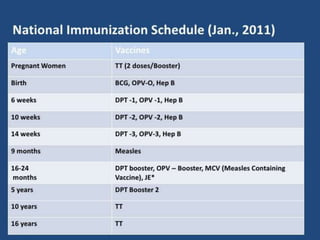
VACCINATION SCHEDULE
• UIP
• EPI
???
• BIRTH ?
• 6, 10, 14 WEEKS ?
• 9 MONTHS ?
• 16 TO 24 MONTHS ?
• 5 TO 6 YEARS ?
• 10 YEARS ?
• 16 YEARS ?
• PREGNANCY ?
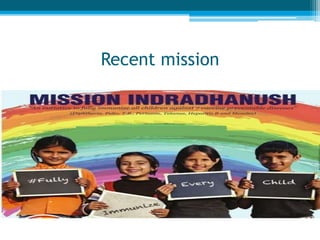
Recent mission
Why not yet discovered?
Thank you

Immunoprophylaxis

  • 1.
  • 2.
    • What isprophylaxis? • Types of prophylaxis?
  • 3.
    • Vaccine ? Organismsthat have lost their ability to cause disease i.e., pathogenicity but which retain the immunogeniticity to induce the immune response
  • 4.
    VPD • Vaccine PreventableDiseases : 1. Diphtheria 2. Pertussis 3. Tetanus 4. Measles 5. Poliomyelitis 6. Mumps 7. Rubella
  • 5.
    Types of immunisation •Active immunisation • Passive immunisation
  • 6.
  • 7.
    ACTIVE IMMUNISATION • Basis– involves both humoral and cell mediated immunity • Specificity and Immunological memory • Types: 1. Live attenuated vaccines 2. Killed inactivated vaccines 3. Toxoids 4. Cellular fractions 5. Subunit vaccines 6. Recombinant vaccines
  • 8.
    Live attenuated vaccine •Attenuation? • More potent than killed vaccines • The live organisms multiply in the host – antigenic dose is higher than killed vaccine • Eg: Oral Polio, Measles, Mumps and BCG vaccines
  • 9.
  • 10.
    Killed inactivated vaccine •Less efficacious • Pathogens are inactivated by heat or chemicals • Require primary and booster doses • Stable and safer • Do not require cold facilities for storage • Eg: Rabies, pertussis, influenza, hepatitis A vaccines and Cholera vaccine
  • 11.
    Toxoids • Certain organismslike diphteria and tetanus – produce exotoxins • Purified toxins inactivated by treatment with formaldehyde – TOXOID • Toxoids are mixed with other vaccines to enhance their antigenicitty • Eg: DPT ( Pertussis is adjuvant)
  • 12.
    Cellular fractions • Bacterialpolysaccharides • Safety and efficacy is high • Limited usage • Eg: Meningococcal vaccine – from the polysaccharide antigen of the cell wall • Pneumococcal vaccine – polysaccharides contained in the capsule of the organism
  • 13.
    Subunit vaccines • Purifiedmacromolecules – from immunogenic components of pathogenic microorganisms by recombinant DNA technology. • Eg: Influenza, HbsAg being incorporated in micelles, liposomes, isocoms and virosomes for better delivery.
  • 14.
    Recombinant vaccines • Genesencoding antigens – cloned in bacteria, yeast and mammalian systems using recombinant technology. • Eg: Hepatitis B and Pertussis vaccines
  • 15.
    PASSIVE IMMUNISATION • Immunoglobulins: 1.Pooled immunoglobulins – short term – Eg: Hep A or measles 2. Hyperimmune Igs – HBIG, HTIG, HRIG
  • 16.
  • 17.
    ??? • BIRTH ? •6, 10, 14 WEEKS ? • 9 MONTHS ? • 16 TO 24 MONTHS ? • 5 TO 6 YEARS ? • 10 YEARS ? • 16 YEARS ? • PREGNANCY ?
  • 19.
  • 20.
    Why not yetdiscovered?
  • 21.